教育公平

Search documents
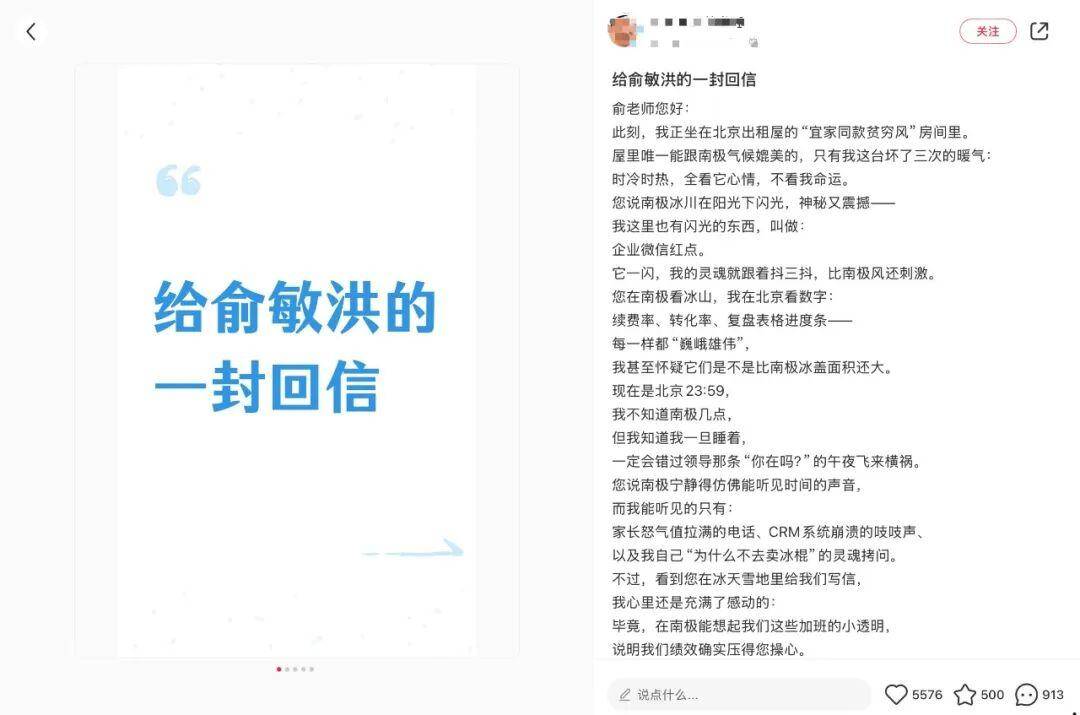
俞敏洪全员信“翻车”:企业家社会责任与教育公平的深层思考
Sou Hu Cai Jing· 2025-11-19 11:24
Core Viewpoint - The internal letter from Yu Minhong, founder of New Oriental, sparked controversy by highlighting the disconnect between the poetic imagery of his experiences in Antarctica and the harsh realities faced by employees, raising questions about the social responsibility of entrepreneurs and the fairness of education [1][2]. Group 1: Empathy Crisis and Entrepreneurial Responsibility - The controversy surrounding Yu Minhong's letter reflects a disconnect between individual narratives and collective struggles, emphasizing the lack of acknowledgment of employee pressures and challenges [1]. - Similar instances of "empathy crisis" have been observed with other entrepreneurs, indicating a trend where successful narratives overlook structural inequalities, leading to increased societal anxiety and diminished trust in business leaders [2]. Group 2: Educational Practice and Challenges - The concept of "the rich helping the poor" in education is fundamentally about ethical resource redistribution, requiring not just equal starting points but also efforts to narrow the gaps in processes and outcomes [3]. - New Oriental's transition from K12 training to diversified sectors like quality education and live commerce illustrates a response to policy changes and an extension of corporate social responsibility, yet it raises concerns about whether the focus on new business growth neglects the original mission of educational equity [3][4]. Group 3: Paths to Implement Social Responsibility - Educational enterprises can implement social responsibility through three main pathways: combining hardware investment with software empowerment, enhancing teacher training and career support, and providing targeted assistance to disadvantaged groups [4][5]. - Specific examples include funding for smart classrooms in impoverished schools, teacher exchange programs, and personalized educational plans for vulnerable populations [4][5]. Group 4: Reconstructing Social Responsibility Narratives - The controversy serves as a warning for entrepreneurs to prioritize empathy and action over mere sentiment, suggesting that educational companies should establish two-way communication mechanisms and integrate social responsibility into their core business strategies [5]. - Collaboration with government and industry to promote educational equity is essential, advocating for increased public investment and forming alliances to share resources effectively [5][6]. Conclusion - The incident with Yu Minhong's letter reflects the struggle between commercial success and social responsibility, emphasizing the need for entrepreneurs to remember that true commitment lies in the classrooms of ordinary educators and the eyes of eager learners [6].


家校联系卡要求填写“家长可提供的社会资源”,一小学致歉并收回相关要求,教育须摈弃功利回归初心
Mei Ri Jing Ji Xin Wen· 2025-11-15 14:02
Core Viewpoint - The recent requirement from Changzheng Primary School in Xinzhou, Shanxi Province, for parents to disclose their social resources on a home-school contact card has sparked widespread controversy, leading to an apology and retraction from the school. The core issue is that the collaboration between home and school should focus on supporting children's growth rather than becoming a "resource exchange" [1][2]. Group 1: Education Principles - The principle of "education without class distinction" has been a fundamental value in Chinese education for over two thousand years, and linking education to parents' social resources contradicts this principle [2]. - The practice of assessing parents' resources can create a hierarchy among families, leading to feelings of inferiority among those with fewer resources, which undermines the concept of equality in education [2][3]. Group 2: Home-School Cooperation - Effective home-school cooperation should be based on equal, voluntary contributions focused on children's needs, such as parents sharing their skills in reading or sports, rather than on their social resources [3]. - The requirement to disclose social resources transforms the nature of home-school relationships into a competition over resources, which detracts from the original intent of fostering collaboration [3][4]. Group 3: Trends in Education - There has been a growing trend of schools conducting "resource surveys" to gather information about parents' social resources, which can lead to a commodification of education and a focus on profit rather than nurturing children's potential [4]. - The shift towards a buyer's market in education, due to declining birth rates, suggests that schools that continue to prioritize resource extraction from parents may face obsolescence [4]. Group 4: Educational Values - Education is fundamentally about nurturing talent and character, and schools should adhere to their educational mission by avoiding short-sighted, profit-driven behaviors [5]. - Upholding the principle of "education without class distinction" is essential for achieving true educational equity and developing well-rounded individuals for the future [5].

每经热评︱家校联系卡不是“资源调查表” 教育须摈弃功利回归初心
Mei Ri Jing Ji Xin Wen· 2025-11-15 07:22
Group 1 - The core issue revolves around the inappropriate linking of parental social resources to education, which contradicts the principle of equal education for all children [1][2] - The requirement for parents to disclose their social resources has been criticized as a means of classifying families and potentially creating a hierarchy among students based on their parents' backgrounds [1][2] - There is a growing trend of schools conducting surveys to gather information about parents' social resources, which is seen as a shift from nurturing children's potential to a more utilitarian approach focused on resource competition [2][3] Group 2 - The article argues that education should not be treated as a business that integrates parental social resources, and that the relationship between schools and families should not be a medium for profit exchange [3] - With the declining birth rate in certain regions, the education market is shifting towards a buyer's market, suggesting that schools that continue to adopt a profit-driven mindset may face obsolescence [3] - The importance of maintaining the original educational mission and principles, such as "education for all," is emphasized as essential for fostering true educational equity and developing capable individuals for the future [3]
当一个9岁小孩有了AI老师
3 6 Ke· 2025-11-13 07:52
Group 1: Impact of AI on Education - AI is transforming the educational landscape, influencing parent-child relationships and communication methods in learning environments [2][5][18] - AI serves as a communication facilitator between parents and children, helping to resolve conflicts and enhance understanding [2][3][5] - The introduction of AI in education is seen as a way to provide personalized learning experiences and new perspectives for children [3][18] Group 2: Challenges and Limitations of Current Educational Tools - Existing educational tools, such as photo-based question search applications, have limitations in their ability to provide comprehensive support for students' learning needs [8][9] - These tools often rely on a fixed question database, which can lead to mismatches and inadequate explanations for students [8][9] - The need for tools that can analyze students' learning conditions and provide targeted guidance is becoming increasingly apparent [8][9][19] Group 3: Technological Advancements in Educational Tools - The development of AI-driven educational tools aims to improve the accuracy of homework grading and provide deeper insights into students' learning processes [9][10][19] - The transition from basic question-answering tools to more sophisticated AI systems capable of understanding and correcting students' answers is underway [9][10][19] - Continuous feedback from parents and users is essential for refining these educational tools and enhancing user experience [13][14] Group 4: Promoting Educational Equity - The rise of online education and AI technologies is helping to bridge the educational resource gap between urban and rural areas [16][18] - AI education tools are designed to democratize access to quality educational resources, making them available to students regardless of their geographical location [18][19] - The ultimate goal of AI in education is to create a more equitable learning environment where every child can receive personalized support and guidance [19]


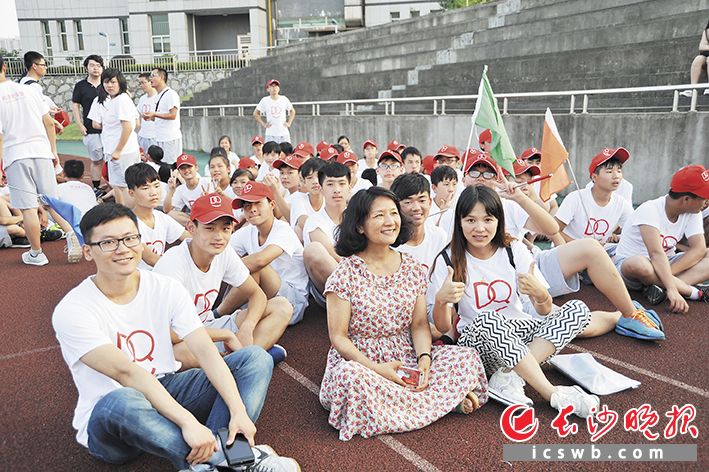
三一集团轮值董事长夫妇的公益十年: 从“捐钱”到“育心”
Chang Sha Wan Bao· 2025-11-10 00:00
Core Insights - The article highlights the transformation of China's charity sector from traditional donations to a focus on sustainable development and deep public welfare initiatives, exemplified by the efforts of entrepreneurs like Tang Xiuguo and Li Kemei [1][3][4] Group 1: Charity Evolution - Over the past decade, Chinese public welfare has shifted towards "deep public welfare," emphasizing mental growth and sustainable development rather than just monetary donations [1][3] - The Deqing Foundation, established by Tang Xiuguo and Li Kemei, has been pivotal in promoting music education in rural areas, impacting over 139 million children [5][10] Group 2: Project Implementation - The "Happy Choir 3+1" project was launched to address the lack of music education in rural schools, focusing on empowering teachers and students through choir activities [4][12] - The project has successfully established choirs in multiple schools across China, providing children with opportunities to perform alongside renowned musicians [5][10] Group 3: Community Engagement - Li Kemei has actively involved family members and local resources in the foundation's work, fostering a culture of giving and community support [9][10] - The foundation collaborates with various organizations and experts to enhance the quality of music education and create a robust support network [12][13] Group 4: Challenges and Solutions - The foundation faces challenges related to perceptions of arts education, resource allocation, and the need for professional development in the nonprofit sector [11][12] - Strategies include breaking down barriers through community engagement, building a network of support, and implementing a dual-expert model for teacher training [11][12] Group 5: Future Aspirations - The article emphasizes the importance of professionalization in the charity sector, advocating for a shift from mere donations to creating lasting value [10][14] - There is a growing expectation for increased public participation in charity, improved professional standards, and a more supportive ecosystem for nonprofit initiatives [15]

最危险的不平等,是理解的不平等:AI x 留守儿童测评发布
3 6 Ke· 2025-11-05 12:45
Core Insights - The article discusses the design and implementation of an "AI Child-Friendliness Assessment" aimed at evaluating mainstream AI models in their interactions with children, particularly focusing on their ability to address children's unique questions and needs [2][4][5]. Assessment Framework - A unique five-layer pyramid evaluation model has been developed to outline the ideal characteristics of an AI partner for children, based on decades of theoretical foundations from education, sociology, and human-computer interaction [4][5]. - The five layers of the model include: 1. **Safety and Reliability**: The foundational layer emphasizing the importance of not causing harm, providing accurate information, and maintaining confidentiality [6]. 2. **Understanding and Growth**: AI should facilitate learning and comprehension, using language that children can understand and encouraging critical thinking [7]. 3. **Empathy and Care**: AI should be capable of recognizing children's emotions and providing genuine encouragement [8][9]. 4. **Relationship Support**: AI should help children build social connections and not isolate them in a virtual environment [10]. 5. **Autonomy and Empowerment**: The highest layer, where AI should respect children's choices and foster their decision-making abilities [11][12]. Performance Evaluation - In the assessment of AI models regarding "left-behind children," significant differences were observed across ten evaluation dimensions, with lower scores in higher-order skills such as empathy and relationship support [20][22]. - The highest scoring dimensions were related to basic safety and reliability, with scores of 4.04 for confidentiality, 3.88 for accuracy, and 3.87 for non-harmfulness, indicating a strong foundational performance [20][48]. - However, higher-order skills like understanding emotions, enabling autonomy, and facilitating friendships scored below 3, highlighting a critical gap in AI's ability to provide emotional and social support [20][48]. Comparative Analysis - The AI model "Deepseek" scored the highest in the assessment, although its performance was not as pronounced in the context of "youth sexual education" [22][48]. - There was no significant difference in the child-friendliness of domestic and international AI models regarding the topic of left-behind children [24][48]. Emotional and Social Dynamics - AI performed best in addressing emotional topics, scoring 3.64, but it primarily exhibited surface-level empathy rather than deep emotional understanding [26][39]. - The assessment revealed that while AI can simulate emotional support, it struggles with providing context-specific guidance and understanding the complexities of real-world situations faced by left-behind children [49]. Implications for Education Equity - The article raises concerns about whether AI will promote educational equity or exacerbate resource inequalities, emphasizing that while AI can democratize access to knowledge, it may also obscure the need for real support systems [50]. - The findings suggest that the most significant inequality lies in the "understanding" gap, where children may relinquish their critical thinking and decision-making to AI, potentially leading to a loss of autonomy [51]. Future Directions - The article advocates for a paradigm shift from merely providing powerful tools to fostering comprehensive human development, emphasizing the need for AI to activate children's self-efficacy rather than replace traditional learning methods [52]. - Ultimately, the goal is to ensure that AI serves as a supportive companion in children's growth, particularly for vulnerable groups like left-behind children, rather than a mere source of information [54][53].

最危险的不平等,是理解的不平等|AI x 留守儿童测评发布
腾讯研究院· 2025-11-05 11:14
Core Viewpoint - The article discusses the role of AI in supporting children, particularly focusing on left-behind children, and emphasizes the need for a scientific evaluation framework to assess AI's suitability for children's welfare [5][59]. Group 1: AI Suitability Assessment - Tencent Research Institute and Beijing University of Science and Technology designed an "AI Suitability Assessment" to evaluate mainstream AI models in addressing children's diverse questions [7]. - A unique five-layer pyramid evaluation model was created, encompassing safety, understanding, empathy, relationship support, and autonomy [9][10]. - The assessment identified ten dimensions that collectively form a comprehensive profile of a child-friendly AI [16]. Group 2: Evaluation Findings - The assessment revealed that AI models scored higher in foundational dimensions like safety and reliability, with scores of 4.04 for confidentiality, 3.88 for accuracy, and 3.87 for non-harmfulness [24]. - However, higher-level dimensions such as empathy, relationship support, and autonomy scored below 3, indicating a significant gap in AI's ability to provide emotional support and foster social relationships [24][57]. - Deepseek was noted as the highest-scoring model in the assessment, although its performance was less pronounced compared to its results in youth sexual education topics [26][57]. Group 3: Emotional and Social Support - In addressing emotional issues, AI performed best with a score of 3.64, reflecting its ability to handle universal emotional patterns but lacking in contextual understanding [28][57]. - The AI's inability to provide deep empathy and effective empowerment was highlighted, particularly in the context of left-behind children's unique challenges [45][49]. - The assessment indicated that while AI can simulate emotional responses, it struggles with fostering genuine relationships and understanding the complexities of children's social environments [40][55]. Group 4: Implications for Education Equity - The article argues that AI can democratize access to educational resources but may also obscure deeper issues of inequality, particularly in understanding children's real-life challenges [59][60]. - The findings suggest that the most effective AI for children is not necessarily the most advanced but one that knows when to engage and when to allow children to take the lead [63]. - The ultimate goal of educational equity should be to nurture well-rounded individuals rather than merely providing advanced tools [63].

高中双休吵了半年,没有人想问学生要不要
虎嗅APP· 2025-11-02 13:09
Core Viewpoint - The article discusses the ongoing debate surrounding the "double weekend" policy in education, highlighting the conflicting interests of various stakeholders while emphasizing the often-overlooked perspective of students [4][5][6]. Group 1: Stakeholder Perspectives - Parents are concerned about the implications of the double weekend policy on social mobility and class reproduction [4]. - Teachers face pressure to conform to existing educational norms, often prioritizing administrative expectations over their own rights and well-being [11][12]. - The education system is characterized by a lack of financial autonomy and a focus on maintaining high academic performance, which complicates the implementation of the double weekend policy [6][10]. Group 2: Student Voices - Students express a strong desire for the double weekend policy, viewing it as a necessary break from the intense academic pressure they face [5][16]. - The article argues that students are often treated as mere instruments in the educational system, with their needs and voices largely ignored [26][27]. - The desire for rest among students is framed as a legitimate aspiration for respect and equality, rather than a sign of laziness or immaturity [17][22]. Group 3: Educational Inequality - The current educational landscape perpetuates inequality, with the emphasis on supplementary tutoring creating a cycle of dependency and financial strain for families [21][22]. - The article critiques the notion that additional tutoring is beneficial, suggesting it primarily serves to reinforce existing social hierarchies rather than improve educational outcomes [21][22]. - The debate around the double weekend policy is seen as a reflection of deeper structural inequalities within the education system, where the privileged continue to benefit at the expense of the less fortunate [21][22].

中国教科院 “智囊团”更新,于漪、顾明远受聘为名誉委员
Xin Jing Bao· 2025-11-01 10:23
Core Points - The new academic committee of the China Academy of Educational Sciences was officially established on October 31, consisting of 3 honorary members and 29 committee members [2][3] - The committee includes 10 external members and 19 internal members, with notable figures such as Yu Yi, Gu Mingyuan, and Andreas Schleicher serving as honorary members [2][3] - Gu Mingyuan emphasized the importance of teacher development in building a strong education system and called for a focus on basic education and quality improvement [3] Research Centers - The China Academy of Educational Sciences established three research centers: the Education Power Index Research Center, the Education Equity Research Center, and the Science Education Research Center [4] - The Education Power Index Research Center aims to monitor and evaluate the progress of education development globally, providing data support and decision-making references for China's education initiatives [4] - The Education Equity Research Center focuses on theoretical research and practical exploration to create new paradigms in education equity, aspiring to become a leading center in this field [4] - The Science Education Research Center aims to develop standardized and scalable science education practices, integrating artificial intelligence to enhance interdisciplinary curriculum [4]
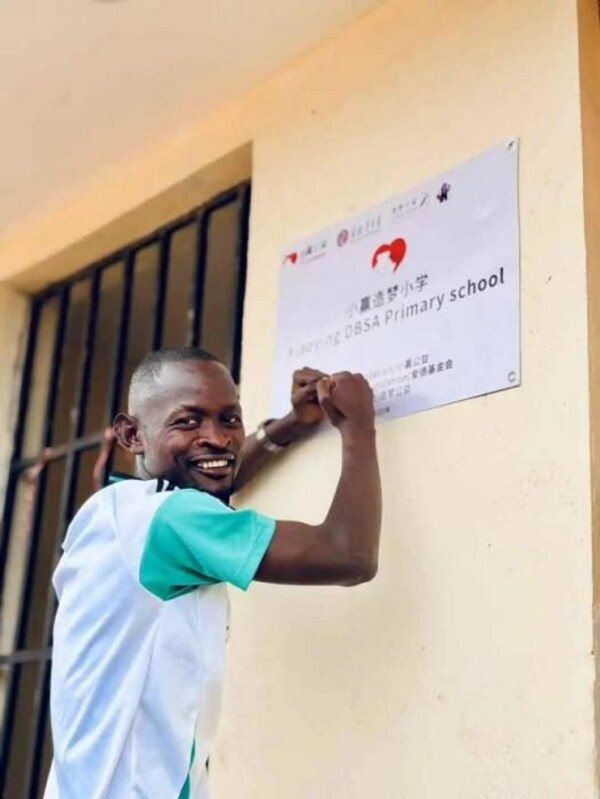
小赢公益助力非洲教育
Xiao Fei Ri Bao Wang· 2025-10-31 09:18
Core Viewpoint - Education is crucial for sustainable development in Africa and lays a solid foundation for building a harmonious world, exemplified by the construction of new schools in the impoverished areas of Nairobi, Kenya, under the "Belt and Road" initiative [1][4]. Group 1: Education and Community Impact - The newly built Xiaoying DBSA Primary School and Page Vision Care Center provide a safe learning environment for over 600 children in the Mathare slum, highlighting the importance of education in community resilience [1][5]. - The "Silk Road Heart-to-Heart" international volunteer service event emphasizes the role of education as a core engine for human civilization, especially in times of crisis [4][6]. - The new school facilities serve not only as educational institutions but also as community hubs during emergencies, providing shelter and resources to families affected by disasters [4][6]. Group 2: Reconstruction Efforts - Following severe flooding in early 2024 that devastated schools in Mathare, the Xiaoying Public Welfare Foundation collaborated with other organizations to rebuild three severely damaged schools [5][6]. - The reconstruction project commenced on January 16, 2025, with a focus on creating safe and functional learning spaces, including classrooms and essential infrastructure [5][6]. - The completion of the new school buildings was celebrated on March 7, 2025, with over 300 attendees, showcasing community involvement and support [5][6]. Group 3: Organizational Commitment - Xiaoying Public Welfare Foundation's initiative in Africa represents a significant extension of its commitment to improving educational conditions, focusing on basic needs before fostering growth [7][8]. - The foundation aims to bridge the gap in educational equity, emphasizing that the desire for a better life is universal among children, regardless of their geographical location [8]. - Future plans include ongoing support for the Mathare community, aiming to collaborate with more partners to enhance educational opportunities for children [8].