新能源转型

Search documents
杰瑞股份市值突破千亿元大关
Da Zhong Ri Bao· 2026-02-13 01:56
Core Viewpoint - Jerry Holdings (002353) has officially surpassed a market capitalization of 100 billion yuan, marking a new stage in its development and positioning it among the top listed companies in Yantai [1] Group 1: Company Development - The company has achieved significant growth in its core oil and gas industry while focusing on new industries to accelerate the construction of a "second growth curve" [1] - Jerry Holdings has made breakthroughs in areas such as data center power supply and natural gas business, while also promoting the deep implementation of its internationalization strategy [1] Group 2: Market Recognition - The market views the company's market capitalization surpassing 100 billion yuan as a recognition of its diversified layout and international capabilities [1] - The increase in market value is attributed to both the favorable cycle in the traditional oil and gas industry and investor confidence in its renewable energy transformation strategy [1]

海油发展股价上涨3.76%,机构看好其新能源转型
Jing Ji Guan Cha Wang· 2026-02-12 01:36
Group 1 - The core focus of China National Offshore Oil Corporation (CNOOC) is on stable growth in its oil and gas main business while integrating the development of renewable energy as part of its "14th Five-Year Plan" [1] - CNOOC is accelerating its offshore wind power layout, with its subsidiary, CNOOC Development, participating in wind power operation and maintenance, indicating a faster pace in the transition to renewable energy [1] Group 2 - On February 11, 2026, CNOOC Development's stock price rose by 3.76% to 4.42 yuan, with a trading volume of 4.44 billion yuan, influenced by the EIA's upward revision of oil price expectations [2] - Over the past five days, the stock price has increased by 4.99%, with a price fluctuation of 7.60%, outperforming the broader market [2] - On February 10, there was a net outflow of 10.10 million yuan from institutional investors, while retail investors contributed a net inflow of 15.28 million yuan [2] Group 3 - Analysts have set a target price of 4.90 yuan for CNOOC Development, indicating a potential upside of 22.50% from the current price [3] - The forecast for 2025 predicts a year-on-year net profit growth of 13.84% and a slight revenue increase of 1.31% [3] - The company is expected to benefit from energy security strategies and low-carbon transitions, maintaining a stable business with a dividend yield exceeding 3% [3]

一汽解放:2026年,公司正全力推进科技解放、绿色解放、国际解放建设
Zheng Quan Ri Bao· 2026-02-11 11:11
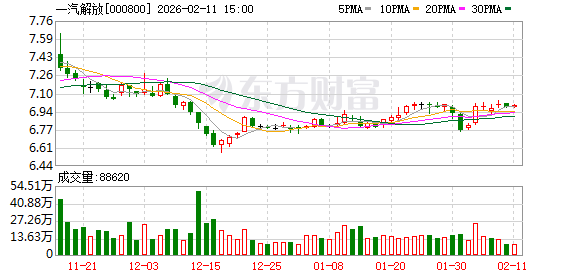
(文章来源:证券日报) 证券日报网讯 2月11日,一汽解放在互动平台回答投资者提问时表示,公司市值受多重因素影响,公司 管理层高度重视市值表现与股东价值,正全力聚焦经营提质、降本增效与新能源转型。2025年公司新能 源、海外业务快速增长。2026年,公司正全力推进科技解放、绿色解放、国际解放建设。未来,公司将 以扎实业绩提升内在价值,切实回报全体股东。 ...


一汽解放:公司正处于新能源转型及海外扩张的关键阶段
Zheng Quan Ri Bao Zhi Sheng· 2026-02-11 10:09
Core Viewpoint - The company is in a critical phase of transitioning to new energy and expanding overseas, emphasizing the need for continuous investment in new energy, intelligence, and globalization [1] Group 1: Industry Insights - The commercial vehicle industry has a long supply chain and rapid technological iteration [1] Group 2: Company Strategy - The company is optimizing its product structure and increasing the proportion of high-value-added models [1] - The company is accelerating its overseas market expansion and implementing lean management to reduce costs and improve efficiency [1] - The company aims to balance scale and efficiency, focusing on high-quality development to reward shareholder trust [1]
多家合资车企销量回暖,触底时刻到了吗?
3 6 Ke· 2026-02-11 06:50
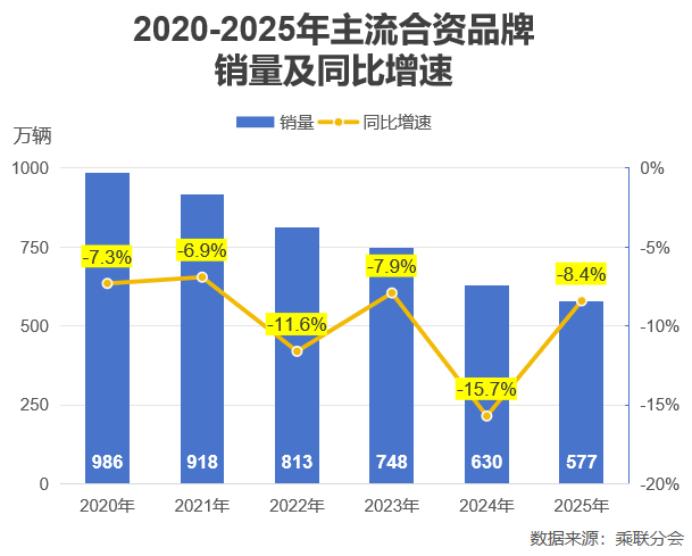
Core Viewpoint - The market share of mainstream joint venture brands in the passenger car market has significantly declined from 51% in 2020 to 24% in 2025, indicating a potential future decline for these brands [1]. Market Overview - In 2025, the sales volume of mainstream joint venture brands decreased by 530,000 units compared to the previous year, marking the lowest figure in the past five years, with the decline rate narrowing from 15.7% to 8.4% [3]. - Despite the overall market downturn, some joint venture companies like Toyota and Mazda have shown signs of recovery, with different strategies contributing to their growth [6]. Sales Performance of Joint Ventures - Notable joint ventures such as Dongfeng Nissan and SAIC General Motors have seen their sales decline rates decrease, stabilizing their market positions, while Honda and Ford continue to struggle [6][9]. - For instance, Dongfeng Nissan's retail sales reached 603,000 units in 2025, with a reduced decline rate of 4.5% compared to 12.7% in 2024 [9]. - SAIC General Motors reported a retail sales figure of 562,000 units, with a significant portion of the decline attributed to the Chevrolet brand [9]. New Energy Transition - The push for new energy vehicle (NEV) transformation has become a priority for joint venture automakers, with many adopting new strategies to enhance local development and pricing [7]. - Successful new joint venture products, such as GAC Toyota's Platinum 3X and Changan Mazda's EZ-60, have yielded positive results, with Changan Mazda achieving a 15.2% year-on-year increase in sales [8]. Challenges and Strategic Adjustments - Some joint venture brands, like Honda, are facing significant sales declines, with their reliance on a few models leading to vulnerabilities [16]. - Honda's sales dropped by 26.7% and 27.9% for its two main joint ventures, indicating a need for a more competitive approach in the NEV market [16]. Future Outlook - The outlook for 2026 appears cautiously optimistic, with several joint ventures setting ambitious sales targets and planning to launch new NEV products [18]. - Companies like Dongfeng Nissan aim for a 40% increase in sales, while new products are expected to target higher price segments [20]. - The overall market for fuel vehicles is projected to stabilize around 30%, with a focus on enhancing the intelligence of fuel vehicles becoming crucial for competitive advantage [23][24].


广汽预亏90亿,本田成最大「拖油瓶」!降价减配都难救?
Xin Lang Ke Ji· 2026-02-11 01:58
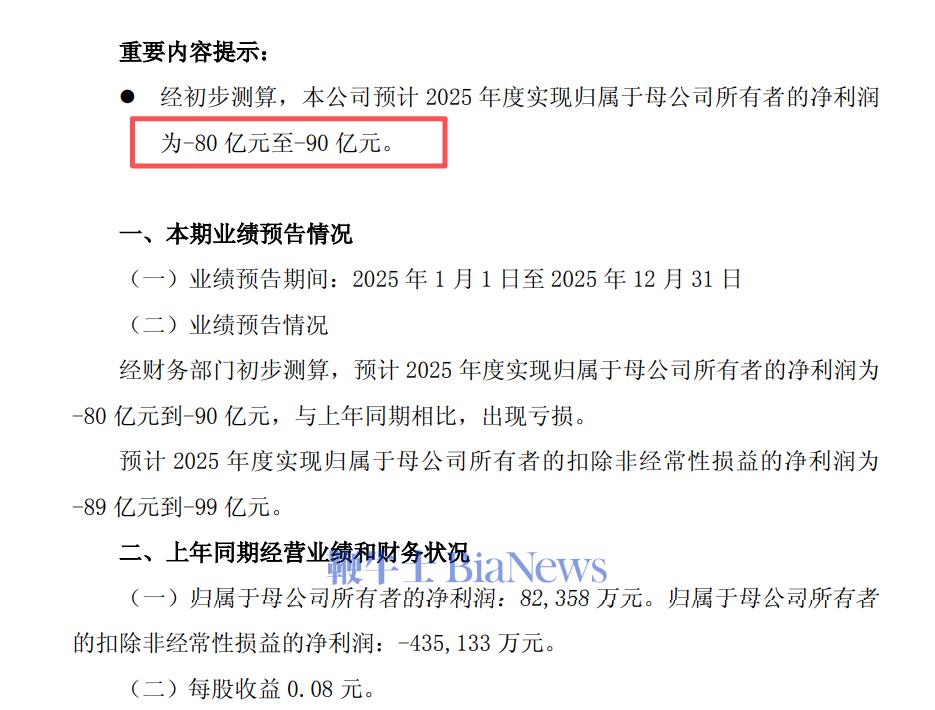
Core Viewpoint - GAC Group is facing significant financial challenges, with a projected net loss of up to 90 billion yuan for 2025, marking the largest decline in a decade, primarily driven by poor sales performance from GAC Honda [2][3][4]. Group Performance - GAC Group's total vehicle sales for 2025 are expected to be around 172.15 million units, falling short of the 230 million target, representing a year-on-year decline of 14.06% [5]. - GAC Honda's cumulative sales reached 351,926 units by the end of last year, a decrease of 25.22%, making it the brand with the largest sales drop within the group [3][5]. Sales and Pricing Strategy - GAC Honda has implemented aggressive discounting strategies, with the P7 model's price reduced from 199,900 yuan to 149,900 yuan, reflecting a 25% decrease [10][11]. - Despite these efforts, GAC Honda's sales in January plummeted by 69.86%, with only 4,558 units sold, indicating a severe downturn [8]. Market and Competitive Landscape - The automotive industry is experiencing intense competition and rapid restructuring, which has adversely affected GAC Group's performance [4]. - GAC Honda's struggles are attributed to its slow adaptation to the electric vehicle market, missing out on the benefits of the current transition to new energy vehicles [10]. Future Outlook - GAC Group is considering reducing the specifications of the P7 model due to the significant gap between the suggested retail price and actual sales price, which may hinder cost recovery [10]. - The company has initiated a series of reforms, including the "Panyu Action" to enhance operational efficiency and integrate its brands more effectively [4].

广汽预亏90亿 本田成最大“拖油瓶”
Xin Lang Ke Ji· 2026-02-11 01:52
Core Viewpoint - GAC Group is facing a significant decline in performance, with a projected net loss of up to 9 billion yuan for 2025, marking the largest drop in nearly a decade. The company failed to meet its sales target of 2.3 million vehicles, achieving only approximately 1.72 million units sold, a year-on-year decrease of 14.06% [4][10]. Group 1: Financial Performance - GAC Group's 2025 earnings forecast indicates a net profit loss between 8 billion to 9 billion yuan, a stark contrast to the profit of 824 million yuan in 2024, representing the largest decline in ten years [4]. - The company's revenue growth rate has slowed significantly, dropping from 45.72% in 2023 to 17.62%, with a further decline expected in 2024 [7]. - The net profit plummeted from 8.064 billion yuan in 2022 to only 824 million yuan in 2024, a decrease of nearly tenfold [7]. Group 2: Sales Performance - GAC Honda, a major brand under GAC Group, reported a cumulative sales figure of 351,926 vehicles by the end of last year, down 25.22% year-on-year, making it the brand with the largest sales decline within the group [10]. - In January, GAC Honda's sales fell to just 4,558 units, a staggering year-on-year drop of 69.86% [13]. - The overall sales target for GAC Group in 2025 was set at 2.3 million vehicles, but the actual sales were only about 1.72 million units, reflecting a significant shortfall [10]. Group 3: Market Strategy and Adjustments - GAC Group has entered a "wartime state" to address its challenges, implementing various reforms, including the "Panyu Action" to enhance operational efficiency and product development processes [7]. - The company is adjusting its sales strategies, including significant discounts on models like the P7, which saw a price reduction of 25% from its original price [3][16]. - GAC Group is also restructuring its management of its own brands, creating new departments to oversee marketing and sales for brands like Trumpchi and Aion [8]. Group 4: Industry Challenges - The automotive industry is experiencing intense competition and rapid restructuring, which has adversely affected GAC Group's sales performance [7]. - GAC Honda's struggles are attributed to its failure to keep pace with the shift towards electric vehicles, missing out on the benefits of the new energy vehicle market [14][18]. - The brand's marketing strategies have been criticized as outdated, failing to adapt to modern retail trends, which has contributed to declining brand awareness [18].
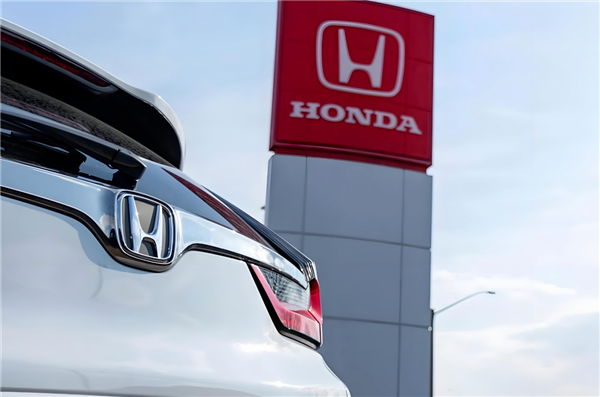
广汽预亏90亿,本田成最大“拖油瓶”,降价减配都难救?
Xin Lang Ke Ji· 2026-02-11 01:48
Core Viewpoint - GAC Group is facing a significant financial downturn, with a projected net loss of up to 90 billion yuan for 2025, marking the largest decline in nearly a decade, primarily attributed to poor performance from GAC Honda [3][5]. Financial Performance - GAC Group's expected net profit for 2025 is projected to be between -80 billion and -90 billion yuan, a stark contrast to the profit of 8.24 billion yuan in 2024, indicating a dramatic decline [3][5]. - The company's revenue growth has slowed from 45.72% in 2023 to 17.62%, with a negative growth trend continuing into 2024 [5]. - GAC Honda's cumulative sales reached 351,926 units by the end of last year, reflecting a year-on-year decline of 25.22%, making it the brand with the largest sales drop within the group [7]. Sales and Market Strategy - In January, GAC Honda's sales plummeted to 4,558 units, a staggering year-on-year decrease of 69.86% [2][10]. - To boost sales, GAC Honda has implemented significant discounts, reducing the price of the P7 model from 199,900 yuan to 149,900 yuan, a 25% decrease [2][11]. - GAC Group has initiated a "wartime state" strategy to address the challenges, focusing on three key battles to revitalize the company [2]. Product and Brand Challenges - GAC Honda's struggles are exacerbated by its inability to keep pace with the shift towards electric vehicles, with the launch of its new electric brand "Yue" facing negative public perception [10][12]. - The company is considering reducing features in its P7 model due to the significant gap between the suggested retail price and actual selling price, which may hinder cost recovery [11][12]. - GAC Honda's marketing strategies are viewed as outdated, failing to adapt to modern retail trends, which has contributed to declining brand awareness [12].
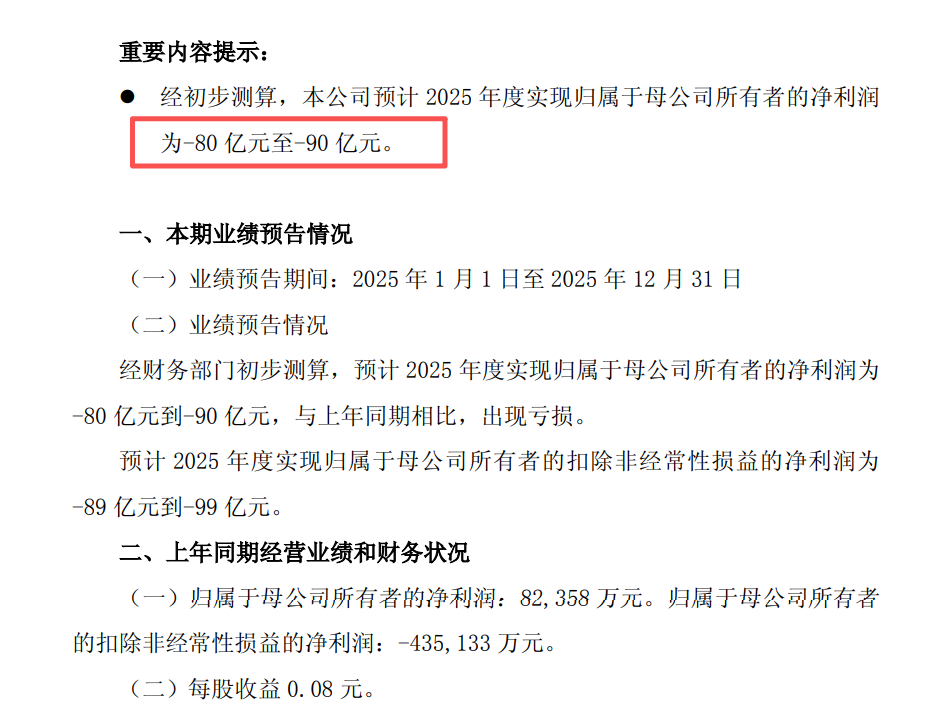
广汽预亏90亿,本田成最大“拖油瓶”! 降价减配都难救? | 次世代车研所
Xin Lang Cai Jing· 2026-02-11 01:09
Core Viewpoint - GAC Group is facing a significant decline in performance, with a projected net loss of up to 90 billion yuan for 2025, marking the largest drop in nearly a decade. The company's ambitious sales target of 2.3 million vehicles has also not been met [2][19]. Financial Performance - GAC Group's forecast for 2025 indicates a net profit attributable to shareholders of between -80 billion and -90 billion yuan, a stark contrast to the profit of 8.24 billion yuan in 2024, representing a nearly tenfold decrease [19]. - The revenue growth rate for GAC Group has slowed from 45.72% in 2023 to 17.62%, with a further decline expected in 2024 [22]. Sales Performance - The actual vehicle sales for GAC Group in 2025 are approximately 1.72 million, a 14.06% decrease compared to the previous year, falling short of the 2.3 million target [25]. - GAC Honda, a major brand under GAC Group, has seen a cumulative sales drop of 25.22% year-on-year, with total sales of 351,926 vehicles by the end of last year [9][25]. Market Strategy and Adjustments - In response to the declining performance, GAC Group has initiated the "Panyu Action" reform, which includes measures such as creating an operational headquarters and integrating operations for its self-owned brands [22][23]. - GAC Group is also restructuring its management of self-owned brands, establishing new departments to oversee marketing and sales for brands like Trumpchi and Aion [23]. Challenges in Product Offering - GAC Honda's flagship model, the P7, has seen a drastic price reduction from a suggested retail price of 199,900 yuan to an actual selling price of 149,900 yuan, reflecting a 25% decrease [12][30]. - The sales of GAC Honda's P7 model have been disappointing, with January sales plummeting by 69.86% year-on-year, indicating a deep adjustment period for the brand [11][30]. Competitive Landscape - Compared to other brands within GAC Group, GAC Honda's performance is notably weaker, with competitors like GAC Aion and GAC Toyota showing positive growth in sales [11][27].
招商公告|2026中国商用车论坛室内/室外展位招商,欢迎广大企业入驻
中汽协会数据· 2026-02-10 05:58
Group 1 - The 2026 China Commercial Vehicle Forum will be held from March 25 to 27, 2026, at the Century Top 100 Hotel in Shiyan, focusing on the themes of "New Energy Transition and Intelligent Empowerment" [2][10] - The forum aims to gather industry consensus, address transformation challenges, and outline development blueprints, featuring a "1+1+6+N" format that includes a closed-door summit, an opening ceremony, and six thematic sub-forums [10] - The event will attract leaders from government departments, logistics, and the automotive industry, as well as experts from research institutions [10] Group 2 - Indoor and outdoor exhibition spaces are available, with standard booths provided by the organizers, including display screens and furniture [3][6][8] - Exhibitors are required to prepare their own video materials in mp4 format for display at their booths [3] - The forum is organized by the China Association of Automobile Manufacturers, emphasizing the importance of the commercial vehicle sector in the context of new energy and digital transformation [10][11]