
智能化升级

Search documents
会员制商店激战“线上到家”,会员店仍在“圈地”
Bei Jing Ri Bao Ke Hu Duan· 2025-11-24 04:30
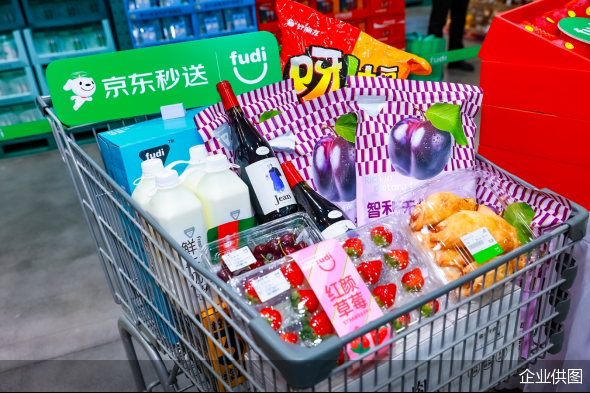
转自:北京日报客户端 会员制超市在激烈比拼供应链能力的同时,快速履约也成为拓展市场的关键。北京本土会员超市品牌 fudi近日宣布与京东秒送达成战略合作,为线上业务寻求增量。沃尔玛近日也发布了2025财年三季度财 报,中国市场保持增长,线上业务持续引领整体业绩上扬。从商品力的持续打造到配送到家的服务,会 员制超市正在进入新一轮的竞争周期。 源:fudi会员商店 fudi发力线上业务 定位于高客单价、大体量的会员制超市,在线上领域也展开较量。近日,fudi与京东秒送达成战略合 作,双方打通线上配送服务、会员体系、供应链与未来生态共建通道。据悉,这是fudi首次进入即时零 售领域。fudi方面表示,本次合作远非简单的配送服务叠加,而是对本土会员店发展路径的一次系统性 重构。面对外资品牌已形成的全国规模,fudi携手京东秒送,旨在打造具有代表性的会员制超市"中国 样本",并通过此次合作,实现"增长模型"的补齐。 fudi方面还表示,该品牌已启动全国布局。据悉,fudi的全国布局已率先在华东、西南启动,并已在上 海、成都等核心城市筹备落子。本次与京东秒送联手,fudi将在目标区域高效实现"未开店、先聚客", 提升品牌知 ...



车展观察|从放权到调价,合资品牌在中国“量身”造车
Bei Ke Cai Jing· 2025-11-24 04:29
Core Insights - The Guangzhou Auto Show showcases a significant shift in the automotive industry, with 629 out of 1,085 vehicles being new energy models, indicating a strong focus on electric and hybrid vehicles [1] - Joint ventures and luxury brands are adapting to the Chinese market by localizing their research and development efforts, as evidenced by their increased market share and penetration rates in the new energy vehicle sector [2][3] Group 1: Market Trends - Domestic brands hold a 65% retail market share and a 46.7% penetration rate in new energy vehicles, prompting foreign brands to localize their strategies [2][3] - The shift from a global product strategy to a localized approach is evident, as companies recognize the need to actively engage with the Chinese market [3][16] Group 2: Strategic Changes - Companies like Dongfeng Nissan are investing over 10 billion yuan in R&D and expanding their local teams to enhance decision-making capabilities [3][5] - Toyota has implemented a "Chief Engineer in China" system, allowing local teams to make decisions without extensive approval from Japan, reflecting a commitment to local market needs [5] Group 3: Product Development - New models such as Dongfeng Nissan's N6 and Toyota's RAV4 are results of localized development, showcasing the importance of understanding local consumer preferences [3][5] - The introduction of new energy vehicles and hybrid models at the auto show highlights the industry's response to changing consumer demands [1][6] Group 4: Technological Advancements - The integration of smart technology in vehicles is becoming a key focus, with companies like SAIC Volkswagen and Dongfeng Nissan showcasing advanced features tailored to Chinese consumers [8][11] - The use of local dialect recognition and adaptive driving systems indicates a significant step towards enhancing user experience in the Chinese market [8][11] Group 5: Pricing Strategies - Many brands are adopting strategies that involve increasing product features while lowering prices to better compete with domestic brands [12][14] - The introduction of competitively priced models with enhanced features, such as the new electric CLA from Beijing Benz, signifies a shift towards more consumer-friendly pricing [14][15] Group 6: Competitive Landscape - The transformation in the automotive sector is driven by the rise of domestic brands, which has created pressure on foreign companies to innovate and adapt [16]


会员制商店激战“线上到家”
Bei Jing Shang Bao· 2025-11-23 11:14
Group 1 - The core viewpoint of the article highlights the competitive landscape of membership-based supermarkets in China, emphasizing the importance of supply chain capabilities and rapid fulfillment as key factors for market expansion [1][3]. - Fudi, a local membership supermarket brand, has announced a strategic partnership with JD Instant Delivery to enhance its online business and enter the instant retail sector, aiming to create a representative "Chinese model" for membership supermarkets [3][4]. - Walmart's recent financial report indicates strong growth in the Chinese market, with net sales reaching $6.1 billion in Q3, a year-on-year increase of 21.8%, driven by the performance of Sam's Club and a more than 30% growth in e-commerce [4]. Group 2 - The competition among membership supermarkets is intensifying, with Sam's Club opening its fifth store in Beijing and maintaining a steady expansion of 6-7 new stores annually, now operating over 60 stores across more than 30 cities in China [8]. - Competitors like Metro and Costco are also active in the market, with Metro undergoing significant store upgrades and Costco planning to open nine new stores, although its expansion in China remains slow [9]. - The competition has shifted from merely attracting foot traffic to a comprehensive evaluation of product quality and customer experience, with a focus on integrating online and offline services to enhance shopping convenience [13].
趋势研判!2025年中国弹簧床垫行业发展历程、产量、市场规模、重点品牌及未来趋势:居民对舒适睡眠需求增加,带动弹簧床垫规模达646.4亿元[图]
Chan Ye Xin Xi Wang· 2025-11-22 02:51
Core Insights - The spring mattress market in China holds a dominant position with nearly 80% market share, driven by its excellent support, breathability, and durability [1][9] - The market size of the spring mattress industry in China is projected to grow from 43.2 billion yuan in 2015 to 64.64 billion yuan in 2024, with a compound annual growth rate (CAGR) of 4.58% [1][9] - The increasing urbanization and rising income levels in China are expected to expand the consumer base and drive continuous product upgrades in the spring mattress market [1][9] Industry Overview - Spring mattresses, also known as "Simmons," are primarily categorized into various structures such as interconnected, one-wire steel, high-elasticity, independent spring bags, and independent cylinder springs [2][3] - The production process involves assembling springs, fabric covering, and edge sewing, with quality inspections to ensure material cleanliness and structural stability [2] Industry Development History - The invention of the spring mattress dates back to the 1870s in the United States, and it was introduced to China in the early 20th century, revolutionizing the mattress market [5] Industry Supply Chain - The upstream of the spring mattress industry includes raw materials like high manganese steel, carbon steel wire, foam, memory foam, latex, and fabrics [6] - The midstream involves the manufacturing of spring mattresses, while the downstream consists of sales channels including e-commerce platforms and retail stores [6] Current Market Status - The production capacity of spring mattress manufacturers in China has been steadily increasing, with production volume projected to rise from 72.08 million units in 2020 to 86.01 million units in 2024, reflecting a CAGR of 4.52% [8][9] Import and Export Trends - In 2021, the import volume of spring mattresses reached 143,600 units, a year-on-year increase of 41.14%, while the import value was 360 million yuan, up 51.92% [9] - The export volume of spring mattresses has shown a consistent upward trend, with 13.72 million units exported in the first three quarters of 2025, a year-on-year increase of 9.91% [10][9] Competitive Landscape - The spring mattress industry in China features a diverse competitive landscape, with established brands leveraging strong distribution networks and emerging brands focusing on product innovation and targeted marketing [10] - Key players in the industry include Xilinmen, Mousse, Mengbaihe, and others, with competition shifting towards material research, functional design, and sleep experience [10] Future Trends - The industry is expected to evolve towards smart health management platforms, integrating non-invasive sensors to monitor physiological data and enhance sleep quality [14] - Material innovation will focus on combining traditional materials to resolve performance conflicts, while sustainable practices will drive a green transformation across the entire supply chain [15][16]


高工锂电年会直击⑦:第三轮锂电扩产带动新一轮降本增效
高工锂电· 2025-11-21 11:29
Core Insights - The article discusses the advancements and trends in the lithium battery industry, highlighting the significant reduction in unit costs due to technological innovations and increased production efficiency [3][4][5]. Group 1: Industry Growth and Production Capacity - By 2025, the shipment of power batteries is expected to exceed 1 TWh for the first time, with a projected growth of nearly three times over the next decade [3]. - The lithium battery industry is anticipated to enter a "third round" of capacity expansion, with over 700 GWh of new effective capacity expected to be added in 2026 [3]. - Domestic equipment efficiency is improving, allowing for stable delivery of lithium batteries, with leading battery companies currently operating at full capacity and some orders extending into the next year [4]. Group 2: Cost Reduction and Efficiency - The enhancement of production efficiency and cycle times has led to significant cost reductions by minimizing material and component waste while spreading fixed costs [5]. - The industry faces ongoing challenges to improve efficiency and reduce costs as diverse battery technologies continue to be introduced [6]. Group 3: Technological Innovations - EK's marketing director presented solutions focused on high efficiency, zero carbon, and intelligent control systems, emphasizing the importance of integrated systems for energy optimization [11][12]. - Magnetic levitation conveyor technology was introduced, offering advantages such as high speed (up to 5 m/s), low maintenance costs, and adaptability to complex production scenarios [17][18]. - Laser application technology has evolved to meet the demands of lithium battery production, achieving high speeds and consistency in various processes [21][22]. Group 4: Environmental and Energy Efficiency Solutions - The introduction of energy-efficient dehumidification systems for solid-state batteries aims to significantly reduce energy consumption, with innovations achieving a 50% reduction in energy use compared to traditional systems [25][26]. - The use of graphene-based infrared heating modules can lead to over 40% energy savings and a 30% increase in drying speed during the coating process [30][31]. Group 5: Automation and Smart Manufacturing - The integration of machine vision technology in lithium battery production aims to enhance quality, efficiency, and cost-effectiveness, with significant improvements in defect detection and operational efficiency [34][36].

“境”品牌入场,华为乾崑手握两张“王牌”
汽车商业评论· 2025-11-20 23:07
Core Viewpoint - Huawei's QianKun is transitioning from a technology supplier to a deep empowerment partner in the automotive industry, marking a significant shift in its role and strategy [7][20][26] Group 1: Brand Development and Partnerships - The launch of the "Jing" series brands, including "QiJing" and "YiJing," signifies a strategic partnership between Huawei QianKun and traditional automakers like GAC and Dongfeng, aiming to reshape the competitive landscape of China's smart automotive industry [7][13][25] - "QiJing" symbolizes the beginning of a new chapter in smart mobility, leveraging Huawei's advanced technology and GAC's manufacturing expertise for a comprehensive collaboration [9][11] - The "YiJing" brand, similarly, aims to fulfill Dongfeng's aspirations in smart transformation, indicating a shared vision for high-end smart automotive development [13][20] Group 2: Market Trends and Consumer Expectations - The Chinese automotive market is witnessing a shift where smart features are becoming core elements of product competitiveness, with over 60% of new models expected to feature L2-level or higher driving assistance by mid-2025 [15][17] - The rapid iteration of smart technologies is raising consumer expectations, compelling automakers to accelerate their smart transformation efforts [15][20] Group 3: Strategic Advantages of the "Jing" Series - The "Jing" series offers automakers a pathway to reduce R&D risks and costs by utilizing Huawei's proven technology solutions, allowing them to focus on their strengths in vehicle platforms and brand management [20][21] - The collaboration is designed to speed up product launch timelines, enabling automakers to respond quickly to market demands and gain a competitive edge in the smart automotive sector [20][21] - Huawei's strong brand recognition in technology enhances consumer confidence in new brands like "QiJing," crucial for initial market penetration and user acquisition [20][21] Group 4: Industry Impact and Future Outlook - The "Jing" and "Jie" series together create a complementary product matrix, allowing Huawei to cater to diverse market segments and consumer needs, ultimately driving the smart automotive ecosystem forward [25][26] - The collaboration is expected to shift the competitive focus from mere technical specifications to differentiated innovation based on shared technology platforms, fostering a deeper level of competition in the industry [25][26] - Huawei QianKun aims to establish itself as a core technology provider, potentially leading to a platform effect similar to "Android," influencing industry standards and technological evolution [26][28]

调研速递|宝丽迪接待上柿行等5家机构调研 前三季度业绩增长受益行业红利与智能化升级 土耳其工厂贡献稳定收益
Xin Lang Zheng Quan· 2025-11-20 08:54
Core Insights - The company, Suzhou Baolidi Materials Technology Co., Ltd., hosted a specific investor research activity on November 20, 2025, attended by five institutions, discussing performance growth, debt levels, new product development, and overseas operations [1][2]. Group 1: Performance Growth - The company's performance growth in the first three quarters is attributed to both external industry benefits and internal optimization efforts. The Chinese color masterbatch market is experiencing steady growth due to ongoing industry expansion, national policy support, and increased environmental awareness among the public [3]. - Internally, the company has enhanced automation and AI applications to control costs and optimize product structure, while also increasing R&D investment to maintain competitive advantages [3]. Group 2: Debt Levels - The company reported a low debt-to-asset ratio, indicating a stable debt level with manageable liquidity risks. The substantial cash reserves provide a solid financial foundation for ongoing operations and future development [4]. Group 3: New Product Development - The company focuses its new product development on three main directions: functionalization, greening, and diversification. It has successfully expanded product applications into new areas such as film and plastics while maintaining its traditional strengths [5]. Group 4: Overseas Operations - The company's Turkish factory, established in partnership with Ibrahim Halil Kara, is producing color masterbatch products primarily for the local carpet and fiber industries. Sales and profits from the Turkish operations are stable and slightly increasing, with efforts underway to build a local team to explore regional market potential [6].
近百个募投项目变更的背后:汽车供应链加速智能化与出海布局
Shang Hai Zheng Quan Bao· 2025-11-14 18:39
Core Insights - The automotive parts industry is undergoing significant changes, with 71 companies announcing fundraising project adjustments, totaling 99 changes, which is more than double last year's total [2] - The adjustments are primarily focused on two main trends: the shift towards intelligent upgrades and global expansion, with funds being redirected from domestic production to overseas expansion [2] Group 1: Intelligent Upgrades - Many parts manufacturers are reallocating funds from traditional automotive production lines to intelligent component production lines, such as control systems and smart sensors, to meet the demand for new energy vehicles and intelligent driving [3] - For instance, Top Group announced a shift of 400 million yuan in unspent funds towards its "Intelligent Manufacturing Industrial Park" project to produce air suspension systems and smart door drive systems [4] Group 2: Global Expansion - The second major trend involves companies redirecting funds to establish overseas production facilities, responding to the global expansion needs of major automotive manufacturers [5] - Examples include Tianyouwei allocating 103 million yuan for a new automotive electronics factory in South Korea and Top Group investing 380 million yuan in a thermal management system project in Thailand [5] Group 3: Market Dynamics - The shift in funding reflects a restructuring of the supply chain driven by cost-cutting pressures from downstream manufacturers, leading to increased opportunities for local suppliers [4] - Local suppliers are gaining market share in areas like air suspension systems, with domestic companies accounting for 89% of the market share based on installation volume from January to August this year [4] Group 4: Caution in Investment - Despite the trend of reallocating funds, some companies are exhibiting caution in their decision-making, focusing on risk dilution and controlling the pace of project development [6] - Top Group has indicated a careful approach to its expansion plans, emphasizing the need for a balanced investment strategy to mitigate risks associated with rapid growth [6][7]

《“十五五”规划建议》解读:纺织服装行业的升级路径:科技创新与绿色转型
Lian He Zi Xin· 2025-11-14 11:28
Investment Rating - The report indicates a positive outlook for the textile and apparel industry, emphasizing the need for technological innovation and green transformation as key drivers for future growth [1][3]. Core Insights - The textile and apparel industry is undergoing significant changes due to weakened cost advantages and increased environmental requirements, necessitating a shift towards technological innovation and green transformation [1][3]. - The "14th Five-Year Plan" highlights the importance of smart and green development paths, positioning the industry for modernization and enhanced competitiveness on a global scale [3][10]. - The report outlines two main development paths: smart upgrade through technological innovation and green transformation for sustainable development [4][7]. Summary by Sections Smart Upgrade - The report emphasizes the need for traditional technology upgrades and the promotion of intelligent manufacturing to enhance production efficiency and reduce operational costs [4][5]. - By 2027, significant improvements in production efficiency and cost reductions are expected in various sectors, including a 5% to 10% decrease in comprehensive costs in the dyeing industry [5]. - Leading companies are already investing in product innovation and technology development, leveraging digital and intelligent technologies to enhance competitiveness [4][6]. Green Transformation - The textile industry is characterized by high energy and water consumption, with the dyeing process accounting for over 10% of industrial water usage [7][8]. - From 2005 to 2024, the industry has seen a cumulative energy consumption reduction of over 65% per unit of output, with a 12% annual growth in the recycling of used textiles [8]. - The report identifies challenges in achieving comprehensive green transformation, including insufficient investment in environmental equipment by small and medium enterprises and the high costs of producing green fibers [8][9]. Policy Outlook - The report outlines the evolution of policies from focusing on technology and equipment innovation to emphasizing intelligent manufacturing and high-quality development [10][12]. - The "14th Five-Year Plan" establishes a dual focus on smart and green development, setting the macroeconomic tone for the next five years [10][12].
泉果基金调研美湖股份,紧抓机器人产业机遇,贯彻落实智能化升级战略
Xin Lang Cai Jing· 2025-11-13 05:12
Core Insights - The company, Meihu Co., is one of the earliest manufacturers of engine pump products in China, with a diverse product range that has expanded into various sectors including electric pumps and components for new energy vehicles [3][4] - The company reported a revenue of 1.624 billion yuan for the first three quarters of 2025, reflecting a year-on-year growth of 9.64%, while the net profit attributable to shareholders decreased by 10.66% to 129 million yuan [4] - The company has established a robotics division in September 2025 to capitalize on opportunities in the robotics industry, with a production capacity of 50,000 sets per year for harmonic reducers [6][7] Company Overview - Meihu Co. has a strong market presence with a leading market share, supported by a stable customer base that includes top domestic and international enterprises [3] - The company has maintained a net asset return rate of over 10% annually for the past decade, indicating a solid business foundation [3] Recent Performance - The company's electronic pump business has seen rapid growth, contributing to the overall revenue increase, despite a decline in net profit due to significant investments in projects and increased R&D expenses [4] - New product projects include hybrid oil pumps and electronic oil pumps, with partnerships established with major automotive manufacturers [5] Strategic Developments - The company has launched a new materials division focused on high-performance PEEK materials, targeting applications in various high-value sectors such as aerospace and medical devices [8] - Recent management changes were made to align with the company's governance structure, including the appointment of a new general manager and the addition of a board member with extensive company experience [9]
