
电池安全

Search documents
新国标催生行业变革 宇通 “三位一体” 构筑电池安全护城河
第一商用车网· 2025-05-31 13:40
关于新能源车,用户最关注的是什么?有人说价格,也有人说续航,但在安全面前,这些都是"1"后面的"0"。只有把安全做到极致,才 能真正赢得市场,收获用户。 何谓安全?答案或许并不唯一,但今年4月新颁布的电池新国标上,将"不起火、不爆炸"从企业技术储备上升为强制性要求的动力电池 安全标准,引发的既是社会关注,也是对相关产业的一次"变革"。 当动力电池安全进入"零容忍"时代,车企们准备好了吗?作为商用车领域龙头企业,宇通集团在做好示范引领的同时,筑起属于自己安 全的"护城河",并在卡车领域做到提前布局,标准前置,不仅把安全做到极致,还全方位为用户考虑,让车主用的安全,用的节省与放 心。 新国标中提出了"不起火、不爆炸"的基本要求,该要求看似简单,却是摆在所有新能源车企面前的一条"金科玉律",在保障用户安全的 同时,也在推动行业转型升级。在卡车领域研发方面,宇通坚持"三线结合",从电池自身的安全着手,到电池给予整车的安全保护,再 到电池的安全监控,"三位一体"给予车辆和乘客最可靠的安全。 宇通集团车载能源高级经理高万兵介绍,通过"整车、系统、箱体、部件、监控"等五重防护,实现全生命周期的安全。首先,是电池自 身的安全 ...


全系产品率先满足电池新国标,宇通如何做到的?
Zhong Guo Qi Che Bao Wang· 2025-05-28 03:29
前不久,工业和信息化部发布的强制性国家标准GB38031-2025《电动汽车用动力蓄电池安全要 求》(以下简称"新国标")在汽车业界引发热议。针对电池包或系统在单个电池因内部短路引发的热失 控后的"不起火、不爆炸"要求,从汽车企业技术储备指标上升为强制性国家标准,这标志着我国车用动 力电池安全标准达到国际领先水平。将于2026年7月1日开始实施的这一新国标,彰显了国家对电池安全 的高度重视,进一步推动了汽车行业对动力电池安全性的提升。 在谈及新国标及动力电池安全性问题时,高万兵表示,动力电池安全性对于新能源商用车而言至关重 要,无论是载客量更大的客车,还是运载量更大的载货车,由于涉及人身和财产安全,其安全性都显得 尤为重要。 从本质上讲,动力电池作为能量储存体,在现有化学体系下,其自身是不能做到绝对安全的。那么如何 在系统层面更精准地管理电池、更合理地使用电池、更有效地保护电池,将电池安全与整车安全有机结 合,对于电池在实际工况下的安全使用具有重大意义。经过长达数十年的深入研究,宇通制定了从整车 到零部件的安全标准,重新定义了新能源商用车的整车安全性。 采访中,高万兵强调称,新能源商用车的安全性不仅体现在动力 ...

上海车展|流量退场,车企开始比拼安全与体验
36氪· 2025-05-09 12:37
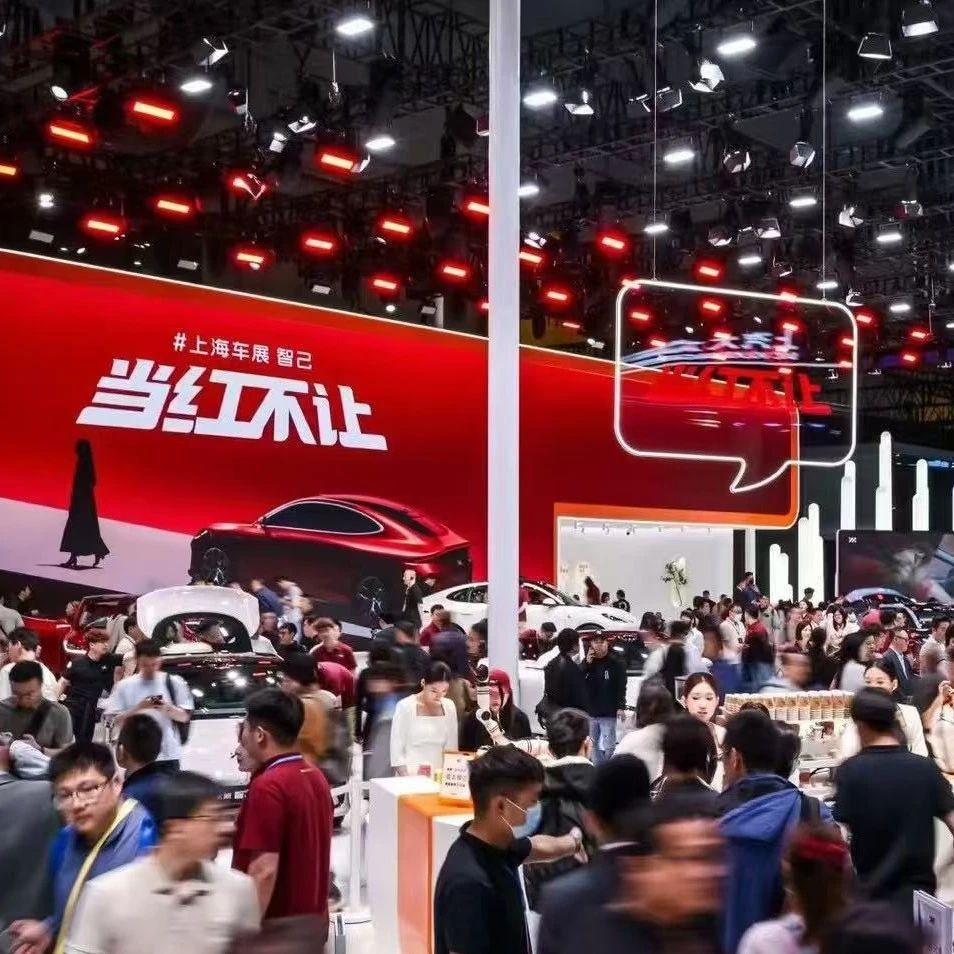
Core Viewpoint - The automotive industry is shifting from an "eyeball economy" to a focus on quality and user experience, emphasizing rational competition and technological advancements in products [1][5][23]. Industry Trends - The 2023 Shanghai Auto Show marked a transition where the focus shifted from celebrity appearances to product technology and user experience [2][5]. - The penetration rate of new energy vehicles in China is projected to exceed 40% by Q1 2025, with L2-level assisted driving features being equipped in over 60% of new vehicles [3]. Safety as a Competitive Edge - Battery safety has become a primary concern for consumers, especially with the increase in electric vehicle ownership and related accidents [8][9]. - New regulations for battery safety, effective from July 2026, are the strictest to date, prompting companies to enhance their safety measures [9][13]. - Companies like Geely and Zhiji have introduced advanced battery safety technologies, with Zhiji's products exceeding the new standards by monitoring for 24 hours without incidents [10][12]. Technological Depth and User Experience - The automotive industry is experiencing a trend of product homogenization, making it essential for companies to focus on user-specific needs and detailed functionalities rather than just hardware specifications [16][23]. - Brands like NIO and Zhiji are innovating by addressing specific user pain points, such as outdoor activities and family needs, through unique product features [17][18][20]. - Zhiji's new model, the L6, has successfully combined aesthetic appeal with practical features, addressing urban consumers' needs for comfort and usability [21][23]. Conclusion - The automotive sector is moving towards a more rational and user-centric approach, where safety, technology, and tailored user experiences will define competitive advantages in the coming decade [5][23].
车展观察|要速度也要安全,动力电池赛道正在重新定义
Bei Ke Cai Jing· 2025-04-28 14:31
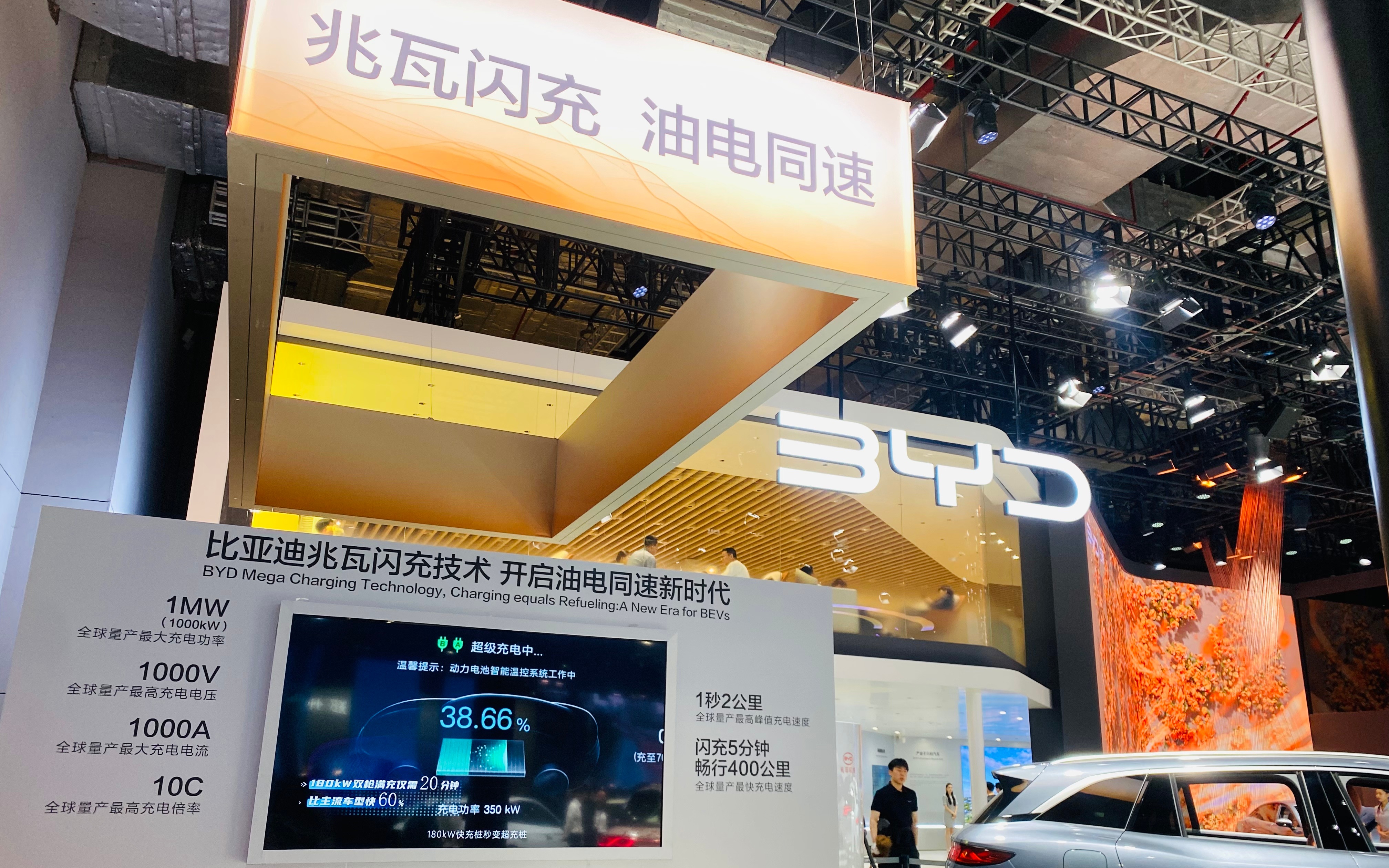
Group 1: Core Insights - The automotive industry is entering the "megawatt era" of ultra-fast charging technology, with companies like BYD, Huawei, CATL, and Star Charge launching megawatt-level products to enhance energy replenishment speed to match that of traditional fuel vehicles [1][4][9] - The introduction of the "strictest new national standard" for battery safety, which mandates that batteries must not catch fire or explode, has led many companies to claim their products exceed these safety standards [2][13][14] - The technological revolution in ultra-fast charging and safety is redefining the battery sector, positioning China's new energy industry at the forefront of the global energy revolution [3][23] Group 2: Company Developments - CATL showcased its second-generation ultra-fast charging battery at the Shanghai Auto Show, claiming it to be the world's first lithium iron phosphate battery with a peak charging rate of 12C and a range of 800 kilometers [5] - BYD introduced its megawatt flash charging product, achieving a peak charging speed of 1 second per 2 kilometers, with a statement emphasizing the goal of eliminating charging anxiety by matching fuel vehicle refueling speeds [5][12] - Huawei launched its liquid-cooled ultra-fast charging product and called for the industry to move towards comprehensive ultra-fast charging development [9] - Star Charge presented a two-megawatt liquid-cooled ultra-fast charging system, capable of a combined power pool of 10 megawatts and a dual-gun output current of 2400A [10] - A new battery safety standard requires rigorous testing, with companies like Geely committing to share safety patents and enhance battery safety across the industry [19][22]


我做了十年电池,至今也没买电车丨产品MAX
36氪· 2025-04-22 10:28
作为产业报道的头部媒体,过往我们对产品报道并不多,但产品报道才是对消费者选车、购车,以及车企造车、卖车最有帮助的文字。 于是,我们决定重塑产品观察栏目,分为MAX,PRO两个不同类型: 产品MAX邀请了车企及供应链企业的专业人士,听听他们选车和购车时关注的重点,为消费者提供有效建议; 以下文章来源于36氪汽车 ,作者韩永昌 36氪汽车 . 看懂汽车产业新百年。36氪旗下智能电动车产业报道公号。 产品PRO则邀请了连续购买多辆新能源车的资深车主,为固定品牌和细分市场提供真实意见。 文 | 韩永昌 编辑 | 张博文 来源| 36氪汽车(ID:EV36Kr) 封面来源 | IC photo 这是第一期栏目,我们邀请了一位拥有约10年动力电池研发经验的专业人士,他经历了中国新能源车崛起的整个过程,在车企、 电池企业都有工作经历,也亲手开发了多款电池包。 他分享了一些如何选择电池、电车,以及日常生活中如何养护电池的经验。但至今他依然在开油车,他的同事们也开油车居多, 让我们来看看他怎么说 36氪:你去看车的时候,你会特别关注这个电池是谁们家的吗? 工程师: 如果是三元电池,我就会特别关注。因为在我们自己开发的角度来看, ...
产品MAX|我做了十年电池,至今也没买电车
3 6 Ke· 2025-04-21 13:39
Core Insights - The article discusses the importance of product reporting in the automotive industry, particularly for consumers and car manufacturers [1] Group 1: Product Insights - The new product observation column is divided into two types: MAX and PRO, aimed at providing effective advice to consumers and real opinions from experienced electric vehicle owners [2] - An engineer with around 10 years of experience in battery development shares insights on choosing batteries and electric vehicles, emphasizing the safety of lithium iron phosphate batteries over ternary batteries [2][9] - The engineer suggests that for vehicles priced above 200,000 yuan, paying a premium for a reputable battery brand like CATL is acceptable [3] Group 2: Charging and Battery Maintenance - The engineer recommends a charging rate of 2C for personal use, arguing that faster charging (4C) is unnecessary and can reduce battery lifespan [4] - Proper battery maintenance includes avoiding high temperatures and high state of charge (SOC) storage, with optimal usage being between 10% and 90% charge [19] Group 3: Market Trends and Consumer Behavior - There is a tendency among battery industry professionals to avoid purchasing vehicles equipped with their own company's batteries due to cost-cutting concerns [5][8] - The engineer recommends purchasing vehicles from manufacturers with high sales volumes, such as those using CATL batteries or BYD, as they are likely to have better quality control [10][15] Group 4: Safety Standards and Regulations - The new national standards for batteries are the strictest yet, but they still represent minimum requirements, and compliance does not guarantee that batteries will not catch fire or explode [20][21] - The article highlights that while new standards are in place, they do not account for all real-world driving conditions, and caution is still advised when it comes to battery safety [21]
全球首款!宁德时代重大发布
Zheng Quan Shi Bao· 2025-04-21 10:42
Core Insights - CATL (Contemporary Amperex Technology Co., Limited) has launched multiple "world-first" products, including the second-generation Shenxing supercharging battery and the "Sodium New" battery, showcasing advancements in battery technology and safety features [1][2]. Group 1: Shenxing Supercharging Battery - The second-generation Shenxing supercharging battery features an 800 km range and a peak charging rate of 12C, allowing for over 520 km of range with just 5 minutes of charging [2]. - This battery can achieve a charging speed of 2.5 km per second and can charge from 5% to 80% in just 15 minutes at -10°C, doubling the current industry standard [2]. - The battery utilizes a new generation of super crystalline graphite and a dedicated "smart electrolyte" production line, enhancing lithium-ion insertion speed and overall charging efficiency [2]. Group 2: Safety Features - The "Xiaoyao Dual-Core Battery" employs a dual-core architecture, ensuring continuous and stable power output even in cases of battery damage or thermal runaway [3]. - This design is particularly relevant for the safety of smart driving technologies, addressing the critical need for reliable battery performance in intelligent vehicles [3]. Group 3: Sodium Ion Battery - The "Sodium New" battery can withstand extreme abuse tests without catching fire or exploding, maintaining 90% energy retention at -40°C [4]. - It has an energy density of 175 Wh/kg, with over 500 km of pure electric range and over 200 km of hybrid range, along with a cycle life exceeding 10,000 cycles [4]. - The first product, a 24V heavy-duty sodium battery, is set to enter mass production in June 2023, with a sodium power battery expected to launch by December 2025 [4]. Group 4: Market Potential - The global sodium battery market was valued at $320 million in 2023 and is projected to approach $1 billion by 2030, driven by the increasing demand for energy storage solutions [6]. - The shift towards a new energy system in China is expected to boost the demand for large-scale energy storage, providing a favorable environment for the growth of sodium ion batteries [6].
电动车安全要求新国标解读专家会
2025-04-17 15:41
Summary of Electric Vehicle Battery Safety Standards Conference Industry Overview - The conference focused on the electric vehicle (EV) battery industry, specifically discussing new safety standards for power batteries set to take effect in July 2026. [1][21] Key Points and Arguments - **Current Battery Safety Performance**: Only a few leading companies (C Company, B Company, and Yiwei Lithium Energy) have products that can achieve 30-60 minutes without burning or exploding, while less than 10% can meet the two-hour standard. [1][4] - **New Safety Standards**: The new national standard requires that after a thermal runaway event, the battery pack must not catch fire or explode for at least two hours, with all temperature points remaining below 60 degrees Celsius. This is a stricter requirement compared to previous standards. [2][21] - **Material and Technology Improvements**: Enhancements in battery safety hinge on material systems and technological applications, including optimizing electrode material density, improving separator heat resistance, and enhancing thermal runaway protection materials. [1][5][6] - **Solid-State Batteries**: Solid-state batteries show significant safety advantages, capable of achieving over 10 hours without fire or explosion, with temperature control below 60 degrees. This technology is seen as a future direction for the industry. [3][19] - **Industry Restructuring**: The new standards aim to regulate liquid battery safety, promote industry consolidation, and accelerate the commercialization of solid-state batteries. [3][21] Additional Important Insights - **Battery Management System (BMS)**: The BMS must monitor battery parameters in real-time to prevent misjudgments or omissions, emphasizing the importance of advanced chip selection. [14][15] - **Challenges in Material Development**: The transition from artificial graphite to silicon-carbon/silicon-oxide for anode materials faces challenges such as volume expansion, which can lead to failures. [9][10] - **Electrolyte Improvements**: There is significant room for improvement in electrolytes, particularly through the addition of flame retardants to enhance safety. [12] - **Impact of New Standards on Suppliers**: The new standards may lead to some suppliers being unable to continue production due to insufficient R&D capabilities or manufacturing processes. [32] - **Consequences of Non-Compliance**: Batteries that do not meet the new standards will not be allowed to be installed in vehicles, leading to potential fines and brand damage for manufacturers. [19][33] Conclusion The conference highlighted the urgent need for the EV battery industry to adapt to new safety standards, emphasizing the importance of material innovation and technology upgrades to ensure compliance and enhance overall safety. The shift towards solid-state batteries is seen as a critical step in achieving these goals.
史上最严电动车电池安全令发布
Guang Zhou Ri Bao· 2025-04-15 20:54
Core Viewpoint - The Ministry of Industry and Information Technology has officially released the "Safety Requirements for Power Batteries for Electric Vehicles," which will be implemented on July 1, 2026, marking it as the "strictest battery safety regulation in history" due to its mandatory requirement for batteries to not catch fire or explode [1] Industry Impact - The new standard is expected to increase R&D costs for automotive manufacturers and may lead to a reshuffling of the industry, promoting concentration and standardization of technology [1] - A survey indicated that 78% of the 36 automotive and battery companies interviewed have the technical capability to ensure batteries do not catch fire or explode, while an additional 14% expect to achieve this capability by 2026-2027 [1] Technological Developments - Several battery manufacturers are enhancing battery safety through innovative designs, such as GAC Aion's modular battery technology, BYD's blade battery, and CATL's Kirin battery, which utilize various safety features to prevent thermal runaway [2] Safety Concerns - There is a discrepancy between laboratory testing and real-world incidents, as multiple battery cells may fail simultaneously in actual accidents, raising questions about the objectivity and authority of safety test results [3] - Issues have been reported regarding data manipulation by manufacturers during third-party testing, which can affect the accuracy of accident responsibility assessments [3] Market Dynamics - The new standard will apply to newly approved vehicle models starting July 1, 2026, and to existing models by July 1, 2027, creating a one-year transition period for existing models to comply or exit the market, potentially leading to a clearance sale of older models in late 2026 [4] - The increase in battery safety requirements will likely lead to higher production costs, which will be passed on to consumers, further reshaping the electric vehicle market [4]
最严动力电池标准出炉!9家电池企业参与
起点锂电· 2025-04-14 09:47
此次起草单位囊括多家主要电池企业、整车厂以及检测 / 测试机构。其中电池企业包括 宁德时代、国轩高科、比亚迪、中创新航、亿纬锂 能、瑞浦兰钧、欣旺达、蜂巢能源、天津力神 ,由各自企业首席技术官代表出席, 比如宁德时代 首席科学家 吴凯、比亚迪 锂电池有限公司 首席技术官( CTO )孙华军 等 。 在新能源汽车 安全 推向舆论风口浪尖 的当下,被业界称为 "史上最严电池安全令"的新规来了! 4 月 3 日,工信部正式发布 GB38031-2025 《电动汽车用动力蓄电池安全要求》,这一被称为"史上最严电池安全令"的新规将于 2026 年 7 月 1 日起实施。 新国标首次将 "不起火、不爆炸"从企业技术储备上升为强制性要求,彻底终结了行业对热失控风险的侥幸心理,标志着动力电池安全进入"零 容忍"时代。 据工信部发布的编制说明显示,截至今年 2 月,对 36 家整车与电池企业的调研显示, 78% 的企业已掌握动力电池不起火、不爆炸的技 术,而剩余 14% 的企业预计在 2026-2027 年间也将达到此技术水平。基于此,新标准计划于 2026 年正式实施。 01 三大核心升级 1、热扩散绝对安全 触发手段升级: ...

