股市泡沫

Search documents
美银:美联储鸽派信号一出,美股恐出现“卖事实”行情
Jin Shi Shu Ju· 2025-08-15 13:42
Group 1: Market Outlook - U.S. stock market may decline if the Federal Reserve signals a dovish stance at the Jackson Hole Economic Symposium [1] - Investors are optimistic about potential Fed rate cuts to support a weak labor market and alleviate U.S. debt burdens, leading to inflows into various risk assets [1] - The S&P 500 index has reached a historical peak, driven by tech giants, despite mixed inflation data affecting rate cut expectations [1] Group 2: Fund Flows and Investment Trends - Record inflows into cash, stock, and bond funds were reported, with cash funds attracting $33 billion, stock funds $26.4 billion, and bond funds $25.9 billion [2] - Cryptocurrency and gold also saw significant inflows, with $4.5 billion and $2.6 billion respectively [2] - Global stock funds attracted over $26 billion in a week, with a total inflow of $576 billion this year, potentially marking the third-highest inflow year [2] Group 3: Economic Indicators and Predictions - The current rate cut cycle is the fastest since 2020, with 88 cuts made by global central banks this year [2] - Discussions around the Fed's independence and inflation targets suggest a weakening dollar, which may benefit gold, cryptocurrencies, and emerging markets [2] Group 4: Energy Market Insights - Oil and gas prices have dropped by 41% since March, reflecting geopolitical tensions [3] - Trump's geopolitical stance aims to lower U.S. energy costs, which may contribute to a bearish energy market [4]
政坛动荡下的日股:泡沫还是实力?
2 1 Shi Ji Jing Ji Bao Dao· 2025-08-14 22:29
Group 1 - The current boom in the Japanese stock market raises questions about whether it is a market bubble or a reflection of economic strength [1] - Following a significant drop in the Nikkei average due to US tariffs, the market rebounded as the impact was perceived to be weaker than expected, supported by recent corporate earnings reports [1] - More than half of Japanese companies expect to see gains this fiscal year, despite a year-on-year decline in profit growth [1] Group 2 - Foreign investment in the Japanese stock market has surged, with many international asset management firms reducing investments in the US and increasing allocations to Japan and Europe [2] - From March 24 to April 11, foreign investors net sold over 2.2 trillion yen in Japanese securities, while from April 14 to July 25, net purchases exceeded 7.4 trillion yen, indicating the significant influence of foreign capital [2] - Japanese companies are attractive to foreign investors due to their strong financial positions and low price-to-book ratios (PBR), with many companies actively repurchasing their own shares [2] Group 3 - The economic and political landscape in Japan has also contributed to the rising stock prices, with the Bank of Japan's decision to refrain from raising interest rates leading to increased capital inflow into the stock market [3] - The expectation of US interest rate cuts has further buoyed the Japanese market, as a potential easing in US monetary policy limits the likelihood of Japanese rate hikes [3] - Political instability in Japan may lead to increased fiscal spending, which could further weaken the yen and attract more capital into the stock market [3] Group 4 - Despite the factors supporting stock price increases, there are concerns about a potential turning point, as Japan's GDP growth remains stagnant while stock prices rise [4] - The disconnect between stock prices and GDP is attributed to the fact that stock prices reflect the profitability of listed companies, which may not correlate with the broader economy [4] - If corporate reforms focus solely on shareholder returns without investing in human resources and equipment, the long-term outlook for Japanese companies may be bleak, potentially impacting stock prices [4]
美股,“大狼”将至!
Jin Rong Jie· 2025-08-01 10:54
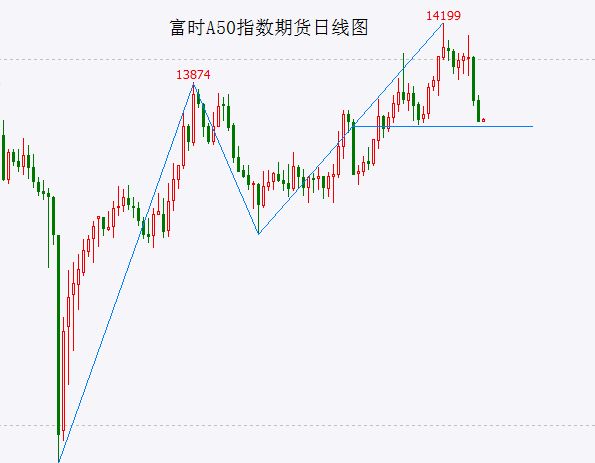
Group 1 - The performance of heavyweight stocks is weak, with the FTSE A50 index futures experiencing a continuous decline reaching support levels, indicating a potential confirmation of the peak if a significant downward movement occurs [1] - The CSI 1000 index and the ChiNext index showed a strong upward movement with gaps left, suggesting the possibility of forming a double top and reaching new highs in the future, although the current phase is near the top of the recent uptrend [1][3] Group 2 - The US stock market has not been discussed recently due to a lack of clear signals, but recent trading has shown a downward trend, indicating potential top signals emerging again [5] - The Nasdaq futures have formed a standard trumpet shape, suggesting that the market may be nearing a significant peak, with the possibility of a major market correction on the horizon [5] - There is a growing concern about the sustainability of the US stock market, with indications that the prolonged bull market may be coming to an end, as the economy shows signs of recession and the stock market appears to be in a bubble [5]

美股要反弹了吗
Bei Jing Shang Bao· 2025-07-29 14:47
Market Overview - The US stock market has been experiencing a significant rally, with the S&P 500 index reaching new highs for six consecutive trading days, closing at 6389.77 points, marking a 0.02% increase [3] - Investor sentiment remains optimistic despite concerns over US tariff policies and government debt, with the S&P 500's valuation exceeding 3.3 times its operating income, a historical high [3][4] - Morgan Stanley forecasts that the S&P 500 index could rise over 12% in the next 12 months, potentially reaching 7200 points, driven by improved corporate earnings prospects [3] Technology Sector Performance - Major technology stocks have significantly contributed to the recent market gains, with Nvidia and Meta's stock prices rising by 100% and 50% respectively since April [4] - Smaller companies like Palantir have seen even greater increases, with a 140% rise since April, while Coinbase's stock surged nearly 180% [4] Trade Agreements and Market Sentiment - The resolution of trade negotiations with Japan and the EU has improved market sentiment, leading to a decrease in the VIX index by 66.83% since April 8, indicating reduced market uncertainty [5][6] - Analysts suggest that the market perceives tariffs as manageable, with expectations that a comprehensive tariff of 10% to 15% could be absorbed by producers and consumers [6] Earnings Season Impact - Upcoming earnings reports from major companies, including Meta, Microsoft, Amazon, and Apple, are anticipated to influence overall investor sentiment [7] - Over 85% of the 62 S&P 500 companies that have reported earnings so far exceeded expectations, with the "Big Seven" expected to show even stronger performance [7] Federal Reserve and Economic Indicators - The Federal Reserve's upcoming policy meeting is expected to maintain stable interest rates, with a 60.4% chance of a rate cut in September [8] - Economic data, including the June personal consumption expenditures report and non-farm payroll data, will be closely monitored for insights into consumer prices and labor market conditions [8] Market Risks and Speculation - Concerns about market bubble formation are rising, with analysts noting that the current environment resembles the late 1990s internet boom, characterized by speculative behavior [9][10] - The surge in "meme stocks" and significant trading volumes in low-value stocks without substantial news support raises alarms about potential market instability [9][10]





美股亮起三大红灯
美股研究社· 2025-07-29 11:06
Group 1 - The core viewpoint of the article highlights the increasing bubble risk in the U.S. stock market due to rising speculative activities and leverage levels, as warned by major investment banks [1][4][12] Group 2 - Goldman Sachs strategists noted that speculative trading activities have reached historical highs, second only to the 2000 internet bubble and the 2021 retail trading frenzy [2][6] - Deutsche Bank pointed out that margin debt has surpassed $1 trillion for the first time, indicating a "heated" level of borrowing to invest in stocks [3][10] - Bank of America reiterated the bubble risk, attributing it to loose monetary policies and relaxed financial regulations, suggesting that increased retail participation leads to greater liquidity and volatility [4][14][16] Group 3 - The speculative trading indicator from Goldman Sachs shows that the proportion of trading in unprofitable stocks and overvalued stocks has increased, with significant activity in major tech companies and firms involved in digital assets [8][7] - Deutsche Bank reported an 18.5% increase in margin debt over two months, marking the fastest pace of leverage since late 1999 or mid-2007 [10][11] - Bank of America forecasts that the global policy interest rate will decrease further, potentially leading to larger market bubbles [14][18]


KVB:美股盈利引擎全开,但警报已拉响!
Sou Hu Cai Jing· 2025-07-28 02:39
Core Insights - The earnings engine of the S&P 500 index is showing sustained strong momentum, reflecting the robust profitability of U.S. companies during the current earnings season, which may alleviate concerns about the overheated nature of the stock market [1] Earnings Performance - Approximately one-third of S&P 500 companies have reported earnings, with about 83% exceeding analyst expectations, potentially marking the highest level since Q2 2021 [3] - The S&P 500 index has rebounded 28% since hitting a low on April 8, with multiple new historical highs reached in recent weeks, indicating a broad-based market rally rather than being driven by a few large-cap stocks [3] Market Sentiment - The strong earnings performance has helped dispel some investors' concerns about a market bubble, leading to a more optimistic outlook for future market trends [4] - The improvement in market sentiment is closely linked to the easing of concerns regarding tariff impacts, which had previously made investors cautious about corporate profitability [3] Sector Performance - Different sectors have shown varying earnings results, but overall, key sectors such as technology, consumer, and industrials have reported satisfactory results, contributing significantly to the index's rise [4] - Some previously bearish sectors have also seen stock price rebounds due to improved profitability, adding to the market's upward momentum [4]
美股创历史新高!分析师警告:泡沫风险显著上升,投资者风险偏好创2001年来最快增长
Jin Rong Jie· 2025-07-26 15:42
Group 1 - The US stock market has recently reached historical highs, but several analysts warn that the risk of a bubble is significantly increasing [1][3] - The current market environment shows extreme investor optimism, with risk appetite at a multi-month high, which may indicate an impending correction due to the high level of consensus among investors [1][3] Group 2 - Global central banks' shift towards loose monetary policy has created a conducive environment for stock market bubbles, with US, UK, and European central banks significantly lowering borrowing costs, reducing global policy rates from 4.8% last year to 4.4% [3] - It is expected that this rate will further decline to 3.9% within the next 12 months, providing ample liquidity support for asset price increases [3] - US policymakers are considering regulatory reforms to increase retail investor participation, which may further amplify market volatility, as a larger retail investor base often leads to increased liquidity and volatility, key drivers of bubble formation [3] Group 3 - A recent fund manager survey indicates that investor risk appetite has grown at the fastest pace since 2001 over the past three months, with the largest increase in US stock allocation since December of the previous year [4] - The allocation to technology stocks has seen the largest three-month increase since 2009, reflecting extreme optimism that historically appears near market tops [4] - Fund managers' cash levels have dropped to 3.9%, falling below the critical 4.0% threshold, which is viewed as a clear "sell signal" in trading rules [4] - The proportion of respondents believing that the economy will not enter a recession in the next year has completely reversed, with pessimistic expectations nearly vanishing, indicating a one-sided market consensus that could trigger rapid adjustments with any negative data [4]

美股亮起三大红灯
华尔街见闻· 2025-07-26 10:43
Core Viewpoint - Major investment banks on Wall Street are raising alarms about increasing speculative behavior and rising leverage levels in the U.S. stock market, indicating that bubble risks are accumulating [1]. Group 1: Speculative Activity - Goldman Sachs warns that high-risk activities in the U.S. stock market have surged, with indicators of market speculation reaching historical highs, second only to the 2000 internet bubble and the 2021 retail trading frenzy [2]. - Goldman Sachs' speculation trading indicators show that current levels are at historical peaks, except for the periods of 1998-2001 and 2020-2021 [6]. - The basket of stocks with the highest short interest has seen price increases exceeding 60%, indicating potential for further gains but also increasing the risk of a downturn [7]. Group 2: Leverage Levels - Deutsche Bank highlights that margin debt levels have reached a "dangerous" threshold, with total margin debt exceeding $1 trillion for the first time in history as of June [3][8]. - Margin debt surged by 18.5% over two months, marking the fastest pace of leverage increase since late 1999 or mid-2007, which poses potential threats to credit markets [8]. - Deutsche Bank strategists suggest that unless unexpected tariff reductions or a more dovish stance from the Federal Reserve occur, the current market exuberance may not be sustainable [9]. Group 3: Monetary Policy and Regulation - Bank of America emphasizes that loose monetary policies and relaxed financial regulations are contributing to rising bubble risks, with global policy rates expected to decline further from 4.4% to 3.9% over the next 12 months [10]. - The consideration of regulatory reforms aimed at increasing retail investor participation is noted, with the expectation that more retail investors will lead to greater liquidity, volatility, and bubble risks [11]. - Despite the stock market reaching new highs driven by economic resilience and optimistic corporate earnings, the S&P 500 index has underperformed compared to international peers this year [12].

美股,突发!一则警告,骤然来袭!
券商中国· 2025-07-26 01:42
Core Viewpoint - The risk of a bubble in the U.S. stock market is increasing, as warned by Michael Hartnett, a prominent analyst at Bank of America [1][2] Group 1: Market Conditions - Global policy rates have decreased from 4.8% last year to 4.4%, with expectations of further reduction to 3.9% in the next 12 months [3] - U.S. policymakers are considering regulatory reforms to increase retail investor participation, which could lead to greater liquidity and volatility in the market [4] - Despite higher tariffs, the U.S. stock market has rebounded to historical highs due to optimism about economic growth and corporate profits [4] Group 2: Investor Sentiment - Fund managers are entering risk assets at a record pace, pushing market sentiment to multi-month highs, with a significant increase in allocations to U.S. stocks and technology stocks [6][7] - The proportion of investors believing that the economy will not enter a recession has reversed, indicating a shift in sentiment [7] - Hartnett warns that the current bullish sentiment may signal a potential sell-off, as the cash level held by fund managers has dropped below 4.0%, which is considered a "sell signal" [6][8] Group 3: Market Indicators - Hartnett identifies several indicators of market overheating, including low cash allocation, high expectations for a soft landing, and excessive net stock allocation [8] - Despite the risks, Hartnett does not anticipate a major sell-off this summer, as stock exposure has not reached "extreme" levels [9] - High levels of consensus among investors regarding risk assets and the S&P 500 may create vulnerabilities, as any minor data change could trigger rapid adjustments [9][10]

【环球财经】乐观情绪推动 标普500、纳指续创新高
Zhong Guo Jin Rong Xin Xi Wang· 2025-07-26 01:25
Market Overview - The New York stock market experienced a positive sentiment, with all three major indices closing higher on July 25. The Dow Jones Industrial Average rose by 208.01 points to 44,901.92, an increase of 0.47%. The S&P 500 gained 25.29 points to close at 6,388.64, up 0.40%. The Nasdaq Composite increased by 50.36 points to 21,108.32, a rise of 0.24% [1]. Sector Performance - Among the eleven sectors of the S&P 500, nine sectors saw gains while two sectors declined. The Materials and Industrials sectors led the gains with increases of 1.17% and 0.98%, respectively. Conversely, the Energy and Communication Services sectors experienced declines of 0.40% and 0.19% [2]. Corporate Earnings - According to FactSet, 82% of the 169 S&P 500 companies that reported their Q2 earnings exceeded expectations. This positive performance is supported by favorable fundamentals, with stable inflation and fluctuating interest rates contributing to a bullish market environment [4]. Economic Indicators - The U.S. Department of Commerce reported that new orders for durable goods in June amounted to $311.8 billion, reflecting a month-over-month decline of 9.3%. This figure was better than the market expectation of -11% but significantly lower than the revised 16.5% increase in May [5]. Company-Specific News - Intel reported its Q2 earnings, showing revenue of $12.9 billion, which remained flat compared to the same period last year. The company incurred a net loss of $2.9 billion, including $1.9 billion in restructuring costs. Following this announcement, Intel's stock price fell significantly by 8.53%, closing at $20.70 per share [6].