
财富效应

Search documents
富人狂消费、穷人缩开支!美联储降息救市,却救不了贫富分化
Sou Hu Cai Jing· 2025-11-01 08:20
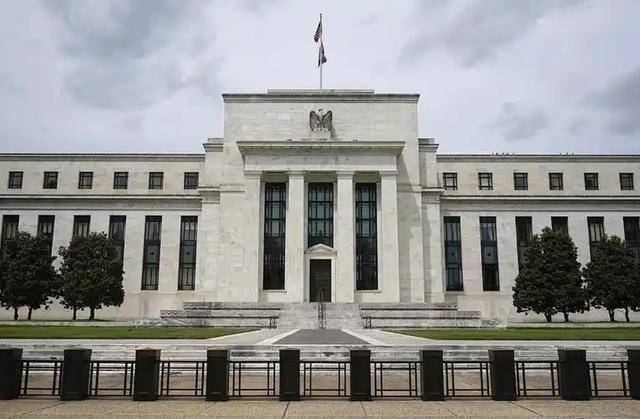
Group 1 - The Federal Reserve has lowered the federal funds rate by 25 basis points for the second consecutive month, bringing the target range to 3.75% to 4% [1] - The Fed announced the end of its quantitative tightening cycle, effective December 1, halting the balance sheet reduction that began in 2022 [2] - There is significant internal disagreement within the Fed regarding the appropriateness of the rate cuts, with some members advocating for more aggressive actions [4][6] Group 2 - The current economic situation in the U.S. is complex, with rising unemployment at 4.3% and inflation still above the Fed's target at 3% [6][20] - The lack of key economic data due to the government shutdown complicates decision-making for policymakers, who must rely on private sector data [8] - Market expectations for further rate cuts in December are not aligned with the Fed's cautious stance, as indicated by Chairman Powell's comments [9][11] Group 3 - The economic landscape shows a bifurcation, where high-income individuals are benefiting from stock market gains while middle and low-income groups face employment anxieties [18][20] - The S&P Case-Shiller home price index showed only a 1.5% year-over-year increase, the lowest since July 2023, indicating a cooling in the housing market [13] - The Fed's policy adjustments aim to alleviate financing costs and enhance liquidity, but the underlying issues of income disparity complicate the effectiveness of these measures [20][23]

《金融时报》:AI热撑起的美国经济繁荣,还能持续多久?
Sou Hu Cai Jing· 2025-10-24 00:32
Core Insights - The article discusses the current state of the U.S. economy, highlighting the impact of the AI investment boom and the resilience of consumer spending, particularly among wealthier households, despite underlying economic concerns [2][5][11]. Economic Performance - The U.S. economy is experiencing a "dual-speed" state, where affluent households benefit from rising stock market valuations, while low-income groups face challenges from high inflation and stagnant wage growth [2][11]. - The IMF has revised its growth forecast for the U.S., predicting a 2% growth in 2025 and 2.1% in 2026, despite concerns about trade tensions and labor market weaknesses [4][21]. Stock Market and Wealth Effect - AI-related stocks now account for 43% of the S&P 500's total market capitalization, contributing approximately $5 trillion in new wealth to American households over the past year [6][11]. - The stock market's performance has created a wealth effect, where for every $1 increase in stock market value, consumers are estimated to spend an additional $0.05 [12][11]. Consumer Behavior - The strong performance of the economy is largely driven by high-income consumers, who contribute to about half of U.S. consumption [11][12]. - Companies in the luxury sector are benefiting from this trend, with reports of increased sales in high-end products [13]. Labor Market Concerns - The labor market shows signs of weakness, with low-income workers experiencing slower wage growth compared to higher-income groups [14][17]. - Economic indicators suggest that the lowest 25% of earners saw an average wage increase of only 3.6% in August, while the highest earners experienced a 4.6% increase [17]. Political and Trade Risks - There are ongoing concerns about the unpredictability of U.S. trade policies and their potential impact on global economic stability [21][22]. - Recent tensions between the U.S. and China regarding key materials highlight the fragility of the global economy [22]. Market Sentiment - Investor sentiment remains optimistic, but there are warnings that a correction in the stock market could lead to significant consequences for consumer spending and overall economic health [20][21].
中国股市慢牛正在形成!高盛力挺A股:未来两年有望涨30%,应转变思维“逢低买入”
Sou Hu Cai Jing· 2025-10-22 06:46
Group 1: Market Outlook - Goldman Sachs predicts that the Chinese stock market will enter a more sustained upward phase, with key indices expected to rise by approximately 30% by the end of 2027, driven by a 12% growth in earnings trends and a 5%-10% potential for further revaluation [2] - The report highlights that the reasons for a lasting bull market include a combination of demand-side stimulus and the new five-year plan, which aids in growth rebalancing and mitigating internal risks [2] - The macro risks may lead to periodic corrections as the bull market unfolds, but the prevailing sentiment should shift from "selling on highs" to "buying on lows" [2] Group 2: Consumer Spending Trends - Bank of America’s consumer survey indicates that consumer spending in China showed resilience in October, with 53% of respondents reporting increased outings and spending over the past two months, up from 45% in August [3] - The survey suggests that high-income consumers are recovering, with 54% expecting to increase spending in the next six months, compared to only 31% of middle and low-income consumers [4] - The wealth effect from the stock market is more pronounced among affluent consumers, contributing to their optimistic spending outlook [4] Group 3: Real Estate Market Sentiment - The survey reveals that 35% of respondents expect home prices to decline over the next year, while 27% anticipate an increase, indicating a narrowing gap in price expectations compared to previous months [4] - Overall, the sentiment in the real estate market has not yet reached its low point but is approaching it [4]
《学习时报》刊登两篇资本市场可提振消费的文章|资本市场
清华金融评论· 2025-10-22 01:03
Core Viewpoint - The stability of the stock market is crucial for boosting consumer confidence and spending, which in turn supports the real economy and enhances economic circulation [4][7][10]. Group 1: Stock Market and Consumer Confidence - The stock market serves as a barometer for economic development, directly affecting household wealth and consumption confidence [5][6]. - As of October 10, the daily trading volume of the Shanghai and Shenzhen stock markets has repeatedly exceeded 2 trillion yuan, with major indices showing significant year-to-date increases: Shanghai Composite Index up 16.27%, Shenzhen Component Index up 28.24%, and ChiNext Index up 45.37% [5]. - The number of new A-share accounts surpassed 20 million by October 13, a year-on-year increase of over 50%, indicating a rise in household financial income [5][6]. Group 2: Mechanisms of Capital Market Impact on Consumption - The relationship between the capital market and consumption is characterized by a dual cycle of "asset appreciation—income growth—enhanced consumption capacity" and "financing support—supply optimization—strengthened consumption willingness" [10][11]. - The wealth effect and confidence effect from asset appreciation lead to increased consumer spending, while a downturn in the capital market can suppress consumption [11][14]. - The capital market can enhance consumption by providing financing to businesses, which in turn can improve product quality and create more job opportunities, thereby increasing consumer purchasing power [12][16]. Group 3: Policy Recommendations for Enhancing Market Stability - To stabilize the stock market, it is essential to improve institutional frameworks, optimize market mechanisms, strengthen investor protection, and enhance policy coordination [7][9]. - Strengthening investor protection through compensation funds and diversified rights protection channels can alleviate psychological burdens on consumers, encouraging them to spend more [9][20]. - Coordinated monetary and fiscal policies are necessary to ensure sufficient liquidity in the capital market and support consumer spending [9][20]. Group 4: Future Directions for Capital Market Development - The capital market should focus on diversifying financial products to meet varying consumer needs and enhance wealth accumulation [19][21]. - Encouraging long-term investments from stable funds like pension funds can help reduce market volatility and support sustainable growth [18][19]. - Developing consumer finance and supporting companies in the consumption sector through bond issuance can stimulate consumer spending and economic growth [20][21].

杨德龙:股市走牛形成财富效应,有效增加居民财产性收入
Xin Lang Ji Jin· 2025-10-21 08:47
Group 1 - The A-share market has entered a bull market, with the Shanghai Composite Index rising over 16% this year and surpassing 3900 points, while the ChiNext Index has increased by 44% [2][4] - Investor confidence is growing, as evidenced by over 20 million new A-share accounts opened this year, a year-on-year increase of over 50% [2][6] - The bull market is seen as a key driver for economic growth and consumer spending, with the stock market acting as a barometer for economic development [1][3] Group 2 - The current bull market is supported by various policies aimed at stabilizing the stock market and boosting consumer confidence, including the "Special Action Plan to Boost Consumption" issued by the central government [1][3] - The technology sector has been a significant contributor to the bull market, with substantial gains in areas such as humanoid robots, semiconductor chips, solid-state batteries, and innovative pharmaceuticals [4][5] - The ongoing Fourth Plenary Session is expected to further support the technology sector, which is crucial for sustaining the current bull market [5] Group 3 - The rise in stock market values directly impacts household wealth and consumer spending, creating a psychological effect that influences consumer behavior [3][4] - Stable stock markets are essential for injecting capital into the real economy and enhancing consumer confidence, thereby promoting a positive cycle of consumption and economic growth [3][4] - The long-term trend of rising international gold prices reflects investor skepticism towards the US dollar, with many turning to gold as a hedge against inflation and currency devaluation [6]
学习时报:努力稳股市让老百姓的消费底气更足
天天基金网· 2025-10-21 05:23
Core Viewpoint - The article emphasizes the importance of stabilizing the stock market to enhance consumer confidence and drive economic growth, highlighting the interconnectedness of stock market performance and consumer spending [3][5][7]. Group 1: Stock Market Performance - As of October 10, the daily trading volume in the Shanghai and Shenzhen markets has repeatedly exceeded 2 trillion yuan, with the Shanghai Composite Index, Shenzhen Component Index, and ChiNext Index rising by 16.27%, 28.24%, and 45.37% respectively this year [3]. - The number of new A-share accounts surpassed 20 million by October 13, marking a year-on-year increase of over 50%, which has positively impacted household financial income [3]. Group 2: Consumer Spending Trends - Despite the stock market's rise, consumer spending growth is lagging behind stock index increases, with per capita consumption expenditure in the first half of the year at 14,309 yuan, reflecting a real growth of 5.3% year-on-year [4]. - The fluctuation in stock values directly affects household wealth and their willingness to spend, creating a psychological barrier to consumption [4]. Group 3: Economic Implications - A stable stock market can inject capital into the real economy and enhance consumer spending through wealth, psychological, and expectation effects, thereby driving economic circulation [5]. - The article suggests that improving institutional frameworks, optimizing market mechanisms, and enhancing investor protection are essential for achieving stock market stability and boosting consumer confidence [5][6]. Group 4: Policy Recommendations - The article advocates for coordinated policy measures, including maintaining adequate liquidity in monetary policy, increasing fiscal support for innovation and livelihoods, and optimizing the business environment through industrial policy [7]. - Such policy coordination is crucial for aligning stock market stability with macroeconomic policies, thereby strengthening public confidence in income and wealth, which can transform consumer willingness into actual spending [7].
经济学人|股市正在推动美国经济的发展(双语对照)
Xin Lang Cai Jing· 2025-10-19 02:15
Group 1: Stock Market and Economic Impact - The stock market is not the economy, but the recent rise in American share prices has coincided with increased consumer spending, suggesting a potential link between stock market performance and economic activity [3][4][5][6] - The concept of "reflexivity" by George Soros indicates that asset prices can influence economic fundamentals, which in turn can affect asset prices, creating a cyclical relationship [7][8] - Historical studies show that rising asset prices, particularly in housing, can lead to increased consumer spending, with a $1 increase in housing wealth resulting in a 2 to 6 cent increase in spending [9][10] Group 2: Current Economic Conditions - The American housing market is currently struggling, with home sales down by one-third compared to 2021 due to higher mortgage rates, which limits the potential for increased consumer spending based on housing wealth [11][12] - Despite the housing market's decline, the stock market has seen significant gains, particularly in technology sectors driven by AI-related enthusiasm, leading to high valuations across various companies [13][14] - Wealth effects from rising stock prices may be less pronounced than those from housing, but the surge in retail investing through platforms like Robinhood could amplify the impact of stock market gains on consumer behavior [15][16] Group 3: Wealth Distribution and Spending Patterns - Wealthier individuals tend to have a higher proportion of their wealth in stocks compared to poorer individuals, which may lead to a disproportionate benefit from rising stock prices, although their spending increases may be muted [15][16] - The percentage of stock ownership among lower-income households has increased significantly, from 3% in 1989 to 17% in 2022, indicating a broader distribution of stock wealth [15][16] - The concentration of wealth among the affluent may explain certain economic trends, such as faster spending growth among the rich compared to the general population [17] Group 4: Future Economic Outlook - Goldman Sachs estimates that wealth effects could boost annualized consumption growth by 0.3 percentage points in Q3 of this year and 0.2 percentage points next year, with potential increases if stock and home prices rise significantly [18][19] - Concerns exist regarding the sustainability of wealth effects, as falling stock prices could negatively impact consumer spending, especially given that household wealth is nearly six times GDP, a record high [20][21] - Historical precedents, such as the dot-com bubble burst, highlight the risks associated with high stock market valuations, although recent data shows that consumption growth remained positive even during market downturns [22]

芝加哥联储:高收入群体支撑消费动能 9月美国零售销售或继续增长
智通财经网· 2025-10-15 16:13
Core Insights - The Chicago Federal Reserve's latest retail trade forecast indicates that U.S. retail sales (excluding automobiles and parts) are expected to continue growing in September, although some of the increase reflects the impact of rising prices [1] - The report estimates a seasonally adjusted month-on-month retail sales growth of 0.5% for September, slightly lower than August's 0.7% [1] - After adjusting for inflation, the actual retail sales growth (excluding automobiles) is estimated at only 0.2% for September, down from 0.3% in August, aligning with most independent economists' predictions [1] Consumer Spending Trends - Retail spending in the U.S. is primarily driven by high-income households, whose financial conditions remain robust due to growth in financial markets and real estate wealth, along with strong wage growth [1] - In contrast, middle- and low-income households are facing more pressure, with middle-income groups squeezed by rising prices and tightening credit conditions, while low-income families are directly affected by job slowdowns and weak wage growth [1] - According to EY-Parthenon, consumers are increasingly fatigued by high prices and are becoming more cautious in their spending, focusing on value and necessities while reducing discretionary spending [2] Income Group Spending Dynamics - Data from the Bank of America Research Institute shows that in September, spending by low-income households increased by only 0.6% year-on-year, while spending by middle- and high-income households rose by 1.6% and 2.6%, respectively [2] - High-income households' consumption is driven not only by wage growth but also by the "wealth effect," where increases in the S&P 500 index lead to a significantly higher increase in discretionary spending among the top 5% of income earners compared to middle-income groups [2]
印度、土耳其:黄金增值带来财富效应,通胀挑战各异
Sou Hu Cai Jing· 2025-10-11 13:45
Core Insights - The current bull market in precious metals has significantly increased the wealth of Indian households, with their gold holdings valued at nearly $3.8 trillion due to rising gold prices [1] - Morgan Stanley estimates that Indian households hold 34,600 tons of gold, surpassing the World Gold Council's previous estimate of 25,000 tons, which is greater than the total gold reserves of the top ten central banks globally [1] - Gold prices have surged over 50% this year, with spot gold reaching over $4,000 per ounce, potentially achieving the largest annual increase since 1979, driven by central bank purchases, geopolitical factors, and Federal Reserve rate cuts [1] Group 1: Indian Gold Market - Indian gold demand is heavily reliant on imports, with domestic prices aligning with global trends; the central bank is projected to purchase approximately 75 tons of gold cumulatively by 2024, increasing total holdings to 880 tons, which constitutes 14% of foreign exchange reserves [1] - The Indian central bank's interest rate cuts and the government's reduction of consumption tax have further enhanced the wealth effect associated with gold [1] Group 2: Turkish Gold Market - In Turkey, the rising gold prices have led to a significant increase in household wealth, with the value of gold held by citizens estimated at $500 billion; the past year has generated over $100 billion in wealth effect due to soaring gold prices [1] - If gold prices increase by an additional 10%, it could create an extra $50 billion in wealth effect, which may complicate the central bank's efforts to control inflation, currently at 33.3% [1] - The concentration of gold wealth in Turkey may boost consumption but could also delay the process of combating inflation [1]
印度、土耳其家庭黄金财富:增值近3.8万亿与5000亿
Sou Hu Cai Jing· 2025-10-11 09:44
Core Insights - The current bull market in precious metals has significantly increased household wealth in India and Turkey, but the effects vary between the two countries [1] Group 1: India - India, as the world's second-largest gold consumer, has seen a substantial increase in household wealth due to gold appreciation, with a reported gold holding of 34,600 tons valued at nearly $3.8 trillion [1] - The cultural significance of gold in India leads families to accumulate it for savings, emergencies, and religious ceremonies, facilitating intergenerational wealth transfer [1] - Gold prices have surged over 50% this year, with spot gold reaching over $4,000 per ounce, potentially marking the largest annual increase since 1979, driven by central bank purchases, geopolitical factors, and Federal Reserve rate cuts [1] - The Reserve Bank of India has purchased approximately 75 tons of gold in 2024, increasing its total holdings to 880 tons, which constitutes about 14% of its foreign exchange reserves [1] - The Indian government's reduction of consumption tax and the central bank's rate cuts further enhance the positive wealth effect from gold [1] Group 2: Turkey - In Turkey, the rise in gold prices has increased household wealth by tens of billions of dollars, with non-financial gold reserves valued at $500 billion [1] - The past year has seen over $100 billion in wealth effect from soaring gold prices, which has stimulated consumer spending [1] - A further 10% increase in gold prices could generate an additional $50 billion in wealth effect [1] - However, the concentration of gold wealth in Turkey complicates the central bank's efforts to control inflation, which has recently risen to 33.3% due to increases in education and rent prices [1] - The Turkish central bank acknowledges that the wealth effect from gold supports consumer demand, and high inflation has historically driven citizens to hold large amounts of gold [1]