
资本市场开放

Search documents
6月20日重要资讯一览
Zheng Quan Shi Bao Wang· 2025-06-20 13:44
Group 1 - The China Securities Regulatory Commission (CSRC) is seeking public opinions on the revised draft of the "Securities Company Classification Evaluation Regulations" to optimize the classification evaluation system for securities companies [2] - The Ministry of Commerce reported that from January to May 2025, the number of newly established foreign-invested enterprises reached 24,018, a year-on-year increase of 10.4%, while the actual use of foreign capital amounted to 358.19 billion yuan, a year-on-year decrease of 13.2% [7] - The People's Bank of China and the Hong Kong Monetary Authority launched the "Cross-Border Payment Link," which will enhance cross-border payment efficiency and service levels between the mainland and Hong Kong, set to go live on June 22, 2025 [4] Group 2 - The Ministry of Finance reported that from January to May 2025, the national fiscal revenue totaled 966.23 billion yuan, a decrease of 0.3%, with tax revenue at 791.56 billion yuan, down 1.6% [6] - The National Medical Products Administration approved measures to support the innovation and development of high-end medical devices, including optimizing special approval procedures and enhancing post-market supervision [10] - The CSRC announced that starting from October 9, qualified foreign institutional investors will be allowed to trade a total of 100 futures and options products, including all 9 ETF options listed on the Shanghai and Shenzhen stock exchanges [5]
油气类ETF领涨;合格境外投资者将可参与ETF期权交易丨ETF晚报
Sou Hu Cai Jing· 2025-06-19 09:44
ETF Industry News Summary Core Insights - The three major indices experienced fluctuations and declines, while several oil and gas-related ETFs saw gains, indicating a potential shift in investor sentiment towards energy sectors amidst geopolitical uncertainties [1][4]. Market Performance - The Shanghai Composite Index fell by 0.79% to 3362.11 points, the Shenzhen Component Index decreased by 1.21% to 10051.97 points, and the ChiNext Index dropped by 1.36% to 2026.82 points [4]. - The oil and gas sector outperformed, with the Oil and Gas Resources ETF (563150.SH) rising by 1.24%, and the Oil and Gas Resources ETF (159309.SZ) increasing by 0.99% [1][13]. - Conversely, the gold sector faced declines, with the Gold Stocks ETF (517520.SH) down by 2.35% [1]. ETF Market Developments - The Shenzhen Stock Exchange held a meeting focused on the high-quality development of the bond ETF market, discussing improvements in institutional mechanisms and product systems [2]. - The China Securities Regulatory Commission announced that starting from October 9, 2025, qualified foreign investors will be allowed to participate in on-exchange ETF options trading, aimed at enhancing the investment landscape for foreign institutions [3]. ETF Category Performance - Among various ETF categories, bond ETFs showed the best performance with an average increase of 0.02%, while cross-border ETFs had the worst performance with an average decline of 1.80% [10]. - The top-performing ETFs included the Oil and Gas Resources ETFs and the Semiconductor ETF, with respective gains of 1.24%, 0.99%, and 0.93% [13][14]. Trading Volume Insights - The top three ETFs by trading volume were the A500 ETF (159351.SZ) with a volume of 2.964 billion, the A500 ETF Fund (512050.SH) at 2.734 billion, and the CSI 300 ETF (510300.SH) at 2.331 billion [17][18].

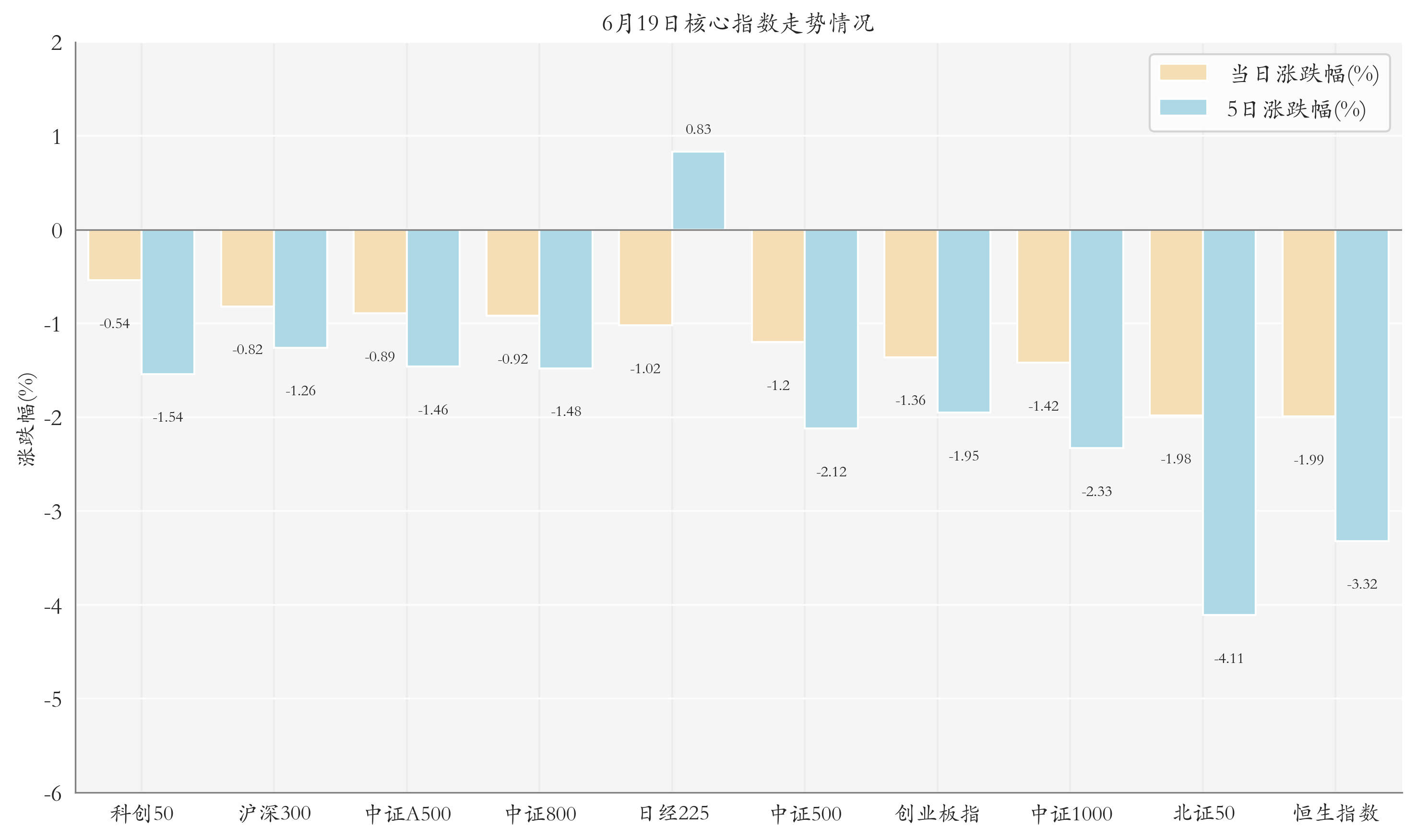
陆家嘴论坛热议金融国际化,上交所、港交所透露未来计划
Di Yi Cai Jing· 2025-06-19 08:59
Group 1 - The financial industry inherently possesses an open gene, and financial activities should embrace openness [1][10] - Since early April, external shocks have increased, causing significant volatility in international financial markets, which has also pressured the Chinese capital market; however, the long-term positive development trend of the Chinese economy remains unchanged [1] - The resilience and risk resistance of the Chinese capital market have been demonstrated despite the challenges [1] Group 2 - The Shanghai Stock Exchange (SSE) aims to maintain market stability and enhance internal stability mechanisms, deepen the reform of the Sci-Tech Innovation Board, and promote long-term capital inflow [4][6] - The SSE reported a compound annual growth rate of 10.7% in R&D investment over the past three years, with a median R&D intensity of 12.6%, leading A-shares [5] - The SSE has seen a 25% year-on-year increase in disclosed asset restructuring plans, with significant growth in major asset restructurings [5] Group 3 - The Hong Kong Stock Exchange (HKEX) plans to enhance its product offerings and risk management tools, including the preparation of RMB government bond futures [7] - HKEX aims to facilitate mainland investors' participation in the Hong Kong market by incorporating RMB counters into the Stock Connect trading mechanism [7] Group 4 - Howard Marks highlighted China's structural advantages, including a highly educated workforce, a large middle-class market, and a robust manufacturing sector [8] - To further internationalize the financial market, Marks suggested opening more asset classes and optimizing foreign investment product access mechanisms [9] Group 5 - The importance of regulatory predictability and consistency with local demands and global practices was emphasized to attract more foreign capital [9][10] - The need for regulatory frameworks to evolve alongside market innovations was also discussed, ensuring that regulations keep pace with market developments [10]


科创板改革升级:设置科创成长层,力挺未盈利企业上市
2 1 Shi Ji Jing Ji Bao Dao· 2025-06-18 14:28
Core Viewpoint - The China Securities Regulatory Commission (CSRC) announced a series of important policies in the capital market, particularly focusing on the "1+6" policy reform for the Sci-Tech Innovation Board (STAR Market), which aims to enhance support for innovative enterprises and improve the listing process for unprofitable companies [1][4]. Group 1: "1" - Establishment of Sci-Tech Growth Layer - The establishment of a Sci-Tech Growth Layer on the STAR Market will allow unprofitable companies to list under the fifth set of standards, providing a more precise service for high-quality tech enterprises with significant breakthroughs and ongoing R&D investments [5][6]. - Companies in the Sci-Tech Growth Layer will be marked with a "U" in their stock abbreviation, making it easier for investors to identify unprofitable firms [5][6]. - Investment qualifications for investors in the Sci-Tech Growth Layer will be heightened to mitigate risks associated with investing in unprofitable companies [6]. Group 2: "6" - Six Specific Measures - Measure 1: Introduction of a system for seasoned professional institutional investors to enhance the assessment of unprofitable companies, although participation is encouraged rather than mandatory [8]. - Measure 2: Implementation of a pre-IPO review mechanism for high-quality tech companies, allowing them to submit documents for preliminary review before formal IPO applications, expediting the process without lowering standards [9]. - Measure 3: Expansion of the fifth set of standards to include more cutting-edge sectors such as artificial intelligence, commercial aerospace, and low-altitude economy [9]. - Measure 4: Support for unprofitable tech companies to conduct capital increases aimed at R&D, specifically for existing shareholders [10]. - Measure 5: Improvement of institutional mechanisms to support the development of STAR Market-listed companies, including facilitating mergers and acquisitions of companies listed for less than three years [10][11]. - Measure 6: Coordination of investment and financing functions in the market, including the introduction of more STAR Market indices and ETFs to attract long-term capital [13]. Group 3: Future Policies - The "1+6" policy is part of a broader set of upcoming capital market reforms, including the introduction of Sci-Tech bond ETFs and other financing tools for tech enterprises [14]. - The CSRC aims to cultivate patient capital and long-term investment through various supportive policies, such as establishing specialized tech companies in Shanghai and optimizing fund share transfer practices [14][15]. - Further measures will be introduced to enhance the openness of the capital market, including optimizing the Qualified Foreign Institutional Investor (QFII) system and expanding the range of products available for foreign investment [15].
证监会最新公告!
证券时报· 2025-06-18 10:23
Core Viewpoint - The China Securities Regulatory Commission (CSRC) has announced that starting from October 9, 2025, qualified foreign institutional investors (QFIIs) will be allowed to participate in on-exchange ETF options trading, primarily for hedging purposes. This move is part of the broader initiative to optimize the QFII system as outlined in the decisions made during the 20th National Congress of the Communist Party of China [2]. Summary by Sections - The CSRC has been progressively relaxing restrictions on QFIIs' participation in domestic commodity futures, options, and ETF options throughout the year. This aims to expand the investment scope for QFIIs and enhance the attractiveness of the QFII system, facilitating the use of risk management tools by foreign institutional investors, particularly those with allocation-focused capital [2]. - Further reforms to optimize the QFII system are expected to be introduced by the CSRC, promoting a high-level institutional opening of the capital market [3]. - The Zhengzhou Commodity Exchange announced that starting from June 20, 2025, it will expand the range of tradable products for QFIIs to include futures and options contracts for glass, soda ash, and silicon manganese [3]. - The Shanghai Futures Exchange will also expand its tradable products for QFIIs from June 20, 2025, adding futures and options contracts for natural rubber, lead, and tin [3]. - The Dalian Commodity Exchange will similarly expand its tradable products for QFIIs from June 20, 2025, including futures and options contracts for ethylene glycol and liquefied petroleum gas [3].
中金 | AH比较系列(2):H+A新路径开启
中金点睛· 2025-06-15 23:38
Core Viewpoint - The article discusses the deepening of the "H+A" listing channel between Hong Kong and mainland China, highlighting the potential for more companies from the Guangdong-Hong Kong-Macao Greater Bay Area to achieve dual listings in both markets as a result of recent policy changes [2][10]. Group 1: Policy Changes and Market Impact - The recent policy document released on June 10 aims to enhance the financial, technological, and data integration to support high-quality economic development, allowing companies listed on the Hong Kong Stock Exchange to also list on the Shenzhen Stock Exchange [2][5]. - The new regulations are expected to strengthen the synergy between the Shenzhen and Hong Kong exchanges, promoting a more integrated capital market and facilitating the dual listing of quality enterprises from the Greater Bay Area [7][10]. Group 2: Potential Companies for Dual Listing - Currently, there are 249 companies from the Greater Bay Area listed on the Hong Kong Stock Exchange, with only 27 achieving dual listings. The total number of companies in the region is 1,593, with a significant portion in new economy sectors [4][5]. - Among the 1,593 companies, 436 are expected to meet the financial standards for the Shenzhen Stock Exchange's main board, while 910 could qualify for the growth enterprise market [5]. Group 3: Historical Performance of H+A Listings - Historical data shows that companies returning from Hong Kong to A-shares have generally performed well, with average price increases of 7.0% after one week, 18.6% after one month, and 19.9% after three months [9]. - The performance of these companies in the A-share market has outperformed both the A-share market and their Hong Kong counterparts, indicating strong investor interest and potential for future listings [9]. Group 4: Investment Opportunities - The article suggests that the new policies will create investment opportunities as more companies from the Greater Bay Area are expected to list on the A-share market, enhancing the quality and diversity of investment options available to domestic investors [10]. - The collaboration between the Hong Kong and Shenzhen exchanges is anticipated to foster a "Hong Kong incubation + mainland acceleration" model, benefiting both markets and attracting long-term capital [8][10].

“逃离美元”的资本,A股该怎么接?
和讯· 2025-05-30 10:24
Core Viewpoint - The valuation advantage of the Chinese capital market is increasingly becoming a focal point for global investors, with A-shares and Hong Kong stocks currently at historically low valuation levels, providing attractive opportunities for investors to share in the growth dividends of quality Chinese enterprises [1][2]. Valuation Levels - The Shanghai Composite Index has a price-to-earnings (P/E) ratio of only 12.6 times, which is less than half of the S&P 500 index and significantly lower than other major international indices like the Nikkei 225 and the DAX [1]. - As of May 26, foreign ownership of A-shares reached 1,274.85 billion shares, with a market value of 2.33 trillion yuan, accounting for approximately 2.95% of the circulating A-share market value and 2.33% of the total market capitalization [2]. Foreign Capital Attraction - Despite the valuation advantages, the actual attraction of A-shares to foreign capital has not been as strong as expected, with the proportion of foreign capital in the A-share market declining [2]. - The need for improved institutional frameworks to protect investor interests and combat illegal activities is crucial for retaining foreign capital [4][17]. Market Dynamics - The ongoing trade tensions and the restructuring of global supply chains may influence foreign capital allocation towards Chinese assets, but the trend of capital flowing from the U.S. to A-shares and Hong Kong stocks is becoming more pronounced [8][9]. - The Chinese asset market is currently undergoing a correction from severe undervaluation towards a more reasonable valuation, with expectations of recovery in valuations throughout the year [5][9]. Policy and Market Measures - To stabilize foreign capital holdings, it is essential to enhance institutional frameworks and ensure investor protection, particularly against financial fraud and misconduct [17]. - The internationalization of the RMB is accelerating, with more countries opting for RMB settlements in trade with China, which could further promote capital market openness [14]. Investment Opportunities - The current valuation of A-shares and Hong Kong stocks is approximately one-third of that of U.S. stocks, indicating a favorable investment opportunity for international investors [18].
瑞达期货纯碱玻璃产业日报-20250529
Rui Da Qi Huo· 2025-05-29 09:19
以刚需为主,汽车玻璃厂备货量增加难以抵消地产相关需求疲软,光伏玻璃需求也面临库存压力。当下价 何保证,据此投资,责任自负。本报告不构成个人投资建议,客户应考虑本报告中的任何意见或建议是否符合其特定状况。本 拉动。注意仓位操作,操作上建议,纯碱主力逢高空.玻璃方面,供应端:部分地区产线复产,且下周有产 线存点火计划,预计周度产量存增加预期。行业整体利润不佳,企业挺价意愿有限,供应压力对价格上行 免责声明 形成阻力。需求端当前地产形势不容乐观,传统淡季下需求将进一步走弱。下游深加工订单不稳定,采购 本报告中的信息均来源于公开可获得资料,瑞达期货股份有限公司力求准确可靠,但对这些信息的准确性及完整性不做任 纯碱玻璃产业日报 2025-05-29 | 项目类别 | 数据指标 | 最新 | 环比 数据指标 | 最新 | 环比 | | --- | --- | --- | --- | --- | --- | | 期货市场 | 纯碱主力合约收盘价(日,元/吨) | 1203 | -12 玻璃主力合约收盘价(日,元/吨) | 985 | -24 | | | 纯碱与玻璃价差(日,元/吨) | 218 | 12 纯碱主力合约持仓量 ...
七年沉寂 谁将成为这一行业上市“破冰者”
Jin Rong Shi Bao· 2025-05-28 12:02
近日,中国信达旗下金融子公司——信达金融租赁股份有限公司(以下简称"信达金租")在2024年业务 经营亮点成果报告中的一句"股改攻坚取得重大突破",让金融租赁业内对其是否将成为又一在资本市场 上市的"破冰者"充满好奇。 信达金租在报告中披露,按照中国信达制定的"股改、引战、上市"三步走战略,信达金租制定股改时间 表、路线图,先后完成股改方案编制、股改评估报告备案、章程核准、金融许可证换领等重要节点任 务,2024年12月,信达金租已整体改制为股份有限公司。 工商信息显示,信达金租注册资本约为35.05亿元,在股权结构方面,作为大股东的中国信达持有 99.9797%的股权,另外合计的0.0203%股权由中国能源建设集团西北电力建设甘肃工程有限公司、寿君 (北京)商业管理有限公司、甘肃省交通物资商贸集团有限公司、嘉峪关大友企业集团有限责任公司持 有。 不过,金融租赁公司的上市路径并非只有一种。机构也可选择股改后在境外市场,如港股寻求上市机 会。国家开发银行控股的国银金租便是这一模式的典型代表。 与江苏金租股改四年后才上市不同,国银金租的上市之路颇为迅速:2015年9月完成股份制改造,仅不 到一年时间便于2016年 ...

从证监会李明最新讲话看资本市场建设新方向:开放步伐始终坚定,即将出台重要改革政策
2 1 Shi Ji Jing Ji Bao Dao· 2025-05-19 06:12
Group 1 - The core message emphasizes the imminent introduction of policies to deepen the reforms of the Sci-Tech Innovation Board and the Growth Enterprise Market [6][7] - The China Securities Regulatory Commission (CSRC) is committed to maintaining a steady pace of opening up the capital market, regardless of external changes [3][5] - The CSRC encourages cash dividends, share buybacks, and mergers and acquisitions as key directions for enhancing investment value [1][2] Group 2 - There is a positive trend of medium- and long-term funds flowing into the stock market, with net purchases of A-shares exceeding 200 billion yuan since the beginning of 2025 [2] - A significant portion of A-share listed companies, approximately 75%, reported profits, with 50% of firms experiencing profit growth in their latest annual reports [2][7] - The proportion of high-tech enterprises among newly listed companies has surpassed 90%, indicating a strong focus on innovation and technology [8] Group 3 - A-share companies are increasingly prioritizing shareholder returns, with total dividends reaching 2.4 trillion yuan and share buybacks at 147.6 billion yuan, both setting historical records [10] - The current valuation levels of A-shares remain relatively low, with the CSI 300 index's price-to-earnings ratio at 12.6, highlighting investment opportunities [10][11] - The stable market conditions and robust economic fundamentals in China provide a higher level of certainty for overseas investors [12][13]