
AI热潮

Search documents
新消费如何赋能“好生活”?多元路径如何探索?
Xin Jing Bao· 2025-11-28 07:20
Group 1 - The concept of "good life" transcends material wealth, emphasizing a harmonious balance between material and spiritual, individual and societal, creation and enjoyment [2][3] - The rise of "new consumption" reflects a shift from product-centric to experience-centric purchasing, where consumers seek emotional value and unique experiences [5][6] - The trend of "personalized consumption" is becoming prevalent, with consumers increasingly favoring tailored products and services that resonate with their individual lifestyles [5][7] Group 2 - The integration of AI technology in various industries, such as tourism and fashion, is seen as a genuine upgrade that addresses industry pain points and enhances efficiency [9][10] - The tourism sector continues to prioritize core elements of travel, with AI serving to better meet personalized consumer demands rather than replacing the fundamental travel experience [10] - The beauty industry is experiencing a complex relationship with AI, where it serves as a tool for data processing but requires careful interpretation to avoid marketing missteps [9] Group 3 - The "pet economy" is rapidly growing, with an increasing number of tourism and hospitality venues accommodating pet owners, indicating a significant market opportunity [6] - The "de-gendering" trend in the beauty sector shows that male consumers are increasingly purchasing a wider range of skincare products, reflecting a shift in consumer attitudes [6] - The future of consumption in China is expected to evolve towards lifestyle brands that embody cultural values, moving away from mere product replication [7]

年底“捡便宜”!“大空头”力荐这些被错杀的股票
Jin Shi Shu Ju· 2025-11-28 06:12
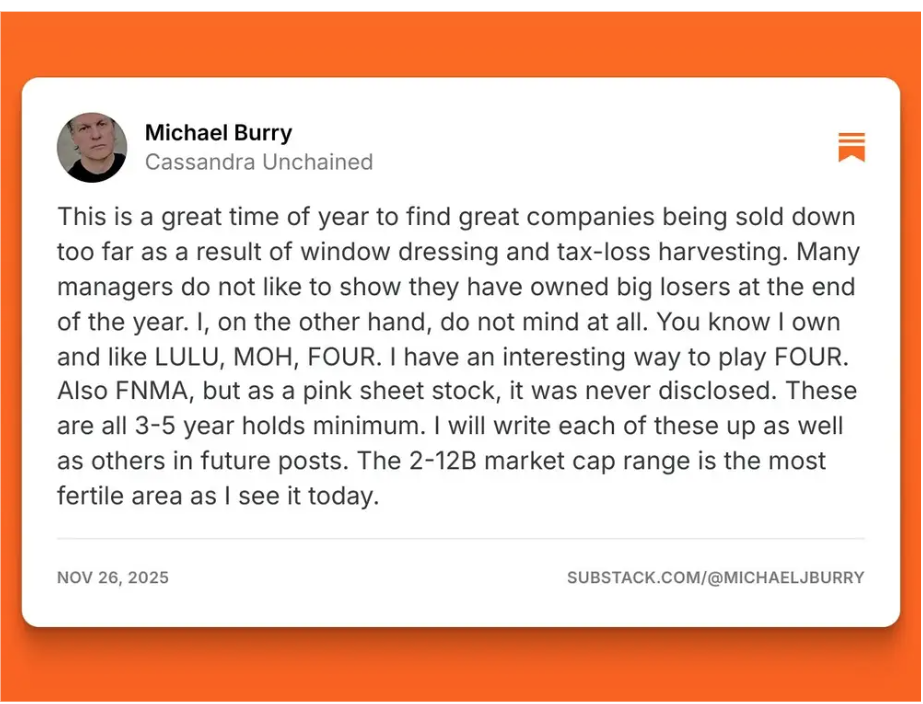
Core Insights - Michael Burry, known for his role in "The Big Short," has closed his hedge fund to external capital and is now sharing his stock picks on a new Substack platform named "Cassandra Unchained" [1] - Burry highlights stocks such as Lululemon (LULU), Molina Healthcare (MOH), Shift4 Payments (FOUR), and Federal National Mortgage Association (FNMA) as his favorites, indicating a market capitalization range of $20 billion to $120 billion as fertile ground for investment [1][2] - He believes that the current market presents an excellent opportunity to find undervalued companies that have been oversold due to fund managers' performance management and tax-loss harvesting [1] Company Summaries - Lululemon is a high-end athletic apparel retailer known for its yoga pants, which has seen its stock price drop by 52% over the past year [2][3] - Molina Healthcare provides affordable healthcare insurance and services primarily for low-income and elderly Americans, with its stock down 49% in the same period [2][3] - Shift4 Payments is a fintech company offering payment processing and business tools for various sectors, experiencing a 32% decline in stock price [2][3] - Federal National Mortgage Association (FNMA) supports the U.S. housing market by providing credit loss guarantees for over $4 trillion in mortgages, with its stock not disclosed in Burry's filings due to being traded in the over-the-counter market [2] Market Context - The three highlighted stocks (Lululemon, Molina, Shift4 Payments) have market capitalizations below $25 billion and are trading at price-to-earnings ratios below 15 times expected earnings for the current fiscal year [3] - In contrast, FNMA's stock has tripled this year amid speculation about potential privatization by the Trump administration, which could pave the way for its market listing [3] Investment Strategy - Burry is known for his deep value investing approach, focusing on finding undervalued stocks, particularly smaller and beaten-down companies [3] - He has also engaged in short positions against companies like Palantir (PLTR) and Nvidia (NVDA), indicating a strategy that combines long positions in undervalued stocks with short positions in overvalued ones [4][5]

TPU算力狂热席卷而来! 三大关键词贯穿新一轮AI投资热潮:ASIC、光互连与存储
智通财经网· 2025-11-27 08:39
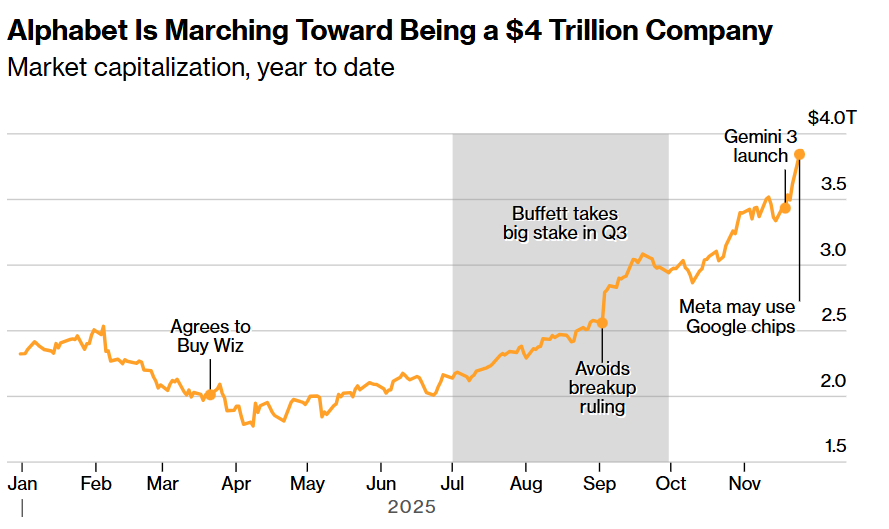
Core Insights - Google's launch of the Gemini 3 AI application ecosystem has significantly increased demand for AI computing power, leading to bullish sentiments from major investment firms regarding Google's stock and its AI ecosystem [1][2][3] - Meta Platforms is reportedly negotiating a multi-billion dollar deal with Google for TPU AI computing clusters, further igniting global investment interest in Google's TPU technology [2][9] - The latest TPU v7 shows a remarkable performance leap, with BF16 computing power reaching 4614 TFLOPS, indicating a substantial advancement over previous generations [3][12] Investment Opportunities - Major investment firms like Morgan Stanley and Mizuho are optimistic about companies within Google's AI ecosystem, including Broadcom, Lumentum, and Micron Technology, as they stand to benefit from the surge in AI demand [1][6][10] - The AI infrastructure investment wave is expected to reach $3-4 trillion by 2030, with Google's TPU AI computing clusters projected to capture a significant market share [15][16] - Micron Technology is identified as a key beneficiary of Google's AI computing expansion, particularly in high-performance storage systems required for AI data centers [8][12] Market Dynamics - The competition between Google's TPU AI computing clusters and NVIDIA's GPU technology is intensifying, with analysts predicting that Google's TPU could disrupt NVIDIA's current market dominance [9][15] - The AI infrastructure market is still in its early stages, with significant growth potential as demand for AI computing power continues to rise [3][15] - The integration of high-performance networking components, such as optical circuit switches (OCS), is crucial for supporting the expanding TPU AI systems [10][11]
高端市场狙击苹果,华为Mate80系列打响“性价比”之战
Hua Xia Shi Bao· 2025-11-26 11:49
Core Insights - Huawei has launched its flagship Mate 80 series and Mate X7 foldable phone, aiming to strengthen its position in the high-end smartphone market as competition intensifies with Apple [1][5] - The Mate 80 series features significant performance improvements, with the Mate 80 Pro Max showing a 42% increase in overall performance compared to its predecessor [2][4] - Despite performance enhancements, the prices of the new models have decreased, with the Mate 80 starting at 4699 yuan, which is 800 yuan lower than the Mate 70 [3][4] Product Details - The Mate 80 series includes four models, all equipped with the HarmonyOS 6 operating system, and utilizes the Kirin 9020 and 9030 chips [2][3] - The pricing strategy reflects a focus on "cost-performance" in a market where memory prices are rising due to increased demand for AI technologies [4][5] Market Competition - Huawei aims to capture more market share in the high-end segment, where it faces strong competition from Apple, which has seen a 37% year-on-year increase in iPhone sales [5][6] - In Q3, Huawei held a 13% market share in China's smartphone market, experiencing a 19% decline in sales year-on-year, while it ranked first in the high-end market with a 33% share [6][7] Ecosystem Development - Huawei's HarmonyOS ecosystem has made significant strides, with over 30 million applications and services available, and a growing developer base of over 10 million [6][7] - The HarmonyOS currently holds a 4% share in the global smartphone market, indicating a stable but modest presence compared to Android and Apple [7]
内存价格太疯狂 Epic CEO:将重创游戏业多年!
Sou Hu Cai Jing· 2025-11-26 09:37
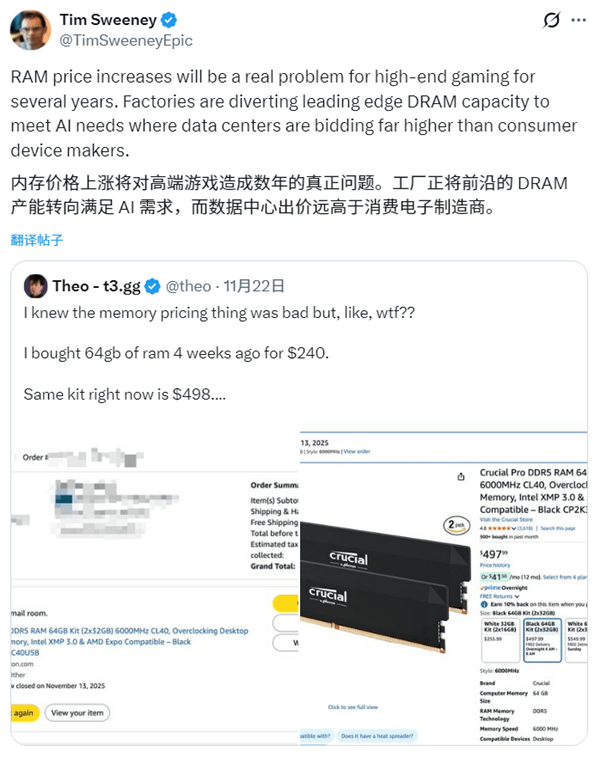
Core Insights - Memory prices have surged dramatically, with a DDR5-6000 64GB kit now costing around 4000 RMB, surpassing the price of a PS5 [1] - Epic CEO Tim Sweeney highlighted that rising memory prices will pose a significant issue for the high-end gaming sector in the coming years [1] - The price of the same memory kit increased from 260 USD to 498 USD (approximately 3531 RMB) within a month, even during the Black Friday sales [3] Industry Impact - The primary reason for the continuous rise in memory prices is the shift of advanced DRAM production capacity to meet AI demands, as data centers are willing to pay significantly more than consumer device manufacturers [3] - Manufacturers are redirecting production lines towards more profitable sectors, which negatively impacts ordinary consumers [4] - The AI boom has created supply chain tensions that not only affect the DRAM market but also lead to increased costs for SSDs, HDDs, and high-capacity microSD cards [4]
日本将建1.4nm晶圆厂!
国芯网· 2025-11-26 04:41
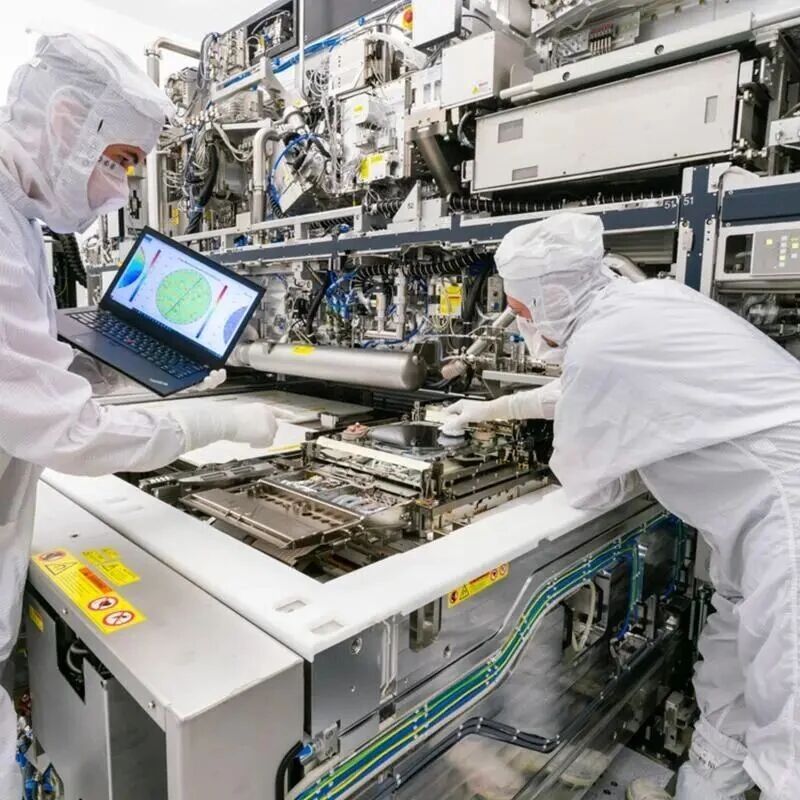
Core Viewpoint - Japan's Rapidus plans to build a next-generation 1.4 nm wafer fab by FY2027, aiming for production in 2029, to compete with industry giants like TSMC and Intel [2][4]. Group 1: Company Overview - Rapidus was established in 2022 and is supported by eight major Japanese corporations, including DENSO, Kioxia, Mitsubishi UFJ Financial Group, NEC, NTT, SoftBank, Sony, and Toyota [4]. Group 2: Competitive Landscape - Rapidus aims to close the gap with TSMC, which announced its 1.4 nm technology earlier this year and will fully launch R&D next year [4]. - Intel has already begun production of its 18A node process (2 nm level), indicating a highly competitive environment for Rapidus [4]. - TSMC is experiencing a surge in orders due to the "AI boom," with its Arizona facility ramping up production of the latest process chips [4]. Group 3: Production Challenges - Rapidus is expected to start mass production of 2 nm process wafers in the second half of 2027, but faces potential yield issues common in mature foundries before mass production [4].
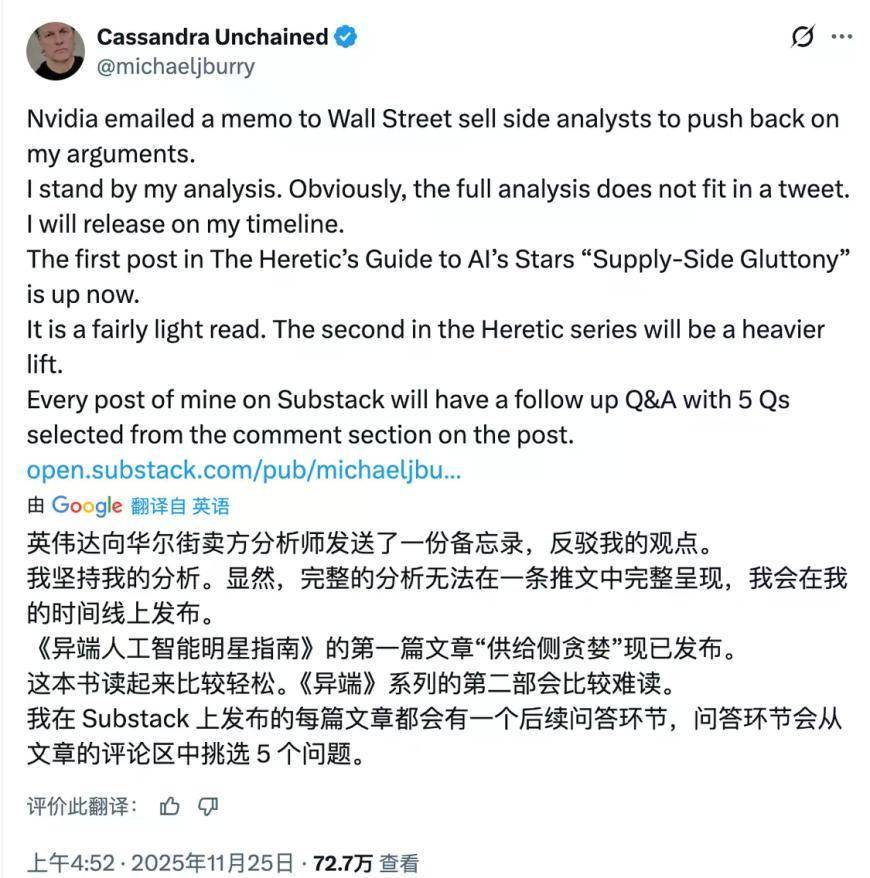
遭“大空头”炮轰,英伟达回击多项批评
Sou Hu Cai Jing· 2025-11-25 07:30
Core Viewpoint - Notable investor Michael Burry has criticized Nvidia regarding its stock incentives, investments, and accounting practices, to which Nvidia has responded directly [1]. Group 1: Stock Incentives - Nvidia addressed Burry's claim that its stock incentives have harmed shareholder value, stating that shareholder returns have not decreased by 50% as he suggested. The company clarified that it has repurchased $91 billion in stock since 2018, not $112.5 billion, and that Burry mistakenly included tax expenses related to restricted stock units in his calculations. Nvidia emphasized that its employee compensation aligns with industry standards and that the benefits employees receive from stock price increases do not imply that the initial stock incentives were excessive [2]. Group 2: Accounting Fraud Allegations - Nvidia refuted comparisons made between the company and historical accounting fraud cases such as Enron and WorldCom. The company asserted that it maintains a solid financial foundation, transparent financial reporting, and a strong commitment to corporate integrity [3]. Group 3: Circular Financing Concerns - In response to criticisms regarding "circular financing" among AI companies, Nvidia stated that its strategic investments represent a small portion of its revenue and constitute a negligible share of the approximately $1 trillion in annual financing in the global private capital market. The revenue of companies within Nvidia's strategic investment portfolio primarily comes from third-party clients rather than Nvidia itself [4].

美股异动|闪迪盘后一度涨超10%,将被纳入标普500指数
Ge Long Hui· 2025-11-25 00:56
Group 1 - S&P Dow Jones Indices announced that SanDisk Corp. will be added to the S&P 500 index on Friday, replacing Interpublic Group of Companies Inc. [1] - Following the announcement, SanDisk's stock (SNDK.US) rose over 10% in after-hours trading [1]. - SanDisk's market capitalization is approximately $34 billion, which is significantly higher than other constituents in the S&P SmallCap 600 index, making it an outlier [1]. Group 2 - SanDisk outperformed Strategy Inc., a major cryptocurrency holder, which recently qualified for inclusion in the S&P 500 index [1]. - The announcement regarding SanDisk's inclusion came earlier than some investors had anticipated, as the market expected adjustments to occur in early December [1]. - The index provider has discretion over the timing and method of adjustments, as evidenced by a similar situation in June [1]. - SanDisk's stock price has surged nearly 400% over the past three months, driven by the AI boom [1].

股指或有所修复,债市或震荡运行
Changjiang Securities· 2025-11-24 07:59
1. Report Industry Investment Rating - No relevant information provided 2. Core Views Stock Index - A-share market oscillated downward, with the Shanghai Composite Index falling below 3900 points and the ChiNext Index dropping 4.02%. After the sharp decline in overseas markets, the expectation of interest rate cuts increased, leading to a market repair. The domestic market may follow suit. The KDJ indicator shows that the market index may rebound, and the outlook is for range-bound oscillations [10]. Treasury Bonds - After the previous stage of treasury bond trading operations, the most fluent phase of yield decline has basically ended. The market has entered a pattern of calm observation and range-bound oscillations. The short - term trading logic will revolve around news disturbances, key economic data releases, and policy expectations such as fund redemption fee rate adjustments. The more certain medium - to long - term trading window awaits clear policy signals from the December Central Economic Work Conference. The stock - bond seesaw effect has weakened, and treasury bonds may oscillate [11]. 3. Summary by Directory Financial Futures Strategy Recommendations Stock Index Strategy Recommendations - **Trend Review**: A - shares oscillated downward, with the Shanghai Composite Index falling below 3900 points and the ChiNext Index dropping 4.02% [10]. - **Core View**: Overseas market decline and increased interest - rate - cut expectations may lead to domestic market repair. - **Technical Analysis**: KDJ indicator shows potential market index rebound. - **Strategy Outlook**: Range - bound oscillations [10]. Treasury Bond Strategy Recommendations - **Trend Review**: Most treasury bond futures closed lower. The 30 - year main contract fell 0.31% to 115.570 yuan, the 10 - year main contract fell 0.04% to 108.430 yuan, the 5 - year main contract fell 0.06% to 105.855 yuan, and the 2 - year main contract remained flat at 102.460 yuan [11]. - **Core View**: The most fluent phase of yield decline has ended, and the market is in a range - bound oscillation pattern. The short - term trading logic focuses on news and policy expectations, while the medium - to long - term depends on the December Central Economic Work Conference. The stock - bond seesaw effect has weakened [11]. - **Technical Analysis**: MACD indicator shows that the T main contract may oscillate. - **Strategy Outlook**: Oscillatory operation [11]. Key Data Tracking PMI - In October, the manufacturing PMI fell to 49.0%, lower than the consensus expectations of Bloomberg and Reuters (49.6%). Seasonally, it fell more significantly than usual. The absolute value of 49.0% is the lowest for the same period since 2013, and the PMI of large enterprises dropped to 49.9%, returning to the contraction range [18]. CPI - In October 2025, the year - on - year CPI was +0.2% and the month - on - month was +0.2%. The year - on - year PPI was - 2.1% and the month - on - month was +0.1%. The recovery of CPI and PPI was due to seasonal factors, low - base effects, and "anti - involution" [21]. Import and Export - In October 2025, China's exports were $305.35 billion, imports were $215.28 billion, and the trade surplus was $90.07 billion. The significant decline in export growth was due to the high - base effect of the previous year and being weaker than the seasonal level, with the overdraft effect of pre - export orders showing [23][24]. Industrial Added Value - In October, the year - on - year growth rate of industrial added value dropped to 4.9% and the service industry production index dropped to 4.6%. Both production data had year - on - year growth rates below 5% for the first time since September 2024. Production weakness was related to high bases and reduced export support, and the decline was consistent with PMI performance. Most product output growth rates declined, except for some like ethylene and integrated circuits [28]. Fixed - Asset Investment - From January to October, fixed - asset investment decreased 1.7% year - on - year, and in October, it is estimated to have declined 11.2% year - on - year, the second - lowest growth rate since February 2020. The decline was mainly due to weakening internal impetus, with both private and public investment growth rates falling. In terms of expenditure directions and major categories, most investment growth rates declined, except for equipment purchases [31]. Social Retail - In October, the year - on - year growth rate of total retail sales of consumer goods dropped to 2.9%, and that of retail sales above the designated size dropped to 1.6%. Consumption maintained positive growth under the high - base environment of the previous year, with a slight increase in the two - year compound growth rate compared to September. The growth rate of optional consumption declined further, and the contribution rate of categories related to the "trade - in" policy to retail sales growth turned negative for the first time since September last year. The early "Double 11" on some platforms boosted the growth rate of essential consumption [34]. Social Financing - In October, the new social financing was 0.8 trillion yuan, a year - on - year decrease of 0.6 trillion yuan. Government bonds and credit were the main drags. The year - on - year growth rate of social financing dropped to 8.5%, and the credit growth rate in the social financing caliber dropped to 6.3%. The M1 growth rate declined as expected, but non - bank deposits turned positive year - on - year. Government bond net financing is expected to be 1.2 trillion yuan lower year - on - year from November to December. After considering the hedging of 500 billion yuan in government bond quotas, it is still expected to drag down social financing by 0.2 percentage points. The new policy - based financial instruments were fully disbursed in October, and subsequent supporting financing is expected to improve, offsetting the decline in social financing to some extent [37].
黄金:降息预期回升白银:震荡调整
Guo Tai Jun An Qi Huo· 2025-11-24 05:08
le 品研 2 2025 年 11 月 24 日 投资咨询从业资格号:Z0020476 刘雨营 liuyuxuan023982@gtjas.com 本面跟踪 贵金属基本面数据 | | | 昨日收盘价 | 日 涨幅 | 昨日夜盘收盘价 | 夜盘涨幅 | | --- | --- | --- | --- | --- | --- | | | 沪金2512 | 932. 56 | -0. 47% | 933.90 | -0.66% | | | 黄金T+D | 930. 00 | -0. 46% | 928. 15 | -0. 46% | | | Comex黄金2512 | 4076. 70 | -0. 04% | - - 12 | | | | 伦敦金现货 | #N/A | #N/A | 17-12 | l | | | 沪银2512 | 12046 | -0. 81% | 11967.00 | -1. 34% | | | 白银T+D | 12030 | -1.03% | 11964 | 0 -1. 11% | | 价格 | Comex白银2512 | 51. 005 | -0. 12% | l | al- | | | 伦 ...