TACO交易

Search documents
宏观与资产论(20251019):又是新的TACO交易机会吗?
Western Securities· 2025-10-19 06:13
Group 1: Macro Insights - The recent volatility in capital markets reflects ongoing macroeconomic concerns, particularly regarding TACO trading and its implications for global markets[1] - Since April, TACO trading has contributed to a V-shaped recovery in global stock markets, with significant attention on the upcoming APEC summit as a critical juncture[1] - Gold prices have surged unexpectedly, indicating tightening liquidity pressures abroad, while the U.S. faces risks from government shutdowns and credit concerns[1] Group 2: Market Performance and Trends - As of October 17, A-shares and Hong Kong stocks are experiencing increased selling pressure, influenced by geopolitical tensions and profit-taking from previously high-performing sectors[2] - The real estate market shows weakness, with a reported transaction area of 1.28 million square meters in 30 major cities as of the week ending October 12[2] - The overall industrial production remains mixed, with notable declines in certain sectors like soda ash, while precious metals continue to perform strongly[2] Group 3: Policy and Economic Outlook - The upcoming Fourth Plenary Session is expected to focus on long-term strategies, including security, development, and economic rebalancing, with macro liquidity anticipated to remain ample[2] - Recent financial data indicates a shift in liquidity narratives, with a notable increase in household deposits by CNY 2.96 trillion, while non-bank deposits decreased by CNY 1.06 trillion in September[2] - The potential for further monetary easing exists, with expectations for rate cuts and reserve requirement ratio reductions to support economic growth amid external and internal demand concerns[2]
A债如何适应TACO?
ZHONGTAI SECURITIES· 2025-10-18 09:25
Group 1 - The TACO trading model reflects a dual strategy in US trade negotiations, characterized by public threats and private institutional measures, which have shown limited effectiveness in negotiations with China [3][9][10] - The recent tariff risks have had a muted impact on the market compared to previous instances, indicating that the capital market has adapted to the TACO trading dynamics [11][14] - The resilience of the market is attributed to macroeconomic signals from US officials and strategic partnerships in the tech sector, which have helped stabilize investor sentiment [13][14] Group 2 - The ongoing trade tensions highlight key points of contention, including China's concerns over fentanyl tariffs and the expansion of the entity list, while the US focuses on China's rare earth export controls and agricultural trade [16][17] - Upcoming events, such as the APEC summit and potential tariff escalations, are critical for market sentiment and investment strategies [18] - The long-term impacts of tariffs on the US and Chinese economies remain uncertain, with a focus on the potential for multiple negotiation pathways rather than a singular resolution [18] Group 3 - The domestic bond market is indirectly influenced by TACO trading, with the current US Treasury yields remaining stable within a wide range since September [19][27] - Recent market behavior shows a divergence in bond performance, with a shift in buying power from funds to brokerages, indicating a change in market dynamics [23][24] - The bond market's future is shaped by internal factors, including asset reallocation and the evolving narrative between traditional and new economy sectors [31]
特朗普“TACO交易”重演:恐慌背后的理性窗口 | 市场观察
私募排排网· 2025-10-18 03:05
Group 1 - The article discusses the phenomenon of "TACO trading," highlighting the market's quick recovery from initial panic following Trump's announcement of potential tariffs on Chinese goods, indicating an increase in market resilience [4][8] - The market's response to external shocks has shifted from panic-driven trading to a more rational, hedging approach, with a notable reduction in the duration of volatility from two weeks in April to just 48 hours in the recent event [8][10] - The article emphasizes the importance of a "barbell strategy" for investors, combining high-growth technology sectors with stable dividend-paying assets to navigate market volatility effectively [10][12] Group 2 - China's exports in September showed an 8.3% year-on-year increase, reflecting the country's efforts to diversify its trade and reduce reliance on a single market, which enhances its position in the global supply chain [15] - The article suggests that the current market environment, characterized by high volatility and structural differentiation, favors a balanced investment approach that captures both growth and defensive characteristics [13][16] - The performance of the CPO sector and the rise of new emotional value industries are highlighted as long-term investment opportunities, despite short-term market fluctuations [16]


港股再现“TACO交易” 过山车行情后何去何从|港股一线
2 1 Shi Ji Jing Ji Bao Dao· 2025-10-17 15:37
Market Overview - The Hong Kong stock market experienced significant volatility, with the Hang Seng Index dropping 3.97% to close at 25,247.1 points and the Hang Seng Tech Index falling 7.98% to 5,760.38 points by October 17 [1][2] - The market's reaction is interpreted as a "TACO trade," suggesting that President Trump's strong statements may eventually soften [1] Market Performance - On October 13, the Hang Seng Index opened down 656 points but managed to recover, closing down only 400 points (-1.52%) for the day, regaining the 50-day moving average [1] - The market saw a strong rebound on October 15, with a 1.84% increase, ending a seven-day losing streak, but continued to decline in the following days [2] Sector Rotation - Amid market turbulence, there is an accelerated rotation among sectors, with defensive sectors like banking and insurance gaining investor interest [2] - Agricultural Bank of China saw its stock rise over 1%, with a total market capitalization exceeding 2.6 trillion yuan, following a streak of ten consecutive days of gains [2] Investment Sentiment - Analysts suggest that in light of external uncertainties, investors may focus on defensive sectors such as Chinese financial stocks, consumer stocks, and high-dividend stocks in the short term [3] - There is a noted shift from growth stocks to value stocks, with historical patterns indicating that extreme relative returns on growth stocks often precede a market style shift [3] Long-term Investment Outlook - Analysts believe that while short-term volatility will persist, the long-term investment value of Hong Kong stocks is becoming apparent [4] - Southbound capital showed a net inflow of 387.86 billion HKD from October 13 to October 16, indicating a potential opportunity for investors [4] Future Market Projections - The Hang Seng Index's recent low of 25,300 points may serve as a short-term support level, with resistance expected between 26,000 and 26,300 points [5] - The potential for significant inflows into the Chinese stock market is highlighted, as current valuations of Chinese tech companies remain significantly lower than their U.S. counterparts [5]
直线拉升!刚刚!特朗普 改口了
Zhong Guo Ji Jin Bao· 2025-10-17 14:32
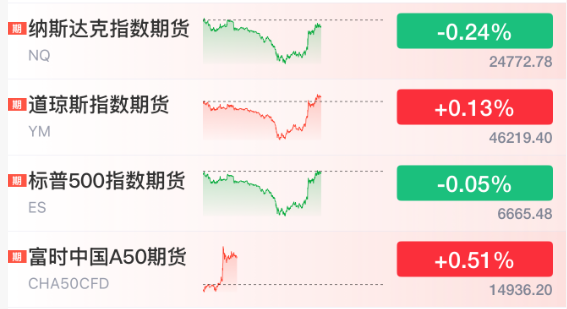
Group 1 - The core viewpoint of the article highlights President Trump's recent comments indicating a potential shift in negotiations, which has led to a market reaction characterized by the "TACO" trading strategy, suggesting that he may adopt a hardline stance before ultimately conceding to reach agreements [1] - The "TACO" strategy, which stands for "Trump Always Chickens Out," reflects a pattern observed in the capital markets during Trump's presidency, where initial market declines are followed by recoveries as negotiations progress [1] - Following the news, U.S. stock index futures experienced a sharp rise, with the Dow futures turning positive, and the FTSE China A50 futures index also increasing by approximately 0.5% [1] Group 2 - Safe-haven assets such as gold and silver saw a short-term decline in response to the market's reaction to Trump's comments [3] - The latest gold price was reported at 4318.63, reflecting a decrease of 7.22 or 0.17% from the previous session, with a trading range indicating volatility [4]
直线拉升!刚刚!特朗普,改口了
Zhong Guo Ji Jin Bao· 2025-10-17 13:39
Group 1 - The core viewpoint of the news is that President Trump has changed his stance again, leading to a market reaction characterized by the "TACO" trading strategy, which reflects his tendency to adopt a tough negotiating position before ultimately conceding to reach agreements [1] - Following the news, U.S. stock index futures surged, with the Dow futures turning positive, and the FTSE China A50 index rising approximately 0.5% [1] - The term "TACO" stands for "Trump Always Chickens Out," indicating a market strategy that capitalizes on Trump's negotiation style since he took office in 2025 [1] Group 2 - Safe-haven assets such as gold and silver experienced a sharp decline in response to the market developments [3] - Gold prices showed a slight decrease of 0.17%, with the latest price at 4318.63, down by 7.22 [4] - Silver prices also fell by 0.72%, with the latest price at 53.71, down by 0.39 [5]

直线拉升!刚刚!特朗普,改口了
中国基金报· 2025-10-17 13:34
Group 1 - The article discusses the "TACO" trading strategy, which stands for "Trump Always Chickens Out," reflecting the tendency of President Trump to adopt a tough stance in negotiations before ultimately conceding to reach agreements, impacting market behavior positively after initial declines [2] - Following Trump's recent comments, U.S. stock index futures surged, with the Dow futures turning positive, and the FTSE China A50 futures index rising approximately 0.5% [2] - The article notes a short-term drop in safe-haven assets such as gold and silver following the news [3] Group 2 - Gold prices showed a slight decline, with the latest price at 4318.63, down 7.22 or 0.17% from the previous close, and a trading range of 4278.78 to 4379.38 [4] - Silver prices also experienced a decrease, with the latest price at 53.71, down 0.39 or 0.72%, and a trading range of 52.88 to 54.44 [5]

中银晨会聚焦-20251017
Bank of China Securities· 2025-10-17 02:17
Key Points Summary Core Insights - The report highlights a positive trend in China's export growth, with a year-on-year increase of 6.1% in the first three quarters, and a notable rise of 8.3% in September alone, supported by ASEAN and EU markets [5][6] - The report indicates a mixed performance in inflation metrics, with the Consumer Price Index (CPI) showing a year-on-year decline of 0.3% in September, while the Producer Price Index (PPI) saw a slight improvement with a year-on-year decrease of 2.3% [9][12] - The report discusses the impact of new port fees imposed by the U.S. on Chinese shipping, which may lead to increased operational costs and a potential restructuring of trade routes [28][31] Macroeconomic Overview - In September, China's exports continued to show positive growth, with a trade surplus of $8750.8 billion and imports declining by 1.1% [5][6] - The report notes that high-tech product imports remain robust, with significant growth in semiconductor and machinery imports [7] - The financial data for September indicates a slight improvement in social financing and M1 growth, while M2 growth remains subdued, reflecting weak demand in the real economy [14][15] Inflation Analysis - The CPI in September showed a 0.1% month-on-month increase, while the core CPI rose by 1.0% year-on-year, indicating a gradual recovery in core inflation metrics [9][11] - Food prices have been a significant factor in the CPI decline, with a year-on-year drop of 4.4% in September, impacting overall inflation [10][11] - The PPI's year-on-year decline has narrowed, suggesting potential stabilization in industrial prices due to policy effects and market adjustments [12][27] Industry Insights - The manufacturing sector's PMI in September was recorded at 49.8%, indicating a slight recovery in manufacturing activity, with new orders and production indices showing positive trends [18][19] - The report emphasizes the need for continued domestic demand policies to support the manufacturing sector amid ongoing challenges [20] - The transportation sector faces increased costs due to new U.S. port fees, which may affect shipping profitability and lead to a shift towards indirect trade routes [28][30] Strategic Considerations - The report suggests that despite short-term market fluctuations, the underlying industrial trends remain strong, with a focus on sectors that can adapt to changing trade dynamics [21][24] - The potential for "迂回贸易" (indirect trade) may reshape logistics and supply chains, particularly in response to increased operational costs from new tariffs [31] - The report highlights the importance of monitoring macroeconomic policies and their impact on market expectations, particularly in light of upcoming economic meetings [22][24]





国贸商品指数日报-20251016
Guo Mao Qi Huo· 2025-10-16 05:46
1. Report Industry Investment Rating - No relevant content found 2. Core Viewpoints of the Report - On Wednesday (October 15), the domestic commodity futures market closed with mixed results, with most industrial products falling and most agricultural products rising [1] - For the black series, the steel market lacks positive drivers, the post - holiday supply - demand pattern is weak, and the inventory has increased significantly. The price increase pressure persists [1] - For basic metals, market risk preference has declined, but the cost side still supports the medium - term copper price, and short - term copper prices are expected to continue to fluctuate at a high level [1] - For energy and chemical products, international oil prices have hit new lows, and short - term oil prices may fluctuate and repair, but the price center may move down in the medium to long term [1] - For oils and fats and oilseeds, the domestic oils and fats market currently lacks positive support, but there is still upward momentum in the medium to long term. In the short term, grains may continue to fluctuate within a range [1] 3. Summary by Related Categories 3.1 Commodity Futures Market Performance - Shipping futures led the gains, with the container shipping index (European line) rising 4.25%; metals all rose, with silver rising 2.30%; oils and fats and oilseeds mostly rose, with soybeans rising 0.76%; agricultural and sideline products all rose, with corn rising 0.67% [1] - Energy products led the losses, with low - sulfur fuel oil falling 1.90%; non - metallic building materials all fell, with glass falling 1.74%; the black series mostly fell, with iron ore falling 1.46%; basic metals were mixed, with zinc falling 1.17%; chemicals mostly fell, with asphalt falling 1.10%; new energy materials mostly fell, with lithium carbonate falling 0.60% [1] 3.2 Black Series - The five major steel product inventories increased by 8.68% week - on - week to 1.60072 billion tons last week, with the increase much higher than 3.65% in the same period last year and a year - on - year increase of 19.5%. The accumulated inventory needs time to digest, exports face new challenges, and steel supply is expected to remain high, resulting in prominent fundamental contradictions and continuous price increase pressure [1] 3.3 Basic Metals - In the copper market, the intensification of Sino - US game has boosted risk - aversion sentiment and weakened global economic growth expectations. The cost side still supports the medium - term copper price, and short - term copper prices are expected to continue high - level fluctuations [1] 3.4 Energy and Chemical Products - International oil prices hit new lows since early May, and short - term oil prices may fluctuate and repair, but the price center may move down in the medium to long term due to the uncertainty of the macro - level [1] 3.5 Oils and Fats and Oilseeds - The domestic oils and fats market currently lacks positive support and is in a weak adjustment. The export data of Malaysian palm oil has improved, and there is still upward momentum in the medium to long term. The supply of South American soybeans is expected to be strong, and domestic soybean and soybean meal inventories are under pressure. In the short term, grains may continue to fluctuate within a range [1] 3.6 Index Performance - The Guomao Commodity Composite Index rose 0.98% from October 14 to October 15 [1] - The Guomao Bulk Commodity Index rose 0.15% [1] - The Guomao Non - Metallic Mineral Products Index rose 0.13% [1] - The Guomao Agricultural and Sideline Products Index fell 0.66% [1] - The Guomao Petroleum and Oil Index rose 1.03% [1] - The Guomao Primary Chemicals Index rose 0.04% [1] - The Guomao Oils and Fats and Oilseeds Index rose 0.27% [1]
华尔街大行三季报超预期,缘何这些高管仍对前景担忧?
Di Yi Cai Jing Zi Xun· 2025-10-16 05:35
Core Viewpoint - Major U.S. banks, including Goldman Sachs, JPMorgan Chase, Citigroup, and Wells Fargo, reported better-than-expected Q3 revenues and profits driven by active trading and corporate lending, despite concerns over the economic outlook due to recent turmoil in the private credit market [1][3]. Group 1: Financial Performance - The U.S. stock market's record highs this year have led hedge funds and other institutions to increase trading and borrowing, boosting various investment banking activities [3]. - The total profit of the six largest U.S. banks reached nearly $41 billion in the past three months, a 19% increase year-over-year [3]. - Goldman Sachs' investment banking revenue grew by 42% in Q3, while JPMorgan and Citigroup saw their investment banking fees rise by 16% and 17% respectively [3]. Group 2: Debt and Equity Markets - Debt capital market activities and corporate lending are surging, with Goldman Sachs' debt underwriting revenue increasing by 30% year-over-year [4]. - Initial public offerings (IPOs) are experiencing a resurgence, benefiting Wall Street investment banks, with Goldman Sachs' equity underwriting revenue up by 21% [4]. - Trading revenues in the post-pandemic era continue to set new highs, with JPMorgan and Goldman Sachs reporting year-over-year increases of 25% and 12% respectively [4]. Group 3: Economic Concerns - Despite strong performance, bank stocks declined due to concerns over trade policies and potential government shutdowns, which could cost the U.S. economy up to $15 billion daily [6]. - Economic data has been sending mixed signals, with a cooling job market and persistent inflation, raising concerns about the overall economic outlook [6]. - Executives from major banks expressed caution regarding geopolitical uncertainties and the potential impact of Federal Reserve policies on economic performance [7]. Group 4: Credit Market Risks - Recent bankruptcies in the automotive sector have raised alarms about underlying economic issues, with major banks exposed to these risks [8]. - JPMorgan's CEO warned that the current credit market conditions could indicate excessive speculation, suggesting that more similar situations may arise if the economy faces a downturn [8].