AI大模型

Search documents
机器人产业ETF(159551)涨超1.3%,机构称人形机器人产业化进程加速
Mei Ri Jing Ji Xin Wen· 2025-12-17 06:37
Group 1 - The core viewpoint indicates a significant increase in domestic and international excavator sales in November 2025, despite a relatively weak real estate demand in China [1] - Domestic fixed asset investment in infrastructure continues to show a downward trend, while mining fixed asset investment has seen a slight recovery over the past two months [1] - The average working hours and operating rates of major engineering machinery products have shown a month-on-month improvement in November [1] Group 2 - The penetration rate of engineering machinery in the mining sector is expected to increase, driven by the commencement of major national projects, accelerated funding, and replacement policies [1] - High demand persists in Africa and regions along the Belt and Road, while demand in Europe and North America is gradually recovering [1] - The U.S. government is focusing on the development of humanoid robots, intending to accelerate policy issuance to boost industry growth [1] Group 3 - Domestic central and local governments continue to issue policies to promote the development of humanoid robots, alongside advancements in AI models and dexterous hands, which are expected to accelerate the industrialization process [1] - The Robot Industry ETF (159551) tracks the Robot Index (H30590), which focuses on the robotics and automation sectors [1] - The index selects listed companies involved in industrial and service robots and their supply chains, reflecting the overall performance of the robotics industry [1]

青春华章•青春问答 | 祝铭明:拥抱未来,在AR“无人区”等风来
Yang Shi Wang· 2025-12-17 06:33
Core Insights - The article discusses the potential transformation of mobile phones into accessories for AR glasses, highlighting how future interactions may be revolutionized [2] - It features an interview with AR industry pioneer Zhu Mingming, who explains the fundamental differences between VR and AR, and how AI large models can empower smart glasses [2] - Zhu believes that China has already gained a leading position in this sector and encourages young people to leverage their youth as a powerful asset, warning that stagnation poses the greatest risk [2] Industry Overview - The conversation emphasizes the significance of augmented reality (AR) and virtual reality (VR) technologies, particularly in the context of smart glasses [2] - The integration of digital information with reality through AI advancements is a key focus, suggesting a shift in how users will interact with technology [2] Market Position - Zhu Mingming asserts that China is at the forefront of the AR industry, indicating a competitive advantage in the global market [2] - The encouragement for young individuals to innovate and adapt reflects a broader trend of valuing agility and creativity in technology development [2]
重庆围绕行业大模型等领域开展关键核心技术攻关!科创人工智能ETF华夏(589010) 午后震荡上行,持仓股星环科技领涨
Mei Ri Jing Ji Xin Wen· 2025-12-17 06:24
Group 1 - The core viewpoint of the news highlights the positive performance of the AI sector, particularly the Sci-Tech Innovation Artificial Intelligence ETF (589010), which rose by 1.47%, indicating strong market confidence and a robust upward trend in prices [1] - The trading volume exceeded 61 million yuan, reflecting active market turnover and investor confidence in the long-term value of the AI sector [1] - The report mentions a surge in stock prices within the sector, with notable gains from companies such as Xinghuan Technology (over 5%), Hehe Information (over 4%), and Lingyun Light (over 3%), showcasing significant profitability for investors [1] Group 2 - Citic Construction Investment Securities emphasizes the importance of accelerating innovation in artificial intelligence and digital technologies as outlined in the "14th Five-Year Plan," highlighting the low current penetration rate of AI large models and the beginning of their industrialization cycle [2] - The report suggests that capital expenditure in AI computing power will grow alongside the revenue from large models, indicating a high potential investment ceiling [2] - The Sci-Tech Innovation Artificial Intelligence ETF closely tracks the Shanghai Stock Exchange Sci-Tech Innovation Board AI Index, covering high-quality enterprises across the entire industry chain, benefiting from high R&D investment and policy support [2]

优必选获AI大模型公司订单,两部委优化集中式新能源市场报价 | 投研报告
Zhong Guo Neng Yuan Wang· 2025-12-17 05:08
Group 1: Industry Overview - The average price of 130um 182-183.75mm N-type silicon wafers is 1.18 RMB/piece, remaining stable compared to last week, while the 130um 210mm silicon wafers are priced at 1.23 RMB/piece, also unchanged [1][3] - Silicon wafer prices show signs of stabilization after a period of decline, with a production cut of approximately 16% in December, leading to a new low in output for the year [1][3] - The reduction in production is a consensus decision among companies due to insufficient demand, losses, and inventory pressure, indicating that silicon wafer prices are expected to remain in a consolidation phase in the short term [1][3] Group 2: Company Developments - UBTECH has secured over 50 million RMB in orders for humanoid robots from a leading AI model company, with the WalkerS2 robot being the primary product, set for delivery within the year [1] - Midea has officially launched the MIROU, a six-arm wheeled humanoid robot, which features stable elevation and 360-degree rotation capabilities, along with six bio-inspired mechanical arms for versatile operations [1] Group 3: Market Dynamics - The average price of polysilicon is 52.0 RMB/kg, remaining stable, while granular silicon is priced at 50.0 RMB/kg, also unchanged, with a projected production of 113,500 tons in December [3] - The average price of 182-183.75mm N-type battery cells is 0.28 RMB/W, reflecting a 1.8% decrease from last week, with a planned production cut of approximately 12.5% in December [4] - The average price of 182*182-210mm TOPCon double-glass modules is 0.693 RMB/W, remaining stable, while the 210mm N-type HJT modules have seen a price decrease [5] Group 4: Investment Recommendations - Key recommendations include companies focusing on BC new technology such as Aiko and Longi Green Energy, supply-side companies like Daqo New Energy and Flat Glass, and energy storage companies like HBS and Sungrow [6] - Companies to actively monitor include GCL-Poly, Tongwei, Xinyi Solar, TCL Zhonghuan, and others in the solar energy sector [6]
青春华章 青春问答 | 祝铭明:拥抱未来,在AR“无人区”等风来
Yang Shi Wang· 2025-12-17 04:48
Core Viewpoint - The article discusses the potential transformation of mobile phones into accessories for AR glasses, highlighting how future interactions may be revolutionized through augmented reality technology [1] Group 1: AR and VR Distinction - The conversation emphasizes the fundamental differences between Virtual Reality (VR) and Augmented Reality (AR), providing insights into their unique characteristics and applications [1] Group 2: AI and Smart Glasses - The article reveals how AI large models can empower smart glasses, enabling the overlay of digital information onto the real world, thus enhancing user experience and interaction [1] Group 3: China's Position in AR Industry - The discussion asserts that China has already gained a leading edge in the AR sector, positioning itself favorably for future developments and innovations in this field [1] Group 4: Encouragement for Youth - The industry leader encourages young individuals to leverage their youth as a powerful asset, warning that stagnation poses the greatest risk to progress and innovation [1]
“天才少女”罗福莉小米首秀:国内外模型代差从三年缩至数月
Bei Ke Cai Jing· 2025-12-17 04:01
Core Insights - The next generation of intelligent systems is envisioned as true "agents" that understand and coexist with the world, rather than mere language simulators [1] - The capabilities of these agents include task execution, memory, reasoning, autonomous planning, decision-making, and execution, as well as unified multi-modal perception integrated into smart devices [1] Company Developments - Luo Fuli, a 95-born AI prodigy, has joined Xiaomi as the head of the MiMo large model team, with a reported annual salary in the tens of millions [2] - Xiaomi has been making significant investments in AI, with progress exceeding expectations, as stated by the company's president Lu Weibing [2] Industry Context - In 2020, Chinese open-source models were at least three years behind the world's top closed-source models, but the gap has now narrowed to mere months [2] - The emergence of AI large models like DeepSeek has contributed to the recognition of young talents in the AI field, such as Luo Fuli [2]

雷军“千万年薪”挖人,罗福莉首秀
3 6 Ke· 2025-12-17 03:32
Core Insights - Xiaomi is at a critical juncture, transitioning towards becoming a hard-tech company, with a strong focus on AI and intelligent hardware [1][5][19] - The launch of AI models like Xiaomi MiMo and MiMo-V2-Flash signifies Xiaomi's commitment to AI research and development, aiming to enhance its competitive edge in the smartphone market [2][6][12] AI Model Development - Xiaomi released its first inference model, Xiaomi MiMo, in April 2025, showcasing impressive performance in mathematical reasoning and coding competitions [1][6] - The latest model, MiMo-V2-Flash, features 309 billion parameters and has achieved top rankings in global open-source model benchmarks, outperforming many competitors in both performance and cost efficiency [2][12][14] Strategic Partnerships and Talent Acquisition - The appointment of Luo Fuli, a prominent AI talent, reflects Xiaomi's aggressive strategy to enhance its AI capabilities, with significant financial investments in talent acquisition [8][11][19] - Luo Fuli emphasized the need for AI systems to evolve beyond mere language processing to become true intelligent agents capable of understanding and interacting with the world [12][19] Market Trends and Competitive Landscape - The AI model landscape is rapidly evolving, with various competitors like Huawei, OPPO, and Vivo also investing in AI technologies, indicating a highly competitive environment [6][19] - The success of AI-integrated devices, such as the Nubia M153, demonstrates the growing consumer demand for AI capabilities in smartphones, which Xiaomi aims to capitalize on [16][17] Investment and R&D Commitment - Xiaomi plans to invest 30 billion yuan in R&D for 2025 and an additional 200 billion yuan over the next five years, covering multiple technology domains including AI [19][20] - The company has filed over 40,000 global patents, indicating a strong commitment to innovation and technology development [19]

AI红娘杀入市场,5万美元找“灵魂伴侣”,婚姻大事能被算法拯救?
3 6 Ke· 2025-12-17 03:31
Core Insights - Keeper, an AI startup, has launched a dating platform with a controversial "50,000 USD plan" for couples who successfully match and marry through the service [3][10] - The platform aims to leverage advanced AI algorithms to improve matchmaking quality, contrasting with traditional dating services that focus on quantity [11][12] - Despite its innovative approach, Keeper's success rate for establishing long-term relationships is only 10%, indicating room for improvement in its AI matching capabilities [10][15] Company Overview - Keeper was founded in 2022 and has attracted 1.5 million registered users, with 300,000 accounts created [4] - The CEO, Jake Kozloski, was motivated to create Keeper due to personal experiences with his parents' marriage, believing that AI can help individuals find compatible partners [7] Business Model - The "50,000 USD plan" is structured as a success fee, only payable if the relationship meets specific criteria, such as co-parenting or maintaining a stable relationship for 18 months [12][14] - Users must complete detailed profiles and questionnaires, and only paid users can access all recommended matches, highlighting a tiered service model [9][10] Market Context - The dating industry is facing challenges, with traditional platforms experiencing declining user engagement and interest [18][21] - Keeper's use of AI is seen as a potential turning point in the industry, aiming to reduce ineffective matches and enhance user experience [18][21] Competitive Landscape - Other platforms like Soul, Tantan, and Momo are also integrating AI to improve user interactions and reduce awkwardness in conversations [21] - Keeper's model, while controversial, offers a streamlined service for users seeking long-term relationships, differentiating it from platforms that cater to a broader social interaction [21]

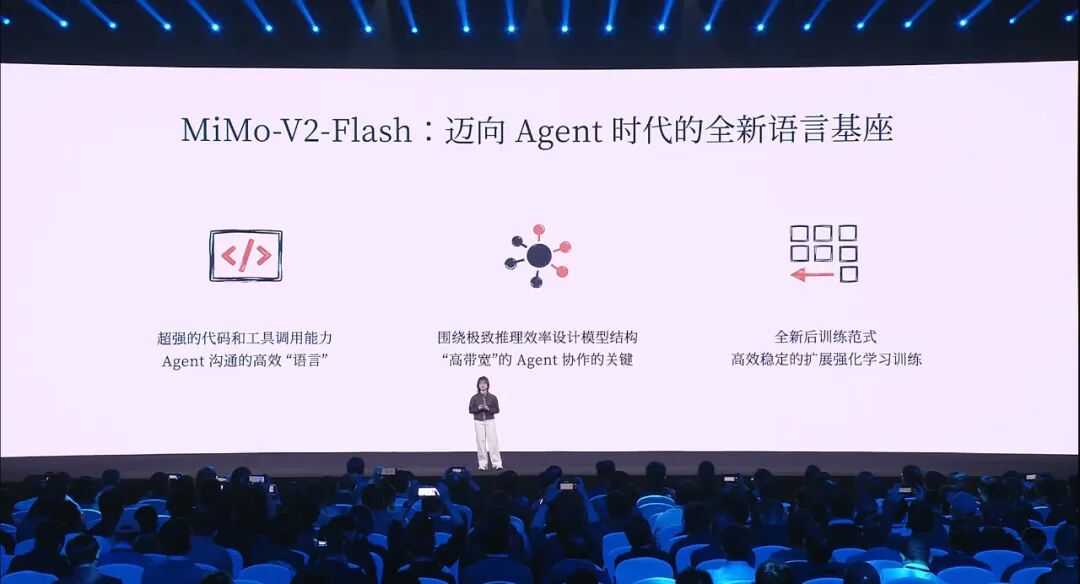
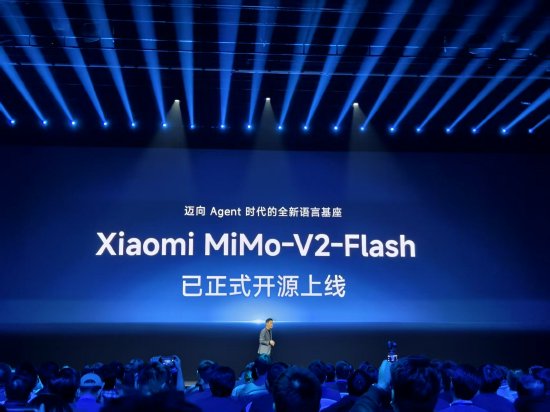
小米自研大模型MiMo-V2-Flash正式开源上线,卢伟冰:迈向Agent时代的全新语言基座
Xin Lang Cai Jing· 2025-12-17 02:34
Core Insights - Xiaomi has officially launched its self-developed AI large model, Xiaomi MiMo-V2-Flash, which is described as a new language foundation for entering the Agent era [1][3] Summary by Categories AI Development - Xiaomi has introduced a timeline for its MiMo series, which includes the inference large model MiMo-7B, the visual inference large model MiMo-VL, the native end-to-end audio generation model MiMo-Audio, the edge visual language large model MiMo-VL-Miloco, and the embodied large model MiMo-Embodied [1][3]
显卡还没跑满,数据中心先被“网线”卡脖子了
3 6 Ke· 2025-12-17 01:23
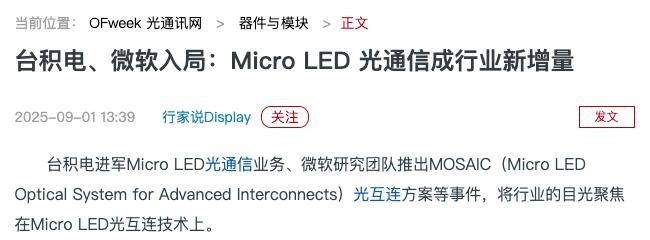
Core Viewpoint - Microsoft is researching Micro LED optical interconnect technology (MOSAIC) to address data transmission bottlenecks in computing centers caused by insufficient bandwidth [1][25]. Group 1: Data Transmission Challenges - Data centers face limitations in bandwidth due to traditional copper cables and optical fibers, which cannot meet the high-speed requirements of AI computing [2][12]. - The typical maximum speed of home network cables is 1 Gbps to 2.5 Gbps, while data center ports commonly operate at 100 Gbps, with AI centers requiring speeds starting at 400 Gbps [4][6]. - The increasing size of AI models necessitates significant data exchange between servers and GPUs, leading to higher bandwidth demands [6]. Group 2: Limitations of Current Technologies - Copper cables can only maintain high transmission speeds over short distances (1-2 meters), while optical fibers, although faster and capable of longer distances, suffer from high power consumption and reliability issues [8][9]. - Using optical fibers exclusively can lead to increased power consumption by 17% and frequent link failures in large GPU clusters [9][11]. Group 3: Introduction of MOSAIC Technology - MOSAIC utilizes Micro LED pixels as light sources, allowing each pixel to function as an independent data transmission channel, enabling a new method of data transfer [14][16]. - Unlike traditional optical communication, which relies on high-speed narrow bandwidth, MOSAIC operates on a "wide and slow" principle, achieving high bandwidth through multiple low-speed channels [16][17]. - MOSAIC can achieve 800 Gbps bandwidth using 400 Micro LED pixels, each transmitting at 2 Gbps, which is a significant advancement over traditional methods [17][21]. Group 4: Advantages of MOSAIC - MOSAIC technology promises to reduce power consumption by up to 68% compared to traditional optical interconnects, while also significantly improving reliability [23]. - The compact size of Micro LED modules allows for high-density configurations without increasing the overall footprint compared to traditional optical modules [19][22]. - The use of multi-core imaging fibers in MOSAIC can support hundreds of optical channels, surpassing the limitations of copper cables and traditional optical fibers [22]. Group 5: Future Outlook - Currently, MOSAIC is in the technical validation stage, with companies like TSMC and others working on prototypes and industry positioning for future commercialization [25]. - The potential of MOSAIC to enhance communication efficiency could address the current bottlenecks in computing centers, making it a critical development in the AI competition landscape [25].