
扩大内需

Search documents
消费板块2026年展望:政策密集出台推动行业高质量发展 消费板块有望接力科技轮动
Zhong Guo Jin Rong Xin Xi Wang· 2025-12-31 10:49
Core Insights - In 2025, the A-share consumer sector is undergoing unprecedented changes, shifting from "scale expansion" to "quality improvement and efficiency enhancement" amid external uncertainties like global economic fluctuations and geopolitical tensions [1][2] - The focus of competition is moving from price wars to service quality and operational efficiency, prompting companies to adopt refined operational strategies [2][4] Policy Initiatives - Multiple policies have been introduced to regulate market order, boost consumer confidence, and promote high-quality development in the consumer sector [2][3] - The National Development and Reform Commission and the Ministry of Finance announced a plan for a large-scale equipment update and a consumption upgrade policy for 2026, with an initial allocation of 62.5 billion yuan for consumer goods [2][3] - A joint notification from the Ministry of Commerce, the People's Bank of China, and financial regulators aims to enhance collaboration between commerce and finance to stimulate consumption [2][3] Industry Challenges - Many companies are facing the challenge of "increasing revenue without increasing profit," as consumer demands for product quality, service experience, and transparency rise [2][3] - The government is addressing industry pain points through regulatory measures and encouraging innovation to ensure food safety, fair pricing, and consumer rights protection [3] Future Outlook - Analysts from various brokerages express optimism about investment opportunities in the consumer sector for 2026, with a focus on different sub-sectors [5][6] - The domestic demand policy is expected to strengthen, making the consumer sector a key area for investment alongside technology themes [6][7] - Specific recommendations include focusing on high-dividend companies and sectors benefiting from wealth effects and supply-side optimization [8][9]
金融“造血”新图景 | 前瞻2026
Guo Ji Jin Rong Bao· 2025-12-31 10:26
Core Viewpoint - The central economic work conference in 2025 emphasizes financial support for key areas such as expanding domestic demand, technological innovation, and small and micro enterprises, marking a shift from "total stability" to "structural reshaping" in financial regulation [1][2]. Financial Support Focus - Financial institutions will focus on addressing the "technology-industry-finance" bottlenecks, transitioning from "blood transfusion" support to "blood production" empowerment, ensuring that financial resources are precisely allocated to stimulate the economy [1][3][4]. Macro Perspective - Financial regulation is shifting from "total stability" to "structural reshaping," guiding funds away from over-concentrated real estate and traditional infrastructure towards higher marginal output areas like domestic demand, technological innovation, and small enterprises [4][5]. Micro Perspective - Differentiated financial tools will assist small and micro enterprises and tech companies in overcoming financing challenges, ensuring that financial resources effectively reach the economy's micro-level and innovation hubs [4][14]. Expanding Domestic Demand - The expansion of domestic demand faces structural bottlenecks on both the demand and supply sides, including high thresholds for consumer credit and insufficient financial support for specific consumption [7][8]. - The core of expanding domestic demand is "scenario-based empowerment + inclusive downscaling," focusing on customized financial products and enhancing financial infrastructure in rural areas [7][8]. Supporting Technological Innovation - Financing for technological innovation encounters three main challenges: light assets, long cycles, and high risks, necessitating a comprehensive financial service chain that covers all stages of enterprise development [11][12]. - The focus should be on "growth" rather than "assets," providing full-cycle financial services to tech companies and facilitating the integration of technology and industry [12][13]. Assisting Small and Micro Enterprises - Small and micro enterprises face financing barriers due to credit gaps, information asymmetry, and weak risk resistance, requiring a focus on digital credit empowerment and the integration of various data sources to enhance credit evaluation [14][15]. - The strategy should shift from "funding blood transfusion" to "capacity building," emphasizing cost reduction, resilience enhancement, and direct financing options [15].
年底了,果然开始有更多好消息了
大胡子说房· 2025-12-31 10:17
Group 1 - The core message of the article emphasizes the positive impact of recent policy changes on the real estate market, particularly the reduction of the value-added tax (VAT) for housing sales, which aims to lower transaction costs and stimulate consumption [1][2] - The VAT exemption for properties held for over two years and the reduction from 5% to 3% for properties held for less than two years will significantly decrease the financial burden on home sellers, potentially saving them tens of thousands of yuan [1] - The government's focus on stimulating consumption is further supported by the early allocation of 625 billion yuan in special bonds for consumer goods, indicating a strong commitment to boosting domestic demand [2][4] Group 2 - The article highlights the importance of increasing income levels as a fundamental solution to enhance consumption, with major companies like JD, ByteDance, and BYD announcing salary increases, signaling a positive trend in wage growth [2][4] - The establishment of national venture capital funds targeting hard technology sectors is expected to inject substantial capital into the market, with a focus on artificial intelligence, quantum technology, and other advanced fields, potentially mobilizing trillions in social capital [4][5] - The article notes a shift in the economic landscape, moving from reliance on real estate and manufacturing to a focus on technological innovation and industrial upgrades, reflecting a broader transformation in wealth accumulation and economic growth strategies [24][32]


2025年港股收官 恒指年涨幅27.77% “深港指数”领涨全球
Mei Ri Jing Ji Xin Wen· 2025-12-31 07:15
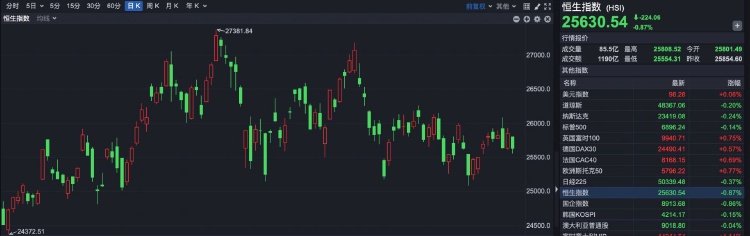
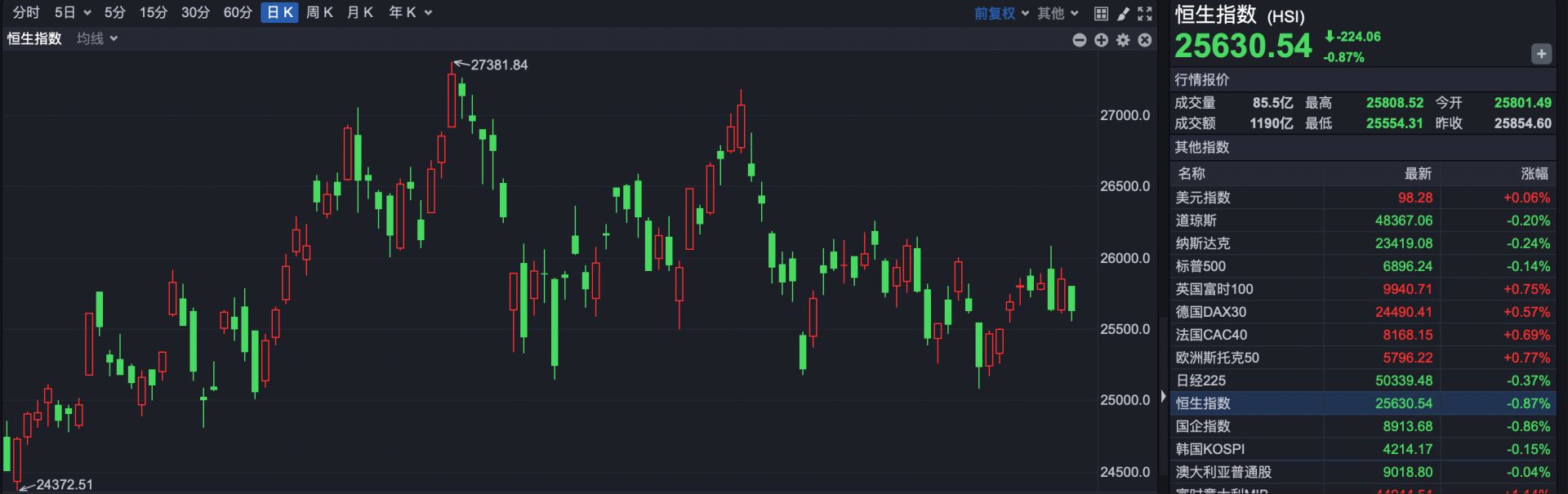
Core Viewpoint - The Hong Kong stock market experienced a mixed performance in 2025, with the Hang Seng Index achieving a year-to-date increase of 27.77%, making it the second-best performer globally after the Shenzhen Composite Index, which rose by 30% [5][6]. Group 1: Market Performance - The Hang Seng Index closed at 25,630.54 points, down 224.06 points or 0.87% on the last trading day of the year [1]. - The Hang Seng Tech Index closed at 5,514.98 points, down 62.40 points or 1.12% [3]. - In 2025, the Hang Seng Index recorded a cumulative increase of 27.77%, while the Hang Seng Tech Index also saw a two-year consecutive rise with a 23.45% increase [5]. Group 2: Sector Performance - The gold and precious metals sector showed remarkable performance, with Zhenfeng Gold (HK01815) increasing over 1200% and Lingbao Gold (HK03330) rising over 570% throughout the year [5]. - The semiconductor sector also performed well, with Huahong Semiconductor (HK01347) up over 240% and SMIC (HK00981) up over 120% [5]. - The brokerage sector saw Guotai Junan International increase by over 140% [5]. - The biopharmaceutical sector was active, with Yaojie Ankang rising over 770% [5]. - Conversely, the real estate and education sectors underperformed due to industry adjustments [5]. Group 3: Market Trends and Outlook - The market showed a subdued performance on the last trading day due to holiday factors, with mixed results among tech stocks and a notable decline in automotive stocks [7]. - In 2025, the Hong Kong market is expected to see a significant influx of southbound capital, with net purchases exceeding 1.4 trillion HKD, and cumulative net purchases surpassing 5 trillion HKD [7]. - Looking ahead to 2026, the industry anticipates a favorable environment for global liquidity, with potential improvements in the profitability of Hong Kong-listed companies driven by policies promoting technological innovation and domestic demand [9].

从决胜到开局
Jing Ji Wang· 2025-12-31 07:14
Group 1 - The year 2025 is significant as it marks both the decisive year of the "14th Five-Year Plan" and the planning year for the "15th Five-Year Plan" [1] - The Central Economic Work Conference focuses on the current economic situation and outlines strategies for expanding domestic demand, supporting the private economy, advancing artificial intelligence, promoting institutional openness, facilitating green transformation, ensuring coordinated development, and enhancing urban-rural integration [1] - These strategies are crucial not only for the long-term strategic layout of the country but also closely related to the daily lives and happiness of the citizens [2] Group 2 - The article emphasizes the importance of understanding the implications of the "15th Five-Year Plan" suggestions, particularly in the context of consumption upgrades and the integration of quality goods and services into everyday life [2] - It highlights opportunities for small and medium-sized enterprises in the AI era and addresses challenges related to home-based elderly care [2] - The publication aims to provide valuable development references for the new journey of the "15th Five-Year Plan" by interviewing experts, scholars, and business representatives [2]

特别策划丨中国大市场将为世界带来广阔市场机遇、投资机遇、增长机遇
Sou Hu Cai Jing· 2025-12-31 06:36
Core Viewpoint - The construction of a strong domestic market is a strategic support for Chinese-style modernization and an important foundation for optimizing the supply system and promoting high-quality development [5][6][22]. Economic Outlook - In 2026, the external environment is expected to continue impacting China's economic development, which still faces challenges. However, the overall conditions supporting long-term economic growth remain unchanged, with strong industrial foundations and broad market space [1][6]. - International organizations and investment banks have raised their economic growth forecasts for China in 2026, indicating a positive outlook for China's role in global trade and value chains [1][6]. Domestic Market Challenges - The supply-demand imbalance in China is a significant issue, limiting the release of the advantages of its large-scale market and hindering the optimization of the supply system [7][8][9]. - Key industries in China face core technology deficiencies, leading to vulnerabilities in the industrial chain. Despite strong competitiveness in manufacturing, there are notable gaps in high-tech and high-value-added sectors compared to developed economies [7][23]. - Some industries experience "involution" competition, resulting in low production efficiency and resource waste. The average profit margin for large industrial enterprises in 2024 is only 5.39%, significantly lower than that of developed countries [8][24]. Strategies for Supply Optimization - Expanding domestic demand is crucial for optimizing the supply structure. The focus should be on enhancing the adaptability and balance between supply and demand to promote a virtuous economic cycle [10][11][25]. - Measures to boost consumption include increasing residents' income, improving social security systems, and encouraging innovation in products and services to enhance consumer confidence [10][11][25]. - Effective investment should be expanded to optimize the supply structure, combining investments in physical assets and human capital to drive high-quality development [11][26]. Global Significance of Domestic Market Expansion - A strong domestic market not only supports China's modernization but also serves as a source of vitality for global economic recovery. China has become the second-largest consumer and import market globally, providing significant opportunities for other countries [13][28]. - The ongoing reforms in foreign investment management and the improvement of the business environment in China are attracting foreign investment, with 22.9 million new foreign enterprises established during the "14th Five-Year Plan" period [13][28]. - The strong domestic market can inject new growth opportunities into the world economy, helping to counteract trade protectionism and promote a more open and inclusive global economic environment [14][28].

2025年港股收官,恒指年涨幅27.77% ,“深港指数”领涨全球
Mei Ri Jing Ji Xin Wen· 2025-12-31 05:33
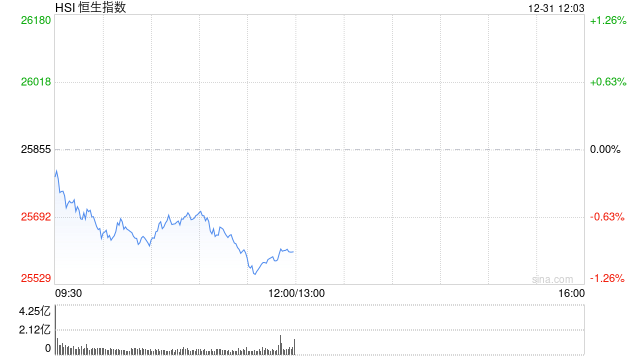
炒股就看金麒麟分析师研报,权威,专业,及时,全面,助您挖掘潜力主题机会! 港股速报 | 2025年港股收官 恒指年涨幅27.77% "深港指数"领涨全球 每经记者|曾子建 每经编辑|袁东 12月31日,因元旦假期,今日港股只交易上午半天。 截至收盘,恒生指数报收于25630.54点,下跌224.06点,跌幅0.87%。 回顾全年港股走势,在2024年上涨17.67%的基础上,恒生指数2025年累计上涨27.77%,恒生科技指数同样迎来两年连涨,2025年累计涨幅23.45%。 横向对比全球重要指数,恒生指数年涨幅仅落后深成指(截至午间收盘,深成指年内涨幅30%),位居第二。 就港股个股表现来看,年内黄金及有色金属板块涨幅亮眼,珠峰黄金(HK01815)全年涨幅超1200%,灵宝黄金(HK03330)年内涨超570%;半导体板块 表现突出,华虹半导体(HK01347)涨超240%,中芯国际(HK00981)涨超120%;券商股方面,国泰君安国际年内涨超140%;生物医药板块亦表现活跃, 药捷安康年内涨幅超770%;因行业调整,地产、教育等板块表现较弱。 今日港股盘面上,受节日因素影响,市场整体表现清淡。科网股跌 ...
港股2025年收官:恒指累计涨近28% 恒生科技指数累涨超23% 黄金板块年内涨幅亮眼
Xin Lang Cai Jing· 2025-12-31 04:04
12月31日消息,港股2025年最后半个交易日,三大指数低开低走,截至收盘,恒生指数跌0.96%,报 25606.37点,恒生科技指数跌1.24%,国企指数跌0.95%。今日港股盘面上,科网股跌多涨少,百度涨超 1%,网易跌超3%,京东、美团、阿里巴巴、快手跌超1%;汽车股高开低走,零跑汽车跌超2%;半导 体板块回调,中芯国际跌超1%;航空股涨幅居前,南方航空涨超4%;影视股活跃,大麦娱乐涨超5%。 | 初始 代码 | | 名称 | . | 最新 | 涨幅% ↓ | 年初至今涨幅% | | --- | --- | --- | --- | --- | --- | --- | | 1 | HSCEI | 恒生国企指数 | | 8905.74 | -0.95 | 22.17 | | 2 | મંદા | 恒生指数 | 1 | 25606.37 | -0.96 | 27.65 | | 3 | HSTECH | 恒生科技指数 | | 5509.26 | -1.24 | 23.30 | 从年线看,恒指全年涨27.65%,恒生科技指数全年涨23.30%,国企指数涨22.17%。年内黄金及有色金 属板块涨幅亮眼,珠峰黄金全年 ...
财政定调“大力提振消费”,“两新”政策接力,消费板块迎密集利好催化
Mei Ri Jing Ji Xin Wen· 2025-12-31 03:41
Core Viewpoint - The Hong Kong consumer sector experienced a decline, with the Hong Kong Consumer ETF (513230) showing a nearly 1% pullback, indicating market volatility and investor sentiment shifts [1] Group 1: Market Performance - The consumer stocks such as Mao Ge Ping, Mixue Group, Lao Pu Gold, Blukoo, and Pop Mart saw significant declines, while stocks like Conant Optical, Aux Electric, and Taobo showed gains [1] - The overall performance of the consumer sector reflects broader market trends and investor reactions to economic policies [1] Group 2: Economic Policy Insights - The National Financial Work Conference emphasized the continuation of a more proactive fiscal policy in 2026, focusing on domestic demand and consumer spending [1] - Key initiatives include boosting consumption through special actions, increasing effective investment, and advancing the construction of a unified national market [1] - The National Development and Reform Commission and the Ministry of Finance issued a notice regarding the implementation of large-scale equipment updates and consumer goods replacement policies for 2026, outlining support areas and subsidy standards [1] Group 3: Investment Outlook - Guojin Securities noted that the central economic work meeting prioritizes "expanding domestic demand," which may revitalize the long-dormant consumer sector and attract investor interest [1] - The anticipated increase in household income and the return of capital flows, along with rising inbound tourism, are expected to contribute to a recovery in Chinese consumption [1]
从关键词读懂2025丨攥指成拳 政策“协同”巩固经济向好基础
Xin Hua Wang· 2025-12-31 02:26
Core Viewpoint - The article emphasizes the coordinated approach of fiscal and monetary policies in 2025, aiming to stabilize growth, expand domestic demand, and promote innovation amidst complex domestic and international changes [1][2]. Fiscal and Monetary Policies - Fiscal policy has shifted from "active" to "more active," with a deficit rate reaching approximately 4%, an increase of 1 percentage point from the previous year, and the issuance of 1.3 trillion yuan in ultra-long-term special government bonds and 4.4 trillion yuan in local government special bonds [2]. - Monetary policy has transitioned to a "moderately loose" stance for the first time in over a decade, including one reserve requirement ratio cut and interest rate reduction, alongside various tools to promote reasonable growth in financial totals [2]. - In the first eleven months, the total social financing scale increased by 33.39 trillion yuan, which is 3.99 trillion yuan more than the same period last year [2]. Debt Market Coordination - The coordination in the debt market is highlighted by a significant increase in net financing of various government bonds, supported by the central bank's liquidity injections, including a net liquidity provision of 4.9 trillion yuan, which is 4.2 trillion yuan more than last year [3]. - The central bank resumed open market operations for government bonds in October, indicating a stable liquidity environment [3]. Consumption Policies - Expanding domestic demand is a top priority for 2025, with various policies introduced throughout the year to enhance consumer capacity and stimulate consumption [4]. - Fiscal policies have included special funds and structural tax reductions, while financial policies have focused on lowering financing costs and supporting consumer credit [4]. - The combination of "subsidy + credit" has effectively amplified policy effects, with 300 billion yuan allocated for subsidies to support the replacement of consumer goods [5][6]. Industrial and Financial Integration - There is a strengthened coordination between industrial and financial policies, focusing on strategic emerging industries and promoting the integration of innovation and industrial chains [7]. - Policies have been introduced to support the financing needs of technology-driven enterprises, with the bond market for technology innovation reaching over 1.8 trillion yuan by the end of 2025 [7]. - The coordinated policies have enabled a systematic approach to technological innovation, supporting the entire chain from research and development to industrialization [8].