
银发经济

Search documents
去年国家铁路发送旅客42.55亿人,创历史新高
Xin Lang Cai Jing· 2026-01-04 07:35
Core Viewpoint - The China National Railway Group aims to enhance its passenger services and expand the "China High-Speed Rail" brand by 2025, focusing on product development, brand building, and market marketing [1] Group 1: Passenger Services and Market Development - The company plans to implement market-oriented operations for tourist trains, launching 2,485 tourist train services, which represents a year-on-year increase of 33.6%, to support the tourism economy, ice and snow economy, and silver economy [1] - The company is conducting a special action to improve passenger service quality and enhance dining services on trains, while also optimizing station and train services [1] - The company will fully implement electronic invoicing for passenger services and expand convenient transfer and internet meal ordering services [1] Group 2: Targeted Discounts and Loyalty Programs - The company is optimizing ticket discount measures for key passenger groups, including children, students, and disabled military personnel [1] - Frequent travelers aged 60 and above will receive a loyalty benefit of 15 times the ticket value in points [1] Group 3: Passenger Volume and Historical Achievements - The national railway completed a passenger volume of 4.255 billion people, marking a year-on-year growth of 4.2% [1] - The peak day for national railway passenger dispatch reached 23.132 million, setting a new historical record [1]
青春赶路 岁月有暖(青年观)
Ren Min Ri Bao· 2026-01-04 06:41
Group 1 - The core message emphasizes the importance of youth taking responsibility and actively participating in their communities and fields, showcasing their growth through action and perseverance [2][3] - Youth are increasingly involved in agricultural innovation and technology, with examples of university students working closely with farmers to implement sustainable practices and researchers making significant breakthroughs in quantum physics [2] - Various supportive measures are being implemented by cities to empower youth, including tax incentives for entrepreneurs, childcare support, and community resources for new employment groups, which serve as a solid foundation for their aspirations [3] Group 2 - The "14th Five-Year Plan" highlights the need for creating new job opportunities and facilitating talent exchange between educational institutions and enterprises, which will inject momentum into youth development [3] - Emerging fields such as renewable energy, intelligent technology, and the aging economy present new opportunities for youth, requiring both individual initiative and societal support to ensure equitable access and fair opportunities [3][4] - The narrative encourages a mutual relationship between youth and society, where both parties contribute to each other's success, ultimately crafting a shared story of progress in a rapidly changing era [4]
青春赶路 岁月有暖
Xin Lang Cai Jing· 2026-01-04 06:35
Group 1 - The core message emphasizes the importance of youth taking responsibility and actively participating in their communities and fields, showcasing their growth through various challenges and experiences [1][2] - Youth engagement in agriculture and technology is highlighted, with examples of university students working alongside farmers and researchers making significant discoveries in quantum physics, demonstrating practical applications of their knowledge [2] - The concept of "youth-friendly" initiatives is introduced, where cities implement policies to support young people's work and life, including tax incentives for entrepreneurs and childcare support, creating a conducive environment for youth development [3] Group 2 - The article discusses the mutual relationship between youth and society, where young individuals take on responsibilities while society provides support, as seen in various government initiatives aimed at enhancing job opportunities and work-life balance for youth [3][4] - New fields and opportunities are emerging, such as renewable energy and smart city development, which require youth to explore and innovate, while society must ensure fair access and equal opportunities [3] - The narrative encourages young people to align their skills with societal needs, fostering a collaborative environment where both youth and society can thrive together [4]
300503,商业航天+人形机器人 历史新高!
Xin Lang Cai Jing· 2026-01-04 00:24
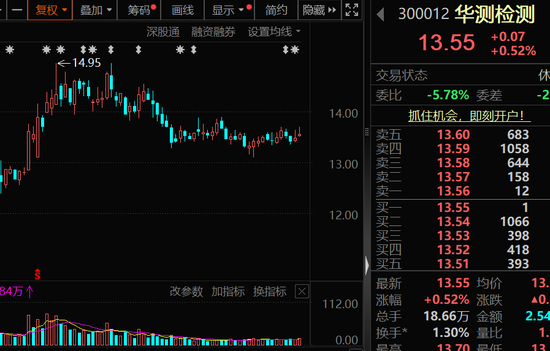
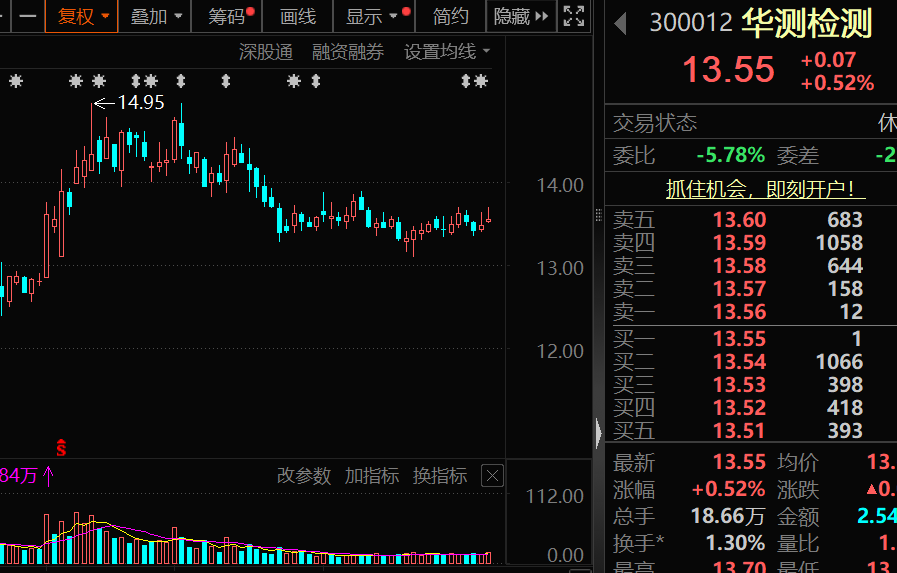
Group 1 - The core focus of Huace Testing is on performance verification of aerospace materials and reliability testing of core components, primarily serving private aerospace enterprises [10][11] - The company plans to enhance its service capabilities in the aviation sector, expanding into lifecycle testing services for new aircraft types such as drones and flying cars [10][11] - Huace Testing is strategically positioning itself in emerging sectors like AI, humanoid robots, silver economy, and low-altitude economy, with a focus on electric vehicle testing and semiconductor chip testing [10][11] Group 2 - Huace Testing has successfully integrated its acquisitions, with a focus on maintaining business continuity through complementary advantages, ensuring smooth collaboration between domestic and international teams [11] - The company has completed the acquisition of Safety SA, Emicert, Openview, and MIDAC laboratory, which are now officially consolidated into its financial statements [10][11] Group 3 - The average stock price of companies under institutional research increased by nearly 1% in the past week, with notable gains from companies like Huazhi Electromechanical, which saw a weekly increase of over 36% [14][15] - Huazhi Electromechanical has established a business partnership with Blue Arrow Aerospace in the commercial aerospace sector, while also focusing on potential applications in the aerospace and satellite fields [14][15] - The company has developed a "N+1+3" structure in its robotics business, indicating a diversified approach to core components and application scenarios [14][15] Group 4 - Companies like Aima Technology, Juxing Agriculture, LiuGong, and Xiangyu Medical have also attracted significant institutional interest, with over 50 institutions conducting research on them [13] - LiuGong reported balanced revenue distribution across nine major overseas regions, with a strong outlook for growth in the global construction machinery market by 2026 [13] - Xiangyu Medical is exploring both invasive and non-invasive brain-machine interface technologies, aiming for a unified approach to treatment effectiveness [14][15]


300503,商业航天+人形机器人,历史新高
Zheng Quan Shi Bao· 2026-01-04 00:13
Core Insights - The article highlights that Huace Testing has been the most researched stock with 79 institutions conducting investigations, focusing on its business in the commercial aerospace sector and plans for diversification and expansion in various fields [2][10]. Group 1: Company Overview - Huace Testing's business primarily focuses on performance verification of aerospace materials and reliability testing of core components, catering mainly to private aerospace enterprises [2]. - The company aims to enhance its service capabilities in the aerospace sector and expand into new areas such as drones and flying cars, establishing a comprehensive testing and certification service system [2]. Group 2: Strategic Developments - Huace Testing is strategically positioning itself in emerging sectors like AI, humanoid robots, the silver economy, and low-altitude economy, with a focus on electric vehicle testing, semiconductor testing, and robotics [2]. - The company completed the acquisition of Safety SA in South Africa, Emicert in Greece, Openview, and MIDAC laboratory in France in Q4 2025, integrating these entities into its operations [2]. Group 3: Integration and Management - Post-acquisition, Huace Testing is implementing differentiated management strategies, ensuring smooth integration by leveraging complementary strengths and maintaining operational continuity [3]. - The integration progress is reported to be on track, with a preliminary management control system established and cultural integration proceeding smoothly [3]. Group 4: Market Performance - In the past week, the average stock price of companies under institutional research increased by nearly 1%, with several stocks, including Haoshi Electromechanical, rising over 10% [6]. - Haoshi Electromechanical's stock surged over 36%, attributed to its collaboration in the commercial aerospace sector and ongoing developments in its robotics business [7]. Group 5: Other Companies - Other companies like LiuGong and Xiangyu Medical also reported positive developments, with LiuGong achieving record overseas revenue and Xiangyu Medical exploring invasive and non-invasive brain-machine interface technologies [5]. - Xiangyu Medical is focusing on non-invasive rehabilitation while initiating research in invasive technologies, collaborating with Xi'an Jiaotong University [5]. Group 6: Institutional Research - The list of companies with significant institutional research includes Huace Testing, Aima Technology, and others, with Huace Testing leading with 79 institutions [10]. - LiuGong and other companies also received substantial attention, indicating a trend of increasing institutional interest in various sectors [10].
专访联合国经社事务部助理秘书长:债务问题需寻求长期解决方案
2 1 Shi Ji Jing Ji Bao Dao· 2026-01-03 23:51
Core Insights - Global economic growth is becoming increasingly "expensive," with developing economies facing structural pressures from debt, tightening financing, and rising external uncertainties [1][2] - The UN predicts that global economic growth will be 2.5% by 2026, significantly below the pre-pandemic level of 3.2%, which is insufficient to meet sustainable development goals [3][4] Factors Affecting Economic Growth - Debt issues are critical, with many developing countries allocating over 10% of their fiscal revenue to debt servicing, limiting their ability to invest in sustainable development [4] - Trade tensions remain a significant risk, with potential new tariffs threatening economic growth [4] - Youth unemployment is a pressing challenge, with rates as high as 20% in some countries, indicating that one in five young people is struggling to find formal employment [4] - Climate shocks are increasingly frequent and severe, disrupting food supply and infrastructure, and exacerbating fiscal burdens for recovery [4] Development Financing Challenges - There is an annual investment gap of approximately $4 trillion to achieve sustainable development goals, which, while substantial, represents a small fraction of the global GDP exceeding $100 trillion [5] - The "Seville Commitment" emphasizes the need for long-term, affordable financing rather than temporary solutions, focusing on three key actions: mobilizing investments, addressing debt crises, and reforming the international financial architecture [5][6] Debt Restructuring and Solutions - The UN is advocating for a systematic approach to debt resolution, emphasizing the need for coordinated solutions rather than temporary fixes [7][8] - The G20 framework for debt relief is progressing slowly, with specific recommendations to expedite debt restructuring and ensure equitable responsibility among creditors [7][8] Investment in Human Capital and Productivity - Investment in human capital is essential, with a focus on education, skills training, and job creation as critical components for future prosperity [9][10] - Structural transformation towards high-value manufacturing and services is necessary to enhance productivity, which has seen a significant decline in developing countries [10][12] - Investments in renewable energy and infrastructure are vital for job creation and economic resilience [13][14] China's Role in Global Development - China is positioned to play a key role in advancing sustainable development through initiatives like the Global Development Initiative (GDI), which aligns with the 2030 Agenda [18][19] - The country can facilitate technology transfer, human capital development, and strengthen multilateral cooperation, reinforcing the UN's central role in global governance [19]
IP赋能,银发“生金”
Xin Hua Ri Bao· 2026-01-03 22:12
Group 1: Longevity as a Cultural and Economic Driver - Rugao is recognized as a "World Longevity City" by the United Nations, with a significantly higher number of centenarians compared to the standard for such cities, making longevity a key aspect of its cultural identity [1] - The city aims to leverage its longevity brand to enhance various industries, including agriculture, health care, and tourism, and is working towards becoming a provincial-level longevity culture protection experimental zone [1][5] - Rugao has established nearly 70 industrial enterprises in the silver-haired industry, with an annual output value exceeding 20 million yuan, and aims for the life and health industry chain to achieve an industrial output value of 5.33 billion yuan by the third quarter of 2025 [1][2] Group 2: Development of Silver Economy - Mengbaihe Company has developed "elderly mode" memory mattresses, which have been included in the Ministry of Industry and Information Technology's promotion directory for elderly products, indicating a focus on the elderly market [2] - Rugao is building a comprehensive silver economy industry chain that includes elderly product manufacturing, healthcare, health food, and elderly services, with over 30 key enterprises in elderly products and more than 20 high-tech companies in the healthcare sector [2] - The city is also focusing on creating a longevity innovation ecosystem, including the establishment of a "Rugao Longevity Culture Resource Database" and collaboration with universities for research on longevity and aging [2][3] Group 3: Agricultural and Food Industry Development - Rugao's black cabbage, known as a "longevity vegetable," is processed and can be preserved for up to 24 months, with an expected export volume of nearly 2,089 tons by 2025, reflecting a 17.9% year-on-year increase [3] - The city is transforming its natural agricultural resources into industrial advantages, with functional health foods like selenium-rich rice and ginkgo products gaining popularity, and traditional foods being certified as health products [3] - Rugao has authorized 49 enterprises under the "Su. Rugao Longevity" regional public brand, aiming for sales exceeding 500 million yuan by 2025 through branding, standardization, and green practices [3] Group 4: Community and Elderly Care Initiatives - Rugao has established 20 model community dining halls for the elderly, providing affordable meals to enhance the quality of life for seniors [4] - The city is innovating in the "public-private partnership" model to foster local elderly care enterprises, integrating medical, rehabilitation, and elderly care services, with over 9,000 beds available in care facilities [4] Group 5: Policy Support for Silver Economy - The 20th National Congress of the Communist Party of China has identified the development of the silver economy as a key measure for promoting high-quality population development, with Rugao's model being seen as replicable and promotable [5]

人形机器人跳秧歌、“苏超”万人喊加油,2025经济活力藏在哪?
Sou Hu Cai Jing· 2026-01-02 20:51
Group 1 - The core idea of the article emphasizes that China's economy is steadily advancing towards a "new and better" direction, driven by significant policy changes and technological advancements [2][19] - The "14th Five-Year Plan" is highlighted as a key policy document that focuses on investing in human capital, indicating a shift from merely accumulating resources to nurturing talent [4][19] - The military-to-civilian technology transfer is becoming increasingly evident, with advancements in defense technology spilling over into civilian applications, enhancing productivity and efficiency in various sectors [7][9] Group 2 - The rise of "new quality productivity" is discussed, showcasing how new technologies and models are being integrated into production processes, particularly through initiatives like "AI+" [9][11] - Emerging industries such as quantum technology, biomanufacturing, and hydrogen energy are gaining traction, with significant investment interest, reflecting a shift towards future-oriented sectors [11][19] - The "silver economy" is gaining momentum, driven by the increasing demand for smart products tailored for the elderly, indicating a growing market for age-friendly technologies [15][19] Group 3 - Cultural consumption is on the rise, with local sports leagues and creative products gaining popularity, showcasing a newfound confidence in Chinese culture and consumer preferences [17][19] - The article notes that the economic landscape is being shaped by a combination of policy support, technological innovation, and active consumer participation, creating a robust environment for growth [21] - The overall sentiment is optimistic, suggesting that as long as the current momentum continues, China's economic narrative will become increasingly vibrant and compelling [21]

食品饮料:千亿成长赛道,变局引领机遇-财通证券
Sou Hu Cai Jing· 2026-01-01 20:27
Group 1 - The core viewpoint of the report highlights the growth opportunities and landscape of China's nutrition and health industry, with a market size expected to reach 260.2 billion yuan by 2024, reflecting a CAGR of 6.3% from 2019 to 2024, indicating significant room for improvement in per capita consumption compared to countries like the US, South Korea, and Australia [1][20][19] - The demand side shows a trend towards "precise segmentation," driven by an aging population expanding the elderly health market, while Generation Z is emerging as a new consumer force due to increased health awareness [1][31][28] - The online channel dominates the distribution, with e-commerce expected to account for 60% of the market share by 2024, and platforms like Douyin experiencing rapid growth, achieving a 53% increase in sales [1][56][62] Group 2 - The category landscape presents a dual-track situation of "traditional steady growth and emerging explosive growth." The traditional category, particularly bone health, is growing at a rate of 18.4%, while new categories like oral anti-aging are projected to reach a market size of 65.4 billion yuan by 2024 [2][70] - The industry chain shows a fragmented competitive landscape at the downstream level, with small and medium brands entering quickly through online channels, while leading brands like Swisse maintain their position through a comprehensive brand matrix [2][10] - The report emphasizes the importance of product innovation and compliance advantages for leading companies like Xianle Health and Baihe Co., which are positioned to benefit from industry growth [2][10][19]


全面实施养老服务消费补贴
Xin Lang Cai Jing· 2026-01-01 16:39
Core Insights - By the end of 2024, China's population aged 60 and above is projected to reach 310 million, marking a transition into a moderately aging society [1] - The government has issued over 30 special policy documents in the aging sector to enhance the rights of the elderly and promote their social participation [1] - During the 14th Five-Year Plan period, 2.24 million households of elderly individuals in special difficulties have undergone home modifications, and 86,000 elderly meal service points have been established [1] Group 1 - The number of elderly care institutions and facilities has reached 396,000, with nursing beds accounting for 67.5% of total beds [1] - The silver economy is being actively developed, with Zhejiang province establishing a silver economy industrial park generating nearly 2.8 billion yuan [1] - Chengdu in Sichuan has recognized over 80 private inclusive elderly care institutions, providing more than 6,200 inclusive beds [1] Group 2 - The next five years are seen as a critical period for addressing demographic changes and aging population challenges [2] - The Ministry of Civil Affairs plans to enhance care for elderly individuals with disabilities and dementia, and to support solitary and empty-nest elderly individuals [2] - There will be a focus on cultivating the elderly care service market and implementing consumer subsidies for elderly care services [2]