地缘政治

Search documents
百利好晚盘分析:避险为王 金价走强
Sou Hu Cai Jing· 2026-01-29 09:04
Gold Market - The Federal Reserve maintained interest rates in the range of 3.5% to 3.75% during the January meeting, with Chairman Powell emphasizing that the monetary policy does not have a predetermined path and will rely on data moving forward [2] - Geopolitical tensions, particularly regarding Iran, are expected to support gold prices as President Trump warned of severe consequences for Iran's actions, while Iran's foreign minister stated that their armed forces are on high alert [2] - Analyst Chen Yu from Baillieau believes the current gold market sentiment is bullish, driven by ongoing geopolitical tensions and discussions about the next Federal Reserve chair [2] - Technically, the gold market shows strong upward momentum, with the 20-day and 62-day moving averages indicating a clear bullish trend, and a short-term focus on the support level around $5,500 [2] Oil Market - Geopolitical factors are critical in influencing oil prices, with Secretary of State Rubio indicating that the Trump administration is prepared to use military force to ensure cooperation from Venezuela's interim president [3] - Following unsuccessful discussions with Iran regarding its nuclear program, President Trump is considering significant military action against Iran, which could lead to volatility in oil prices [3] - Despite long-term oversupply pressures in the oil market, recent cold weather in North America has caused a sharp decline in U.S. production, while demand growth remains weak [3] - Technically, the oil market is currently in a strong upward trend, with the 20-day and 62-day moving averages forming a golden cross, suggesting potential for further price increases, with a focus on the support level around $63.73 [3] Dollar Index - The dollar index has shown weakness recently, influenced by President Trump's actions regarding Greenland and ongoing sales of U.S. debt by Europe, leading to a significant depreciation of the dollar [4] - The Federal Reserve's decision to maintain current interest rates and lack of a clear policy path has contributed to the dollar's decline, although Powell's comments on the next Fed chair's independence may help limit further depreciation [4] - Technically, the dollar index is currently under pressure, with recent trading showing a potential for a rebound, while short-term bearish sentiment remains dominant [4] Nikkei 225 - The Nikkei 225 index is currently experiencing a period of high-level consolidation, with previous corrections finding support at the 62-day moving average [5] - The index remains above the 62-day moving average, indicating potential for further upward movement, with a short-term focus on the support level around 53,104 [5] Copper Market - The copper market is showing strong performance, with prices expected to break out of recent consolidation patterns [6] - The market is currently above the 62-day moving average, indicating a bullish overall trend, with a short-term focus on the support level around $6.10 [6] Market Overview - Reports indicate that President Trump and Senate Minority Leader Schumer are moving towards a potential agreement to avoid a government shutdown [7] - Treasury Secretary Mnuchin stated that the independence of the Federal Reserve does not imply a lack of accountability, with a new Fed chair candidate expected to be announced soon [7] - The World Gold Council reported that global gold demand is expected to reach a new high by 2025, with central banks purchasing a net 230 tons of gold in Q4 [7] Upcoming Data/Events - Initial jobless claims for the week ending January 24 will be released at 21:30 [8] - U.S. factory orders for November will be reported at 23:00 [8]


伊朗局势持续发酵 预计原油期货仍维持震荡偏强
Jin Tou Wang· 2026-01-29 06:02
Group 1 - The domestic energy sector in the futures market showed a mostly positive trend, with crude oil futures opening at 462.1 yuan/barrel and reaching a high of 472.2 yuan, marking a 3.49% increase [1] - The current crude oil market is exhibiting a strong upward trend, with various institutions providing insights on future price movements [2] Group 2 - Everbright Futures noted that risks to Iranian oil supply are pushing prices higher, while a larger-than-expected decline in U.S. crude oil inventories is offset by an increase in refined oil inventories, leading to a forecast of continued strong fluctuations in oil prices [2] - Chaos Tiancheng Futures analyzed that OPEC+ is maintaining production levels amidst geopolitical disturbances and U.S. cold weather affecting shale oil output, while strong U.S. economic resilience and a weaker dollar support non-dollar demand [2] - Zhongcai Futures indicated that EIA commercial crude oil inventories have decreased more than expected, alongside ongoing tensions in Iran, predicting a short-term continuation of a strong fluctuation in oil prices [2]
有色狂涨浪潮席卷:沪铜冲击11万!早盘领涨6.35%,铜牛蓄势待发!
Xin Lang Cai Jing· 2026-01-29 05:22
Core Viewpoint - The metal sector on the Shanghai Futures Exchange experienced a significant rally on January 29, 2026, driven by multiple factors including macroeconomic policies, geopolitical dynamics, supply-demand balance, capital flows, and inter-commodity linkages. Group 1: Core Driving Factors - **Macroeconomic Policy**: The Federal Reserve maintained interest rates at 3.5%-3.75%, signaling a dovish stance and reinforcing expectations for rate cuts in the first half of 2026. The US dollar index fell to 96.2, a near four-year low, reducing overseas procurement costs for metals and attracting global capital into the commodity market [1]. - **Domestic Growth Policies**: Continued domestic policies aimed at stabilizing growth, such as the issuance of ultra-long special government bonds and consumption stimulation during the Spring Festival, further boosted metal demand expectations [2]. - **Geopolitical Factors**: Easing concerns over supply chain disruptions due to improved conditions in resource-rich areas, although geopolitical uncertainties remain. Silver, with its dual attributes of finance and safe-haven, became a preferred choice for capital allocation [3]. - **Supply-Demand Dynamics**: A "tight balance" in supply and demand was noted, with supply constraints in tin, nickel, and lead due to environmental policies and mining difficulties, while demand surged from sectors like new energy and construction [4][5]. - **Capital Flows**: Increased risk appetite led to significant capital inflows into the commodity market, with metals showing heightened trading activity. The reversal of previously accumulated pessimism quickly drove prices up [7]. Group 2: Price Movements and Commodity Performance - **Price Increases**: Major metals saw substantial price increases, with copper rising by 6,490 yuan (+6.35%), aluminum by 765 yuan (+3.08%), and silver by 1,706 yuan (+5.99%). Gold also saw a notable increase of 87.14 yuan (+7.53%) [1]. - **Commodity Linkages**: Leading commodities like copper and aluminum initiated the rally, boosting market sentiment. Copper reached a new high of 108,000 yuan/ton, while aluminum followed suit due to dual demand from new energy and infrastructure [8]. - **Differentiated Performance**: Various metals exhibited different price responses based on their supply-demand characteristics and market attributes, with tin and nickel showing strong rebounds due to specific supply constraints and demand from new energy applications [9]. Group 3: Market Outlook - **Short-term Outlook**: The market is expected to maintain strong fluctuations leading up to the Spring Festival, supported by ongoing stocking activities and favorable macroeconomic conditions. Copper may challenge the 109,000 yuan/ton mark, while aluminum is monitored around the 26,000 yuan/ton resistance level [10]. - **Long-term Perspective**: Structural demand from industries such as new energy and AI computing is anticipated to reshape the market, with copper, aluminum, and tin potentially entering a "super cycle." However, caution is advised regarding potential risks from US government shutdowns and disappointing earnings from tech giants [10].

银河期货每日早盘观察-20260129
Yin He Qi Huo· 2026-01-29 04:39
Report Industry Investment Ratings No relevant content provided. Core Viewpoints of the Report The report provides a comprehensive analysis of various futures markets, including financial derivatives, agricultural products, black metals, non - ferrous metals, shipping, and energy chemicals. It assesses the current market situation, influencing factors, and provides trading strategies for each market segment. The overall market is affected by multiple factors such as geopolitical situations, supply - demand relationships, and macro - economic policies, with different trends and investment opportunities in each sector. Summaries According to Relevant Catalogs Financial Derivatives - **Stock Index Futures**: The market's support has further increased. Although the wide - based ETFs linked to the CSI 300 Index saw an increase in trading volume again, the stock index remained in the positive territory for most of the time, indicating enhanced market confidence. The sharp rise in the precious metals and non - ferrous sectors created a significant profit - making effect, and the market sentiment was stable. It is expected that the market will continue to fluctuate upwards. [21][23] - **Treasury Bond Futures**: The market's incremental information remains limited. The central bank's net injection of short - term liquidity led to a narrow - range fluctuation in the market's capital. The bond market sentiment was fair, and the futures bonds closed with small overall gains. In the short term, the risk of the medium - and short - term is controllable, but the odds of going long are low. The long - term yield may also be difficult to continue to decline smoothly. [25] Agricultural Products - **Protein Meal**: The supply disturbances have increased, and the US soybean price is trending strongly. The demand has slightly improved, and the recent weather in South America has supported the US soybean futures. However, under the overall supply - demand situation of relative looseness, the center of gravity of US soybeans still tends to move down. [28][29] - **Sugar**: The international sugar price is expected to fluctuate at the bottom in the short term. The domestic sugar market is in the peak crushing period, and the supply has certain pressure. However, considering the low sugar price and the strong support from the international market, the decline space is limited. [34] - **Oilseeds and Oils**: The crude oil has driven the continuous rise of oils. The domestic soybean supply is sufficient, and the soybean crushing is expected to recover in the next two weeks. The palm oil in Malaysia is expected to continue to reduce production and inventory, but the inventory reduction speed is slow. [37][38] - **Corn/Corn Starch**: The spot price in the northern port has declined, and the futures price is fluctuating weakly. The US corn is expected to oscillate at the bottom in the short term, and the domestic corn price is stable in the short term but still has pressure in the later stage. [40][42] - **Hogs**: The supply pressure has increased, and the price decline has intensified. The overall inventory of hogs remains at a relatively high level, and the supply pressure still exists. [43][44] - **Peanuts**: The spot price of peanuts is stable, and the futures price is oscillating at the bottom. The import volume has decreased significantly, and the domestic peanut price is relatively stable. [45][46] - **Eggs**: As the Spring Festival stocking approaches, the egg price has increased. The recent demand for eggs is good, and the profit situation is favorable. However, considering the off - season after the Spring Festival, it is advisable to short the June contract. [48][49] - **Apples**: The pre - festival sales are good, and the apple price is firm. The apple inventory in cold storage is low and of poor quality. The 5 - month contract price is expected to rise easily and fall difficultly. [52][53] - **Cotton - Cotton Yarn**: The overall change is small, and the cotton price is supported. The planting area of cotton in Xinjiang is expected to decrease, and the downstream consumption is expected to increase. The cotton price has upward potential. [56][58] Black Metals - **Steel**: The demand has weakened marginally, and the steel price continues to oscillate. The steel enterprises are still in a loss state, but the loss has decreased. The steel price is expected to continue to oscillate before the Spring Festival, and the volatility is low. [60] - **Coking Coal and Coke**: The driving force is not obvious, and attention should be paid to capital disturbances. The trading main line is not clear, and the market is expected to fluctuate widely. [62][63] - **Iron Ore**: The terminal demand is at a low level, and the ore price is oscillating. The supply is loose, and the demand is difficult to improve significantly. The ore price is expected to oscillate. [65][67] - **Ferroalloys**: The valuation is low and there is a need for repair, and it is expected to be slightly strong in the short - term. The supply of silicon iron and manganese silicon is stable, and the demand is supported. The valuation is low, and it can be considered as a long - position allocation. [68][69] Non - Ferrous Metals - **Gold and Silver**: The Fed is slightly hawkish, but gold and silver remain strong. The Fed's decision to maintain interest rates is in line with market expectations. The geopolitical situation and inflation expectations support the upward trend of gold and silver. [71][72] - **Platinum and Palladium**: The Fed's interest - rate meeting did not make any unexpected statements, and the upward trend of precious metals continues. The geopolitical situation and the market's expectation of a dovish successor to the Fed support the price of platinum and palladium. [74][75] - **Copper**: The copper price is consolidating at a high level. The Fed's hawkish stance is in line with expectations, and the geopolitical risk supports the copper price. The short - term macro and fundamentals deviate, and the copper price is expected to oscillate at a high level. [76][77] - **Alumina**: The scale of phased production cuts has expanded, and the alumina price has rebounded. The supply side has short - term production cuts, and the demand side has a small amount of stocking demand. The price is expected to oscillate and rebound in the short term. [79][80] - **Electrolytic Aluminum**: It is running strongly. The supply - demand situation is tight, and the price is expected to continue to be strong. [82][84] - **Cast Aluminum Alloy**: The alloy price is following the upward trend of aluminum but with relatively weak follow - up. The market is in a state of high cost and low trading volume. [85] - **Zinc**: Attention should be paid to the change in domestic social inventory. The supply of zinc concentrate is still in short supply, and the refined zinc supply has increased. The zinc price is expected to be strong in the short term, but the consumption may weaken after the Spring Festival. [88][89] - **Lead**: The supply and demand are both weak, and it is oscillating weakly in the range. The supply of primary lead is stable, and the production of secondary lead may decline. The demand for lead is expected to weaken, and the price is expected to oscillate. [91][93] - **Nickel**: The regulation has cooled down, and it is running at a high level. The short - term inventory pressure has increased, but the long - term upward trend is expected. [96][97] - **Stainless Steel**: The supply and demand are tight, and there is cost support. The supply is reduced due to factory maintenance, and the demand is also affected by the holiday. The price is expected to run at a high level. [98][100] - **Industrial Silicon**: Attention should be paid to the production cuts of large enterprises. The demand for industrial silicon has weakened, but if the large - scale production cuts are implemented, the price may rise. [102] - **Polysilicon**: Short - term attention should be paid to the spot trading situation. The demand for polysilicon is weak, and the supply is expected to decrease. The price is expected to be in a certain range. [104][106] - **Lithium Carbonate**: The regulation has cooled down, the supply and demand are tight, and it is running at a high level before the Spring Festival. The downstream replenishment is active, and the inventory is decreasing. The price is expected to remain high before the Spring Festival. [107][108] - **Tin**: The tin price may maintain a high - level consolidation. The supply is increasing, and the demand is in the off - season. The price is expected to oscillate at a high level. [110][111] Shipping - **Container Shipping**: The expectation of the Iranian geopolitical situation dominates the market, and attention should be paid to geopolitical dynamics. The spot freight rate is adjusting, and the market sentiment is affected by the geopolitical situation. The demand is gradually declining, and the supply is relatively stable. [113] Energy and Chemicals - **Crude Oil**: The intensification of the geopolitical situation drives the oil price upward. The threat of the US to Iran and the low inventory support the oil price. The oil price is expected to oscillate strongly. [117][118] - **Asphalt**: Supported by the cost, the asphalt market price is oscillating at a high level. The cost is affected by the crude oil price, and the demand is weak. The price is expected to oscillate strongly, but it is not recommended to chase the high price. [119][122] - **Fuel Oil**: The fundamental weakness remains, and the geopolitical situation is still the main bullish driver. The high - sulfur fuel oil has a weak fundamental situation, and the low - sulfur fuel oil supply has increased. The price is expected to oscillate strongly, and it is not recommended to chase the high price. [124][125] - **LPG**: It is slightly strong in the short - term. The Iranian event and the winter heating demand support the price, but the chemical demand has a negative feedback. It is recommended to hold long positions but not to chase the high price. [127][128] - **Natural Gas**: The TTF/JKM price has limited upward momentum, and the cold wave in the US continues. The European inventory is low, and the supply concern is high. The US supply is affected by the cold wave. It is recommended to hold short positions in the third - quarter TTF and JKM contracts and the second - quarter HH contract. [128][131] - **PX&PTA**: The polyester demand is seasonally weak, and there is a negative feedback in the polyester industry chain. The PX supply is at a high level, and the PTA supply is affected by the device maintenance. The demand for polyester is weak, and the price is expected to oscillate. [131][132] - **BZ&EB**: Sinopec has raised the listed price of pure benzene, and the supply - demand pattern of styrene has improved. The supply of pure benzene and styrene is stable, and the price is expected to oscillate at a high level. [133][134] - **Ethylene Glycol**: The Lianyungang device is switching production, and the inventory accumulation pressure before the Spring Festival is still obvious. The supply is affected by the device switching production, and the inventory is expected to increase before the Spring Festival. The price is expected to oscillate widely. [136] - **Short - Fiber**: The production cuts are gradually being implemented, and the terminal load is partially reduced. The short - fiber load is expected to decrease, and the price is expected to oscillate. [138][140] - **Bottle Chips**: The processing margin is firm. The bottle - chip production is expected to decrease, and the processing margin is stable. The price is expected to oscillate. [141] - **Propylene**: The cost of propane is strong, and the propylene load continues to decline. The supply of propylene is affected by the device maintenance, and the price is expected to oscillate strongly. [144] - **Plastic PP**: The inventory accumulation rate of air - conditioners has slowed down. The L and PP prices are expected to be strong, and it is recommended to hold long positions. [146][149] - **Caustic Soda**: The caustic soda price is oscillating. The supply is sufficient, and the demand is weak. The price is expected to oscillate, and it is recommended to wait and see. [150][152] - **PVC**: It is in a weak consolidation. The supply is expected to decrease, and the demand is affected by the holiday. The price is expected to be strong, and it is recommended to go long at a low price. [153][155] - **Soda Ash**: It is in a weak - oscillating trend. The supply is increasing, and the demand is stable. The price is expected to oscillate and repair. [157] - **Glass**: It is in a weak - oscillating trend. The supply is increasing, and the demand is weak. The price is expected to oscillate, and it is recommended to short at a high price. [159][160] - **Methanol**: It is oscillating. The international device operation rate is declining, and the domestic supply is loose. The price is expected to be supported by the geopolitical situation and the strong performance of chemical products. It is recommended to go long at a low price. [161][164] - **Urea**: It has risen and then fallen. The supply has increased, and the demand is affected by the复合肥 production and the international market. The price is expected to oscillate, and it is recommended to pay attention to the 5 - 9 positive spread. [165][167] - **Pulp**: The pulp price continues to decline in an oscillating manner. The supply is greater than the demand, and the inventory is accumulating. The price is expected to be in a range - bound operation. [170][171] - **Offset Printing Paper**: The high inventory suppresses the paper price. The supply is sufficient, and the demand is weak. It is recommended to short at a high price. [173][175] - **Logs**: The spot price is slightly strong. The valuation shows a differentiation pattern of strong in the south and weak in the north. It is recommended to hold long positions. [177][180] - **Natural Rubber and No. 20 Rubber**: The import of dark - colored rubber has reached a new high. The import volume of rubber has increased, and the global auto industry index has strengthened slightly. It is recommended to wait and see for the RU and NR contracts and to consider the spread trading. [182][185] - **Butadiene Rubber**: The global auto industry index has risen slightly. The production of synthetic rubber has decreased, and the auto industry index has strengthened. It is recommended to wait and see for the BR contract. [186][187]
能源化策略:美伊关系?向仍有不确定,原油及化?延续震荡整理
Zhong Xin Qi Huo· 2026-01-29 04:28
1. Report Industry Investment Rating No information provided regarding the report's industry investment rating. 2. Core View of the Report The relationship between the US and Iran may undergo significant changes, leading to high volatility in crude oil prices in the near term. The outcome of US - Iran peace talks or a breakdown will be the key factor influencing the short - term trend of the crude oil market. The chemical industry chain as a whole continues to oscillate. The market should approach the oil price and the chemical industry with an oscillatory mindset, as the crude oil still faces potential geopolitical risks [1]. 3. Summary by Relevant Catalogs 3.1 Market Outlook - **Crude Oil**: Supply pressure remains, and geopolitics dominates the rhythm. The market is in supply surplus, and short - term trends are influenced by the Iranian situation. Outlook is oscillatory [1][7]. - **Asphalt**: Geopolitical premium and spot price increases have led to a significant strengthening of asphalt futures prices. The absolute price is overvalued, and the medium - to - long - term valuation is expected to decline. Outlook is oscillatory [9]. - **High - Sulfur Fuel Oil**: Geopolitical premium supports high - sulfur fuel oil. Venezuelan production growth may put long - term pressure on it. Outlook is oscillatory [10]. - **Low - Sulfur Fuel Oil**: It follows crude oil and oscillates strongly. It faces some negative factors but has a low valuation. Outlook is oscillatory [11]. - **Methanol**: There is a long - short game in coastal areas, and it oscillates within a range. The fundamental situation is weak, but there are potential overseas disturbances. Outlook is oscillatory [27][28]. - **Urea**: External markets and export expectations have briefly boosted sentiment. It is expected to be stable with a slight upward trend in the short term. Outlook is oscillatory [29]. - **Ethylene Glycol**: The driving force is average, and it is more affected by the commodity atmosphere and device disturbances. It is expected to oscillate within the range of [3800 - 4050] yuan/ton. Outlook is oscillatory [20][22]. - **PX**: The near - end fundamentals continue to weaken, and the futures price oscillates and consolidates. It is expected to oscillate in the short term, and PXN is expected to remain within the range of 【320, 350】 dollars/ton. Outlook is oscillatory [12][13]. - **PTA**: The fundamentals are weak, and supply and demand are accumulating. It is expected to oscillate and consolidate in the short term. Outlook is oscillatory [13][14]. - **Short - Fiber**: Spot trading is weak, and the driving force is average. It is expected to oscillate under the influence of commodity sentiment and cost. Outlook is oscillatory [23][24]. - **Bottle Chips**: It follows cost fluctuations, and the support for profit at the lower end is increasing. Outlook is oscillatory [25]. - **Styrene**: Capital behavior and export narratives have led to a recent increase. Seasonal inventory accumulation may lead to a profit contraction, but the impact is expected to be limited. Outlook is oscillatory [19]. - **PL**: Supply is tightening, and it oscillates. PDH maintenance expectations provide some support. Outlook is oscillatory [35]. - **PP**: Raw material and macro factors drive a rebound, but the upward space is limited. It is expected to oscillate in the short term. Outlook is oscillatory [34]. - **LLDPE**: Raw material and macro factors drive a rebound, but the upward space is limited. It is expected to oscillate in the short term. Outlook is oscillatory [33]. - **PVC**: Low valuation provides support, and it oscillates. Short - term "export - grabbing" and low valuation support the market, but fundamental pressure remains. Outlook is oscillatory [39]. - **Caustic Soda**: The electricity price has been slightly reduced, and the cost is decreasing. It is expected to oscillate weakly before the festival. Outlook is oscillatory [41]. 3.2 Variety Data Monitoring 3.2.1 Energy and Chemical Daily Indicator Monitoring - **Inter - period Spreads**: Data for various varieties such as Brent, Dubai, PX, PTA, etc., are provided, including the latest values and change values of different inter - period spreads [44]. - **Basis and Warehouse Receipts**: Data on the basis, change values of the basis, and warehouse receipts for multiple varieties like asphalt, high - sulfur fuel oil, etc., are presented [45]. - **Inter - variety Spreads**: Information on inter - variety spreads for different months of various combinations, such as PP - 3MA, TA - EG, etc., is given, along with the latest values and change values [46]. 3.2.2 Chemical Basis and Spread Monitoring Although the content mentions the monitoring of various varieties such as methanol, urea, etc., no specific data or analysis is provided in the text. 3.3 Commodity Index - **Comprehensive Index**: The comprehensive index, characteristic index (including commodity 20 index, industrial products index, PPI commodity index), and plate index (energy index) are presented, along with their respective values and percentage changes [285][286][287].
美国为何“需要”格陵兰岛
Di Yi Cai Jing· 2026-01-29 04:01
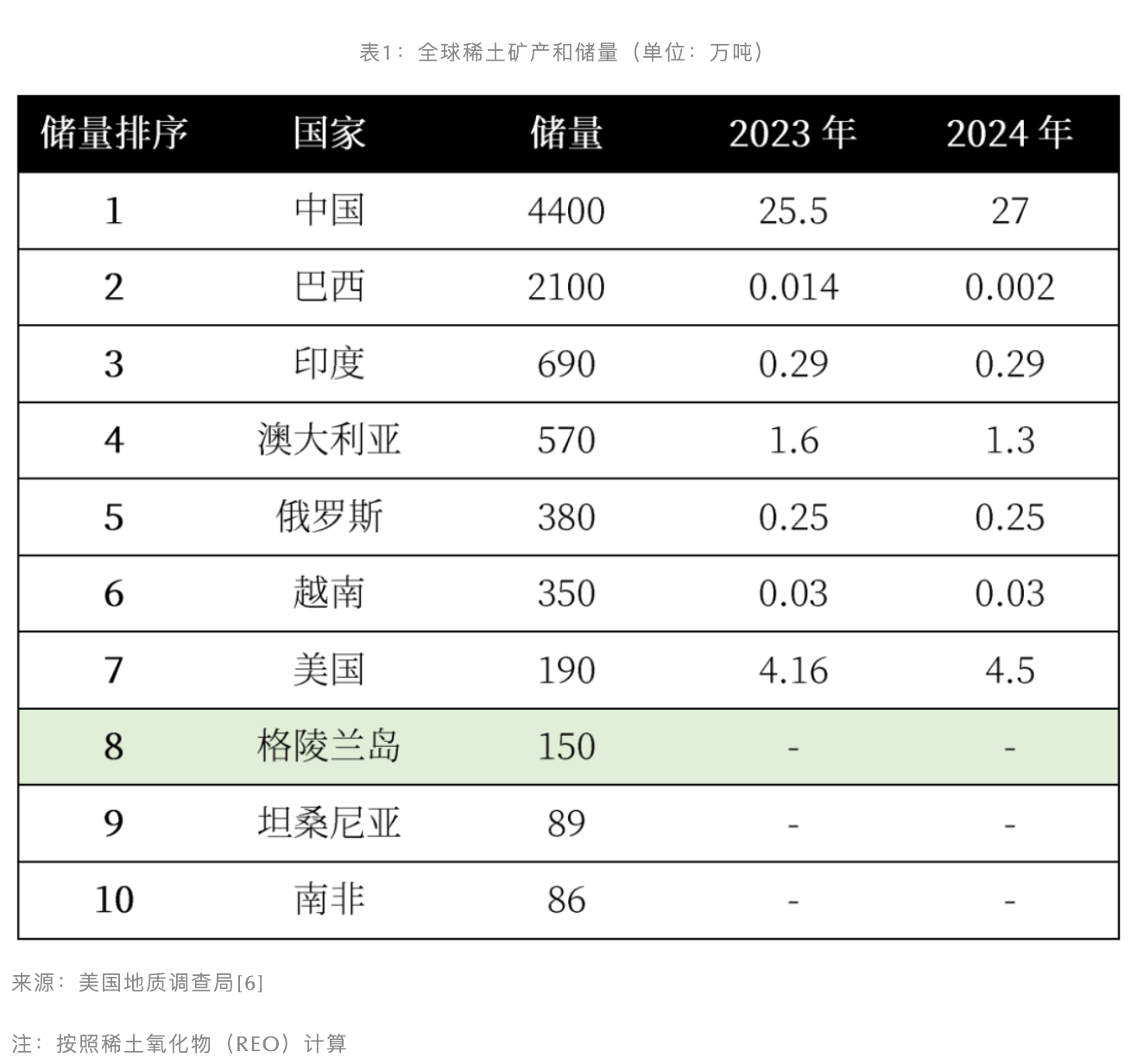
Group 1: Core Insights - The U.S. has expressed a renewed interest in acquiring Greenland, citing national security concerns, with President Trump reiterating this intention shortly after military actions in Venezuela [1] - The strategic significance of Greenland is rooted in its unique geopolitical position, high autonomy, and reliance on external financial support, with a GDP of approximately $3.3 billion and a per capita GDP of $58,499 [2] - Greenland is rich in critical minerals, including 25 of the 30 raw materials identified by the EU, making it a key player in the global supply chain for resources like graphite and rare earth elements [2][3] Group 2: Resource Development - The Amisok graphite project in Greenland is highlighted as a strategic asset due to its high carbon content, which is crucial for lithium-ion batteries, amidst rising global demand for electric vehicles [3] - The development of rare earth resources in Greenland, particularly in the Kvanefjeld and Tanbreez projects, is seen as vital for reducing dependence on Chinese supply chains [4] - The U.S. is actively supporting the Tanbreez project with a $120 million loan proposal to facilitate its development, indicating a strategic push to secure critical resources [4] Group 3: Geopolitical Context - Greenland's military value is underscored by its role in the GIUK gap, which is crucial for intercepting Russian submarines and maintaining NATO's strategic advantage in the North Atlantic [7] - The U.S. military presence in Greenland, including the Thule Air Base, enhances its missile defense capabilities against potential threats from Eurasia [8] - The geopolitical landscape in the Arctic is increasingly competitive, with Russia holding significant advantages in terms of military presence and operational capabilities [11] Group 4: U.S. Legislative Challenges - Historical attempts by the U.S. to purchase Greenland have faced numerous legislative hurdles, with Congress showing resistance to direct acquisition proposals [13] - Current discussions in Congress reflect a mix of support and opposition to the idea of acquiring Greenland, with various bills being proposed to either facilitate or block such actions [16][17] - The legal complexities surrounding Greenland's self-determination rights pose significant challenges to any U.S. acquisition efforts, as the island's population has expressed mixed feelings about U.S. control [18][19] Group 5: Strategic Pathways - The U.S. may employ a strategy of geopolitical pressure and investment to influence Greenland's governance and reduce its reliance on Denmark, potentially leading to a form of functional absorption [19][20] - Proposed initiatives could include direct financial support for infrastructure development in Greenland, aimed at fostering economic independence from Denmark [19] - The potential for a "Compact of Free Association" similar to agreements with other Pacific nations could provide a framework for U.S. influence while respecting Greenland's autonomy [20]
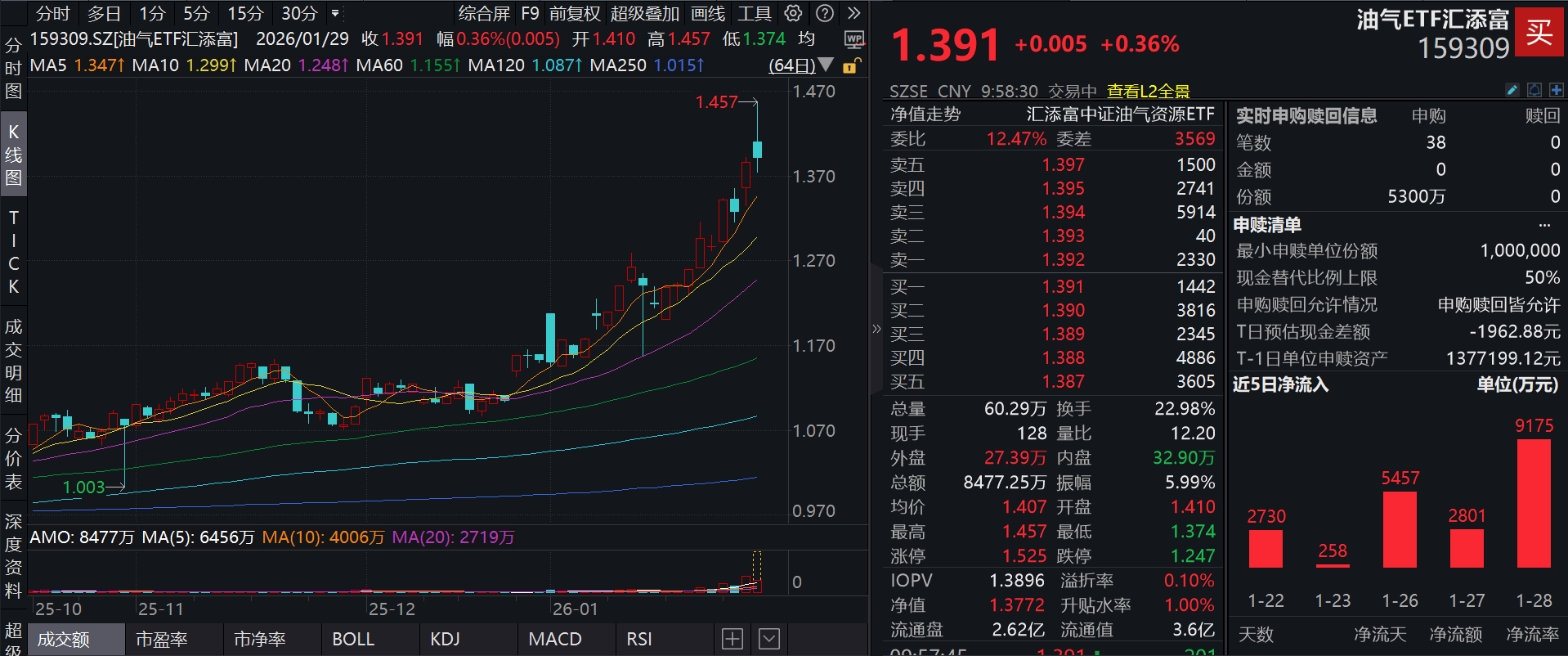
油价接力大宗上涨,洲际油气涨超8%,中国海油续创新高,油气ETF汇添富(159309)涨超2%,盘中净流入7500万,连续12日大举吸金超2.5亿!
Sou Hu Cai Jing· 2026-01-29 02:16
Core Viewpoint - The oil and gas sector is experiencing a positive trend, with significant increases in stock prices and ETF performance, driven by geopolitical factors and supply constraints [1][3][4]. Group 1: Market Performance - The China Securities Oil and Gas Resource Index rose by 0.90%, with notable increases in component stocks such as Tongyuan Petroleum (up 11.88%) and Zhongman Petroleum (up 6.97%) [1]. - The oil and gas ETF, Huatai Fu (159309), saw a peak increase of over 2% during trading, currently up 0.36%, with a latest price of 1.39 yuan [1]. - Over the past week, the Huatai Fu oil and gas ETF has accumulated a 10.00% increase [1]. Group 2: Liquidity and Fund Flows - The Huatai Fu oil and gas ETF recorded a turnover rate of 22.97% during trading, with a transaction volume of 84.72 million yuan, indicating active market participation [1]. - The ETF has seen a net subscription of 50 million units, translating to an estimated net inflow of 75 million yuan based on the average transaction price [1]. - The ETF's latest scale reached 361 million yuan and its share count reached 262 million, both marking a one-year high [3]. Group 3: Supply and Demand Dynamics - Kazakhstan's major oil fields, Tengez and Korolev, have suspended production due to power system failures, which may reduce crude oil supply through the Caspian Pipeline Consortium (CPC) [3]. - Geopolitical tensions and increased energy demand due to cold weather are providing substantial support for international oil prices [3][4]. Group 4: Long-term Outlook - Analysts predict that oil prices may rebound in the second to third quarter of 2026, with Brent crude price expectations raised to $65 per barrel [4]. - The oil and gas sector is expected to show long-term investment value, with companies capable of increasing production and reducing costs likely to present attractive opportunities [4][5].

集运早报-20260129
Yong An Qi Huo· 2026-01-29 01:27
Report Summary 1. Report Industry Investment Rating - Not provided 2. Core Viewpoints - Due to recent geopolitical tensions, Maersk's stable February quotes, and potential cargo rush and price support in March, the market may be difficult to decline in the short - term. The current valuation is moderately high, and the upside potential depends on capital behavior. It is recommended to look for opportunities to short on rallies, with a focus on the far - month contract 2610, which is more affected by the off - season and policies. Caution should be exercised for the 2604 contract, unless there is significant premium in the market. Short - term attention should be paid to geopolitical situations and PA alliance quotes [3] - The export tax rebate adjustment policy is negative for contracts after April. However, the valuations of the 06 and 08 contracts are hard to determine, are currently within a reasonable range, and are greatly affected by geopolitical factors. Prudent operation is advised [3] 3. Summary by Related Catalogs Futures Contract Information - **Contract Prices and Changes**: EC2602 closed at 1719.0 with a 0.09% increase; EC2604 at 1229.0 with a 2.94% increase; EC2606 at 1493.2 with a 3.54% increase; EC2608 at 1560.8 with a 2.12% increase; EC2610 at 1135.1 with a 2.08% increase [2] - **Open Interest Changes**: The open interest of EC2602 decreased by 309 to 3186; EC2604 increased by 1499 to 40146; EC2606 increased by 1690 to 9602; EC2608 increased by 67 to 1549; EC2610 increased by 211 to 8722 [2] - **Month - Spread Changes**: The month - spread of EC2502 - 2604 was 490.0, a day - on - day decrease of 63.6 and a week - on - week decrease of 79.9; EC2504 - 2606 was - 264.2, a day - on - day decrease of 15.9 and a week - on - week decrease of 2.8 [2] Spot Market Information - **SCFIS and SCF Indexes**: The SCFIS (European Line) index on January 26, 2026, was 1859.31 points, a 4.86% decrease from the previous period. The SCF (European Line) was 1595 dollars/TEU on January 23, 2026, a 4.85% decrease from the previous period [2] - **Shipping Company Quotes**: In Week 5, the central quote was 2500 dollars, equivalent to 1750 points on the futures. In Week 6, the central quote was equivalent to 1580 points on the futures. MSK's February Week 7 - 9 quote was 1950 dollars, lower than market expectations [4] Related News - Hamas senior official Musa Abu Marzouk stated that Hamas has never agreed to hand over its weapons in any form, and any arrangement for Gaza must be reached through an agreement with Hamas. Israeli Prime Minister Netanyahu has no right to boast about the release of Israeli hostages [5] - After the initial nuclear negotiations between the US and Iran failed to make progress, US President Trump is considering a new major strike against Iran. Options under consideration include air strikes on Iranian leaders and security officials, as well as attacks on Iranian nuclear facilities and government institutions [5]
伊朗突然掐住全球能源咽喉,中国如何应对?
Sou Hu Cai Jing· 2026-01-28 21:29
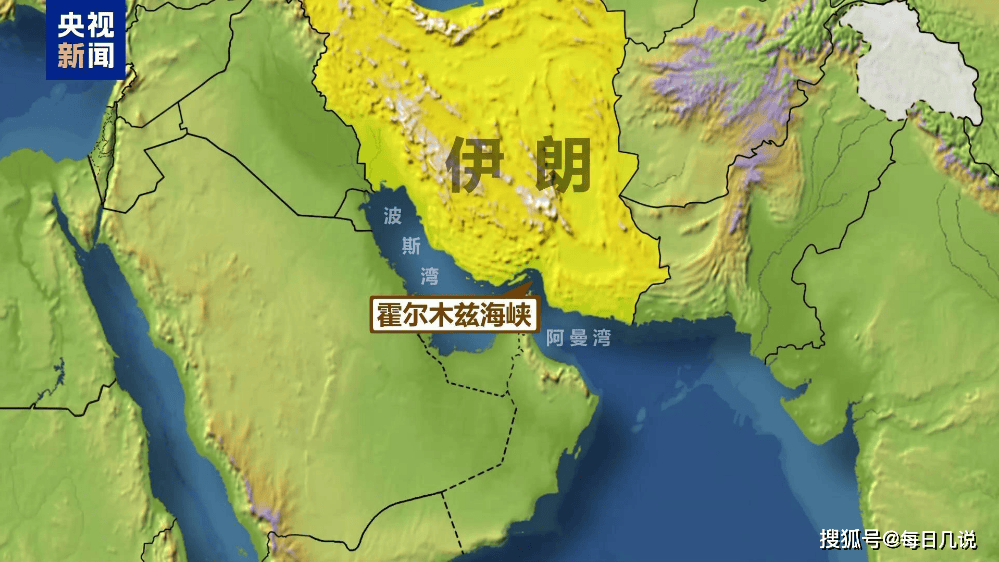
伊朗海军指挥官一句"海峡通行完全由伊朗掌控",让全球三分之一的原油贸易通道悬于一线,中国的能源安全红灯骤然亮起。 当地时间1月27日,伊朗伊斯兰革命卫队海军高级指挥官穆罕默德·阿克巴尔扎德宣布,伊朗已实现对霍尔木兹海峡的全面智能化实时监控,是 否允许船只通行"完全由伊朗掌控"。 霍尔木兹海峡是海湾地区石油输往世界各地的唯一海上通道,全球约三分之一的海运原油贸易每天超过2000万桶石油都要经过这里。伊朗此 次强硬表态意味着全球能源安全的敏感神经被直接触动。 伊朗此次行动不止是技术升级。阿克巴尔扎德明确表示:"伊朗的周边国家是我们的朋友,但如果其陆地、空域或水域被用于针对伊朗,将被 视为敌对行为。" 这一战略通道的安全现在"取决于德黑兰的决策"。 与以往不同,伊朗特别强调了"全面智能化"和"实时监控",这意味着传统规避监控的手段可能失效。伊朗革命卫队已经将技术优势转化为地缘 政治筹码。 霍尔木兹海峡若被封锁,将引发全球能源市场地震。有分析预测,如果海峡运输量大幅减少,国际原油价格可能出现飙升。 即使只是短期干扰,全球石油供应也将显著下降。对于液化天然气而言,情况更为严峻——几乎没有替代路线。 中国作为全球最大原油 ...
特朗普暴跳如雷!英国专家:一种情况下,美国将立即对华发动核战
Sou Hu Cai Jing· 2026-01-28 18:10
Group 1 - The recent geopolitical tensions have escalated with President Trump's sanctions targeting traditional allies Canada and South Korea [2][4] - Canada is attempting to balance its trade relations between the US and China, which has provoked a strong response from Washington [2][4] - Trump's threats include imposing punitive tariffs of up to 100% on Canadian goods if any substantial trade agreements with China are made [4] Group 2 - South Korea has faced similar sanctions, with tariffs on its automotive and pharmaceutical sectors raised from 15% to 25% due to perceived failures in trade commitments to the US [5] - The sanctions against South Korea are a direct response to President Yoon Suk-yeol's recent high-profile visit to China, where numerous economic cooperation agreements were signed [6][8] - The US is exhibiting extreme anxiety over its geopolitical influence, as evidenced by its aggressive trade policies aimed at preventing allies from strengthening ties with China [8][30] Group 3 - The US Department of Defense's recent National Defense Strategy report has sparked debate, as it contrasts sharply with Trump's aggressive trade rhetoric [10] - The report avoids mentioning Taiwan and emphasizes cooperation in areas of mutual interest, suggesting a shift towards a more pragmatic approach to US-China relations [12][13] - Analysts interpret this as a sign of the US military's acknowledgment of its limitations in a direct confrontation with China, despite ongoing military superiority [10][13][20] Group 4 - Economic data indicates that China, with a population of 1.4 billion and a GDP growth rate around 5%, is on a trajectory to surpass the US economically within 10 to 20 years [16] - The US military remains a significant asset, with annual defense spending that exceeds the combined total of the next nine countries, maintaining a global military presence [18] - The current military advantage of the US is seen as a critical window for action against China, as economic competition appears increasingly unfavorable for the US [20][22] Group 5 - There is a faction within the US military advocating for preemptive action against China, viewing military engagement as a necessary strategy to disrupt China's modernization [22][24] - The potential for nuclear conflict is highlighted, with the US military's willingness to consider first-use scenarios under specific conditions [24][26] - The US is expected to continue leveraging trade wars and geopolitical tensions to slow China's progress while preparing its military capabilities for future confrontations [28][30]