
提振消费

Search documents
大消费平台激发市场活力 促进消费升级
Zheng Quan Ri Bao Wang· 2025-07-11 06:03
Group 1 - The core viewpoint of the articles emphasizes the importance of consumption stimulus measures implemented by the Chinese government to enhance consumer capacity, improve supply quality, and increase consumer willingness, thereby supporting the new development pattern [1] - Major consumption platforms like Taobao, Meituan, and JD.com are actively responding to government policies by innovating and investing in consumption vouchers, creating an immediate supply system that combines goods and services, which is seen as a beneficial exploration for the development of the e-commerce sector [1] - Analysts note that since the beginning of the year, these major platforms have invested resources, leading to an increase in market capacity and consumer engagement, which positively impacts merchants by attracting new customers and increasing order volume and profit retention [1] Group 2 - The surge in online orders has significantly boosted offline store sales, with examples such as Nayuki's Tea achieving over 1 million delivery orders in just two days, marking a 50% increase, and some stores experiencing a 230% increase in order volume [2] - Merchants report that the increase in order volume has led to greater exposure and sales, resulting in effective profitability despite the higher order volume, indicating a win-win situation for both consumers and merchants [2] - Delivery riders have also experienced increased order volumes and benefits from platform incentives, such as summer heat subsidies, which enhance their earnings potential [2] Group 3 - The role of major consumption platforms in driving consumer spending is significant, as their consumption voucher programs lower costs and effectively enhance user purchasing power, while integrating resources around daily life needs to create comprehensive consumption scenarios [3] - The industry is evolving towards a healthier ecosystem, where platforms can flexibly adjust strategies based on their strengths, allowing users to compare services across platforms and enabling riders to manage their income and time effectively [3] - This competitive environment fosters continuous innovation in service models and optimizes user experience, ultimately leading to a positive cycle of competition, innovation, and upgrading, propelling the industry to new heights [3]


国新证券每日晨报-20250711
Guoxin Securities Co., Ltd· 2025-07-11 05:08
Domestic Market Overview - The domestic market experienced a slight increase on July 10, with the Shanghai Composite Index closing at 3509.68 points, up 0.48%, and the Shenzhen Component Index closing at 10631.13 points, up 0.47% [1][4][9] - A total of 20 out of 30 sectors in the CITIC first-level industry rose, with real estate, oil and petrochemicals, and non-bank financials leading the gains, while automotive, media, and computer sectors saw significant declines [1][4][9] - The total trading volume of the A-shares was 151.51 billion yuan, which was a decrease compared to the previous day [1][4][9] Overseas Market Overview - On July 10, major U.S. stock indices mostly rose, with the Dow Jones increasing by 0.43%, the S&P 500 rising by 0.27%, and the Nasdaq gaining 0.09%, with both the S&P 500 and Nasdaq reaching historical highs [2][4] - The Nasdaq China Golden Dragon Index rose by 0.9%, indicating a positive trend for Chinese concept stocks in the U.S. market [2][4] Key News Highlights - The National Development and Reform Commission emphasized increasing investment in new urbanization through targeted funding strategies [3][11] - A 2% increase in pensions for retirees was announced, effective from January 1, 2025 [3][12] - The Ministry of Commerce has initiated a special action to combat the smuggling and export of strategic minerals [3][14] - A new action plan to boost consumption in Beijing aims for an average annual growth of 5% in total market consumption by 2030 [3][16] - President Trump announced a 50% tariff on imported copper starting August 1, 2025, which may impact market sentiment [3][17] Market Drivers - The Ministry of Commerce indicated ongoing communication between China and the U.S. regarding trade issues, which may influence market dynamics [10][15] - The automotive market in China showed strong performance in the first half of the year, with production and sales exceeding 15 million units, reflecting over 10% growth year-on-year [19] - The residential land transfer fees in 300 cities increased by 27.5% year-on-year, indicating a robust real estate market despite a 5.5% decline in transaction area [19]
“浙江有礼”三重好礼 真金白银促进消费
Cai Fu Zai Xian· 2025-07-11 03:08
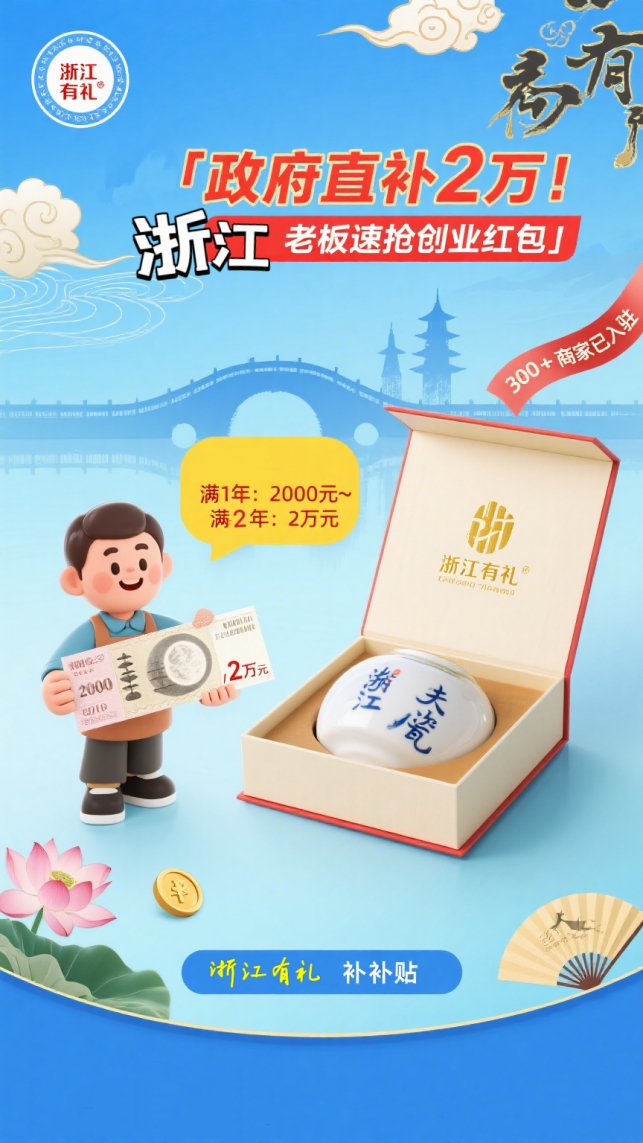
Core Viewpoint - The Zhejiang Youli Selection Center mini-program is set to launch by the end of July 2025, aiming to stimulate consumption and stabilize growth through a multi-faceted approach involving government subsidies, platform empowerment, and public participation [1] Merchant Side: Tiered Subsidies to Strengthen Market Foundation - A "Development Safeguard Plan" is introduced for small and medium-sized merchants, offering tiered subsidies based on the duration of their participation in the mini-program, with 2,000 yuan available after one year and a cumulative total of 20,000 yuan after two years [3] - The subsidy funds are directed towards supply chain upgrades and service quality improvements, particularly in key sectors such as catering, retail, and cultural tourism, aiming to create a cluster of "reassuring consumption demonstration merchants" [3] Consumer Side: Targeted Subsidy Coupons to Activate Consumption - The program will launch "benefit subsidy consumption coupons" covering various consumer categories, allowing users to receive a direct 30% subsidy based on their spending through the mini-program, which can be combined with other platform discounts [5] - This cash-based incentive model is designed to directly enhance residents' purchasing power and boost consumer confidence [5] Agent Side: Nationwide Recruitment for Promotion Agents - A "Consumption Promotion Agent" recruitment plan is initiated, allowing individuals from all sectors to apply as promotion agents, earning 100 yuan for each merchant they successfully refer to the platform [6] - The agent mechanism includes professional training and data monitoring support, aiming to create a vibrant atmosphere of public participation in consumption promotion, with expectations to onboard over 5,000 merchants within the year [6] Policy Closure: Transition from Short-term Stimulus to Long-term Ecological Consumption Upgrade - The policy represents an innovative practice by the Zhejiang Youli Selection Center to implement consumption stimulation strategies, forming a complete loop from supply to demand through the three-dimensional linkage of merchant stability, consumer confidence, and channel expansion [6] - The application process for merchant entry, coupon collection, and agent registration is currently in preparation and will soon be available on the official mini-program platform [6]

健全最低工资调整机制如何提振消费?专家解读
Xin Jing Bao· 2025-07-10 13:43
Core Viewpoint - The "Beijing Action Plan for Deepening Reform to Boost Consumption" was officially released, focusing on six major areas and proposing 24 tasks aimed at increasing residents' income and reducing burdens, with a specific emphasis on improving the minimum wage adjustment mechanism [1] Group 1: Minimum Wage Standard - From 2010 to 2023, Beijing's minimum wage standard increased from 5.5 yuan per hour and 960 yuan per month to 13.91 yuan per hour and 2420 yuan per month, indicating potential for further increases [2] - The expectation for raising the minimum wage is driven by the public, especially low-income workers, and is seen as essential for stimulating domestic consumption in the context of complex international economic conditions [2] Group 2: Optimization of Adjustment Mechanism - The current minimum wage adjustment mechanism in Beijing is relatively clear but can be optimized by establishing a scientific calculation formula that considers factors like CPI, average social wage, and unemployment insurance [3] - A more precise adjustment mechanism would require a collaborative approach among relevant departments to ensure effective implementation and to pause adjustments only after thorough analysis in case of uncontrollable economic factors [3] Group 3: Broader Impact of Minimum Wage Adjustment - The adjustment of the minimum wage standard not only benefits low-income groups but also sends a signal to the market encouraging companies to raise wages across different job levels to maintain salary ratios [4] - The increase in minimum wage can lead to wage increases for positions close to the minimum wage, thereby positively impacting low and middle-income earners, which in turn supports consumption growth [4][5]
金融促消费,北京打算这样做
Bei Jing Shang Bao· 2025-07-10 13:32
Group 1 - The core viewpoint of the news is the release of the "Beijing Action Plan for Deepening Reform to Boost Consumption," which aims for an average annual growth of around 5% in total market consumption by 2030 and the creation of 2-3 new consumption landmarks worth over 100 billion yuan [1][4] Group 2 - The Action Plan includes 24 detailed measures focusing on increasing residents' income and reducing their financial burdens, promoting the healthy development of the platform economy, and encouraging new business formats to create more job opportunities [4] - It emphasizes enhancing consumer spending by leveraging housing provident funds to support home purchases and proposing a "mortgage transfer with collateral" policy [4] - The plan aligns with national strategies to expand domestic demand and integrates the unique resources of the capital city, showcasing a shift from merely responding to policies to innovative practices [4][6] Group 3 - The Action Plan encourages financial institutions to increase credit support for key consumption areas and develop financial products that meet the needs of new consumption formats [5] - Various banks and licensed consumer finance institutions are responding by launching initiatives to stimulate consumption, such as interest-free promotions and flexible payment options [5] - The financial sector is expected to play a crucial role in boosting consumption, with a focus on developing tailored financial solutions for emerging business models [5][6] Group 4 - The multi-faceted deployment of the Action Plan is anticipated to create a ripple effect, enhancing residents' purchasing power, activating related demands, and promoting a cycle of investment and consumption [6] - This approach aims to strengthen Beijing's influence in the global consumption market and support its development as an international consumption center [6]
北京发布提振消费24条:优化小客车指标配置、调整最低工资标准
Sou Hu Cai Jing· 2025-07-10 05:13
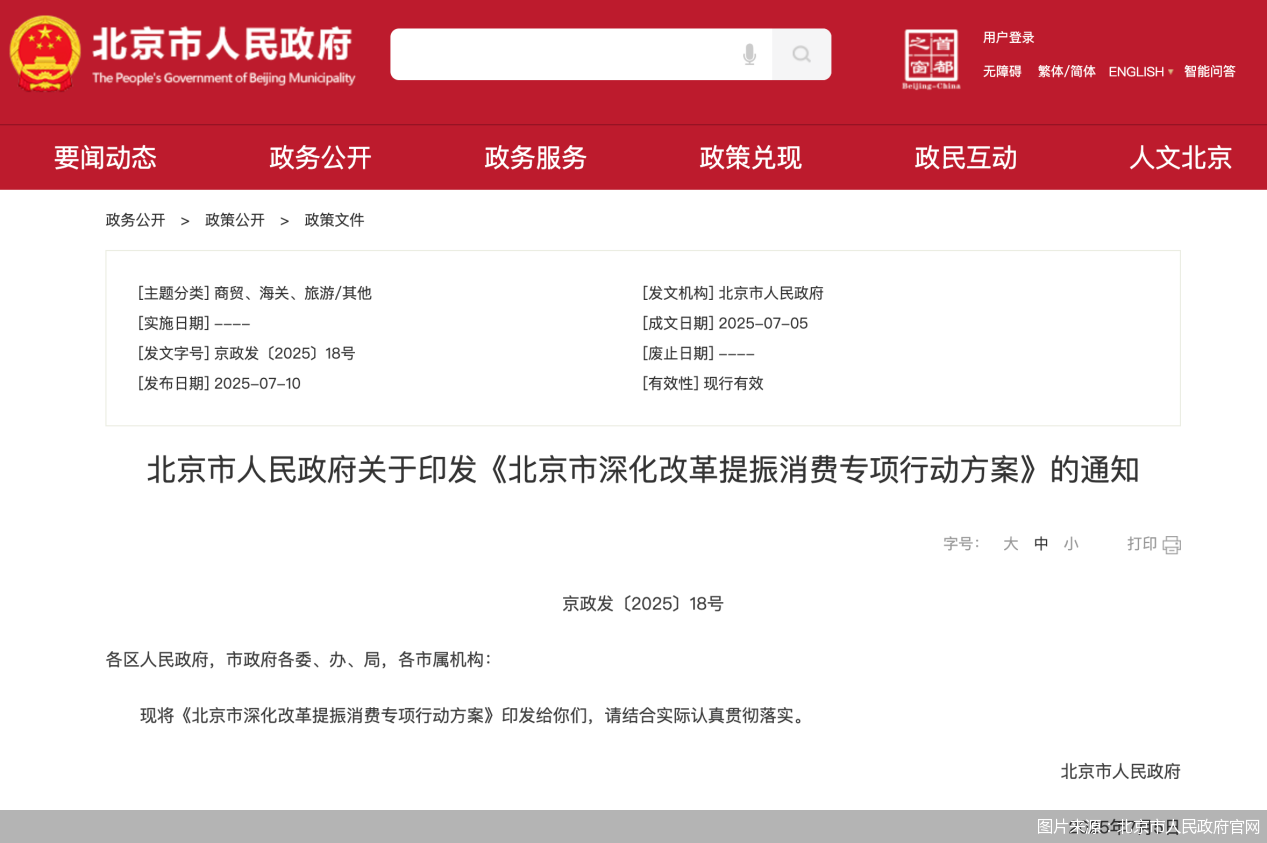
Core Viewpoint - The "Beijing Action Plan for Deepening Reform and Boosting Consumption" aims to achieve an average annual growth of around 5% in total market consumption by 2030, establishing 2-3 new consumption landmarks worth over 100 billion yuan, and enhancing Beijing's role as an international consumption center [1] Group 1: Promoting Income Growth and Reducing Burdens - Focus on reasonable growth of wage income through employment strategies and protection of flexible employment rights [2] - Support for securities institutions to diversify trading products and encourage listed companies to increase dividend rates [2] - Measures to enhance farmers' income through modern agriculture and eco-friendly practices [2] Group 2: Optimizing Service Consumption Experience - Development of new cultural and entertainment consumption models, including support for online performances and digital transformation of traditional publishing [4] - Creation of new tourism consumption scenarios, including major projects like the second phase of Universal Studios [4] - Enhancement of sports consumption through increased utilization of Olympic venues and development of outdoor destinations [4] Group 3: Enhancing Product Consumption Dynamics - Promotion of national trend consumption by encouraging collaborations between new and old brands [7] - Establishment of international consumption experience zones and support for high-profile launch events [7] - Development of new food brands and support for the innovation of traditional dining establishments [7] Group 4: Extending the Consumption Chain - Creation of a new exhibition consumption pattern by optimizing venue layouts and attracting international brand exhibitions [9] - Encouragement of digital consumption through the use of new technologies and support for live e-commerce [9] - Expansion of green consumption practices and improvement of recycling networks [9] Group 5: Revitalizing Commercial Consumption Spaces - Upgrading commercial spaces and promoting the commercialization of idle resources [11] - Enhancing the consumption capacity of major transport hubs and expanding duty-free sales [11] Group 6: Continuous Optimization of the Consumption Environment - Implementation of supportive policies and investment in fixed assets to enhance consumer protection [13] - Encouragement of compliance and integrity in business operations, particularly in sectors like fitness and dining [13] - Strengthening cross-regional collaboration in key sectors such as culture, tourism, and healthcare [14]

票根何以成为消费“新钥匙”(新知)
Ren Min Ri Bao· 2025-07-08 22:15
Core Concept - The "ticket root economy" is emerging as a new model that connects various consumption scenarios through movie tickets, offering discounts and enhancing urban consumption vitality during events like the Shanghai International Film Festival [1][2]. Group 1: Definition and Impact - The "ticket root economy" allows consumers to use physical or electronic tickets as vouchers for discounts in subsequent consumption scenarios, thereby extending cultural, social, and economic value [2]. - A successful case is the "Pyramid at the Top: Ancient Egyptian Civilization Exhibition" at the Shanghai Museum, which generated over 10 billion yuan in surrounding consumption by leveraging ticket roots [2]. - The model is gaining momentum in 2023, with various cities implementing it; for example, in Wuxi, ticket holders can enjoy discounts on accommodation and dining, while in Luoyang, high-speed train ticket holders can visit attractions at half price [2]. Group 2: Benefits and Consumer Experience - The ticket root serves as a "flow entry" for urban consumption, encouraging exploration and engagement with local culture [2]. - For consumers, tickets act as both discount coupons and guides to local attractions, providing emotional value beyond mere savings [2]. - For businesses, while discounts may reduce short-term profits, increased repurchase rates and customer loyalty can lead to long-term benefits [2]. Group 3: Challenges and Recommendations - The ticket root economy faces challenges such as over-reliance on discounts, potential ticket forgery, and complex cross-platform redemption processes [3]. - Recommendations include optimizing cooperation mechanisms, enhancing ticket design with cultural value, and creating more attractive consumer experiences to convert first-time visitors into repeat customers [3]. Group 4: Broader Economic Context - The emergence of various new consumption models, including "ticket root economy," reflects the vibrant market dynamics in China, showcasing the potential of small-scale innovations to create significant impacts [4].
山东城市观察丨年中经济测温,济南市委书记聚焦“消费”直抵一线
Xin Lang Cai Jing· 2025-07-05 03:38
Group 1 - Consumption is a key focus in the current economic landscape, with efforts to boost domestic demand becoming crucial for stabilizing the economy amid global uncertainties [3][4] - Jinan has elevated consumption to a core strategic priority for urban development, implementing comprehensive actions to stimulate consumption across various sectors [5][6] - The city is actively engaging with businesses to understand their operational challenges and ensure effective policy implementation, aiming to bridge the gap between policy and market needs [6][9] Group 2 - Jinan's social retail sales are projected to exceed 520 billion yuan in 2024, with consumption increasingly contributing to economic growth [8] - Recent initiatives, including subsidies and consumption vouchers, have successfully stimulated over 157.2 billion yuan in consumption, showcasing the effectiveness of targeted measures [8][9] - The city is fostering a sustainable consumption ecosystem through innovative policies, such as the "Prepaid Treasure" platform, which enhances consumer trust and mitigates concerns about prepayment risks [11][13] Group 3 - The government is focused on creating a favorable environment for consumption by addressing consumer confidence and ensuring a reliable market [12][13] - Jinan's approach emphasizes the importance of both policy support and business innovation in driving consumption, highlighting a collaborative effort between government, enterprises, and consumers [9][15] - The ongoing efforts to enhance consumer experience and trust are expected to lead to sustained growth in the consumption market, reflecting a deep understanding of economic dynamics [15][16]

盛松成:打好政策组合拳激发消费内生动能
Sou Hu Cai Jing· 2025-07-04 13:28
Group 1 - The total retail sales of consumer goods from January to May increased by 5.0% year-on-year, with a 6.4% increase in May alone, reflecting the positive effects of policies aimed at boosting consumption and implementing trade-in programs for consumer goods [1] - The Consumer Price Index (CPI) in May showed a year-on-year decrease of 0.1% and a month-on-month decrease of 0.2%, indicating a need to enhance the internal momentum of consumption [1] - To stimulate consumer demand in the short term, it is suggested to focus on transfer payments and expand the trade-in policy, particularly in central and western regions, encouraging participation from urban-rural integration areas [1] Group 2 - Long-term personal income tax reform could help adjust disposable income, providing stable cash flow for households, especially if tax rates for low- and middle-income groups are lowered [2] - A higher pension replacement rate can enhance current consumption tendencies, and transferring some savings to personal pension accounts could increase the overall pension replacement rate without affecting current cash flow [2] - Recommendations include increasing tax incentives for personal pension accounts and improving the performance and returns of pension products, as well as enhancing related services like healthcare based on pension contributions [2]
中行江西省分行:多措并举为提振消费增添动能
Sou Hu Cai Jing· 2025-07-04 11:36
Core Viewpoint - The Bank of China Jiangxi Branch is actively responding to national policies aimed at boosting consumption by implementing a comprehensive action plan to enhance consumer finance, thereby stimulating economic growth and improving people's livelihoods [1] Group 1: Consumer Finance Development - The Bank of China Jiangxi Branch has launched the "China Bank Jiangxi Branch Development Consumer Finance to Boost Consumption Special Action Plan" focusing on deepening consumer scenarios, enhancing product innovation, and optimizing resource allocation [1] - The bank has increased the credit limits for online and offline consumer loans to 300,000 yuan and 500,000 yuan respectively, and extended loan terms to meet long-term consumer needs [2] - From January to June, the bank provided consumer credit services to nearly 30,000 new customers, representing a year-on-year increase of 12%, with total consumer loan disbursements reaching 8.4 billion yuan, a year-on-year increase of 24% [2] Group 2: Consumer Experience Enhancement - The bank has optimized service processes and improved mobile banking convenience, allowing consumers to submit offline loan applications via a mobile scanning system and access various loan services online [2] - The bank has launched promotional activities such as "Consumption Discounts" and "618 Payment Reductions," distributing over 1 million yuan in consumer subsidies, which have driven consumption exceeding 2 billion yuan [3] Group 3: Support for New Energy Vehicles - The bank has significantly increased financial support for new energy vehicle purchases, with installment financing reaching nearly 300 million yuan by the end of June, reflecting a year-on-year increase of over 200% [4] - The bank is promoting "trade-in" policies to stimulate consumption and industry upgrades, offering various financial products and discounts for automotive and home improvement needs [4][5] Group 4: Service Consumption Upgrade - The bank is focusing on enhancing service consumption, which is crucial for improving living standards and optimizing consumption structure, by providing comprehensive financial services across various sectors such as dining, entertainment, and tourism [6] - The bank has supported local cultural tourism projects, providing 480 million yuan in loans to enhance the development of tourist attractions, thereby improving payment experiences for visitors [8]