
价值投资

Search documents
财富大时代,一本书讲透财富与人生的复利魔方︱重阳荐文
重阳投资· 2025-11-24 07:33
Core Viewpoint - The article discusses the challenges and opportunities in the investment landscape during the "VUCA" (Volatility, Uncertainty, Complexity, Ambiguity) era, emphasizing the need for rational decision-making amidst market fluctuations and cognitive biases [2][3]. Summary by Sections Investment Landscape - The years 2021-2025 are characterized as a "post-pandemic" era with trade wars and rapid AI advancements disrupting traditional industries [2]. - Investor sentiment has been low due to significant market fluctuations over the past four years, revealing cognitive biases such as pessimism, anchoring effects, and loss aversion [3]. Book Overview - "Wealth is the Realization of Cognition" has received positive feedback since its release, helping readers navigate turbulent investment periods and achieve returns [4]. - The upgraded version of the book includes an additional 40,000 words of analysis, addressing key global shifts such as the AI equity revolution and the implications of trade policies [5]. Cognitive Traps and Solutions - The book identifies 12 cognitive traps that investors face, such as overconfidence and loss aversion, and provides corresponding strategies to overcome them [13][14]. - Key strategies include using self-awareness to combat overconfidence and adopting long-term thinking to counteract the urge for quick gains [13][14]. Author's Background - The author, Shu Taifeng, combines a humanities background with extensive media experience to present investment philosophies in an accessible manner [25][28]. - The book integrates insights from historical figures like Buffett and Laozi, highlighting the timeless nature of investment wisdom [19][28]. Reader Engagement - The article encourages readers to engage with the book, offering discounts for bulk purchases and membership benefits [7][9].


“安全边际大师”卡拉曼MIT经典演讲:要有健康的投资纪律,能不能睡个安稳觉比什么都重要……
聪明投资者· 2025-11-24 07:04
Core Viewpoint - The article emphasizes the importance of understanding risk in investment decisions, highlighting that successful investors prioritize risk assessment over return expectations [5][6][17]. Group 1: Investment Philosophy - The investment philosophy advocated by Seth Klarman focuses on the principle of "margin of safety," which suggests that investors should buy assets at a price significantly below their intrinsic value to mitigate risks [6][46]. - The article critiques the short-termism prevalent in the market, arguing that many investors are unable to filter out market noise and maintain a long-term perspective [9][12]. - It highlights the psychological aspects of investing, noting that human emotions often lead to irrational decision-making, such as excessive risk-taking during market euphoria and panic selling during downturns [14][49]. Group 2: Market Dynamics - The article discusses the dangers of high leverage in the financial system, indicating that excessive risk-taking has permeated the entire financial landscape, leading to systemic vulnerabilities [11][25]. - It points out that market prices are often driven by emotions rather than fundamentals, creating opportunities for value investors who can remain calm during market fluctuations [55][58]. - The article also mentions the role of institutional constraints and market structure in creating mispriced assets, suggesting that these factors can lead to significant investment opportunities for those willing to look beyond the surface [50][51]. Group 3: Value Investing - Value investing is presented as a disciplined approach that focuses on acquiring undervalued assets, emphasizing the need for patience and rigorous analysis [46][47]. - The article asserts that value investors are often able to achieve superior returns by capitalizing on market inefficiencies and emotional reactions from other investors [33][58]. - It concludes that the essence of value investing lies in recognizing that markets are not always efficient, allowing for the identification of mispriced opportunities [48][62].
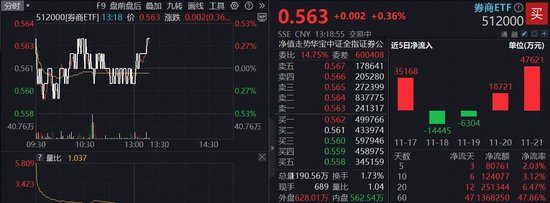
顶流券商ETF(512000)红盘整理,资金逢低吸筹6.6亿元!机构:券商板块β弹性可期
Xin Lang Ji Jin· 2025-11-24 05:36
券商ETF(512000)及其联接基金(联接C:007531)被动跟踪证券公司指数,该指数前十大权重股分 别为东方财富、中信证券、国泰海通、华泰证券、广发证券、招商证券、东方证券、申万宏源、兴业证 券、国信证券。 数据来源于沪深交易所、公开资料等。 风险提示:以上产品由基金管理人发行与管理,代销机构不承担产品的投资、兑付和风险管理责任。投 资人应当认真阅读《基金合同》、《招募说明书》、《基金产品资料概要》等基金法律文件,了解基金 的风险收益特征,选择与自身风险承受能力相适应的产品。基金过往业绩并不预示其未来表现,基金投 资须谨慎!销售机构(包括基金管理人直销机构和其他销售机构)根据相关法律法规对本基金进行风险 评价,投资者应及时关注基金管理人出具的适当性意见,各销售机构关于适当性的意见不必然一致,且 基金销售机构所出具的基金产品风险等级评价结果不得低于基金管理人作出的风险等级评价结果。基金 合同中关于基金风险收益特征与基金风险等级因考虑因素不同而存在差异。投资者应了解基金的风险收 益情况,结合自身投资目的、期限、投资经验及风险承受能力谨慎选择基金产品并自行承担风险。中国 证监会对上述基金的注册,并不表明其对上 ...
14位上市公司董秘“喊话”挺市:A股长期投资价值凸显 增强企业核心竞争力回报投资者
Mei Ri Jing Ji Xin Wen· 2025-11-24 04:09
Core Viewpoint - The importance of listed companies in stabilizing the capital market and promoting sustainable development is increasingly recognized, especially in the current environment where market sentiment is volatile. High-quality companies that focus on core operations and deliver excellent performance are essential to restore investor confidence and stabilize market expectations [1]. Group 1: Market Valuation and Investment Opportunities - A-share valuations are currently at a low level, indicating potential for recovery and highlighting long-term investment value [2][3]. - The medical industry is expected to grow significantly due to China's large population and increasing healthcare demands, driven by the "Healthy China" strategy [2]. - The market is experiencing a divergence where funds are increasingly concentrated on high-quality companies, reflecting a shift towards value investing [4][5]. Group 2: Company Actions and Strategies - Companies like Aier Eye Hospital are committed to aligning interests with investors and enhancing performance, achieving a market value of approximately 80 billion yuan, which is 12 times its initial listing value [6]. - Dabeinong is balancing short-term and long-term goals through employee stock ownership plans to ensure sustainable growth [6]. - Guolinda aims for stable revenue growth and successful cloud transformation while focusing on shareholder returns [7]. Group 3: Economic Environment and Future Outlook - Positive fiscal policies are anticipated in the second half of the year, which may improve the macroeconomic environment and boost investor confidence [3]. - The A-share market is expected to gradually return to value investing as macro policies adjust and market sentiment stabilizes [2][3]. - The inclusion of A-shares in the MSCI index is seen as a beneficial factor, indicating a potential shift in market investment styles towards high-quality growth companies [4].




《巴菲特的护城河》:巴菲特为什么买入谷歌
猛兽派选股· 2025-11-24 03:41
Core Insights - Berkshire Hathaway's recent investment in Google, acquiring approximately 17.85 million shares valued at around $4.3 billion, marks a significant addition to its portfolio, making it one of the top ten holdings [1][2] - Warren Buffett's investment strategy remains consistent, focusing on companies with strong fundamentals despite the changing market landscape [1] Group 1: Investment Rationale - The investment in Google aligns with Buffett's investment philosophy, emphasizing four key factors: a wide economic moat, ample free cash flow, valuation with a margin of safety, and long-term growth potential [1] - Google's strong economic moat is supported by its dominance in search and advertising, YouTube, and the Android/Chrome ecosystem, which creates high user engagement and pricing power [1] - The company's robust financial health, characterized by substantial free cash flow and manageable debt levels, allows for continued investment in AI and cloud services while providing shareholder returns [1] Group 2: Valuation and Growth Potential - Google's current price-to-earnings (PE) ratio is significantly lower than that of its peer tech giants, indicating that the market may undervalue its AI and cloud capabilities, thus providing a favorable entry point [2] - The integration of AI into advertising and the rapid growth of Google Cloud, along with technological advancements like TPU and large models, opens up long-term growth opportunities [2] - Buffett's decision to invest in Google also serves to rectify past oversights and optimize his investment portfolio, reinforcing the idea that it is never too late to recognize a company's value [2]


巴菲特持仓报告揭秘!科技股投资新风向?
Sou Hu Cai Jing· 2025-11-24 01:09
Group 1 - The core message of the news is that Warren Buffett has made significant changes to his investment portfolio, including a notable reduction in Apple shares and a new investment in Alphabet (Google) [1][2] - Buffett sold approximately $11 billion worth of Apple stock, leaving Berkshire Hathaway with a total value of about $61 billion in Apple shares as of the end of Q3 [1] - The reduction in Apple holdings has led to market speculation that Buffett may be concerned about Apple's high valuation [1] Group 2 - Buffett's new investment in Alphabet includes the purchase of approximately 17.85 million shares, valued at around $4.34 billion, making it the tenth largest holding in Berkshire's portfolio [1] - The investment in Google is seen as a potential signal of a shift in Buffett's investment strategy, possibly reflecting the influence of Berkshire's investment managers who are more active in tech stocks [1][2] - Google's third-quarter revenue reached $102.35 billion, a 16% year-over-year increase, surpassing market expectations, with strong performance in advertising and cloud services [2] Group 3 - Google's AI application, Gemini 3, has been released, showcasing significant advancements and a growing user base, indicating the company's strong position in the AI sector [2] - The investment in Google suggests that Buffett's team is recognizing new forms of competitive advantages in the digital age, aligning with the essence of value investing [2]


海外基金3年期收益率为138.98%,1年期收益率为26.63% 但斌微博“晒单”引热议,持仓动向藏着答案
Mei Ri Jing Ji Xin Wen· 2025-11-23 12:27
Core Insights - The performance of Dongfang Hongwan's overseas fund is highlighted, with a 3-year return of 138.98%, ranking third among 9,970 hedge funds globally, while the 1-year return of 26.63% is slightly above the domestic average of 24.32% but significantly lower than the top 5% return of 82.48% [1][3][4] Fund Performance - The fund's 3-year return of 138.98% demonstrates effective strategies of investing in great companies and cross-market allocation [3][5] - The 1-year return of 26.63% is considered less impressive compared to peers, raising questions about the fund's short-term performance [3][5] Holdings and Investment Strategy - The fund's significant holdings include Nvidia, Google, Meta, and Microsoft, with Nvidia being the largest position at $236 million [2][3] - The fund has also invested in Chinese internet companies, notably Alibaba, reflecting a belief in the growth potential of these assets [2][3] Market Context - The current market environment is characterized by a slow bull market in A-shares, with significant short-term opportunities in technology and resource sectors [5] - The divergence in performance among fund managers is attributed to the difference between value investing and short-term speculation [5][6] Long-term Perspective - The fund's strategy emphasizes long-term growth, as evidenced by its commitment to leading companies in the AI sector and its cautious approach to market volatility [6] - The ongoing debate centers around the choice between chasing short-term gains versus investing in stable, long-term performers [6]


投资大佬但斌“晒单”引热议:海外基金三年赚138%全球第三,投资者质疑
Mei Ri Jing Ji Xin Wen· 2025-11-23 09:52
Core Insights - The article highlights the performance of Dongfang Hongwan's overseas fund, which achieved a three-year return of 138.98%, ranking third among 9,970 global hedge funds, and a one-year return of 26.63% [1][5] - There is a mixed market interpretation of these results, with the one-year return being slightly above the domestic average of 24.32% but significantly lower than the top 5% return of 82.48% [1][5] - Concerns have been raised regarding the underperformance of domestic products, which recorded returns around 15%, well below the average [1][5] Investment Strategy - Dongfang Hongwan's investment strategy is heavily focused on AI, with a significant portion of its $1.292 billion portfolio allocated to AI-related stocks, including major holdings in Nvidia and Google [3][4] - The fund's top holdings include Nvidia at $236 million, Google at $224 million, and new positions in Alibaba and Broadcom, reflecting a strong belief in the AI sector [3][4] - The fund also invested in key players in the AI supply chain, such as Astera Labs and BitMine Immersion Technologies, indicating a comprehensive approach to the AI industry [4] Performance Analysis - The long-term performance of Dongfang Hongwan is praised for its effectiveness in value investing, with a three-year return of 138.98% demonstrating strong asset judgment [5][7] - However, the one-year performance has sparked debate, as it falls short compared to peers, raising questions about the sustainability of its strategy [5][7] - The domestic products have shown significant volatility, with notable losses earlier in the year, leading to investor concerns about short-term performance [6][7] Market Perspective - Analysts suggest that the performance disparity reflects the inherent differences between value investing and short-term speculation, especially in a structural bull market [7] - The current market environment has created numerous short-term opportunities, but high volatility is expected, making long-term strategies more appealing [7] - The ongoing debate centers on whether to pursue short-term gains or to invest in long-term growth, with Dongfang Hongwan's strategy leaning towards the latter [7]
投资大佬但斌“晒单”引热议:海外基金三年赚138%全球第三,为何国内基金一年收益仅15%?投资者质疑:是否过度神化了
Mei Ri Jing Ji Xin Wen· 2025-11-23 09:07
Core Viewpoint - The performance of Dongfang Hongwan's overseas fund, led by Chairman Dan Bin, has sparked diverse interpretations in the market, with a three-year return of 138.98% ranking third among global hedge funds, while its one-year return of 26.63% is slightly above the domestic average but significantly lower than the top performers [1][4]. Group 1: Fund Performance - The overseas fund's three-year return of 138.98% places it among the top three hedge funds globally, indicating the effectiveness of its strategy focused on "investing in great companies and cross-market allocation" [3][5]. - The one-year return of 26.63% is slightly above the domestic average of 24.32%, but it falls short compared to the top 5% performers, which achieved returns of 82.48% [4][5]. - Domestic products under Dan Bin's management have shown lower performance, with returns around 15%, significantly lagging behind the average of 24.32% for similar funds [4]. Group 2: Investment Strategy - The fund's investment strategy heavily emphasizes AI, with a significant portion of its $1.292 billion portfolio allocated to AI-related companies, including major holdings in Nvidia and Google [2][3]. - Dan Bin's recent investments include new positions in Alibaba and key players in the AI supply chain, reflecting a commitment to long-term growth in the technology sector [2][3]. - The focus on hard technology and AI supply chain components, such as Astera Labs and Broadcom, highlights the fund's strategic positioning within the evolving AI landscape [3]. Group 3: Market Reactions and Perspectives - Market reactions to the fund's performance have been mixed, with some investors expressing concerns over short-term results, questioning whether Dan Bin has been "over-mythologized" [5][6]. - Analysts suggest that the divergence in performance between long-term value investing and short-term speculative strategies is a natural outcome in a structural bull market [5][6]. - Dan Bin's commitment to a long-term investment philosophy is evident in his focus on established leaders in the AI sector, indicating a preference for stability over short-term gains [6].




伯克希尔重仓买入谷歌,巴菲特退休前夕策略引关注
Huan Qiu Wang· 2025-11-23 02:58
Core Insights - Berkshire Hathaway has made a surprising investment by acquiring 17.84 million shares of Alphabet, making it the company's tenth-largest holding, which contrasts with Warren Buffett's long-standing principle of avoiding businesses that are not well understood [1][3]. Investment Strategy Shift - This investment marks a significant departure from Buffett's traditional investment philosophy, as it involves entering the complex technology sector and paying a high valuation, approximately 40 times the tracking free cash flow, compared to the S&P 500's average of about 26 times since 1991 [3]. - The timing of this investment coincides with a critical leadership transition at Berkshire, with speculation that the incoming CEO, Greg Abel, may have played a key role in this decision, indicating a potential shift in the company's investment logic towards accepting higher premiums for future growth [3][4]. Future Growth Expectations - Analysts suggest that for the valuation to become reasonable, Alphabet needs to achieve an annual free cash flow growth rate of 13% to 23% over the next three to five years, despite its current free cash flow margin of about 19%, which is weaker than Nvidia's margin of 44% [3]. - This investment places Berkshire at the center of the ongoing debate on whether the AI-related investments on Wall Street are overvalued [3].
