生成式AI

Search documents
拉瑞安CEO为《神界》用AI辩护,引发粉丝与前员工不满
Sou Hu Cai Jing· 2025-12-20 03:36
Core Viewpoint - Larian Studios' CEO Swen Vincke defended the use of generative AI in the early development stages of the game "Baldur's Gate," which has sparked concerns among former employees and fans regarding the implications of AI in creative processes [1][3]. Group 1: Company Position on AI Usage - Larian Studios has been experimenting with AI for generating creative ideas, creating presentations, writing placeholder text, and concept art design, while acknowledging internal opposition to this approach [3]. - Vincke emphasized that the majority of the company's staff accepts the use of AI, but clarified that no AI-generated content will appear in the final game, as all artistic and textual content will be created by human employees [3][5]. - The company currently employs 72 artists, including 23 concept artists, and is actively recruiting more, asserting that the artworks produced are original and that the use of AI is not intended to replace artists [5][7]. Group 2: Reactions and Controversy - Vincke's statements have led to backlash from fans and former developers, with one ex-employee accusing him of dishonesty regarding the acceptance of AI [5]. - Another former artist expressed concern over the direction of the company, urging respect for the creative talents of employees and cautioning against reliance on AI for creativity [5]. - In response to the growing criticism, Vincke reiterated on social media that the company is not aggressively promoting AI or using it to replace artists, but rather exploring possibilities to enhance their work [7][9].


“GPT-6”或三个月内亮相?奥特曼亲口承认:9亿用户难敌谷歌“致命一击”,1.4 万亿美元砸向算力
AI前线· 2025-12-20 02:01
Core Insights - OpenAI's CEO Sam Altman expresses concerns about competition, particularly from Google, which he views as a significant threat to OpenAI's market position [2][11] - Altman emphasizes the importance of user retention and the development of "AI-native software" rather than merely integrating AI into existing products [2][12] - OpenAI is focusing on creating a comprehensive product ecosystem that enhances user experience through personalization and memory capabilities [9][10] Group 1: Competition and Market Position - Altman acknowledges that OpenAI is in a "red alert" state due to increasing competition, particularly after the release of Google's Gemini 3, but believes the impact has not been as severe as initially feared [5][6] - He notes that while Google has a strong distribution advantage, OpenAI's user base has grown significantly, reaching nearly 9 million users, which provides a competitive edge [3][8] - Altman believes that maintaining a slight paranoia about competition is beneficial for OpenAI's strategy and product development [6][7] Group 2: Product Development and Strategy - OpenAI is not rushing to release GPT-6; instead, it plans to focus on customized upgrades that cater to specific user needs, with significant improvements expected in early 2024 [36][37] - The company aims to build the best models and products while ensuring sufficient infrastructure to support large-scale services [8][9] - Altman highlights the importance of creating a cohesive product ecosystem that integrates various functionalities, making it easier for users to adopt and rely on OpenAI's offerings [10][24] Group 3: Enterprise Market Focus - OpenAI's strategy has shifted towards prioritizing enterprise solutions, as the technology has matured enough to meet business needs [27][28] - The company has seen rapid growth in its enterprise segment, with increasing demand for AI platforms from businesses [28][29] - Altman emphasizes that the enterprise market is ready for AI integration, particularly in areas like finance and customer support [29][30] Group 4: Infrastructure and Financial Outlook - OpenAI has committed approximately $1.4 trillion to build its infrastructure, which is essential for supporting its AI capabilities and future growth [39][48] - The company anticipates that as revenue grows, the cost of inference will eventually surpass training costs, leading to profitability [48][49] - Altman acknowledges that while current spending is high, the long-term vision is to create a sustainable business model that leverages AI advancements [50][51]
企业争相布局“AI+教育”生态 人工智能应用场景探索加速
Zhong Guo Jing Ying Bao· 2025-12-19 21:12
Core Insights - The education sector is a key application area for large AI models, with multiple tech companies focusing on "AI + Education" initiatives [2] - The market for "AI + Education" is projected to reach nearly 150 billion yuan by 2026, with an annual growth rate of 10% to 15% [2] - Companies are increasingly integrating AI into educational products to create a closed ecosystem, enhancing personalized learning and reducing teacher workloads [4][6] Group 1: Company Initiatives - Xiaomi is actively hiring for various AI education-related positions, indicating a strategic focus on products like the REDMI Pad 2 and MiTu children's smartwatch [2][4] - Other companies, such as Alibaba and Huawei, are also launching AI educational products, including AI learning machines and AI toys, to capture market interest [5] - The domestic learning tablet market is divided into "tech" and "education" camps, with companies like TAL and Yuanfudao enhancing their AI capabilities for educational purposes [3] Group 2: Market Dynamics - The demand for personalized education from families and schools is driving the growth of "AI + Education," with significant interest from both B2B and B2C sectors [4][6] - The use of AI in education is becoming more prevalent, with over half of middle school teachers in Shanghai utilizing AI-assisted teaching, surpassing the OECD average [5] - The competitive landscape is shifting, with tech companies viewing educational AI as a crucial part of their ecosystem strategy rather than just a direct revenue source [9] Group 3: Challenges and Considerations - The implementation of "AI + Education" faces challenges such as adapting AI products to educational contexts and addressing data privacy concerns [7][8] - The need for a unified industry standard is essential to avoid homogenized competition in the market [8] - The dual nature of AI as both a tool and a potential risk necessitates a balanced approach to its integration in educational settings [6]


百度会下场做GEO吗?
Sou Hu Cai Jing· 2025-12-19 18:11
Group 1 - The core idea of the news is that Baidu has introduced a Generative Engine Optimization (GEO) solution aimed at enhancing brand visibility in AI-generated content, but there are concerns about the reliability of information generated by AI due to the presence of fabricated content [1][3] - The GEO solution is designed to optimize content structure, semantic matching, and authoritative sources to increase the likelihood of brand mentions in generative AI responses, thereby boosting brand exposure [3] - There are significant concerns regarding the quality of GEO services in the market, with reports of some providers flooding AI models with fake articles and misleading information, which could undermine the credibility of AI outputs [3] Group 2 - Baidu's Q3 2025 financial report indicates a revenue of 31.2 billion yuan and a net loss of 11.2 billion yuan, marking a decline in both revenue and profit, transitioning from profit to loss [4] - Traditional online marketing, which previously accounted for 80% of Baidu's revenue, has seen a continuous decline, with Q3 revenue dropping to 15.3 billion yuan, a year-on-year decrease of 18%, marking the sixth consecutive quarter of decline [4]


光计算芯片,新突破
财联社· 2025-12-19 15:04
Core Viewpoint - Shanghai Jiao Tong University has achieved a breakthrough in the field of next-generation optical computing chips, successfully realizing an all-optical computing chip that supports large-scale semantic media generation models, published in the journal "Science" on December 19 [1] Group 1: Optical Computing Breakthrough - The rapid evolution of deep neural networks and large-scale generative models has led to extremely high computing power and energy consumption demands, creating a significant performance gap in traditional chip architectures, which has drawn attention to new architectures like optical computing [1] - Optical computing utilizes light propagation within chips instead of electrons in transistors, leveraging the inherent speed and parallelism of light to address bottlenecks in computing power and energy consumption [1] Group 2: LightGen Chip Performance - The research team introduced the LightGen chip, which demonstrated a performance improvement of two orders of magnitude in computing power and energy efficiency compared to top digital chips, even when using relatively outdated input devices [2] - LightGen overcomes three key bottlenecks: integration of millions of optical neurons on a single chip, all-optical dimensional transformation, and a light-based generative model training algorithm that does not rely on true values, enabling end-to-end implementation for large-scale generative tasks [2] - LightGen can complete a closed loop of "input-understanding-semantic manipulation-generation," achieving high-resolution (≥512×512) image generation, 3D generation (NeRF), high-definition video generation, and semantic control, while also supporting denoising and feature transfer tasks [2]

计算机行业GenAI系列(二十三):火山多模态和千问高德:硬核能力成生态格局新基石
GF SECURITIES· 2025-12-19 13:51
Investment Rating - The report assigns a "Buy" rating for the computer industry, consistent with the previous rating [2]. Core Insights - The report highlights the significant growth in the usage of the Doubao large model, with daily token usage surpassing 50 trillion, reflecting a 417-fold increase since its launch [14][47]. - The competitive landscape is shifting from business model innovation to hard technology capabilities, emphasizing the importance of foundational research and engineering in AI development [5]. - The integration of AI capabilities into various applications, such as travel planning and local services, is expected to benefit companies involved in AI chips, servers, and foundational software tools [24]. Summary by Sections 1. Doubao Large Model Token Growth - The Doubao large model's daily token usage has exceeded 50 trillion, marking a significant increase from 30 trillion in September 2025, with a monthly growth rate of 22% [14][15]. - The model's commercial viability is improving as the cost of reasoning decreases, with the latest version, Doubao 1.8, optimizing for multi-modal tasks and reducing redundant computational costs [15][20]. 2. Performance Enhancements of Doubao Large Model - The Doubao 1.8 model has shown substantial improvements in multi-modal understanding and task execution, outperforming competitors like Qwen3 in various metrics [27][32]. - New models such as Seedance 1.5 Pro and Seedream 4.5 have been introduced, enhancing capabilities in video generation and image creation, respectively [33][43]. 3. Integration of Qianwen APP with Gaode - The Qianwen APP has integrated with Gaode, enabling it to transition from understanding user intent to executing real-world services, significantly enhancing user experience in travel and local services [56][58]. - The app's public testing has resulted in rapid user adoption, with over 3 million active users within 23 days of launch [53]. 4. Investment Recommendations - Companies expected to benefit from the increase in reasoning-side computational power include AI chip and server firms like Cambricon, Inspur, and Unisoc, as well as foundational software companies like Fourth Paradigm and StarRing Technology [24].
字节砸重金“抢人”:全面提高薪酬与期权激励
Xin Lang Cai Jing· 2025-12-19 12:48
Core Viewpoint - ByteDance is increasing its talent investment by enhancing incentive policies across various dimensions, including bonuses, salary adjustments, compensation ranges, and the job level system, aiming to ensure competitive employee compensation that leads the market globally [1][6]. Group 1: Incentive Measures - ByteDance has introduced four core initiatives that cover both short-term incentives and long-term returns, with a 35% overall increase in the bonus pool for the 2025 performance evaluation cycle compared to the previous cycle [2][7]. - The performance incentive caps for employees rated "M" and above will be increased, with specific adjustments for different performance levels, enhancing the incentive space significantly [2][7]. - The calculation method for semi-annual incentives will change, with the base for those achieving "E" and above shifting from "monthly salary" to "monthly total package," increasing the weight of options in short-term incentives [2][7]. Group 2: Salary Package Strategy - ByteDance is adopting a more aggressive strategy regarding salary packages, with a 1.5 times increase in the overall budget for salary adjustments compared to the previous cycle, directly raising employee compensation levels [3][8]. - The company is also raising the upper and lower limits of salary ranges for various job levels, aiming to provide greater salary increase potential for current employees and enhance competitiveness in the recruitment market [3][8]. - This approach contrasts with other leading platforms in the domestic internet industry, which have focused on structural adjustments rather than overall salary increases [3][8]. Group 3: Job Level System Update - ByteDance is implementing a new job level system, transitioning from a 5-level 10-tier system to a 10-level system (L1-L10), which will provide greater salary growth potential even without job level promotions [4][9]. - The new system aims to better motivate and retain top talent while attracting global talent, emphasizing that it is never too late to join the company [4][10]. Group 4: Market Context and Competition - The decision to enhance talent investment is driven by the ongoing evolution in areas such as generative AI and the integration of short videos with e-commerce, where core talent remains scarce despite industry cooling [5][11]. - As ByteDance expands its international business, it faces increasing competition from major tech companies like Meta, Google, and Amazon, which are also using high cash and high option incentives to secure talent [6][11]. - ByteDance's commitment to leading in global markets with its incentive strategies indicates a willingness to invest heavily in talent during a critical growth phase, despite the potential for increased labor costs [6][11].
2025,中国大模型不信“大力出奇迹”?
3 6 Ke· 2025-12-19 11:06
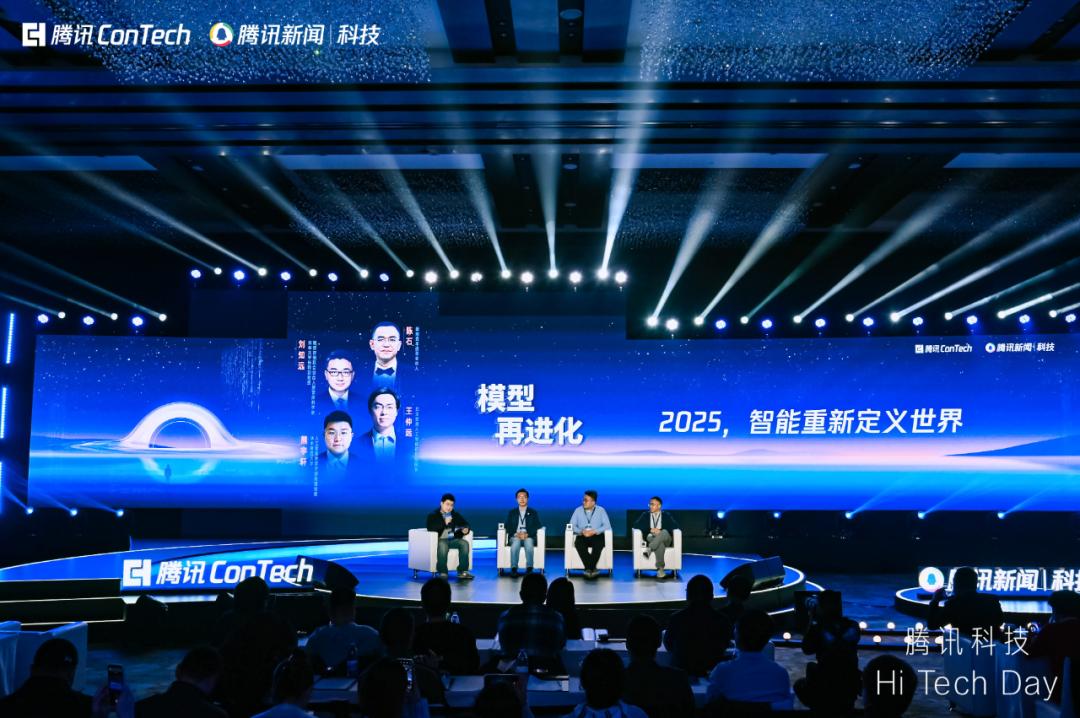
Core Insights - The article discusses the evolution of generative AI leading up to 2025, highlighting three main trajectories: cognitive deepening, dimensional breakthroughs, and efficiency reconstruction [1][2][3] Group 1: Evolution of AI Models - The first trajectory is cognitive deepening, transitioning from "intuition" to "logic," where models evolve from quick pattern matching to multi-step reasoning through reinforcement learning [1] - The second trajectory involves dimensional breakthroughs, moving from "language" to "physical space," emphasizing the importance of spatial intelligence in understanding the physical world [1][2] - The third trajectory focuses on efficiency reconstruction, shifting from "brute force aesthetics" to "cost-effectiveness," necessitating lighter model architectures to support deep reasoning and spatial understanding [1] Group 2: Key Discussions from the Forum - At the Tencent HiTechDay forum, experts discussed the evolution of large models, emphasizing the transition from learning from text to learning from video, which provides rich spatiotemporal information [2][3] - The "Densing Law" proposed by Liu Zhiyuan suggests that the future of AI lies in increasing the "intelligence density" within model parameters, predicting that by 2030, devices could support capabilities equivalent to GPT-5 [3][8] - The commercial landscape is characterized by a "dual-core drive" between open-source and closed-source models, with a focus on building a sustainable business structure that can withstand model iteration cycles [3][10] Group 3: Challenges and Opportunities - The article identifies three main challenges in the commercialization of AI agents: insufficient core reasoning capabilities, the need for domain-specific training, and issues with memory and forgetting mechanisms [11][12] - The discussion highlights the importance of end-side intelligence, which must balance quick responses with deep thinking, particularly in applications like robotics [13][18] - The potential for AI to penetrate various industries is noted, with a focus on the "ToP" (To Professional) market segment as a lucrative opportunity for AI applications [15][21] Group 4: Future Directions and Recommendations - The article emphasizes the need for a collaborative ecosystem that combines open-source initiatives with efficient model technologies to drive AI advancements in China [20][22] - Entrepreneurs are advised to seek opportunities in niche industries that are less accessible to large models and to establish business structures that can adapt to ongoing model iterations [21][22] - The integration of hardware and software is seen as crucial for the future of AI, with a call for investments in both areas to achieve a balanced development [19][20]
网传千问开大会“吃豆包”,官方回应:假的,被AI整了!
Guan Cha Zhe Wang· 2025-12-19 10:12
对于这张"杰作"的来源,阿里千问的回应也颇具行业调侃意味:"也不知这张图是哪位的杰作,大家都是干AI的,相煎何太急啊。" 此次事件也折射出当前AI行业竞争的激烈程度。阿里巴巴的"千问"与字节跳动的"豆包"是国内AI助手领域的主要竞品。 12月19日,一张据称是"阿里千问全员会"的现场图片在社交网络和社群中广泛传播,引发了大量网友的关注与讨论。 图片显示,疑似阿里千问的员工聚集在广场上,手举豆包,背景横幅写有"阿里千问全员会"和"干死豆包"的标语,甚至有传言称会后大家将豆包分食。 针对这一事件,阿里千问官方迅速通过其官方账号进行了回应与辟谣。官方明确指出,这张广为流传的图片是AI生成的虚假内容,并非真实场景。 官方在回应中幽默地表示:"听说我被AI整了",并正式澄清:"广场大会是假的,图完全是AI生成的,里面的Logo和工牌全是错的。" 就在不久前,阿里巴巴宣布成立"千问C端事业群",由集团副总裁吴嘉负责,整合了夸克、AI硬件等业务,目标是将千问打造为AI时代的超级APP。同时, 千问APP自11月17日公测上线后,发展迅猛,公测仅23天月活用户就突破了3000万。 在辟谣的同时,阿里千问也借势进行了一波产品推 ...


【招银研究|行业深度】AI系列研究——端侧AI将重塑全球智能终端产业格局
招商银行研究· 2025-12-19 08:58
Core Insights - Edge AI is leading a technological paradigm shift, reshaping the new landscape of the smart terminal industry by enabling local execution of AI models, resulting in low latency, high energy efficiency, and privacy protection [4][9][10] - The development of Edge AI is driven by innovations in AI computing architecture, multimodal perception and interaction, and system-level AI integration, transitioning smart devices from mere "computing nodes" to "local reasoning and autonomous decision-making" [4][6][10] Application Ecosystem - Multiscenario integration is accelerating the growth of the Edge AI terminal market, with AI PCs expected to achieve a penetration rate of 64% by 2028, and AI smartphones projected to exceed 900 million units in shipments by the same year [5][6] - AI wearables are anticipated to reach a market size of $153.8 billion by 2030, while AI smart homes are expected to grow to $537.2 billion, highlighting Edge AI as the core growth engine of smart hardware [5][6] Upstream Ecosystem - Breakthroughs in advanced process technology and Chiplet architecture are driving significant performance improvements in Edge AI, with NPU computing power increasing to 50-100 TOPS to meet local model operation demands [6][10] - The global Edge AI processor market is projected to grow from $31 billion in 2022 to $60.2 billion by 2028, with major players like Qualcomm, Apple, and NVIDIA dominating the high-end market [6][10] Business Recommendations - Companies should prioritize Edge AI as a key strategic focus, developing differentiated strategies around terminals, supply chains, and application scenarios to capitalize on this emerging trend [6]