美元霸权

Search documents
魏民:国际市场正对美元信用投不信任票
Sou Hu Cai Jing· 2025-04-29 22:41
市场剧烈震荡迫使美国政府开始政策回调。美国已宣布延迟90天实施"对等关税"政策,特朗普还暗示可 能下调对华关税,否认施压美联储主席离职,市场暂时出现了美元资产回暖势头。但是美国关税政策剧 烈变化带来的高度不确定性、美财政整顿前景不明以及美债已发生的外资减持、中长期国债净空头加仓 等结构性变化,表明国际资本仍对美元资产前景疑虑丛丛。如果再叠加美联储降息预期拖延太久、90天 后关税谈判达不成协议以及今年美国9万亿到期国债再融资出现困难等,不排除市场还可能迎来新一轮 美元资产抛售潮。 当然,美国依然保有一些特别的竞争优势。硅谷科技集群贡献了全球40%的原创性技术创新,36万亿美 元的美国国债市场,其深度和流动性是其他资产均难以取代的。作为储备货币,美元参与了全球约90% 的外汇交易并占全球近60%的央行储备,美元霸权的根本一时还难以撼动。尽管如此,美国现政府带来 的巨大不确定性,以及美国经济中存在的结构性问题,都在侵蚀着美国的固有优势。制造业空心化导致 美贸易赤字常年维持在GDP的3%,联邦债务与GDP之比攀升至123%,这些数据折射出美国维护霸权的 成本已经过高并难以持续。尽管美国现政府在面临产业链断链、通胀重燃 ...
比布雷顿森林体系解体时还惨!特朗普“百日执政”创下尴尬新纪录
商业洞察· 2025-04-29 09:41
凤凰网财经 . 你好,我们是凤凰网财经,全球华人都在看的财经公众号,传播最有价值的财经报道,你值得关注!欢 迎访问:http://finance.ifeng.com/ 以下文章来源于凤凰网财经 ,作者凤凰网财经 作者: 凤凰网财经 来源: 凤凰网财经 特朗普或 创下 "尴尬"新纪录 。 据财联社报道, 自 1月20日特朗普重返白宫至4月25日,美元指数累计下跌近9% , 料将 创下 1973年尼克松时代以来美国总统任期前100天的最大跌幅。这一表现与1973年 " 尼克松冲击 " 时期形成历史性呼应 ——彼时布雷顿森林体系崩溃引发全球抛售美元,而如今特朗普反复无常的 关税威胁、对美联储独立性的干预,以及对传统国际秩序根基的动摇,正重演"去美元化"浪潮。 数据显示,自尼克松第二任期开启至拜登执政前,美国总统任内前 100天美元平均回报率为 0.9%,而特朗普的政策已使美元成为全球资本的"弃儿"。欧元、瑞郎和日元兑美元汇率涨幅均 超8%,黄金价格同步攀升,蒙特利尔银行指出:"美元作为储备货币的三大支柱——制度信任、 自由贸易和稳定外交政策正在瓦解。" 01 历史重现——布雷顿森林体系崩塌与美元"假死" 1971年 ...
40天后,美国就要还6万亿美元的国债,特朗普已经找好了替罪羊
Sou Hu Cai Jing· 2025-04-29 03:37
Group 1 - The core message revolves around the misconception that the U.S. must repay $6 trillion in national debt in June, which is actually a misunderstanding of the debt rollover process [1][3][5] - The U.S. national debt currently stands at $31.4 trillion, equating to approximately $94,000 per citizen, highlighting the scale of the debt issue [3][7] - The actual requirement in June is to refinance approximately $6 trillion in maturing debt, with the government needing to issue new bonds to cover old debt principal, only paying interest during this period [5][7] Group 2 - The political dynamics involve former President Trump pressuring Federal Reserve Chairman Powell to lower interest rates, which could lead to inflationary risks reminiscent of the 1970s [9][14] - The Federal Reserve faces a complex decision-making environment, balancing inflation control, employment promotion, and managing government debt, with historical data indicating a high likelihood of policy shifts during election years [16][18] - The rising interest rates have significantly increased the cost of new debt issuance, with new bond rates climbing from 1.5% in 2019 to 5% currently, leading to higher annual interest payments [11][20] Group 3 - The U.S. Treasury's issuance of new debt reached a record $23 trillion last year, with 98% allocated to refinancing old debt, creating a "debt spiral" situation [12][20] - The current interest payments are projected to exceed $1 trillion, surpassing military and healthcare expenditures, indicating a critical fiscal challenge [12][20] - The erosion of the dollar's dominance is evident as countries reduce their holdings of U.S. debt, with China’s holdings dropping from $1.32 trillion in 2013 to $848 billion in 2023 [23][30] Group 4 - The ongoing political maneuvering, particularly by Trump, aims to create a narrative of economic crisis to influence monetary policy and public sentiment ahead of elections [27][29] - The Federal Reserve's independence is increasingly challenged by political pressures, complicating its ability to manage monetary policy effectively [27][36] - The potential for a significant financial crisis looms as the U.S. debt-to-GDP ratio reaches 123%, raising alarms about the sustainability of current fiscal practices [36][38]

特朗普大打关税背后暗藏阴谋:或故意让美债崩跌,再让全球买单?
Sou Hu Cai Jing· 2025-04-28 15:49
王爷说财经讯:你能想象吗?美国总统特朗普大打关税战,这背后竟然隐藏着1个惊人秘密:"狸猫换太子"式的美债清洗计划!特朗普故意让美债崩跌,然 后让全球买单!为什么这样说?一起来看看几个数据吧! 大家仔细想想,特朗普故意让美债、美元下跌,各国一慌就赶紧抛售,美债、美元价值降低,美国的债务可不就相当于"缩水"了嘛。 而且特朗普还高调宣称,美国拥有最多黄金,之后再让美元上涨,继续称霸全球货币领域。 说到这儿,不得不提美国经济面临的"老大难"问题——沉重的美债负担。 据美国财政部最新公开数据显示,2024年,美国政府光是为35.3万亿美元的美国债务支付的利息就首次突破1万亿美元大关。今年年初,美国国债更是突破 36万亿美元大关,创下历史新高。 4月28日消息,据外媒报道,一些经济学家和分析人士分析出了一个惊人的可能性——美国总统特朗普或许正谋划着一场"狸猫换太子"式的美债清洗计划。 他很可能以 当年尼克松让黄金与美元脱钩的"尼克松震撼"为蓝本,打算让美元与比特币挂钩,把虚拟货币列为战略性储备资产。 这一招要是成了,那可不得了,全世界都得为美国债务"买单",美元还能稳稳地维持其重要地位。 而台湾《商业周刊》总主笔——吕国 ...
特朗普若罢免鲍威尔,就动了美元的根基,美联储丧失独立性是推倒美元霸权的第一张多米诺骨牌
Mei Ri Jing Ji Xin Wen· 2025-04-28 13:36
Core Viewpoint - Trump's challenge to the independence of the Federal Reserve (Fed) poses a significant risk to the credibility of the US dollar, potentially undermining its status as the world's reserve currency [2][14][17]. Group 1: Trump's Actions and Statements - Trump has openly criticized Fed Chairman Jerome Powell, suggesting he should resign and threatening to remove him if necessary [3][4]. - The conflict between the President and the Fed is not new, as historical tensions have existed since the Fed's inception [3][4]. - Trump's remarks have led to a decline in the dollar index, which has dropped approximately 9% since January 20, marking one of the worst performances for the dollar in the first 100 days of a presidency since 1973 [14][16]. Group 2: Historical Context of Fed Independence - The Fed was established in 1913 to prevent excessive concentration of power in Washington and to avoid control by Wall Street financial giants [6][7]. - The Fed's independence is crucial for maintaining the credibility of the dollar, as it allows for the formulation of monetary policy free from political influence [12][13][17]. Group 3: Economic Implications - Trump's pressure on the Fed to lower interest rates is driven by the need to manage the US's substantial debt, which exceeds $36 trillion [23][26]. - The Fed's dual mandate focuses on price stability and full employment, often requiring it to act contrary to short-term political interests [12][31]. - The potential loss of Fed independence could lead to increased inflation and a decline in the dollar's international standing, as seen in historical precedents [21][22][30]. Group 4: Market Reactions - Speculative traders are increasingly shorting the dollar, with short positions reaching approximately $10 billion, indicating a lack of confidence in the dollar's stability [16][14]. - The market's reaction to Trump's threats suggests a growing uncertainty regarding the Fed's ability to operate independently, which could have broader implications for global financial stability [18][19]. Group 5: Future Outlook - Analysts express concern that if the Fed's independence is compromised, it could lead to a structural shift in global asset allocation away from the dollar [17][20]. - The ongoing political pressure on the Fed may result in a prolonged period of uncertainty, affecting both domestic and international economic conditions [18][19].
事态开始失控?特朗普动摇了美国国本,美国沦为世界老二已成定局
Sou Hu Cai Jing· 2025-04-28 03:42
Group 1 - The U.S. is experiencing significant economic challenges, highlighted by a global tariff war initiated by Trump, leading to rising prices and consumer panic [1][3] - The consumer confidence index from the University of Michigan has plummeted, indicating a severe decline in public sentiment [1] - The U.S. international credibility has diminished, with the share of oil transactions in U.S. dollars dropping from 70% to 58% [1] Group 2 - The wealth gap in the U.S. has widened dramatically, with the top 10% of the population holding 52% of the wealth, while the bottom 50% saw a 7.3% decrease in real income [3] - Large-scale protests have erupted, with participation peaking at 5 million, reflecting widespread public discontent [3] - Political trust is eroding, with 57% of the population perceiving government policies as inconsistent [3] Group 3 - China is managing to withstand the impacts of the tariff war due to its robust manufacturing base, with all 41 industrial categories represented [3] - The semiconductor industry in China is accelerating its development, with 592 new chip design companies established in 2024 [3] - The share of cross-border payments in Renminbi has surpassed 12%, and the subscription rate for panda bonds reached 137% [3] Group 4 - The U.S. is facing a liquidity crisis in its treasury market, with rising interest payments consuming a large portion of fiscal revenue [3] - The Federal Reserve's continued interest rate hikes are causing international capital to flee from dollar assets [3] - The global reserve share of the U.S. dollar has fallen below 49%, indicating a shift in the international financial landscape [3]

美债震荡动摇美元霸权根基(经济透视)
Ren Min Ri Bao· 2025-04-27 22:11
四是美国债作为全球安全资产的声誉被严重削弱。白宫经济顾问委员会主席斯蒂芬·米兰近期在一份报 告中提出,未来要"强制"外国投资者将所持美债置换为超长期低息债券,并限制投资者直接在市场上出 售这些美债。如果外国投资者拒绝"合作",美国政府将会对这些投资者的投资收益征收高额税收。这种 金融霸凌行径将会严重侵蚀美国债的声誉和信用。在相关预期作用下,当前外国主权投资者购买美国债 的意愿明显下降,这也将导致美国债收益率上升。 近期,美国滥施关税政策对国际金融市场造成直接冲击,美国股市、债市、汇市出现了三者齐跌的罕见 现象。其中,美国10年期国债收益率由4月4日的4.01%一度升至4月11日的4.49%,创下自2001 年"9·11"事件以来的最大单周涨幅。收益率飙升对应的是美债价格的大幅下跌,进而引发全球对美国债 市场系统性风险的普遍担忧。 4月以来,美长期国债收益率快速上升及其导致的市场巨震,主要受四重因素驱动: 一是美国政府滥施关税引发美国经济再通胀预期。市场预测,仅美国对华关税加征至245%这一举动, 就将显著推高其进口商品价格,恶化美国中低收入群体生活水平,并推高其未来通胀预期。通胀预期升 高导致美联储降息空间收 ...
美国承认发生战略性误判,我们对此深表遗憾但再也回不去了!
Sou Hu Cai Jing· 2025-04-27 09:06
Group 1 - The article discusses the strategic misjudgment by the U.S. regarding China, highlighting that the U.S. underestimated China's determination and response to tariffs [1][3] - It mentions that the U.S. has faced significant challenges in its trade war with China, with American retailers warning about the consequences of ongoing tariffs [1][5] - The article indicates that China has successfully shifted its orders from the U.S. to other countries, making it difficult for the U.S. to revert to previous trade conditions even if it softens its stance [7] Group 2 - The article points out that the U.S. is struggling with internal economic pressures, including the Federal Reserve's decision not to lower interest rates amidst a challenging trade environment [5] - It emphasizes that the U.S. has not secured any new trade agreements with other countries, which complicates its position in the ongoing trade conflict [7] - The article suggests that the timeline for significant changes in U.S. trade policy is limited, as the upcoming midterm elections may restrict the administration's ability to enact substantial reforms [5]
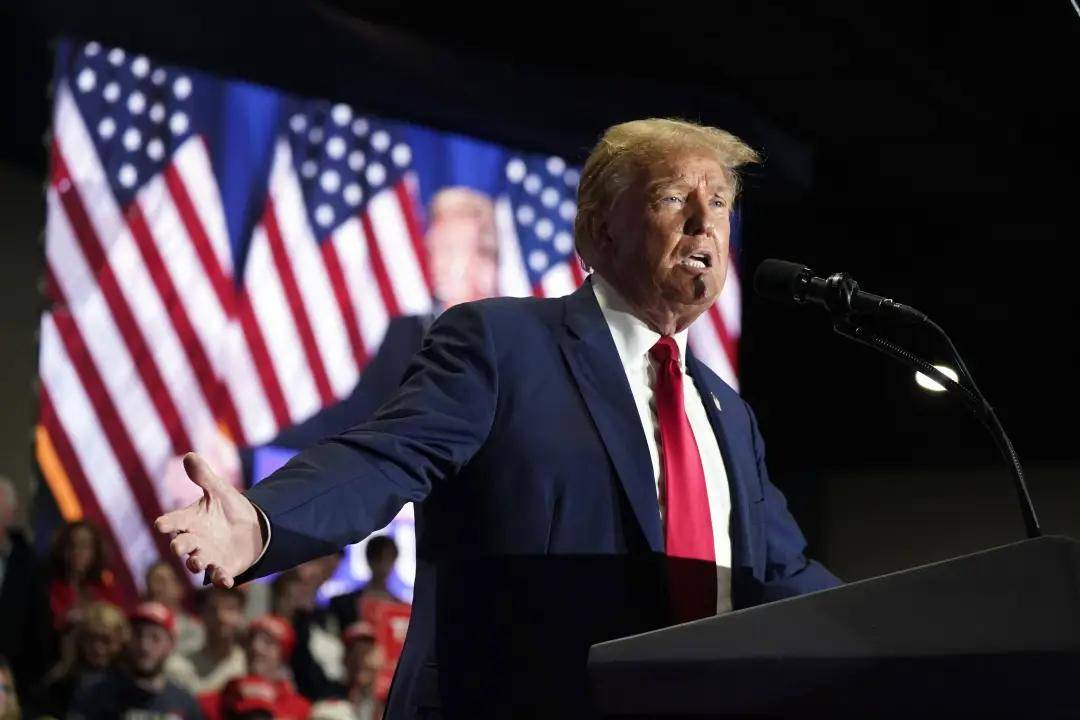
特朗普到底想要什么?一文带你读懂美国关税战背后的逻辑
Sou Hu Cai Jing· 2025-04-27 03:25
Core Viewpoint - The article argues that Trump's tariff strategy is unlikely to resolve the underlying issues of trade deficits and the decline of American manufacturing, which are rooted in structural problems related to the dollar's status as the global reserve currency [1][11]. Group 1: Trade Deficits - Trump's perception of trade deficits as a loss is criticized as a flawed logic, equating it to a one-sided transaction [1][3]. - The trade deficit is primarily driven by the dollar's unique position as the global reserve currency, leading to high demand and appreciation of the dollar, which in turn raises production costs in the U.S. [3][6]. - The U.S. has a long-standing reliance on imports due to high domestic production costs, resulting in a growing trade deficit [8][11]. Group 2: Manufacturing Challenges - The high cost of labor in the U.S. due to the dollar's strength makes domestic manufacturing less competitive compared to imports [3][8]. - Trump's strategy to bring manufacturing back to the U.S. through tariffs is deemed impractical, as it does not address the fundamental cost issues associated with U.S. production [9][10]. Group 3: National Debt Concerns - The U.S. national debt has reached $34.5 trillion, with annual interest payments projected to exceed $1 trillion, highlighting a significant fiscal challenge [16][18]. - The increasing reliance on short-term debt due to high interest rates poses additional risks, with a substantial amount of debt maturing soon [19][20]. Group 4: Tariff Implications - While tariffs could generate significant revenue (estimated at over $800 billion from a 20% tariff on $4.11 trillion in imports), they do not fundamentally resolve the underlying economic issues [23][24]. - The tariffs may serve as a negotiating tool to encourage other countries to lower their tariffs on U.S. products, potentially alleviating some trade imbalances [26][32]. Group 5: Global Economic Dynamics - The article suggests that Trump's tariffs are partly aimed at forcing countries to choose sides in the global economic landscape, particularly against China, which has become a significant competitor in manufacturing [34][38]. - The potential for increased prices and inflation in the U.S. due to tariffs could undermine the country's global credibility and economic stability [39]. Group 6: Future Outlook - The article concludes that regardless of the effectiveness of Trump's policies, the U.S. may face a period of economic hardship, necessitating resilience and adaptability from both the U.S. and its trading partners [40][41].
3大国冲击美元霸权,美元体系还能维持多久?谁都担心被突然
Sou Hu Cai Jing· 2025-04-26 19:25
Group 1: Dollar Hegemony - The dominance of the dollar was established post-World War II with the Bretton Woods system, supported by the strong economic power of the United States [3][5] - The dollar's status as the primary currency is reinforced by its significant share in global foreign exchange reserves, accounting for over 65% [7] - The dollar's position allows U.S. companies to mitigate exchange rate risks and attract substantial capital inflows into its financial markets [7] Group 2: Emerging Currency Challenges - The Indian Rupee has gained traction among developing countries, with agreements to settle oil transactions in Rupees, although India's economic development remains a limiting factor [9][14] - Russia's exclusion from the SWIFT system has prompted a shift towards Ruble settlements for energy exports, which could challenge the dollar's dominance if successful [11][13] - The Chinese Yuan is emerging as a strong competitor to the dollar, supported by China's robust economic growth and increasing global acceptance [14][18] Group 3: Future Outlook - The increasing reliance on the Yuan by countries like Brazil, which saw a threefold increase in its foreign reserves in Yuan, indicates a growing trend away from the dollar [16][18] - The long-term potential for the Yuan to challenge the dollar hinges on China's comprehensive economic strength and manufacturing capabilities [20] - Overall, while the Rupee and Ruble are making strides, the Yuan is positioned as the most formidable challenger to dollar hegemony in the future [20]