AI算力

Search documents
最前线|「天顿数据」获福田资本8亿元战略投资,粤港湾控股加速转型AI智算
3 6 Ke· 2026-02-03 07:08
Core Insights - Shenzhen Tiandun Data Technology Co., Ltd. has recently completed a new round of financing, securing a strategic investment of 800 million RMB from Futian Capital, a wholly-owned subsidiary of the Futian District State-owned Assets Supervision and Administration Commission [1] - The funding will primarily be used to enhance AI computing infrastructure, expand heterogeneous computing service capabilities, and supplement working capital [1] - Tiandun Data is a core subsidiary of Hong Kong-listed company Yuegangwan Holdings, positioning itself as a service provider for intelligent computing construction and operation [1] Industry Overview - The AIGC (Generative Artificial Intelligence) industry is experiencing explosive growth, with computing power becoming the third core element after data and algorithms [1] - IDC predicts that the global IDC market will maintain rapid growth from 2023 to 2030, with AI computing power demand growing significantly faster than traditional computing power [1] Company Performance - Tiandun Data reported a revenue of 174 million RMB in Q1 2025, achieving profitability, and has a remarkable revenue growth rate of 1091% over the past three years, earning a spot in Deloitte's 2025 China High-Tech High-Growth 50 [2] - The company has over 10 billion RMB in orders on hand and serves nearly 200 clients, including leading cloud service providers and AI companies [2] Strategic Developments - The parent company, Yuegangwan Holdings, optimized its asset-liability structure through debt restructuring and completed the acquisition of Wisdom Group, marking its entry into the AI computing sector [2] - Tiandun Data has established a partnership with Huagong Technology, a leader in the optical communication field, to jointly develop intelligent computing solutions [2] - The company has initiated the "Run Liu Chi - Tiandun Greater Bay Area AI Inference Computing Industry Base" in Longgang, Shenzhen, with the first phase producing a cluster of 1,000 high-performance inference servers [2]
光通信概念股涨幅居前 北美CSP资本开支指引乐观 光纤光缆行业已转向量价齐升
Zhi Tong Cai Jing· 2026-02-03 06:57
Group 1 - The core viewpoint of the article highlights the significant increase in stock prices of optical communication concept stocks, driven by strong capital expenditure growth in AI infrastructure from major companies like Microsoft and Meta [1] - Microsoft reported a record capital expenditure of $37.5 billion for the second fiscal quarter of 2026, representing a 66% year-on-year increase [1] - Meta anticipates its capital expenditure for 2026 to be between $115 billion and $135 billion, nearly double its 2025 capital expenditure [1] Group 2 - Both Microsoft and Meta's management emphasized that their investments in computing power will continue to increase in the coming quarters to support the training of next-generation large models and growing inference demands [1] - Citic Securities released a report indicating a surge in AI agent phenomena like Clawdbot and a significant increase in Tokes usage, projecting strong AI computing power demand in 2026 [1] - The optical fiber and cable industry has transitioned from recovery to a phase of simultaneous volume and price increases, with continued recommendations for the optical module industry chain due to high visibility in performance [1]

港股异动 | 光通信概念股涨幅居前 北美CSP资本开支指引乐观 光纤光缆行业已转向量价齐升
智通财经网· 2026-02-03 06:56
Group 1 - The core viewpoint of the article highlights the significant rise in optical communication concept stocks, driven by strong capital expenditure in AI infrastructure from major companies like Microsoft and Meta [1] - Microsoft reported a record capital expenditure of $37.5 billion for Q2 of fiscal year 2026, marking a 66% year-on-year increase [1] - Meta anticipates its capital expenditure for 2026 to be between $115 billion and $135 billion, nearly double its 2025 capital expenditure [1] Group 2 - The report from CITIC Securities indicates a surge in AI agent phenomena like Clawdbot, with a substantial increase in Tokes usage [1] - The demand for AI computing power is expected to remain strong in 2026, with optimistic capital expenditure forecasts for North American CSPs [1] - The optical fiber and cable industry is transitioning from recovery to a phase of simultaneous volume and price increases, with continued recommendations for the optical module industry chain [1]


化工板块全线反攻!“反内卷”政策催化行业新起点,化工ETF(516020)涨超4%!
Xin Lang Cai Jing· 2026-02-03 06:39
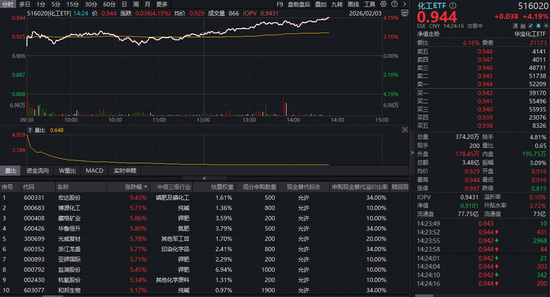
Group 1 - The chemical sector experienced a significant rebound on February 3, with the Chemical ETF (516020) rising by 4.19% during the trading day [1][2][6] - Key stocks in the sector, including phosphate chemicals, soda ash, and potash, saw notable gains, with Hongda Co. surging over 9% and several others, such as Boyuan Chemical and Hualu Hengsheng, increasing by more than 5% [1][7][9] Group 2 - Huafu Securities indicated that the chemical industry has undergone a bottoming process in profitability and valuation, with expectations for a recovery in earnings in 2026, driven by supply-side reforms and new production capabilities represented by AI computing and advanced manufacturing [1][9] - Zhongyin Securities projected that the current round of industry expansion is nearing its end, and measures like "anti-involution" are expected to catalyze a recovery in industry profitability, particularly benefiting new materials due to rapid downstream demand growth [3][9] - Investors are advised to focus on low-valuation industry leaders and the impact of "anti-involution" on supply-side dynamics, as well as companies in the electronic materials sector that are increasingly critical in the context of self-sufficiency [3][9] Group 3 - The Chemical ETF (516020) tracks the CSI sub-sector chemical industry theme index, covering popular themes such as AI computing, anti-involution, robotics, and new energy [3][9] - Investors can also consider the Chemical ETF linked funds (Class A 012537/Class C 012538) for exposure to the chemical sector [3][9]

交银国际:太空光伏远期空间巨大 太空数据中心有望推动需求
Zhi Tong Cai Jing· 2026-02-03 06:21
Group 1 - The global commercial space industry is experiencing rapid growth, driven by policy incentives and the increasing demand for AI computing power, which is expected to boost the demand for space photovoltaic solutions [1][3] - Space photovoltaic systems are identified as the most cost-effective power solution for space activities, with significant advantages over terrestrial solar power, including enhanced sunlight exposure and higher energy stability [1][3] - The annual energy output of a solar cell in a morning and evening orbit is 5-12 times greater than that of ground-based systems, and it does not require expensive energy storage systems [1] Group 2 - Low Earth Orbit (LEO) satellites are currently favored for short-term applications, with HJT crystalline silicon batteries being the preferred choice, while perovskite batteries are expected to be the future option [2] - Space photovoltaic batteries are categorized into three types: gallium arsenide, crystalline silicon, and perovskite, with crystalline silicon currently being the most cost-effective despite its lower performance [2] Group 3 - The market potential for space crystalline silicon and perovskite photovoltaic batteries is estimated to be around 3 billion RMB annually from 2026 to 2030, but this is limited in the short term [3] - If launch costs significantly decrease, the annual launch capacity could dramatically increase, potentially reaching 100 GW, leading to a market expansion to 500 billion RMB [3] Group 4 - Companies that may benefit from the growth of space photovoltaic technology include those involved in HJT and perovskite battery equipment, such as Maiwei Co., Ltd. (300751.SZ), Jiejia Weichuang (300724.SZ), and Jing Shan Light Machinery (000821.SZ) [4] - Other beneficiaries include GCL-Poly Energy Holdings Limited (03800) for perovskite batteries and Dongfang Risheng (300118.SZ) for ultra-thin HJT batteries [4]
多重利好共振,光伏板块活跃,光伏ETF博时(560313)火热发售中!
Sou Hu Cai Jing· 2026-02-03 06:04
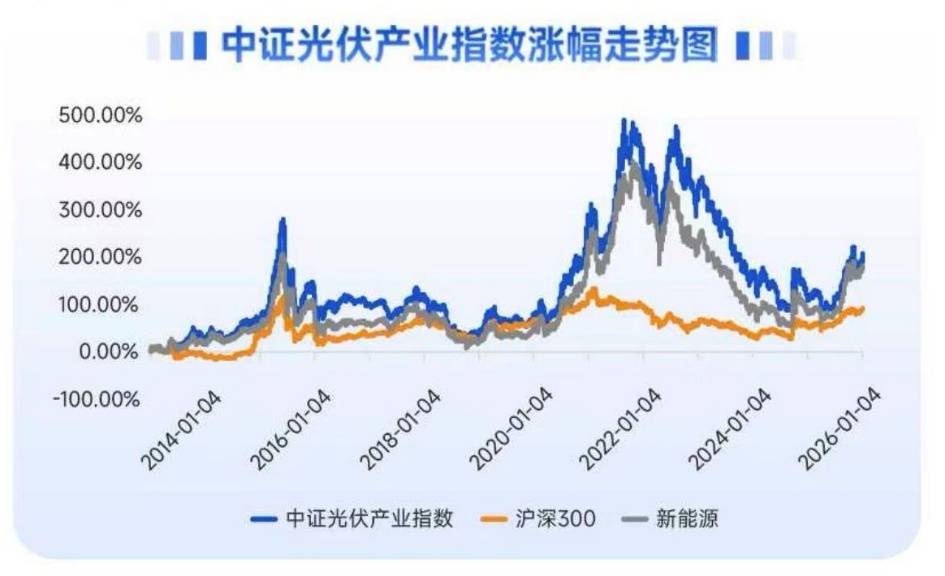
Core Viewpoint - The photovoltaic (PV) sector is experiencing a significant rebound, with the photovoltaic industry index rising over 5% as of February 3, indicating a shift in investment logic from a rebound after a downturn to a deeper game of supply and demand restructuring [1][2]. Group 1: Industry Developments - The launch of the photovoltaic ETF by Bosera (subscription code: 560313) on January 26, 2026, aims to facilitate investor access to leading companies in the photovoltaic industry chain, with the subscription period ending on February 6 [2]. - Elon Musk's proposal for "space photovoltaics," which includes plans to deploy a 100GW solar array to power space data centers, opens new possibilities for the industry, suggesting that Chinese photovoltaic companies could benefit from their leading position in the entire industry chain [2]. - The Ministry of Industry and Information Technology held a meeting on January 28, 2026, to address "anti-involution" in the photovoltaic industry, emphasizing mergers, restructuring, and standard-setting to combat excessive competition [2][5]. Group 2: Market Dynamics - The price war in the photovoltaic industry has intensified, with the average price of polysilicon dropping below the industry average cost, leading to significant losses forecasted by leading companies like Longi and Tongwei [2]. - The cancellation of export tax rebates for photovoltaic products on April 1, 2026, is expected to accelerate the elimination of outdated production capacity, thereby strengthening the market share and bargaining power of leading enterprises [2][5]. - The demand for photovoltaic products is increasingly driven by non-European and non-American overseas markets, with the construction of low-orbit satellite constellations boosting the demand for space photovoltaics [5]. Group 3: Technological Advancements - New technologies, such as BC and the replacement of precious metal pastes, are rapidly developing and may help reduce costs in the photovoltaic sector [6]. - The China Securities Index for the photovoltaic industry has shown a growth of 214.96% from December 31, 2012, to February 2, 2026, outperforming the CSI 300 and new energy indices, which grew by 82.57% and 191.04%, respectively [3]. Group 4: Future Outlook - With the implementation of "anti-involution" policies and the increasing energy demand driven by AI computing, the photovoltaic industry is expected to enter a recovery phase characterized by simultaneous growth in volume and profit [3]. - Current valuations in the photovoltaic sector remain relatively low historically, presenting a potential investment opportunity for those optimistic about energy transition and industry recovery [3].
研报掘金丨东吴证券:维持中际旭创“买入”评级,看好公司受益产业趋势
Ge Long Hui A P P· 2026-02-03 05:39
Core Viewpoint - The performance of Zhongji Xuchuang meets expectations, with significant growth potential anticipated due to scale-up opportunities [1] Financial Performance - The company expects to achieve a net profit attributable to shareholders of 9.8 to 11.8 billion yuan in 2025, representing a year-on-year growth of 89.50% to 128.17%, aligning with market expectations [1] - The company is in an upward trend regarding profit margins, driven by high demand for 800G and 1.6T products, as well as the accelerated penetration of silicon photonics [1] Growth Drivers - The company is expected to benefit from increased shipment scale, higher silicon photonics proportion, and improved integration of silicon photonics chips, which will enhance profit margins in the future [1] - Continuous expansion and increased R&D investment in cutting-edge products are being pursued by the company [1] - The ongoing high growth in AI computing power is expected to trigger an explosive demand for optical communications, creating a multiplier effect [1] Investment Outlook - Given the clear prospects for the ramp-up of 1.6T products and scale-up opportunities, the company's profit forecast has been upgraded [1] - The company is viewed positively in light of industry trends and the release of high-end products, maintaining a "buy" rating [1]


建材行业2025年业绩前瞻:预计25Q4玻纤收入利润高增,传统建材业绩承压
Guolian Minsheng Securities· 2026-02-03 05:10
Investment Rating - The report maintains a "Recommended" rating for the building materials industry [1] Core Views - The report anticipates significant growth in revenue and profit for fiberglass in Q4 2025, while traditional building materials face performance pressure [1] - The overall outlook for the cement industry indicates continued price and profit stabilization, with domestic pressures expected to persist [4][7] - The glass industry is projected to experience ongoing revenue and profit pressure, particularly in the float glass segment due to weak downstream demand [14][20] - The fiberglass sector is expected to see robust growth driven by increased demand for raw yarn and high-end fabrics [28] Summary by Sections Cement - Q4 2025 is expected to see domestic cement performance under pressure, while overseas markets may perform better. The average national cement price is projected at 357 RMB per ton, down 16% year-on-year [7] - The report notes that the cement industry is experiencing a bottoming out phase, with a year-on-year production decline of 7% from January to November 2025 [7] - Non-operating projects may impact profits, with companies accelerating capacity replacement and asset disposals [4][7] Glass - The float glass industry is expected to remain under pressure, with high inventory levels and ongoing losses. The average price for 5mm float glass is projected at 62 RMB per box in Q4 2025, down 17% year-on-year [14] - The photovoltaic glass segment is also expected to face significant revenue and profit pressure due to weak domestic installation demand, with a projected average price of 12.3 RMB per square meter in Q4 2025 [20] Fiberglass - The fiberglass sector is projected to see continued high growth in revenue and profit, with domestic net demand reaching 5.48 million tons, a 19% year-on-year increase [28] - The average price for mainstream products is expected to be 3,603 RMB per ton in 2025, with a slight decrease in Q4 [28] - High-end electronic fabric prices are expected to rise, benefiting companies with a first-mover advantage [28] Renovation Materials - The renovation materials sector is expected to face continued pressure, with a year-on-year decline in housing starts, completions, and sales area [4] - Companies are exploring new business channels to maintain resilience in performance [4]



史上最贵独角兽诞生:SpaceX与xAI正式合并,估值1.25万亿美元!马斯克的野心藏不住了?
Sou Hu Cai Jing· 2026-02-03 03:13
Core Viewpoint - The merger of SpaceX and xAI has created the world's most valuable unicorn, valued at $1.25 trillion, marking a significant shift in the tech landscape driven by Elon Musk's vision for space-based AI computing [1][3]. Group 1: Merger Details - SpaceX is valued at $800 billion, while xAI, despite being only two and a half years old, has reached a valuation of $230 billion after raising $20 billion [3]. - The merger positions the combined entity as the most valuable tech company, surpassing Apple [3]. - Musk's motivation for the merger is not financial but rather to address the energy demands of AI model training, which is becoming increasingly unsustainable on Earth [3][5]. Group 2: Space-Based AI Ambitions - Musk envisions establishing space data centers to reduce costs associated with AI training, leveraging near-constant solar energy and minimal cooling costs in space [5][6]. - The plan includes launching 1 million satellites to serve as "orbital servers," fundamentally changing how AI computations are conducted [6][8]. Group 3: Integrated Ecosystem - The merger creates a closed-loop ecosystem where data generated on the X platform is transmitted via Starlink, processed by xAI in space, and utilized by Tesla's robots [8][9]. - This ecosystem positions Musk as both a rule-maker and enforcer, creating a self-sustaining technological environment [8]. Group 4: Future Implications - SpaceX plans to go public in June, aiming to raise an additional $50 billion, indicating a race against competitors like OpenAI and Google in the AI space [12][13]. - The concentration of AI computing power in private hands, especially in space, raises concerns about regulatory oversight and potential monopolistic control over AI capabilities [14][16]. - The merger represents not just a business transaction but a transformative shift in human productivity, prompting questions about the role of individuals within this new technological framework [16].

电子行业动态跟踪:AI算力需求拉动,存储紧缺持续
Orient Securities· 2026-02-03 02:24
Investment Rating - The industry investment rating is maintained as "Positive" [4] Core Insights - The demand for AI computing power is driving a persistent shortage in storage [2][8] - Major storage companies are experiencing strong performance, with AI demand expected to continue creating incremental opportunities [6] - The supply of niche storage is under pressure from mainstream storage, leading to a sustained tight supply situation [7] Summary by Sections Investment Recommendations and Targets - Key investment targets include domestic storage chip design companies such as Zhaoyi Innovation, Puran, Jucheng, Dongxin, Beijing Junzheng, and Hengsuo [2][8] - Domestic storage module manufacturers like Jiangbolong, Demingli, and Baiwei Storage are also highlighted [2] - Companies benefiting from storage technology iterations include Lanke Technology, Lianyun Technology, and Aojie Technology [2] - Semiconductor equipment firms such as Zhongwei Company, Jingzhida, and Beifang Huachuang are recommended [2] - Domestic packaging and testing companies like Shentek, Huicheng, and Tongfu Microelectronics are included in the investment targets [2] Market Dynamics - TrendForce has revised upward the price growth rates for DRAM and NAND Flash products for the first quarter, with DRAM contract prices expected to rise by 90-95% and NAND Flash by 55-60% [7] - AI computing demand is becoming the dominant factor in storage demand, with significant price increases anticipated for Server DRAM and Enterprise SSDs [7] - The AI inference process is expected to significantly alter data center storage structures, leading to increased demand for active data storage [7] Niche Storage Supply - Niche storage products like NOR Flash and MLC/SLC NAND Flash are expected to remain in tight supply due to reduced production from major suppliers focusing on mainstream products [7] - The global capacity for MLC NAND Flash is projected to decrease by 41.7% in 2026 due to supply constraints [7]