生成式AI

Search documents
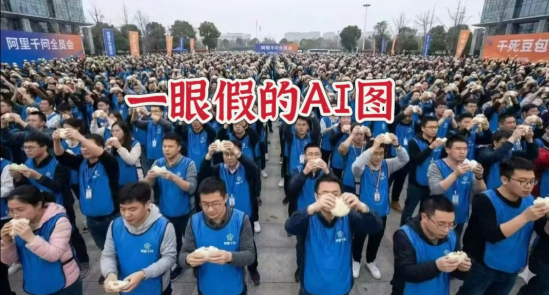
阿里千问全员会干死豆包现场图疯传,阿里紧急辟谣称系伪造,多位网友吐槽:像AI合成、更像菜鸟晨会
Xin Lang Cai Jing· 2025-12-19 08:22
炒股就看金麒麟分析师研报,权威,专业,及时,全面,助您挖掘潜力主题机会! 文/新浪财经上海站 十里 12月19日,网络上流传一张所谓"阿里千问全员大会"现场照片,画面中疑似大量人员在广场上手举豆 包,背景标语显示"阿里千问全员会""干死豆包"。 该网传的截图表示:说千问开了一个全员会,把所有人拉到了一个广场,每个人发了一个豆包,让他们 把豆包举过头顶,边喊干死豆包,边掰成两半,最后吃掉。 对此,阿里相关人士今日回应称,网传图片为"假的"。图片中涉及的所谓全员大会、现场举豆包等情节 均与事实不符。 多名网友也指出,该图片疑似由生成式AI生成,并调侃称"这明明是google minibanana生成的""在香蕉 水印上硬加豆包水印""怎么看都不像互联网研发的场景"。亦有评论认为,图中人员穿着马甲的风格更 像是菜鸟或饿了么的线下晨会,而非AI业务相关团队。 责任编辑:公司观察 炒股就看金麒麟分析师研报,权威,专业,及时,全面,助您挖掘潜力主题机会! 文/新浪财经上海站 十里 该网传的截图表示:说千问开了一个全员会,把所有人拉到了一个广场,每个人发了一个豆包,让他们 把豆包举过头顶,边喊干死豆包,边掰成两半,最后吃掉 ...


7.1万亿美元期权合约到期,美股“疯狂一日”即将爆发
3 6 Ke· 2025-12-19 02:45
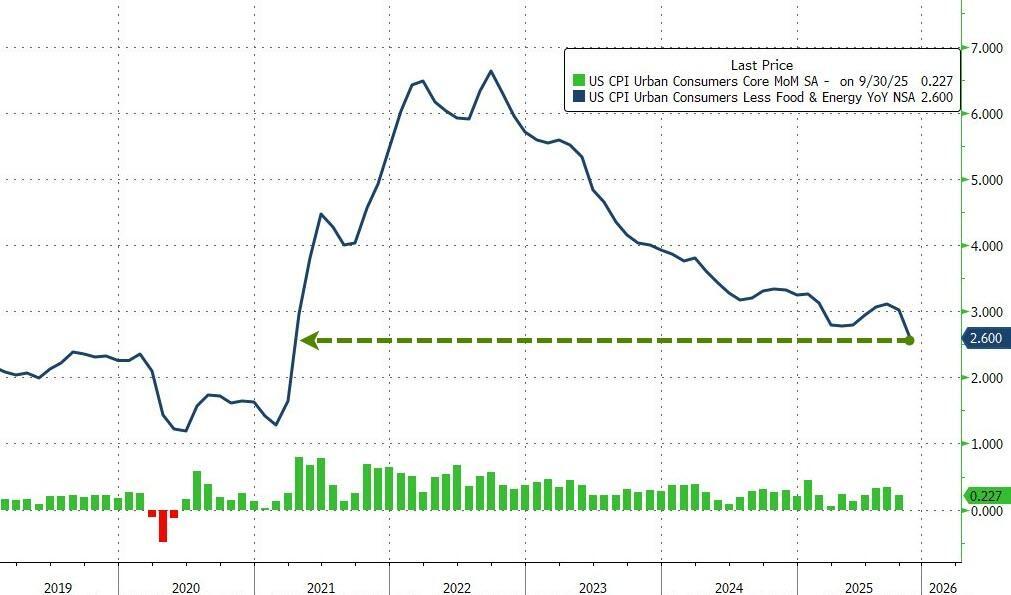
Economic Indicators - The latest November core CPI increased by 2.6% year-on-year, marking a new low since 2021 and falling below expectations, indicating a trend of slowing inflation [1] - Kevin Hassett, a leading candidate for the Federal Reserve chair, praised the CPI report as "shockingly good," noting that wage growth is outpacing price increases and predicting substantial tax refunds for American taxpayers next year [3][5] Federal Reserve Outlook - Hassett suggested that the Federal Reserve has significant room to lower interest rates due to improving supply-side conditions that are expected to suppress inflation in the long term [5] - Following the CPI data release, market expectations for aggressive easing by the Fed in 2026 increased, particularly regarding the likelihood of rate cuts in March next year [5] Market Dynamics - The S&P 500 faced technical resistance while attempting to breach the 6800-point level, leading to significant volatility and a rapid sell-off triggered by quantitative funds and high-leverage long positions [7][9] - The current market is in a "negative Gamma" zone, where small retreats can lead to systemic sell-offs, emphasizing the need for the index to maintain above 6800 points for stability [9][16] Options Market - A record $7.1 trillion in nominal value of options contracts is set to expire on the upcoming "quadruple witching" day, which typically amplifies market volume and volatility [14] - The dominance of zero-day-to-expiration (0DTE) options is expected to disrupt true asset pricing, shifting the focus from inflation data to liquidity pressures [16] Meta's AI Strategy - Meta is developing two ambitious AI models, "Mango" for video and "Avocado" for language, with plans for a 2026 release, reflecting a strategic pivot amid a $70 billion capital expenditure [17][19] - The company has shifted its approach from open-source to potentially proprietary models, aiming to establish a competitive edge in AI technology [20][22] - Meta's dual development of Mango and Avocado is seen as a defensive strategy to enhance user engagement and maintain its competitive position against rivals like Google and OpenAI [21][22]

AI新子弹要来了,报道称OpenAI正探讨“数百亿甚至1000亿美元融资”
3 6 Ke· 2025-12-19 02:17
Group 1 - OpenAI is planning an unprecedented capital operation, aiming for financing of up to $100 billion to strengthen its dominance in the AI field and cover high model training costs [1] - The company is reportedly discussing a valuation of approximately $750 billion with investors, with potential financing reaching hundreds of billions, possibly up to $100 billion [1] - If successful, this financing would represent a 50% increase over OpenAI's last valuation from October of the previous year, further enhancing its cash reserves for AI model training and operations [1] Group 2 - Amazon is in deep discussions to invest at least $10 billion in OpenAI, which would support OpenAI's commitment to rent Amazon Web Services (AWS) servers for $38 billion over the next seven years [2] - The agreement would involve OpenAI using Amazon's proprietary Trainium chips, positioning Amazon as a significant investor alongside tech giants like Nvidia [2] - This financing activity highlights the escalating arms race in the generative AI sector, indicating a complex competition among Silicon Valley giants regarding computing power, exclusive agreements, and market share [2]

白宫200亿订单加持藤仓电缆扩张遇挑战,CEO直言“根本无法满足所有客户”
智通财经网· 2025-12-19 00:49
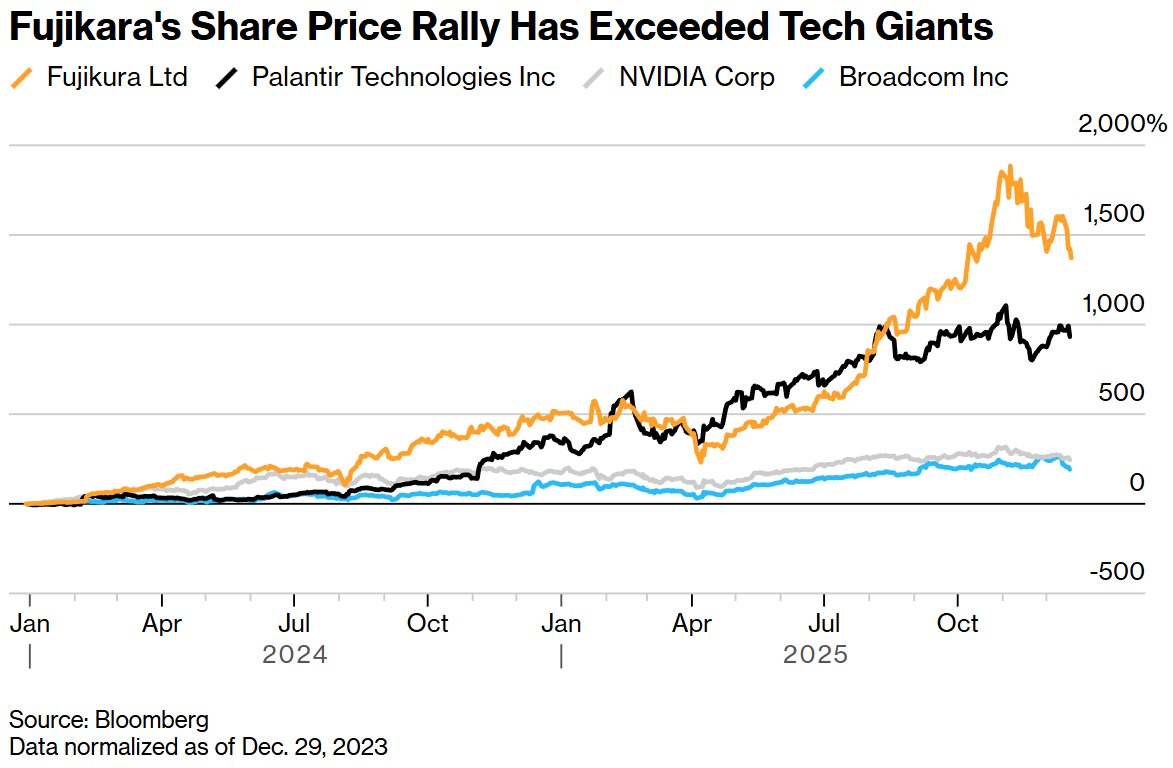
Core Viewpoint - Fujikura's stock has surged approximately 1400% over the past two years due to soaring demand for its cables from new data centers, but the company is struggling to keep up with this demand [1] Group 1: Company Performance and Strategy - The CEO Naoki Okada indicated that further capital expenditure is necessary to meet AI-related demand, with new investment plans expected to be announced in May [1] - Fujikura's stock price fell by 3.4% to 15,960 yen following concerns about AI investment prospects after Blue Owl Capital decided not to fund Oracle's data center [1] - The company is recognized as a leading Japanese cable manufacturer, involved in capital expenditures for major cloud computing giants and high-margin telecom products [1][6] Group 2: Market Demand and Supply Challenges - There is a significant shortage of fiber optic cables, highlighting potential risks for investors in AI-related companies, particularly for Fujikura [1] - Fujikura has been selected by the White House to provide fiber optic cables worth up to $20 billion for AI infrastructure, and the company plans to invest 45 billion yen (approximately $289 million) in a new factory [6] - The CEO acknowledged that current production capacity cannot meet the rapidly growing demand from AI-driven data centers [7] Group 3: Financial Outlook and Analyst Insights - Fujikura raised its full-year revenue forecast to 179 billion yen, a 26% increase from previous expectations, with about 75% of its sales coming from overseas, potentially benefiting from a weaker yen [7] - Morgan Stanley MUFG Securities raised Fujikura's target price from 14,000 yen to 21,500 yen, anticipating strong growth through product optimization and connector sales [7]
AI校园争夺战升级:OpenAI以“批发价”抢占百万用户,微软谷歌如何破局?
Zhi Tong Cai Jing· 2025-12-19 00:14
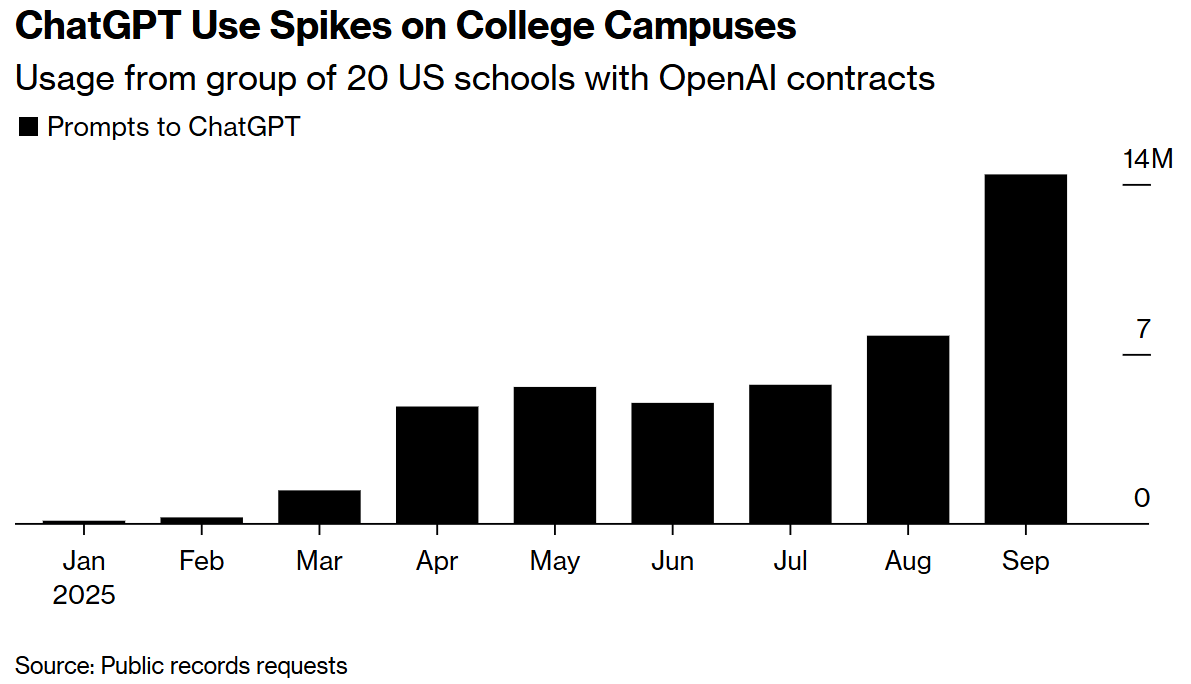
Core Insights - OpenAI has sold over 700,000 ChatGPT licenses to approximately 35 public universities, indicating rapid adoption in U.S. campuses compared to Microsoft's AI tools [1] - The average usage of ChatGPT among users in September exceeded 14 million times, with each user averaging 176 calls per month for tasks like writing and data analysis [1] - OpenAI's pricing strategy allows schools to purchase ChatGPT access at a significantly lower cost compared to Microsoft's Copilot, enhancing its appeal [2][3] Group 1: Adoption and Usage - Arizona State University has purchased ChatGPT access for all students and staff, with nearly 10,000 students and 6,400 staff using the licenses by late November [3] - California State University system plans to provide AI tools to approximately 500,000 students and staff, agreeing to pay OpenAI $15 million annually [3] - Many universities are now embracing AI, with educators recognizing ChatGPT as a valuable tool for students, despite initial skepticism [4] Group 2: Competitive Landscape - OpenAI's ChatGPT has gained a competitive edge due to its popularity and significant discounts, while Microsoft and Google's AI tools are struggling to achieve similar adoption rates in educational institutions [2][8] - Google is offering a one-year free trial of its Gemini AI assistant to all university students, aiming to compete with OpenAI's offerings [8] - Despite being a major client of Microsoft, Texas State University shows that ChatGPT's usage rate is still double that of Copilot, indicating OpenAI's strong position in the market [9] Group 3: Educational Impact and Concerns - Some universities are cautious about AI's impact on education, with ongoing research into how these tools affect teaching and learning [6] - Nebraska University found that 92% of surveyed faculty and students would recommend ChatGPT, highlighting its perceived benefits in saving time and enhancing productivity [6] - Concerns about plagiarism and data security are prompting some institutions to adopt a more measured approach to AI tool implementation [7]


AI校园争夺战升级:OpenAI以“批发价”抢占百万用户,微软(MSFT.US)谷歌(GOOGL.US)如何破局?
智通财经网· 2025-12-18 23:24
Core Insights - OpenAI has sold over 700,000 ChatGPT licenses to approximately 35 public universities for use by students and faculty, significantly outpacing Microsoft's AI tools in adoption rates within these institutions [1][12] - The rapid adoption of ChatGPT in U.S. campuses is evidenced by over 14 million uses in September alone, with an average of 176 uses per user [1] - OpenAI's pricing strategy, offering bulk licenses at a few dollars per user per month, contrasts sharply with Microsoft's higher pricing for its Copilot tool, making ChatGPT more attractive to educational institutions [2][6] Group 1: Adoption and Usage - Arizona State University has purchased ChatGPT access for nearly 10,000 students and 6,400 staff, while California State University plans to provide access to about 500,000 students and faculty, paying $15 million annually [6][8] - Many universities are now embracing AI tools, with educators recognizing the potential benefits of ChatGPT for research and writing, despite initial skepticism [7][9] - A survey at the University of Nebraska Omaha found that 92% of respondents would recommend ChatGPT, with many reporting time savings of 1 to 5 hours per week [9] Group 2: Competitive Landscape - OpenAI's ChatGPT is currently leading in the education sector, but competition from Google and Microsoft is intensifying, with Google offering free trials of its Gemini AI assistant to students [13][14] - Despite Microsoft's strong presence in corporate environments, its educational adoption of Copilot remains limited compared to ChatGPT, with many universities only purchasing a small number of licenses for faculty use [13][14] - OpenAI's confidence in maintaining its lead is bolstered by the popularity of ChatGPT among students, even in institutions that have access to other AI tools [15]
中信建投证券金剑华:资本市场转向系统赋能 机构服务应实现“三个转变”
Shang Hai Zheng Quan Bao· 2025-12-18 18:24
Core Viewpoint - The capital market is undergoing profound institutional changes and ecological restructuring, with a shift in focus from merely being a financing channel to becoming a key hub connecting technology, industry, and capital [1] Group 1: Policy and Market Changes - The logic of the securities industry in serving technological innovation has transitioned from "auxiliary support" to "system empowerment" following the implementation of the new "National Nine Articles" [1] - Multi-level capital market reforms have evolved from expanding sectors to optimizing functions, with a policy support system moving from single-point breakthroughs to systematic construction [1] - New policies such as the "Sixteen Articles on Technology," "Eight Articles on the Sci-Tech Innovation Board," and "Six Articles on Mergers and Acquisitions" have been introduced, creating a comprehensive policy framework for the entire lifecycle of technology companies [2] Group 2: Financing and Investment Trends - The bond market has become a crucial support for technological innovation, with securities firms underwriting 539 sci-tech bonds in 2024, totaling 613.69 billion yuan, reflecting a year-on-year growth of over 60% [2] - The influx of medium- and long-term funds into the market is changing the capital structure, with insurance and pension funds increasing their allocation to technology stocks, providing stable funding support for tech companies [2] - The structure of A-share listed companies is shifting from being dominated by finance, real estate, and traditional manufacturing to being driven by technological innovation, advanced manufacturing, and green industries [2] Group 3: Company Strategy and Services - The company has established "serving high-level technological self-reliance" as a core strategy, leading to comprehensive business restructuring and organizational changes [2] - The company emphasizes a "banking + investment + research" service model to enhance comprehensive service capabilities for clients, covering traditional investment banking services and extending to innovative areas like asset securitization and REITs [3] - The company has set up specialized industry groups to strengthen services for specialized and innovative enterprises, with a focus on sectors such as TMT, advanced manufacturing, chemicals, and healthcare [3] Group 4: Future Outlook - The company envisions playing multiple roles in building a technologically strong nation, from early-stage PE/VC investments in startups to providing IPO services and supporting technological iterations and scale expansions [4] - The company aims to continue deepening its collaborative model of "banking + investment + research" while embracing cutting-edge technologies like generative AI and blockchain to create an intelligent financial service system [4]

腾讯研究院AI速递 20251219
腾讯研究院· 2025-12-18 16:01
Group 1 - Google is advancing the "TorchTPU" strategy to enable PyTorch to run smoothly on TPU chips, aiming to eliminate migration barriers for developers and considering partial open-sourcing of the software [1] - Google is negotiating a collaboration with Meta to provide Meta with more TPU access, allowing Meta to reduce inference costs and dependence on NVIDIA by adapting software for TPU [1] - Wall Street analysts believe that CUDA is NVIDIA's strongest defense, and Google's previous reliance on its internal Jax framework has widened the gap with external customer usage habits [1] Group 2 - The ChatGPT app store has officially launched, categorizing applications like Adobe Photoshop and Canva, with users triggering them via "@app name" [2] - Developers can submit applications for review on the OpenAI developer platform, which offers a comprehensive resource system including best practice guides and open-source sample applications [2] - OpenAI plans to raise new funding at an estimated valuation of around $750 billion, potentially reaching $1 trillion, attempting to replicate the Apple App Store model in the AI era [2] Group 3 - Google has released the Gemini 3 Flash model, achieving a score of 33.7% on the Humanity's Last Exam benchmark, while Gemini 3 Pro scored 37.5% and GPT-5.2 scored 34.5% [3] - This model maintains the Flash series' extreme native speed, outperforming Gemini 2.5 Pro while tripling the speed, priced at $0.50 per million tokens for input and $3 for output [3] - Gemini 3 Flash is now the default model for Gemini applications and search AI modes, with response times generally under one second, available globally through Google AI Studio and Vertex AI [3] Group 4 - ByteDance has launched the universal Agent model Seed1.8, which integrates search, code, and GUI Agent capabilities, automatically adjusting processing methods based on task complexity [4] - In GUI Agent evaluations, Seed1.8 surpassed Seed1.5-VL, demonstrating reliability in multi-step tasks across computer, web, and mobile environments, scoring 67.6 on the BrowseCompen benchmark [4] - The model achieved a top score of 11.0 on ZeroBench and 87.8 on VideoMME for long video understanding, incorporating the "VideoCut" video tool [4] Group 5 - The Step-GUI cloud model has been fully upgraded, supporting over 200 task scenarios and usable across mobile, PC, and automotive platforms, with deployment of an "AI phone" possible in as little as 10 minutes [5][6] - This model features longer reasoning steps, enhanced semantic understanding, and generalization capabilities, autonomously asking questions when user instructions are vague [6] - The GUI-MCP protocol is open for end-cloud collaboration, with APIs temporarily available for free, and a call for users to create showcases and develop applications [6] Group 6 - xAI has officially released the Grok Voice Agent API, making its real-time voice capabilities available to developers for voice-first application scenarios [7] - The API includes various built-in voices and companion personalities, allowing developers to finely control system commands and behavior parameters [7] - It supports real-time voice recognition and synthesis with a streaming audio design, enabling search capabilities during conversations and significantly reducing interaction latency [7] Group 7 - Apple is reportedly abandoning its VR headset project in favor of developing AI smart glasses, with a projected launch in late 2026 or 2027 [8] - The company has paused its AR/VR headset initiatives and plans to reintroduce the iMac Pro, which has been off the market for over four years, potentially featuring the M5 Max chip [8] - A 20th-anniversary edition iPhone is expected in 2027, featuring a curved design that wraps around the device edges and a front camera positioned under the display [8] Group 8 - a16z partners assert that the AI bubble has not yet burst, as it has not reached a point where investments are wasted [9] - They believe that if companies cease developing larger models and rely solely on existing models, they could quickly achieve profitability at current profit margins [9] - Predictions indicate that GDP could grow by several percentage points by 2030, with a reasonable lower limit of 30% growth if AGI is achieved, though outcomes could vary widely [9]



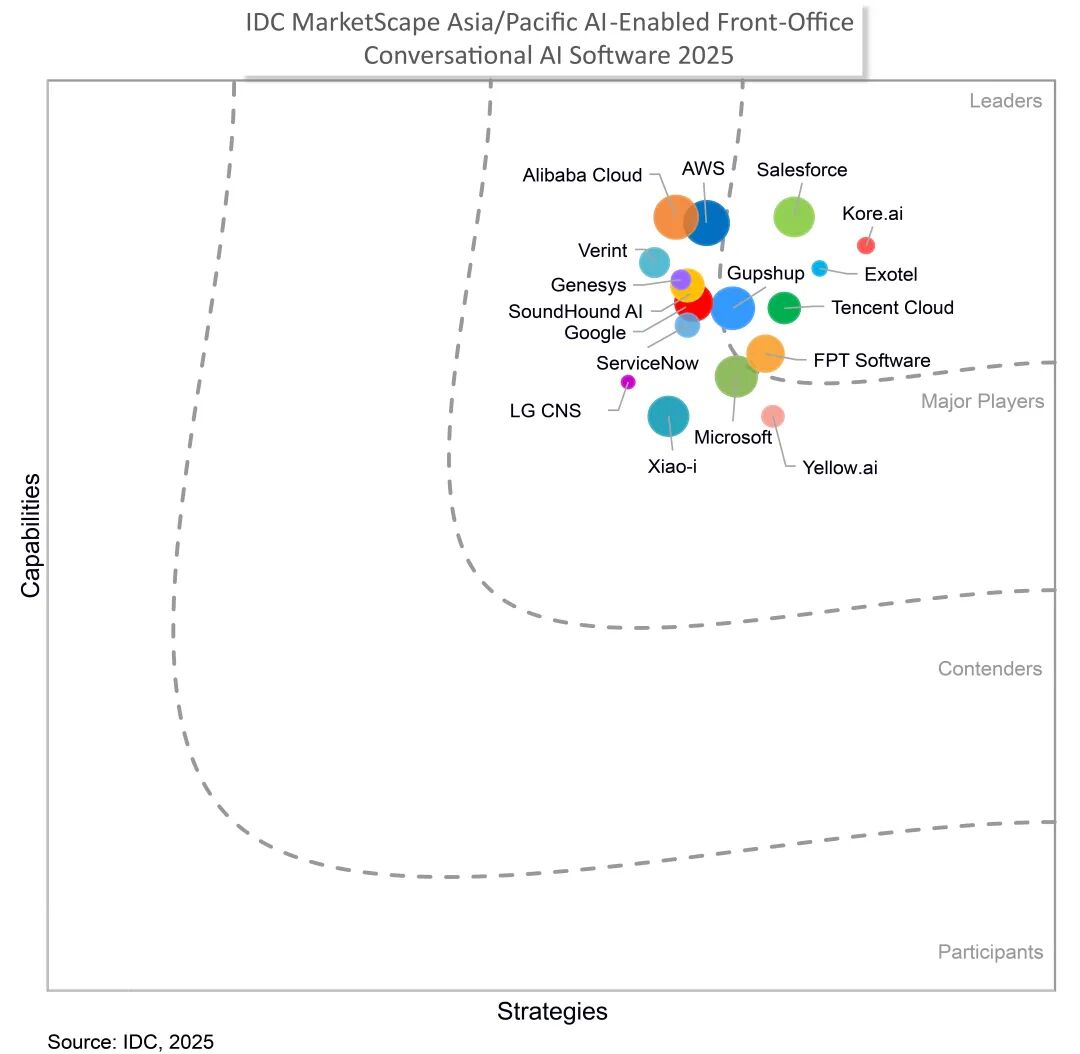
对话式AI,我们斩获“亚太领导者”!
Xin Lang Cai Jing· 2025-12-18 14:26
Core Insights - Tencent Cloud has been recognized as a "Leader in the First Quadrant" by IDC, making it the only Chinese company in this category, surpassing many global competitors [1][17]. Group 1: Conversational AI Applications - Conversational AI is highlighted as a key application of generative AI, enhancing customer service externally and improving employee efficiency internally [4][19]. - The Asia-Pacific region presents significant challenges for the deployment of conversational AI due to its linguistic diversity, cultural variety, and complex regulations [4][19]. - Tencent Cloud's conversational AI products have demonstrated improved efficiency, such as a 5% increase in the resolution rate of customer service queries for DHL, reducing the need for human agents by 200 per day [4][19]. Group 2: Industry Collaborations - Tencent Cloud has partnered with Huazhu Group to create a "24-hour digital concierge" app, enhancing customer service across various hotel operations [9][22]. - An intelligent investment assistant developed in collaboration with a leading brokerage firm has processed nearly 2 million user inquiries, tripling user penetration rates [9][23]. - A specialized automotive agent created with FAW Toyota provides detailed maintenance guidance, significantly improving service interaction and problem resolution rates [9][24]. - Collaboration with Yili Group has led to a smart shopping assistant that increased click-through rates by 15.7% and order numbers by 26%, with a 39% rise in conversion rates for direct orders [9][27]. Group 3: Regional Expansion and Impact - Tencent Cloud's conversational AI applications have expanded across regions including Hong Kong, Macau, Singapore, and Indonesia, impacting various industries such as automotive manufacturing, cross-border logistics, pharmaceutical retail, and financial insurance [4][15][29].

假图骗取电商退款,洗脑驯化大模型,南都报告揭秘AI灰产
Nan Fang Du Shi Bao· 2025-12-18 10:35
Core Insights - The rise of generative AI has led to an increase in AI-related fraud and misinformation, particularly in the e-commerce sector, highlighting the challenges of distinguishing truth from falsehood in a technologically advanced society [2][4] - A report released at the eighth Woodpecker Data Governance Forum reviews 118 cases of generative AI risks, focusing on the societal trust challenges and ethical dilemmas posed by human-AI interactions [4][5] Group 1: Impact on Society and Individuals - Generative AI has significantly altered the landscape of information production and dissemination, leading to an exponential increase in fake content across personal, industry, and societal levels [5] - AI-generated misinformation has resulted in various forms of fraud, including "AI yellow rumors" and scams targeting vulnerable populations, particularly the elderly [5][6] - The report highlights a case where a PhD student at the University of Hong Kong cited 24 AI-generated fake references in a paper, leading to its retraction and an investigation [6] Group 2: Legal and Ethical Concerns - Instances of lawyers using AI to generate fictitious legal cases have emerged, raising concerns about the integrity of legal proceedings [6] - The report discusses the emergence of a gray industry exploiting generative AI, manipulating data to influence AI model outputs, which can mislead users into believing the information is factual [7] - The ethical implications of AI's "flattering" algorithms are examined, particularly in the context of human-AI relationships and the potential for emotional manipulation [8] Group 3: Regulatory Responses and Recommendations - The report emphasizes the need for global consensus and institutional rules to address the challenges posed by AI-generated misinformation, advocating for stronger platform regulation and cross-border collaboration [7] - Recent lawsuits against AI platforms like Character.AI and OpenAI highlight the legal accountability issues surrounding AI interactions, particularly concerning youth safety [9][10] - Various countries are implementing regulations to protect minors from AI-induced harm, with recommendations for AI products to prioritize user mental health and transparency in design [11]