
人民币国际化

Search documents
关于自贸港建设,海南最新发布
Shang Hai Zheng Quan Bao· 2025-12-10 06:09
Core Viewpoint - The proposal outlines a vision for the development of Hainan's Free Trade Port by 2035, aiming to enhance economic strength, openness, technological capabilities, regional influence, and global impact, establishing it as a new highland of China's open economy [1]. Group 1: Economic and Social Development Goals - The proposal sets eight main goals for Hainan's economic and social development during the 14th Five-Year Plan period, including high-standard construction of the Free Trade Port, breakthroughs in reform and opening-up, and improvements in economic quality and efficiency [1]. Group 2: Policy and Institutional Framework - The proposal emphasizes the need to build a policy and institutional framework that aligns with a high-level Free Trade Port, focusing on trade liberalization and facilitation, and enhancing the role of Hainan in both domestic and international economic cycles [3]. - It suggests optimizing the policy system characterized by "zero tariffs, low tax rates, and simplified tax systems," and enhancing the management of cross-border services and capital flows [3][4]. Group 3: Taxation and Investment - The proposal calls for establishing a competitive tax system and implementing tax policies for imported goods consumed by residents, while also optimizing foreign investment access and tax incentives [4]. - It aims to expand the management authority of local taxes in Hainan gradually [4]. Group 4: Open Economy and Trade - The proposal highlights the importance of attracting significant foreign investment projects and enhancing trade quality, while promoting digital trade and offshore trade development [5]. - It also emphasizes the need for a dual circulation strategy to support domestic enterprises in expanding internationally [5]. Group 5: Industry Development - The proposal outlines the cultivation of five key industry chains, including agriculture, marine economy, aerospace, green technology, and digital economy, to drive Hainan's economic growth [6][7][8][9]. - It aims to establish Hainan as a hub for innovative industries such as biomanufacturing and hydrogen energy [9]. Group 6: International Tourism and Consumption - The proposal aims to enhance Hainan's status as an international tourism consumption center, promoting global shopping experiences and improving medical tourism services [11]. - It seeks to create a multi-layered supply structure for consumer goods, including duty-free shopping and cross-border e-commerce [11]. Group 7: Financial Services and RMB Internationalization - The proposal emphasizes improving financial services for the real economy and expanding financial sector openness, aiming to create a financial system that supports the Free Trade Port [13]. - It includes plans to promote the internationalization of the RMB and explore offshore RMB business opportunities [12][13].
宇信科技周帆:从东南亚到伦敦 七年出海深耕全球金融科技服务
2 1 Shi Ji Jing Ji Bao Dao· 2025-12-10 03:45
Group 1 - The banking industry is experiencing a digital transformation wave, requiring new technological frameworks and financial technology partners to enhance business capabilities [1] - Yuxin Technology has been expanding its overseas business since its A-share listing in 2018, initially targeting Southeast Asian countries along the Belt and Road Initiative to provide technology and business systems to foreign financial institutions [1] - The company has successfully implemented overseas projects and replaced clients' core systems, leveraging over 20 years of accumulated technological and product advantages [1] Group 2 - Yuxin Technology submitted its Hong Kong IPO application on June 18, aiming for coordinated development of overseas business and capital platforms [2] - The Hong Kong listing is seen as a crucial step in the company's global strategy, serving as both a capital and business platform to explore opportunities and talent overseas [2] - The company is positioned to become a global leader in the financial technology sector, driven by trends such as the internationalization of the RMB and the global promotion of digital RMB [2]

金价站上4200美元,央行为何还在买?
Sou Hu Cai Jing· 2025-12-09 15:02
12月7日,中国人民银行公布的数据显示,截至11月底,中国黄金储备达到7412万盎司(约2305.39 吨),环比增加3万盎司,实现连续13个月增持。同期,国家外汇储备规模也保持稳定,连续第四个月 保持在3.3万亿美元上方。 当国际金价已在每盎司4200美元的高位徘徊,国内金饰价格突破每克1320元时,央行的持续购金行动显 得格外引人注目。 战略考量 央行增持黄金的行动始于2022年11月,至今已持续整整13个月。在这段期间,中国黄金储备从6980万盎 司稳步增加至7412万盎司。 全球央行正在延续自2022年以来的购金热潮,成为支撑国际金价上涨的重要力量。分析人士指出,从中 长期来看,黄金上涨的核心驱动因素仍未改变,即美元信用体系受到挑战。 在央行持续购金的背景下,黄金市场呈现出多重特征。国际金价在2025年已超过50次创下历史新高,累 计回报率超过60%,成为全球表现最为亮眼的资产之一。 国内黄金市场同样活跃,11月份黄金期货成交额达8.62万亿元,同比增长56.7%。全球实物黄金ETF连 续6个月实现净流入,中国成为11月黄金ETF净流入的最大单一来源。 值得注意的是,中国黄金储备占外汇储备的比重正在稳 ...


7.0关口告急,国有大行紧急出手,俄罗斯这波“抛盘”正是时候
Sou Hu Cai Jing· 2025-12-09 13:09
汇率战的硝烟往往是无声的,但残酷程度丝毫不亚于热战,7.0关口岌岌可危,中国出口企业利润薄如刀片,就在国家队出手稳汇率的关键时刻,俄罗斯的 一纸抛售令,竟成了最好的"神助攻",这世上哪有那么多意外?一边是国有大行逆势买入美元,一边是俄罗斯抛出千亿人民币,两股力量在冥冥之中形成了 合力,这场看似矛盾的金融操作背后,到底藏着怎样一盘呵护中国实体经济的大棋? 7.0关口:出口企业的生死线 12月4日,路透社引述知情人士消息,中国国有大行在即期市场大量买入美元,阻止人民币升破7.0关口,同日,第一财经指出,受美联储降息预期影响,年 末企业结汇需求爆发,人民币短期升值概率极高。 现在俄罗斯因为财政困难,把这些人民币吐出来了,这些钱流向了哪里?流向了外汇市场,被需要人民币的第三方国家、或者被中国进口企业买走了。 对于中国央行来说,正愁市场上人民币买盘太强(都在结汇),突然来了个大卖盘(俄罗斯抛售),这简直是天降甘霖,如果没有俄罗斯的这波助攻,国有 大行可能需要买入更多的美元才能稳住汇率,那意味着我们要消耗更多的外汇储备。 值得关注的是,为什么人民币汇率一定要死守7.0? 因为现在的全球经济环境太差了,欧美需求疲软,贸易保 ...
共话现代金融新机遇 共绘湾区协同新图景 2025第四届粤港澳大湾区金融论坛年度大会在澳门成功举办
Feng Huang Wang Cai Jing· 2025-12-09 10:26
Core Insights - The 2025 Fourth Guangdong-Hong Kong-Macao Greater Bay Area Financial Forum was held in Macau, focusing on leveraging modern financial systems to promote diversified development in Macau and create a new collaborative framework in the Greater Bay Area [1] Group 1: Forum Overview - The forum attracted nearly 300 representatives from government, business, academia, and research sectors across Guangdong, Hong Kong, and Macau [1] - The event was co-hosted by the National Financial Research Institute of Renmin University of China, the China Capital Market Research Institute, and the Macao Banking Association [1] Group 2: Key Speeches and Discussions - The Secretary for Economy and Finance of the Macao SAR, Dai Jianye, emphasized the importance of integrating finance with various industries such as technology, culture, tourism, and healthcare to promote economic diversification [3] - Wu Xiaoqiu, a prominent financial scholar and forum chairman, highlighted Macau's unique role in the Greater Bay Area's financial ecosystem, advocating for wealth management and capital market development [5] - The forum included discussions on the Macao Investment Fund Law and industry funds, featuring insights from experts and government officials [6] Group 3: Future Directions - The forum aims to strengthen the link between finance and real industries, enhancing Macau's integration into national development strategies [3] - The event is seen as a platform for fostering cooperation and consensus in the financial sector, contributing to Macau's economic diversification and the high-quality collaboration of the Greater Bay Area [7]
我们,还差一个关键转折点
大胡子说房· 2025-12-09 09:49
Core Viewpoint - The article discusses the disparity between the perception of economic strength in China and the reality of its position relative to the United States, emphasizing the importance of understanding the underlying distribution rules that govern global economics [4][6][7]. Group 1: Economic Performance - In 2021, China's industrial output accounted for 30% of the global total, and its GDP reached 77% of that of the United States. However, by 2024, while industrial output increased to 35% of the global total, the GDP ratio relative to the U.S. fell to 65%, a decline of 12% [4][5]. - The article highlights that despite improvements in industrial production capabilities, China's economic growth is hindered by the existing distribution rules set by the U.S., which maintains its status as the largest consumer nation [6][7]. Group 2: Global Economic Rules - The article categorizes countries into resource countries, industrial countries, and consumer countries, with the U.S. being the largest consumer country that dictates the rules of the game [6]. - The dominance of the U.S. is attributed to its control over the distribution of global wealth, with the dollar serving as the primary currency for international transactions, reinforcing the concept of dollar hegemony [6][7]. Group 3: Military and Economic Strategy - The article suggests that to change the existing economic rules, China must enhance its military capabilities, particularly in naval power, to gain leverage in international negotiations [8][10]. - It is noted that the U.S. is currently adjusting its national security strategy to stabilize relations with China while addressing its own economic issues, indicating a shift in the dynamics of their relationship [14][18]. Group 4: Future Outlook - The article expresses optimism about China's future, suggesting that while it may not immediately become the new "game master," the current challenges faced by the U.S. could create opportunities for China [13][22]. - It emphasizes the importance of being prepared for potential economic shifts and the need for diversified asset allocation to navigate the changing landscape [35][44]. Group 5: Policy and Market Dynamics - The article stresses the significance of monitoring policy changes and macroeconomic events, as these will influence market conditions and investment strategies [45][52]. - It highlights the volatility in capital markets due to global liquidity changes, particularly in response to actions taken by major central banks like the Federal Reserve and the Bank of Japan [47][48].

D音大生态:2025中国跨境支付趋势(三)
Sou Hu Cai Jing· 2025-12-09 09:22
Group 1 - The cross-border payment market is expected to reach $290 trillion by 2030, with the retail market growing by 45% [1] - B2B e-commerce is projected to grow from $39 trillion to $56 trillion, becoming the largest segment of cross-border payments [1] - The growth of cross-border commercial services is anticipated to surpass that of goods trade [1] Group 2 - Digital payments are dominating online consumption, with their share in the global e-commerce market increasing from 34% in 2014 to 66% by 2024 [3] - The growth of e-commerce is driving the rise of Buy Now Pay Later (BNPL) services, leading to a significant decline in cash and card usage [3] - The global e-commerce market is expected to grow by 10% year-on-year from 2023 to 2024, with a projected CAGR of 8% by 2030 [3] Group 3 - The renminbi has become the fourth largest currency for international payments, maintaining a market share of over 4% since the second half of 2023 [5] - The Cross-Border Interbank Payment System (CIPS) has expanded globally, with 171 direct participants and 1,500 indirect participants as of April 2025 [5] Group 4 - The central bank is collaborating with five official institutions to build a multi-central bank digital currency bridge, mBridge, which will enable cross-border "payment and settlement" [7] - The commercial pilot for the digital renminbi (DCEP) is set to accelerate by 2025, covering over 50 countries and regions, including 90% of the economies along the Belt and Road [7] Group 5 - "D Payment" is a closed-loop payment ecosystem developed by D Payment Technology Co., integrating payment, traffic, marketing, and data capabilities to provide merchants with a comprehensive growth solution [8]

金融学家黄益平:兼具政策影响力与学术权威的数字货币研究者|数字货币专家赋能
Sou Hu Cai Jing· 2025-12-09 08:37
"稳定币和央行数字货币并非零和",黄益平在 2025 夏季达沃斯访谈中提出,两者可在不同场景互补:CBDC 侧重法偿性与监管可控,适合大额、跨境及公 共支付;合规稳定币则依托市场机制,满足零售与链上生态需求。他建议,可在香港先行试点"盯住离岸人民币"的稳定币,既为境外人民币资产提供链上结 算工具,也为内地资本项目未完全开放留出"风险隔离墙"。 【邀请诺贝尔奖、图灵奖得主、两院院士、各行业专家,请联系五洲名家智库】 1957 年生于浙江的黄益平,拥有澳大利亚国立大学经济学博士,是北京大学国家发展研究院教授、院长,两度被任命为中国人民银行货币政策委员会委员 (2015—2018、2024—至今),并兼任中国金融四十人论坛学术委员会主席、北京大学数字金融研究中心主任。丰富的政策咨询与海外投行经历,使他对数 字货币、宏观金融与监管科技始终保持前沿视角。 数字货币:全球货币体系重构的"增量变量" 黄益平指出,数字货币并非短期风口,而是"正在改写支付、清算与储备资产规则"的增量变量。全球九成以上的虚拟资产交易已借助稳定币完成,而 90% 的稳定币与美元挂钩,"这相当于在现有跨境支付系统之外,再建一条由私营机构主导的美元清 ...
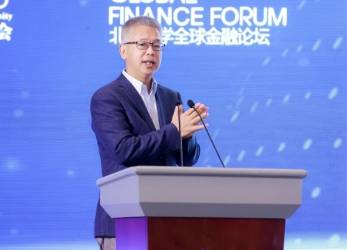
王一鸣:深化京港协同,推进五大领域金融合作
Jing Ji Guan Cha Wang· 2025-12-09 08:36
12月5日,"深化京港协同,赋能金融高水平开放——资产管理行业在'十五五'开放格局下的发展机 遇"金融街论坛系列活动在北京成功举办。 其四,京港两地优势互补提升各自竞争力。北京国家金融管理中心建设可积极借鉴香港金融规则体系以 及国际一流管理经验,加快构建与国际通行规则接轨的制度体系。香港则可借助北京在内地金融市场的 核心地位和金融资产规模优势,继续深化京港金融市场的互联互通,巩固香港国际金融中心地位。 其五,强化京港两地金融监管协同。伴随我国金融市场开放度不断提升,金融风险敞口也会相应增大。 对此,京港两地需进一步健全金融监管协调机制,强化两地金融监管机构的协调联动,完善跨境资金流 动监测,共享金融监管数据,运用人工智能技术健全风险预警和响应机制,防范跨境跨市场风险共振, 共同维护国家金融安全。 据了解,上述活动是在北京市地方金融管理局、北京金融街服务局的指导下,由北京资产管理协会与港 大经管学院华北校友会共同主办。 其一,京港合作发展科技金融。发挥京港两地的科技优势,构建"科技-产业-金融"良性循环。对于香港 来说,京港合作能够提升其科技创新能力,助力香港打造国际创新科技中心;对于北京而言,可依托香 港的国 ...
国际金融中心对外开放的全球经验与上海提升路径
Guo Ji Jin Rong Bao· 2025-12-09 08:13
Core Insights - The high-level opening of financial markets is a core strategic pivot for the structural upgrade of the modern economic system, influenced by the post-pandemic global governance restructuring and digital technology paradigm shifts [1] - The competition logic of international financial centers has evolved from traditional "capital scale competition" to "institutional supply capability comparison" [1] Group 1: Current Status of Shanghai's Financial Market Opening - Shanghai has made significant progress towards becoming a globally influential international financial center, with 1,796 licensed financial institutions as of September 2025, nearly one-third of which are foreign institutions [2] - The internationalization of the RMB has improved, with the global payment share stabilizing at around 3.5%, ranking fourth globally, but still has substantial growth potential compared to the dollar's 48.5% [10] - Shanghai's financial market size ranks among the top globally, but foreign ownership in the stock market remains low at 8%-10%, compared to over 35% in mature markets like New York and London [9] Group 2: Comparative Analysis of Global Financial Centers - New York's governance-oriented open model is supported by the dollar's international status and a regulatory framework that promotes global rule output [4] - London's intermediary open model balances domestic regulatory flexibility with international rule adaptability, supported by a robust professional service network [5] - Singapore's adaptive open model emphasizes governance efficiency through a "three-in-one" framework that allows for dynamic regulatory adjustments [6] Group 3: Challenges and Opportunities for Shanghai - Shanghai faces structural shortcomings in market openness depth, monetary hub functionality, and financial rule discourse power compared to top financial centers [2] - The international financial rule discourse power of Shanghai is gradually increasing, transitioning from a "rule taker" to a "rule participant," but still needs to enhance its influence [10] - The regulatory framework in Shanghai requires further optimization to address issues such as multi-head regulation and data silos, which hinder cross-border investment and financial technology [11] Group 4: Governance Framework for High-Level Opening - Establishing governance principles such as adaptability, precision, and synergy is essential for constructing a high-level opening system [13] - Key tools for institutional innovation include high-standard rule pressure testing and the establishment of an internationalized legal protection ecosystem [14][15] - A multi-level risk prevention system is necessary to ensure the safety of financial high-level opening, incorporating macro-prudential management and regulatory technology [16] Group 5: Talent and Institutional Support - Building an international financial talent hub is crucial, with policies aimed at attracting high-end talent in derivatives innovation and financial technology [17] - The cultivation of specialized financial service clusters and enhancement of international financial cooperation platforms are vital for reducing transaction costs and increasing Shanghai's global competitiveness [17]