能源转型

Search documents
年内第27次新高!有色矿业ETF招商(159690)盘中强势翻红,白银有色、湖南白银双双涨停封板
Jin Rong Jie· 2025-12-29 04:04
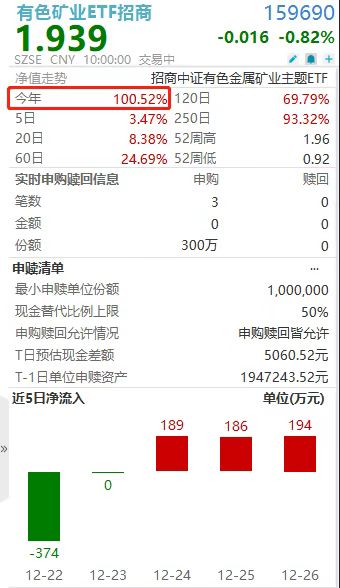
Core Viewpoint - The non-ferrous metal mining sector is experiencing strong performance, with related ETF products reaching new highs, indicating structural opportunities within specific sub-sectors [1][2]. Group 1: ETF Performance - The non-ferrous metal ETF (159690) rose by 0.10%, marking its 27th price high of the year, with a year-to-date increase exceeding 102% [1][2]. - The sector shows significant stock performance divergence, with silver-related stocks, including Hunan Silver, hitting the daily limit up, highlighting structural opportunities in specific varieties [1]. Group 2: Market Dynamics - The current market rally is driven by several factors: the index focuses on upstream mining companies benefiting directly from rising commodity prices, enhanced profitability of leading mining firms, and dual support from macroeconomic conditions and industrial demand [2][3]. - Major global economies are adopting looser monetary policies, coupled with sustained structural demand for key minerals in sectors like renewable energy and artificial intelligence, which collectively support the high prosperity of the non-ferrous metal sector [2]. Group 3: Strategic Value of Resources - The strategic value of resources is being re-evaluated by the market, with copper and lithium transitioning from traditional commodities to strategic materials, leading to a fundamental shift in valuation logic for upstream resource companies [3]. - Despite the high volatility in the sector, non-ferrous metal resource assets still possess long-term allocation value as long as the supply-demand dynamics remain unchanged [3].


光热规模化发展意见出台11月原煤产量降幅收窄 | 投研报告
Zhong Guo Neng Yuan Wang· 2025-12-29 04:02
华源证券近日发布大能源行业2025年第52周周报:原煤产量回升同比仍降,供给偏紧但暖冬致需求阶段 性走弱。据国家统计局数据,2025年11月,全国原煤产量为42679万吨,同比-0.5%。11月下旬以来,煤 价高位回落,持续走低,核心在于季节性需求远逊同期。 以下为研究报告摘要: 投资要点: 电力设备:光热规模化发展意见出台十五五装机有望迎近10倍增长空间 本周,两部委印发《关于促进光热发电规模化发展的若干意见》(以下简称《意见》)。对于十五五的 光热装机规模提出明确目标:到2030年总装机规模力争达到1500万千瓦左右,这意味着十五五光热发电 装机有望迎来近10倍增长空间。 光热发电兼具可靠、灵活、清洁属性,有望在我国能源转型中发挥重要作用。《意见》中也重点提及了 要发挥光热的优势,包括:(1)在大型能源基地中配置光热;(2)积极探索技术经济可行的光热电站 在大基地中作为支撑调节电源发挥作用;(3)建设以光热发电为主的支撑型调节新能源电站;(4)建 设以光热为基础的源网荷储一体化系统;(5)光热与产业协同发展,包括与矿产资源开发冶炼、算力 中心、动力电池制造、盐湖提锂等。 当前光热发电成本较高,需技术降本和 ...
“铜博士”创历史新高,多因素驱动下2026铜价还将继续“狂飙”?
Feng Huang Wang· 2025-12-29 03:09
Group 1 - International copper prices have reached a historic high, with LME copper rising over 5% to $12,785.33 per ton, marking the highest level ever recorded [1] - Year-to-date, international copper prices have increased by over 40%, potentially setting the best annual growth record since 2010 [1] - The surge in copper prices has triggered a collective rise in the stock prices of metal companies, with notable increases in shares of Jiangxi Copper, Chalco International, and others [1] Group 2 - On the supply side, major global copper producers have recently lowered their production forecasts, leading to a continued trend of mine reductions [2] - Significant incidents and shutdowns at major mines, such as Grasberg in Indonesia and Kamoa-Kakula in the Democratic Republic of Congo, have contributed to supply disruptions [2] - On the demand side, the acceleration of global energy transition and the explosion of artificial intelligence capabilities are driving strong and sustained demand for copper [2] - The electricity consumption of data centers can reach ten times that of traditional facilities, leading to a rapid increase in copper demand for AI infrastructure [2] - Research from BHP indicates that by 2050, the copper required for AI data center electrical wiring could increase sixfold, with annual demand potentially reaching around 3 million tons [2]
双电”业务并行推进特锐德卡位电网“下半场
Zheng Quan Shi Bao· 2025-12-29 02:22
Core Insights - Teruid has established itself as a leading enterprise in domestic power equipment manufacturing and charging network construction, focusing on "smart manufacturing + integrated services" and electric vehicle charging networks as its core businesses [1] - The company has made significant strides in internationalization, successfully implementing a high-voltage mobile prefabricated substation project in Saudi Arabia, which showcases its modular, rapid deployment, and digital operation solutions [1] - Teruid has upgraded its charging infrastructure from a single "load terminal" to a controllable energy node, solidifying its leading position in the charging pile sector during the 14th Five-Year Plan period [1] Industry Statistics - As of October 2025, Teruid operates 855,000 public charging terminals, with 513,000 being DC charging terminals, holding approximately 24% market share, ranking first in the country [2] - From January to October 2025, the charging volume exceeded 15.6 billion kWh, with a market share of about 23%, also leading the industry [2] - By June 2025, Teruid had over 7,700 power stations capable of participating in dispatch, meeting the conditions for a virtual power plant [2] Future Outlook - The next five years are seen as a critical window for Teruid to achieve carbon peak targets by 2030, with plans to integrate its development into national and global energy transition efforts [2] - The company aims to promote higher quality development in both itself and the entire renewable energy industry through the combination of industry and capital [2]

穿越电力革命的黄金周期:海辰储能的专业主义是怎样炼成的?
21世纪经济报道· 2025-12-29 02:19
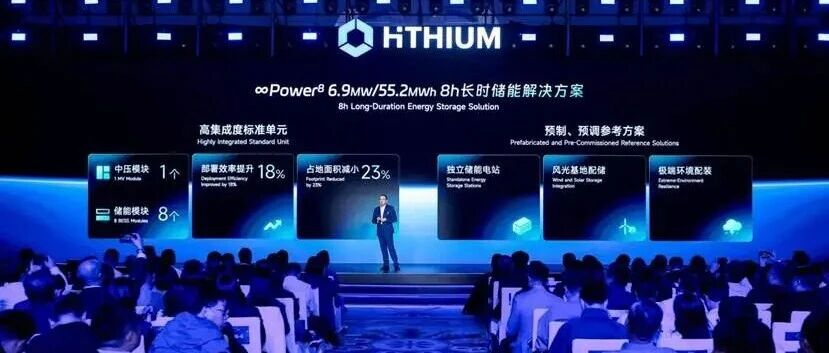
Core Viewpoint - The article highlights the significant rise of Haichen Energy in the energy storage sector, emphasizing its unique focus on dedicated energy storage cells and its strategic positioning in the long-duration energy storage market, which is crucial for stabilizing renewable energy supply [1][2][3]. Group 1: Industry Context - The contradiction between wind and solar energy abandonment and electricity shortages in China is becoming increasingly evident, necessitating long-duration energy storage solutions that can provide stability across day and night cycles [2]. - The International Energy Agency (IEA) projects that global renewable energy capacity will double by 2030, with nearly 80% of this growth coming from solar photovoltaic sources, while challenges such as grid integration and supply chain vulnerabilities persist [1]. Group 2: Haichen Energy's Innovations - Haichen Energy has developed the world's first 8-hour long-duration energy storage dedicated cell, achieving a capacity increase of over four times compared to mainstream products through proprietary "super-thick electrode technology" [3]. - The company has established a complete cell matrix ranging from 587Ah to 1300Ah, with the first two models already achieving large-scale commercial delivery, validating the feasibility of its technological approach [5]. Group 3: Market Opportunities - The global data center electricity consumption is expected to reach 750 TWh by 2025 and double to 1500 TWh by 2030, indicating a significant market opportunity for Haichen Energy's solutions [8]. - Haichen's innovative lithium-sodium collaborative AIDC (Artificial Intelligence Data Center) all-time energy storage solution addresses the imbalance between rapid computing power demands and traditional energy supply, significantly reducing infrastructure construction time from 5-10 years to 1-2 years [6]. Group 4: Strategic Positioning - Haichen Energy's "All-Weather Green Power 135 Lighthouse Plan" aims to lead the long-duration energy storage sector and promote green energy accessibility across various industries, focusing on long-term value creation rather than price competition [14][15]. - The company is transitioning from a battery manufacturer to a system solution service provider, enhancing its market positioning and profitability, with a projected compound annual growth rate of 167% in shipment volume from 2022 to 2024 [15]. Group 5: Safety and Reliability - Safety remains a core concern in the energy storage industry, and Haichen Energy emphasizes a "safety as a baseline" philosophy throughout its product lifecycle, achieving significant safety certifications and conducting extreme safety tests to set industry standards [12][13].
2025:能源转型交出高分“答卷”
中国能源报· 2025-12-28 23:33
Core Viewpoint - The article emphasizes the significant transformation of China's energy structure towards a low-carbon economy, highlighting the importance of green development as a key aspect of high-quality growth in the country [1][3]. Group 1: Structural Changes in Energy Landscape - By 2025, China's clean energy consumption is projected to reach 28.6%, while coal consumption will decrease to 53.2%, marking a substantial shift in the energy structure [3][14]. - The establishment of the world's largest carbon market is noted, which effectively guides the largest scale of carbon emissions in the economy and society [3][14]. - The renewable energy system, led by wind and solar power, is not only set to meet the 2030 targets ahead of schedule but also continues to inject green momentum into the world [3][14]. Group 2: Investment Trends - In 2025, China's energy investment is expected to reach 3.54 trillion yuan, reflecting an 11% year-on-year growth, indicating a robust upward trend in investment [5][15]. - Investments in nuclear power, onshore wind, distributed solar, and smart grids are highlighted, along with rapid growth in future industries such as new energy storage and hydrogen energy [5][15]. - The article describes the investment landscape as a "green symphony," where financial commitments accelerate the arrival of green energy and foster innovation [5][15]. Group 3: Future Outlook - The "14th Five-Year Plan" is recognized as a pivotal year for coordinating efforts in carbon reduction, pollution control, green expansion, and economic growth [9][17]. - The upcoming "15th Five-Year Plan" is anticipated to usher in a new era led by a green technology revolution, transforming the energy sector into a key player in shaping a beautiful China [9][17]. - The article expresses confidence in the future of clean energy, with hydrogen and nuclear fusion being identified as new economic growth drivers, indicating a shift from supplementary to primary energy sources [7][16].

新增订单总额将超4000亿,这家国际造船集团野心不小
Sou Hu Cai Jing· 2025-12-28 18:08
Core Insights - Fincantieri reports a total order backlog of €41 billion as of September 30, 2025, representing a 32% increase from the end of 2024, with 100 ships scheduled for delivery until 2036 [2] - The company has set ambitious financial targets for the next five years, aiming for revenues of €12.5 billion by 2030, a 40% increase from 2025, and an EBITDA of over €1.25 billion, reflecting a 90% growth [2][3] - The defense sector is a strategic focus for expansion, with global defense spending expected to reach $2.93 trillion by 2030, an 18.6% increase from 2025 [6] Financial Goals - By 2028, Fincantieri anticipates revenues of approximately €11 billion, increasing to €12.5 billion by 2030 [3] - EBITDA is projected to rise from around €930 million in 2028 to €1.25 billion in 2030, with an EBITDA margin improvement from 8.5% to 10% [3] - Net profit is expected to grow from approximately €220 million in 2028 to €500 million in 2030, with profit margins doubling from 2% to 4% [3] Order and Market Opportunities - Fincantieri expects to secure over €50 billion in new orders from 2026 to 2030, with a significant portion of contracts in the defense sector anticipated to materialize between 2026 and 2028 [3] - The company has identified over €56 billion in commercial opportunities for the same period, with €23 billion having a medium to high probability of realization [3] Business Segments - In the cruise segment, Fincantieri maintains a leading market share of over 49%, with 34 cruise ship orders scheduled for delivery until 2036 [4] - The defense sector is a key area for growth, with plans to double production capacity at Italian shipyards and expand into new markets in the U.S., Southeast Asia, and the Middle East [6] - The offshore and special vessels segment is expected to benefit from increased global energy demand, with opportunities for constructing 130-140 new ships [6] Emerging Markets - The newly established underwater business segment is projected to see market size double from €22 billion to €43 billion between 2026 and 2030, driven by strong growth potential in defense, commercial, and dual-use applications [6] - Fincantieri aims to achieve its first zero-carbon cruise ship by 2035 as part of its energy transition strategy [6]

南华期货铜产业周报:持仓创新高,多空资金博弈加剧-20251228
Nan Hua Qi Huo· 2025-12-28 14:20
南华期货铜产业周报 ——持仓创新高,多空资金博弈加剧 南华有色金属研究团队 傅小燕 投资咨询证号:Z0002675 联系邮箱:fxiaoyan@nawaa.com 投资咨询业务资格:证监许可【2011】1290号 2025/12/28 第一章 核心矛盾与策略建议 1.1 核心矛盾 上周美国初请失业金人数小于预期,降息概率小幅下修。据CME"美联储观察":美联储明年1月降息25个 基点的概率为17.7%,维持利率不变的概率为82.3%。数据还表明,到明年3月累计降息25个基点的概率为 45.6%,维持利率不变的概率为46.7%,累计降息50个基点的概率为7.7%。但市场并未过多解读。CFTC持仓 显示,Comex铜投机净多头资金继续增仓,价格顺势大涨。 基本面上,上游冶炼企业采购情绪较强,但中游电解铜买卖双方购销情绪偏弱,因为下游加工企业采购畏高 情绪仍在,实际成交量偏少,甚至有企业开始"躺平",现货价格涨幅受限。LME铜注销仓单仍维持在 50000吨上下,局部供应紧张支撑中国保税区铜溢价回升,目前出口窗口依然打开。 CSPT不对2026年一季度设定现货采购指导价,打破往年惯例,表明当前铜价已超出企业认知,一季 ...

大能源行业2025年第52周周报(20251228):光热规模化发展意见出台11月原煤产量降幅收窄-20251228
Hua Yuan Zheng Quan· 2025-12-28 14:14
证券研究报告 公用事业 行业定期报告 hyzqdatemark 2025 年 12 月 28 日 投资评级: 看好(维持) 证券分析师 查浩 SAC:S1350524060004 zhahao@huayuanstock.com 刘晓宁 SAC:S1350523120003 liuxiaoning@huayuanstock.com 戴映炘 SAC:S1350524080002 daiyingxin@huayuanstock.com 邱达治 SAC:S1350525050001 qiudazhi@huayuanstock.com 光热规模化发展意见出台 11 月原煤 产量降幅收窄 ——大能源行业 2025 年第 52 周周报(20251228) 投资要点: 电力设备:光热规模化发展意见出台 十五五装机有望迎近 10 倍增长空间 本周,两部委印发《关于促进光热发电规模化发展的若干意见》(以下简称《意见》)。 对于十五五的光热装机规模提出明确目标:到 2030 年总装机规模力争达到 1500 万 千瓦左右,这意味着十五五光热发电装机有望迎来近 10 倍增长空间。 光热发电兼具可靠、灵活、清洁属性,有望在我国能源转型中 ...
帮主郑重眼中的2025:十大财经事件背后的真相与谎言
Sou Hu Cai Jing· 2025-12-28 12:02
Group 1: Economic Events - Trump's tariff policy initiated on April 2 led to significant market declines, with the S&P 500 dropping 11% in two days and the Hang Seng Index falling over 13% on April 7 [3][4] - The U.S. manufacturing sector faced challenges, with nine consecutive months of contraction and rising inflation due to tariff policies, indicating a lack of substantial economic benefits from these measures [4] - Global debt reached a record high of $355 trillion in Q2 2025, with a debt-to-GDP ratio of 368%, raising concerns about sustainability and future economic risks [8] Group 2: Market Trends - Gold prices surged over 70% in 2025, surpassing $4,000, reflecting a growing distrust in the current monetary system and a shift towards safer reserve assets [5] - Nvidia's market capitalization exceeded $5 trillion, driven by strong demand for its Blackwell chips, although its valuation is high compared to historical averages [6] - The AI sector transitioned from speculative enthusiasm to a focus on cash flow and profitability, with investors demanding evidence of financial returns from tech giants [11] Group 3: Geopolitical and Regulatory Changes - Geopolitical tensions escalated, with over thirty countries experiencing conflicts, making geopolitical risks a significant concern for investors [12] - Germany revised its 2035 ban on combustion engines, indicating a shift in energy transition strategies and the ongoing importance of traditional energy sources [13] Group 4: Notable Figures and Events - Warren Buffett announced his retirement at the end of 2025, marking the end of an era in value investing, although his principles continue to influence investors [9][10] - Bitcoin experienced extreme volatility, reaching a peak of $120,000 before a liquidity crisis led to a significant drop, highlighting the fragility of the cryptocurrency market [14]