
消费升级

Search documents
11月经济数据点评:结构延续分化,内需有待加力
Mai Gao Zheng Quan· 2025-12-16 12:00
Production - In November 2025, the industrial added value of large-scale industries grew by 4.8% year-on-year, a slight decrease of 0.1 percentage points from the previous month[1] - The mining industry recorded a growth of 6.3%, outperforming manufacturing at 4.6% and water, electricity, and gas at 4.3%, indicating ongoing reliance on traditional resource sectors[12] - The sales rate of industrial products fell to 96.5%, reflecting a misalignment between production expansion and end demand[13] Consumption - The total retail sales of consumer goods in November 2025 increased by 1.3% year-on-year, marking a decline of 1.6 percentage points from October, the lowest monthly growth since December 2022[2] - Service retail sales grew by 5.4% year-on-year from January to November, indicating a shift towards service-oriented consumption[16] - Online retail sales of physical goods increased by 5.7%, accounting for 25.9% of total retail sales, highlighting the impact of digital consumption trends[17] Investment - From January to November 2025, national fixed asset investment (excluding rural households) decreased by 2.6%, with a widening decline of 0.9 percentage points compared to the previous period[5] - Real estate investment saw a cumulative decline of 15.9%, with housing sales area and sales amount both decreasing by 7.8% and 11.1% respectively, continuing a negative growth trend for 43 months[25] - Manufacturing investment fell by 0.8 percentage points to 1.9%, with a monthly decline of 4.5%, reflecting ongoing challenges in the sector[24] Economic Outlook - The economic data for November indicates that insufficient effective demand remains the primary contradiction in the economy, opening up further space for policy support[27] - Future policies to boost domestic demand are expected to focus on enhancing employment, increasing residents' income, and improving social security[28]
金字火腿“闪电换将”:郭波辞去总裁职务 实控人之子郑虎接任
Xi Niu Cai Jing· 2025-12-16 11:18
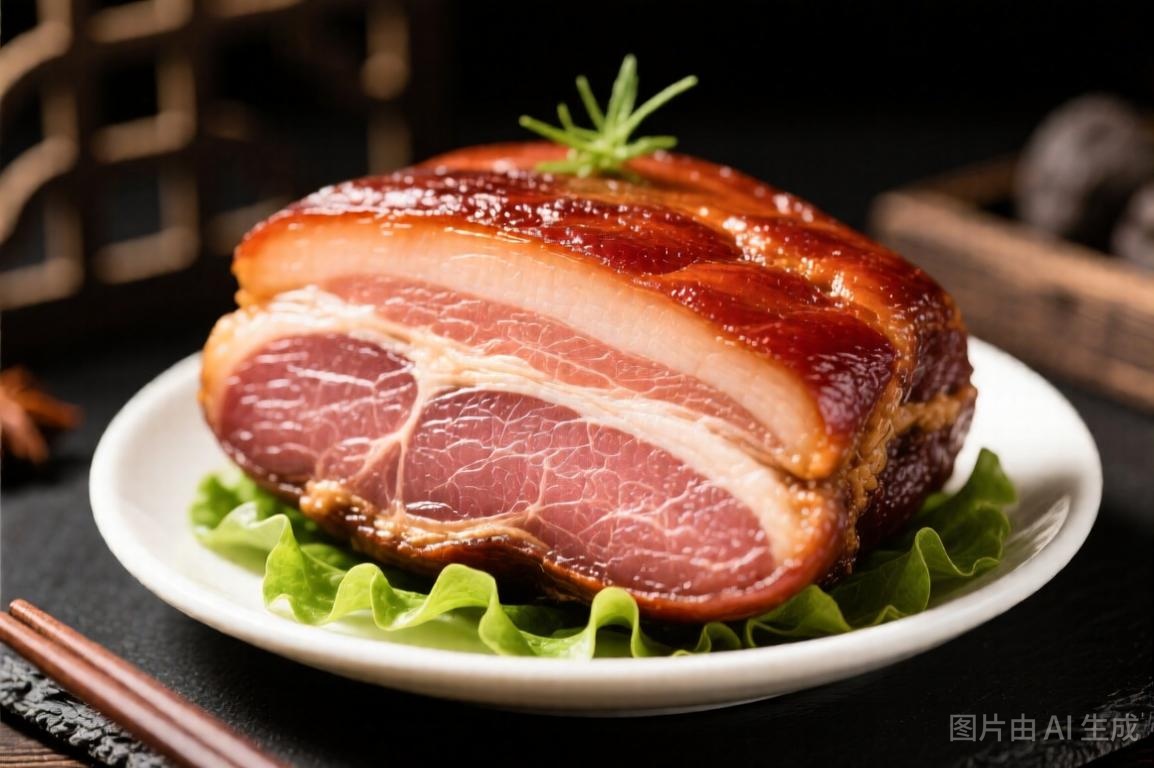
12月15日,金字火腿发布公告称,总裁郭波因个人原因辞职,辞职后仍担任副董事长及董事会战略委员会委员职务。郭波辞职自送达董事会之日起生效,且 未持有金字火腿股份,也不存在未履行的承诺事项。 业绩起伏不定的背后,或因金字火腿在面对消费升级、预制菜崛起等新趋势时,转型步伐迟缓。 从履历看,郑虎自2018年起担任上海阿斯顿马丁汽车销售有限公司董事,2025年7月才进入金字火腿担任副总裁。从汽车销售跨界到传统肉制品行业,再从 副总裁到总裁仅用5个月,这样的晋升速度在A股上市公司中颇为罕见。 值得注意的是,人事变动的同时,也恰逢金字火腿业绩承压之际。其近年来营收持续波动,2022年至2024年营业收入分别为4.45亿元、3.14亿元、3.44亿 元。2025年前三季度,金字火腿营收为2.22亿元,同比下降13.97%;归母净利润为2201.46万元,同比下滑26.25%。 同时,金字火腿召开董事会,聘任郑虎为新总裁,任期至第七届董事会任期结束。公告显示,郑虎此前任副总裁,并与金字火腿控股股东、实控人郑庆昇存 在父子关系。 公开资料显示,1977年出生的郭波拥有硕士学历,曾在渤海证券投行总部担任高级副总裁,后创立清禾私募 ...


雷军们,押注下一个“老铺黄金”
3 6 Ke· 2025-12-16 10:50
Core Insights - The luxury gold market is experiencing a transformative shift, with traditional gold jewelry being redefined as high-end collectibles, driven by consumer demand and scarcity marketing strategies [1][5][6] - Brands like Lin Chao Jewelry and Bao Lan are gaining traction, utilizing limited release mechanisms and emphasizing craftsmanship to create a sense of exclusivity [2][5][6] Market Dynamics - The demand for traditional gold jewelry has surged, with significant sales growth reported during major shopping events, indicating a shift in consumer preferences towards gold over luxury handbags [3][6] - Lin Chao Jewelry has adopted a strict order limit, accepting only 12 new orders weekly, with a production lead time of up to 12 months, highlighting the supply-demand imbalance [2][7] Consumer Behavior - A notable portion of gold buyers previously purchased luxury items, indicating a shift in consumer spending habits towards gold as a more valuable investment [3][6] - The perception of gold jewelry is evolving, with consumers viewing it as a cultural artifact rather than just a commodity, enhancing its appeal [5][6] Brand Strategies - Both Lin Chao and Bao Lan leverage scarcity marketing, creating a perception of exclusivity that resonates with high-end consumers [5][6] - The brands emphasize their artisanal heritage and craftsmanship, positioning their products as cultural treasures rather than mere jewelry [4][5] Investment Landscape - Recent capital investments in brands like Lin Chao and Bao Lan reflect investor confidence in the scalability and profitability of the traditional gold market [6][7] - The success of Lao Pu Gold serves as a benchmark, with its impressive financial performance and high customer overlap with luxury brands, indicating a lucrative market opportunity for emerging players [6][7] Challenges Ahead - Emerging brands face a dilemma between maintaining artisanal quality and meeting the capital market's demand for growth, which may require a shift in production strategies [7][9] - The brands must navigate the balance between exclusivity and scalability, as over-standardization could dilute their unique selling propositions [7][9]
服务消费稳固,智能经济消费展现高成长性
China Post Securities· 2025-12-16 08:54
Group 1 - The core viewpoint of the report indicates that China's economy continues to develop steadily, characterized by "demand decline and stable production" as of November [2] - Retail sales growth has shown a declining trend, with a year-on-year growth rate of 1.3% in November, down 1.6 percentage points from the previous value, marking six consecutive months of marginal slowdown [8] - Service consumption remains robust, while smart economy consumption, such as smart wearables and digital consumption, exhibits high growth potential [2][8] Group 2 - Fixed asset investment has seen a cumulative year-on-year decline of 2.6% from January to November, with the real estate market undergoing deep adjustments and construction investment growth in negative territory [15] - The average price of commercial housing in November was 9096.64 yuan per square meter, a year-on-year decrease of 9.94%, indicating a bottoming process in housing prices [16] - Industrial value-added growth remained relatively stable at 4.8% year-on-year in November, with mining and high-tech industries showing significant growth [28]
名酒降价VS白酒社区“散打”
Xin Lang Cai Jing· 2025-12-16 08:48
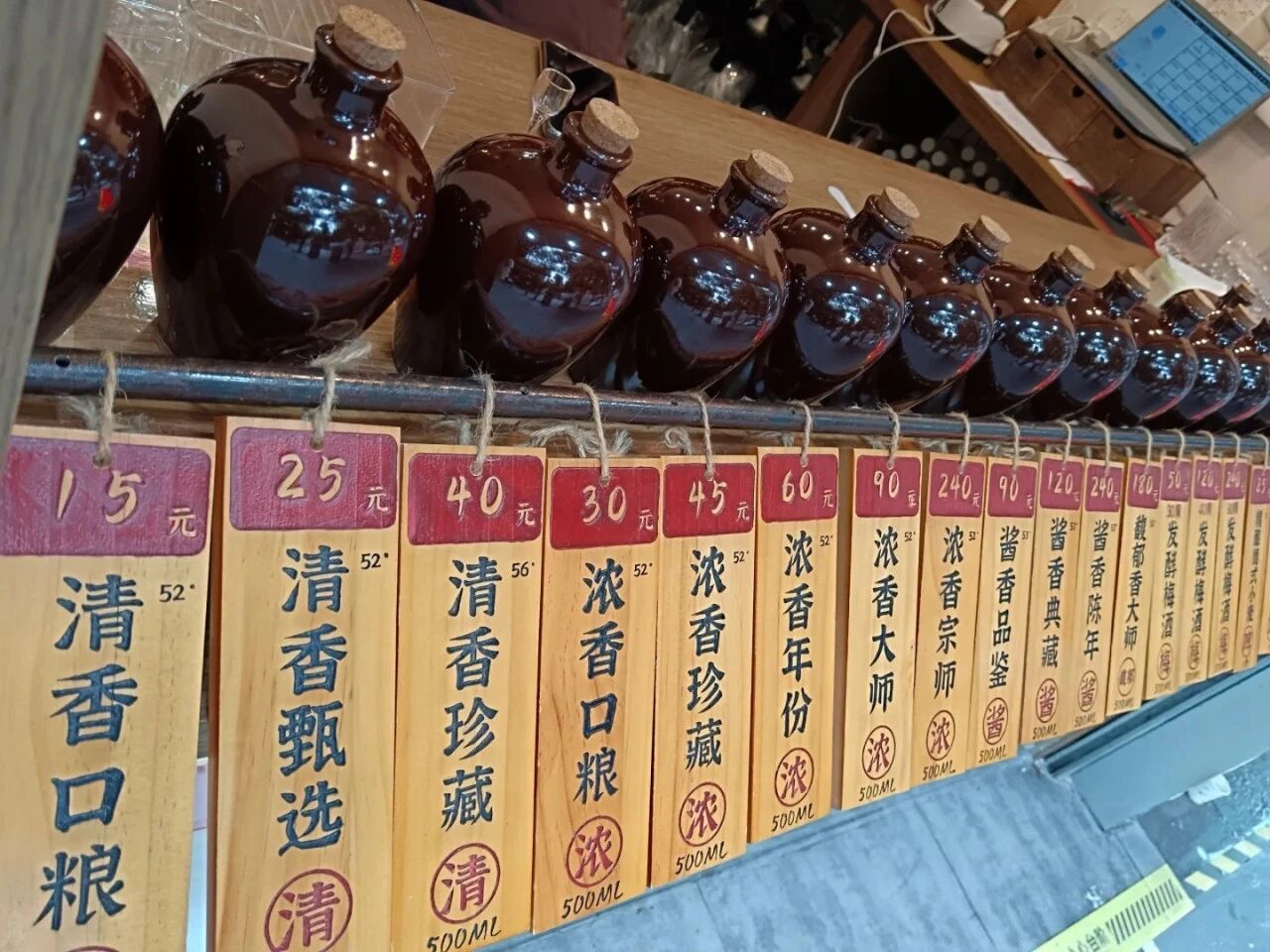
Core Insights - The high-end liquor market, particularly represented by Feitian Moutai, is experiencing a significant price drop, with prices falling below the official guidance price of 1499 yuan, indicating a collapse of the previously strong pricing system [1][4][17] - The low-end market for bulk liquor is emerging as a strong competitor, with companies increasingly establishing community liquor stores that promote a "pay by the cup" model, marking a significant shift in consumer behavior [1][9][22] Market Dynamics - Analysts suggest that the drastic differentiation across high, medium, and low-end markets is not merely a short-term price fluctuation but a necessary outcome of a deep correction in the liquor industry, with a shift in consumer logic from "brand premium worship" to "value for money" [3][16] - The power dynamics in distribution are shifting from producers to consumers, fundamentally reshaping the industry's value framework [3][16] Price Trends - As of December 12, 2025, the wholesale reference price for 500ml Feitian Moutai has dropped to 1485 yuan per bottle, marking a historical low and the first time it has fallen below the official guidance price [4][17] - The price decline is not isolated to Moutai; Wuliangye is also adjusting its pricing strategy, offering discounts to alleviate pressure on distributors [4][17] Inventory and Supply Issues - Data indicates that 60% of liquor companies are facing price inversion, particularly in the 800-1500 yuan price range, with an average inventory turnover period of 900 days, which has increased by 10% year-on-year [6][19] - The supply-side "pressure selling" growth model has exacerbated inventory issues, leading to a vicious cycle where distributors are forced to sell at lower prices to recover funds [8][21] Rise of Bulk Liquor - The bulk liquor market is rapidly growing, with a market size exceeding 800 billion yuan in 2024 and an annual growth rate of over 15%, projected to reach 1 trillion yuan by 2025 [9][22] - New bulk liquor stores are entering high-end communities and commercial areas, offering a modern and appealing shopping experience [9][22] Consumer Behavior Changes - The primary consumers of bulk liquor are younger individuals aged 25-35, who now prioritize personal enjoyment over social necessity, favoring a "small quantity, multiple purchases" approach [10][23] - The demand from lower-tier markets is significant, contributing approximately 60% of new growth, with consumers seeking high cost-performance products [10][23] Challenges in Bulk Liquor Market - Despite rapid expansion, the bulk liquor market faces food safety concerns, with reports of non-compliance in product quality and storage practices [11][24] - Increased competition is leading to homogenization in product offerings, with a lack of differentiation among new brands [13][26] Industry Transformation - The contrasting dynamics in the liquor industry reflect a deep struggle between consumption upgrades and industry transformation, as premium brands lose their financial allure and bulk liquor sheds its low-end image [13][26]


利好来袭!这个板块7股齐涨停 龙头4连板!
Zheng Quan Ri Bao· 2025-12-16 08:12
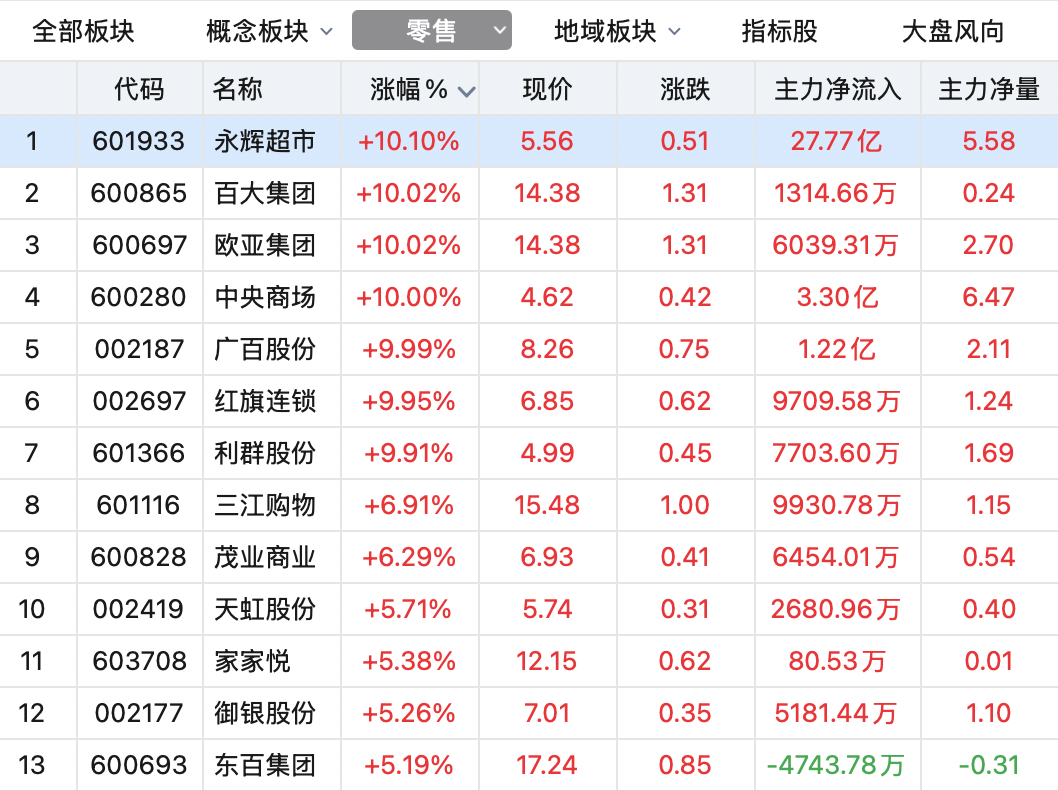
Core Viewpoint - The A-share retail sector continues to show strong performance, with several retail stocks hitting the daily limit up, indicating a bullish trend in the market [1][2]. Retail Sector Performance - As of the morning close on December 16, seven retail concept stocks, including Yonghui Supermarket and Baida Group, reached their daily limit up, with Baida Group achieving a four-day consecutive limit up [1]. - Other notable stocks such as Maoye Commercial and Sanjiang Shopping also saw significant gains, with increases exceeding 5% [1][2]. Economic Indicators - From January to November, the total retail sales of consumer goods increased by 4% year-on-year, surpassing both the same period last year and the overall growth rate for the previous year [3]. - Service retail sales grew by 5.4% year-on-year, indicating a shift towards service consumption, which is outpacing goods retail sales [3][4]. New Consumption Trends - New consumption models, including instant retail and live-streaming e-commerce, are rapidly growing, with online retail sales of physical goods increasing by 5.7% year-on-year, accounting for 25.9% of total retail sales [4]. - The integration of digital and green consumption trends is becoming increasingly significant, with new consumer demands emerging in the market [4][5]. Industry Outlook - The retail industry is expected to undergo significant transformation in 2025, with traditional retailers enhancing product and service quality through various reforms [4][5]. - Policies encouraging the improvement of product quality and service in the retail sector are seen as key development directions for the industry [4][5]. Investment Opportunities - The retail sector is experiencing structural growth, particularly in home appliances and lower-tier markets, driven by policies such as "trade-in" programs [5][6]. - The application of AI and digital technologies in retail processes is enhancing operational efficiency and creating new growth opportunities in the market [6].


利好来袭!这个板块7股齐涨停,龙头4连板!
Zheng Quan Ri Bao Zhi Sheng· 2025-12-16 07:28
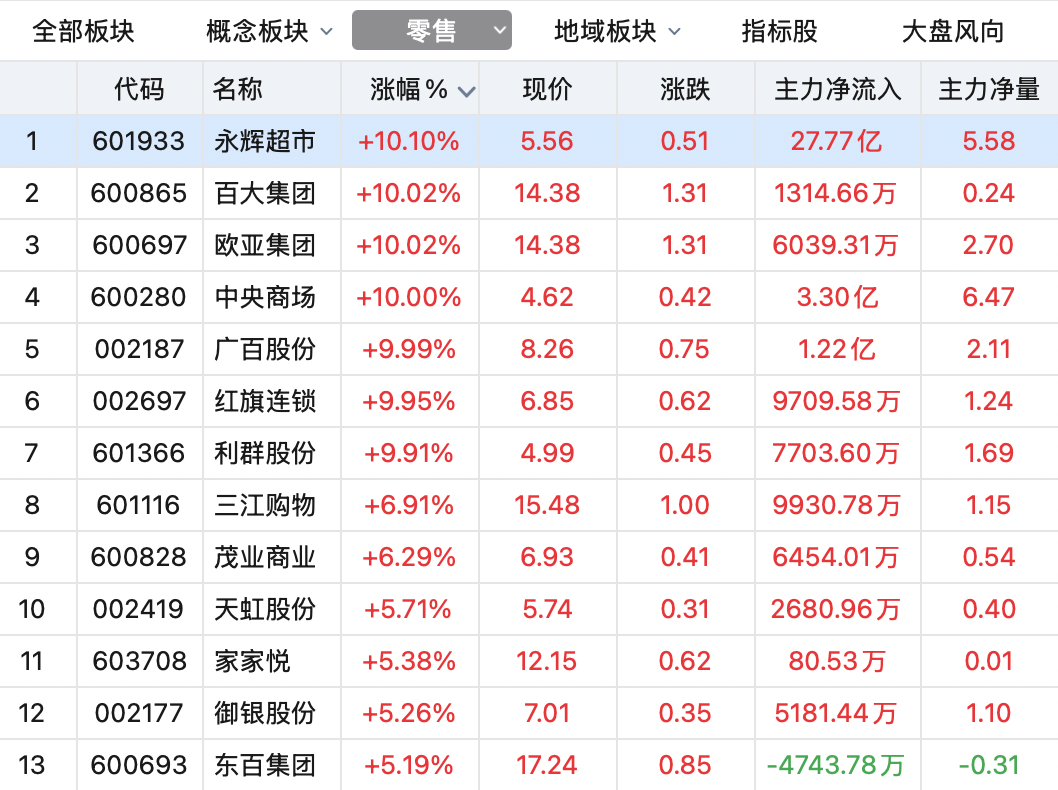
Core Viewpoint - The A-share retail sector continues to show strong performance, with several retail stocks hitting the daily limit up, indicating robust market sentiment and investor confidence in the sector [1][2]. Retail Sector Performance - As of the morning close on December 16, seven retail concept stocks, including Yonghui Supermarket and Baida Group, reached their daily limit up, with Baida Group achieving a four-day consecutive limit up [1]. - Notable stocks such as Guobai Co., Hongqi Chain, and Li Qun Co. also showed significant gains, with increases of nearly 10% [2]. Economic Indicators - From January to November, the total retail sales of consumer goods increased by 4% year-on-year, surpassing both the previous year's growth and the overall annual growth rate [3]. - Service retail sales grew by 5.4% year-on-year, indicating a shift towards service consumption, which is outpacing goods retail sales [3][4]. New Consumption Trends - New consumption models, such as instant retail and live-streaming e-commerce, are rapidly growing, with online retail sales of physical goods increasing by 5.7% year-on-year, accounting for 25.9% of total retail sales [4]. - The integration of digital and green consumption trends is becoming increasingly significant, with new consumer demands shaping the market landscape [4][6]. Policy and Market Environment - Policies encouraging the retail sector to enhance product and service quality are driving the industry's transformation towards high-quality development [4][5]. - The retail industry is experiencing structural growth, particularly in home appliances and in lower-tier markets, supported by government initiatives like "trade-in" programs [5][6]. Future Opportunities - Key opportunities in the retail sector include the application of AI and digital technologies for precise marketing and supply chain management, enhancing operational efficiency [6]. - Innovative retail models that combine services with traditional retail are effectively meeting consumer demands for convenience and emotional value [6].

规模翻16倍!苏州银行“开挂”成长路,解锁服务实体经济的密码
Jin Rong Shi Bao· 2025-12-16 03:11
Core Viewpoint - Suzhou Bank has achieved significant growth and transformation over 15 years, evolving from a local bank to a regional financial backbone, aligning its development with national strategies and contributing to the high-quality development of the economy [1][3]. Group 1: Financial Performance and Growth - As of Q3 2025, Suzhou Bank's total assets reached 776.04 billion, a 16-fold increase since its establishment, with deposits and loans growing 14.31 times and 15.59 times respectively [3]. - The bank ranked 237th in the 2025 Global Bank 1000 list, improving by 48 positions in three years and 735 positions since its inception [3]. - The bank's focus on specialized operations has led to nearly 20% of its loans directed towards manufacturing and inclusive small and micro enterprises, which is above the industry average [3]. Group 2: Strategic Development and Innovation - Suzhou Bank has undergone a strategic transformation since its establishment in 2010, focusing on the integration of financial services with local economic needs and the national strategy of the Yangtze River Delta [2][4]. - The bank has developed a comprehensive financial service model that includes subsidiaries and innovative financial products, enhancing its service capabilities and supporting regional economic development [3][5]. Group 3: Support for Innovation and Technology - The bank has launched initiatives to support technology innovation, including the "Accompanying Flight," "Soaring," and "Leading" plans, targeting emerging industries such as biomedicine and artificial intelligence [5][6]. - Suzhou Bank has served over 13,500 technology enterprises, with a credit scale exceeding 130 billion, indicating a strong commitment to supporting innovation [6]. Group 4: Community and Consumer Services - The bank emphasizes a people-centered approach, integrating financial services into daily life and enhancing community engagement through initiatives like the "Su Xin" brand [7][8]. - Suzhou Bank has developed specialized financial products for the elderly and has actively engaged in community services, including health seminars and support for new citizens [9]. Group 5: Consumer and Cultural Development - The bank is responding to national policies aimed at boosting consumption by creating platforms for consumer engagement and supporting cultural events [10][11]. - Suzhou Bank has introduced digital financial products to streamline services for residents, enhancing access to financing for various needs [10][11].
江苏银行 “双十二” 线上促消费系列举措正式发布
Zhong Jin Zai Xian· 2025-12-16 03:10
Group 1 - Jiangsu Bank is actively responding to the national consumption boom by launching multiple online promotional measures for the "Double Twelve" shopping festival, investing approximately 3.3 million yuan in marketing expenses to stimulate consumer potential and enhance the consumption market [1] - The bank has partnered with leading payment platforms like Alipay and JD.com to offer exclusive payment discounts, investing around 1.5 million yuan in marketing to effectively lower shopping costs for consumers and boost overall consumption enthusiasm [3] - Jiangsu Bank is focusing on high-ticket consumption scenarios by introducing installment payment discounts and consumer loan benefits, with over 1 million yuan allocated for marketing to support large-scale transactions and facilitate consumption upgrades [5] Group 2 - To enhance travel-related financial services, Jiangsu Bank has collaborated with major online travel platforms such as Ctrip and Qunar, launching travel payment options and discounts for public transport, thereby supporting the recovery of the cultural and tourism industry [7] - The bank is leveraging its 22 million mobile banking customers to create dedicated consumption portals, implementing a multi-faceted strategy to drive traffic and support merchants in expanding sales channels during the "Double Twelve" period [9] - Jiangsu Bank plans to continue promoting quality merchants and products through both online and offline channels, aiming to stimulate consumer demand and drive consumption growth while fulfilling its social responsibility as a financial institution [11]

国家发改委:坚定实施扩大内需战略
Di Yi Cai Jing· 2025-12-16 02:26
顺应消费升级、人口老龄化、促进出生人口增长等需要,在养老、托育、健康、文旅等消费配套设施领 域实施一批重点项目。 国家发改委在《求是》杂志发表文章《坚定实施扩大内需战略》中指出,着力释放居民消费潜力。 一方面,大力提升居民消费意愿。深入实施提振消费专项行动。加力稳定大宗消费,实施好消费品以旧 换新政策。强化品牌引领、标准升级、新技术应用,打造一批带动面广、显示度高的消费新场景。支持 首发经济、赛事经济、电子商务等发展。顺应消费升级、人口老龄化、促进出生人口增长等需要,在养 老、托育、健康、文旅等消费配套设施领域实施一批重点项目。大力实施城市更新,抓好停车场、老旧 电梯更新等民生微项目。进一步拓展入境消费,提升便利化水平。 另一方面,切实增强居民消费能力。强化就业优先政策,多渠道稳定和扩大就业,优化创业促进就业政 策环境,支持重点群体就业。实施城乡居民增收计划,提高居民收入在国民收入分配中的比重,提高劳 动报酬在初次分配中的比重,努力实现居民收入和经济增长同步、劳动报酬提高和劳动生产率提高同 步。加大直达消费者的普惠政策力度,增加政府资金用于民生保障支出。健全社会保障体系,稳步推进 基本公共服务均等化,加大生育 ...