
光伏产业

Search documents
黄金“失宠”?2025年度资产黑马诞生!年内涨幅已超90%
Sou Hu Cai Jing· 2025-12-02 07:43
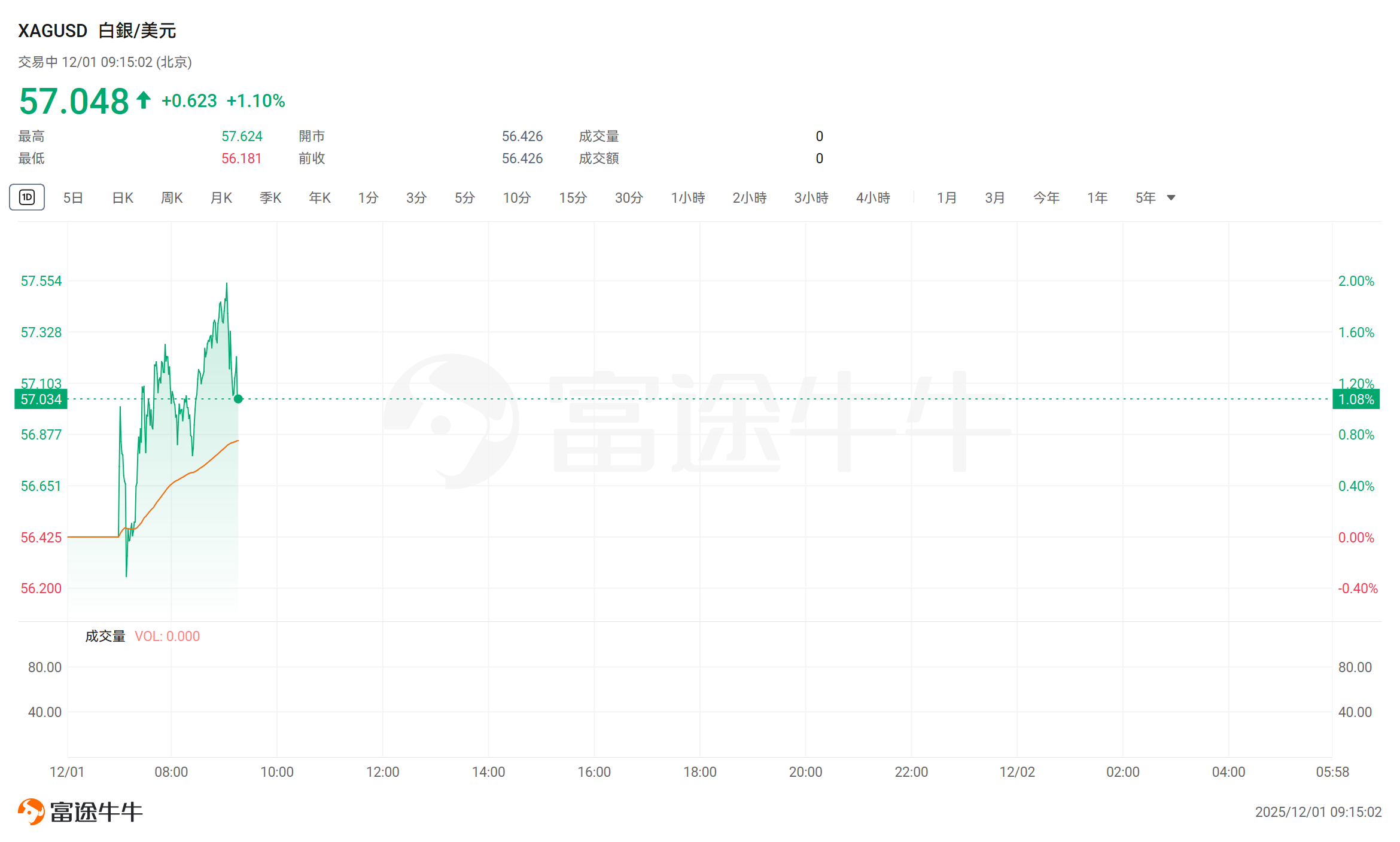
年内行情跌宕起伏 降息周期点燃牛市引擎 回顾2025年白银市场走势,可谓一波三折、后劲十足。1-5月,国际银价维持29-35美元/盎司区间小幅震荡,沪银主力合约同步在7500-8500元/千克区间温 和波动,市场整体处于蓄势阶段。6月起,全球白银库存告急信号持续释放,叠加光伏产业用银需求爆发式增长,白银价格迎来首次加速突破,开启上行 通道。7-8月,市场关注度逐步提升,国际银价在36-41美元/盎司区间筑牢支撑,沪银主力合约稳步攀升至9300元/千克上方。 9月美联储正式开启降息周期,为白银牛市注入关键动力,市场热情被彻底点燃,银价进入加速上涨阶段。10月中旬,白银价格出现短暂剧烈回调,获利 回吐并未逆转上行趋势,反而为后续上涨积蓄动能。11月市场再度爆发,期现货价格同步创下历史纪录,截至12月1日,伦敦现货白银盘中突破57美元/盎 司,年内涨幅超90%,表现远超黄金。 供需缺口叠加交割风险 逼空行情持续升温 12月1日亚洲交易时段,伦敦现货白银价格盘中突破每盎司57美元,创下历史新高。截至目前,国际白银价格年内涨幅已超90%,大幅跑赢黄金同期表 现,成为2025年全球表现最佳的资产之一,上演了一波惊艳的牛市 ...


广期所出手稳多晶硅期货!机构指出短期波动收敛,中长期看供需!光伏ETF华夏(515370)跌1.32%
Mei Ri Jing Ji Xin Wen· 2025-12-02 07:07
Core Viewpoint - The A-share market experienced a pullback on December 2, with the photovoltaic ETF Huaxia (515370) declining by 1.32%, reflecting a broader trend of most constituent stocks retreating, particularly in the photovoltaic sector [1] Group 1: Market Performance - The A-share market's three major indices showed volatility and a downward trend, with significant declines in stocks such as 聚合材料 and 通威股份, which fell over 4% [1] - Major companies like 大全能源, TCL中环, and 隆基绿能 also experienced declines, indicating a general downturn in the photovoltaic sector [1] Group 2: Policy Adjustments - On December 1, the Guangxi Futures Exchange announced adjustments to the trading margin standards and limits for the polysilicon futures PS2601 contract, effective from December 3, 2025 [1] - The speculative trading margin for the PS2601 contract will be raised to 13%, while the hedging margin will be set at 12%, with a daily opening position limit of 500 contracts for non-futures company members or clients [1] Group 3: Market Outlook - According to Jianxin Futures, the adjustments aim to curb excessive speculation and reduce volatility risks in the market [1] - Short-term effects include constraints on speculative funds, leading to a cooling of trading activity in near-month contracts and a potential decrease in open interest [1] - In the medium to long term, the fundamental supply and demand dynamics of the industry remain unchanged, with polysilicon prices still dependent on terminal demand, production cuts by companies, and inventory reduction pace [1]
协鑫能科(002015.SZ):公司业务未涉及光伏产业的生产制造环节
Ge Long Hui· 2025-12-01 07:25
格隆汇12月1日丨协鑫能科(002015.SZ)在投资者互动平台表示,公司业务未涉及光伏产业的生产制造环 节。 ...

供需缺口驱动,白银年度涨幅逼近翻倍
Huan Qiu Wang· 2025-12-01 07:19
Core Viewpoint - The silver market is experiencing a remarkable bull market in 2025, driven by supply constraints and surging industrial demand, with prices reaching historical highs, significantly outpacing gold [1][2]. Group 1: Market Dynamics - The silver market is approximately one-tenth the size of the gold market, leading to more volatile price movements and the potential for short squeezes [1]. - Recent market tensions have escalated to extreme levels, with some silver deliveries being transported by air instead of sea to meet demand [1]. - Historical peaks in silver prices occurred in January 1980, 2011, and now in 2025, with the current market dynamics being fundamentally different from previous speculative-driven rallies [1]. Group 2: Demand Factors - The surge in silver demand is particularly pronounced in India, where traditional consumption peaks coincide with significant festivals, such as Diwali, leading to a price increase of 85% since the beginning of the year [2]. - India, as the largest consumer of silver, consumes approximately 4,000 metric tons annually, primarily for jewelry and decorative items [2]. Group 3: Supply Constraints - India relies heavily on imports for silver, with 80% of its supply sourced from abroad, while global silver inventories, particularly in London, have decreased significantly [4]. - The London Bullion Market Association reported a decline in silver inventory from 31,023 metric tons in June 2022 to 22,126 metric tons in March 2025, a reduction of about one-third [4]. - The silver supply is facing long-term challenges, with global mine production declining over the past decade, particularly in Central and South America [4]. Group 4: Industrial Demand - The industrial applications of silver are expanding, particularly in electric vehicles, artificial intelligence, and solar energy, with a standard electric vehicle containing approximately 25 grams of silver [5]. - The transition to solid-state silver batteries could increase silver requirements to one kilogram or more per vehicle, highlighting the metal's critical role in future technologies [5]. - Analysts believe that the current bull market, driven by real supply and demand factors, is just beginning to reveal the true value of silver [5].

白银冲破57美元再创新高!降息预期下“魔鬼金属”彻底觉醒
Jin Shi Shu Ju· 2025-12-01 01:29
Core Viewpoint - Silver prices have surged past $57 per ounce, driven by supply constraints and expectations of a Federal Reserve rate cut in December [2][4]. Group 1: Market Dynamics - The current rise in silver prices is supported by ongoing supply tightness and strong market expectations for a Federal Reserve rate cut this month [4]. - Concerns over global market supply tightness have re-emerged, despite record amounts of silver flowing into London to alleviate historic shortages [5]. - The one-month silver borrowing cost remains high, indicating persistent pressure across trading hubs [5]. Group 2: Historical Context and Trends - Silver prices have reached historical highs, with October's surge being one of only three peak periods in the last fifty years [5]. - The other two peak periods occurred in January 1980 and after the U.S. debt ceiling crisis in 2011, when silver and gold were viewed as safe-haven assets [5]. Group 3: Demand Factors - India's silver consumption is significant, with the country consuming approximately 4,000 tons annually, primarily for jewelry and decorative items [6]. - The recent surge in Indian domestic silver prices reached ₹170,415 per kilogram, an 85% increase since the beginning of the year [7]. - The demand for silver is expected to peak in the fall, coinciding with the end of the Indian monsoon and harvest seasons [6]. Group 4: Supply Challenges - The London silver stock has dramatically decreased, with inventories dropping from 31,023 tons in June 2022 to 22,126 tons by March 2025, marking a significant decline [8]. - The market has shifted from structural surplus to deficit due to factors such as the electrification of vehicles, AI development, and demand from the photovoltaic industry [8]. - Silver's role in electric vehicles is highlighted, with current vehicles containing about 25 grams of silver, potentially increasing to over 1 kilogram with solid-state batteries [8]. Group 5: Future Outlook - Silver is positioned as a bridge between precious and industrial metals, with increasing applications in batteries and solar panels creating significant growth opportunities [9]. - The evolving technological landscape is expected to enhance silver's value, particularly in the context of a more electrified world [9].
“沉默黑马”爆发!白银从跟跑者变领涨王
Jin Tou Wang· 2025-11-28 02:55
Core Viewpoint - The silver market is experiencing a significant surge driven by strong demand from the photovoltaic industry and a structural supply gap, marking the beginning of a "silver storm" fueled by green energy [1][2]. Group 1: Price Movement and Historical Context - As of November 28, 2023, spot silver prices rose by 1.00% to $53.90 per ounce, marking four consecutive days of gains [1]. - Since October 3, 2023, silver has increased by 163% from a low of $20.67 per ounce, reaching a historical high of $54.38 per ounce on November 13, 2023 [2]. - In comparison, gold prices rose by 142% during the same period, from $1,813.90 per ounce to a peak of $4,381.21 per ounce [2]. Group 2: Industrial Demand and Supply Dynamics - Industrial demand for silver is projected to increase from 644 million ounces in 2023 to 689.1 million ounces in 2024, with silver usage in solar panels rising from 191.8 million ounces to 243.7 million ounces, a 158% increase from 2020 [4]. - The global solar power capacity is expected to add approximately 600 gigawatts (GW) in 2024, with projections of nearly 1,000 GW by 2030 [5]. - The International Energy Agency anticipates an addition of 4,000 GW of solar power capacity from 2024 to 2030, potentially increasing silver demand by nearly 150 million ounces annually, representing a 13% increase on top of the 1.169 billion ounces of physical demand expected in 2024 [6]. Group 3: Market Gap and Future Outlook - The silver market is projected to have a gap of 501.4 million ounces in 2024, significantly larger than the 19.4 million ounces gap in 2023 [7]. - Current spot silver prices reflect a daily increase of 0.84%, with COMEX silver futures up by 1.38% [7].
装机容量持续增长,光伏ETF嘉实(159123)一键布局光伏全产业链
Xin Lang Cai Jing· 2025-11-28 02:36
Core Insights - The photovoltaic equipment sector experienced a rebound on November 28, 2025, with the CSI Photovoltaic Industry Index rising by 0.29% and key stocks such as Maiwei Co., Ltd. increasing by 6.71% [1] - The National Energy Administration issued guidelines on promoting the integration of new energy on November 12, 2025, indicating a supportive policy environment for the industry [1] - A strategic cooperation agreement was signed between Haibo Shichuang and CATL to deepen collaboration in the energy storage sector [1] Industry Dynamics - Cumulative new photovoltaic installations in China reached 240.27 GW from January to September 2025, representing a year-on-year growth of 49.3% [1] - In October 2025, the monthly new bidding capacity for energy storage in China increased by 85% year-on-year, indicating strong demand in the sector [1] - Exports of photovoltaic modules and inverters also saw year-on-year growth, while the weighted average price of energy storage systems increased month-on-month [1] Key Stocks - As of October 31, 2025, the top ten weighted stocks in the CSI Photovoltaic Industry Index accounted for 60.74% of the index, including companies like Sungrow Power Supply, LONGi Green Energy, and Trina Solar [1]
工业硅:区间震荡为主,多晶硅:关注2512合约持仓
Guo Tai Jun An Qi Huo· 2025-11-28 01:59
Report Summary 1. Report Industry Investment Rating - No industry investment rating information is provided in the report. 2. Core View of the Report - The industrial silicon market is expected to mainly experience range - bound fluctuations, and attention should be paid to the positions of the 2512 contract of polysilicon [1][2]. 3. Summary by Relevant Catalogs 3.1 Fundamental Tracking - **Futures Market Data**: - For industrial silicon Si2601, the closing price is 9,115 yuan/ton, with changes of - 95 yuan compared to T - 1, - 40 yuan compared to T - 5, and - 160 yuan compared to T - 22. The trading volume is 323,524 lots, down 45,701 lots from T - 1, down 250,821 lots from T - 5, and up 62,437 lots from T - 22. The open interest is 237,648 lots, down 22,881 lots from T - 1, down 36,330 lots from T - 5, and up 25,978 lots from T - 22 [2]. - For polysilicon PS2601, the closing price is 55,235 yuan/ton, down 660 yuan from T - 1 and up 2,785 yuan from T - 5. The trading volume is 324,070 lots, down 6,246 lots from T - 1 and up 19,235 lots from T - 5. The open interest is 141,586 lots, down 1,457 lots from T - 1 and up 7,294 lots from T - 5 [2]. - **Price and Basis**: - Industrial silicon spot prices vary by region. For example, Xinjiang 99 - silicon is 8,900 yuan/ton, and Yunnan Si4210 is 10,000 yuan/ton. Polysilicon - N - type re - feedstock is 52,300 yuan/ton [2]. - The basis of industrial silicon and polysilicon also shows different trends. For example, the industrial silicon spot premium (against East China Si5530) is + 435 yuan/ton [2]. - **Profit**: - Silicon factory profits in Xinjiang (new standard 553) are - 2,154.5 yuan/ton, and in Yunnan (new standard 553) are - 3,401 yuan/ton. Polysilicon enterprise profits are 7.7 yuan/kg [2]. - **Inventory**: - Industrial silicon social inventory (including warehouse receipt inventory) is 550,000 tons, with an increase of 2,000 tons compared to T - 5 and a decrease of 8,000 tons compared to T - 22. The enterprise inventory of industrial silicon (sample enterprises) is 180,000 tons, with an increase of 1,800 tons compared to T - 5 and an increase of 12,000 tons compared to T - 22. The industry inventory (social + enterprise inventory) is 730,000 tons, with an increase of 3,800 tons compared to T - 5 and an increase of 3,900 tons compared to T - 22. The industrial silicon futures warehouse receipt inventory is 198,000 tons, down 4,000 tons from T - 1, down 14,000 tons from T - 5, and down 42,000 tons from T - 22. The polysilicon factory inventory is 281,000 tons, with an increase of 10,000 tons compared to T - 5 and an increase of 20,000 tons compared to T - 22 [2]. - **Raw Material Cost**: - The prices of raw materials such as silicon ore, washed coking coal, petroleum coke, and electrodes in different regions are provided. For example, the price of silicon ore in Xinjiang is 320 yuan/ton, and in Yunnan is 290 yuan/ton [2]. 3.2 Macro and Industry News - On November 22, 2025, the list of winning bidders for the 2025 photovoltaic module centralized procurement project of China Energy Engineering Group Co., Ltd. was publicly announced. The total scale of the tender is estimated to be 17GW, divided into 8 bid packages, covering 182mm TOPCon modules, 210mm TOPCon modules, HJT modules, and BC modules [2]. 3.3 Trend Intensity - The trend intensity of industrial silicon is 0, indicating a neutral outlook. The trend intensity of polysilicon is - 1, indicating a slightly bearish outlook. The trend intensity ranges from - 2 (most bearish) to 2 (most bullish) [4].
铝 偏强运行为主
Qi Huo Ri Bao· 2025-11-26 00:36
Group 1 - Aluminum prices have shown limited pullback after breaking the 22,000 yuan/ton mark in mid-November, with a bullish outlook expected to continue [1] - The domestic electrolytic aluminum production capacity is capped at 45 million tons, with current operational capacity at 44.434 million tons, indicating limited room for future capacity increases [2] - The low proportion of aluminum ingots in the current supply structure, with only 22.3% of production being ingots, tightens delivery supplies and supports low inventory levels [2] Group 2 - Demand for electrolytic aluminum is primarily driven by construction (30%), transportation (20%), and electricity (16%), with the real estate market currently in a recovery phase [3] - The automotive sector has shown robust performance, with October production and sales of vehicles increasing by 12.1% and 8.8% year-on-year, respectively [3] - New energy vehicles (NEVs) have a significantly higher aluminum consumption per vehicle compared to traditional fuel vehicles, with NEV production and sales in October rising by 21.1% and 20.0% year-on-year [4] Group 3 - The photovoltaic industry continues to drive demand for electrolytic aluminum, with a 39.48% year-on-year increase in cumulative installed capacity as of October [4] - Social inventory of electrolytic aluminum stood at 612,000 tons as of November 24, showing a decrease from the previous week and remaining low compared to last year [5] - Overall, the stable supply and growing demand from emerging industries like NEVs and photovoltaics suggest a favorable outlook for aluminum prices [5]
晶科能源新产品飞虎3已签单15GW 行业承压前三季度归母净利亏39.2亿
Chang Jiang Shang Bao· 2025-11-24 08:47
Core Viewpoint - JinkoSolar has officially launched mass production of its new product, the TigerNeo3.0 solar module, which features a conversion efficiency exceeding 24.8% and a power output of up to 670W, marking a significant advancement in the company's product offerings [1] Group 1: Product Development - The TigerNeo3.0 module has a maximum bifacial rate of 90% and is designed for high power, excellent low-light performance, and efficiency [1] - JinkoSolar has secured a total of 15GW in orders during a global signing ceremony with distributors, although these agreements are non-binding and subject to formal contracts [1] Group 2: Financial Performance - JinkoSolar's net profit attributable to shareholders is projected to be less than 100 million yuan for 2024, reflecting a general decline in profitability across the solar industry [2] - In the first three quarters of 2025, JinkoSolar reported a revenue of 47.986 billion yuan, a year-on-year decrease of 33.14%, and a net loss of 3.92 billion yuan [2] Group 3: Research and Development - Despite financial losses, JinkoSolar continues to invest in R&D, particularly in N-type TOPCon technology, with R&D expenses of 1.199 billion yuan in 2022, 1.578 billion yuan in 2023, and 719 million yuan in the first three quarters of 2025 [2] - The company's N-type TOPCon modules achieved a maximum conversion efficiency of 25.58% and the full-area efficiency of 27.02% for 182N-type TOPCon cells [2] Group 4: Market Position - JinkoSolar has established a strategic presence in the integrated solar supply chain, serving approximately 4,000 customers across nearly 200 countries and regions [3] - As of the end of the third quarter of 2025, JinkoSolar's cumulative module shipments exceeded 370GW, maintaining its position as the global leader in module shipments for six consecutive years [3]
