房产税

Search documents
未来一线城市的房子租售比可能到4%吗?
集思录· 2025-07-09 14:11
Core Viewpoint - The rental yield in first-tier cities in China is currently around 1.5% to 2%, significantly lower than the 4% benchmark, suggesting that property prices may need to decrease by 40% to 50% to reach a more sustainable rental yield [1][2]. Group 1: Rental Yield Comparisons - Rental yields in major international cities are higher than those in Chinese first-tier cities, with Tokyo at approximately 5% to 6.9%, New York around 6%, Los Angeles at about 4%, and London at approximately 5% [1]. - Historical rental yields in Shenzhen have decreased from 7% in 2007 to an estimated 1.5% in 2025, indicating a long-term downward trend [2]. Group 2: Market Dynamics - The shift from "agreement transfer" to "public bidding" for land sales in 2004 led to increased land prices, which subsequently drove up property prices, with a 40% increase noted from 2004 to 2006 [4]. - The cultural context in China, where homeownership is prioritized over renting, contributes to a higher demand for purchasing homes compared to renting, resulting in a supply-demand imbalance in the rental market [5][6]. Group 3: Future Projections - If rental yields are to improve, societal acceptance of renting as a viable long-term living arrangement must increase, similar to trends observed in other countries [6]. - The potential introduction of property taxes in China could alter the pricing structure of real estate, leading to further declines in property values and increased rental yields [2].


山西:2025年上半年从价计征房产税申报提醒(一,二)及2025年上半年城镇土地使用税申报提醒
蓝色柳林财税室· 2025-06-29 08:08
Core Viewpoint - The article discusses the regulations and procedures related to property tax and urban land use tax in China, particularly focusing on the tax rates, calculation methods, and obligations for taxpayers [2][3][4]. Property Tax Regulations - Property tax is levied in urban areas, county towns, administrative towns, and industrial and mining areas [2]. - The tax rate for property tax is set at 1.2% based on the remaining value of the property after a deduction of 10% to 30% from the original value [2][3]. - In Shanxi Province, the deduction standard for property tax has been unified to 80% [3]. Tax Calculation - The formula for calculating the taxable amount is: Taxable Amount = Original Property Value * (1 - Deduction Rate) * 1.2% [3]. - Tax obligations arise from the month following the delivery of new properties or the transfer of ownership for existing properties [4][5][6]. Taxpayer Obligations - Taxpayers must pay property tax starting from the month after the property is delivered for rental or use [5]. - For self-built properties, tax is due from the month following completion [6]. - If a taxpayer entrusts a construction company, tax is due from the month after acceptance [7]. Tax Payment Schedule - Property tax is collected annually and can be paid in installments, with specific deadlines set by local governments [8][10]. - In Shanxi Province, property tax payments are divided into two halves, with the first half due by the end of June and the second half by the end of December [10]. Tax Collection Authority - Property tax is collected by the tax authority in the location of the property [11]. - Taxpayers with properties in different locations must pay taxes separately to the respective local tax authorities [11][27]. Urban Land Use Tax - Urban land use tax is calculated based on the actual area of land occupied, with rates determined by local governments [21]. - Tax obligations for urban land use tax begin from the month following the approval of land acquisition [22][23]. Reference Policies - The article references several regulations, including the "Interim Regulations on Property Tax" and the "Interim Regulations on Urban Land Use Tax" [13][29].

房价走向清晰,2025年或首迎“抛房潮”,3类人将退出楼市
Sou Hu Cai Jing· 2025-06-22 02:16
Core Viewpoint - The "housing sell-off wave" in 2023 indicates a significant market shift, driven by declining property prices, shrinking demand, and impending property tax implementation, suggesting a deep adjustment period for the Chinese real estate market [1][3][7]. Group 1: Market Dynamics - From January to June 2023, the listing volume of second-hand houses surged in 13 key cities, with Shanghai, Chengdu, and Chongqing leading at 180,000, 200,000, and 220,000 listings respectively [1]. - The price decline in the housing market has shaken investor confidence, with 91% of 100 key cities reporting a drop in second-hand housing prices [1][3]. - The sell-off is exacerbated by a significant reduction in market demand due to the pandemic's impact on income and employment, leading to an imbalance between supply and demand [3][6]. Group 2: Seller Profiles - First-time buyers who followed market trends without considering their financial capacity are now forced to sell their properties to alleviate mortgage burdens [4]. - Middle-class individuals owning multiple properties are selling off excess assets to mitigate financial risks amid falling prices and reduced income [6]. - Speculative investors, facing liquidity issues due to the pandemic, are compelled to sell properties to avoid debt crises and exit the market [6]. Group 3: Future Implications - The ongoing sell-off is a signal of a deeper transformation in the real estate market, indicating a shift towards more rational market behavior and a focus on genuine housing demand rather than speculative investments [7].

70城房价变化公布,房贷利率下调10基点,楼市会向上吗?
Sou Hu Cai Jing· 2025-06-18 01:15
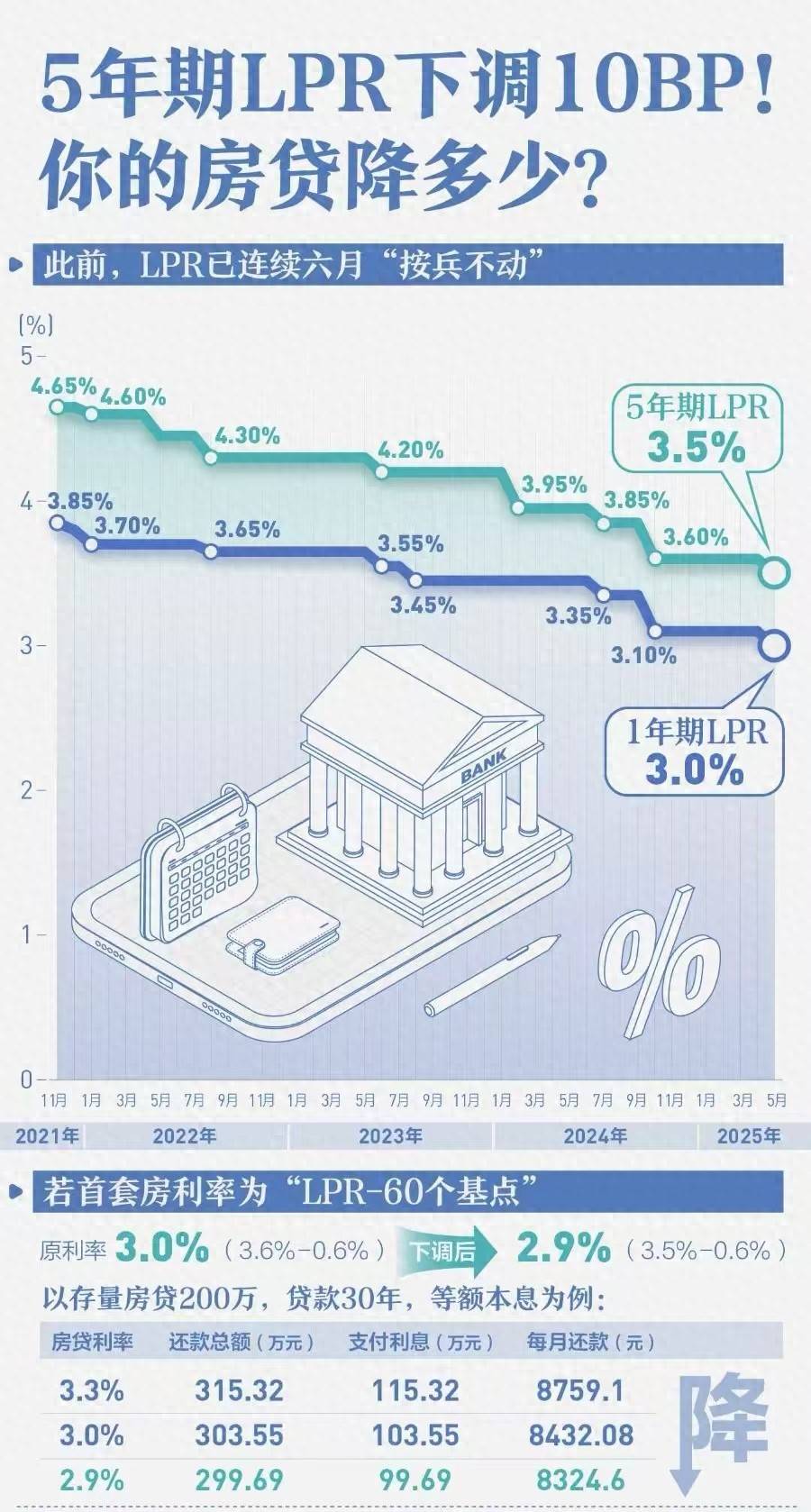
Core Viewpoint - The housing market in 70 major cities shows a stagnant trend in prices, with a recent 10 basis point reduction in the five-year LPR mortgage rate from 3.6% to 3.5%, which may lower the cost of home buying but has not significantly increased buyer confidence [1][4][5]. Group 1: Housing Price Trends - In first-tier cities like Beijing, Shanghai, Guangzhou, and Shenzhen, there are mixed results with Shanghai seeing a 0.5% increase and Guangzhou a 0.2% decrease, indicating a potential stabilization in housing prices [5][10]. - The overall trend in major cities shows both increases and decreases in housing prices, but the rate of decline is narrowing while the rate of increase is expanding, suggesting a possible stabilization [5][9]. Group 2: Buyer Sentiment and Economic Factors - A significant portion of surveyed users expressed uncertainty about purchasing homes, with many stating that changes in mortgage rates do not affect their decisions, indicating a saturated market and declining demand for first-time buyers [4][9]. - The disposable income growth rate for urban residents has decreased from 8.9% in 2019 to 4.5% in 2024, with 28% of households having a mortgage-to-income ratio exceeding 50%, contributing to cautious buyer sentiment [4][5]. Group 3: Future Market Predictions - Predictions suggest that first-tier cities may see stable or rising prices due to strong economic fundamentals and population attraction, while second-tier cities will experience significant price differentiation based on economic strength and population trends [10][11]. - Third and fourth-tier cities are expected to continue adjusting downward in prices, although the reduction in mortgage rates may mitigate the extent of these declines [10][11].
【12366近期热点问答】房产税等热点解答
蓝色柳林财税室· 2025-06-11 01:00
Group 1 - The property tax is levied on the property owner within the taxation scope, which includes cities, towns, and industrial areas [2] - For newly purchased properties, the property tax starts from the month following the delivery of the property; for existing properties, it starts from the month following the completion of ownership transfer registration [2] Group 2 - For enterprises renting out properties and collecting rent, the property tax is calculated based on rental income [3] - The tax liability varies based on property ownership, with specific rules for state-owned, collective, and individual properties [3] Group 3 - Taxpayers can use the remaining available invoice quota from the previous month and not exceeding the total invoice quota for the current month during the VAT declaration period [4] - After completing the VAT declaration, the invoice quota will be automatically adjusted [4] Group 4 - To apply for invoice quota adjustments, taxpayers can log into the electronic tax bureau and navigate to the relevant sections to submit their requests [5] - The progress of the invoice quota adjustment application can be tracked through the electronic tax bureau [6]

一问一答 | 企业所得税汇算清缴工资薪金税前扣除
蓝色柳林财税室· 2025-06-08 00:41
欢迎扫描下方二维码关注: (09). 一问一答丨农产品流通环节有关税收优惠政策 (08). 一问一答丨高校学生公寓房产税、印花税有关税收优惠政策 (07). 一问一答丨增值税小规模纳税人涉税热点问题汇总 (06). 一问一答丨保障性住房有关税收优惠政策 (05). 一问一答︱关于近期多项个人所得税优惠政策 (04). 一问一答丨老师您辛苦了,个税礼包送来啦 往期链接 (50). 一问一答 | 国际儿童节 税惠伴成长 (49). 一问一答 | 粽香端午 税惠相伴 (48). 一问一答丨高新技术企业相关税收政策 (47). 一问一答 | 资源综合利用增值税及企业所得税相关政策 (46). 一问一答丨企业所得税税前扣除凭证 (45). 一问一答 | 个人所得税热点问题 (44). 一问一答丨@各行各业劳动者 查收您的专属税收优惠 (43). 一问一答丨物流企业大宗商品仓储设施用地城镇土地使用税优惠政策 (42). 一问一答 | 建筑业小规模纳税人跨区域涉税事项 (41). 一问一答丨社区家庭服务相关税惠政策热点问题 (40). 一问一答丨小型微利企业所得税汇算清缴 (39). 一问一答 | 个体工商户所得税优惠政策 ...

“保楼市”还是“保实体经济”?国家做出选择,房价接下来走势更明了
Sou Hu Cai Jing· 2025-05-31 06:09
Core Viewpoint - The real estate market in China is undergoing a significant transformation, shifting from a focus on property investment to prioritizing the real economy, with a clear indication that housing is no longer viewed as a guaranteed wealth generator [1][3][15]. Policy Shift - The focus of national policy has shifted from prioritizing the real estate market to emphasizing the real economy, with mentions of "real estate" in economic meetings dropping by 60% compared to five years ago, while "technology innovation" and "real economy" have doubled in mention [3][4]. - The government is adopting a dual strategy: supporting the real estate market while simultaneously providing financial support to the real economy, with a projected 22% increase in funding for chip research in 2024 [4][6]. Market Logic Change - The approach to real estate regulation has evolved from "stimulating the market" to "stabilizing prices," focusing on risk prevention, maintaining expectations, and reducing financialization [6][7][9]. - The government is actively working to prevent a hard landing in the housing market by converting inventory homes into affordable housing [6]. New Market Dynamics - A clear "Matthew Effect" is emerging in the housing market, where prime properties in first-tier cities are appreciating, while second and third-tier cities are experiencing significant declines, with some areas seeing price drops of up to 60% [11][12]. - Over 90% of properties have lost their investment value, driven by factors such as demographic shifts, the rise of the rental market, and changing perceptions of property as an investment [11][12]. Recommendations for Individuals - Individuals are advised to view housing as a consumer good rather than an asset, with a focus on retaining properties in core urban areas while divesting from older or less desirable properties [13][14]. - The emphasis is on targeting prime locations in major cities, as these properties are more likely to retain value and attract higher-tier buyers [14].

房价不断下跌,历史却惊人相似,中国房地产可能要走日本“老路”
Sou Hu Cai Jing· 2025-05-23 00:03
Core Insights - The Chinese real estate market is experiencing significant turmoil, with housing prices remaining stagnant or declining, indicating a prolonged downturn in the industry [1][7]. - There are contrasting views on the future trajectory of housing prices, with some hoping for a rebound similar to the U.S. market, while others fear a prolonged decline akin to Japan's experience [3][4][15]. Market Dynamics - The current decline in housing prices is fundamentally different from previous market fluctuations, suggesting a deeper structural issue rather than a temporary cycle [11]. - Many cities are witnessing a drop in housing prices, marking a potential turning point in the market [7]. - The high debt levels among residents and declining birth rates are internal factors that may further weaken market demand [11][15]. Historical Comparisons - The situation in China is compared to Japan's real estate bubble in the 1990s, where many households were trapped by high mortgages after a market crash [13][15]. - Unlike Japan, the U.S. market saw a quicker recovery post-financial crisis, suggesting that China may have a better chance of avoiding a severe downturn due to its centralized government control [16][17]. Government Policies - The Chinese government is implementing a dual-track system of commodity and affordable housing to alleviate market pressure and support living standards [20]. - The gradual approach to property tax reform in China aims to mitigate risks without triggering a systemic collapse, contrasting with Japan's abrupt tax increases during its market peak [22]. Regional Disparities - The real estate market in China is expected to exhibit significant regional differences, with first-tier cities and some strong second-tier cities likely to recover faster than weaker regions facing severe downward pressure [29][30]. - The potential for "ghost towns" in less attractive cities is a concern, with some areas already experiencing extremely low housing prices [30]. Future Outlook - The duration of the current market adjustment remains uncertain, with scenarios ranging from a two to three-year decline similar to the U.S. to a prolonged fifteen-year downturn like Japan's [30][32]. - The era of easy profits from real estate investments is over, necessitating a shift in strategies for investors and homebuyers alike [32].

房产税和城镇土地使用税常见问答
蓝色柳林财税室· 2025-05-21 01:00
Core Viewpoint - The article discusses the regulations and tax policies related to property tax and urban land use tax in China, particularly focusing on the calculation methods, tax rates, and exemptions for small and micro enterprises. Group 1: Property Tax Calculation and Rates - Property tax for rental income is calculated based on the rent excluding value-added tax, with a tax rate of 12% [2] - For small-scale VAT taxpayers and small micro-profit enterprises, property tax can be halved [3] - The property tax rate based on property value is 1.2% after deducting 30% from the original value [3] Group 2: Tax Exemptions and Reductions - From January 1, 2023, to December 31, 2027, small-scale VAT taxpayers, small micro-profit enterprises, and individual businesses can enjoy a 50% reduction in various taxes, including property tax [3] - Organizations renting properties to individuals or specialized housing rental enterprises are taxed at a reduced rate of 4% [2] Group 3: Tax Obligation Timing - Property tax obligations begin from the month following the completion of construction or the month following the transfer of property rights for existing properties [5] - Rental properties are taxed from the month following their delivery for rent [5] Group 4: Tax Source Information and Reporting - Taxpayers must enter property and land ownership information into the electronic tax system for tax source collection and reporting [10][11] - Changes in property use that affect tax calculation methods must be updated in the tax system, with the new information taking effect the following month [12]

我国楼市大局已定,未来全国45%的家庭,将面临“5大挑战”
Sou Hu Cai Jing· 2025-05-16 12:36
Core Viewpoint - The real estate market in China has entered a long-term adjustment phase since 2022, affecting both second and third-tier cities initially, and now extending to first-tier cities like Shanghai and Shenzhen in 2023. The market is experiencing significant declines in sales volume and prices, indicating a challenging environment for property owners, especially those with multiple properties [1][5]. Group 1: Market Trends - In 2024, the national sales area of commercial housing is expected to decrease by 11.3% year-on-year, with sales revenue declining by 15.7% [1]. - The new residential price index for 300 cities is projected to drop by 3.2% year-on-year, while the second-hand residential price index is expected to fall by 5.1% [1]. - Property prices in first-tier cities have seen a decline of over 30%, with prices in Shanghai and Shenzhen dropping from over 90,000 yuan per square meter to over 60,000 yuan [5]. Group 2: Challenges for Property Owners - Families owning two or more properties, which account for approximately 45% of households, are facing five major challenges due to the market downturn [3]. - The first challenge is the continuous depreciation of property values, making it difficult for owners to realize gains [5]. - The second challenge is the increasing difficulty in liquidating properties, with many owners needing to sell at 10-15% below market value to achieve sales [7]. - The third challenge involves rising holding costs, including increased property service costs, which are projected to rise by 15% in 2024 [9]. - The fourth challenge is the growing difficulty of "renting to pay mortgages," as rental demand decreases and rental prices decline in both first and second-tier cities [12]. - The fifth challenge is the impending introduction of property taxes, which will impose additional financial burdens on families with multiple properties [15].