
日元贬值

Search documents
日元,跌跌跌不休
第一财经· 2025-12-23 08:42
Core Viewpoint - The Japanese yen has been in a downward trend in the foreign exchange market, with significant depreciation despite the Bank of Japan's recent interest rate hike, indicating a lack of market confidence in the government's policies [3][4][6]. Group 1: Yen Depreciation and Economic Policies - The yen has depreciated significantly, with a 20% drop compared to three years ago, reaching historical lows against major currencies [3][6]. - Following a 25 basis point interest rate hike by the Bank of Japan, the yen continued to weaken, suggesting that the market does not view the government's policies favorably [4][6]. - The Bank of Japan's cautious approach to monetary policy, characterized by a gradual increase in rates, has not effectively addressed inflation or stabilized the currency [6][10]. Group 2: Market Reactions and Investor Sentiment - The increase in loan costs due to the interest rate hike has led to a shift in investment strategies, with some funds moving to the stock market while others are leaving Japan due to concerns over public debt [7][10]. - The yield on 10-year Japanese government bonds has reached a 26-year high, indicating a lack of confidence in domestic investments [7][8]. - There is a growing concern among investors regarding Japan's fiscal health, with a significant portion of the population expressing worries about the government's financial management [12][11]. Group 3: Future Outlook and Potential Interventions - Analysts predict that if the yen continues to depreciate, the Bank of Japan may need to reassess its monetary policy to balance between stabilizing the currency and controlling inflation [14][15]. - The Japanese government is expected to face increasing fiscal pressure, with potential interventions in the foreign exchange market if the yen's decline accelerates [14][15]. - Future interest rate hikes are anticipated, with expectations of two more increases, potentially bringing the rate to 1.25% [15].


日元贬值突破关键关口 日本政府干预风险陡增
Jin Tou Wang· 2025-12-23 02:29
日本政府已释放明确的干预信号。12月22日,财务省副财相三村淳公开表态,对近期日元"单边且突 然"的贬值深感担忧,并强调将对过度波动采取适当应对措施。这一表述被市场解读为干预前的预警, 上一次日本当局出手干预汇市是在2024年7月,当时美元兑日元触及161.96的高位。当前临近"双旦"假 期,市场流动性萎缩可能加剧汇率异动,进一步提升干预概率。 日本央行12月19日的加息举措本被寄予提振日元的厚望——将政策利率从0.5%上调至0.75%,创下30年 来最高水平,标志着日本正式告别近30年的超宽松货币政策时代。但市场用脚投票,加息消息公布后美 元兑日元从155一线快速突破156、157关口,核心症结在于政策缺乏明确指引。日本央行行长植田和男 仅表示加息节奏取决于经济与物价数据,未给出清晰的后续路径,导致市场对其政策定力存疑。 更深层的压力来自日本经济的结构性失衡。贸易收支连续4年逆差,2025年前10个月逆差规模达1.5万亿 日元,进口货款的美元需求持续压制日元。更严峻的是服务贸易逆差,同期数字收支逆差高达5.6万亿 日元,成为日元贬值的新推手。叠加高市早苗政府推出的18.3万亿日元经济刺激计划,市场对日本财政 ...
中国外汇投资研究院:仅靠口头干预可能不足以逆转日元跌势
Xin Hua Cai Jing· 2025-12-22 09:32
新华财经北京12月22日电中国外汇投资研究院金融分析师张正阳表示,日元贬值的驱动因素是多方面 的。日本的财政扩张政策加剧了市场对日本财政状况的担忧,进而削弱日元价值。此外,全球能源价格 波动和地缘政治紧张局势,也放大了日元作为避险资产的波动性,这使得汇率更易受投机行为影响。从 经济影响来看,日元贬值虽有利于出口企业提升竞争力,但负面效应更为突出,进口成本上升直接推高 物价,尤其是能源和食品价格,加剧了家庭生活压力;企业生产成本增加,可能抑制投资和就业;更深 远的是,贬值若持续,会放大财政风险,因为政府债务以日元计价,但贬值可能通过通胀途径增加偿债 负担。 历史经验表明,日本货币当局常通过言论来引导市场预期,避免实际干预的高成本。然而,市场反应显 示,仅靠口头干预可能不足以逆转趋势,尤其在财政宽松预期强化的情况下。 (文章来源:新华财经) ...
【环球财经】日元急剧贬值刺激东京股市反弹 日经225指数涨1.81%
Xin Hua Cai Jing· 2025-12-22 09:13
Group 1 - The core viewpoint of the articles highlights the impact of the Bank of Japan's interest rate hike on the financial markets, particularly the rebound in the Tokyo stock market due to the sharp depreciation of the yen [1][2] - The Nikkei 225 index rose by 1.81%, closing at 50,402.39 points, while the Tokyo Stock Exchange index increased by 0.64%, closing at 3,405.17 points [2] - The market reaction included a sell-off in the Tokyo bond market, with the yield on new 10-year government bonds reaching 2.1%, the highest in nearly 27 years, indicating ongoing concerns about Japan's fiscal deterioration [1] Group 2 - Various sectors within the Tokyo Stock Exchange showed mixed performance, with notable gains in sectors such as non-ferrous metals, electrical products, and machinery, while sectors like land transportation, air transportation, and other products experienced declines [2]
日元急跌引担忧!日本高官急发警告,空头却在“准备度假”
Jin Shi Shu Ju· 2025-12-22 04:13
Group 1 - The Japanese government is concerned about the recent one-sided and sudden fluctuations in the foreign exchange market, particularly after the Bank of Japan's monetary policy meeting, indicating a potential need for intervention if the yen continues to weaken towards the 160 level [1] - Following the Bank of Japan's decision to maintain interest rates, the yield on the benchmark 10-year Japanese government bond rose by 7.5 basis points to 2.095%, the highest level since February 1999, while the 2-year bond yield increased by 3 basis points to 1.12%, the highest since 1997 [1] - Nomura Securities reports that Prime Minister Fumio Kishida is becoming aware that the continuous depreciation of the yen could impact his political stability, suggesting that Japanese authorities may be close to taking strong action [4] Group 2 - Market participants acknowledge the possibility of further interest rate hikes but do not fully accept a rapid or aggressive rate increase path, indicating a cautious approach to trading the yen [5] - Speculative positions in the dollar-yen pair have been affected by the U.S. government shutdown, with data showing a significant decline in long positions on the yen, approaching neutral levels [5] - Analysts believe that while the Japanese Ministry of Finance can temporarily halt the yen's decline by selling dollars, this strategy may not be sustainable, especially without a shift towards a more hawkish tone from the Bank of Japan [5]
加息难挡贬值压力,日元将跌至160?
日经中文网· 2025-12-22 03:23
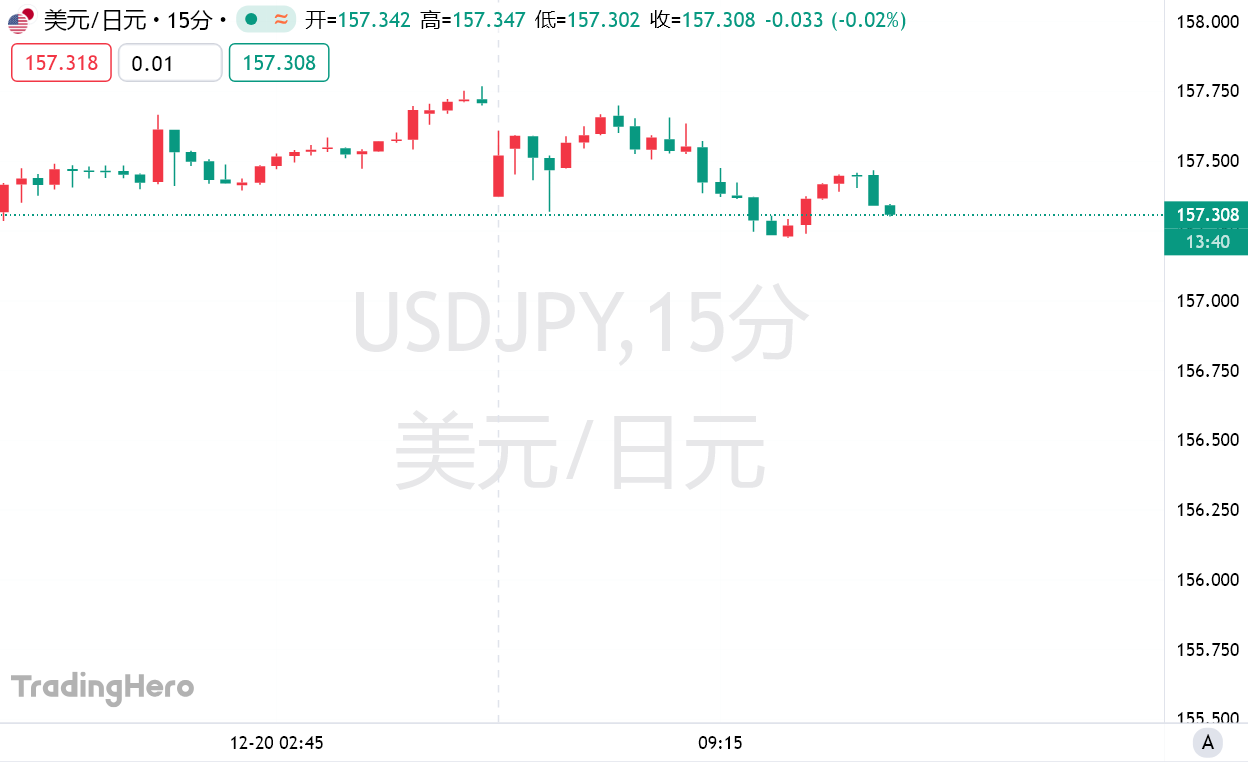
Core Viewpoint - The Bank of Japan raised interest rates to 0.75% on December 19, but the lack of a clear hawkish stance from the governor led to unexpected depreciation of the yen, with potential for further decline towards 160 yen per dollar [2][4][6]. Group 1: Interest Rate and Currency Impact - The long-term interest rates in Japan rose to 2% for the first time in 19 years following the interest rate hike, but the yen's exchange rate remained relatively stable around 155.80 yen before the announcement [4]. - After the press conference, the yen quickly depreciated, reaching a low of 157.70 yen per dollar, marking a one-month low due to the unexpected lack of aggressive monetary tightening signals from the Bank of Japan [6][8]. - Market participants expect the yen to depreciate further, with many anticipating a rate of around 160 yen by the end of March 2026 [6][8]. Group 2: Market Reactions and Predictions - Analysts predict that the next interest rate hike by the Bank of Japan may not occur until October 2026, leading to a potential depreciation of the yen to 162 yen in the first quarter of 2024 [8]. - Concerns about currency intervention have arisen, especially as the yen approaches the 160 yen mark, with officials indicating readiness to respond to excessive movements [8]. - Some analysts believe that the yen's depreciation may be limited, with expectations of a potential appreciation back to 155 yen by March 2024, influenced by anticipated actions from the U.S. Federal Reserve [9]. Group 3: Stock Market Implications - The depreciation of the yen is expected to benefit export-oriented companies, potentially driving up stock prices, with forecasts suggesting the Nikkei average could rise to between 50,000 and 55,000 points [10]. - Concerns about fiscal expansion and political developments, such as potential early elections, could pose risks to stock prices, with some analysts suggesting a possible adjustment to around 45,000 points [10].
日银加息落地美元反而冲高
Jin Tou Wang· 2025-12-22 02:39
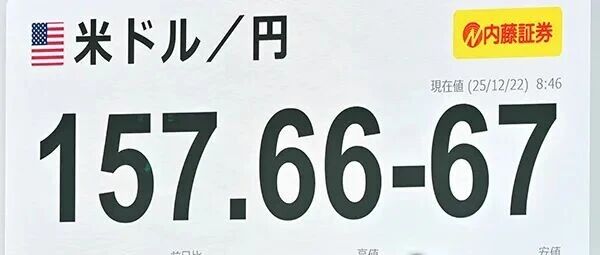
经济基本面的结构性失衡也加剧了日元贬值压力。数据显示,日本贸易收支已连续4年出现逆差,2025 年前10个月逆差达1.5万亿日元,进口货款多以美元支付,直接加剧日元贬值压力;更严峻的是,同期 服务收支逆差高达5.6万亿日元,且呈扩大趋势。此外,日本政府推出的18.3万亿日元经济刺激计划引发 市场对财政赤字化的担忧,国际投资者对其财政纪律的质疑声日益增多,进一步动摇日元信用基石。 对于后市走势,机构普遍持谨慎态度。摩根士丹利此前预测,若日银如期加息,美元兑日元将逐步下探 154.40支撑位,2026年一季度可能跌至140关口;三菱日联金融集团则预计2026年初汇价向150水平靠 拢,但当前市场表现已偏离部分机构前期预期。分析人士指出,单纯的货币紧缩已不足以将日元拉出干 预"危险区",若无法从根源上解决贸易收支失衡、财政扩张等结构性问题,日元或难以扭转下行趋势。 2025年12月22日,东京外汇市场上美元兑日元汇率维持震荡走高态势,汇率报157.2900,值得关注的 是,这一走势出现在日本央行12月19日宣布加息之后,市场对政策提振日元的预期落空,反而推动美元 兑日元汇率突破157关口,延续近期贬值趋势。 此次汇 ...
21评论丨加息也难扭转日元贬值态势
Xin Lang Cai Jing· 2025-12-19 22:31
特约评论员 黄亚南 而日本的国际收支和贸易需求也限制了日元升值的空间。根据日本财务省的数据,2025年日本的国际收支基本处在均衡状态。而一旦处于这种 均衡状态,即便是美日两国的货币政策再怎么调整,也很难形成日元升值的趋势。这是因为今年日本企业进出口基本持平,导致的外汇交易今 年也保持平衡,没有产生更多的购买日元的需求。加上日本国际收支的一大部分是海外投资的收益,由于这部分收益并没有及时输送回日本, 而是在海外再投资中消化,所以,也就不会形成大量的购买日元的需求,不会造成日元升值的局面。 另外,国际投机资本在投资策略性方面现在也不会推动日元的升值。对冲基金曾经主导了今年上半年日元升值,日元汇率一度达到1美元兑换 140日元。这些基金仅在今年6月,就卖出200亿美元换取其他国家的货币进行对冲投资,但是,随着年底决算期的到来,这些基金纷纷回购美 元,这只会推动美元升值而不会推动日元升值。 不仅如此,日元实际上还面临着继续贬值的压力。由于目前日本政府不顾财政纪律而扩大财政支出,日本面临着巨大的财政风险。同时,如果 日本政府持续施压,威胁日本央行的独立性,那么日元就会继续贬值。 如此,虽然国际金融市场出现了本世纪以来罕 ...

日本与“安倍经济学”诀别的必然
日经中文网· 2025-12-19 08:00
Core Viewpoint - The article discusses the shift in Japan's monetary policy under the Bank of Japan (BOJ) as it moves towards interest rate hikes in response to the depreciation of the yen and rising inflation, contrasting with the previous era of aggressive monetary easing known as "Abenomics" initiated in 2012 [2][4]. Group 1: Economic Context - "Abenomics" began in 2012 when Japan faced record yen appreciation and persistent deflation, with the yen valued at approximately 80 yen per dollar [4]. - Currently, the yen's value has dropped to nearly half of its 2012 level, leading to increased inflation, with the Consumer Price Index (CPI) rising around 3%, which is 1.5 times the BOJ's target of 2% [4][5]. Group 2: Policy Shift - The BOJ's decision to raise interest rates is seen as a necessary response to the current economic conditions, where yen depreciation and inflation require different measures compared to the past [4]. - The article emphasizes that continuing with the previous monetary easing policies would exacerbate yen depreciation and inflation, potentially leading to economic downturns [5]. Group 3: Central Bank Independence - The independence of central banks is highlighted as crucial for maintaining price stability, which sometimes conflicts with political interests [5]. - The BOJ has maintained its stance despite changing economic conditions, indicating a need for the Japanese government to implement effective policies alongside the BOJ's actions [5].

日本核心CPI连续51个月同比上升
Xin Hua Cai Jing· 2025-12-19 02:44
Core Insights - Japan's core Consumer Price Index (CPI), excluding fresh food, rose by 3.0% year-on-year to 112.5 in November, marking the 51st consecutive month of year-on-year increases [1] - The year-on-year increase in November's core CPI remained stable compared to the previous month, while the month-on-month increase was 0.3%, slightly lower than the 0.4% recorded in the prior month [1] Price Drivers - The primary driver of the price increase in November was food, with significant price hikes observed in grains, snacks, prepared foods, dining out, beverages, meat, and dairy products [1] - Coffee bean prices surged by 51.6% year-on-year, while the price of ordinary japonica rice saw a year-on-year increase of 37.0%, although this was a decrease from last year's high levels [1] - Other categories such as housing repairs, electricity, automotive-related expenses, communication fees, and hotel accommodations also experienced year-on-year price increases [1] Economic Policy Impact - Concerns have been raised by media and experts regarding Prime Minister Suga Yoshihide's commitment to an active fiscal policy, which is exacerbating the depreciation of the yen and potentially leading to further inflation in Japan [1]