智能体

Search documents
中银国际:AI大模型演进路径逐渐清晰 算力或供不应求
Zhi Tong Cai Jing· 2026-02-25 06:17
Group 1 - The core viewpoint is that major AI models both domestically and internationally are set to complete significant upgrades around the Spring Festival in 2026, indicating a robust demand for advanced models and a potential growth in computing power hardware [1][2]. Group 2 - Domestic AI models are undergoing intensive updates, with several releases from companies such as Zhiyuan, ByteDance, and Alibaba between January 27 and February 16, 2026 [2]. - Internationally, major model updates include OpenAI's GPT-5.3-Codex, Anthropic's Claude Opus 4.6, and Google's Gemini 3.1 Pro, all released in February 2026, showcasing enhanced capabilities [2]. Group 3 - The enhancement of model capabilities is leading to the emergence of intelligent agents and multimodal applications, with tools like OpenClaw evolving from simple chatbots to sophisticated office assistants [3]. - ByteDance's SeeDance 2.0 has significantly improved video generation efficiency, increasing the usable rate from 20% to 90%, which may drive the animation and film industries towards large-scale development [3]. Group 4 - The price adjustment by Zhiyuan for its GLM Coding Plan, including a 30% or more increase in subscription prices, reflects a growing market demand and indicates a supply bottleneck in computing power, suggesting ongoing benefits for the computing power industry [4].
云知声黄伟预言:未来3年,AI竞争核心是智能体
Feng Huang Wang Cai Jing· 2026-02-24 06:11
Core Viewpoint - The future competition in the AI industry over the next three years will center around intelligent agents, with a significant focus on multimodal development of large models this year, leading to rapid growth and widespread implementation of intelligent agents [1] Industry Insights - The intelligent agent sector is expected to experience rapid development and simultaneous growth in both consumer (C-end) and industry (B-end) applications this year [1] - The foundational capabilities of large models have reached a usable boundary over the past two to three years, resulting in a well-cultivated market and clearer demand for AI capabilities [1]
企业AI应用盘点:字节跳动、瓶子星球、三顿半等企业的实践路径
Sou Hu Cai Jing· 2026-02-24 04:39
Core Insights - The article highlights a significant shift in AI development from virtual interfaces to physical applications, indicating that AI is increasingly being integrated into real-world business operations and decision-making processes. Group 1: ByteDance - ByteDance is integrating its "Doubao" large model capabilities into core products like Douyin and Toutiao, utilizing AI agents to enhance content recommendation and creation systems [2] - The AI agent system analyzes video content and user interaction data to generate descriptive tags for optimizing personalized content distribution [2] - This transition marks a shift from traditional algorithm models to an integrated AI-driven architecture covering both content production and consumption [2] Group 2: McDonald's China - McDonald's China has systematically deployed various AI agents within its digital ecosystem to address peak demand and personalization needs [4] - AI voice ordering machines are used at the front end to process customer orders through natural language [4] - The company has integrated AI functionalities into its restaurant management system for tasks like scheduling, inventory management, and dynamic pricing [4] Group 3: Netflix - Netflix has deeply integrated generative AI into its global content marketing and production processes to overcome scalability challenges [5] - AI is used to create localized promotional materials and conduct targeted advertising by analyzing regional user viewing data [5] - In content production, AI assists in enhancing efficiency, such as generating special effects for shows and films [5] Group 4: CATL (Contemporary Amperex Technology Co., Limited) - CATL has established an "extreme manufacturing" system centered on AI and big data to ensure battery safety and consistency [7] - The company has deployed high-speed AI visual inspection systems on production lines to detect defects in real-time [7] - Human-like robots named "Xiao Mo" are used for final functional testing of battery packs, showcasing advanced automation in production [7] Group 5: Bottle Planet - Bottle Planet Group exemplifies "precision empowerment" in the beverage industry through AI applications across demand insight, intelligent production, and channel collaboration [8][9] - An AI user insight system has been developed to analyze consumer behavior and inform market strategies [8] - The company has created a smart agricultural production platform for comprehensive digital management of raw materials [8] Group 6: Guangdong Yida Textile - Guangdong Yida Textile has developed an AI automated fabric inspection system to address inefficiencies in traditional manual inspection [11] - The system can accurately identify over 40 types of defects and operates with millimeter-level precision [11] - The deployment of this system has significantly increased inspection efficiency compared to skilled labor [11] Group 7: Three Dots Half - Three Dots Half has integrated AI technology into its operations, focusing on product innovation, user interaction, and supply chain optimization [12] - An "AI recycling system" has been established to track recycling data and optimize collection routes [12] - The company aims to achieve data-driven operations across various business segments, enhancing efficiency and reducing costs [12] Group 8: Industry Trends - The practices of these companies are deepening and expanding the traditional concept of industrial automation, promoting a more integrated human-machine collaboration model [14] - AI is seen as a complement to human efforts, enhancing overall operational efficiency and decision-making [14] - A new organizational structure centered around project demands and AI agent collaboration networks is emerging, characterized by increased fluidity and adaptability [14]


测评7个手机智能体:点一杯奶茶,意味着交付40%高敏权限
2 1 Shi Ji Jing Ji Bao Dao· 2026-02-24 00:23
Core Insights - The rise of intelligent agents signifies a shift from machines merely chatting to machines performing tasks on behalf of users, with a notable focus on local deployment rather than cloud-based solutions [1][2] - The increasing integration of intelligent agents into personal devices raises concerns about privacy and the extent of permissions required for their operation [2][19] Group 1: Intelligent Agent Development - Intelligent agents like Doubao are being embedded in smartphones, allowing them to perform various tasks such as ordering food and playing games [3][4] - A significant number of permissions are required for these agents, with many devices exceeding 100 system permissions, which is notably higher than typical applications [5][6] Group 2: Permission and Privacy Concerns - Approximately 40% of the permissions requested by mobile intelligent agents are classified as high-sensitivity, including access to precise location and reading messages [7][10] - The use of accessibility permissions allows intelligent agents to bypass standard security measures, raising concerns about potential misuse and privacy violations [10][12] Group 3: Security Measures and User Awareness - Companies like Doubao and OPPO have begun to publish AI privacy and security white papers, focusing on user awareness and control over sensitive operations [24][25] - The need for transparent usage guidelines and the importance of logging AI operations have been emphasized to ensure accountability and traceability [25][29] Group 4: Data Handling and Cloud Risks - The process of data transmission to the cloud remains controversial, with concerns about sensitive information being exposed during this process [29][30] - Current intelligent agents struggle with effectively identifying and protecting sensitive information, highlighting a gap in privacy protection capabilities [30][32]



万字详解智能体2.0:手机里的“互联互通”新战场
2 1 Shi Ji Jing Ji Bao Dao· 2026-02-24 00:10
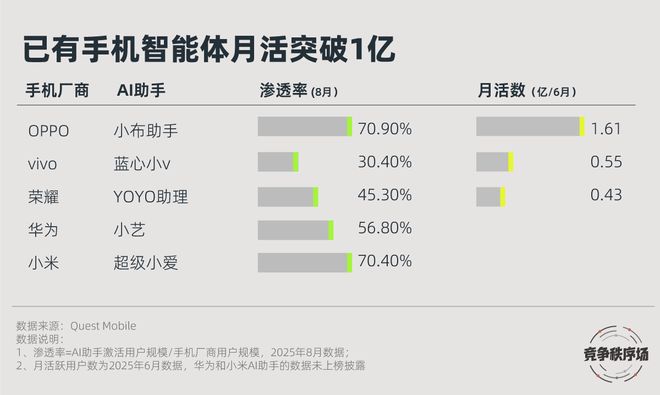
Core Insights - The AI industry is shifting focus towards edge-based intelligent agents, with significant developments in both domestic and international markets [1][2][3] - ByteDance's Doubao and other intelligent agents are gaining traction, operating across various personal devices and applications, but face challenges related to privacy and operational capabilities [2][3][5] - The industry consensus is that the future of intelligent agents will depend on their ability to connect multiple personal devices and services, reshaping the ecosystem [2][3] Group 1: Market Developments - OpenClaw has gained popularity in Silicon Valley, while Doubao is embedded in smartphones in China, with high demand reflected in the second-hand market [1] - The user base for intelligent agents among six major Chinese smartphone manufacturers grew by 65 million in one year, reaching a total of 535 million users [3] - OPPO, Vivo, and Honor are leading the charge in the domestic market, with OPPO's Xiaobu Assistant achieving 160 million monthly active users by June 2025 [3] Group 2: Technical Challenges - Current intelligent agents are struggling with task execution, often only able to perform basic functions like opening apps rather than completing complex tasks [7][8] - A recent evaluation of seven intelligent agents revealed a success rate of only 20% for completing tasks, with many tasks failing or being interrupted [5][7] - The technology behind these agents is still in its infancy, with most operating at a basic level and lacking the ability to handle complex, multi-step tasks effectively [8][10] Group 3: Privacy and Security Concerns - Intelligent agents require extensive permissions, often exceeding 100, raising concerns about privacy and potential misuse of sensitive data [17][18] - The use of high-sensitivity permissions, such as accessing location and reading messages, poses significant risks to user privacy [19][20] - The reliance on cloud processing for data handling introduces vulnerabilities, as sensitive information may be exposed during transmission [27][28] Group 4: Industry Dynamics - A ceasefire agreement has been reached between ByteDance and several app developers, allowing for normal login procedures while limiting AI operations [35] - The competitive landscape is marked by tensions between smartphone manufacturers and app developers, with concerns over the implications of intelligent agents on existing business models [30][31] - The future of intelligent agents hinges on establishing a viable revenue-sharing model and addressing the concerns of both hardware manufacturers and app developers [31][32]



ARM,失宠了
半导体行业观察· 2026-02-19 02:46
Core Viewpoint - NVIDIA has sold its remaining stake in ARM for approximately $140 million, marking a significant shift from its previous attempt to acquire the company, which is crucial for AI infrastructure development [2] Group 1: NVIDIA and ARM Relationship - NVIDIA's collaboration with ARM has been vital for launching key products like Grace Hopper and Blackwell, with ARM playing a critical role in the upcoming Vera CPU [2] - The sale of ARM shares coincides with growing skepticism about ARM's position in the AI competition [2] Group 2: CPU Market Dynamics - There is a notable shift in workload from GPU to CPU, particularly for agentic tasks, which emphasizes the increasing importance of CPUs [2] - Major cloud providers are experiencing a surge in demand for data center CPUs, contributing to the rapid expansion of the overall CPU market [3] Group 3: ARM vs. x86 Architecture - ARM-based CPUs are perceived to have weaker momentum in AI servers due to lower GPU scheduling efficiency compared to x86 [3] - x86 architecture is favored for agentic workloads due to its superior single-thread burst performance, which is critical in environments executing millions of micro-tasks per second [3] Group 4: Ecosystem and Market Trends - The x86 ecosystem is well-established in enterprise data centers, including firmware stacks and virtualization layers, driving demand for Intel and AMD server products [4] - NVIDIA's move to introduce x86 server racks aligns with the ongoing upgrade cycle among large cloud providers [4] Group 5: NVIDIA's Strategic Direction - NVIDIA is actively pursuing an x86 strategy in collaboration with Intel, integrating x86 solutions into NVLink-equipped server racks [5] - The sale of ARM shares is primarily a financial maneuver and does not significantly impact NVIDIA's overall product strategy, although future CPU generations may explore x86 diversification [5]


两个春节,一年时间:战火烧红整条AI产业链
Di Yi Cai Jing· 2026-02-18 09:58
Core Viewpoint - The competition among major tech companies for national-level traffic entry points during the Spring Festival is intense, with no clear winner emerging from this year's "red envelope war" [1][16]. Group 1: Competition Overview - Major players in the competition include Alibaba, ByteDance, Tencent, and Baidu, each deploying significant financial resources to attract AI users [3][19]. - Alibaba's Qianwen announced a 30 billion yuan "Spring Festival invitation plan," while Tencent's Yuanbao offered 1 billion yuan in cash red envelopes, and Baidu provided 500 million yuan in red envelopes for users of its Wenxin assistant [3][19]. - ByteDance did not disclose specific amounts but indicated it would distribute over 100,000 tech gifts and cash red envelopes during the Spring Festival [3][19]. Group 2: Company Strategies and Ecosystems - Alibaba benefits from a robust ecosystem supported by its large models and diverse application scenarios, including its open-source models that compete internationally [4][20]. - Qianwen's user engagement exceeded expectations, leading to an actual investment surpassing the planned 30 billion yuan due to high user participation [4][20]. - ByteDance's Doubao has gained a competitive edge with a higher daily active user count compared to its rivals, achieving 1.9 billion AI interactions on New Year's Eve [4][20]. Group 3: Model Capabilities and Market Position - Tencent's underlying model capabilities are perceived as weaker compared to Alibaba and ByteDance, lacking a leading position in major model rankings [5][21]. - Baidu's strategy focuses on integrating its Wenxin assistant into its existing app with over 700 million monthly active users, offering incentives to encourage user transition to AI [5][21]. - The competitive landscape has raised entry barriers for other companies, necessitating substantial financial investments to compete effectively [6][22]. Group 4: Future Trends and Developments - The emergence of intelligent agents, such as NetEase Youdao's LobsterAI, indicates a shift towards new AI application forms, with significant expectations for their future role in AI applications [8][24]. - The gap between Chinese and American large models has narrowed, with the difference in capabilities reduced from six months to approximately three months [13][28]. - Chinese companies are expected to maintain a competitive advantage in terms of cost-effectiveness in AI investments compared to their American counterparts [15][32].



两个春节,一年时间:战火烧红整条AI产业链 | 海斌访谈
Di Yi Cai Jing· 2026-02-18 09:41
Core Viewpoint - The competition among major tech companies for national-level traffic entry points during the Spring Festival is intense, with no clear winner emerging from this year's events [1][3][6]. Group 1: Competition Overview - Major players in the competition include Alibaba, ByteDance, Tencent, and Baidu, each deploying significant financial resources to attract AI users [3][5]. - Alibaba's Qianwen launched a 30 billion yuan "Spring Festival invitation plan," while Tencent offered 1 billion yuan in cash red envelopes through its Yuanbao app [3][4]. - ByteDance's Doubao and Baidu's Wenxin Assistant also participated, with Doubao reporting 1.9 billion AI interactions on New Year's Eve [4][13]. Group 2: Company Strategies - Alibaba leverages its extensive ecosystem and open-source models to compete effectively in both domestic and international markets [3][5]. - ByteDance's Doubao has gained a first-mover advantage with a higher daily active user count compared to its competitors [3][5]. - Tencent's model capabilities are perceived as weaker, but the company remains confident in its ability to compete in the AI space [5][6]. Group 3: Market Dynamics - The competition has raised the entry barrier for other companies, requiring substantial investment to compete for national-level traffic [5][6]. - The rapid iteration of large models in China has narrowed the gap with U.S. counterparts, with the difference in capabilities reduced to about three months [13][14]. - Chinese companies are increasingly efficient in their AI investments, achieving competitive intelligence levels with lower costs compared to U.S. firms [15]. Group 4: Future Trends - The emergence of intelligent agents, such as LobsterAI, indicates a shift towards more specialized applications of AI technology [8][9]. - The evolution of intelligent agents is expected to progress through various stages, from single-app functionalities to cross-platform interactions [10][11]. - The competitive landscape suggests that smaller companies may find opportunities by leveraging multiple AI models rather than being tied to a single one [9].

陆家嘴财经早餐2026年2月17日星期二
Wind万得· 2026-02-17 00:17
Group 1 - The 2026 CCTV Spring Festival Gala featured a variety of robots performing alongside artists, showcasing advanced skills and technology [3] - The Hong Kong stock market saw a positive close on the last trading day before the Lunar New Year, with the Hang Seng Index rising by 0.52% and AI application stocks experiencing significant gains, such as Haizhi Technology Group increasing nearly 30% [3][4] Group 2 - OpenAI announced the recruitment of Peter Steinberger, founder of the open-source AI agent OpenClaw, indicating a strategic shift towards collaborative AI ecosystems [4] - Alibaba released a new generation of the Qwen 3.5 model, which competes with Gemini 3 Pro, achieving a significant performance leap and reducing API costs to 0.8 yuan per million tokens [4] Group 3 - The demand for GLM-5 has surged, prompting Zhipu to initiate a "computing power partner" recruitment plan to enhance service capabilities [11] - The storage chip price increase is intensifying, with Kioxia predicting a 50% rise in average selling prices starting in Q1 2026 [11] Group 4 - The Hong Kong property market saw a 7.33% increase in prices during the Year of the Snake, marking the largest rise in nearly eight lunar years [8] - The U.S. stock market is expected to experience a significant capital expenditure increase in AI, projected to reach $740 billion in 2026, which may lead to a shift in investment patterns [16]

OpenAI急迫招入OpenClaw之父解决四个问题
虎嗅APP· 2026-02-16 08:52
Core Viewpoint - The article discusses the significant developments at OpenAI, particularly the addition of Peter Steinberger, who will lead the development of the next-generation personal agent, which is expected to become a core component of OpenAI's products [4][7]. Group 1: OpenAI's Strategic Direction - OpenAI's strategy emphasizes model capability, safety, and compliance, rather than rapid and complete openness, which has led to a trend where its agent products exhibit stronger thinking capabilities than execution abilities [7]. - The current product matrix of OpenAI consists of three layers: foundational model layer (GPT series), agent application layer (ChatGPT Agent for personal clients and Frontier for enterprise clients), and tool layer (AgentKit and GPT Store) [8]. Group 2: Peter Steinberger's Role and Impact - Peter Steinberger's expertise is expected to address several challenges faced by OpenAI, including reducing the learning curve for users, enhancing local execution capabilities, improving multi-agent collaboration efficiency, and aligning agent functionalities with user needs [9]. - Steinberger's addition is seen as a strategic move to accelerate the deployment of OpenAI's agent products across various scenarios, leveraging his experience in rapidly iterating products based on user demands [9]. Group 3: OpenClaw's Future - OpenClaw will operate as an independent, non-profit open-source foundation, with OpenAI continuing to sponsor it, ensuring that the project remains free from ownership by any single company [5][10]. - The operational model of OpenClaw is likened to that of PyTorch and Linux, where tech giants like Google, Intel, and Microsoft play a sponsorship role [10]. Group 4: Competitive Landscape - The competition in the agent market is intensifying, with major AI players positioning themselves for a battle over user retention, monetization, and ecosystem development in 2026 [14]. - The article highlights the challenges OpenAI faces in retaining talent, as concerns about the balance between product development and research may impact the work environment for new hires like Steinberger [14].