
期货套保

Search documents
南华豆一产业风险管理日报-20250918
Nan Hua Qi Huo· 2025-09-18 02:22
Report Summary 1. Industry Investment Rating No industry investment rating is provided in the report. 2. Core Viewpoints - The supply of soybeans is currently in a stage of loose supply, causing the spot price to decline [4]. - Mid - and downstream players are waiting for lower prices, resulting in low purchasing enthusiasm and a bearish sentiment [4]. - The soybean futures market has broken through key levels, with increased positions and trading volume in active contracts, strengthening the bearish trend [4]. 3. Summary by Directory Price Forecast and Risk Strategy - **Price Range Forecast**: The price range of the soybean No. 1 11 - contract is predicted to be between 3850 - 4000, with a current 20 - day rolling volatility of 10.16% and a historical percentile of 31.4% [3]. - **Risk Strategies**: - For inventory management of planting subjects, when there is a large demand for selling new soybeans in autumn but significant selling pressure, it is recommended to short the A2511 soybean futures contract at a hedging ratio of 30% in the price range of 4000 - 4050 to lock in planting profits [3]. - When there is a concentrated listing of soybeans and the seller's bargaining power weakens, it is advisable to sell the A2511 - C - 4050 call option at a hedging ratio of 30% in the range of 40 - 50 (holding) to increase the selling price [3]. - For procurement management, when worried about rising raw material prices and increasing procurement costs, it is mainly recommended to wait to purchase spot goods in the medium - term and focus on forward procurement management. Consider going long on A2603 and A2605 contracts, waiting for price guidance in autumn [3]. Market Analysis - **Likely Positive Factors**: - Uncertainty in Sino - US trade. If soybean imports from the US continue to be halted or delayed in Q4, it may create a demand window for domestic soybeans [4]. - The suspension of this week's auctions, with attention on subsequent auction arrangements [4]. - There is an expected recovery in the demand for edible soybeans starting from September [4]. - **Negative Factors**: - The supply of soybeans is in a stage of loose supply, which is the core factor affecting the market [4][6]. - Purchasers are still waiting for lower prices, pushing the market to seek a new balance downwards [4][6]. - The closing prices of soybean No. 1 contracts on September 17, 2025, all declined compared to September 16, with daily declines ranging from 28 - 30 and daily decline rates from 0.70% - 0.76% [5].

借力尿素“商储无忧” 企业承储实现“零风险”
Qi Huo Ri Bao Wang· 2025-09-15 23:30
Core Viewpoint - The article highlights the challenges faced by fertilizer companies, particularly in the context of fluctuating urea prices and the implementation of the "Commercial Storage Without Worries" project, which aims to mitigate risks for storage enterprises through financial tools and risk management mechanisms [1][4]. Group 1: Market Challenges - Urea production is at an average daily output of 190,000 tons, with demand shrinking and exports not being opened, leading to concerns about inventory becoming a "hot potato" for storage companies [1]. - The volatility in urea prices has transformed the responsibility of storage from a duty to a high-risk burden for enterprises involved in national fertilizer reserves [2]. Group 2: "Commercial Storage Without Worries" Project - The "Commercial Storage Without Worries" project was initiated to provide financial support for storage enterprises, allowing them to hedge against price risks and effectively manage their operations [2]. - Participation in the project has grown from 5 companies to 52 over five years, indicating its success and the establishment of a risk management mechanism that covers storage costs and supports futures trading [2][4]. Group 3: Risk Management and Financial Outcomes - The company utilized futures tools to establish short positions, successfully generating a profit of approximately 1.8 million yuan from a 200 yuan per ton price drop in the futures market, which offset the depreciation of their physical inventory [3]. - The effective use of futures as a hedging tool has allowed storage companies to stabilize their operations and protect inventory value, demonstrating a successful case of risk management in the fertilizer industry [3][4].

贴水行情里 生猪养殖龙头的避险之道
Qi Huo Ri Bao Wang· 2025-09-15 23:25
Core Insights - The pig futures market has been experiencing a unique phenomenon since 2025, where futures prices consistently remain lower than spot prices, indicating a market expectation of a loose supply of pigs [1] - Leading companies like Muyuan Foods have established sophisticated hedging systems to manage risks effectively in this environment [2][5] - The persistent price discount in futures reflects deep concerns about supply-demand mismatches in the market [3] Group 1: Market Dynamics - As of May 2025, the national breeding sow inventory reached 40.42 million, exceeding the normal holding level by 3.6% [3] - The self-breeding and self-raising model has been profitable for over a year, reducing the incentive for producers to cut back on production [3] - The current market shows a divergence where low-cost producers are barely profitable while high-cost producers are incurring losses, indicating a need for capacity reduction or a significant disease outbreak to change the situation [3] Group 2: Hedging Strategies - In a loose supply environment, hedging through futures is considered the optimal solution for breeding enterprises, although the low absolute value of futures prices complicates direct hedging [4] - Companies are advised to use a "futures price + basis" model for forward contracts to mitigate price risks while capturing potential gains from rising spot prices [4] - Guizhou Fuzhiyuan Technology Group has effectively utilized hedging strategies on both feed raw materials and pig products to manage price volatility risks [4][5] Group 3: Cost Management - The focus on cost reduction has become a central theme in the pig farming industry, with leading companies achieving significant profit growth through cost control measures [5][6] - Muyuan Foods emphasizes that every percentage point reduction in breeding costs can lead to substantial profit increases, highlighting the importance of internal efficiency improvements [6] - Fuzhiyuan Group aims to maintain cost competitiveness by adjusting hedging ratios based on market conditions to secure future sales profits [6] Group 4: Innovative Risk Management Tools - The flexibility of options tools is highlighted, allowing companies to tailor their hedging strategies according to specific needs [7] - Combining futures and options can provide broader protection against price declines while reducing margin requirements [7][8] - Smaller producers face challenges in directly participating in futures hedging, and are encouraged to monitor futures prices to adjust production plans accordingly [9] Group 5: Support for Small Producers - Fuzhiyuan Group's "1050" project aims to enhance the competitiveness of small producers by sharing expertise and utilizing futures tools to mitigate price risks [9] - The collaboration with insurance companies to offer "insurance + futures" solutions provides a more accessible hedging option for small producers [9]

尿素产业风险管理日报-20250911
Nan Hua Qi Huo· 2025-09-11 12:42
Report Summary 1. Report Industry Investment Rating No information provided in the given content. 2. Core Viewpoints - The domestic urea market showed a narrow adjustment with a pattern of strong - then - weak performance, with a weekly adjustment range of 10 - 30 yuan/ton. The supply - demand situation remained weak. After the parade, there was a slight regional increase in industrial and compound fertilizer demand, but the overall impact was limited. The market is more concerned about China's supply volume in the Indian tender and whether it will cause concentrated cargo collection at ports. The upstream is facing increasing pressure to receive orders, and urea factories started to lower prices to receive orders over the weekend. The 01 contract is expected to fluctuate between 1650 - 1850 yuan/ton [4]. - The export of urea has been confirmed. The futures are expected to show a wide - range oscillation pattern with stronger support at the bottom due to speculative pricing [5]. - Domestic policies are suppressing the market. The association requires factories to sell urea at low prices, which has a negative impact on the spot market sentiment [6]. 3. Summary by Related Content 3.1 Price Range Forecast | Product | Price Range Forecast (Monthly) | Current Volatility (20 - day Rolling) | Current Volatility Historical Percentile (3 - year) | | --- | --- | --- | --- | | Urea | 1650 - 1950 | 27.16% | 62.1% | | Methanol | 2250 - 2500 | 20.01% | 51.2% | | Polypropylene | 6800 - 7400 | 10.56% | 42.2% | | Plastic | 6800 - 7400 | 15.24% | 78.5% | [3] 3.2 Urea Hedging Strategy - **Inventory Management** - When the finished - product inventory is high and there are concerns about price drops, short - sell urea futures (UR2601, sell, 25%, 1800 - 1950 yuan/ton) to lock in profits and cover production costs; buy put options (UR2601P1850, buy, 50%, 15 - 20) to prevent sharp price drops and sell call options (UR2601C1950, sell, 45 - 60) to reduce capital costs [3]. - **Procurement Management** - When the procurement inventory is low and procurement is based on orders, buy urea futures (UR2601, buy, 50%, 1650 - 1750 yuan/ton) to lock in procurement costs in advance; sell put options (UR2601P1650, sell, 75%, 20 - 25) to collect premiums and reduce procurement costs, and lock in the purchase price if the price drops [3].
甲醇日报:港口延续快速累库,内地工厂库存回建-20250904
Hua Tai Qi Huo· 2025-09-04 07:03
1. Report Industry Investment Rating - Not provided in the content 2. Core Viewpoints - The port inventory continued to rise rapidly on Wednesday, especially in the Jiangsu region, a trading hub. The overseas methanol production is still at a high level, and the arrival pressure in China in September remains high, awaiting the resumption of downstream MTO Xingxing in early September. The pattern of weak ports and strong inland areas persists, and the window for ports to flow back to southern Shandong has opened. The downside space depends on the inland performance. In the inland areas, the centralized maintenance period of coal - based methanol has passed, the production of coal - based methanol has further increased, the inland factory inventory has bottomed out and rebounded, and the inland supply - demand may weaken marginally. Among traditional downstream industries, the pending orders have declined, the production of MTBE and acetic acid has decreased, and the formaldehyde production is still at a low level [2] 3. Summary by Relevant Catalogs 3.1 Methanol Basis & Inter - period Structure - The report presents multiple figures related to methanol basis, including methanol Taicang basis and the main contract, basis of spot - main futures in different regions, and inter - period spreads between different methanol futures contracts such as 01 - 05, 05 - 09, and 09 - 01 [6][21] 3.2 Methanol Production Profit, MTO Profit, Import Profit - Figures show the production profit of Inner Mongolia coal - based methanol, the MTO profit in East China (PP&EG type), and import spreads such as Taicang methanol - CFR China, as well as price differences between CFR Southeast Asia - CFR China, FOB US Gulf - CFR China, and FOB Rotterdam - CFR China [26][27] 3.3 Methanol Production and Inventory - The total port inventory of methanol, MTO/P production rate (including integrated), inland factory sample inventory, and China's methanol production rate (including integrated) are presented. The port inventory increased rapidly, with the total port inventory at 1,427,655 tons (+127,905 tons), and the inland factory inventory also increased, with the inland factory inventory at 341,083 tons (+7,690 tons) [2][22] 3.4 Regional Price Differences - It shows price differences between different regions, such as Lubei - Northwest - 280, East China - Inner Mongolia - 550, Taicang - Lunan - 250, etc. For example, the Lubei - Northwest - 280 price difference is - 43 yuan/ton (-15 yuan/ton) [22][39] 3.5 Traditional Downstream Profits - Figures display the production profits of traditional downstream industries, including the production profit of Shandong formaldehyde, Jiangsu acetic acid, Shandong MTBE isomerization etherification, and Henan dimethyl ether [58][60] 4. Strategies - Unilateral: Cautiously short - sell on rallies for hedging - Inter - period: Wait and see - Cross - variety: Wait and see [3]
甲醇日报:港口库存压力仍高,维持深度负基差-20250903
Hua Tai Qi Huo· 2025-09-03 07:10
Report Industry Investment Rating - Not provided Core Viewpoints - The port inventory pressure of methanol remains high, and the deep negative basis is maintained. There is currently a pattern of weak ports and strong inland areas. The port reflow to southern Shandong has opened, and the downside space depends on the inland performance. The coal - based methanol concentrated maintenance period has passed, and the inland supply - demand may weaken marginally. The traditional downstream has seen a decline in pending orders and a drop in the operating rates of MTBE and acetic acid, while the formaldehyde operating rate remains low [1][2] Summary by Directory I. Methanol Basis & Inter - period Structure - The report presents multiple figures related to methanol basis (such as methanol at Taicang, Lunan, Inner Mongolia Northern Line, etc. relative to the main futures contract) and inter - period spreads (such as between different methanol futures contracts like 01 - 05, 05 - 09, 09 - 01). All data are presented in figures with units of yuan/ton [6][21][23] II. Methanol Production Profit, MTO Profit, Import Profit - Figures show the Inner Mongolia coal - based methanol production profit, East China MTO profit (PP&EG type), and import spreads such as Taicang methanol - CFR China, CFR Southeast Asia - CFR China, FOB US Gulf - CFR China, FOB Rotterdam - CFR China. The units are yuan/ton or US dollars/ton [25][26][29] III. Methanol Operation, Inventory - The report provides figures on methanol port total inventory, MTO/P operating rate (including integrated ones), inland factory sample inventory, and China's methanol operating rate (including integrated ones). The units are tons and percentages respectively [33][34][36] IV. Regional Spreads - Figures display regional spreads such as Lubei - Northwest - 280, East China - Inner Mongolia - 550, Taicang - Lunan - 250, etc., with the unit of yuan/ton [38][45][48] V. Traditional Downstream Profits - Figures present the production gross profits of traditional downstream products like Shandong formaldehyde, Jiangsu acetic acid, Shandong MTBE isomerization etherification, and Henan dimethyl ether [49][54][58]
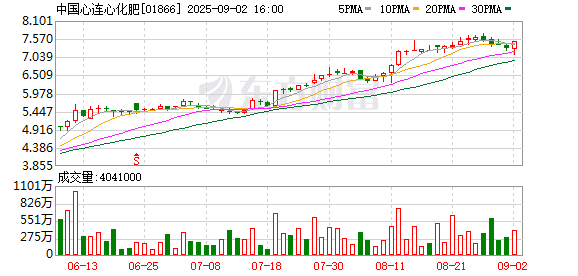
心连心集团的期货破局之路
Qi Huo Ri Bao Wang· 2025-09-02 16:03
Core Insights - The article discusses how Xinyan Group, a leading enterprise in the coal chemical industry, has evolved its approach to risk management by integrating futures trading into its operations, transitioning from a passive to an active optimization strategy [1][3][8] Group 1: Company Background and Initial Challenges - Xinyan Group, established in 2003 and listed in 2005, has a strong foothold in the coal chemical sector, with a management team experienced in the industry [1] - The company faced significant challenges due to market price volatility, with methanol prices dropping by 30% within six months and export profits for urea being eroded by international shipping costs [1] Group 2: Shift in Strategy and Learning Journey - In 2019, the team began exploring the futures market after a learning trip to southern China, where they observed successful integration of futures in trading practices [2] - The realization that futures could serve as essential risk management tools led to a shift in the company's mindset, prompting core team members to obtain futures trading qualifications [2][4] Group 3: Implementation and Operational Changes - By September 2024, Xinyan Group's subsidiary, Xinnuo Chemical, adopted a bold strategy of selling spot goods first and then repurchasing from the futures market, effectively locking in profits [4] - Xinnuo Chemical's operations have expanded significantly, with methanol trade volume reaching approximately 1.2 million tons in 2024, establishing a solid foundation for futures application [5] Group 4: Practical Applications and Benefits - The integration of futures pricing into the procurement, production, and sales processes has allowed Xinnuo Chemical to effectively manage costs and enhance customer loyalty through futures pricing options [5] - A collaborative approach with a methanol trader demonstrated the effectiveness of using futures to mitigate price discrepancies and reduce delivery costs [6] Group 5: Challenges and Future Directions - Despite notable successes, Xinyan Group still faces challenges related to understanding and decision-making barriers regarding futures trading [6][7] - The company plans to enhance training and expand its professional team to improve expertise in asset allocation and hedging strategies [7] Group 6: Industry Impact and Future Outlook - Xinyan Group's experience serves as a model for other enterprises in the industry, promoting a collaborative risk management ecosystem among regional chemical companies [8] - The integration of production, trade, and futures is seen as a transformative approach that not only stabilizes operations but also opens new avenues for value creation [8]

油料产业风险管理日报-20250902
Nan Hua Qi Huo· 2025-09-02 05:06
Report Summary 1. Report Industry Investment Rating No relevant content provided. 2. Core Viewpoints - Externally, the weather in the late growth stage of US soybeans has turned slightly dry, and the market's sensitivity to the weather is gradually increasing. In the short term, Sino-US talks have intensified the expectation of a rebound in US soybeans. Domestically, the domestic soybean complex has weakened due to Sino-US talks, and attention should be paid to whether the supply-demand gap in the far - month contracts can open up upward space. The domestic rapeseed complex also has the expectation of Sino - Canadian talks and may show weak sentiment in the short term [4]. - There is a strong bullish sentiment for far - month contracts due to the supply - demand gap. The Brazilian export premium supports the far - month contract prices from the cost side. The Sino - Canadian tariff expectation provides high support for the far - month contracts, but short - term sentiment may suppress the market due to the negotiation expectation. The timing of going long depends on subsequent changes in warehouse receipts [5]. - For soybean meal, the real - world pressure lies in the arrival of the inventory inflection point in September. After the trading logic shifts to far - month contracts, attention should be paid to the subsequent soybean supply. The supply of imported soybeans in China is at a seasonal high, the oil mill crush volume has slightly increased, and soybean meal continues to accumulate inventory seasonally. In terms of demand, the physical inventory has increased seasonally, and consumption remains at a rigid - demand level due to high livestock inventories. The expected soybean arrivals are 10 million tons in September, 9 million tons in October, and 8 million tons in November. Without purchasing US soybeans, a supply gap is expected after the first quarter of next year [6]. 3. Summary by Relevant Catalogs 3.1 Oilseed Price Range Forecast - The price range forecast for soybean meal in the month is 2800 - 3300, with a current 20 - day rolling volatility of 12.5% and a historical percentile of 19.8% over 3 years. The price range forecast for rapeseed meal is 2450 - 2750, with a current 20 - day rolling volatility of 25.4% and a historical percentile of 76.3% over 3 years [3]. 3.2 Oilseed Hedging Strategy | Behavior Orientation | Spot Exposure | Strategy Recommendation | Hedging Tool | Buying/Selling Direction | Hedging Ratio (%) | Suggested Entry Range | | --- | --- | --- | --- | --- | --- | --- | | Trader Inventory Management | Long | Short soybean meal futures to lock in profits and make up for production costs according to enterprise inventory to prevent inventory losses | M2601 | Sell | 25% | 3300 - 3400 | | Feed Mill Procurement Management | Short | Buy soybean meal futures at present to lock in procurement costs in advance on the market to prevent the increase of procurement costs due to rising meal prices | M2601 | Buy | 50% | 2850 - 3000 | | Oil Mill Inventory Management | Long | Short soybean meal futures to lock in profits and make up for production costs according to enterprise situation to prevent losses from imported inventory | M2601 | Sell | 50% | 3100 - 3200 | [3] 3.3 Oilseed Futures Prices | Futures Contract | Closing Price | Daily Change | Change Rate | | --- | --- | --- | --- | | Soybean Meal 01 | 3054 | 0 | 0% | | Soybean Meal 05 | 2814 | 0 | 0% | | Soybean Meal 09 | 3004 | - 18 | - 0.6% | | Rapeseed Meal 01 | 2513 | 0 | 0% | | Rapeseed Meal 05 | 2406 | 0 | 0% | | Rapeseed Meal 09 | 2540 | - 10 | - 0.39% | | CBOT Yellow Soybeans | 1053 | 0 | 0% | | Off - shore RMB | 7.1359 | 0.0324 | 0.46% | [7][9] 3.4 Soybean and Rapeseed Meal Spreads | Spread Type | Price | Daily Change | | --- | --- | --- | | M01 - 05 | 240 | 5 | | M05 - 09 | - 190 | 12 | | M09 - 01 | - 50 | - 17 | | RM01 - 05 | 107 | 18 | | RM05 - 09 | - 134 | - 8 | | RM09 - 01 | 27 | - 10 | | Soybean Meal Rizhao Spot | 3020 | 20 | | Soybean Meal Rizhao Basis | - 34 | 21 | | Rapeseed Meal Fujian Spot | 2516 | - 8 | | Rapeseed Meal Fujian Basis | 3 | - 8 | | Soybean and Rapeseed Meal Spot Spread | 504 | 28 | | Soybean and Rapeseed Meal Futures Spread | 541 | - 1 | [10] 3.5 Oilseed Import Costs and Crushing Profits | Import Item | Price (Yuan/ton) | Daily Change | Weekly Change | | --- | --- | --- | --- | | US Gulf Soybean Import Cost (23%) | 4531.2634 | - 29.8378 | - 0.2236 | | Brazilian Soybean Import Cost | 3992.81 | 19.18 | - 58.48 | | US Gulf (3%) - US Gulf (23%) Cost Difference | - 736.7908 | - 1.8538 | 68.0082 | | US Gulf Soybean Import Profit (23%) | - 589.4934 | - 29.8378 | 424.5052 | | Brazilian Soybean Import Profit | 154.0428 | 0 | 0.4671 | | Canadian Rapeseed Import Futures Profit | 779 | 55 | 166 | | Canadian Rapeseed Import Spot Profit | 870 | 55 | 185 | [11]
油料产业风险管理日报-20250829
Nan Hua Qi Huo· 2025-08-29 12:27
Report Summary 1. Core View - The weather in the late growth stage of US soybeans has turned slightly dry, and the market's sensitivity to the weather has gradually recovered. In the short term, Sino-US talks have increased the expectation of a rebound in US soybeans. The domestic soybean system has weakened due to Sino-US talks in the short term, and attention should be paid to whether the supply-demand gap in the far - month can open up the upward space. The domestic rapeseed system also has the expectation of Sino - Canadian talks and may show weak sentiment in the short term [4]. - There is a strong bullish sentiment in the far - month due to the supply - demand gap. The Brazilian export premium supports the far - month contract price from the cost side. The Sino - Canadian tariff expectation continues to give high support to the far - month contract, but due to the recent negotiation expectation, the short - term sentiment may further suppress the market. The timing of going long needs to pay attention to the subsequent changes in warehouse receipts [5]. - The real pressure on the soybean meal side focuses on the arrival of the inventory inflection point in September. After the trading logic of the market switches to the far - month, attention should be paid to the subsequent soybean supply. The supply of imported soybean raw materials in the country continues to be at a seasonal high, the oil mill's crushing volume has slightly increased, and soybean meal continues the seasonal inventory accumulation trend. In terms of arrivals, it is expected to be 10 million tons in September, 9 million tons in October, and 8 million tons in November. Without purchasing US soybeans, the subsequent soybean arrivals are expected to face a gap after the first quarter of next year [6]. 2. Price Forecast and Strategy Price Forecast - The monthly price range forecast for soybean meal is 2800 - 3300, with a current 20 - day rolling volatility of 10.2% and a 3 - year historical percentile of 7.8%. The monthly price range forecast for rapeseed meal is 2450 - 2750, with a current 20 - day rolling volatility of 12.7% and a 3 - year historical percentile of 7.2% [3]. Hedging Strategy - For traders with high protein inventory worried about the decline in meal prices, they can short soybean meal futures according to their inventory situation to lock in profits and make up for production costs, with a hedging ratio of 25% and an entry range of 3300 - 3400 [3]. - For feed mills with low procurement inventory, they can buy soybean meal futures at present to lock in procurement costs in advance, with a hedging ratio of 50% and an entry range of 2850 - 3000 [3]. - For oil mills worried about excessive imported soybeans and low soybean meal sales prices, they can short soybean meal futures according to their own situation to lock in profits and make up for production costs, with a hedging ratio of 50% and an entry range of 3100 - 3200 [3]. 3. Market Data Futures Prices - The closing price of soybean meal 01 is 3055, up 16 (0.53%); soybean meal 05 is 2820, up 6 (0.21%); soybean meal 09 is 3022, up 33 (1.1%); rapeseed meal 01 is 2513, up 30 (1.21%); rapeseed meal 05 is 2424, up 16 (0.66%); rapeseed meal 09 is 2550, up 8 (0.31%); CBOT yellow soybeans are 1048.25, unchanged; the offshore RMB is 7.1214, down 0.0333 (-0.47%) [7][9]. Spreads - The M01 - 05 spread is 225, up 9; RM01 - 05 is 75, up 20; M05 - 09 is - 175, down 12; RM05 - 09 is - 134, down 8; M09 - 01 is - 50, up 3; RM09 - 01 is 59, down 12; the soybean meal Rizhao spot price is 3000, unchanged, and the basis is - 39, up 6; the rapeseed meal Fujian spot price is 2534, down 21, and the basis is 51, down 3; the soybean - rapeseed meal spot spread is 466, up 21, and the futures spread is 556, up 12 [10]. Import Costs and Profits - The import cost of US Gulf soybeans (23%) is 4539.2712 yuan/ton, up 445.131 yuan/day and down 0.1941 yuan/week; the import cost of Brazilian soybeans is 3973.63 yuan/ton, down 2.21 yuan/day and down 66.71 yuan/week; the cost difference between US Gulf (3%) and US Gulf (23%) is - 738.0929 yuan/ton, up 61.6559 yuan/day and up 57.307 yuan/week; the import profit of US Gulf soybeans (23%) is - 604.8362 yuan/ton, up 445.131 yuan/day and up 359.0468 yuan/week; the import profit of Brazilian soybeans is 120.0737 yuan/ton, down 17.0232 yuan/day and down 0.0282 yuan/week; the import profit of Canadian rapeseed on the futures market is 724 yuan/ton, up 100 yuan/day and up 93 yuan/week; the import profit of Canadian rapeseed in the spot market is 815 yuan/ton, up 100 yuan/day and up 121 yuan/week [11].
从期货到场外期权套保:一家纸浆贸易商的风险管理进阶之路
Qi Huo Ri Bao Wang· 2025-08-29 01:47
Core Viewpoint - In 2024, the pulp industry in China is undergoing a deep adjustment and transformation amid complex internal and external environments, with significant price fluctuations impacting companies' operations [1] Group 1: Market Trends - In the first half of 2024, pulp prices showed a clear upward trend, leading to optimistic market expectations [1] - However, after high-level purchases of pulp by Company X, prices fell, resulting in inventory losses and increased storage costs [2] Group 2: Company Strategy - Company X, established in early 2020, began forming a pulp trading team by the end of 2021, achieving an annual trading volume of 340,000 tons and a trading value of 1.7 billion yuan [1] - The company engaged with Huazhong Futures to develop risk management strategies, leading to the establishment of a professional futures team and a strict hedging system [1][2] Group 3: Risk Management - Company X's hedging volume increased from approximately 18,000 tons in 2021 to 36,000 tons in 2023, demonstrating effective risk management through futures and options [2] - In response to market downturns, the company sold its existing inventory at market price to recover funds and mitigate further losses [3] Group 4: Derivative Tools Utilization - The company utilized options to hedge risks, converting inventory into option positions to avoid storage costs while generating premium income to offset previous losses [3][4] - Company X adopted a dual strategy of selling both put and call options to manage its positions effectively, thereby reducing holding costs and protecting against price fluctuations [4] Group 5: Future Plans - Looking ahead, Company X plans to expand its risk management toolbox by integrating futures, options, and basis trading, aiming to build a hedging alliance within the pulp industry [5] - The company seeks to enhance its risk management capabilities, transforming them into competitive advantages in the industry, and contributing to high-quality development in the pulp sector [5]