
经济多元化

Search documents
国泰海通|产业:阿联酋投资洞察:石油王国到转型典范
国泰海通证券研究· 2025-09-18 15:09
Core Insights - The report focuses on the macroeconomic environment, endowment characteristics, industrial structure of the UAE, and its comparative position in the Middle East, particularly in relation to China and the Gulf Cooperation Council (GCC) [1][2] Economic Overview - The UAE has a strategic geographical location and a stable political environment, contributing to its role as a major trade and logistics hub in the Middle East [1] - The UAE's economy is significantly supported by its oil and gas resources, ranking sixth and seventh globally in reserves, respectively. As of Q4 2024, the oil sector accounts for 20% of the UAE's GDP, making it the second-largest economy in the Gulf region and one of the highest per capita GDPs worldwide [2][3] Economic Diversification - Recent years have seen the UAE actively pursuing economic transformation, resulting in a notable increase in the share of non-oil sectors. The service industry has become a significant contributor to economic growth, with domestic demand and private consumption driving this expansion [3] - The UAE has established itself as a key commercial and financial logistics center in the Gulf, with a competitive business environment and rapid development in re-export trade and financial services [3] Demographics and Consumption - The UAE has a favorable demographic structure, with a high percentage of foreign immigrants (88%) and a well-educated workforce, which supports industrial transformation and domestic market expansion [4] - The UAE's consumption patterns reflect a coexistence of high income and inequality, but ongoing urbanization and economic diversification are expected to further expand the non-oil economy and stimulate consumer market growth [4] Trade Relations with China - The UAE is a crucial energy supplier to China and the largest export market in the Middle East. Recent years have seen strengthened trade cooperation, with a growing preference for importing machinery, automobiles, and home goods from China [4] - The energy sector remains a cornerstone of UAE-China relations, with a shift from traditional oil purchases to clean energy collaborations and an expansion into new economic and digital infrastructure projects [4]



科特迪瓦第一家由中企投资的瓷砖厂正式投运
Shang Wu Bu Wang Zhan· 2025-09-17 17:31
Core Points - The Keda Ceramic Factory, the first tile production facility in Côte d'Ivoire, has officially commenced operations, marking a significant step in the country's industrialization efforts [1] - The project is a joint venture between Keda and Senda, with an initial investment of $54 million, and the first production line has an annual capacity of 12 million square meters, creating 1,000 jobs, including 500 long-term positions [1] - A second production line is expected to be operational by 2026, with an additional investment of $35 million, increasing the factory's annual production capacity to 21 million square meters [1] Industry Impact - The establishment of the ceramic factory indicates Côte d'Ivoire's commitment to diversifying its economic development model and enhancing local processing capabilities [1] - The government aims to provide competitive products to local consumers and reduce imports to achieve trade balance [1] - The growing real estate sector in Côte d'Ivoire creates a demand for locally produced tiles, offering a viable alternative to imported ceramic products for local builders [1]

中东“刚需”直奔山东“强项”!阿联酋的酋长国来山东找机会了
Qi Lu Wan Bao· 2025-09-17 09:20
Group 1: Overview of Cooperation Opportunities - The Emirate of Ras Al Khaimah is seeking cooperation opportunities with Shandong, indicating a deepening economic collaboration between China and Middle Eastern countries [1][2] - The Ras Al Khaimah Free Trade Zone offers tax incentives for businesses engaged in transshipment trade, including exemption from import/export duties [3] Group 2: Economic and Infrastructure Development - Ras Al Khaimah is developing its Saqr Port, which will enhance its oil refining capabilities and increase liquid bulk handling capacity to 100 million tons annually [4] - The region is witnessing significant infrastructure projects, with Chinese companies actively participating in local developments, including the establishment of a large concrete pipe factory [4][6] Group 3: Investment and Market Opportunities - The UAE has a favorable business environment, ranking 7th globally for competitiveness, with zero personal income tax and low corporate tax rates [3] - The Middle East is becoming a key market for Chinese companies, with opportunities in various sectors including renewable energy, transportation, and smart city solutions [10][11] Group 4: Strategic Partnerships and Projects - Shandong Electric Power Construction Third Engineering Company is a leading player in the Middle East, being the largest EPC contractor for seawater desalination globally [8] - Saudi Arabia's Vision 2030 presents numerous investment opportunities in renewable energy, infrastructure, and mining, aligning with Shandong's strengths [13] Group 5: Challenges and Recommendations - Chinese EPC contractors face competition from international firms and must adapt to local standards and requirements to succeed in the Middle East [11][14] - Companies are advised to have a solid foundation and experience before entering the Middle Eastern market to mitigate risks [14]
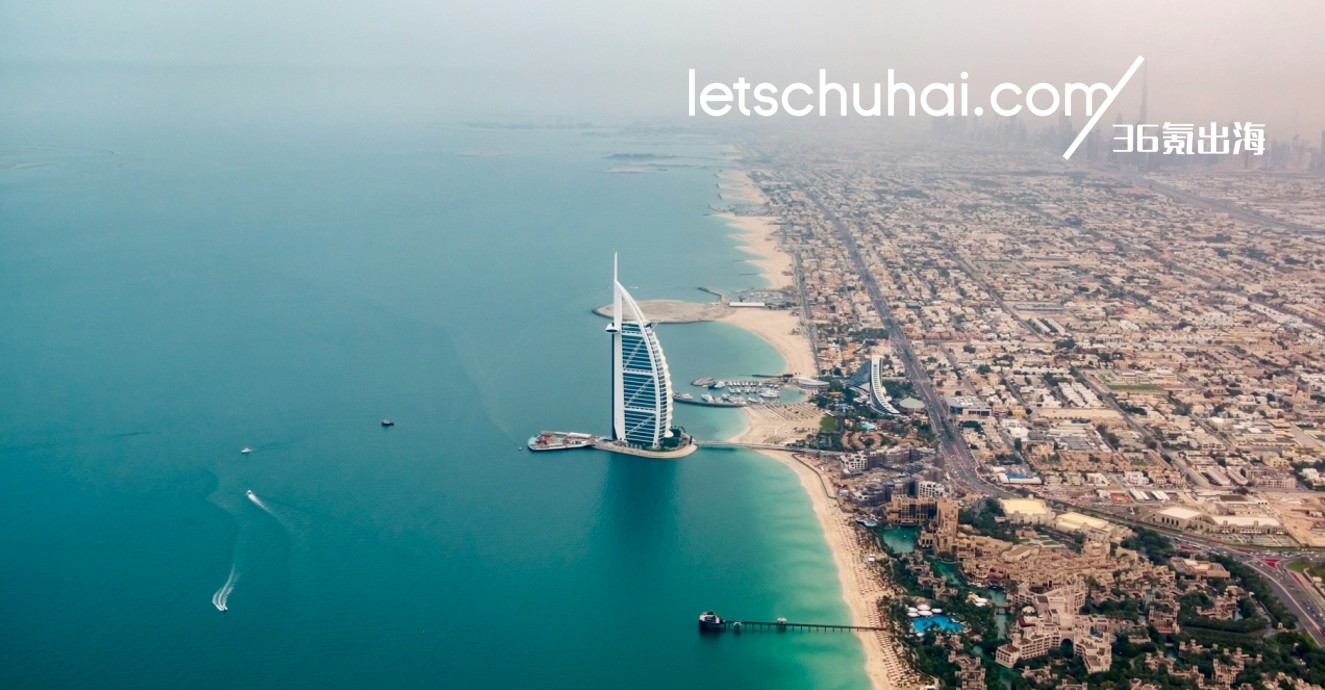
36氪出海·中东|2025年,哪些行业在迪拜自贸区增长突出?
3 6 Ke· 2025-09-16 03:35
Core Viewpoint - Dubai Free Trade Zone continues to be the preferred platform for global entrepreneurs and investors, showcasing significant growth potential across various sectors by 2025, particularly in fintech, e-commerce, logistics, consulting, and manufacturing [2]. Group 1: E-commerce - E-commerce is one of the fastest-growing industries in the Dubai Free Trade Zone, driven by increasing consumer demand in the Middle East and a surge in online shopping [3]. - Dubai's strategic geographical location connects Asia, Europe, and Africa, enabling businesses to efficiently reach global consumers [3]. - The Free Trade Zone contributes over 60% of the UAE's total goods export volume, establishing itself as a crucial gateway for online retailers expanding globally [3]. Group 2: Logistics - Dubai has established itself as a global logistics hub, with the Free Trade Zone playing a vital role in this expansion [4]. - The UAE's non-oil trade has surpassed $272 billion, with significant contributions from the Free Trade Zone [4]. - The logistics sector is expected to see further growth by 2026, driven by rising demand for last-mile delivery and advanced warehousing solutions [4]. Group 3: Fintech and Artificial Intelligence - Fintech and AI are at the forefront of redefining the future of business in Dubai, with the fastest growth anticipated by 2025 due to government-driven digitalization and AI transformation policies [5]. - The Free Trade Zone provides innovative infrastructure and regulatory frameworks to support the development of blockchain, smart contracts, and AI financial services [5]. - The industry is expected to experience explosive growth in the coming years as digital payments and smart automation become mainstream [5]. Group 4: Consulting Services - There is an exponential increase in demand for consulting services, including management consulting, IT advisory, and market strategy support [6]. - Consulting firms in the Dubai Free Trade Zone offer comprehensive support for local market entry, compliance guidance, and digital transformation [6]. - Tax incentives and streamlined registration processes attract more international consulting firms to the region, catering to the growing business ecosystem in the UAE [6]. Group 5: Manufacturing - The manufacturing sector within the Free Trade Zone is evolving from traditional heavy industries to high-tech, light industries, and precision manufacturing [7]. - The Dubai government actively promotes economic diversification, providing advanced prototyping and small-batch production facilities [7]. - Proximity to ports and airports enhances the attractiveness of manufacturing firms by facilitating efficient global product exports [8]. Group 6: Advantages of the Free Trade Zone - The Dubai Free Trade Zone offers tailored advantages for rapidly growing industries, enabling businesses to establish quickly, operate stably, and expand globally [9]. - The Free Trade Zone is adapting to global business trends by deploying virtual offices, cloud licensing management, and electronic signature services to support entrepreneurs [9]. - Initiatives to promote green manufacturing and the adoption of energy-efficient equipment are also being implemented to drive sustainable transformation [9]. Group 7: IFZA Support - IFZA supports various industries, including e-commerce, fintech, consulting, logistics, and manufacturing, by providing diverse license types, remote registration, and business expansion support [10]. - The Free Trade Zone is committed to helping businesses enter the Dubai market efficiently and cost-effectively, regardless of their industry [10].
跌至全球第19名!上半年,沙特经济增长3.6%,GDP为6270亿美元
Sou Hu Cai Jing· 2025-09-15 11:52
Core Insights - Saudi Arabia's economy is showing strong performance, with a 3.9% year-on-year GDP growth in Q2 2025, reflecting the effectiveness of its economic diversification strategy [1][6] - The non-oil sector is the primary driver of this growth, contributing 2.6 percentage points to the overall GDP increase, indicating a significant shift in the economic structure [6][12] Non-Oil Sector Performance - The non-oil activities grew by 4.6% year-on-year in Q2 2025, outpacing the overall economic growth rate [6][12] - The electricity, gas, and water supply sector saw a remarkable growth of 10.3%, the highest among all sectors, driven by industrialization and rising public demand [7] - The financial services sector also performed well, with a 7.0% increase, attributed to the deepening of financial markets and innovation [9] - Wholesale, retail, and hospitality sectors experienced a 6.6% growth, supported by increased disposable income and tourism development [9] - Manufacturing, excluding refining, grew by 4.5%, indicating a steady industrialization process [9] - The construction sector grew by 4.2%, fueled by infrastructure projects and rising housing demand [9] Trade and Economic Structure - Imports surged by 9.0%, reflecting strong domestic demand and active economic activities, while exports grew by 3.6%, indicating an improving export structure [12] - The overall economic performance in Q2 2025 demonstrates significant progress in economic diversification, with the non-oil sector becoming the main engine of growth [12][14] Future Outlook - The Saudi government is expected to continue implementing reforms under the "Vision 2030" initiative, focusing on improving the business environment and promoting private sector development [12][15] - Investments in infrastructure, human resources, and technological innovation are anticipated to lay a solid foundation for long-term economic growth [12][15]

善水资本与阿曼投资局推出专项能源转型基金 初始资本规模达2亿美元
Zhi Tong Cai Jing· 2025-09-12 02:25
Core Insights - The signing ceremony for Oman's first dedicated energy transition fund was held in Hong Kong, launched by Templewater Capital and the Oman Investment Authority's Oman Future Fund [1] - The fund has an initial capital size of $200 million, aimed at supporting Oman's Vision 2040 for energy transition and economic diversification, focusing on clean energy, energy storage, synthetic fuels, smart mobility, renewable energy, and green data centers [1] Fund Structure and Investment Strategy - The fund plans to complete 5 to 10 investments during its investment period, with the first projects expected to be finalized within the next 6 to 12 months, particularly in energy storage and smart mobility [1] - The operational model includes a five-year investment period followed by a five-year holding period, with several projects currently in due diligence and negotiation stages [1] Local Presence and Management - Templewater Capital has established an office in Muscat, Oman, with team members from its headquarters and is actively recruiting local talent [1] - The CEO of Templewater Capital stated that upon maturity of the investment projects, the fund will exit through either an IPO or sale, with the Oman Future Fund holding a 50% stake in the fund and the remaining 50% available for other investors, while Templewater Capital will primarily manage the fund [1]
花旗掌舵者看好美国经济韧性与并购市场动能 押注中东“强劲十年”
智通财经网· 2025-09-11 08:13
Group 1: Economic Outlook - Citigroup's CEO Jane Fraser indicates that the U.S. economy will continue to show resilience due to clearer monetary policy signals, with a low likelihood of recession [1] - Fraser expects a strong growth period of about ten years in the Middle East, driven by investment flows and emerging industries, as Gulf countries invest billions to diversify their economies away from oil dependence [1][4] Group 2: Market Activity - Following the announcement of tariffs by former President Trump, volatility in global financial markets has increased, benefiting financial institutions like Citigroup from heightened client trading activity [2] - Fraser notes that clients are becoming more active in capital markets and large transactions due to stronger clarity in tax, tariffs, and deregulation policies [1] Group 3: Monetary Policy - There is a divergence in views among financial leaders regarding the U.S. economy and Federal Reserve monetary policy, with some expressing caution about the impact of tariffs on the economy and inflation [2] - Barclays economists have adjusted their predictions, now expecting three rate cuts of 25 basis points each this year, reflecting a shift in focus from combating inflation to addressing potential economic slowdown [3] Group 4: Middle East Investment - The Middle East is becoming one of the busiest IPO markets globally, with Gulf region issuers raising over $5 billion through IPOs this year [5] - Citigroup is among the international banks expanding in the Gulf region, attracted by the area's growing business ties with India and China [4]

专访哈萨克斯坦Baiterek董事会副主席Timur Onzhanov:中国技术和经验有助于推动中亚经济多元化 看好能源等领域合作前景
Mei Ri Jing Ji Xin Wen· 2025-09-02 13:48
Core Insights - Baiterek National Managing Holding JSC has upgraded its positioning in the Chinese market to a "funds + industry" dual corridor, actively seeking to raise funds in the Chinese capital market while promoting high-value-added exports from Kazakhstan to China [1][4] - The organization aims to allocate over $16.2 billion by 2025 to support key economic sectors such as agriculture, manufacturing, infrastructure, and export trade [1] - In 2024, the total assets of Baiterek are projected to reach $30 billion, with a focus on creating new industrial growth poles and restructuring Kazakhstan's economic framework [1] Trade and Investment Relations - The trade relationship between China and Kazakhstan has been strengthening, with the total trade volume between China and Central Asian countries reaching a record $94.8 billion in 2024, and the trade volume between China and Kazakhstan at $43.8 billion, marking a 6.8% year-on-year increase [3] - Baiterek has been actively involved in financing large industrial projects, providing loans to SMEs, and supporting export enterprises, with nearly $9 billion invested in various projects in 2024 [3][5] Strategic Partnerships - Baiterek has established strong partnerships with Chinese financial institutions, including the China Development Bank and China Construction Bank, to secure additional funding for projects [5] - A memorandum of understanding was signed with China International Capital Corporation (CICC) to enhance cooperation in financial services, with plans for bond issuance in the Chinese capital market [6] Sectoral Focus - Baiterek is particularly focused on enhancing the processing and manufacturing sectors, aiming to facilitate the export of high-value-added products from Kazakhstan to China rather than just raw materials [5][9] - Key sectors for future collaboration include renewable energy projects, infrastructure modernization, and agricultural exports, particularly in oilseed crops and barley [9][10] Long-term Vision - Baiterek's investment strategy aligns with Kazakhstan's "2050 Strategic Vision," ensuring that all economic activities are consistent with national priorities and sectors [11] - The organization is committed to maintaining active operations in key industries and providing financing support as the main financing operator for the government [11]
联想集团在沙特设立区域总部
Xin Hua Wang· 2025-08-22 14:21
Core Insights - Lenovo Group has established a regional headquarters in Riyadh, Saudi Arabia, aimed at enhancing its operational capabilities and supporting broader regional strategies [1][3] - The strategic move is a deepening of collaboration with the Saudi Public Investment Fund (PIF) and its subsidiary, Eniat, to build an advanced manufacturing facility in the Saudi Integrated Logistics Zone (SILZ) [3][5] - The manufacturing facility is expected to begin trial production in 2026, with an annual output of millions of units, including laptops, desktops, mobile phones, and servers [3][5] Investment and Economic Impact - The collaboration is projected to create up to 15,000 direct jobs and 45,000 indirect jobs, contributing an estimated $10 billion to Saudi Arabia's non-oil GDP [3] - Lenovo's CEO emphasized the company's commitment to supporting Saudi Arabia's Vision 2030, which focuses on economic diversification, industrial development, technological innovation, and job growth [5] Strategic Goals - The establishment of the regional headquarters and manufacturing base is intended to strengthen Lenovo's global footprint and capitalize on growth opportunities in the Middle East and Africa [5] - The manufacturing facility will be powered by clean energy, aligning with global sustainability trends and enhancing Lenovo's operational efficiency in the region [5]

英高校研究:高端游客涌入,非洲本土却“零存在感”
Huan Qiu Shi Bao· 2025-08-20 22:45
Core Insights - A recent study from the University of Manchester indicates that the development of luxury tourism in some African countries, aimed at attracting high-spending tourists and boosting economic growth, has had limited positive effects and has even caused negative impacts [1][2] Group 1: Economic Impact - International institutions, including the World Bank, have long recommended that African countries focus their development strategies on luxury tourism, believing it could achieve "high value, low impact" growth that protects the environment and benefits local communities [1] - The study reveals that luxury resorts and all-inclusive hotels in Africa are often isolated from surrounding communities, leading to minimal local spending by tourists [1] - Employment opportunities for local residents in these luxury facilities are limited, with most profits flowing overseas, and many high-profit eco-resorts are foreign-owned [1] Group 2: Social Impact - The development of luxury tourism has not significantly improved the living standards of ordinary local residents in Africa [1] - In Mauritius, for example, many locals complain that high-quality beaches are increasingly monopolized by luxury resorts, resulting in a loss of access for the local population [1] Group 3: Environmental Concerns - The environmental issues associated with luxury tourism are significant, as many luxury tourists travel by private jets, contributing to a higher global carbon footprint [2] - The reliance on European and North American customers for this tourism model has led to criticisms of it being a form of "pseudo-carbon reduction" [2] - The study's lead researcher emphasizes the need for African countries to find a new balance between economic diversification and sustainable tourism development to ensure that the tourism industry genuinely benefits local societies [2]