
要素市场化配置

Search documents
第36周周报 | 长株潭入选改革试点,商品房市场呈平稳发展
Sou Hu Cai Jing· 2025-09-15 17:54
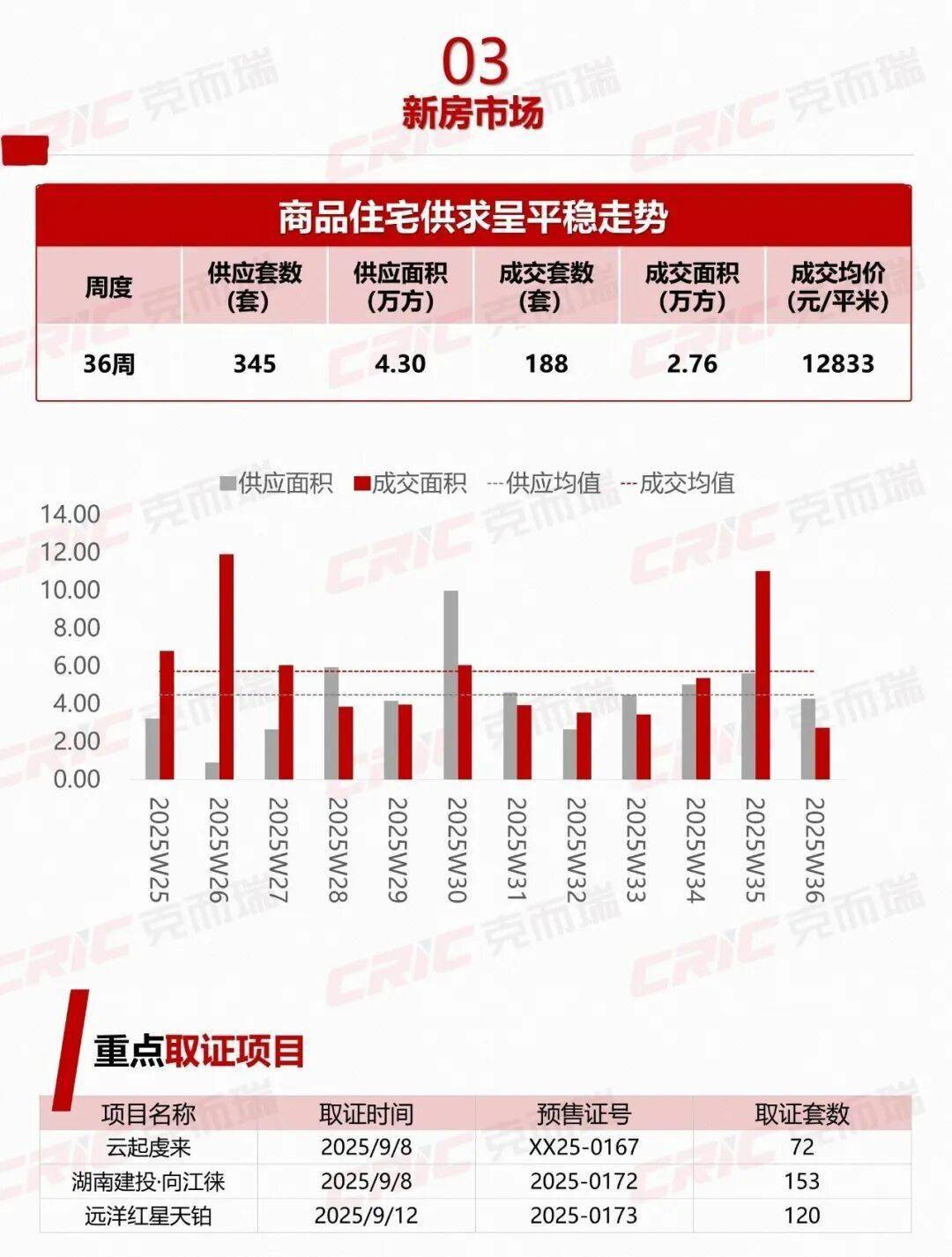
Group 1: Macro Policy - The State Council has approved the Longzhutan area as a pilot for comprehensive reform in market-oriented allocation of factors, which will inject strong momentum into Changsha's technological innovation and industrial upgrading, further consolidating its position as a regional development engine [3][5][4] - The pilot program will be implemented over the next two years and includes cities such as Beijing's sub-center, Suzhou, Hangzhou, and the Guangdong-Hong Kong-Macao Greater Bay Area [3] Group 2: Real Estate Regulation - Changsha is following the trend of new residential regulations by standardizing the promotion of "usable area" to avoid misleading consumers, responding to national regulatory trends [5][6] - The Changsha Real Estate Trading Industry Association has noted instances of exaggerated or false advertising regarding "usable area," which can mislead market expectations and lead to transaction disputes [5][6] - The tightening of regulations is seen as a push for the market to return to the essence of housing as a place to live, emphasizing comprehensive performance, quality, and experience over mere numerical games of "usable area" [7] Group 3: New Housing Market - This week, the commodity housing market in Changsha showed stable development with a supply of 345 units and a transaction of 188 units, with an average transaction price of 12,833 yuan per square meter [8][9] - The total supply for the week was 4.30 million square meters, and the total transaction area was 2.76 million square meters [2][9] Group 4: Marketing Dynamics - One project, Yide Mansion, launched 76 units with a size range of 223-288 square meters, achieving a sales rate of 68% by selling 52 units [12][14] - Various promotional activities are being conducted by different projects, including group purchases and open house events, to attract buyers [15]

证监会严肃查处东方通严重财务造假案件;住房租赁新规今日起正式施行|每周金融评论(2025.9.8-2025.9.14)
清华金融评论· 2025-09-15 10:04
Group 1: Regulatory Actions - The China Securities Regulatory Commission (CSRC) has taken serious action against Beijing Dongtong Technology Co., Ltd. (*ST Dongtong*) for severe financial fraud, initiating delisting procedures [7] - CSRC's investigation revealed that *ST Dongtong* inflated revenue and profits for four consecutive years, violating securities laws [7] - The penalties include a fine of 229 million yuan for the company, 44 million yuan for seven responsible individuals, and a 10-year market ban for the actual controller [7][8] Group 2: Housing Rental Regulations - The new Housing Rental Regulations, effective from September 15, aim to standardize the housing rental market and address various rental issues faced by tenants and landlords [8][9] - The regulations consist of 50 articles covering rental activities, behavior of rental companies, and enhanced supervision and accountability [9] - The regulations establish a clear framework for rental agreements, including deposit rules and responsibilities, to improve the rental experience and protect the rights of both landlords and tenants [9] Group 3: Economic Policies and Developments - The State Council is working on improving the overseas comprehensive service system to support enterprises in international cooperation and competition [10] - A new pilot program for market-oriented allocation of factors has been approved, focusing on traditional and new factors like data and computing power [12][13] - The pilot program aims to enhance the efficiency of factor allocation and promote high-quality economic development in selected regions [13] Group 4: Market Trends - Gold prices reached a historic high of over $3,700 per ounce, influenced by expectations of a Federal Reserve interest rate cut and escalating geopolitical tensions [14] - The Consumer Price Index (CPI) for August remained flat month-on-month but decreased by 0.4% year-on-year, with core CPI rising by 0.9% [15]

成都在列!国务院批复10个改革试点
Zhong Guo Fa Zhan Wang· 2025-09-15 07:23
Core Viewpoint - The State Council of China has approved a pilot implementation plan for the market-oriented allocation of factors in ten regions, including Chengdu, to enhance innovation, resource efficiency, and economic development [1]. Group 1: Innovation and Technology - The plan aims to stimulate innovation in technology by reforming the ownership of scientific achievements and promoting the establishment of specialized technology transfer institutions [4]. - It encourages the integration of technology and capital by supporting the development of a comprehensive service system connecting technology and capital markets [5]. Group 2: Land Resource Efficiency - The plan includes reforms in land management to optimize the approval processes for construction projects and to promote the efficient use of idle land [6][7]. - It proposes innovative supply methods for industrial land, including flexible leasing and mixed-use land supply [6]. Group 3: Human Resource Mobility - The plan seeks to reform the household registration system to facilitate the movement of human resources and improve the integration of migrant populations into urban areas [9]. - It emphasizes the importance of attracting innovative and entrepreneurial talent through a reformed talent evaluation system [10]. Group 4: Data Flow and Utilization - The initiative aims to establish a foundational support system for data markets, including the protection of data rights and promoting public data sharing [11][12]. - It encourages the development of a data-driven economy by facilitating the circulation and commercialization of social data [12]. Group 5: Financial Services for the Real Economy - The plan aims to enhance financial services to support the real economy, including expanding the application of digital currency and improving the investment environment for venture capital [13]. Group 6: Environmental Resource Market Development - The initiative promotes the establishment of a market-oriented trading mechanism for resources, including green energy and ecological products [14][15]. - It encourages the development of green finance products and the integration of environmental resources into asset trading [15]. Group 7: Collaborative Resource Allocation - The plan focuses on improving the collaborative allocation of factors across regions, particularly in the Chengdu-Chongqing economic circle, to enhance resource efficiency and market integration [17].
政策动态 | 十省市开展要素市场化配置综合改革试点,赋予地方土地市场更大自主管理权(9.1-9.14)
克而瑞地产研究· 2025-09-15 03:24
Core Viewpoint - The article discusses the ongoing reforms in the market-oriented allocation of factors, particularly focusing on land use efficiency and the promotion of REITs projects, with various local governments implementing supportive policies to stimulate housing consumption and optimize land management [1][3][6]. Group 1: Central Government Initiatives - The State Council approved a pilot program for market-oriented allocation of factors in ten regions, including major urban areas, to enhance land use efficiency and promote reforms in land management [3][4]. - The Ministry of Development issued a notice to accelerate the application of mature asset REITs projects, with a focus on affordable rental housing as a key project type [1][6]. Group 2: Local Government Policies - Six provinces and cities released market stabilization policies, with Henan Province introducing twelve new measures to support housing consumption, including increased subsidies and adjustments to housing loan limits [6][9]. - Local governments are encouraged to revitalize idle land through market-oriented methods, with ten provinces and cities leading the pilot implementation [2][4]. Group 3: Regional Characteristics and Innovations - Each pilot region is exploring unique measures based on their geographical and economic characteristics, such as land transfer methods linked to industrial contributions and mixed-use land supply [4][5]. - Notable initiatives include the "limited land price competition" method in Hangzhou, which emphasizes post-sale land productivity rather than just bidding prices [4][5]. Group 4: Policy Trends and Market Response - The frequency of policy releases aimed at stabilizing the market has significantly decreased, reaching a new low since the second quarter, indicating a potential shift in strategy [8][9]. - The article highlights that the most common policies released recently are related to subsidies and tax incentives, with a notable decline in public fund optimization policies [11][14].

城记 | 一周聚焦:要素串联破壁垒 多维协同激活长三角发展新动能
Xin Hua Cai Jing· 2025-09-13 08:26
Core Insights - The efficiency of factor circulation directly determines the quality and speed of regional economic development, acting as a "connection line" that links cities and industries, allowing resources to escape "island status" and form a complementary development synergy [1] Group 1: Factor Circulation - Factor circulation encompasses three core categories: basic guarantee factors (e.g., transportation and logistics), innovation-driven factors (e.g., technology, talent, data), and institutional support factors (e.g., market-oriented allocation reforms) [1] - The aim is to enhance circulation efficiency from "passive adaptation" to "active improvement" by breaking down administrative barriers and unifying rules and standards [1] Group 2: Regional Development Initiatives - The Yangtze River Delta is implementing various measures to promote efficient circulation of various factors, continuously releasing the deep potential of regional development [2] - The opening of the Changtai Yangtze River Bridge significantly improves traffic efficiency between Changzhou and Taizhou, reducing travel time from 1 hour and 20 minutes to approximately 20 minutes, thus facilitating economic exchanges [3] Group 3: Market-oriented Reforms - The State Council approved a pilot implementation plan for comprehensive reforms in factor market-oriented allocation, starting from September 8 for two years, involving ten pilot regions that collectively account for over a quarter of the national economic output by 2024 [4] - The selected pilot regions include key urban clusters and metropolitan areas, emphasizing a combination of national needs and local strengths [4] Group 4: Regional Synergy in the Yangtze River Delta - The Yangtze River Delta includes three pilot regions with distinct characteristics, covering key sectors such as manufacturing in Jiangsu, digital economy in Zhejiang, and emerging industries in the Hefei metropolitan area [5] - The complementary development pattern among these regions is expected to enhance cross-regional integration of industrial chains through collaborative pilot policies [5] Group 5: Educational and Technological Collaboration - The construction of the Nanjing University of Posts and Telecommunications Wuxi campus aims to fill the higher education resource gap in Wuxi and promote deep collaboration in education, technology, and talent [6][7] - The collaboration extends beyond campus construction, establishing a technology transfer center and focusing on emerging fields such as integrated circuits and artificial intelligence [7]
美滞胀迫近,黄金起飞;罗永浩炮轰西贝预制菜丨一周热点回顾
Di Yi Cai Jing· 2025-09-13 02:53
Group 1: CPI and PPI Trends - The core CPI has increased for four consecutive months, with a year-on-year growth of 0.9% in August, while the overall CPI decreased by 0.4% year-on-year [1] - The PPI has shown a narrowing decline, with a year-on-year decrease of 2.9%, which is a 0.7 percentage point improvement from July [1] - Experts suggest that the core CPI growth may continue to rise due to supportive policies and low base effects, contributing to overall CPI stability [1] Group 2: Trade and Export Performance - In the first eight months of the year, China's total goods import and export value reached 29.57 trillion yuan, a year-on-year increase of 3.5% [2] - Exports grew by 6.9%, while imports fell by 1.2%, with the decline in imports narrowing by 0.4 percentage points compared to the previous seven months [2] - The private sector's exports of high-end equipment and biomedicine increased significantly, indicating a robust performance in these sectors [2] Group 3: Monetary Policy and Financing - The M1-M2 gap has narrowed to -2.8%, the lowest since June 2021, indicating a shift towards more liquid deposits [3] - The total social financing stock reached 433.66 trillion yuan, with a year-on-year growth of 8.8% [3] - The structure of loans is improving, with significant growth in small and micro loans, as well as medium to long-term loans in the manufacturing sector [3] Group 4: Automotive Industry Regulation - Six departments have initiated a three-month campaign to address online chaos in the automotive industry, focusing on illegal profit-making and false advertising [6] - The campaign aims to tackle issues such as malicious defamation and misleading promotions that affect consumer trust [6] - This initiative is expected to shift competition in the automotive sector from marketing battles to product quality [6] Group 5: Market Reforms and Pilot Programs - The State Council has approved ten regions to conduct pilot programs for market-oriented allocation of factors, including traditional and new types of resources [7] - These pilots aim to enhance the efficiency of resource allocation and support economic development in key urban areas [7] - The focus on new industries such as artificial intelligence and renewable energy reflects a strategic shift towards modern economic drivers [7] Group 6: Stock Market Performance - The ChiNext Index has surged to 3053.75 points, marking a 5.15% increase and reaching the 3000-point milestone for the first time in three years [8] - The index's performance is attributed to strong gains in technology stocks and supportive market conditions [8] - Key stocks in the index, particularly in emerging industries, have shown significant growth potential, although caution is advised regarding potential corrections [9] Group 7: Consumer Rights and Food Industry Debate - The public dispute between Luo Yonghao and Xibei over pre-prepared dishes has highlighted consumer rights and the need for transparency in food labeling [10][12] - Xibei has responded by providing detailed information about their food preparation processes, aiming to restore consumer trust [10][12] - The debate underscores the broader issue of consumer awareness regarding food quality and safety in the pre-prepared food sector [12] Group 8: Competitive Landscape in Local Services - Alibaba's launch of the "Gaode Street Ranking" aims to compete with Meituan's "Dazhong Dianping," focusing on real user behavior rather than subjective ratings [13] - This move is expected to intensify competition in the local service market, with both companies offering substantial consumer incentives [13][14] - The competition reflects a shift towards more data-driven approaches in evaluating service quality and consumer preferences [13][14]


要素市场化配置将让湾区经济更有活力
Nan Fang Du Shi Bao· 2025-09-12 15:17
Core Viewpoint - The State Council has approved a two-year pilot program for market-oriented allocation of factors in ten key urban areas, including the Guangdong-Hong Kong-Macao Greater Bay Area, aimed at enhancing economic vitality and efficiency in resource allocation [1][2]. Group 1: Market-Oriented Allocation of Factors - Market-oriented allocation of factors means that the prices and ownership of these factors are determined by the market [2]. - The reform aims to eliminate institutional barriers and address key issues in various factors, such as technology, land, and data [2][3]. Group 2: Objectives and Challenges - The core objective of the reform is to establish a unified, open, and competitively ordered factor market system [3]. - The Greater Bay Area faces complex challenges due to its unique status as a "one country, two systems, three tariff zones" region, necessitating improved efficiency in factor allocation [3]. Group 3: Focus on New Factors - The pilot program emphasizes the efficient allocation of new factors, particularly data, which is crucial in the digital economy [4]. - The proposal includes exploring mechanisms for data property rights, circulation, and cross-border transmission to unlock data value and position the Greater Bay Area as an international data hub [4]. Group 4: Integration of Government Services - Promoting integrated government services is a key direction of the reform, requiring rule alignment, standard recognition, and regulatory collaboration [5]. - The pilot program aims to facilitate the flow of human resources, technology transfer, and capital allocation across the nine cities, enhancing cooperation in areas like household registration and social security [5]. Group 5: Broader Implications - The reform is expected to strengthen the flow and cooperation of factors between the nine cities in the Greater Bay Area and Hong Kong-Macao, creating a model for factor allocation that accommodates different systems and economic frameworks [5]. - The initiation of this pilot program represents a significant opportunity for regional development and a strong declaration of China's commitment to deepening reforms and expanding openness [5].
国务院批复新政:支持城乡非就业居民持居住证参加广东医保
Nan Fang Du Shi Bao· 2025-09-12 14:32
Core Points - The State Council approved the "Comprehensive Reform Pilot Implementation Plan for Market-oriented Allocation of Factors" on September 11, selecting 10 regions for pilot reforms, including Beijing's urban sub-center and cities in the Guangdong-Hong Kong-Macao Greater Bay Area [1] - The plan aims to address the underdevelopment of factor markets compared to goods and services markets, which hinders the establishment of a unified national market [1] - The plan emphasizes the need for reform of the household registration system, particularly in the nine cities of the Guangdong-Hong Kong-Macao Greater Bay Area, to facilitate labor mobility and improve public services [2][3] Factor Market Reforms - The pilot regions will focus on traditional factors like labor, capital, and land, as well as new factors such as data, computing power, airspace, and frequency spectrum [1] - The plan aims to break down administrative and regional barriers to ensure smooth flow of factors, enhancing the efficiency of resource allocation [2] - Specific measures include implementing a residence permit system and expanding access to public services for non-employed residents [2][3] Data and New Factor Markets - The Guangdong-Hong Kong-Macao plan outlines initiatives to enhance data sharing, develop standardized data usage scenarios, and strengthen data security [5][6] - The plan highlights the importance of data as a new factor, emphasizing the need for regulations on data circulation and privacy protection [5] - The plan also includes the establishment of a comprehensive unmanned system across land, sea, and air, focusing on innovative configurations of production factors [6] Economic Growth and Innovation - The Guangdong province is projected to see significant growth in sectors such as new energy vehicles, industrial robots, and smartphones, with substantial market shares in the national context [5] - The plan encourages the introduction of high-level talent and innovative teams, with flexible policies regarding employment and compensation [3] - The focus on new industries such as artificial intelligence and modern agriculture aims to attract advanced production factors and foster new economic growth [6]
交通运输部:支持全国部分地区实施要素市场化配置综合改革试点工作 加快建设统一开放的交通运输市场
Zheng Quan Shi Bao Wang· 2025-09-12 13:37
Core Viewpoint - The Ministry of Transport emphasizes the implementation of the State Council's decisions to deepen market-oriented reforms and promote the construction of a unified national market [1] Group 1 - The meeting highlighted the importance of supporting pilot programs for comprehensive market-oriented allocation of factors in certain regions [1] - There is a focus on accelerating the establishment of a unified and open transportation market [1]
宏观经济周报:警惕预期兑现和风险共振-20250912
BOHAI SECURITIES· 2025-09-12 12:02
Group 1: US Economic Indicators - August non-farm employment data was weaker than expected, with previous months' employment figures revised down[1] - The unemployment rate remains stable due to a significant increase in household survey employment, but the job market shows signs of prolonged weakness[1] - Inflation indicators show a mild increase in overall CPI, but the super core CPI excluding housing and used cars has slowed down, raising concerns[1] Group 2: European Economic Outlook - The European Central Bank (ECB) maintained its current policy stance, showing confidence in future inflation and economic growth in the Eurozone[1] - Market expectations for another rate cut before mid-2026 have dropped below 50%[1] Group 3: Domestic Economic Conditions - August export growth declined year-on-year due to a high base effect from last year, with exports to non-US countries outperforming those to the US[4] - PPI year-on-year growth has narrowed due to low base effects and "anti-involution" policies, while CPI growth is significantly impacted by food and energy prices[4] - The Ministry of Finance plans to implement more proactive fiscal policies to strengthen domestic circulation and enhance fiscal-financial coordination[4] Group 4: Market Trends and Prices - Real estate transactions remain sluggish, while wholesale prices of agricultural products have rebounded[4] - Steel prices are stable, cement prices have slightly increased, and coal prices have decreased, while non-ferrous metal prices have risen[4]