风险资产

Search documents
TACO交易?亚洲市场开盘,风险资产全新走高:美股反弹,数字货币大涨
Hua Er Jie Jian Wen· 2025-10-13 00:26
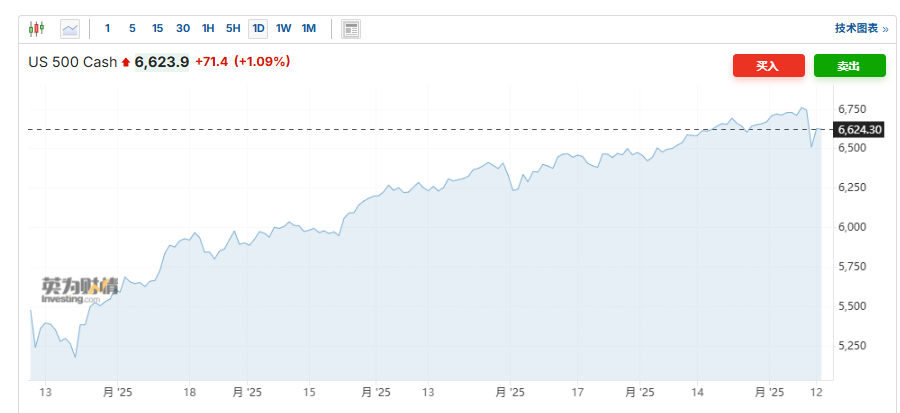
Market Overview - Risk assets across Asia rebounded, reversing the pessimistic sentiment from the previous week, with investors returning to stocks, oil, and digital currencies, while gold continued its upward trend [1] - U.S. stock index futures rose, with the S&P 500 futures climbing nearly 1% [1][3] - Oil prices increased by over 1%, with WTI crude oil rising 0.9% to $59 per barrel [4] - Spot gold rose 0.7% to $4045 per ounce [1] - The cryptocurrency market saw a strong rebound, with Bitcoin surpassing $115,000 [1][8] Economic Relations - The Chinese Ministry of Commerce reiterated its stance on the trade war, stating that China does not wish to engage in conflict but is not afraid to do so [2] - The Ministry urged the U.S. to correct its erroneous practices and maintain stable and healthy economic relations through dialogue [2] - Analysts from Minsheng Securities believe that the fundamental tone of U.S.-China relations remains unchanged and will not become a turning point for the market [2] Cryptocurrency Market - The cryptocurrency market experienced a significant rebound after a historic large-scale liquidation, with Bitcoin rising 4.2% to around $115,180 and Ethereum increasing by 10.8% to $4,143 [8] - Other major cryptocurrencies also saw gains, with Solana up 6.3% and Dogecoin soaring 7.6% [10] - The total market capitalization of cryptocurrencies rebounded to $3.85 trillion, up nearly 10% from two days prior [10]

风险资产恐慌 加密货币遭遇近六个月最大规模平仓潮
Ge Long Hui· 2025-10-11 05:34
Core Insights - The cryptocurrency market experienced a significant downturn, with approximately $10 billion in positions liquidated in the past 24 hours, marking the largest liquidation event since early April [1] - Smaller and less liquid tokens were hit the hardest, with XRP, DOGE, and Cardano's ADA dropping approximately 19%, 27%, and 25% respectively [1] - A sudden event in the trading sector has led to increased market uncertainty, resulting in a decline in risk assets, as noted by the co-head of Falcon X's derivatives trading desk [1]
深夜!全线暴跌 发生了什么?
Zheng Quan Shi Bao Wang· 2025-10-10 23:46
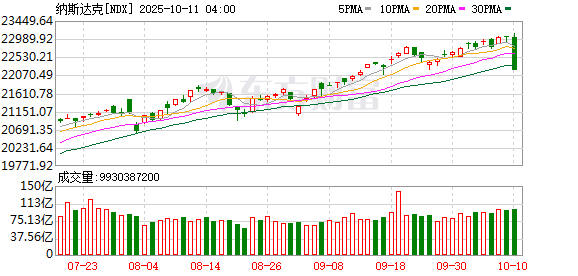
Market Overview - The U.S. stock market experienced a significant decline, with major indices falling sharply, including the Nasdaq dropping over 3%, marking its largest single-day decline since April [2][3] - The Dow Jones Industrial Average fell by 1.9%, while the S&P 500 index decreased by 2.71% [3] - Major tech stocks also suffered, with TSMC ADR down over 6%, and other companies like Tesla, Nvidia, and Amazon dropping more than 4% [3] Global Impact - Global financial markets faced widespread sell-offs, with European indices also declining, such as the Euro Stoxx 50 down 1.75% [3] - The Nasdaq Golden Dragon China Index fell over 6%, impacting Chinese stocks significantly, with Futu Holdings down over 11% and NIO down over 10% [3] Commodities and Cryptocurrencies - Oil prices plummeted, with WTI crude oil falling over 4.24% and Brent crude down 4.62% [4] - Cryptocurrencies faced severe losses, with Bitcoin dropping over 13% and Ethereum falling more than 17% [4] Economic Indicators - The University of Michigan's consumer sentiment index for October was reported at 55, the lowest since May, indicating stagnant consumer confidence [8] - Consumers expect inflation to rise at an annual rate of 4.6% next year, with over 63% anticipating an increase in unemployment [8] Government Actions - The U.S. government shutdown has escalated, with the Trump administration implementing large-scale permanent layoffs of federal employees, affecting thousands across multiple departments [6][7] - This action marks a departure from previous practices during government shutdowns, intensifying the political standoff between the Trump administration and Democrats [7]
深夜!全线暴跌,发生了什么?
券商中国· 2025-10-10 23:27
Core Viewpoint - The U.S. stock market experienced a significant downturn, referred to as "Black Friday," with major indices suffering substantial losses due to rising uncertainties and macroeconomic concerns [2][4][10]. Market Performance - On October 10, U.S. stock indices fell sharply, with the Dow Jones dropping by 1.9%, the Nasdaq plunging by 3.56%, and the S&P 500 declining by 2.71% [4]. - Major tech stocks also faced heavy losses, with TSMC ADR down over 6%, Broadcom and Tesla down over 5%, and Nvidia and Amazon down over 4% [6]. - Chinese stocks listed in the U.S. were affected as well, with the Nasdaq Golden Dragon China Index falling over 6% [6]. Global Market Impact - European markets also saw declines, with the Euro Stoxx 50 index down 1.75% and major indices in Germany, France, and Italy dropping over 1% [7]. - Commodities like WTI crude oil fell over 4%, nearing yearly lows, while Bitcoin experienced a drop of over 13% [7]. Investor Behavior - The uncertainty in the market led to a surge in demand for protective derivatives, with investors flocking to safe-haven assets like gold and U.S. Treasury bonds [8]. - Gold prices rose over 1%, surpassing $4000 per ounce, while the yield on the U.S. 10-year Treasury note fell to 4.034% [8]. Macroeconomic Indicators - The preliminary consumer confidence index from the University of Michigan for October was reported at 55, the lowest since May, indicating stagnant consumer sentiment [12]. - Approximately 63% of respondents expect unemployment to rise next year, and over two-thirds anticipate inflation to exceed income growth [12]. Government Actions - The U.S. government shutdown has escalated, with the Trump administration initiating large-scale permanent layoffs of federal employees, marking a departure from previous practices during shutdowns [10][11].



每日机构分析:10月9日
Xin Hua Cai Jing· 2025-10-09 13:33
Group 1 - Nomura Securities reports that foreign capital is returning, with the yen approaching the 150 mark, indicating potential weakness in the currency [1] - Goldman Sachs highlights that expectations of Federal Reserve rate cuts and improved corporate earnings are supporting risk assets [1][3] - Oxford Economics states that Spain's economic growth is likely to continue into next year, driven by a strong tourism sector, robust job market, and effective use of EU investment funds [1] Group 2 - CBA analysts note that the Federal Reserve's September meeting minutes align with market expectations for two rate cuts by year-end, despite potential delays in key economic data due to government shutdown [2] - ING analysts observe low volatility in the Eurozone government bond market, with attractive yield spreads between French, Italian, and German bonds [2] - Morgan Stanley predicts that South Korea's exports will maintain a positive trend until the end of 2025, supported by demand for AI semiconductors and non-tech products [2] Group 3 - Goldman Sachs traders indicate that global stock indices remain above key moving averages, with ample liquidity supporting risk assets and a focus on earnings season and FOMC meetings [3] - Morgan Stanley reports that a tenfold increase in computing power could lead to a non-linear leap in AI model capabilities by 2026, potentially reshaping asset valuations in global supply chains [3] - Nomura strategists mention that a weak yen is driving the Japanese stock market upward, with foreign capital inflow and a projected P/E ratio reaching a high of 17 times since Abe's administration [3]
全球宏观环境对风险资产具有决定性支撑作用;高盛顶级宏观交易员_ZeroHedge
Goldman Sachs· 2025-09-26 02:28
Investment Rating - The report indicates a positive outlook for risk assets, supported by a favorable global macro environment [1][3]. Core Insights - The global macro environment plays a decisive role in supporting risk assets, with 76% of OECD leading indicators currently in expansion or recovery [1]. - Strong financial health of U.S. consumers and businesses underpins resilient consumption, particularly in non-essential goods and speculative investments [4]. - Loose financial conditions and low real interest rates create a favorable environment for risk assets, with U.S. 10-year Treasury yields gradually rising to 5% [7]. - Institutional net leverage remains at historical lows, providing incremental support despite high valuations of major stocks [8]. - The current credit creation cycle is in its early stages, fostering a conducive environment for risk-taking, especially in long-term capital investments [12]. - The AI theme reflects both genuine productive potential and speculative enthusiasm, with significant capital inflows into the sector [13]. - The report emphasizes a market driven by liquidity, strong balance sheets, and supportive fiscal, credit, and monetary policies [16]. Summary by Sections 1. Economic Growth and Balance Sheets - U.S. consumers and businesses are the engines of global economic growth, with consumer debt ratios at multi-decade lows and rising corporate profit margins [4][5]. 2. Financial Conditions and Real Interest Rates - The combination of loose financial conditions and low real interest rates is beneficial for risk assets, with manageable impacts from bond market fluctuations [7]. 3. Market Structure - Positioning, Liquidity, Valuation - Despite high valuations, liquidity-driven environments mean that valuation is not a constraining factor, with institutional net leverage at 73.2% [8][9]. 4. Mispricing and Asset Dislocation - The report highlights significant market dislocations, with the U.S. monetary situation influencing global financial conditions [10]. 5. Credit Cycle and Policy Impulses - The current credit creation cycle is early-stage, providing fertile ground for risk-taking, particularly in high-return capital investments [12]. 6. Technology and Speculative Dynamics - The AI sector is characterized by both real productivity potential and speculative fervor, with notable investments like Nvidia's collaboration with OpenAI [13]. 7. Strategic Positioning - The market is driven by arbitrage opportunities, with liquidity and strong balance sheets taking precedence over valuation considerations [16][17].

罕见!黄金今年36次、美股28次,同创新高,什么信号?如何交易?
Sou Hu Cai Jing· 2025-09-23 11:54
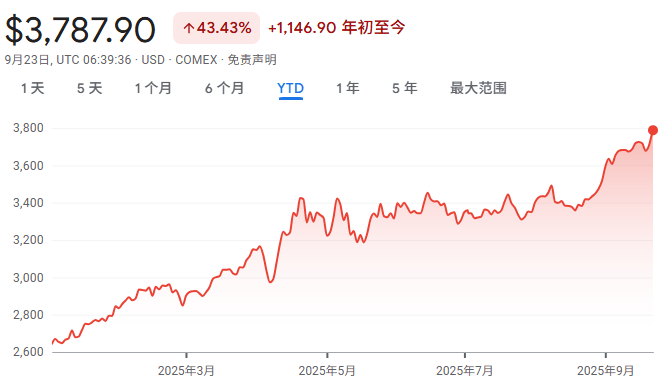
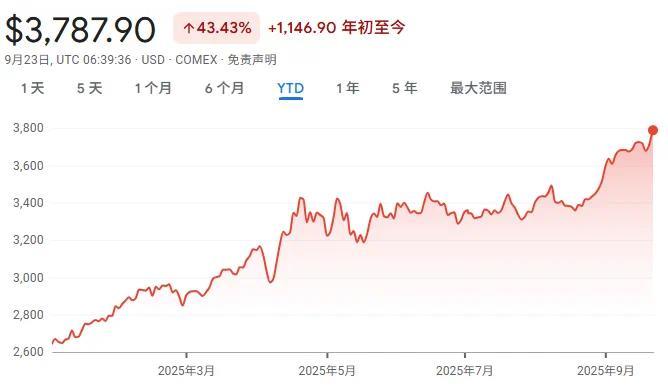
Core Viewpoint - The Federal Reserve is initiating interest rate cuts, leading to a surge in global asset prices, with significant movements in both risk and safe-haven assets [1][5]. Group 1: Market Performance - Nvidia's substantial investment in OpenAI has reignited the AI boom, pushing the three major U.S. stock indices to new highs, with the S&P 500 index hitting its 28th record high this year [2]. - COMEX gold prices closed at $3,775.10, marking the 36th record high of the year, with a year-to-date increase of approximately 43% [2]. Group 2: Market Dynamics - The simultaneous rise of risk and safe-haven assets has led to skepticism among investors regarding whether the market has reached "perfect pricing" [5]. - Bank of America strategist Michael Hartnett suggests that the combination of tariff cuts, tax reductions, and interest rate cuts creates a "run-it-hot" policy environment, providing implicit guarantees for the economy and stock market [5]. - Deutsche Bank's report indicates that the market has not yet reached a "perfect pricing" state, suggesting that concerns about future risks may actually provide room for potential market increases [5][6]. Group 3: Investment Strategies - Hartnett proposes a five-point trading strategy to navigate the current market conditions, including investing directly in bubble assets, constructing a "barbell" portfolio, shorting corporate bonds of bubble companies, shorting U.S. bonds, and trading volatility [10][11]. - The current market sentiment is characterized by a belief that "money is depreciating, and holding it is less favorable than consumption or investment," driving funds into risk assets [6]. Group 4: Gold Market Analysis - The rise in gold prices is attributed to geopolitical uncertainties, inflation concerns, and expectations of interest rate cuts, creating a "perfect storm" for gold [13][14]. - Deutsche Bank notes that the high gold prices reflect market fear rather than extreme optimism, indicating a typical sign of investors seeking safe-haven assets [13]. - Despite concerns about a potential bubble, key market indicators have not shown signs of irrational exuberance, suggesting that the current gold market may be in a sustained bull phase rather than a bubble [14][15].

金价创出今年第36个新高,什么信号?如何交易?
Hua Er Jie Jian Wen· 2025-09-23 11:50
Core Viewpoint - The Federal Reserve is initiating interest rate cuts, leading to a surge in global asset prices, particularly in the U.S. stock market, with the S&P 500 index hitting new highs multiple times this year [1][4]. Group 1: Market Dynamics - Nvidia's significant investment in OpenAI has reignited interest in AI, contributing to the rise of major U.S. stock indices [1]. - The COMEX gold price closed at $3,775.10, marking the 36th record high of the year, with a year-to-date increase of approximately 43% [1]. - Risk assets and safe-haven assets are both reaching historical highs, raising questions about whether the market has perfectly priced in all favorable conditions [4]. Group 2: Economic Indicators - Analysts from Bank of America and Deutsche Bank suggest that the market is not yet in a "perfect pricing" state, indicating potential for further gains despite visible bubble signs [4][6]. - The current economic environment, characterized by tax cuts, tariff reductions, and interest rate cuts, is seen as a "run-it-hot" policy that supports economic and stock market growth [4]. Group 3: Investment Strategies - Historical data indicates that the current market rally may still have room for growth, with past bubbles showing an average increase of 244% from low to peak [8][10]. - A proposed five-point trading strategy includes investing in bubble assets, creating a "barbell" portfolio with both bubble and undervalued stocks, shorting bubble company bonds, and taking positions against U.S. bonds [11][12]. Group 4: Gold Market Analysis - The rise in gold prices is attributed to geopolitical uncertainties, inflation concerns, and expectations of interest rate cuts, creating a "perfect storm" for gold [13]. - Despite concerns about a potential bubble, key market indicators do not yet show signs of irrational exuberance, suggesting that gold is in a sustained bull market rather than a bubble [15][18].
“美国经济增长+美联储降息”=风险资产“涨涨涨”?
Hua Er Jie Jian Wen· 2025-09-23 07:09
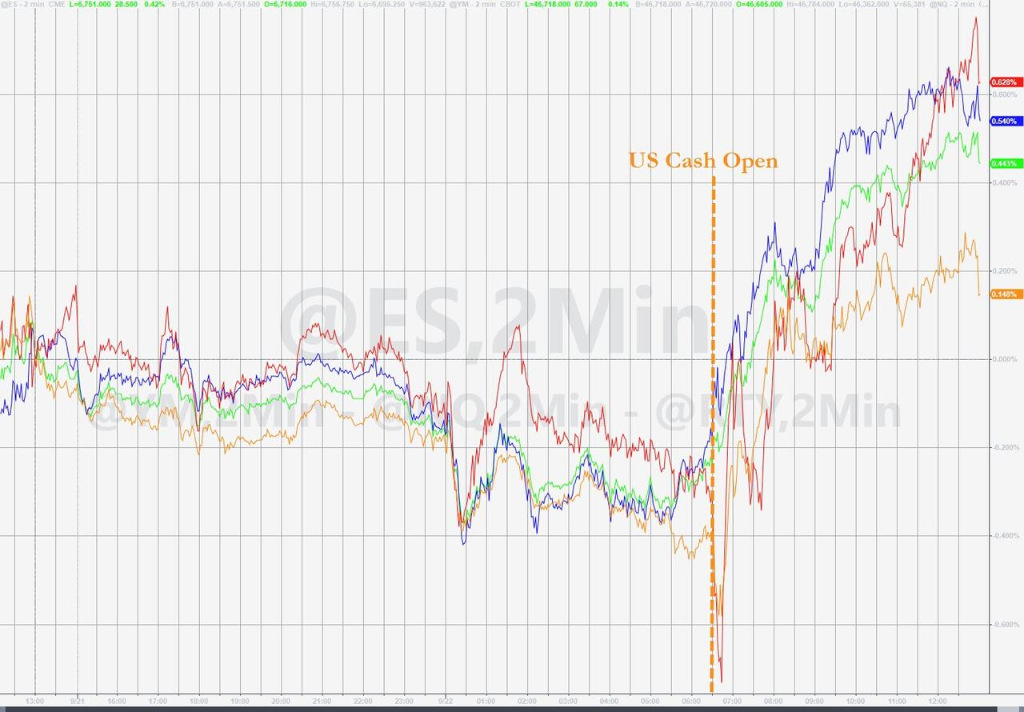
Core Viewpoint - The report from HSBC indicates that the recent acceleration in U.S. economic data, combined with the Federal Reserve's inclination to lower interest rates, serves as a strong catalyst for the continued rise of risk assets [1][6]. Economic Recovery Signals - Macro data shows improvement in U.S. weekly retail sales and composite growth indicators since late June [3]. - Labor market indicators, such as private sector overtime hours, are beginning to exhibit early-cycle characteristics [3]. - Earnings expectations for major stock indices have been significantly revised upward in the past three months, a trend typically seen in the early stages of an economic cycle [3]. Capital Market Activity - There is a resurgence in capital market activities, with mergers and acquisitions (M&A) and initial public offerings (IPOs) showing signs of recovery [5]. Low-Income Household Pressures - Low-income households face multiple pressures, including higher inflation rates on essential goods, slower wage growth compared to high-income groups, and rising default rates on credit cards and auto loans [6][10]. - Despite these pressures, the overall level of credit defaults is not yet alarming [9]. High-Income Household Support - High-income households are currently in a strong financial position, contributing significantly to overall consumer demand [10]. - The top 10% of income earners account for approximately 50% of total consumption, which supports macroeconomic data despite the struggles of low-income households [11]. Investment Outlook - The current environment is favorable for increasing allocations to risk assets, particularly in cyclical sectors of the stock market [14]. - Emerging market equities and local currency bonds are rated for "overweight" due to limited potential for a rebound in the dollar [14]. - Conversely, U.S., U.K., and Japanese government bonds are rated for "underweight," as bond attractiveness remains weak compared to equities [14].

《周末小结系列》:“保险式降息”:美元见底?美股还能嗨多久?
Sou Hu Cai Jing· 2025-09-23 00:15
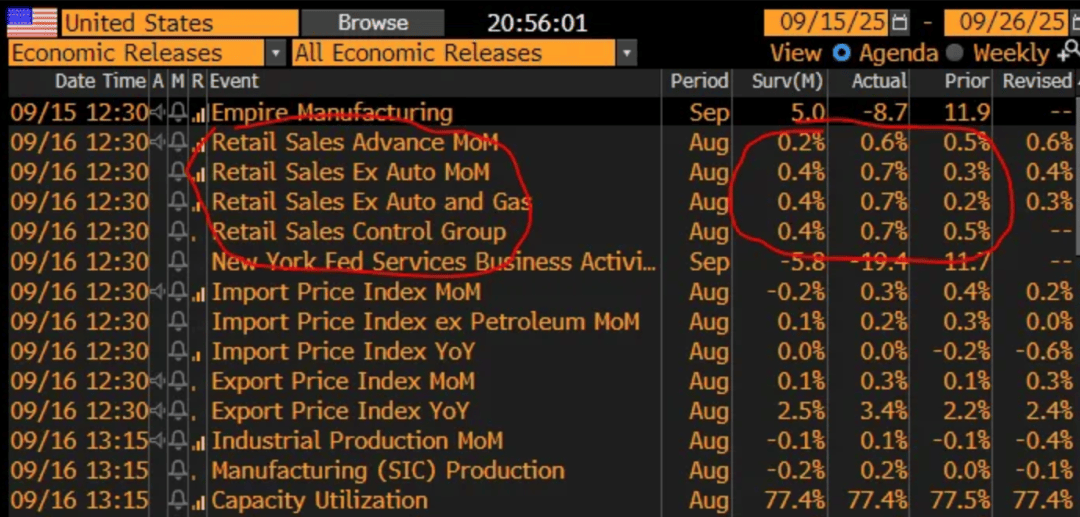
Group 1 - The core focus of the market in the past week was on the strong U.S. retail sales data and the Federal Reserve's FOMC meeting, which resulted in a significant interest rate cut described as "insurance-style" [1][5] - U.S. retail sales data exceeded expectations, particularly the retail control group, indicating that consumer spending remains robust despite signs of a cooling labor market [2][4] - The Federal Reserve's decision to cut rates was characterized as a preventive measure rather than a response to an economic downturn, suggesting that the overall economic condition is still stable [5][6] Group 2 - The market's initial reaction to the retail data was somewhat counterintuitive, with short-term interest rates falling before rebounding after the FOMC meeting [6][8] - The performance of the U.S. dollar is expected to stabilize, with potential for a rebound as the Fed enters a phase of consecutive rate cuts, which may correct market expectations of excessive easing [11][18] - U.S. equities, particularly growth and technology stocks, have been performing well, supported by the combination of a stable economy and Fed rate cuts, with small-cap stocks potentially poised for a rebound due to low positioning [13][14][16] Group 3 - The Bank of England faces a dilemma regarding the sale of long-term bonds purchased during QE, which could either exacerbate the pressure on the bond market or lead to significant losses if held [16][18] - The overall conclusion from the week's events indicates that the U.S. economy is not weakening as feared, and the Fed's "insurance-style" rate cut is favorable for risk assets, with implications for the dollar, equities, and gold [18]