关税战

Search documents
“美国人急得很,都想让我发空运了”
Guan Cha Zhe Wang· 2025-06-11 06:54
Group 1 - The trade war initiated by the Trump administration has disrupted international trade order and negatively impacted U.S. retailers, leading to inventory shortages [1] - Zhejiang Aodu Daily Necessities Co., Ltd. is a major OEM for several well-known thermal cup brands, with approximately 70% of thermal cups used in the U.S. sourced from Yongkang, Zhejiang [1] Group 2 - Following the announcement of mutual tariff reductions between China and the U.S. on May 12, there has been a surge in order requests from American clients, with previously paused orders being reinstated [2] - U.S. supermarkets have sold out their inventories due to the trade war, prompting American consumers to stock up on products in anticipation of potential shortages [2] - Shipping goods to the U.S. typically takes over two weeks, and some U.S. clients have requested air freight due to urgency, but high costs and limited capacity have made this impractical [2] - There is an expectation of a significant increase in orders during the 90-day tariff window, with certainty that order volumes will surge [2]
百利好早盘分析:经济增速下调 黄金暴跌预警
Sou Hu Cai Jing· 2025-06-11 03:32
Group 1: Gold Market - The World Bank's "Global Economic Outlook" indicates that U.S. tariffs and policy uncertainties will significantly pressure global economies, lowering global growth from 2.7% to 2.3% for the year, compared to 2.8% last year. U.S. growth is revised down from 2.3% to 1.4% [2] - The trade war has caused global trade to stagnate in the second half of the year, impacting supply chains, but a recession is not expected. The effects of Trump's tariff policies continue, leading to increased uncertainty and market volatility [2] - Technically, gold has been fluctuating, with a focus on resistance at $3342. A drop below $3300 could accelerate declines [2] Group 2: Oil Market - Iran's Security Council warns that any Israeli attacks on its nuclear facilities will be met with retaliation, strengthening Iran's resolve to develop nuclear weapons. U.S.-Iran nuclear negotiations show progress but remain contentious, with the U.S. demanding a halt to uranium enrichment [4] - OPEC+ announced an increase in production by 411,000 barrels per day, continuing a trend for four months. However, five members are not meeting their production targets, with actual increases at 180,000 barrels per day against a planned 310,000 [4] - Geopolitical tensions are rising, contributing to higher oil prices [4] Group 3: Technical Analysis - Oil prices extended gains, reaching a high of $66.25, with a quick pullback observed. Support is noted at $64.40, and a drop below this level could lead to further declines towards $63.60 [6] - Copper prices are experiencing a tight range after volatile trading, with support at $4.77 and resistance at $4.90. A break below support could accelerate declines, while a breakout above resistance could lead to further bullish momentum [8] Group 4: Nikkei 225 - The Nikkei 225 index has broken through resistance at 37800 and is in a bullish trend, recently touching 38400 before a quick pullback. The upward trend is expected to continue, with resistance at 38700 [9]

美媒提醒特朗普,关税战正削弱美国,中国超越的“分水岭”已到来
Sou Hu Cai Jing· 2025-06-11 01:52
直到现在,特朗普还没有意识到中国正在超越美国。 看着特朗普第二任期统治下的美国,美国媒体已经开始着急,他们发出提醒,希望特朗普政府能够重视 起来,不要再继续错误行为了。 特朗普二次"入宫"的政策,真的错了吗? 从特朗普上台开始,他的核心只有一个:利益。他喊着"MAGA(让美国再次伟大)"的口号,做的全是 让自己赚得盆满钵满的事情。 上任前两个月,特朗普践行自己在竞选时期的承诺:改善国内非法移民的情况、签署各种政令、与马斯 克一起,对各部门下手,做的是"节流"的事情、推动俄乌停火等等。 本以为特朗普此任期真的会就"MAGA"展开行动,然而,上任的第三个月,特朗普就暴露了自己的目 的。 就连特朗普所在的共和党,内部也出现了不赞同的声音。更别说这项政策给美国带来了严重的危机,许 多铁杆盟友因此开始考虑这段关系。 简而言之,关税能够给美国带来多少收入暂且不论,特朗普政府已经开始在短短几个月时间内遭受内外 夹击了。 对于特朗普政府来说,唯一超出其预料的就是中国。中国从推出"对等关税"开始就持强烈反对态度,但 特朗普也认为,中国虽然反对,但迟早会接受自己的政策。 他发动了关税战,称关税会让美国好起来,还喊话希望美国民众" ...
观察者网视频栏目“未来方法论”重磅推出!中国产业“时代启示录”
Guan Cha Zhe Wang· 2025-06-10 09:59
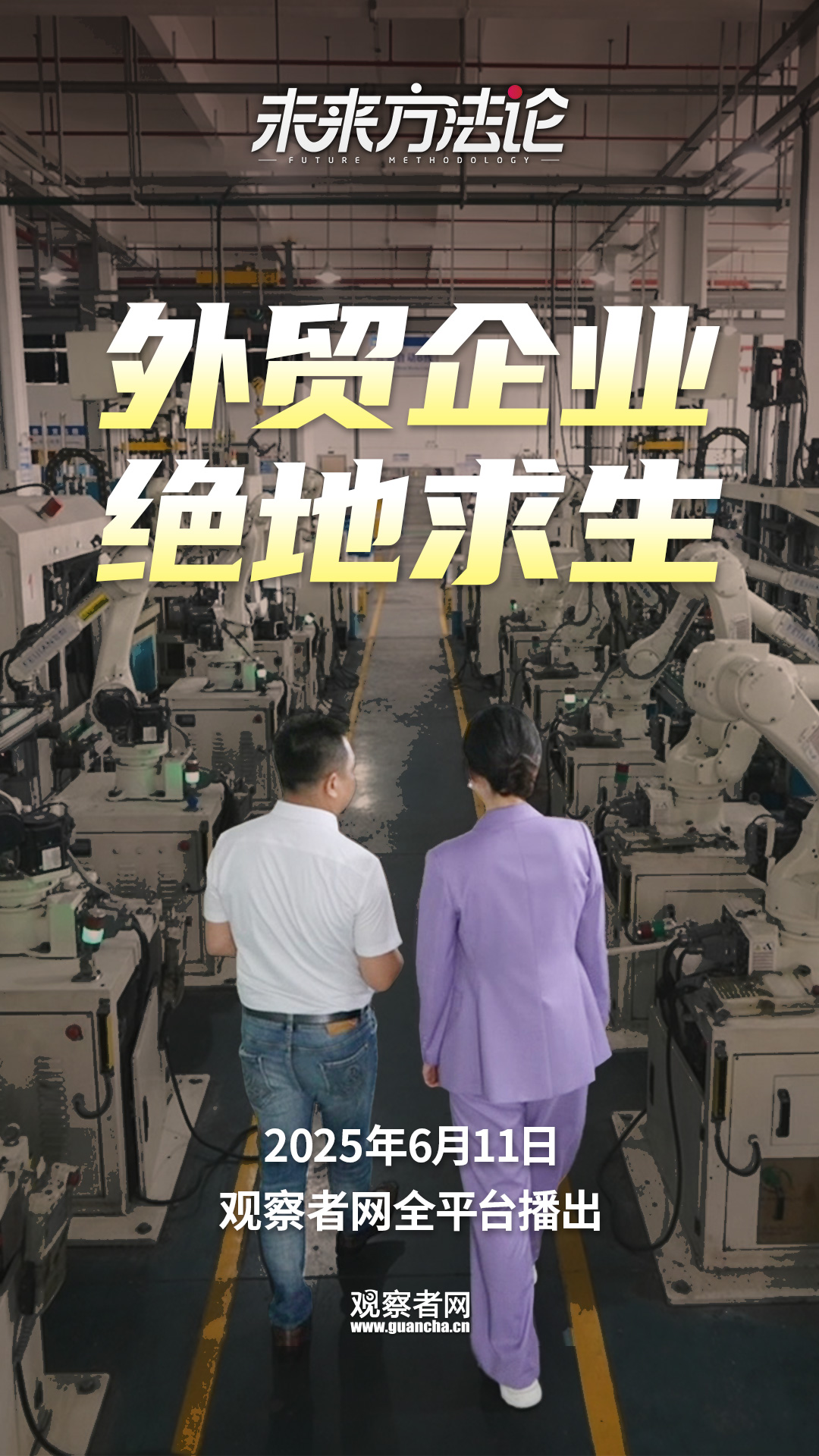
Group 1 - The article discusses a new wave of technological revolution and industrial transformation that is reshaping the global innovation landscape and economic structure [1] - Chinese companies are transitioning from being followers to leaders in the face of globalization challenges, significantly impacting both the Chinese and global economies [1] - The "Future Methodology" video series aims to provide insights into the rise of strategic emerging industries, the transformation of traditional industries, and to serve as a valuable reference for China's industrial development [1] Group 2 - The first episode of the "Future Methodology" will focus on foreign trade enterprises affected by the tariff war, specifically in Yongkang, Zhejiang, known for its precision manufacturing and large hardware industry chain [2] - Yongkang is recognized as the largest production and export base for thermal cups and kettles in China and globally, with many international brands relying on its manufacturing capabilities [2] - The article highlights the challenges faced by Yongkang's export-oriented enterprises due to the tariff war and their strategies for survival and competitiveness in an uncertain future [2]
建信期货集运指数日报-20250610
Jian Xin Qi Huo· 2025-06-10 01:21
行业 集运指数日报 日期 2025 年 6 月 10 日 研究员:何卓乔(宏观贵金属) 18665641296 hezhuoqiao@ccb.ccbfutures.com 期货从业资格号:F3008762 研究员:黄雯昕(国债集运) 021-60635739 huangwenxin@ccb.ccbfutures.com 期货从业资格号:F3051589 研究员:聂嘉怡(股指) 021-60635735 niejiayi@ccb.ccbfutures.com 期货从业资格号:F03124070 宏观金融团队 请阅读正文后的声明 #summary# 每日报告 | | | 表1:集运欧线期货6月9日交易数据汇总 | | | | | | | | | --- | --- | --- | --- | --- | --- | --- | --- | --- | --- | | 合约 | 前结算 价 | 开盘价 | 收盘价 | 结算价 | 涨跌 | 涨跌幅 (%) | 成交量 | 持仓量 | 仓差 | | EC2506 | 1,954.6 | 1,920.0 | 1,948.6 | 1,941.0 | -6.0 | -0.3 ...
专题报告关税战风险暂缓,抢出口成色如何
Bao Cheng Qi Huo· 2025-06-09 12:07
1. Report Industry Investment Rating - No relevant content provided. 2. Core Viewpoints of the Report - In May 2025, the China-US tariff war eased, but there are still significant uncertainties. Trump's tariff policy is influenced by the "Great and Beautiful" Act. If it passes the Senate, the tariff policy may ease; otherwise, it may intensify [1][33]. - The suspension of the tariff war promoted panic exports, leading to a month-on-month increase in the manufacturing PMI in May. The improvement in demand was mainly supported by external demand, but enterprises were worried about future demand, as indicated by the continuous decline in the finished - product inventory index [1][34]. - Despite the easing of the tariff war, its negative impact has formed, squeezing enterprises' willingness to produce and invest. Enterprises prefer to maintain the original re - export trade rather than direct exports due to the expiration of the tariff suspension period in early July [2][34]. 3. Summary According to the Table of Contents 3.1 Tariff War Risk Temporarily Eased, but Uncertainty Remains 3.1.1 Tariff War News Since May - In the China - US high - level economic and trade talks from May 10 - 11, significant progress was made, including a substantial reduction in bilateral tariffs and the establishment of a bilateral consultation mechanism. However, there is a risk of tariff war escalation after the 90 - day suspension period ends on July 9 [7][8]. - There were legal disputes over Trump's tariff policy in May. On May 28, a federal court blocked Trump's tariff policy, but on May 29, the federal appeals court temporarily suspended the lower - court's ruling. On June 3, Trump increased steel and aluminum tariffs from 25% to 50% [8]. - There are internal differences in the US on tariff policy, but Trump adheres to a tough stance, making the future of the tariff war uncertain [9]. 3.1.2 Assessment of Trump's Future Tariff Policy - Trump's tariff policy is stubborn. His purposes include creating political legacies and expanding family assets, as well as generating fiscal revenue for tax cuts. The "Great and Beautiful" Act's passage in the Senate will affect the intensity of his tariff policy [10][11]. 3.2 Tariff War Suspension Promoted Panic Exports, and the Manufacturing PMI Rose Month - on - Month in May - In May, the manufacturing PMI rebounded by 0.5 points to 49.5 but remained in the contraction range. The panic - export effect drove the recovery of most sub - indicators except price - related and finished - product inventory indicators [12]. - In terms of production, the PMI production index rose by 0.9 points to 50.7, higher than the rebound of the demand index and the seasonal average. Enterprises accelerated production during the 90 - day buffer period to ship goods [12][13]. - In terms of demand, the new order index rose by 0.6 points, and the new export order index rose by 2.8 points, indicating that external demand supported the improvement. However, the finished - product inventory index continued to decline by 0.8 points, reflecting enterprises' concerns about future demand [13]. 3.3 Enterprises Remain Cautious about Direct Trade with the US and Prefer Re - export Trade - In May, the weekly average throughput of monitored ports increased slightly month - on - month, and the import container data of the Port of Los Angeles showed a recovery but did not reach previous highs. Enterprises prefer re - export trade due to the cumulative effect of tariffs and the short suspension period [18]. - Different industries are affected differently by tariff policies. Strategic emerging industries are less affected, while traditional labor - intensive foreign - trade enterprises are more cautious. Forward - looking indicators show that the actual production and operation recovery of enterprises is slower than expected [24]. - In April, more than half of the 13 export - dependent industries saw profit improvements, but there was a deviation between price - volume changes and profit recovery. Profit improvement driven by cost reduction is not sustainable, so enterprises choose to reduce inventory [29]. 3.4 Summary - The China - US tariff war eased in May, but Trump's tariff policy remains uncertain, depending on the "Great and Beautiful" Act's passage in the Senate [1][33]. - The suspension of the tariff war promoted panic exports and a month - on - month increase in the manufacturing PMI in May. External demand supported the improvement in demand, but enterprises were worried about future demand [1][34]. - The negative impact of the tariff war has formed, squeezing enterprises' willingness to produce and invest. Enterprises prefer re - export trade due to the expiration of the tariff suspension period in early July [2][34].
5月对美出口降幅扩大,整体出口保持较强韧性
Dong Fang Jin Cheng· 2025-06-09 11:40
Export Performance - In May 2025, China's export value increased by 4.8% year-on-year, a decrease of 3.3 percentage points compared to April[1] - Exports to the U.S. fell by 34.5% year-on-year, with the decline expanding by 13.5 percentage points from the previous month, significantly dragging down overall export growth[1][3] - The high base effect from the previous year, where exports grew by 7.4% in May 2024, also contributed to the slowdown in May 2025[4] Import Trends - In May 2025, China's import value decreased by 3.4% year-on-year, with the decline widening by 3.2 percentage points from April[6] - Imports from the U.S. saw a year-on-year decline of 18.1%, with the drop expanding by 4.3 percentage points compared to the previous month, directly impacting overall import growth by 1.1 percentage points[6] - The decline in import demand was also influenced by the overall slowdown in exports and the negative impact of the trade war on domestic investment and consumer confidence[5][6] Market Dynamics - The "export rush" effect towards the U.S. is expected to continue in June, potentially maintaining positive year-on-year growth in exports, although the growth rate may drop to around 1.0%[5] - The ongoing high tariff levels from the U.S. and the established trend of external demand slowing down suggest that export growth may face downward pressure in the second half of the year[5] - The diversification of export markets has shown progress, with exports to ASEAN growing by 14.8% and to the EU by 12.0% in May, indicating resilience amid external challenges[4]
中国外贸前5个月出口增7.2%,对东盟、欧盟出口保持增长
Bei Ke Cai Jing· 2025-06-09 11:34
Core Viewpoint - China's total goods trade value reached 17.94 trillion yuan in the first five months of the year, showing a year-on-year growth of 2.5%, with exports increasing by 7.2% and imports decreasing by 3.8% [1][4]. Trade Performance - The trade growth rate in the first five months was 0.1 percentage points higher than in the first four months [2]. - In May alone, the total goods trade value was 3.81 trillion yuan, reflecting a growth of 2.7%, with exports up by 6.3% and imports down by 2.1% [5]. - The export growth rate in May decreased by 3 percentage points compared to April [5]. Trade Partners - ASEAN remained China's largest trading partner, with a trade value of 3.02 trillion yuan, growing by 9.1%, accounting for 16.8% of total foreign trade [6]. - The EU was the second-largest trading partner, with a trade value of 2.3 trillion yuan, increasing by 2.9%, making up 12.8% of total foreign trade [6]. - Trade with the US, however, saw a decline, with a total trade value of 1.72 trillion yuan, down by 8.1%, and exports to the US decreasing by 8.7% [6]. Market Outlook - The foreign trade market is expected to face significant uncertainties moving forward, particularly after the 90-day window for US-China negotiations [8][9]. - Despite the pause in the trade war, foreign trade enterprises continue to seek opportunities in overseas markets, particularly in "Belt and Road" countries and Europe [11]. - There are expectations for continued positive growth in exports for June, although challenges remain due to high US tariffs and a slowing external demand [10][11]. Policy Implications - The government is likely to maintain supportive policies for stabilizing growth and foreign trade, with potential increases in fiscal measures to promote consumption and investment [12].
特朗普被打了措手不及,美国要“输了”?白宫火速致电中国
Sou Hu Cai Jing· 2025-06-09 11:27
Core Viewpoint - The recent ruling by the U.S. International Trade Court has declared several tariffs imposed by the Trump administration as illegal, marking a significant setback for the administration's trade policies [1][3]. Group 1: Impact on Domestic Economy - The tariffs, including a 10% global benchmark tariff and a 20% tariff on Chinese goods, have led to increased prices for imported goods, significantly raising living costs for American consumers [3][5]. - Reports indicate that prices for specific imported items, such as bananas from Costa Rica, have risen nearly 10%, and the cost of car seats imported from China is expected to increase from $350 to $450 [3][5]. - Many U.S. businesses, particularly small enterprises reliant on imported materials, are facing rising production costs and declining profits due to these tariffs [3][5]. Group 2: International Trade Relations - The tariffs have prompted retaliatory measures from countries such as China, the EU, and Canada, escalating global trade tensions and harming the international image of the U.S. [5][6]. - U.S. export sectors, including agriculture and automotive industries, are experiencing significant declines in orders, leading to production cuts and layoffs [5][6]. - The ruling against Trump's tariffs has undermined his strategy of pressuring allies to impose tariffs on Chinese products, further isolating the U.S. in international trade discussions [5][6]. Group 3: Future of U.S.-China Relations - The ruling presents an opportunity for dialogue between the U.S. and China, as both nations recognize the mutual losses incurred from the ongoing trade war [8]. - Recent communications between U.S. and Chinese officials indicate a willingness to maintain dialogue, although significant challenges remain in improving bilateral relations [8]. - The outcome of the trade conflict will have profound implications not only for U.S.-China relations but also for the global economy and international order [8].
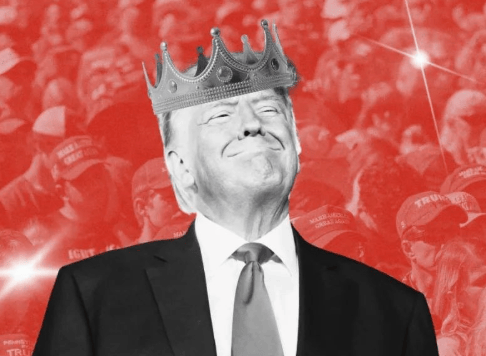
搬起石头砸脚实录:特朗普加税3700亿,中国反手让美国农民损失230亿
Sou Hu Cai Jing· 2025-06-09 10:32
Group 1 - The U.S. is facing significant challenges in securing rare earth materials, which are critical for military applications, particularly the F-35 fighter jet that requires 417 kg of rare earths per unit [3] - China's dominance in rare earth refining technology is causing U.S. defense contractors to struggle with quality and cost, leading to a 42% increase in production costs due to the need for three times the raw materials to produce acceptable quality [3] - The trade war initiated by the U.S. has resulted in a significant drop in China's technology exports to the U.S. by 31%, while ASEAN countries have seen a 143% increase in orders for 28nm chips from China [4] Group 2 - Negotiations in London have stalled, with the U.S. proposing a "rare earth for chips" deal, but China is demanding Boeing orders and Texas semiconductor factories in exchange [6] - Chinese companies are exploring the establishment of rare earth refining facilities in the Middle East, indicating a potential shift in the global supply chain [6] - The current geopolitical landscape mirrors historical events, with China leveraging rare earths to influence global industry, contrasting with the U.S. focus on isolationist policies [6]