
经济衰退

Search documents
美联储主席鲍威尔“言论冲击波”,全球市场连锁反应全解析
Sou Hu Cai Jing· 2025-04-06 16:56
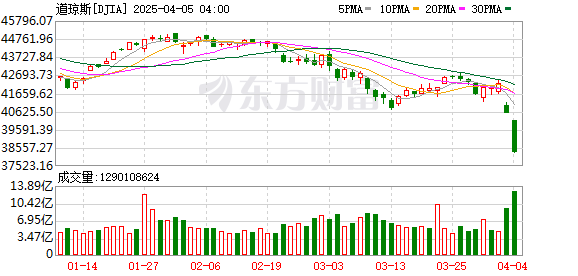
Market Reaction - The U.S. stock market experienced its largest decline since the pandemic, with the Dow Jones dropping 10.7% over two days and the Nasdaq entering a technical bear market with a pullback exceeding 20% from its historical peak [2] - The S&P 500 index saw a loss of $6.5 trillion, marking the largest weekly drop since March 2020, while the Nasdaq Golden Dragon Index for Chinese stocks plummeted 8.87% in a single day [2] - Major tech companies lost a combined market value of $1.8 trillion, with Tesla's stock falling over 15% in one day [2] Currency Market - The U.S. dollar index surged 1.5% to reach a three-month high, while the offshore Chinese yuan fell below the 7.40 mark [2] - Commodity currencies faced significant declines, with the Australian dollar dropping to a new low of 0.60 against the U.S. dollar, a 5.19% decrease in one day [2] - Safe-haven currencies showed mixed results, as the Japanese yen appreciated slightly by 0.3%, while the Swiss franc depreciated by 1.2% due to tightening market liquidity [2] Bond Market - The yield curve inverted to its steepest level in 18 years, with the 10-year U.S. Treasury yield rising by 18 basis points to 4.25% and the 2-year yield soaring by 25 basis points to 4.85% [2] - The inversion reached -60 basis points, the highest level since 2007, indicating a significant increase in recession risk [2] - The credit spread for U.S. high-yield bonds widened by 35 basis points in one day, reaching the highest level since January 2024 [2] Institutional Response - The probability of a rate cut in June plummeted from 68% to 12%, while the likelihood of a rate hike in September surged to 45% [3] - Traders revised their expectations for rate cuts in 2025 from four times to two times [3] - Investment banks adjusted their strategies, with UBS downgrading its rating on U.S. stocks from "overweight" to "neutral," warning that the S&P 500 could fall below 5000 points [3] Policy Conflicts - There is a conflict between the White House and the Federal Reserve, with President Trump advocating for rate cuts to stimulate the economy, while the Fed remains cautious about inflation [5] - The imposition of 34% tariffs on China could push the U.S. core CPI above 4% in the next three quarters [5] - The restructuring of global supply chains, particularly in the semiconductor and electric vehicle sectors, is leading to increased costs for companies [5] - The market is currently in a "policy vacuum panic period," with a stark contrast between Powell's assertion of a "still good" economic foundation and the collapse of capital markets [5]

海外高频 | 关税超预期,市场博弈联储年内4次降息
赵伟宏观探索· 2025-04-06 11:52
Group 1: Economic Overview - Since early 2025, the economic downturn and reciprocal tariffs have led to a continuous decline in the US stock market, raising concerns about potential negative feedback on the economy and signaling a possible recession [1][30] - The US imposed a baseline tariff of 10% on global imports and additional tariffs ranging from 20% to 49% on over 60 countries with the highest trade deficits, exceeding market expectations [30][35] Group 2: Market Reactions - Major stock indices in developed markets experienced significant declines, with the Nasdaq down 10.0%, S&P 500 down 9.1%, and Nikkei 225 down 9.0% [4][7] - Emerging market indices also fell, with the South African FTSE down 9.0% and the Ho Chi Minh Index down 8.1% [4] Group 3: Employment Data - In March, the US non-farm payrolls added 228,000 jobs, significantly surpassing the market expectation of 140,000, while the unemployment rate rose to 4.2% [2][41] - The labor force participation rate increased to 62.5%, indicating a recovery from the extreme weather impacts earlier in the year [41] Group 4: Federal Reserve Outlook - As of April 5, the market anticipates the Federal Reserve will cut interest rates four times in 2025, specifically in June, July, September, and December [2][35] - Despite the economic outlook deteriorating, recent hard data has shown resilience, leading to a cautious stance from Fed officials [35][37] Group 5: Manufacturing Sector - The ISM Manufacturing PMI for March was reported at 49.0, slightly below the expected 49.5, indicating a contraction in the manufacturing sector [38] - The price index surged to 69.4, reflecting concerns over the impact of tariffs on domestic manufacturing [38] Group 6: Commodity Market - The WTI crude oil price dropped by 10.6% to $62.0 per barrel, while Brent crude fell by 10.9% to $65.6 per barrel [23][28] - Precious metals also saw declines, with COMEX gold down 1.8% to $3,035.6 per ounce and COMEX silver down 15.1% to $29.5 per ounce [28]

基本金属全线大跌,期铜下挫逾6%【4月4日LME收盘】
Wen Hua Cai Jing· 2025-04-06 07:06
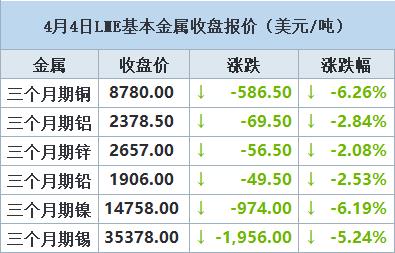
Core Insights - The comprehensive tariff plan by U.S. President Trump has triggered significant concerns about an economic recession, leading to a substantial sell-off in base metals on the London Metal Exchange (LME) [1][3] - Copper futures recorded their largest single-day drop since the onset of the COVID-19 pandemic in 2020, with a decline of $586.50 or 6.26%, closing at $8,780 per ton [1][2] - The overall sentiment in the market has been severely impacted, with predictions of a 60% chance of a global recession by the end of the year, up from a previous estimate of 40% [4][5] Summary by Category Market Performance - LME three-month copper fell to $8,780 per ton, marking a significant decline of over 10% for the week [1][2] - Other base metals also experienced declines, with three-month aluminum down $69.50 or 2.84%, three-month zinc down $56.50 or 2.08%, and three-month nickel down $974 or 6.19% [2][7] Economic Impact - Dan Smith from Amalgamated Metal Trading noted that metals reliant on economic growth are currently facing disastrous performance due to tariff concerns [3] - Federal Reserve Chairman Jerome Powell expressed shock at the extent of the tariffs, indicating that their economic impact may be greater than previously anticipated, including potential inflation and slowed economic growth [5][6] Regulatory Developments - The U.S. government announced a 34% tariff on all imports from China, effective April 10, 2025, which is seen as a unilateral and bullying approach that undermines international trade rules [3] - The Chinese government responded by implementing export controls on certain rare earth materials, further escalating trade tensions [4]
油价断崖下跌,原油两日暴降超12.5%,下次4月17日调价,大降中
Sou Hu Cai Jing· 2025-04-06 06:26
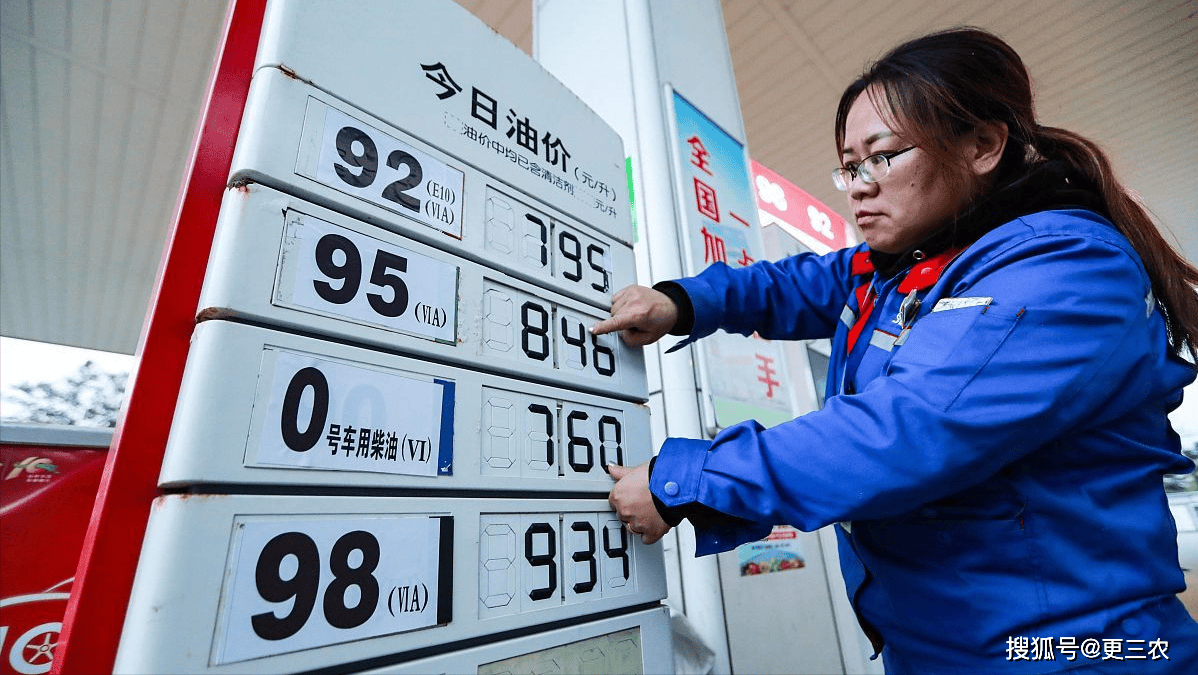
Core Insights - Domestic fuel prices in China have increased significantly, with a rise of 230 yuan/ton effective from April 2, leading to 92 and 95 octane gasoline prices reaching approximately 7.45 yuan/liter and 7.95 yuan/liter respectively [1][3] - The next fuel price adjustment is scheduled for April 17, marking the eighth adjustment of the year, with current trends indicating a potential increase of 150 yuan/ton based on the average crude oil price [3][5] - Recent fluctuations in international oil prices have been dramatic, with a notable drop of over 12.5% in just two days, influenced by various economic factors including increased tariffs and rising U.S. oil inventories [5][7] Price Adjustments - The recent price hike in domestic fuel is attributed to a 2.91% change in domestic crude oil prices, with the first working day of the new pricing cycle reflecting a significant increase [3] - The anticipated price adjustment on April 17 could see a reversal in trends, with projections suggesting a decrease of nearly 200 yuan/ton due to the recent drop in international oil prices [5][7] Market Dynamics - The decline in oil prices is driven by multiple factors, including unexpected increases in U.S. tariffs, rising crude oil inventories, and OPEC+ plans to increase production capacity significantly [5][7] - Market sentiment remains pessimistic, with fears of a global economic slowdown and potential further declines in oil prices, impacting future domestic fuel pricing strategies [7] Regional Price Overview - Current gasoline prices across various regions in China show slight variations, with 92 octane gasoline priced around 7.45 to 7.63 yuan/liter and 95 octane gasoline ranging from 7.90 to 8.15 yuan/liter [8]
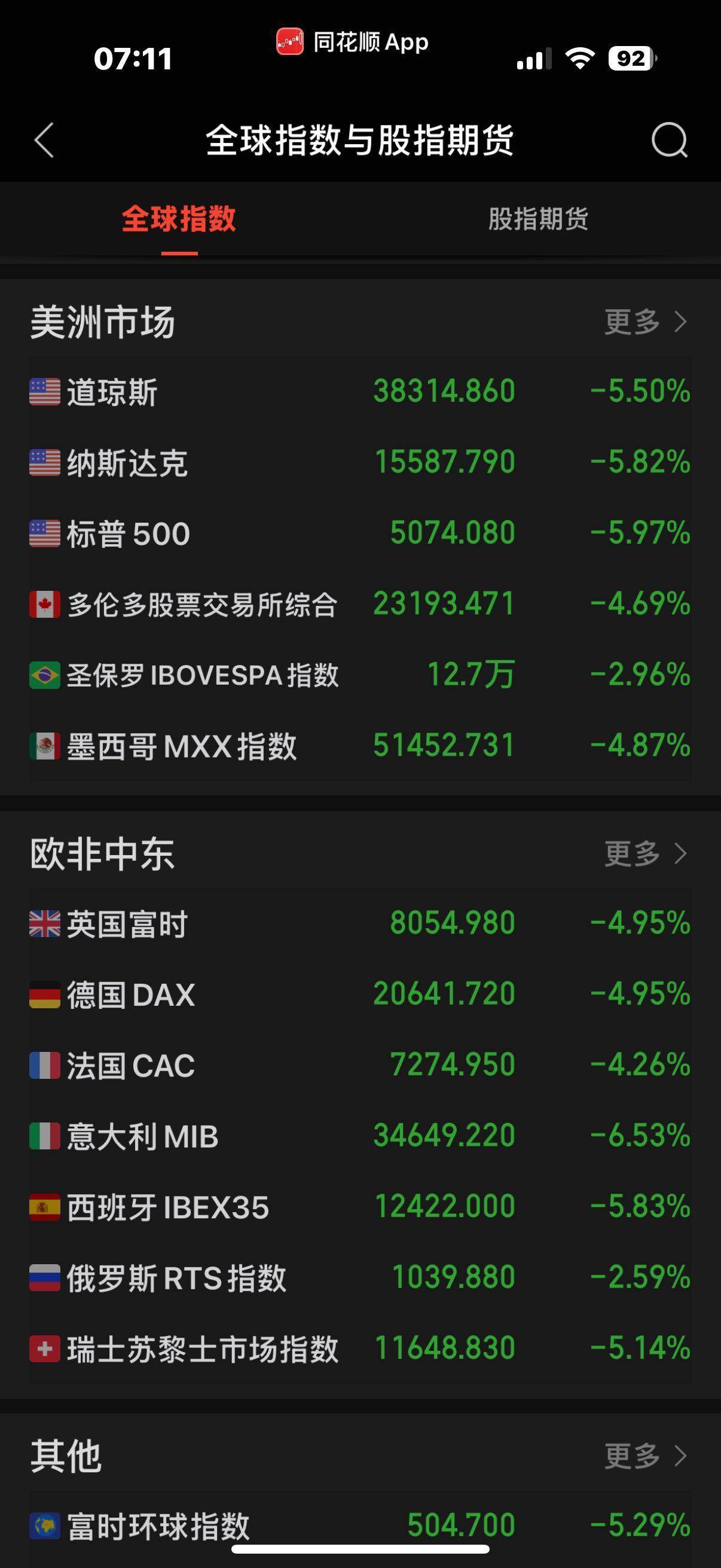
【环球财经】一周前瞻:经济前景不确定性加剧,市场或迎“血雨腥风”
Xin Hua Cai Jing· 2025-04-06 05:00
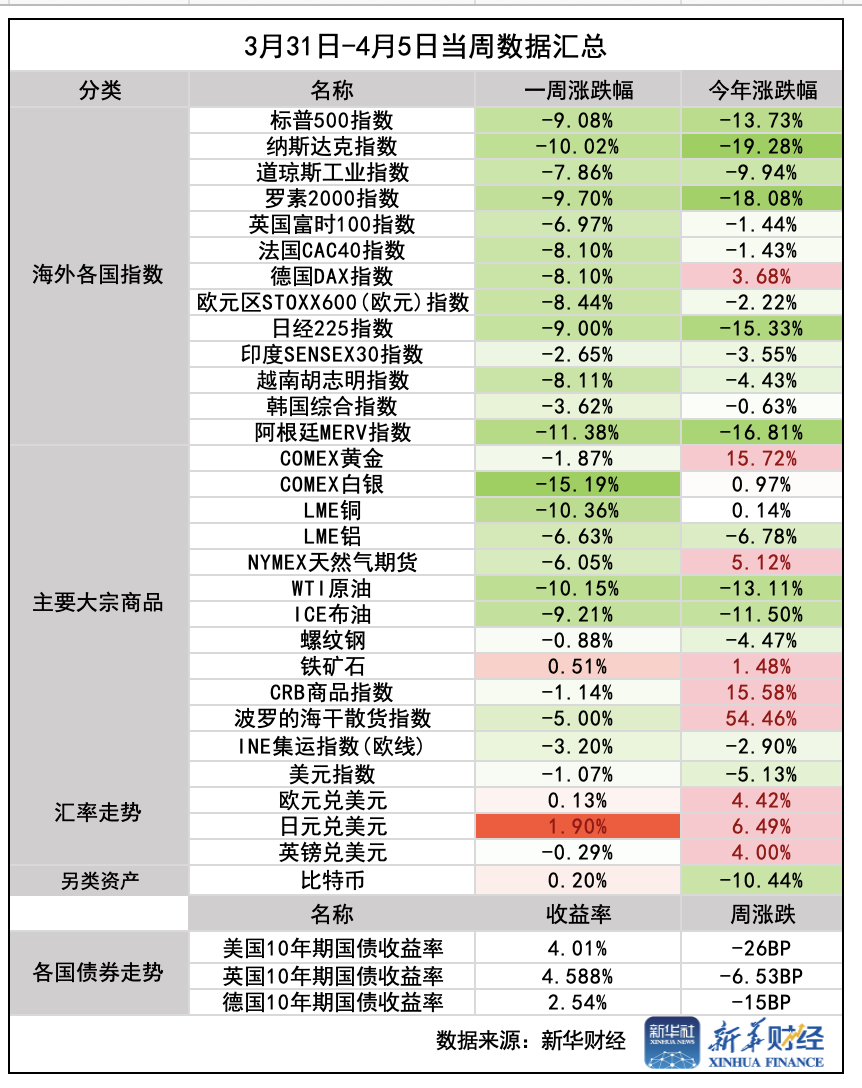
Market Overview - Global markets experienced a severe sell-off during the week of March 31 to April 5, with major stock indices and commodities facing significant declines, marking it as a "black week" [1] - The Nasdaq Composite fell over 10%, entering bear market territory, while the Dow Jones Industrial Average dropped 7.86%, and the S&P 500 fell 9.08% [1][4] - The Cboe Volatility Index (VIX) surged over 88%, reaching its highest level since March 2020, indicating heightened market fear [1] U.S. Stock Market - The "Big Tech" companies collectively lost $1.4 trillion in market value, the largest single-week decline on record, with notable drops in Nvidia, Apple, Meta, and Amazon, all down over 10% [1] - The S&P 500 index is down 13.73% year-to-date, while the Nasdaq is down 19.28% [4] European Stock Market - The Eurozone STOXX 600 index fell 8.44% for the week, marking its largest decline since 2020, and is down nearly 11.9% from its March 3 high [2] - Major European indices such as Germany's DAX and France's CAC40 both dropped 8.1% [2][4] Asia-Pacific Stock Market - The Nikkei 225 index fell below 34,000 points, with a weekly decline of 9%, while the South Korean Composite Index dropped 3.62% [2] - The Indian SENSEX30 index saw a decline of 2.65% for the week [2][4] Commodity Market - International crude oil prices hit four-year lows, with WTI crude down 10.15% to $62.32 per barrel, and Brent crude down 9.21% to $66.06 per barrel [3] - Precious metals experienced widespread declines, with gold down 1.52% and silver down 13.26% for the week [2][4] Economic Outlook - The probability of a recession in the U.S. has increased, with estimates rising from 25% to 30-35% according to S&P Global [7] - Concerns over the impact of tariffs on trade and economic growth have led to a cautious outlook among investors, particularly regarding corporate earnings forecasts [11][12]
大事件影响,过去一周全球市场风云突变!
Wind万得· 2025-04-05 23:04
Global Market Performance - Global stock markets experienced significant declines over the past week, with all 19 major indices falling, particularly the Italian FTSE MIB and Nasdaq, which dropped over 10% [3] - The S&P 500, Nikkei 225, German DAX, and French CAC40 also saw declines exceeding 5%, while China's A-share Shanghai Composite Index was the most resilient, only slightly down by 0.28% [3] Technology Sector Impact - Major technology companies, including Nvidia, Apple, Amazon, and Facebook, faced substantial losses, each dropping over 10% in the past week, with Apple hitting a nearly one-year low and others reaching six-month lows [6] Commodity Market Trends - The commodity market experienced volatility, particularly in metals and energy, with COMEX silver and copper plunging over 14%. NYMEX crude oil and ICE Brent oil fell by 10.15% and 9.21%, respectively, while gold remained relatively stable with a decline of less than 2% [9] Tariff Policy Analysis - Analysts suggest that the "reciprocal tariffs" may signal the beginning of a new wave of market turmoil rather than a resolution, emphasizing that the focus should be on negotiation rather than the direct economic impact of tariffs [11] - China's position in the tariff negotiations is strengthening due to its industrial upgrades and international expansion, allowing it to focus on its economic development without being overly influenced by U.S. tariff policies [11] Economic Outlook and Ratings Adjustments - UBS Global Wealth Management downgraded its rating on U.S. stocks from "attractive" to "neutral," significantly lowering the S&P 500 year-end target from 6400 to 5800 points due to profit forecast and valuation risks [12] - Other investment banks, including Barclays and Deutsche Bank, warned that continued implementation of tariffs could increase the risk of a recession in the U.S. economy this year [12]



美股连续暴跌 关税令华尔街损失逾5万亿美元
Zhong Guo Xin Wen Wang· 2025-04-05 00:04
Group 1 - The US stock market experienced its worst week since March 2020, with major indices dropping over 5.5% [2] - The Nasdaq entered a technical bear market, closing down over 20% from its historical peak, while the S&P 500 recorded its largest weekly decline since March 2020 [3] - The market capitalization of US stocks evaporated by over $5 trillion in two days, with a total loss of nearly $8 trillion since January 2017 [3] Group 2 - President Trump announced a tariff increase on April 2, leading to market turmoil and concerns about a global economic recession, with potential for further volatility before the April 9 deadline for reciprocal tariffs [3] - Federal Reserve Chairman Jerome Powell indicated that the impact of tariffs on the economy could be greater than expected, emphasizing the need to maintain stable inflation expectations [7] - Morgan Stanley's chief US economist projected a contraction in real GDP due to the pressure from tariffs, revising the growth forecast for the year to -0.3% from a previous estimate of 1.3% [8]
深夜雪崩!美股遭遇“黑色星期五”
Sou Hu Cai Jing· 2025-04-04 23:58
Core Viewpoint - The U.S. stock market experienced a significant decline due to escalating trade tensions and concerns over inflation, leading to a loss of over $3 trillion in market value for major tech companies in just two days [1][9]. Group 1: Market Performance - The U.S. stock indices fell by more than 5%, marking one of the worst trading days in recent years, with the S&P 500 dropping 5.97% and the Dow Jones Industrial Average plummeting 2,231 points [4][9]. - The technology sector was particularly hard hit, with the "Tech Seven" companies losing over $2 trillion in market capitalization in a single day [13]. - European markets also suffered, with the Stoxx 600 index falling 5.12%, the largest drop since the onset of the COVID-19 pandemic [14][17]. Group 2: Economic Indicators - Federal Reserve Chairman Jerome Powell indicated that inflation pressures from unilateral tariffs could persist for several quarters, leading to a cautious stance on monetary policy [8][18]. - Despite a stronger-than-expected increase in non-farm payrolls, the unemployment rate unexpectedly rose to 4.5%, raising concerns about the labor market [8][18]. - The market is closely watching upcoming U.S. CPI data and Federal Reserve meeting minutes for any signs of policy shifts that could impact market stability [18]. Group 3: Sector-Specific Impacts - Major tech stocks like Tesla and Apple saw significant declines, with Tesla dropping 10.4% and Apple falling 7.3% [11][13]. - The semiconductor sector also faced severe losses, with the Philadelphia Semiconductor Index down 7.6% [13]. - Commodity markets experienced widespread declines, with crude oil prices falling nearly 10% and gold prices dropping over 3% [13]. Group 4: Global Economic Outlook - The ongoing trade war and the Fed's policy deadlock have led to a loss of investor confidence in global economic recovery [17]. - Analysts warn that continued trade protectionism and delayed monetary policy responses could push the global economy into a recession [18].


US Bank Stocks Tumble as Sweeping Tariff Stokes Recession Fears
ZACKS· 2025-04-04 14:46
Core Viewpoint - The announcement of sweeping tariffs by President Trump has led to significant declines in U.S. bank stocks, raising concerns about a potential global trade war and its negative impact on economic growth and inflation [1][6]. Banking Industry Impact - The Dow Jones Industrial Average fell 3.9%, the S&P 500 dipped 4.8%, and the Nasdaq Composite declined 5.9%, with bank stocks performing worse than these major benchmarks [2]. - The KBW Nasdaq Bank Index slid 9.8%, and the S&P Regional Banks Select Industry Index tanked 10.3%, indicating severe pressure on the banking sector [2]. - Major banks such as Citigroup and Bank of America saw their shares plunge more than 10%, while Morgan Stanley, Goldman Sachs, and Wells Fargo declined over 9% [3]. Tariff Details - President Trump announced tariffs ranging from 10% to 50% on imports from various countries, with Chinese products facing a 34% tariff, the European Union at 20%, and Japan at 24% [4][5]. - These tariffs are expected to push overall tariff rates to their highest level in a century, potentially slowing economic growth and reducing investment [6]. Economic Outlook - The new tariffs are likely to complicate the Federal Reserve's efforts to bring inflation down to its 2% target, raising fears of a recession that could negatively impact banks [6][7]. - A potential drop in loan demand and an increase in delinquency rates, particularly in consumer loans, could harm banks' asset quality [7]. - Investment banking income may remain under pressure as companies delay acquisitions due to tariff uncertainties [7]. Future Considerations - Entering 2025, banks had anticipated benefiting from a healthy economy and favorable interest rates, but the outlook has changed dramatically due to the tariffs [8]. - The probability of prolonged market volatility necessitates close monitoring of further tariff plans and broader economic indicators by investors [8]. - Currently, major banks like Bank of America, Morgan Stanley, Citigroup, Goldman Sachs, and Wells Fargo hold a Zacks Rank 3 (Hold) [9].



关税“黑天鹅”后还有数据核弹:今晚非农会引爆“黑色星期五”吗?
凤凰网财经· 2025-04-04 13:03
以下文章来源于财联社 ,作者潇湘 财联社 . 财联社是上海报业集团主管主办,定位资本市场报道财经通讯社,以"准确、快速、权威、专业"为准则,提供7x24小时金融信息服务。 来源|财联社 随着特朗普的对等关税"黑天鹅",在隔夜彻底令全球市场陷入了灾难性的"黑色星期四",今晚这个美国"非农夜",华尔街或许已再也经受不起任何 意外的打击…… 周四美股市场的大跌无疑是史诗级的 ——标普500指数全天下跌了4.8%,为2020年6月11日以来的最大单日跌幅,当时人们对第二波新冠肺炎疫情 的担忧粉碎了迅速恢复疫情前生活的希望。而除那一天外,本世纪只有4天抛售幅度比昨日更严重,而且全部发生在疫情初期的2020年3月。目前, 标普500指数已经跌至了去年8月份以来的最低水平。 可以说,在经历了昨日的关税暴击后,投资者的交投信心眼下已变得格外敏感而脆弱。 贸易战引发的全球经济衰退威胁,已被认为是当前金融市场 上主要的尾部风险。而假如在关税噩耗传出前,美国经济数据就已经呈现滑坡态势,则无疑可能进一步激发市场人士的抛售意愿。 那么,今晚的美 国3月非农就业报告,又是否会扮演类似落井下石、火上浇油的角色呢? 01 非农前瞻:今晚市场 ...