具身智能

Search documents
突然解散,宗馥莉下狠手了
创业家· 2026-03-06 10:26
Core Viewpoint - The article discusses the significant decision made by Zong Fuli, the daughter of the late founder of Wahaha, to dissolve the Wahaha Robotics Company, marking a departure from the global trend of investing heavily in robotics and automation [5][12][27]. Group 1: Company Strategy and Changes - Zong Fuli has decided to eliminate all non-core assets of Wahaha, including the robotics division, which was initially established by her father to diversify the company's operations [6][16]. - The Wahaha Robotics Company was founded in 2011 to innovate and integrate robotics into the production lines of Wahaha, but it has now been officially dissolved [5][6]. - The decision to dissolve the robotics division is seen as a move away from the booming global robotics market, where China has been a leader in investment and development [12][27]. Group 2: Market Context and Investment Trends - The global robotics sector has seen a surge in investment, with nearly 800 financing events in the past year, totaling around 100 billion yuan [12]. - Robotics is considered the leading area of hard technology investment, surpassing other high-growth sectors such as aerospace and new energy [12]. - Major companies like Tencent, Alibaba, and JD.com are heavily investing in robotics, indicating a strong market trend that Zong Fuli's decision contradicts [12][27]. Group 3: Zong Fuli's Leadership and Future Direction - Zong Fuli's leadership has been characterized by a focus on consolidating power and shifting the strategic emphasis to her controlled company, Hongsheng Beverage, which handles a significant portion of Wahaha's production [16][21]. - The restructuring under Zong Fuli has led to a significant rebranding effort, with many Wahaha companies being renamed under the Hongsheng brand [24]. - Despite the dissolution of the robotics division, Zong Fuli's focus remains on core business operations, with plans to streamline and strengthen the Hongsheng Beverage's market position [25][28].


中国人形机器人再迎百亿独角兽
21世纪经济报道· 2026-03-06 10:21
Core Insights - The field of embodied robotics is experiencing a surge in financing, with companies like Xingdong Jiyuan completing a strategic round of financing worth 1 billion yuan, achieving a valuation exceeding 10 billion yuan [1] - As of now, there are eight companies that have entered the unicorn club with valuations over 10 billion yuan, indicating a trend of increasing investment in this sector [1][2] - The competition for achieving a 10 billion yuan valuation is driven by its symbolic significance as a marker of unicorn status, which attracts substantial funding towards leading companies [2] Financing Trends - In 2025, the total financing amount in the domestic embodied intelligence sector is projected to reach 73.543 billion yuan, with over 740 investment events [4] - The largest financing amount in recent times was secured by Yinhe Tongyong, which completed a new round of financing worth 2.5 billion yuan, bringing its post-investment valuation to 30 billion USD (over 200 billion yuan) [5] - The capital influx is driven by the anticipated scaling of humanoid robots, with predictions indicating that sales will reach 28,000 units in 2026, a 133% increase from previous estimates [6] Market Dynamics - The market is witnessing a shift towards head companies, with capital increasingly concentrating on a few leading firms as the industry matures [4][7] - Companies focusing on the "brain" aspect of robotics, such as Yinhe Tongyong and Ziyuan Robotics, are receiving higher valuations compared to those concentrating on hardware [9] - The integration of both software (brain) and hardware (body) is becoming essential, as companies recognize the need for collaboration to enhance their technological capabilities [10] Technological and Commercialization Factors - Key technological advancements include the development of proprietary models and data sets, such as Yinhe Tongyong's "Galaxy Star Brain," which is a leading integrated model in the field [11] - Commercialization efforts are accelerating, with companies like Xingdong Jiyuan implementing logistics solutions and achieving significant orders in industrial applications [12] - The expectation for the humanoid robotics market is optimistic, with industry experts suggesting that the sector will continue to grow over the next five to ten years, indicating a long-term upward trajectory [13]

估值破100亿!帕西尼再获超10亿元融资,具身智能“百亿估值俱乐部”再迎强者入局!
机器人圈· 2026-03-06 10:18
Core Insights - The embodied robotics industry is experiencing unprecedented growth, driven by public engagement and advancements in motion control and body coordination [1] - A significant milestone is expected by 2025, with the upstream supply chain for core end-effectors like "dexterous hands" maturing, paving the way for large-scale production [1] - A critical bottleneck in the industry is the extreme scarcity of high-performance tactile sensors, which hampers the collection and reuse of tactile data, slowing down the evolution of perception and decision-making capabilities [1] Group 1: Company Valuation and Funding - PaXini Technology has completed a Series B financing round exceeding 1 billion RMB, achieving a valuation of over 10 billion RMB, placing it among the eight companies in China with a valuation exceeding 10 billion RMB [3] - The financing was led by Huangpujiang Capital, Kaita Capital, and Xinan Capital, with participation from various state-owned platforms and industry capital [3] Group 2: Competitive Advantages - PaXini is unique among the billion-dollar companies in the embodied intelligence sector, as it integrates rare tactile modalities into a comprehensive data system, enabling closed-loop training of the OmniVTLA embodied intelligence model [4] - The company has established a high-precision data collection system, producing nearly 10 billion high-quality multimodal data points annually, which covers critical perception information [8][12] - This data collection capability positions PaXini as a leader in defining data standards within the embodied intelligence field, creating a significant competitive edge [8] Group 3: Technological Innovation - The OmniVTLA model developed by PaXini enhances the physical interaction and adaptive decision-making capabilities of robots, allowing for human-like precision in operations [9][11] - The company has created a self-evolving engine through a closed-loop system where hardware generates data, which in turn feeds back into model iterations, guiding future hardware innovations [11] Group 4: Market Applications - PaXini has successfully bridged the gap between technology and market application, establishing partnerships with industry leaders like BYD, JD.com, and Zhiyuan to implement embodied intelligence in key production scenarios such as automotive assembly and logistics [12][13] - The company has become a preferred partner for global tech giants and is experiencing a surge in international orders, solidifying its leadership in the physical perception infrastructure sector [13] Group 5: Future Outlook - The valuation of over 10 billion RMB is seen as a starting point for PaXini, reflecting its role as a leader in reshaping the underlying logic of embodied intelligence [14] - The recent funding will be used to expand data collection facilities and enhance the OmniVTLA model, further solidifying its technological capabilities [14][16] - PaXini aims to redefine the standards for physical AI, leveraging its unique data resources to drive advancements across various industries [16]

长盛轴承(300718) - 300718长盛轴承调研活动信息20260306
2026-03-06 10:10
Group 1: Company Overview - The company specializes in the research, production, and sales of self-lubricating bearings and high-performance polymers, with key products including self-lubricating bearings and modified engineering plastics [2] - The self-lubricating bearings developed by the company are characterized by lightweight, maintenance-free, low noise, low cost, long lifespan, high load capacity, and corrosion resistance, widely used in various industries such as automotive, engineering machinery, and clean energy [2] - The company has established itself as a national champion in manufacturing and maintains a leading position in the domestic self-lubricating bearing industry, benchmarking against international firms like Saint-Gobain and GGB [2] Group 2: Automotive Industry Progress - The company has been a significant supplier in the domestic automotive sliding bearing sector, leveraging the advantages of self-lubricating bearings [4] - Products are extensively used in automotive components such as seats, doors, shock absorbers, and steering systems, with a steady increase in single vehicle value [4] - The automotive sector is the largest downstream segment for the company, consistently contributing to revenue growth [4] Group 3: Embodied Intelligence Applications - The company focuses on self-lubricating bearings and related components for embodied intelligence applications, including joints and actuators [5] - Key features of these bearings include high strength, high load capacity, and low maintenance, which simplify mechanical design and extend product lifespan [5] - The company collaborates closely with stakeholders in the embodied intelligence industry to enhance product reliability and reduce costs [5] Group 4: Wind Power Sector - The company's bearings for wind power applications are designed to handle large volumes, low-speed heavy loads, and extreme environmental challenges [6] - Current products are being tested in wind turbine gearboxes, with ongoing collaborations for sample deliveries to gearbox manufacturers [6] Group 5: Technical Barriers and Competitive Advantage - The company's technical barriers include the ability to provide comprehensive solutions tailored to diverse customer needs, from material formulation to mass production [6] - A rich database and process parameters accumulated over decades enable rapid response to personalized customer demands [6] - Continuous R&D investment enhances material systems and product performance, establishing a core competitive advantage in the industry [6]

德赛西威:系列点评七2025Q4业绩再创新高,末端物理+机器人全新布局-20260306
Guolian Minsheng Securities· 2026-03-06 10:00
Investment Rating - The report maintains a "Recommended" rating for the company [3]. Core Insights - The company achieved record high performance in Q4 2025, with revenue reaching 10.22 billion yuan, a year-on-year increase of 18.25% and a quarter-on-quarter increase of 32.87% [9]. - The company is capitalizing on the opportunities presented by the development of automotive intelligence, with significant growth in its core business, particularly in high-end intelligent cockpits and advanced driving products [9]. - The company has launched a new brand for low-speed unmanned vehicles, marking its entry into a new logistics sector, and has secured key orders in the robotics domain [9]. - The internationalization strategy is progressing steadily, with the establishment of 16 overseas branches and successful acquisition of new projects from major clients like VW and Toyota [9]. Financial Forecasts - Revenue is projected to grow from 32.56 billion yuan in 2025 to 46.47 billion yuan by 2028, with growth rates of 17.9%, 14.4%, 12.5%, and 10.9% respectively [3][10]. - Net profit attributable to shareholders is expected to increase from 2.45 billion yuan in 2025 to 3.69 billion yuan in 2028, with growth rates of 22.4%, 15.9%, 17.4%, and 10.5% respectively [3][10]. - Earnings per share (EPS) is forecasted to rise from 4.11 yuan in 2025 to 6.18 yuan in 2028 [3][10]. - The company’s price-to-earnings (PE) ratio is projected to decrease from 28 in 2025 to 19 in 2028, indicating a potential increase in valuation attractiveness over time [3][10].

科技消费双轮驱动:2026政府工作报告学习体会
CAITONG SECURITIES· 2026-03-06 10:00
Investment Rating - The report suggests a focus on sectors such as sports events and health tourism, as well as strategic emerging industries like future energy and quantum technology [1]. Core Insights - The report outlines a pragmatic GDP growth target for 2026, set between 4.5% and 5.0%, with a fiscal policy that remains "more proactive" [1]. - It emphasizes the importance of domestic demand, proposing measures to boost consumer spending and increase government investment in livelihood projects [1]. - The report highlights the need for technological innovation, particularly in emerging industries such as integrated circuits, aerospace, and biomedicine, while prioritizing future energy [1]. - It addresses the "anti-involution" initiative and dual carbon goals, aiming for a 3.8% reduction in carbon emissions per unit of GDP [1]. - The report focuses on enhancing social welfare, particularly in employment, education, and healthcare, with an expectation of increased government spending in these areas [1]. Summary by Sections - **Economic Development Goals**: The 2026 GDP growth target is set at 4.5%-5.0%, with a fiscal deficit rate of 4% and significant allocations for special bonds and public budget expenditures [1]. - **Domestic Demand Focus**: The report continues to support consumer income growth and proposes new funds to stimulate domestic demand, particularly in the service consumption sector [1]. - **Technological Innovation**: Emphasis is placed on nurturing new industries and technologies, with future energy being prioritized, indicating a shift in strategic focus [1]. - **Environmental Goals**: The report sets a target for reducing carbon emissions and expanding the carbon trading market, indicating a market-driven approach to achieving low-carbon transitions [1]. - **Social Welfare Enhancement**: The report outlines plans to improve employment, education, and healthcare services, anticipating increased government investment to stabilize consumer confidence [1].
别认为小鹏还只是个造车的
虎嗅APP· 2026-03-06 09:59
Core Viewpoint - Xiaopeng Motors is transitioning from being merely a car manufacturer to creating a "super intelligent entity" with its second-generation VLA (Vision-Language-Action) model, which aims to revolutionize autonomous driving technology and enhance user experience [2][4][10]. Group 1: Technological Advancements - The second-generation VLA model features a disruptive architectural redesign that eliminates the "language translation" step, allowing for intuitive responses akin to human driving [2][5]. - The model integrates visual, auditory, and reading capabilities, enabling it to function as a foundational model for various applications, including Robotaxi and humanoid robots [5][9]. - Xiaopeng's approach to leap directly from L2 to L4 autonomous driving aims to clarify responsibility and streamline the development process, avoiding the complexities associated with L3 [7][8]. Group 2: Market Positioning and Strategy - Major investment banks, including Morgan Stanley and Bank of America, have issued buy ratings for Xiaopeng Motors, highlighting its potential to compete with Tesla in the global market due to advancements in autonomous driving technology [2][3]. - The company aims to double its overseas sales by 2026, with a target of selling 1 million vehicles abroad by 2030, contributing significantly to its profits [11][13]. - Xiaopeng's Robotaxi initiative is set to begin public road testing, with plans for operational deployment in Guangzhou by the end of 2026, marking a significant step in expanding its market beyond traditional passenger vehicles [14]. Group 3: Research and Development - The second-generation VLA has been trained on 50PB of data, with each model version utilizing 40 trillion tokens, showcasing Xiaopeng's commitment to data-driven development [9]. - The establishment of a "General Intelligence Center" consolidates the autonomous driving and smart cockpit divisions, emphasizing the integration of driving decisions and human-vehicle interaction [11]. - The company is investing heavily in the foundational model, which is seen as crucial for the future of various embodied intelligent systems, indicating a long-term vision for technological leadership [11][16].


GDP突破7000亿,「浙江之心」如何用AI撬动万亿未来?
36氪· 2026-03-06 09:56
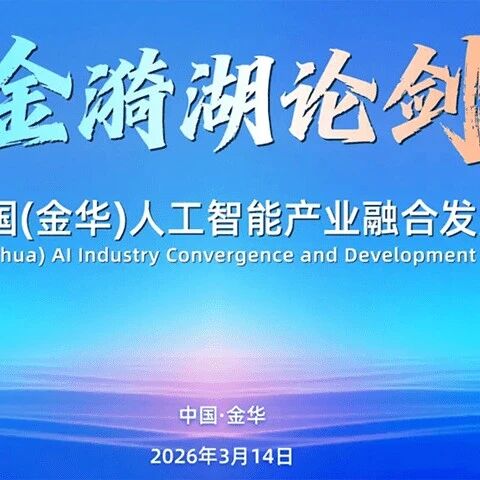
Core Viewpoint - The article discusses the upcoming "Jin Yi Lake Forum" 2026 China (Jinhua) Artificial Intelligence Industry Convergence Development Conference, which aims to connect technology with industry and capital with the AI sector, highlighting the need for practical applications of AI technology in various industries [3][4][35]. Group 1: Economic Context of Jinhua - Jinhua's GDP surpassed 700 billion yuan, reaching 731.35 billion yuan in 2025, marking a significant growth rate of 6.3%, positioning it among the top in the province [8]. - The city aims to reach a GDP of 1 trillion yuan by 2030, transitioning from a manufacturing hub to a stronghold of intelligent manufacturing [9][31]. - Jinhua's robust manufacturing base, particularly in hardware and automotive parts, provides a solid foundation for AI applications [10]. Group 2: AI Industry Potential in Jinhua - The rise of companies like Leap Motor, which produced 665,000 electric vehicles in 2025, demonstrates the successful integration of advanced technology with local manufacturing capabilities [10]. - Jinhua's logistics sector is highly developed, with 18.85 billion express deliveries in 2025, accounting for about 10% of the national total, showcasing its efficiency and potential for AI applications [11][12]. - The city is exploring digital logistics initiatives to enhance efficiency and reduce costs, making it an ideal testing ground for AI solutions [13]. Group 3: Conference Highlights - The conference will feature top experts and industry leaders discussing urgent issues and cutting-edge technologies relevant to Jinhua's industrial transformation [15][19]. - Notable speakers include academicians and founders of leading companies, who will share insights on AI innovation and practical applications [17][18][19]. - The event aims to connect startups with potential applications and industry support, fostering an environment for technological advancement [19][30]. Group 4: Strategic Location and Infrastructure - The conference is held in Jinyi New District, a key hub in the Yangtze River Delta, benefiting from multiple national strategic platforms [21][25]. - The area boasts a well-developed transportation network, facilitating efficient resource flow and collaboration among scientists and engineers [22][24]. - Jinyi New District is committed to creating a favorable business environment and supporting emerging industries, particularly in AI and intelligent manufacturing [28][29].
郑栅洁:“十五五”将实施一批投资万亿级以上的能源重大工程
证券时报· 2026-03-06 09:40
Core Viewpoint - The article discusses the strategic initiatives and future plans outlined by the National Development and Reform Commission (NDRC) for the upcoming "15th Five-Year Plan" period, focusing on significant investments in energy, emerging industries, and traditional sectors. Group 1: Major Investments and Infrastructure - The NDRC plans to implement a series of major energy projects with investments exceeding one trillion yuan, including initiatives like the Yarlung Tsangpo River hydropower project and offshore wind power bases [2] - Additionally, the NDRC aims to advance significant transportation projects, including the construction of the "Eight Vertical and Eight Horizontal" high-speed railway main corridors and the national expressway network [2] Group 2: Emerging and Future Industries - The NDRC will focus on developing six emerging pillar industries: integrated circuits, aerospace, biomedicine, low-altitude economy, new energy storage, and intelligent robotics, with a combined output expected to reach nearly 6 trillion yuan by 2025 and potentially double to over 10 trillion yuan by 2030 [3] - Future industries identified include quantum technology, biomanufacturing, green hydrogen energy, nuclear fusion energy, brain-computer interfaces, embodied intelligence, and 6G technology, which are on the brink of technological breakthroughs [3] Group 3: Traditional Industries and Market Expansion - The NDRC anticipates that traditional industries will see an additional market expansion of over 10 trillion yuan in the next five years, emphasizing the importance of upgrading and strengthening these sectors [4] Group 4: Mergers, Acquisitions, and Competition - The NDRC supports the establishment of a national-level merger fund to address investment exit difficulties and promote mergers and acquisitions to alleviate "involution" competition issues [5] Group 5: Innovation and Open Scenarios - The NDRC plans to launch around ten comprehensive open scenarios in key areas this year to promote industrial innovation, with a focus on modern agriculture and elder care services, identifying approximately 100 flagship projects to drive development [6]

高端仪器仪表列入“十五五”重大工程项目
仪器信息网· 2026-03-06 09:07
Core Viewpoint - The article discusses the implementation of the "14th Five-Year Plan" and outlines six major areas with 109 significant engineering projects aimed at enhancing national development and innovation capabilities [4]. Group 1: New Production Capacity Development - Focus on high-end new materials, basic components, industrial software, and major technical equipment to boost industrial competitiveness [5][7]. - Emphasis on emerging industries such as integrated circuits, bio-manufacturing, and new energy technologies like hydrogen energy and advanced medical devices [9][10]. Group 2: Infrastructure Modernization - Development of a comprehensive national transportation network, including high-speed rail, highways, and modern airport systems [12]. - Construction of new energy bases and modernization of water networks to support sustainable development [13][14]. Group 3: Rural and Urban Development - Initiatives for agricultural modernization, including high-standard farmland construction and rural living condition improvements [15][16]. - Urban renewal projects aimed at enhancing city infrastructure and commuting efficiency [17]. Group 4: Health and Social Welfare - Strengthening public health capabilities and improving medical services, including traditional Chinese medicine and community health services [19][20]. - Focus on enhancing elderly care services and support for vulnerable populations [20]. Group 5: Environmental Sustainability - Commitment to carbon peak and carbon neutrality goals through energy efficiency and clean energy initiatives [22][23]. - Implementation of ecological protection and restoration projects across various regions [25][26].