
绿色转型

Search documents
菏泽2025年新能源产值将破150亿元
Xin Lang Cai Jing· 2025-12-18 12:06
来源:河畔视频 【#菏泽2025年新能源产值将破150亿元#】12月17日,菏泽市召开"产业链上的山东好品牌"菏泽市系列 现场新闻发布会(新能源产业专场),介绍该市新能源产业高质量发展情况。 全市新能源企业从2020年的38家增至目前的67家,形成百亿级产业集群,2025年产值将突破150亿元。 绿色转型成效显著。依托本地新能源产品,全市建成风电场站总装机量达1.9GW,年发电量43.7亿千瓦 时,减少碳排放约340万吨。就业与税收双提升。带动就业10.6万人,2024年贡献税收近20亿元,同比 增长8.7%,成为拉动区域经济的新发展引擎。(@新黄河 记者李焜染) 来源:河畔视频 【#菏泽2025年新能源产值将破150亿元#】12月17日,菏泽市召开"产业链上的山东好品牌"菏泽市系列 现场新闻发布会(新能源产业专场),介绍该市新能源产业高质量发展情况。 全市新能源企业从2020年的38家增至目前的67家,形成百亿级产业集群,2025年产值将突破150亿元。 绿色转型成效显著。依托本地新能源产品,全市建成风电场站总装机量达1.9GW,年发电量43.7亿千瓦 时,减少碳排放约340万吨。就业与税收双提升。带动就业 ...
凝心聚力开新局 以经济强基筑牢复兴伟业
Xin Hua Wang· 2025-12-18 10:36
Group 1 - The core viewpoint emphasizes that high-quality development is laying a solid foundation for national rejuvenation, with the 2025 Central Economic Work Conference providing clear direction [1] Group 2 - The conference highlights the importance of domestic demand as a driving force, aiming to build a strong domestic market. Retail is rapidly transforming towards quality and service, with successful initiatives like appliance trade-ins and vibrant rural live-streaming sales [3] Group 3 - The conference stresses the need for innovation in foreign trade and expanding an open new pattern. It focuses on win-win cooperation across multiple fields, with cross-border live streaming and the continuous operation of the China-Europe Railway Express [5] Group 4 - The conference underscores the importance of people's livelihoods, aiming to do more practical things for the public. Stability in livelihoods, employment, income growth, and social security are emphasized to ensure a solid safety net [7] Group 5 - The conference advocates for a green transition, leading with the "dual carbon" goal to promote comprehensive green transformation. Green development is reshaping the economic ecology, with solar panels and new energy buses contributing to low-carbon urban transport [9]

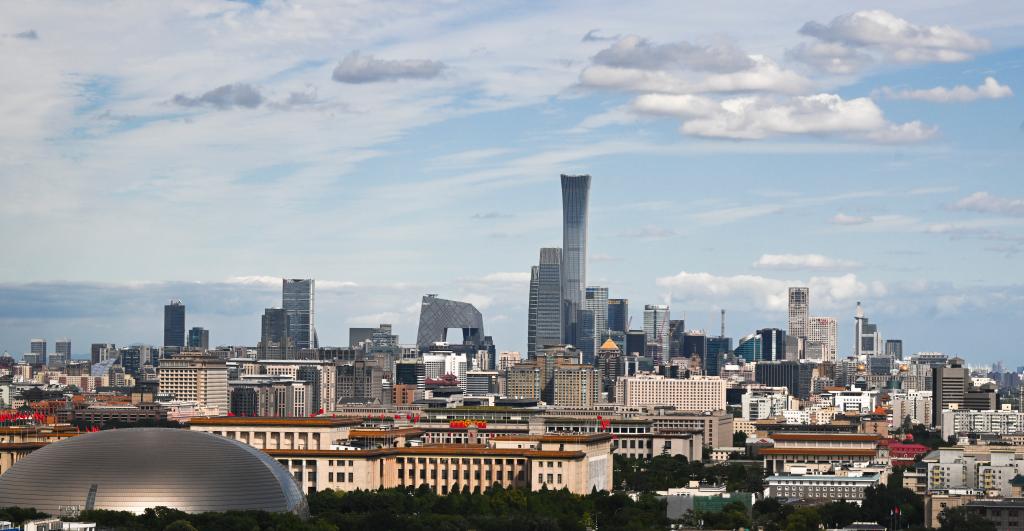
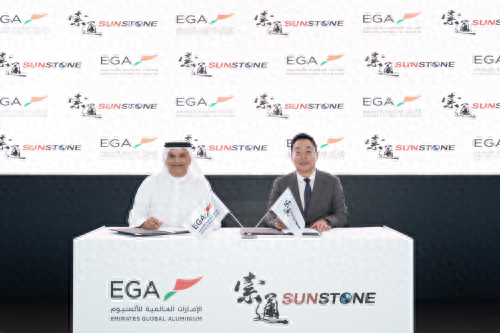
索通发展携手阿联酋环球铝业(EGA)计划于2026年在阿建设预焙阳极生产基地
Huan Qiu Wang· 2025-12-18 09:54
Group 1 - The core point of the article is the signing of a joint venture agreement between Suotong Development Co., Ltd. and Emirates Global Aluminium (EGA) to establish a prebaked anode production base in the UAE with an annual capacity of 300,000 tons, expected to start construction in 2026 and commence production in 2028, with a total investment of approximately $295 million [1][3][4] Group 2 - Suotong Development will hold 55% of the joint venture, while EGA will hold 45%, with Suotong responsible for the construction and operation of the factory [1][3] - This partnership marks a significant upgrade in the relationship between Suotong and EGA, transitioning from a supply chain relationship to a deeper capital and strategic collaboration, enhancing risk management and development capabilities in complex international environments [3] - The production base represents Suotong's first overseas investment project, optimizing its global capacity and supply chain layout, and aligning with the company's long-term strategic planning [3] - The project has received strong support from various departments of the UAE government, highlighting its potential as a model for mutual benefit and development between China and the UAE [3] - The collaboration is seen as a response to the global manufacturing industry's green transformation, with both companies aiming to set new benchmarks in low-carbon, green, and efficient construction [4]

护航乳业全产业链低碳转型,渣打集团支持蒙牛集团成功发行首笔可持续发展点心债券
Zhong Guo Shi Pin Wang· 2025-12-18 09:02
Core Viewpoint - The dairy industry is undergoing a significant low-carbon transformation, which is essential for its high-quality development and has a profound impact on global dairy emissions reduction efforts. China's dairy sector is becoming a key player in driving the global dairy value chain towards a low-carbon future [1]. Group 1: Industry Transformation and Challenges - The dairy industry faces unprecedented transformation pressures under the "dual carbon" goals, with over 90% of emissions originating from the supply chain, making collaborative carbon reduction across the entire industry chain crucial [1]. - For Mengniu, its extensive supply chain network, which includes farms, suppliers, and logistics partners, generates significant "Scope 3" emissions, posing a core challenge to achieving its strategic goals of carbon peaking by 2030 and carbon neutrality by 2050 [3]. Group 2: Financial Solutions and Innovations - Standard Chartered Bank and Mengniu Group have collaborated to implement a sustainable financial practice, successfully issuing a sustainable offshore RMB bond totaling 3.5 billion RMB, marking a significant step in aligning China's dairy industry with international standards [1][4]. - The issuance of the sustainable bond was supported by a sustainable development financing framework that meets international standards, ensuring funds are directed towards key carbon reduction projects [5]. Group 3: Market Response and Impact - The bond issuance received overwhelming interest, with total orders reaching approximately 39.9 billion RMB, resulting in a subscription multiple of over 11 times, setting records for the lowest interest rates and largest issuance scale for Chinese dairy companies in the offshore RMB bond market [9]. - The final interest rates were set at 2.000% for the 5-year bond and 2.300% for the 10-year bond, establishing a new pricing benchmark for Chinese companies seeking sustainable financing in offshore markets [9]. Group 4: Future Outlook and Collaboration - The successful issuance of the sustainable bond is a critical step for Mengniu in shaping a globally influential sustainable brand image and driving collaborative carbon reduction across its supply chain [10][13]. - As the "dual carbon" goals advance, more companies are expected to accelerate their green transformations, with international financial institutions like Standard Chartered playing a key role in supporting these efforts [13].


商务部官员谈应对光伏贸易摩擦:做行业赋能者,而不是产能转移者
Xin Lang Cai Jing· 2025-12-18 08:27
炒股就看金麒麟分析师研报,权威,专业,及时,全面,助您挖掘潜力主题机会! 围绕光伏行业如何应对包括贸易摩擦在内的各类挑战,顾宇表示,首先要秉持长期主义,坚定发展信 心。光伏行业的发展前景依然广阔。今年以来,在市场和政策的双向驱动下,行业反内卷已见成效,我 国光伏产业正稳步迈向高质量发展新阶段。其次,要坚持创新驱动,促进合作共赢。在这场行业寒冬 中,创新将是个体企业能否生存的关键。企业要坚持贯彻新发展理念,推动光伏行业转型升级,继续加 大对先进技术研发投入力度,以质量和技术构建行业竞争力,为全球光伏行业及终端用户提供更多更好 的中国解决方案。 12月18日消息,在今天举行的2025光伏行业年度大会上,商务部贸易救济调查局副局长顾宇表示,中国 光伏行业在全球产业链中占有最重要的位置,不仅提供了优质的产品和服务,也为全球减碳事业发展作 出了重大贡献。他指出,当前光伏行业遭遇贸易摩擦,有两大趋势值得关注,第一是发达国家对我光伏 限制措施进一步强化,第二是新兴国家与我贸易摩擦抬头。 顾宇谈到,未来一段时期,受地缘政治及产业格局重塑影响,新兴国家恐通过各种手段减少对中国供应 链的依赖,光伏产品出口及企业出海或将面临多线受 ...
【利得基金】基金销售新规划定多重红线
Sou Hu Cai Jing· 2025-12-18 08:19
Group 1: Fund Sales Regulation - The China Securities Investment Fund Industry Association issued a draft regulation aimed at improving fund sales practices, focusing on investor interests and addressing issues like "heavy sales, light service" [1] - Key measures include prohibiting the display of annualized performance for funds with a duration of less than one year, banning the promotion of fund managers' personal achievements, and requiring certified personnel for live sales [1] - The regulation emphasizes a shift towards a sales philosophy centered on the real long-term returns for investors [1] Group 2: Hong Kong Stock Exchange Technology Index - The Hong Kong Stock Exchange launched the Hang Seng Tech 100 Index, which tracks the performance of the 100 largest technology companies listed in Hong Kong [2] - The index covers six major innovation themes: artificial intelligence, biotechnology and pharmaceuticals, electric vehicles and smart driving, information technology, internet, and robotics [2] Group 3: QDII Product Subscription Limits - Recent adjustments to subscription limits for certain QDII products have raised market attention, with thresholds changing from 100,000 yuan to as low as 100 yuan within three days [3] - Many QDII products are now imposing very low subscription limits, with some set at 100 yuan or below [3] - Experts advise investors to avoid blindly chasing QDII products with opened quotas, as this does not guarantee good performance or optimal investment timing [3] Group 4: Market Outlook - Huatai Securities suggests focusing on structural clues from the Central Economic Work Conference, emphasizing domestic demand, innovation in AI, and the importance of financial technology [4] - The report highlights the need for risk management in real estate and encourages investment in energy and construction sectors [4] - The upcoming Federal Reserve meeting is expected to influence market liquidity, with a dovish outlook anticipated [4] Group 5: Investment Recommendations - Following recent economic meetings, the focus is on sector-specific investment opportunities, particularly in AI, lithium batteries, military, and certain consumer goods [5] - The report suggests adjusting investment strategies to increase exposure to seasonal, industrial, and policy-driven themes while reducing allocations to domestic cyclical assets [5] Group 6: Focus on Consumer and Cyclical Sectors - Dongfang Securities identifies a potential resurgence in mid-cap blue-chip stocks, particularly in the consumer sector, which has been undervalued [6] - The cyclical sector is also highlighted for its potential due to technological empowerment and supply constraints, with a focus on new materials and strategic metals [6] - The report recommends monitoring themes such as aerospace, nuclear fusion, and semiconductor sectors for investment opportunities [6]
欧盟汽车一揽子计划是修订二氧化碳规则的重要第一步
Zhong Guo Qi Che Bao Wang· 2025-12-18 06:39
欧洲汽车制造商协会(European Automobile Manufacturers' Association)表示,欧盟委员会的汽车 一揽子计划为修订轿车和厢式货车的二氧化碳法规迈出了重要的第一步。该协会称,该计划是迈出的第 一步,旨在创建一条更务实、更灵活的路径,以使脱碳与竞争力和韧性目标保持一致。然而,该计划需 要更果断的措施,以促进未来几年的转型。 该行业组织(简称ACEA)的总干事Sigrid de Vries表示:"周二的提案正确地认识到,要使绿色转 型取得成功,就需要更大的灵活性和技术中立性。"她称:"我们现在将研究该计划,并与共同立法者合 作,在必要时对提案进行严格审视并予以加强。" ...
五矿商会刘丹阳:将各方力量凝聚成“一块坚硬的钢铁”,筑牢资源安全堤坝
Xin Hua Cai Jing· 2025-12-18 05:41
Core Viewpoint - The global supply chain is undergoing significant restructuring, elevating the strategic importance of securing key mineral resources, including iron ore, to unprecedented levels [1][2]. Group 1: Industry Developments - The China Minmetals Import and Export Chamber of Commerce (Minmetals Chamber) has been actively working on high-quality development and resource security in the steel industry [1]. - Since 2023, the Minmetals Chamber has been responsible for collecting, organizing, analyzing, and verifying import and export information for iron ore, copper concentrate, crude oil, potash fertilizer, and rare earths, providing services to over 3,000 enterprises [1]. - The Minmetals Chamber has been monitoring market changes and regularly reporting early data on bulk commodity imports and exports to relevant government departments [1]. Group 2: Industry Advocacy - The Minmetals Chamber represents collective industry interests and provides professional guidance for companies facing international trade challenges, including anti-dumping investigations [1]. - The organization has publicly opposed unilateralism and trade bullying, striving to maintain the stability and security of China's steel industry supply chain [1]. Group 3: Sustainability Initiatives - The Minmetals Chamber has developed four international standards related to sustainable minerals, with the "China Mineral Supply Chain Due Diligence Management Guidelines" recognized by major international institutions like the London Metal Exchange (LME) [2]. - The establishment of the "Green Minerals Committee" aims to create a collaborative mechanism for responsible sourcing and sustainable supply chain governance, helping companies gain a competitive edge in global markets [2]. Group 4: Global Cooperation - The Minmetals Chamber is exploring the construction of a diversified and resilient global resource supply network, including hosting events like the "China-Africa Green Minerals Cooperation Exchange" to identify new resource collaboration opportunities [2]. - The organization emphasizes the need for strategic leadership, policy coordination, and active participation from all enterprises to build a robust and sustainable resource security framework [2].
五矿商会刘丹阳:将各方力量凝聚成“一块坚硬的钢铁” 筑牢资源安全堤坝
Xin Hua Cai Jing· 2025-12-18 05:36
Core Viewpoint - The global supply chain is undergoing significant restructuring, making the security of key mineral resources, including iron ore, a strategic priority that must be addressed in the current era [1]. Group 1: Industry Developments - The China Minmetals Trade Association (CMTA) has been actively working on high-quality development and resource security in the steel industry, focusing on regulating the import and export order of bulk commodities [1]. - Starting in 2023, CMTA is responsible for collecting, organizing, analyzing, and verifying import and export information for iron ore, copper concentrate, crude oil, potash, and rare earths, providing services to over 3,000 enterprises and reporting early data to relevant departments [1]. - CMTA is committed to representing the collective interests of the industry and providing professional guidance for companies facing international trade challenges, opposing unilateralism and trade bullying to maintain the stability and security of China's steel industry chain [1]. Group 2: Green Transformation and Standards - CMTA has developed four international standards related to sustainable minerals, with the "China Mineral Supply Chain Due Diligence Management Guidelines" recognized by major international institutions like the London Metal Exchange (LME), allowing Chinese companies to use "Chinese standards" in international transactions [2]. - The establishment of the "Green Minerals Committee" aims to create a collaborative mechanism for responsible sourcing and sustainable supply chain governance, helping companies gain a competitive edge in global markets [2]. Group 3: Global Cooperation and Resource Supply - CMTA is exploring the construction of a diversified and resilient global resource supply network, including hosting "China-Africa Green Mineral Cooperation Exchange Activities" to help enterprises discover new resource cooperation opportunities [2]. - The organization emphasizes that ensuring resource security requires strategic leadership, policy coordination, and active participation from all enterprises, as well as dialogue and cooperation from the international community [2].
白银价格突破关键点位
Sou Hu Cai Jing· 2025-12-18 05:08
Core Viewpoint - The international spot silver price has experienced a significant upward trend, reaching new highs due to supply-demand imbalances and the Federal Reserve's loose monetary policy [1][2]. Group 1: Price Movement - On December 1, the spot silver price peaked at $58.84 per ounce, with a year-to-date increase exceeding 100% [1]. - By December 17, the price surpassed $66 per ounce, rising nearly 4% to $66.28, and briefly hitting a historical high of $66.88 [1]. Group 2: Supply and Demand Dynamics - The silver market is currently facing a supply shortage, driven by the rapid development of the green and digital transitions [2]. - Increased demand for silver is being fueled by the growth in the electric vehicle battery and solar panel markets, as well as ongoing demand from the artificial intelligence sector [2]. - A report from the Silver Institute and Oxford Economics highlights silver's critical role in global economic and technological transitions, particularly in solar energy, electric vehicles, and AI data centers over the next decade [2]. Group 3: Monetary Policy Impact - Silver prices are sensitive to changes in U.S. interest rates, with recent rate cuts by the Federal Reserve enhancing the appeal of non-yielding assets [3]. - The U.S. dollar index fell from approximately 99.4 on December 1 to 98.37 by December 17, providing upward momentum for silver prices denominated in dollars [3]. - The U.S. unemployment rate rose to 4.6% in November, the highest in over four years, indicating a weakening labor market and contributing to increased market demand for safe-haven assets like silver [3].