
硬科技

Search documents
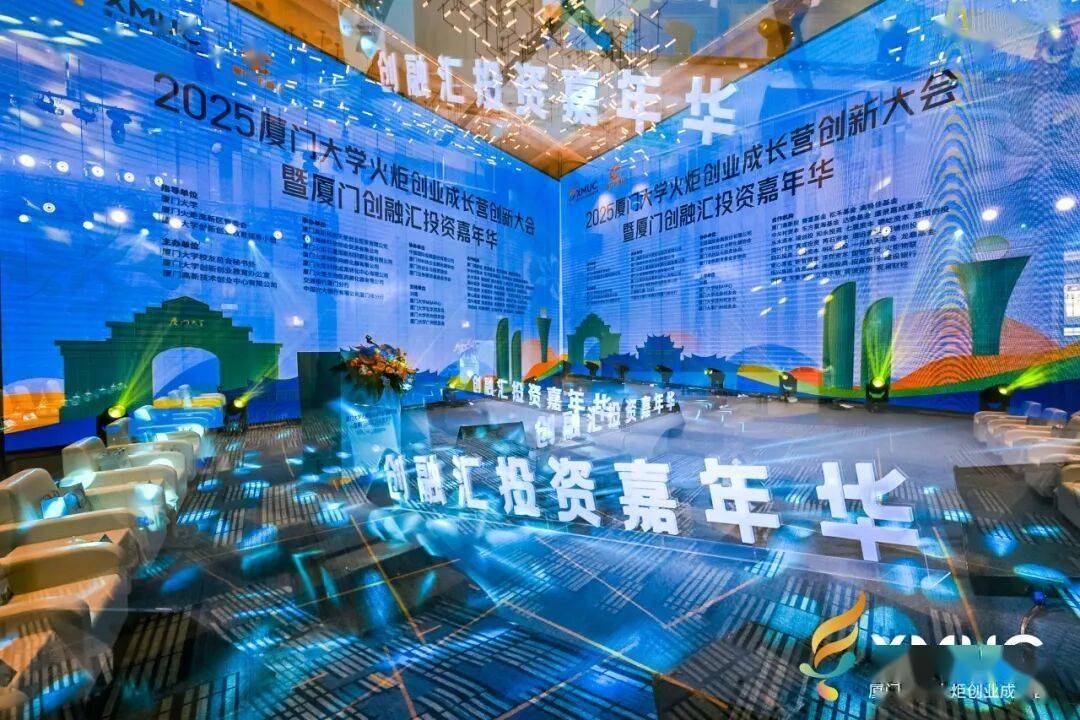
汇聚投资力量,致敬创业初心,2025厦门大学火炬创业成长营创新大会圆满落幕
Sou Hu Cai Jing· 2025-11-27 03:32
Core Insights - The 2025 Xiamen University Torch Entrepreneurship Growth Camp Innovation Conference and Xiamen Chuangronghui Investment Carnival took place in Xiamen, attracting nearly 300 hard technology projects since its launch in May 2023, with 36 high-quality projects selected from roadshows in four cities [1][3] Group 1: Event Overview - The event featured a "Technology Innovation Project Exhibition" where startup teams engaged with leading domestic institutions, showcasing projects ranging from satellite communication chips to new energy equipment [3] - The conference was attended by nearly 100 representatives from investment institutions, banks, guarantee institutions, securities firms, law firms, accounting firms, and professional service organizations [1] Group 2: Key Speeches - Wu Zhiwei, Chief Engineer of Xiamen Torch High-tech Zone, emphasized the importance of promoting university research results to the market as a key to regional innovation [6] - Chen Yundong, Deputy Secretary-General of the Xiamen University Alumni Association, expressed gratitude to various stakeholders and encouraged entrepreneurs to embody the spirit of innovation and perseverance [7] Group 3: Investment and Support Initiatives - Lin Zhichao, Chairman of Xiamen High-tech Venture Capital, highlighted the establishment of a 35,000 square meter "Technology Achievement Transformation Center" set to open before the Spring Festival next year, along with a 500 million yuan fund to support technology commercialization [10] - The fund aims to provide comprehensive financial support for high-quality hard technology projects at various development stages [10] Group 4: Project Presentations - The project roadshow featured 36 projects divided into six groups, each given one minute to present their technological barriers and business models, showcasing strong commercial potential and industrialization capabilities [14][15] - Awards were given to three companies for their growth potential, as evaluated by a panel of investors and industry experts [15] Group 5: Event Atmosphere - The event included performances by a "Chuangtou Band" composed of investment members, creating a lively atmosphere and engaging the audience [19] - The closing ceremony featured a collective singing of a song that resonated with the entrepreneurial spirit, symbolizing hope and determination [22][24] Group 6: Future Prospects - The entrepreneurship camp will continue to leverage national university talent and research advantages, along with the service ecosystem of Xiamen Chuangronghui, to facilitate systematic guidance and precise connections for projects [25]


从实验室到交易所,北京五年诞生了200家上市公司
Bei Ke Cai Jing· 2025-11-27 02:21
Core Insights - Beijing's innovative landscape is highlighted by the transformation of companies like Sanyuan Gene, Haitan Ruisheng, and Haibo Sunchuang into platform-based innovators, showcasing a shift from single-product firms to comprehensive solution providers in their respective fields [7][9][10]. Group 1: Company Transformations - Sanyuan Gene has evolved from a single-product pharmaceutical company to a platform-based innovative pharmaceutical enterprise, achieving significant growth in R&D investment and patent numbers [8][9]. - Haitan Ruisheng has transitioned from a data company to a foundational infrastructure provider for AI model implementation, with its asset scale increasing from 500 million to nearly 900 million yuan and maintaining a revenue growth rate of over 24% [7][10]. - Haibo Sunchuang has established itself as a leader in energy storage integration, leveraging its origins in Haidian District to become a key player in the tech innovation sector [4][10]. Group 2: Market and Economic Context - During the 14th Five-Year Plan period, Beijing ranked third globally in the number of unicorn companies, with R&D expenditure intensity around 6%, placing it among the top innovative cities worldwide [5][11]. - By the end of 2024, Beijing is expected to have 115 unicorn companies and 1,035 national-level specialized and innovative "little giant" enterprises, leading the nation in both metrics [11]. - The city has seen over 300 new tech companies established daily, surpassing Silicon Valley in density, and has achieved direct financing exceeding 5.6 trillion yuan during the 14th Five-Year Plan [11][19]. Group 3: Policy and Support - Beijing's government has implemented a range of supportive policies for tech companies, including funding for R&D, tax incentives, and a comprehensive service network to facilitate innovation and growth [12][18]. - The "15th Five-Year Plan" emphasizes the development of strategic emerging industries, including integrated circuits, robotics, and AI, aiming to enhance the competitive edge of these sectors [22][24]. - The introduction of the "merger and acquisition 19 articles" aims to accelerate the listing process for tech companies and improve the quality of existing listed companies, fostering a more integrated innovation ecosystem [40][42][43]. Group 4: Future Outlook - Sanyuan Gene aims to achieve annual revenue exceeding 1.5 billion yuan by the end of the 15th Five-Year Plan, positioning itself as a pioneer in gene engineering [22]. - Haitan Ruisheng plans to solidify its role as a key player in the digital transformation of multiple industries by the end of the 15th Five-Year Plan [20][21]. - The focus on building industry clusters and enhancing collaboration among companies is expected to lower innovation costs and accelerate technology application [28][30].

11.27犀牛财经早报:7只双创人工智能ETF将于28日首发 阿里巴巴经营利润骤降85%
Xi Niu Cai Jing· 2025-11-27 01:45
Group 1 - The first batch of seven AI-focused ETFs will collectively launch on November 28, 2023, providing investors with new opportunities in "hard technology" [1] - Several small and medium-sized banks are discontinuing high-interest long-term deposit products to reduce funding costs in response to narrowing net interest margins [1] - The storage industry is experiencing a "super cycle" driven by AI demand, with expectations of continued price increases into the first half of next year [2] Group 2 - Lithium carbonate prices have surged over 60% in the past six months, reaching a new high of 102,500 yuan per ton, driven by inventory depletion and increased demand [2] - Paper companies are actively seeking to balance supply and demand amid rising raw material prices, with new production capacities being introduced [2] - Alibaba's operating profit plummeted by 85% to 5.365 billion yuan, primarily due to strategic investments in AI and instant retail [3] Group 3 - Vanke is seeking to extend a 2 billion yuan domestic bond, with a meeting scheduled for December 10, 2025, to discuss related matters [4] - "Encounter Little Noodles" plans to issue over 97 million shares in its Hong Kong IPO, with a maximum price set at 7.04 HKD per share [4] - Muxi Co. announced its initial public offering on the Sci-Tech Innovation Board, with a subscription date set for December 5, 2025 [5] Group 4 - Xining Special Steel announced a share transfer of 14.63% from Wuhu Xinzhehai to Qinghai Guotou [6] - Shengshi Technology signed a strategic cooperation agreement with Songyan Power to enhance collaboration in the humanoid robot sector [6] - U.S. stock indices collectively rose, with the Dow Jones up 0.68% and the Nasdaq up 0.81%, supported by technology stocks [7] Group 5 - Chinese concept stocks halted a three-day rally, with Alibaba and Baidu experiencing significant intraday declines of 4.5% and 3.6% respectively [8] - The British budget announcement led to a drop in long-term UK bond yields, while U.S. Treasury yields fluctuated following unemployment data [8] - Commodities saw a broad increase, with oil prices rising over 1% and gold futures reaching a near two-week high [8]


硬科技不仅需要“金主”,更需要“合伙人”
3 6 Ke· 2025-11-27 00:24
Group 1 - The core viewpoint of the articles highlights a shift in the financial support model for hard technology companies, moving from traditional funding to a partnership approach that emphasizes understanding technology and shared growth [2][4][18] - Zhihui Technology, a commercial cleaning and inspection robot company, received a credit line of 25 million yuan from China Resources Bank, marking a significant change in its development trajectory [1][8] - The financial industry is transitioning from an asset-based logic to a technology-based logic, focusing on the technical capabilities and growth potential of companies rather than just their collateral [8][15] Group 2 - Hard technology companies exhibit unique characteristics, such as high technology, high growth, high risk, high return, and low asset reliance, which complicate their access to traditional financing [5][7] - The demand for tailored financial solutions arises from the specific needs of hard technology firms, which often lack traditional collateral but possess valuable intellectual property and customer validation [5][10] - Financial institutions are increasingly required to understand the language of the industry and provide services that align with the unique development stages of technology companies [6][17] Group 3 - China Resources Bank has developed a comprehensive service model called "Runchuang Port," which includes various modules to support technology companies beyond just financial assistance [12][14] - The bank's approach emphasizes embedding financial services within the real growth scenarios of companies, transforming its role from a mere fund provider to a co-builder of innovation ecosystems [9][14] - The concept of "patient capital" is gaining importance, as financial support that accompanies companies through their entire growth cycle is essential for nurturing new productive forces [15][16]
两创板块年内领涨 投资该如何抉择?
Jin Rong Jie· 2025-11-27 00:01
Core Insights - The STAR Market and ChiNext have been the standout performers in the A-share market this year, with the STAR 50 Index and ChiNext Index rising by 37.3% and 43.3% respectively as of November 18 [1] Group 1: Market Positioning and Focus - The STAR Market focuses on "hard technology" companies, emphasizing R&D-driven innovation and allowing unprofitable firms with high technical barriers to go public, while ChiNext serves "growth-oriented innovative enterprises" supporting high-tech and traditional industry upgrades [2] - The industry distribution on the STAR Market is more concentrated, with electronics and biomedicine making up 25% and 19% of companies respectively, while the ChiNext has a more diversified industry coverage [2] Group 2: Performance and Investment Timing - The STAR Market tends to show significant performance elasticity during hard technology breakthrough cycles, while ChiNext benefits from a dual-driven model of "new energy + technology" during periods of strong demand in sectors like energy storage and technology upgrades [4] - The STAR Market is more likely to benefit from policies promoting "hard technology" and domestic self-sufficiency, while ChiNext performs better during supply-side reforms and breakthroughs in technologies like solid-state batteries [4] Group 3: Market Sentiment and Trading Activity - The STAR Market typically outperforms during periods of rising risk appetite, such as when the Federal Reserve signals interest rate cuts, while ChiNext has higher trading activity, with an average turnover rate of 5.7% compared to the STAR Market's 3.2% [5] - In periods of high market liquidity, ChiNext's sectors like new energy and electronics are more likely to generate a "wealth effect," driving index growth [5] Group 4: Investment Strategies - Investors with a strong risk tolerance and a long-term view on technology may prefer the STAR Market during clear "hard technology" trends, while those looking to balance new energy and technology may find ChiNext more suitable [5] - For ordinary investors, both markets have high entry thresholds, but they can consider investing through ETFs like the STAR 50 ETF and ChiNext ETF for easier access to core companies in these markets [5][6]
江苏新增45家标杆孵化器
Xin Hua Ri Bao· 2025-11-26 23:09
Core Insights - The Jiangsu Provincial Science and Technology Department announced the list of 45 benchmark incubators for 2025, bringing the total to 77 across the province [1] - The newly added incubators focus on "hard technology" and have established over 100 specialized technical service platforms, incubating more than 5,800 enterprises [1] Summary by Categories Benchmark Incubators - The 45 new benchmark incubators are distributed across all prefecture-level cities in Jiangsu, with Suzhou having 13, Nanjing and Wuxi each having 8, Changzhou 5, Yancheng 3, and other cities 1 each [1] - 29 of the benchmark incubators are located in provincial-level high-tech zones, with 15 in "Double High Coordination" pilot high-tech zones and 2 relying on the National University Regional Technology Transfer and Transformation Center (Jiangsu) [1] Industry Focus - The incubators are targeting industries such as third-generation semiconductors, artificial intelligence, hydrogen energy, new energy storage, and advanced materials [1] - They aim to cultivate enterprises with potential for key technology breakthroughs and import substitution, aligning closely with local industrial layouts [1] Enterprise Composition - Among the incubated enterprises, 54% are technology-based SMEs and high-tech enterprises, including over 270 specialized, refined, unique, and innovative enterprises, more than 180 unicorns and gazelles, and 80 listed (or registered) companies [1]
资本市场要当好创新放大器
Jing Ji Ri Bao· 2025-11-26 22:43
Group 1 - The core viewpoint of the article emphasizes the acceleration of the capital market's support for technology innovation, as demonstrated by Yushu Technology's completion of its IPO guidance report, marking a significant step towards A-share market entry [1] - The emergence of high-quality technology companies, like Yushu Technology, reflects the rapid development of cutting-edge technologies such as artificial intelligence, biotechnology, and quantum technology, which are reshaping industry landscapes and driving the need for a supportive capital supply system [1][2] - The capital market is tasked with providing a nurturing environment for innovative companies, as evidenced by the introduction of more inclusive listing standards, such as the fifth set of listing standards for the Sci-Tech Innovation Board and the third set for the Growth Enterprise Market [1][2] Group 2 - The article highlights the importance of a capital market that not only provides financing but also enhances governance through targeted listing guidance, standardized information disclosure, and strict corporate governance requirements, helping technology companies improve management and risk resilience [2] - It stresses the need for a capital market capable of accurately identifying future value, focusing on a technology company's R&D team, technological barriers, and industry prospects rather than just current profitability [2] - The article calls for a capital market that can support long-term innovation efforts, recognizing that technological innovation is a marathon rather than a sprint, and emphasizes the need for patient capital that understands the nonlinear nature of innovation [3]
科创板公司研发投入保持高位
Jing Ji Ri Bao· 2025-11-26 22:36
Core Insights - The article highlights the strong R&D investment and growth characteristics of companies listed on the STAR Market, with a focus on "hard technology" sectors such as integrated circuits and artificial intelligence [1][2][3] Group 1: R&D Investment and Financial Performance - In the first three quarters, STAR Market companies reported a total R&D investment of 119.745 billion yuan, which is 2.4 times the net profit of the sector, with a median R&D intensity of 12.4%, significantly leading other A-share sectors [1] - The 35 unprofitable companies in the STAR Growth Layer showed a remarkable performance, with a 39% year-on-year revenue growth and a 65% reduction in net profit losses, while maintaining a median R&D intensity of 44.3% [1] - Overall, STAR Market companies achieved an operating revenue of 1,105.011 billion yuan, a year-on-year increase of 7.9%, and a net profit of 49.268 billion yuan, up 8.9% year-on-year [2] Group 2: Policy and Market Environment - The STAR Market has established a unique financing channel for innovative companies by allowing unprofitable and red-chip enterprises to list, supported by continuous regulatory improvements [2] - The introduction of the "1+6" policy and the expansion of the fifth listing standard to include cutting-edge fields like artificial intelligence and commercial aerospace have further enhanced the market's appeal [2] - The STAR Market is expected to nurture more world-class technology companies, with a focus on fostering "hard technology" leaders as part of China's journey towards high-level technological self-reliance [3] Group 3: Sector-Specific Growth - The artificial intelligence sector has emerged as a new growth pillar, with companies like Cambrian and Haiguang Information reporting revenue increases of nearly 24 times and 55%, respectively [3] - Companies in the communication and supporting business segments, such as Shijia Photon and Shengyi Electronics, have also seen significant profit growth, indicating a surge in demand for AI-related technologies [3]
中泰证券助恒坤新材成功上市
Da Zhong Ri Bao· 2025-11-26 22:34
Group 1 - Xiamen Hengkang New Materials Technology Co., Ltd. successfully listed on the Shanghai Stock Exchange's Sci-Tech Innovation Board, raising 1.01 billion yuan [1] - Hengkang New Materials focuses on the research, production, and sales of key materials for integrated circuits, including photoresists and precursors, and is one of the few companies capable of developing and mass-producing 12-inch integrated circuit wafer manufacturing materials [1] - The company has contributed significantly to the domestic integrated circuit industry by addressing critical material challenges and is expected to expand its market share amid the domestic production wave [1] Group 2 - Zhongtai Securities played a key role in Hengkang's successful IPO, completing the process in less than 11 months and ranking third in the industry for both the number and scale of Sci-Tech Innovation Board IPOs since 2025 [2] - The firm has established multiple industry groups focused on "hard technology" and has provided comprehensive financial services to technology innovation enterprises [2] - Zhongtai Securities aims to enhance its investment banking capabilities and continue supporting the real economy by offering a full-chain, one-stop financial service [2]

精准布局特定产业趋势 硬科技投资产品矩阵扩容
Xin Lang Cai Jing· 2025-11-26 22:24
Core Viewpoint - The technology growth market, led by sectors such as artificial intelligence, semiconductors, robotics, and innovative pharmaceuticals, is performing well this year, with new hard technology-themed funds being launched to cater to investors interested in these areas [1] Group 1: Fund Launches - Seven new AI-themed ETFs and one semiconductor design-themed ETF will be launched on November 28, providing refined tools for investors looking to invest in these sectors [1] - The fundraising caps for the newly approved ETFs are set at 10 billion, 20 billion, and 50 billion respectively by Yongying Fund, Penghua Fund, and Huatai-PB Fund [1] Group 2: Market Trends - In addition to the approved products, funds focused on robotics and innovative pharmaceuticals are also being reported for approval, indicating a growing interest in hard technology sub-sectors [1]