
经济衰退

Search documents
美国经济新剧本:不是悬崖,而是缓坡?
Jin Shi Shu Ju· 2025-03-25 11:25
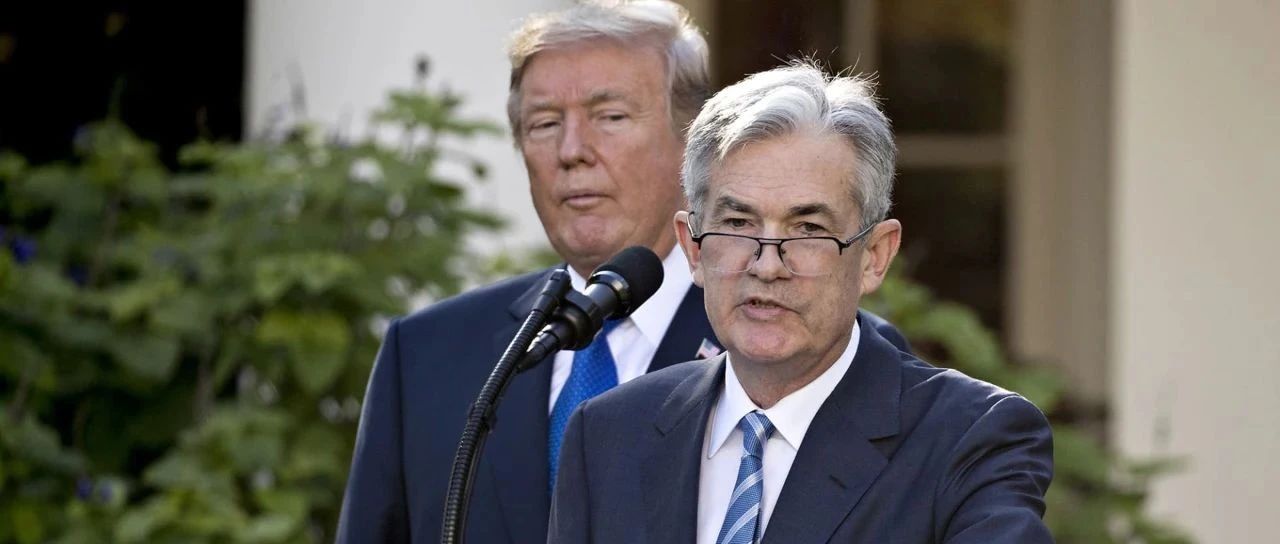
美国经济新剧本:不是悬崖,而是缓坡? 过去一个月,美国经济的叙事发生了转变。 由于政策的不确定性使消费者对经济前景更加谨慎,过去一个月,几项消费者信心指标均出现下滑。但 这些大多反映了当前的"氛围",因为对关税和联邦裁员的担忧占据了新闻头条,它们并未反映经济形势 的现实。 这种情况以前也发生过:2022年,消费者情绪和信心指标(均被视为"软数据")以类似的方式暴跌。当 时,消费者继续消费,使"硬数据"(如月度零售销售报告)保持稳定。 摩根士丹利首席全球经济学家在上周日给客户的研究报告中写道,"所有关于经济衰退的危机都可能被 夸大了。"他指出,1月份零售销售的下滑吓坏了投资者,但随后在2月份又被增长所抵消。 在连续两年超出预期后,2025年伊始,美国经济的增长速度低于华尔街许多人的预期。但尽管经济正在 降温,但并未崩溃。 美联储主席鲍威尔在3月19日的最近一次新闻发布会上表示:"经济增长似乎可能略有放缓,消费者支出 略有放缓,但仍保持稳健的步伐。" 鲍威尔用"似乎健康"来描述经济,此前,美联储在上周发布的最新经济预测摘要(SEP)中将2025年的 国内生产总值(GDP)预测下调至1.7%,低于美联储在去年12月 ...
美股不怕“4月2日”?上周五成交量创今年最高
美股研究社· 2025-03-24 11:10
Core Viewpoint - The article discusses the volatility in the U.S. stock market due to Trump's announcement of "reciprocal tariffs" and highlights the active participation of retail investors despite market uncertainties [1][2]. Group 1: Market Dynamics - The U.S. stock market experienced significant trading activity, with over 21 billion shares exchanged, marking the highest volume since 2025 [1]. - Retail investors are actively buying into the market, particularly in stocks like Tesla, which has seen a net inflow of $8 billion over 13 consecutive trading days [4]. - Despite concerns over trade conflicts and economic slowdown, there is a prevailing optimism among investors, leading to substantial capital inflows into global equity markets [1][2]. Group 2: Investor Sentiment - Investors appear to be ignoring the potential risks posed by a full-scale trade war, as indicated by the influx of "huge" funds into the stock market [2][3]. - The contrasting performance of the S&P 500 compared to European indices, such as Germany's DAX, suggests a divergence in investor sentiment regarding global trade prospects [3]. - The recent surge in retail investor activity may indicate that the market has not yet reached its bottom, as these investors are typically the last to exit [5]. Group 3: Institutional Behavior - Systematic funds have begun shorting U.S. stocks for the first time in over a year, reducing their exposure to the S&P 500 to its lowest level in 2023 [4]. - Despite the challenges faced by the stock market, retail investors continue to increase their investments, demonstrating a strong commitment to the market [4].

美国经济衰退或滞胀概率几何?|国际
清华金融评论· 2025-03-21 10:30
Core Viewpoint - The likelihood of the U.S. economy entering a recession in the foreseeable future is low, but growth is expected to slow down, with a possibility of a brief stagnation or decline, although this is considered unlikely. Current high inflation, exacerbated by rising tariffs, raises the potential for stagflation, but any occurrence would not be considered true stagflation [1][14]. Current Economic Status - The U.S. economy has shown resilience despite predictions of recession, with mixed economic indicators suggesting both recessionary signals and robust growth metrics. The Federal Reserve's recent meetings indicate a stable economic outlook, although uncertainty has increased [1][4][8]. - Various indicators point towards recession risks, including a significant drop in consumer confidence and weak retail sales data. However, the relationship between soft indicators and actual economic performance is often tenuous [5][7]. - The Atlanta Fed's prediction of a 2.8% decline in GDP for Q1 is primarily attributed to temporary factors, and economists still expect continued growth, albeit at a reduced rate [6][8]. Recession Indicators - Soft indicators, such as consumer confidence and small business optimism, have declined, but actual employment data remains strong, with job growth and low unemployment rates indicating a stable labor market [7][8]. - The mixed signals from economic data necessitate careful analysis to distinguish between temporary fluctuations and underlying trends [4][5]. Future Outlook - If current economic policies remain unchanged, the probability of recession may increase, potentially leading to a transition from soft to hard indicators of economic decline. However, historical patterns suggest that political pressures may lead to policy adjustments to mitigate economic damage [10][11]. - The impact of tariffs on inflation is projected to be temporary, with estimates suggesting an increase of 0.5-0.8 percentage points in inflation rates. The Federal Reserve is inclined to overlook these temporary effects, focusing instead on broader economic stability [14][15]. - The resilience of the U.S. economy, particularly through technological innovation and infrastructure investment, is expected to support growth while controlling inflation, although significant unforeseen challenges could still arise [15].

多家知名机构,紧急警告!
券商中国· 2025-03-20 23:23
Group 1: Economic Outlook - The risk of a recession in the U.S. is high and increasing, with Moody's chief economist Mark Zandi warning that Trump's tariff policies could push the economy into recession if implemented for three to five months [1][4][3] - Zandi noted that the current economic environment is fragile, with declining consumer and business confidence impacting investment plans [4][3] - The potential for a recession is described as a "designed recession," indicating that it could be a result of deliberate policy choices rather than external shocks [4] Group 2: Tariff Implications - Trump's announcement of reciprocal tariffs has raised concerns about its impact on various sectors, including agriculture and technology [3][5] - Analysts warn that tariffs could hinder the development of U.S. data centers and AI technologies, as much of the necessary hardware is sourced from abroad [5][6] - The imposition of tariffs on key components, such as semiconductors, could pose significant risks to the data center market, which relies on global supply chains [6] Group 3: Federal Reserve's Stance - The Federal Reserve's decision to maintain interest rates and its characterization of inflation as "temporary" has faced criticism, particularly from Allianz's chief economic advisor, who labeled it a "major policy mistake" [6][7] - Concerns are raised that the Fed's underestimation of inflation risks could lead to inadequate responses to economic changes, similar to past misjudgments during the pandemic [7][8] - Barclays economists suggest that the Fed's confidence in the temporary nature of price pressures may hinder its ability to respond effectively to evolving economic conditions [7][8]
2025年3月美联储议息会议解读:”不变”应变
Ping An Securities· 2025-03-20 07:41
Investment Rating - The investment rating for the industry is "Outperform the Market," indicating an expected performance that exceeds the market by more than 5% over the next six months [29]. Core Insights - The Federal Reserve's March 2025 meeting maintained the federal funds target rate in the range of 4.25-4.50% and plans to slow down the balance sheet reduction starting in April, decreasing the monthly reduction of Treasury securities from $25 billion to $5 billion [5][12]. - Economic growth forecasts for 2025 have been significantly downgraded from 2.1% to 1.7%, while the unemployment rate is expected to rise slightly from 4.3% to 4.4% [10][13]. - Inflation expectations have been adjusted upward, with the PCE and core PCE inflation rates forecasted to be 2.7% and 2.8%, respectively, for 2025 [13][14]. - Powell's remarks emphasized the uncertainty brought by tariffs on inflation and economic outlook, suggesting a flexible monetary policy approach [16][18]. Summary by Sections Meeting Statement and Economic Forecast - The Federal Reserve's March meeting did not lower interest rates as expected but still anticipates two rate cuts within the year [12]. - The description of economic uncertainty has shifted from "uncertainty exists" to "uncertainty increases," reflecting heightened concerns about the economic outlook [12][10]. Economic Predictions - The median economic growth forecast for 2025 has been revised down to 1.7%, with the unemployment rate expected to rise to 4.4% [13][14]. - Inflation predictions have been adjusted upward, with PCE inflation now expected at 2.7% and core PCE at 2.8% for 2025 [14][15]. Powell's Remarks - Powell highlighted the challenges in assessing the impact of tariffs on inflation, indicating that long-term inflation expectations remain stable despite short-term fluctuations [16][18]. - He noted that while the probability of recession has increased, it remains low, and the labor market shows resilience [16][22]. Policy Considerations - The current economic situation is characterized by high uncertainty, leading to a cautious approach in policy adjustments [20][21]. - The decision to slow down the balance sheet reduction is seen as a technical adjustment rather than a shift in monetary policy stance [20][21]. Market Reactions - Following the meeting, market reactions included a decline in the 10-year Treasury yield and gains in major stock indices, indicating a "loose trading" environment [17][18].
美联储3月议息前瞻:政策路径陷“特朗普迷雾”
美股研究社· 2025-03-19 10:56
Core Viewpoint - The article discusses the complex situation faced by the Federal Reserve as it navigates inflation trends and the impact of political factors, particularly the potential reintroduction of tariffs by the Trump administration, which complicates monetary policy decisions [1][3]. Group 1: Monetary Policy and Economic Indicators - The Federal Reserve is expected to maintain the benchmark interest rate in the range of 4.25%-4.50% for the second consecutive time, with a "policy silence" likely to continue until summer [1]. - The recent economic data shows a mixed picture: while the labor market remains strong with 303,000 new jobs added in March and wage growth stable at 4.1%, consumer confidence has dropped to a six-month low, and retail sales growth has slowed [5]. - The Fed's latest GDPNow model has raised the first-quarter economic growth forecast from 2.5% to 3.1%, alleviating some concerns about a hard landing [5]. Group 2: Inflation and Interest Rate Expectations - The recent CPI data showed a temporary easing, but rising energy prices and persistent service inflation keep the Fed cautious, leading to a reduction in the expected number of rate cuts from two to one for the year [2]. - The interest rate futures market has shifted expectations for the first rate cut from June to September, with the anticipated total cut for the year narrowing to 40 basis points [6]. Group 3: Political Influences on Monetary Policy - The potential reintroduction of tariffs by the Trump administration poses a dilemma for the Fed, as increased import costs could reignite inflation, while escalating trade tensions might necessitate earlier rate cuts to support the job market [3]. - Analysts expect the upcoming Fed meeting to be a critical communication window, with possible changes in policy statements reflecting a need for more evidence to confirm inflation targets [7]. Group 4: Market Reactions and Future Outlook - The market is showing signs of adjusting to the Fed's cautious stance, with the 10-year Treasury yield rising above 4.3% and the dollar index hovering around the critical level of 104 [6]. - Morgan Stanley notes that while recent economic data indicates a slowdown, short-term fluctuations are insufficient to alter the Fed's policy direction, suggesting a continued data-driven approach in the face of uncertainty [8].

美国财长称美股调整是健康的,不保证没有衰退,“如果有人在2006-07年踩刹车,就不会有08年的危机”
华尔街见闻· 2025-03-17 10:35
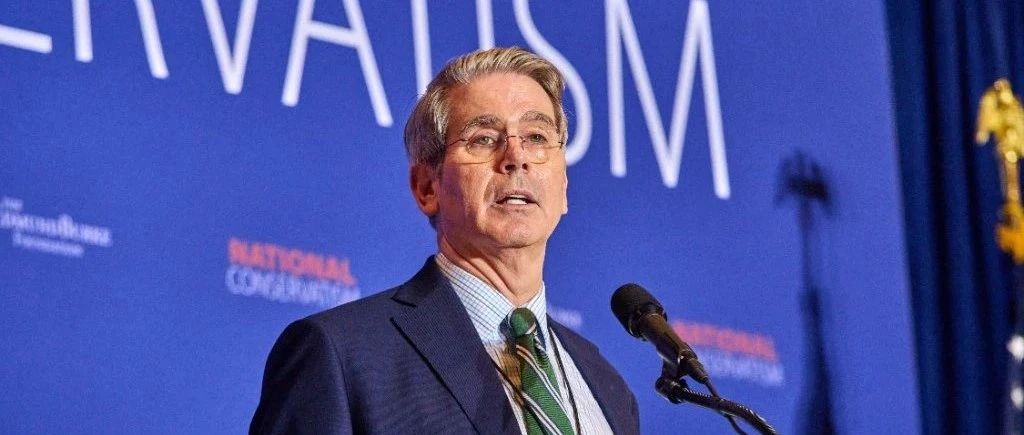
Core Viewpoint - The U.S. Treasury Secretary supports Trump's policies, stating that market adjustments are healthy and normal, and emphasizes the importance of sound tax policies, deregulation, and energy security for long-term market performance [1][2]. Group 1: Market Conditions - The S&P 500 index recently entered a technical correction, raising concerns among investors about the impact of Trump's policies on tariffs, immigration, and federal spending cuts [1]. - The Treasury Secretary reassures that the current market fluctuations are not indicative of a crisis but rather a transitional phase, asserting that a week is insufficient to alter market trends [1][3]. Group 2: Economic Outlook - The Treasury Secretary acknowledges that there is "no guarantee" against a recession, highlighting the unpredictability of economic events like the COVID-19 pandemic [2]. - He emphasizes the need for the Trump administration to reduce excessive government spending and stimulate the private sector, indicating that small banks are ready to start lending [2]. Group 3: Government Spending and Policy - The current level of government spending is deemed unsustainable, and the transition from government to private sector spending will significantly impact the economy [3]. - The Trump administration is not expected to intervene in the market due to short-term declines, with a focus on maintaining policy direction regardless of market fluctuations [4].
美国CPI不及预期,美元维持弱势
Dong Zheng Qi Huo· 2025-03-17 03:18
Investment Rating - The report rates the dollar as "volatile" [6] Core Insights - Market risk appetite continues to decline, with most global stock markets experiencing downturns and bond yields rising, particularly US Treasury yields which have slightly increased to 4.31% [9][11] - The US dollar index fell by 0.12% to 103.7, while non-US currencies showed mixed performance [9][22] - The latest US CPI data for February was below expectations, with year-on-year growth dropping from 3% to 2.8% and core CPI decreasing from 3.3% to 3.1% [2][29] - Inflation expectations have risen, with the one-year inflation expectation jumping from 4.3% to 4.9% and the five-to-ten-year expectation increasing from 3.5% to 3.9% [2][11] Summary by Sections Global Market Overview - The market is characterized by a continued decline in risk appetite, with most stock markets down and bond yields up, particularly US Treasury yields which rose to 4.31% [9][11] - The dollar index decreased by 0.12% to 103.7, while gold prices increased by 2.6% to 2984 USD/oz [9][25] Market Trading Logic and Asset Performance - The US stock market has seen a four-week decline, influenced by tariff policies and recession expectations, with the S&P 500 dropping by 2.27% [11] - The February CPI data indicates a cooling inflation trend, with core inflation pressures easing, although food prices are rising [2][29] - The Federal Reserve is expected to maintain its current interest rates in the upcoming meeting, with inflation risks increasing [2][11] Hotspot Tracking - The February CPI data from the US was notably below expectations, indicating a temporary easing of inflation concerns [3][29]
特朗普故意制造一场衰退?
海豚投研· 2025-03-15 15:32
Core Viewpoint - The article discusses the recent downturn in the US stock market, attributing it to market re-evaluation of Trump's "transition period" and the potential for economic recession, alongside the implications for asset allocation strategies [4][5][6]. Group 1: Market Performance - On March 10, US stock indices experienced significant declines, with the Nasdaq dropping 4%, marking its largest daily drop since September 2022, while the S&P 500 fell 2.7% to a new closing low since last September [1]. - The three major indices have retreated significantly from their December highs, with the Nasdaq down 13.5%, the S&P 500 down 8.6%, and the Dow down 7% [2]. Group 2: Economic Outlook - Trump's comments on the possibility of recession and the "transition period" indicate a significant shift in economic policy, focusing on reducing government spending and addressing national debt [5][6]. - The Treasury Secretary's warning about a "detox period" for the economy suggests a slowdown as the government attempts to reduce reliance on spending [6]. Group 3: Debt and Fiscal Policy - The US federal debt has reached $36 trillion, with interest payments projected to rise significantly in the coming years, potentially exceeding $1 trillion annually by 2026 [9]. - The Trump administration aims to reduce the deficit and interest costs, which could involve various strategies, including tax increases and government efficiency measures [9][10]. Group 4: Market Dynamics - The article highlights the relationship between market expectations, liquidity, and economic fundamentals, suggesting that the current economic environment is characterized by uncertainty and volatility [13][19]. - The potential for a new economic cycle is discussed, with the expectation that private sector investment may increase, particularly in technology and infrastructure, despite the government's efforts to reduce debt [17][18]. Group 5: Asset Allocation Strategies - The article suggests considering various asset classes for hedging against stock market risks, including Chinese assets, gold, and US Treasury bonds, which have shown resilience amid market volatility [23][24][25]. - The performance of US stocks, particularly the tech-heavy Nasdaq, is under scrutiny, with recommendations to diversify into more stable indices like the Dow Jones [26][27]. Group 6: Currency Trends - The US dollar index has seen a significant decline, attributed to weakening economic expectations and increased confidence in Europe, impacting the offshore RMB [28].
美国2月CPI数据点评:关税影响不在于通胀,而在于经济是否会衰退
Dongxing Securities· 2025-03-14 03:23
Group 1: Inflation and Economic Indicators - The U.S. February CPI increased by 0.2% month-on-month, lower than the expected 0.3%, and year-on-year it rose by 2.8%, against an expectation of 2.9%[4] - Core CPI also rose by 0.2% month-on-month, below the expected 0.3%, and year-on-year it increased by 3.1%, compared to an expectation of 3.2%[4] - Energy prices significantly contributed to the decline in both inflation and core inflation, with housing prices contributing nearly half of the total inflation increase[6] Group 2: Tariff Impacts - The primary concern regarding tariffs is not inflation but the risk of economic recession, as tariffs can lead to temporary price increases or permanent cost hikes[7] - Tariffs affect not only import prices but also increase prices of domestic competitors and complementary goods, complicating the assessment of their impact on the economy[7] - A comprehensive tariff strategy raises the likelihood of a global trade war, disrupting global supply chains and potentially doubling the effective tariff costs on certain products[7] Group 3: Economic Outlook - The risk of economic recession increases with the breadth of tariffs imposed, as a wider coverage leads to greater negative impacts on the economy[8] - The U.S. 10-year Treasury yield is expected to remain between 3.7% and 5%, with a low probability of breaching 5% in the short term[8] - The S&P 500 index is currently overvalued by 22% compared to its long-term trend, indicating potential market corrections due to policy uncertainties[10]