
具身智能

Search documents
【光大研究每日速递】20260306
光大证券研究· 2026-03-05 23:07
Group 1: Economic Indicators and Policies - The traditional method of evaluating PMI is based on whether it exceeds 50%, indicating economic expansion or contraction compared to the previous month. Investors may also focus on the change from the previous period for sensitivity to new data [5] - Since Q4 2025, positive factors have accumulated to drive price recovery, with December CPI showing a year-on-year increase of 0.8%, up 1.2 percentage points from August. The expectation of a 2% increase in consumer prices is deemed achievable through coordinated policy measures [5] Group 2: Government Work Report Insights - The 2026 Government Work Report emphasizes the cultivation of emerging industries and the development of a green low-carbon economy, with a target to reduce carbon emissions per unit of GDP by approximately 3.8% in 2026 [5] - The automotive industry policies continue to focus on consumption stimulation and industrial upgrading, with expectations that the "trade-in" policy will persist and high-level intelligent driving may reach a commercialization turning point [7] - In the food and beverage sector, the report suggests investment opportunities in the liquor sector due to improved wealth effects from stable real estate prices and a focus on frozen food products under inflationary conditions [7] - The healthcare sector is highlighted for its focus on emerging industries such as biomedicine and brain-computer interfaces, with initiatives to enhance healthcare services and insurance coverage for long-term care [7] Group 3: Company-Specific Developments - Haidilao's operational data during the 2026 Spring Festival exceeded expectations, demonstrating its resilience and market leadership. The management changes have led to efficiency improvements and growth potential from new product categories, reinforcing both short-term performance and long-term strategies [8]


智微智能(001339) - 2026年3月5日投资者关系活动记录表
2026-03-05 14:02
Group 1: Company Overview and Strategic Focus - Shenzhen Zhimi Intelligent Technology Co., Ltd. has made significant investments in AI, focusing on training markets and embodied intelligence, with rapid order growth expected in 2024 [2][3] - The company has invested in Hangzhou Yuanchuan Micro Technology Co., Ltd. to deepen its layout in the AI inference chip sector, aiming to leverage opportunities from the shift in AI paradigms [2][3] Group 2: LPU Technology and Advantages - LPU (Language Processing Unit) is designed specifically for inference tasks, achieving a token generation speed six times faster than NVIDIA's H100, with costs reduced to one-fourth and energy consumption to one-third of the H100 [4][6] - The LPU's architecture includes a hard pipeline system, large on-chip SRAM, and static compilation scheduling, which collectively minimize latency and enhance processing efficiency [6][7] Group 3: Market Position and Future Outlook - By 2027-2028, inference computing is projected to account for 90% of the market, with LPU expected to dominate due to its superior efficiency, cost-effectiveness, and low latency compared to GPUs, which will primarily focus on training [8] - The LPU's architecture allows for the integration of large models on a single chip, significantly reducing deployment costs and enabling a pay-as-you-go commercial model [8]
三星、新加坡电信海外产业资本开始投资中国具身智能 背后原因有哪些?
Mei Ri Jing Ji Xin Wen· 2026-03-05 13:53
Core Insights - The investment trend in the embodied intelligence sector has surged since the beginning of 2026, with significant financing activities indicating a shift towards industrial integration rather than just research and development [1][2]. Group 1: Investment Trends - Star Motion Era completed a strategic financing round of 1 billion yuan, attracting both domestic giants like Geely Capital and international investors such as Samsung and Singtel [1]. - The capital influx reflects a growing confidence in embodied intelligence as a new productive force, with technology now ready for industrial application [2][4]. - The focus has shifted from merely funding research to securing orders and establishing a foothold in the global supply chain [1][2]. Group 2: Technological Maturity - The maturity of technology and the clarity of commercialization paths have improved, enabling robots to enter practical work environments [2][3]. - Advances in motion control, joint modules, and end-effectors have been achieved, contributing to the engineering optimization necessary for real-world applications [2][3]. Group 3: International Capital Involvement - International capital is increasingly recognizing the capabilities of Chinese embodied intelligence companies, which excel in cost control, supply chain depth, and production speed [4][5]. - Notable international investors are now engaging with Chinese firms after becoming customers, indicating a strategic interest in the technology and products [4][5]. Group 4: Competitive Landscape - The competition in the embodied intelligence sector has evolved from a focus on technical prowess to a battle for order fulfillment and establishing commercial viability [5]. - The current investment climate favors companies that are more mature in terms of commercialization and capital readiness, reflecting a cautious approach from international investors [5].

中国移动3月5日全情报分析报告:「中国移动张冬谈具身智能产业发展」对股价有积极影响
36氪· 2026-03-05 13:31
Core Viewpoint - China Mobile is strategically positioning itself in the embodied intelligence sector, focusing on technological innovation and ecosystem collaboration to enhance its market presence and investor confidence [7][12][13]. Market Performance - On March 5, China Mobile's stock rose by 1.27%, closing at 95.61, with a trading volume of 116,800 lots and a turnover rate of 1.29% [5][6]. - The stock has seen a 3-day increase of 1.38% and a 5-day increase of 1.46%, with a total market capitalization of 2.07 trillion [6]. Event Analysis - The event related to China Mobile's strategic focus on embodied intelligence generated a total of 21,795 online public opinion messages, with 70.1% being positive [8][10]. - The primary communication channel for this event was WeChat, accounting for 23.66% of the total messages [10]. Impact Analysis - The speech by Vice President Zhang Dong at the World Mobile Communications Conference is expected to boost investor confidence and positively influence stock prices due to the company's strategic initiatives in embodied intelligence [12]. - Emphasis on technological innovation indicates ongoing R&D investments, likely attracting tech-focused investors [12]. - Plans to enhance service offerings suggest potential revenue growth, positively impacting stock performance [12]. - The commitment to industry collaboration may strengthen market positioning and enhance competitive advantages in the robotics sector [12]. Long-term Outlook - In the short term, the positive market sentiment from the conference is likely to attract investor attention and support stock price growth [13]. - Long-term success in the embodied intelligence sector is anticipated through sustained innovation, service expansion, and competitive positioning [13].


21独家|理想汽车将在今年年内发布一款双轮机器人
2 1 Shi Ji Jing Ji Bao Dao· 2026-03-05 13:24
Core Viewpoint - Li Auto has confirmed the departure of its former head of autonomous driving, Lang Xianpeng, shortly after he took charge of the humanoid robot business, which will now be led by Zhan Yifei. The company has been secretly developing humanoid robots for nearly a year under the project code-named Nexus, with plans to release two products: a two-wheeled robot and a bipedal robot, with the former expected to launch mid-year for factory manufacturing scenarios [2][4]. Group 1 - The humanoid robot team at Li Auto has been in existence prior to the recent leadership changes and has been working on the project for almost a year [2][4]. - The two planned products include a two-wheeled robot ready for release in mid-2024 and a bipedal robot, with the development strategy inspired by Tesla's approach to robotics [2][8]. - Li Auto's internal discussions revealed a shift in strategy regarding robotics, with CEO Li Xiang initially hesitant but later recognizing the need for early investment in the sector [4][5]. Group 2 - The Nexus team, consisting of fewer than 30 members, operates under strict confidentiality within the company, leading to some confusion about its objectives compared to other teams [6][7]. - The decision to prioritize a wheeled robot over a humanoid robot stems from the current technological uncertainties in the robotics industry, with many companies opting to follow Tesla's lead [8][10]. - Li Auto's cautious approach contrasts with other companies like XPeng, which has already developed multiple iterations of its robots and plans to launch a new generation by the end of 2026 [9][10].


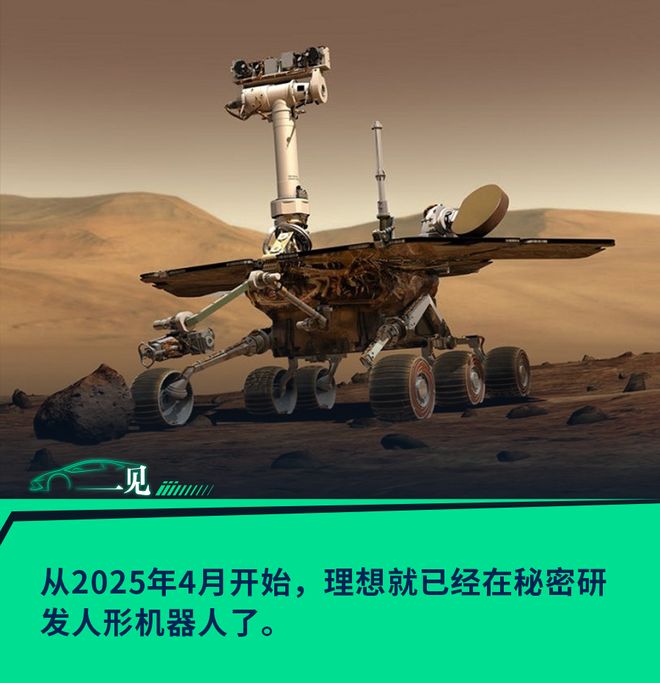
理想汽车将在今年年内发布一款双轮机器人
2 1 Shi Ji Jing Ji Bao Dao· 2026-03-05 13:20
Core Viewpoint - Li Auto has confirmed the departure of its former head of autonomous driving, Lang Xianpeng, shortly after he took charge of the humanoid robot business, which will now be led by Zhan Yifei. The company has been secretly developing a humanoid robot team under the codename Nexus for nearly a year, with plans to release two products: a two-wheeled robot and a bipedal robot, with the former expected to launch mid-year for factory manufacturing scenarios [1][4]. Group 1: Company Developments - The humanoid robot team at Li Auto has been in existence prior to the recent leadership changes and has been working on the project for almost a year [1]. - The team is led by He Junpei, a hardware partner from the startup Jiuguang Intelligent, and is focused on developing hardware capabilities first before moving to more complex functionalities [4]. - Li Auto's first robot will be a two-wheeled model rather than a humanoid robot, as it is deemed more stable and reliable for factory settings [8][9]. Group 2: Industry Context - The domestic robotics industry has seen rapid development, with 196 financing cases and a total investment of 12.8 billion yuan in the first three quarters of the year [3]. - Tesla has been a significant influence in the robotics sector, having introduced its humanoid robot Optimus and planning to produce 1 million units annually by 2026 [7]. - Other companies, such as XPeng Motors, are also developing robots, with XPeng's AI robot IRON set to launch in late 2026, indicating a competitive landscape in the robotics market [8].
2026年政府工作报告点评:扩内需,育新能,把握三大投资脉络
Zhong Guo Yin He Zheng Quan· 2026-03-05 12:34
Investment Rating - The report maintains a "Recommended" rating for the machinery equipment industry [1] Core Insights - The government work report emphasizes the continuation of equipment renewal policies to stimulate investment and demand, with a focus on upgrading key industries and supporting major technical transformation projects with 200 billion yuan in special bonds [5][7] - The report highlights the potential for new quality productivity and emerging industries, particularly in humanoid robotics, low-altitude economy, and controllable nuclear fusion, which are expected to create significant investment opportunities [10][11][16] - Infrastructure investment and equipment renewal efforts are expected to remain strong, with a projected central budget investment of 755 billion yuan for 2026, supporting the engineering machinery sector [24][25] Summary by Sections Equipment Renewal: Policies Continue to Promote Investment and Demand Release - The ongoing equipment renewal policies are expected to drive effective investment growth and expand domestic demand, benefiting various sectors including general equipment, engineering machinery, and railway equipment [7][9] - Specific demands for railway locomotives and engineering machinery are projected, with an estimated 2,000 new energy locomotives needed to replace old ones by 2027 [5][8] New Quality Productivity: Future and Emerging Industries - Humanoid robotics is recognized as a key future industry, with expectations for significant technological breakthroughs and market penetration by 2025 [10] - The low-altitude economy is emerging as a strategic industry with broad applications across various sectors, including medical and agricultural fields [11][12] - Controllable nuclear fusion is highlighted as a long-term energy solution, with optimistic projections for commercialization in the coming decades [16][18] Engineering Machinery: Driven by Major Projects, New Urbanization, and Equipment Renewal - The report indicates a stable outlook for engineering machinery driven by ongoing infrastructure projects and urban renewal efforts, with significant growth in domestic sales of excavators and other machinery [24][25][26] - The report recommends focusing on leading manufacturers in the engineering machinery sector, such as SANY Heavy Industry and XCMG, as they are expected to benefit from both domestic and international demand [26]




Counterpoint 研讨会2026年具身智能和半导体产业洞察
Counterpoint Research· 2026-03-05 11:25
Core Insights - The article emphasizes the transition of embodied intelligence from concept to commercial application by 2026, focusing on key areas such as smart cities, humanoid robots, and autonomous driving, while identifying growth opportunities within these sectors [5][7]. Group 1: Event Overview - The Counterpoint seminar will take place on March 24, 2026, from 13:30 to 18:00 at the Grand Hyatt Shanghai, aimed at exploring the commercial milestones of embodied intelligence [6]. - The seminar will cover the evolution of AI from generative models to agentic and physical AI, highlighting the shift in industry focus towards computational infrastructure, key chips, advanced manufacturing, and diverse edge devices [5][11]. Group 2: Target Audience - The event is designed for professionals in semiconductor, cloud data centers, automotive electronics/intelligent driving, robotics/intelligent hardware, consumer electronics OEM/ODM, and investment and research sectors [7]. Group 3: Agenda Highlights - The agenda includes various presentations on topics such as the AI ecosystem, humanoid robot brain and computational needs, automotive chip localization, and the impact of AI on consumer electronics, providing insights into market dynamics and strategic opportunities [8]. - Key speakers will discuss the structural impacts of the AI wave on the foundry market, storage industry, and consumer electronics, offering actionable market and strategic insights for 2026 [11]. Group 4: Pricing Information - Ticket prices for the seminar are set at 800 RMB for regular tickets and 500 RMB for early bird tickets until March 17 [12].
双百亿!帕西尼再获超10亿融资,估值破100亿:以「全球唯一百亿级实采全模态数据」重塑具身智能模型天花板
36氪· 2026-03-05 10:54
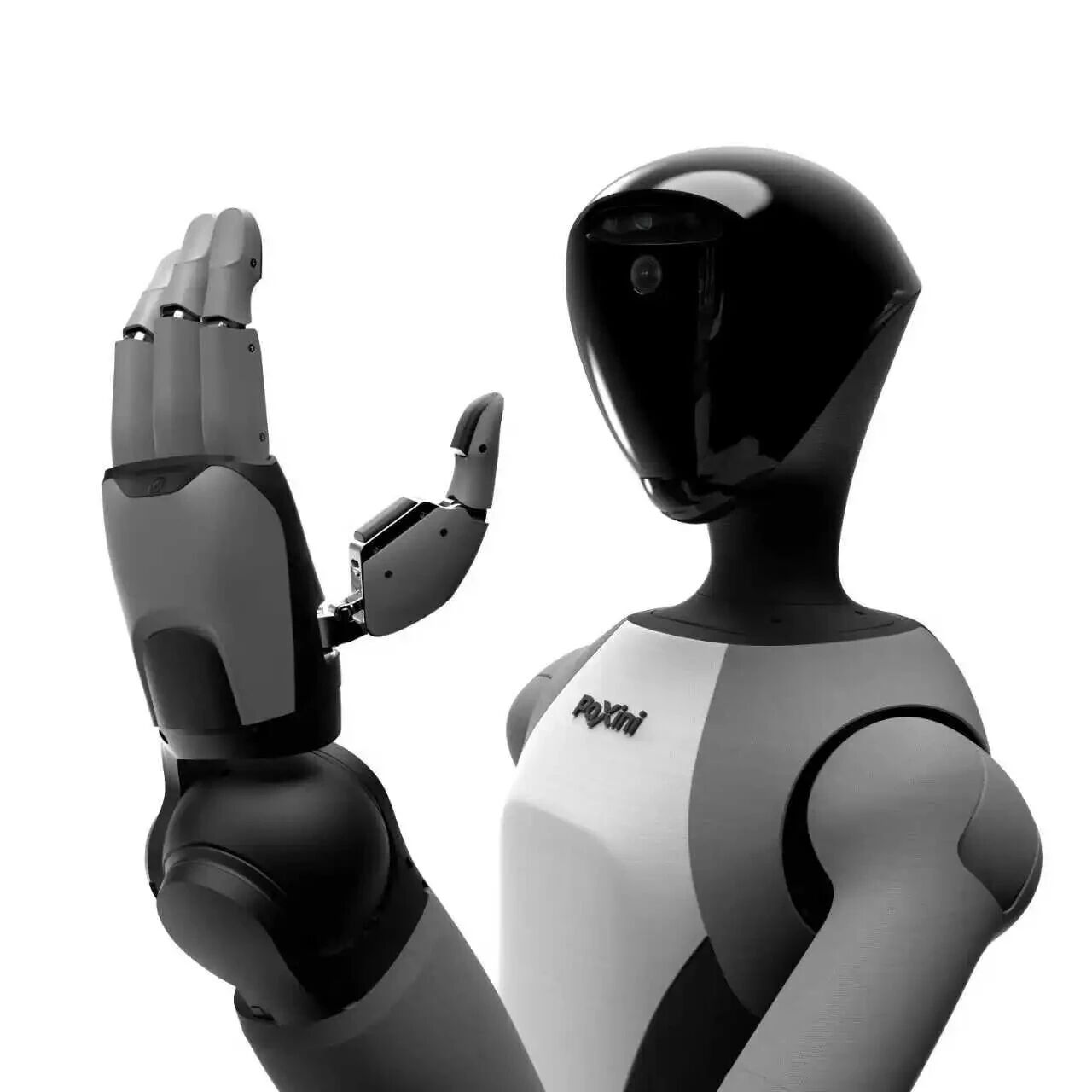
Core Viewpoint - PaXini Tech has completed a B-round financing exceeding 1 billion RMB, achieving a valuation of over 10 billion RMB, making it one of the eight companies in the "100 billion valuation club" in the field of embodied intelligence, and the highest valued company globally in this sector [1][3]. Group 1: Company Overview - PaXini Tech is recognized as a global leader in embodied perception-driven general intelligence, with a unique position in the market due to its irreplaceable perception barriers and comprehensive dominance in the sector [1][3]. - The company is the only one among the eight billion-dollar giants in embodied intelligence that can integrate a billion-level deep collection of tactile modalities into its data system, enabling closed-loop training of its OmniVTLA embodied intelligence model [3][4]. Group 2: Technological Advantages - PaXini has established a high-precision data collection system centered on human interaction, utilizing self-developed high-precision tactile hardware, which sets it apart from competitors relying on simulated or externally sourced data [6][10]. - The company operates the world's largest data collection factory, the Tianjin Super EID Factory, and is set to announce new data collection factories, aiming for an annual production capacity of nearly 10 billion high-quality multimodal data points [6][10]. Group 3: Business Strategy and Market Position - PaXini has successfully transformed its closed-loop system into a new productive force, breaking down barriers between technology and market application, and establishing a significant competitive moat in the global embodied intelligence field [10][12]. - The company has formed deep strategic partnerships with industry leaders such as BYD and JD.com, applying embodied intelligence in key production scenarios like automotive assembly lines and logistics sorting [10][12]. Group 4: Future Outlook - The recent funding of over 1 billion RMB will be used to expand and upgrade data collection factories and further develop the OmniVTLA model, reinforcing PaXini's full-stack technological capabilities in embodied intelligence [13][14]. - The company aims to accelerate the application of embodied intelligence across various industries, creating limitless possibilities for enhancing productivity in human society [14].
全国两会释放重要产业政策信号:重实体、夯根基、谋创新、强担当
Western Securities· 2026-03-05 10:52
Policy Highlights - The government emphasizes the importance of the real economy, stating that the focus should be on developing the real economy and modern industrial systems[1] - Traditional industry policies are prioritized over emerging and future industries, with a commitment of 200 billion yuan in special bonds for equipment upgrades[1] - New industries such as "future energy" and "brain-machine interfaces" are highlighted for the first time in the government report, indicating a shift towards innovative sectors[2] Innovation and Investment - State-owned enterprises are encouraged to lead in opening application scenarios and establishing investment growth mechanisms for future industries[2] - The report emphasizes the importance of an innovation ecosystem, promoting venture capital and angel investment to support startups[2] - The concept of "smart economy" is introduced, focusing on the commercialization of AI and the development of new infrastructure like satellite internet and 5G[2] Service Sector Development - The report calls for deeper integration of advanced manufacturing and modern service industries, with a specific mention of the financial sector's role[3] - The government aims to enhance the value of software services and expand the technology service market[3] Risk Considerations - There are warnings about the long policy implementation cycles and potential market risks exceeding expectations[5]