
十五五规划

Search documents
梅雁吉祥:公司重视“十五五”规划机遇,将稳步推进各项新能源业务
Zheng Quan Ri Bao Wang· 2026-01-07 11:44
证券日报网讯1月7日,梅雁吉祥(600868)在互动平台回答投资者提问时表示,公司重视"十五五"规划 机遇,将稳步推进各项新能源业务,并聚焦主业提升经营质量,完善各业务的协同发展,相关进展请以 公告为准。 ...

\十五五\规划研究系列之五:\新\新基建,地方如何适度超前?
Shenwan Hongyuan Securities· 2026-01-07 10:30
Group 1: New Infrastructure Development - The "14th Five-Year Plan" emphasizes "moderate advance" in new infrastructure, focusing on information communication networks and integrated computing networks[2] - New infrastructure has expanded significantly, covering communication networks, data, and computing fields, driven by economic digital transformation[11] - From 2019 to November 2025, investment in electricity, internet software, and logistics has increased by 10.4%, 5.0%, and 4.1% respectively, highlighting the core investment attributes of new infrastructure[13] Group 2: Regional Strategies - Local governments focus on integrating infrastructure and enhancing traditional infrastructure's digital transformation, with 28 regions proposing smart upgrades[3] - The North China region emphasizes the construction of national data hubs and energy transition, with Beijing leading in data management and resource centers[22] - Eastern and Southern regions prioritize low-altitude infrastructure and smart upgrades in water transport, with Guangdong promoting comprehensive low-altitude flight infrastructure[24] Group 3: Policy Support for New Infrastructure - Fiscal policies have increased support for new infrastructure through policy financial tools, with 980.2 billion yuan allocated for digital economy and AI projects in 2025[5] - Monetary policy tools like technology innovation loans have been expanded to support new infrastructure, with green loans growing at rates of 17.5% and 25.1% for infrastructure upgrades[40] - Regulatory measures will optimize spatial layouts and control hidden debts to prevent redundant construction and "involution" competition[42]
“十五五”规划系列四:地方“十五五”规划建议稿9大看点
GOLDEN SUN SECURITIES· 2026-01-07 09:45
Group 1: Economic Strategy and Focus Areas - Local governments emphasize "strengthening foundations and comprehensive efforts," with a focus on industrial strength rather than expanding domestic demand as prioritized by the central government[2] - Economic provinces prioritize building a modern industrial system, with Jiangsu, Shandong, and Zhejiang leading in this focus, while Guangdong and Shanghai emphasize regional development initiatives[3] - Over 10 regions are pushing for enterprises to "go global," with specific industries highlighted such as technology services in Beijing and cultural trade in Jiangsu[5] Group 2: Consumption and Investment - Consumption strategies focus on enhancing service consumption and developing new business models, with cities like Beijing and Zhejiang promoting unique consumption experiences[20] - Local governments are establishing international consumption centers, with cities like Shenzhen and Hangzhou aiming to become key consumption hubs[21] - Investment stability is emphasized through project management, with regions like Zhejiang advocating for a project-driven development approach[5] Group 3: Industrial Development and Innovation - Regions are focusing on innovation-driven growth, with a strong emphasis on green and low-carbon development, particularly in traditional industries[6] - Specific industries such as marine economy, aerospace, and low-altitude economy are gaining attention in various provinces, showcasing regional strengths[6] - Local governments are implementing reforms to enhance market access and promote high-level platforms for business development[7] Group 4: Risk Management and Regional Coordination - Risk management strategies are centered on real estate, local debt, and financial institutions, with a focus on controlling new risks and optimizing supply[10] - Regions are actively aligning with national strategies, emphasizing the importance of regional cooperation and development, particularly in major economic zones[11] - Local policies are being adjusted to prevent unhealthy competition and ensure a balanced economic environment, with a focus on standardizing investment and procurement practices[7]
高盛:2026年对A股和H股均维持超配评级
Zheng Quan Ri Bao Wang· 2026-01-07 09:05
Group 1 - Goldman Sachs' chief China equity strategist Liu Jinjun and his team forecast a positive outlook for the Chinese stock market in 2026, expecting the MSCI China Index to rise by 20% and the CSI 300 Index by 12%, maintaining an overweight rating for both A-shares and H-shares [1] - The firm anticipates a "slow bull" market in 2026, with stock market returns increasingly reliant on fundamentals and stock selection, driven by factors such as accelerated earnings growth of listed companies, reasonable current valuations, policy support, and significant potential for incremental capital inflows [1] - Current valuations are noted, with the MSCI China Index trading at a price-to-earnings ratio of 12.4 times and the CSI 300 Index at 14.5 times, which are considered fair relative to historical levels but still at a discount compared to global markets [1] Group 2 - Goldman Sachs emphasizes four major investment themes closely aligned with policy priorities and structural trends, including the selection of ten leading private enterprises expected to enhance their market positions under trends like AI and policy support [2] - The firm has introduced an investment portfolio based on the "14th Five-Year Plan," comprising 50 mid-cap stocks focused on sectors supported by policy initiatives [2] - A selection of leading companies with strong global competitiveness and resilience in exports has been identified, benefiting from increased global market share [2] - Goldman Sachs has also launched a shareholder return portfolio, focusing on companies with significant buyback programs and attractive dividend yields, offering both cash returns and diversification value [2]

策略深度报告:“十五五”开局,破浪前行
Xinda Securities· 2026-01-07 08:55
Group 1 - The positive factors for stabilizing profits are increasing, including weak endogenous economic recovery, policy support, and potential improvements in PPI and real estate [4][11][18] - The PPI is expected to show marginal improvement due to seasonal demand and supply-demand balance driven by "anti-involution" policies [4][18][22] - The real estate market is experiencing a downtrend, but there are signs of potential stabilization, with some data showing slight improvements [4][28][29] Group 2 - The core factors influencing the height of the liquidity bull market are policies and stock market funds, with smaller bull markets focusing on profits while larger bull markets are driven by macro liquidity [4][11][18] - The capital market's institutional dividends can easily drive large-scale bull markets, and the "asset shortage" logic is expected to enhance the willingness to allocate funds to the stock market [4][18][22] - The regulatory policy adjustment rhythm will be crucial in the mid-term of the bull market, with significant changes in investor behavior expected as the market progresses [4][11][18] Group 3 - The style judgment indicates that small-cap growth stocks remain a trend, but there will be volatility in the mid-term of the bull market [4][29][31] - Long-term trends favor small-cap stocks, but there may be significant quarterly fluctuations influenced by new resident funds and growth-value style disturbances [4][31][32] - Growth style is likely to maintain a performance advantage over value style [4][31][32] Group 4 - Industry allocation suggests a foundation in finance, with technology as the main line and themes rotating actively [4][33][39] - Non-bank financials are gaining elasticity and have certain allocation value, while technology is expected to see a second wave of growth in the later stages of the bull market [4][33][39] - Key sectors to watch include power equipment, certain cyclical industries, and new consumption, focusing on improvements in ROE [4][39][42][44]
“十五五”规划研究系列之五:“新”新基建,地方如何适度超前?
Shenwan Hongyuan Securities· 2026-01-07 08:44
Group 1: New Infrastructure Development - The "14th Five-Year Plan" emphasizes "moderate advance" in new infrastructure, focusing on information communication networks and integrated computing networks[3] - New infrastructure has expanded significantly, covering communication networks, data, and computing fields, driven by economic digital transformation[3][16] - From 2019 to November 2025, investment in electricity, internet software, and logistics has increased by 10.4%, 5.0%, and 4.1% respectively, indicating the core investment attributes of new infrastructure[4][19] Group 2: Regional Development Strategies - Local governments focus on integrating infrastructure and enhancing traditional infrastructure's digital transformation, with 28 regions proposing smart upgrades[5][21] - In North China, the focus is on national data hub construction and energy transition, with Beijing leading in data management and resource centers[29] - Eastern and Southern regions prioritize low-altitude infrastructure and smart water transport upgrades, leveraging their geographical advantages[32][33] Group 3: Policy Support for New Infrastructure - Fiscal policies have increased support for new infrastructure, with policy-based financial tools allocating 98.02 billion yuan to digital economy and AI projects in 2025[7][40] - Monetary policy tools like technology innovation loans have been expanded to support new infrastructure, with green loans growing at 17.5% and infrastructure loans at 25.1% as of Q3 2025[49] - Regulatory measures will optimize spatial layouts and control hidden debts, preventing redundant construction and "involution" competition[51]
李忠民任民建中央副主席
Bei Jing Ri Bao Ke Hu Duan· 2026-01-07 08:29
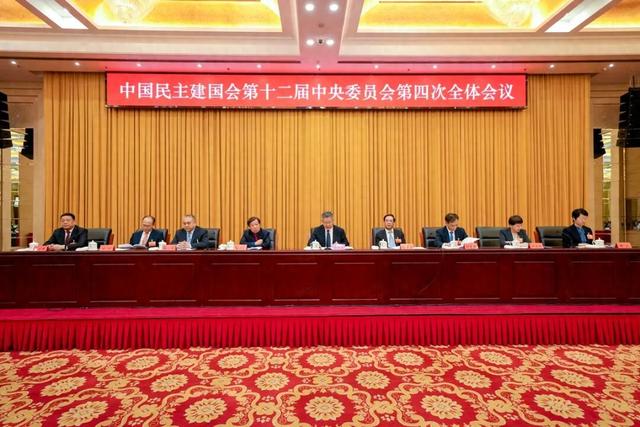
民建十二届四中全会在京闭幕 民建中央委员出席闭幕会。中共中央统战部一局负责同志应邀参会。不担任民建中央委员的民建中央机 关工作部门主要负责人、部分民建省级组织专职副主委、部分民建中央专门委员会副主任、民建中央内 部监督委员会组成人员、部分民建十二大代表等列席会议。 来源:民建中央网站 作者: 王元鑫 中国民主建国会第十二届中央委员会第四次全体会议圆满完成各项议程,1月6日下午在京闭幕。民建中 央副主席孙东生主持闭幕会,副主席沈金强、孙菊生、洪慧民、张文彤、司马红、程京、解冬、李忠民 出席闭幕会。 转自:北京日报客户端 会议审议通过了关于中央常务委员会工作报告的决议,关于中央内部监督委员会工作报告的决议,关于 李世杰同志不再担任中国民主建国会第十二届中央委员会副主席、常务委员、委员职务的决定。会议补 选李忠民为中国民主建国会第十二届中央委员会副主席,补选李玉萍等6人为中国民主建国会第十二届 中央委员会常务委员,补选朱旭等17人为中国民主建国会第十二届中央委员会委员。 会议指出,2026年是实施"十五五"规划的开局之年。民建要坚持以习近平新时代中国特色社会主义思想 为指导,深入学习贯彻中共二十届四中全会精神,认真 ...
民建十二届四中全会在京闭幕
Xin Lang Cai Jing· 2026-01-07 06:03
"中国民主建国会"微信公号1月7日消息,中国民主建国会第十二届中央委员会第四次全体会议圆满完成 各项议程,1月6日下午在京闭幕。民建中央副主席孙东生主持闭幕会,副主席沈金强、孙菊生、洪慧 民、张文彤、司马红、程京、解冬、李忠民出席闭幕会。 会议审议通过了关于中央常务委员会工作报告的决议,关于中央内部监督委员会工作报告的决议,关于 李世杰同志不再担任中国民主建国会第十二届中央委员会副主席、常务委员、委员职务的决定。会议补 选李忠民为中国民主建国会第十二届中央委员会副主席,补选李玉萍等6人为中国民主建国会第十二届 中央委员会常务委员,补选朱旭等17人为中国民主建国会第十二届中央委员会委员。 会议指出,2026年是实施"十五五"规划的开局之年。民建要坚持以习近平新时代中国特色社会主义思想 为指导,深入学习贯彻中共二十届四中全会精神,认真贯彻落实中共中央致庆祝民建成立80周年大会的 贺词精神,更加广泛地凝聚人心、凝聚共识、凝聚智慧、凝聚力量。要更加突出政治引领,以习近平新 时代中国特色社会主义思想凝心铸魂,坚定捍卫"两个确立"、坚决做到"两个维护",筑牢共同思想政治 基础;更加积极履职尽责,锚定中共二十届四中全会确定 ...

超配中国股票!渣打银行最新投资布局
券商中国· 2026-01-07 03:32
日前,渣打银行财富方案部发布《2026年全球市场展望》,主题为 "浮沤危悬?多元布局!"。 在采访中,渣打中国财富方案部投资策略总监王昕杰表示,从宏观层面看,2026年美国经济软着陆的几率上 升,随着全球贸易紧张局势缓和、主要经济体将推进宽松的财政和货币政策,以及人工智能蓬勃发展,风险资 产预期将表现领先。 渣打方面建议,投资者在基础投资组合中超配股票和黄金,对于中国资产则重点关注科技、健康护理和通信行 业。 超配中国股票 "站在2026年的新起点,全球市场正面临关键的转折,地缘政治冲突、人工智能泡沫等讨论备受关注。我们预 见,美元的结构性支撑将逐步减弱,而亚洲经济的韧性与改革红利正日益凸显。"渣打银行(中国)有限公司 财富方案部总经理梁大伟指出。 渣打预期,风险资产在2026年将表现领先,在市场上升的同时分化将更为明显,建议在更广泛的资产类别中进 行分散投资。面对增长动能转换与地缘格局重塑的双重变奏,投资者更需要在不确定性中保持定力,在变化中 前瞻布局。 在基础配置中,渣打建议超配美国、印度和中国股票,新兴市场债以及黄金,同时低配欧洲、英国和日本股 票。其中,中国股票则有望获益于企业治理的改善,以及针对科技 ...

葡学者看好“十五五”规划:中国具有长期视野与高度稳定优势
Zhong Guo Xin Wen Wang· 2026-01-07 03:02
Core Viewpoint - The new five-year plan in China is characterized by long-term vision and high stability, providing clear and stable development expectations for various market entities, including foreign-funded enterprises [2] Group 1: Economic Outlook - China will continue to expand its opening-up policies, prioritizing innovation, particularly in technology and new energy sectors [2] - The country is accelerating its transition from external demand to internal demand, with domestic consumption showing continuous growth and significant potential [2] Group 2: Opportunities for Foreign Investment - The ongoing transformation in China presents important opportunities for the country itself and broad market space for foreign enterprises [2]