
制度型开放

Search documents
勇立开放前沿 赋能发展新篇
Ren Min Wang· 2025-10-19 01:41
Core Viewpoint - Zhejiang province is positioned at the forefront of China's opening-up strategy, emphasizing a deeper and broader level of international cooperation during the "14th Five-Year Plan" period [1][2]. Group 1: Legal Framework and Support - The role of the legal system is increasingly significant in promoting high-level openness, with a focus on integrating domestic and foreign legal frameworks to enhance judicial services for international cooperation [2][6]. - Zhejiang courts have successfully handled over 29,000 foreign-related commercial and maritime cases during the "14th Five-Year Plan" period, reflecting a growing trust in the judicial system from international parties [6][12]. Group 2: Case Studies and Judicial Practices - A notable case involved a financial loan guarantee dispute that required the application of multiple jurisdictions, showcasing the court's ability to clarify complex legal relationships and protect the rights of all parties involved [3][4]. - The introduction of an online platform for foreign law inquiries has reduced the average time for legal clarification from over 70 days to 35 days, benefiting over 100,000 enterprises [4][9]. Group 3: Mediation and Arbitration Innovations - The establishment of a mediation mechanism in Yiwu has effectively resolved 1,320 foreign-related commercial disputes, amounting to over 165 million yuan, by utilizing foreign mediators familiar with local customs [7][8]. - Zhejiang has developed a unified system for resolving foreign-related disputes, incorporating innovative measures such as the introduction of foreign mediators and a neutral assessment mechanism [8][9]. Group 4: International Recognition and Influence - Zhejiang courts have gained international recognition for their judicial practices, particularly in the fields of digital economy and maritime law, enhancing China's voice in global governance [12][13]. - The participation of Zhejiang judges in drafting international maritime conventions highlights the province's growing influence in international legal frameworks [12][13].
深入推进长三角一体化发展
Jing Ji Ri Bao· 2025-10-18 22:11
Core Insights - The Yangtze River Delta (YRD) region has seen continuous improvement in overall strength and competitiveness since the implementation of the integration development strategy, with a GDP of 33.1691 trillion yuan in 2024, reflecting a growth of 5.5% year-on-year [1][2][3]. Economic Performance - In 2024, the YRD's GDP reached 33.1691 trillion yuan, accounting for 24.6% of the national total, with a contribution rate of approximately 30% to national economic growth [2][3]. - The YRD's total import and export value was 16.01 trillion yuan in 2024, marking a year-on-year increase of 5.6%, contributing 52.3% to national export growth in the first eight months of the year [3][13]. Innovation and Industry Development - The YRD has strengthened its technological innovation and industrial collaboration, becoming a key driver of high-quality national economic development, with significant advancements in quantum computing, domestic aircraft, and industries like integrated circuits and biomedicine [3][4]. - The region has established a collaborative innovation system, focusing on key technology research and development in fields such as integrated circuits, biomedicine, and artificial intelligence [4][11]. Infrastructure and Platform Development - The YRD has implemented a series of institutional innovations through major functional platforms, enhancing systemic mechanisms and achieving significant breakthroughs in key areas [5][12]. - The Shanghai Free Trade Zone has seen an average GDP growth of 17.6% from 2019 to 2024, with industrial output value growing at an average of 28.4% [5]. Environmental Cooperation - The YRD has made progress in ecological environment cooperation, focusing on joint governance of air and water quality, with PM2.5 levels averaging 33.0 micrograms per cubic meter in 2024, a 31.4% decrease from 2017 [18][20]. - The region has established a collaborative ecological protection mechanism, promoting biodiversity and enhancing ecological system integrity [19][20]. Open Cooperation and Trade - The YRD has become a model for collaborative openness, achieving a total import and export value of 16.01 trillion yuan in 2024, which accounts for 36.5% of the national total [13][14]. - The region has actively participated in international trade, with exports to Belt and Road countries reaching 7.7 trillion yuan, representing 34.9% of the national total [15].
塑造新优势 澎湃新动能——“活力中国调研行”感受高水平对外开放新活力
Xin Hua Wang· 2025-10-18 10:41
Core Viewpoint - China's high-level opening up is creating new momentum for high-quality development, emphasizing the importance of expanding openness to promote reform and growth [3]. Group 1: Attracting Foreign Investment - Siemens' chairman is actively engaging with Chinese innovation companies, highlighting Shanghai's status as a preferred investment destination for foreign businesses [4][5]. - Shanghai has seen an average of over 5,700 new foreign enterprises established annually since the 14th Five-Year Plan, with a consistent import-export total exceeding 4 trillion yuan [8]. - The localization rate of the automotive supply chain for Schaeffler in China exceeds 95%, showcasing the deep trust in China's manufacturing and R&D capabilities [9]. Group 2: Exporting Chinese Products - Chinese companies are increasingly confident in their ability to "go global," with significant growth in exports of new energy vehicles and lithium batteries [14]. - Jiangsu's foreign trade volume reached 86.59 million tons in the first eight months of the year, with a year-on-year increase of 11.7% [14]. - High-tech product exports from China grew by 11.9% year-on-year, with industrial robots seeing a remarkable increase of 54.9% [19]. Group 3: Institutional Opening and Policy Support - Hainan is enhancing its role as a testing ground for high-level opening up, with new policies simplifying foreign investment registration processes [24]. - The province aims to become a hub for Chinese companies going international and foreign companies entering China, supported by a series of policy optimizations [27]. - Various regions, including Shanghai and Jiangsu, are implementing innovative measures to facilitate foreign investment and enhance service for outbound enterprises [29].

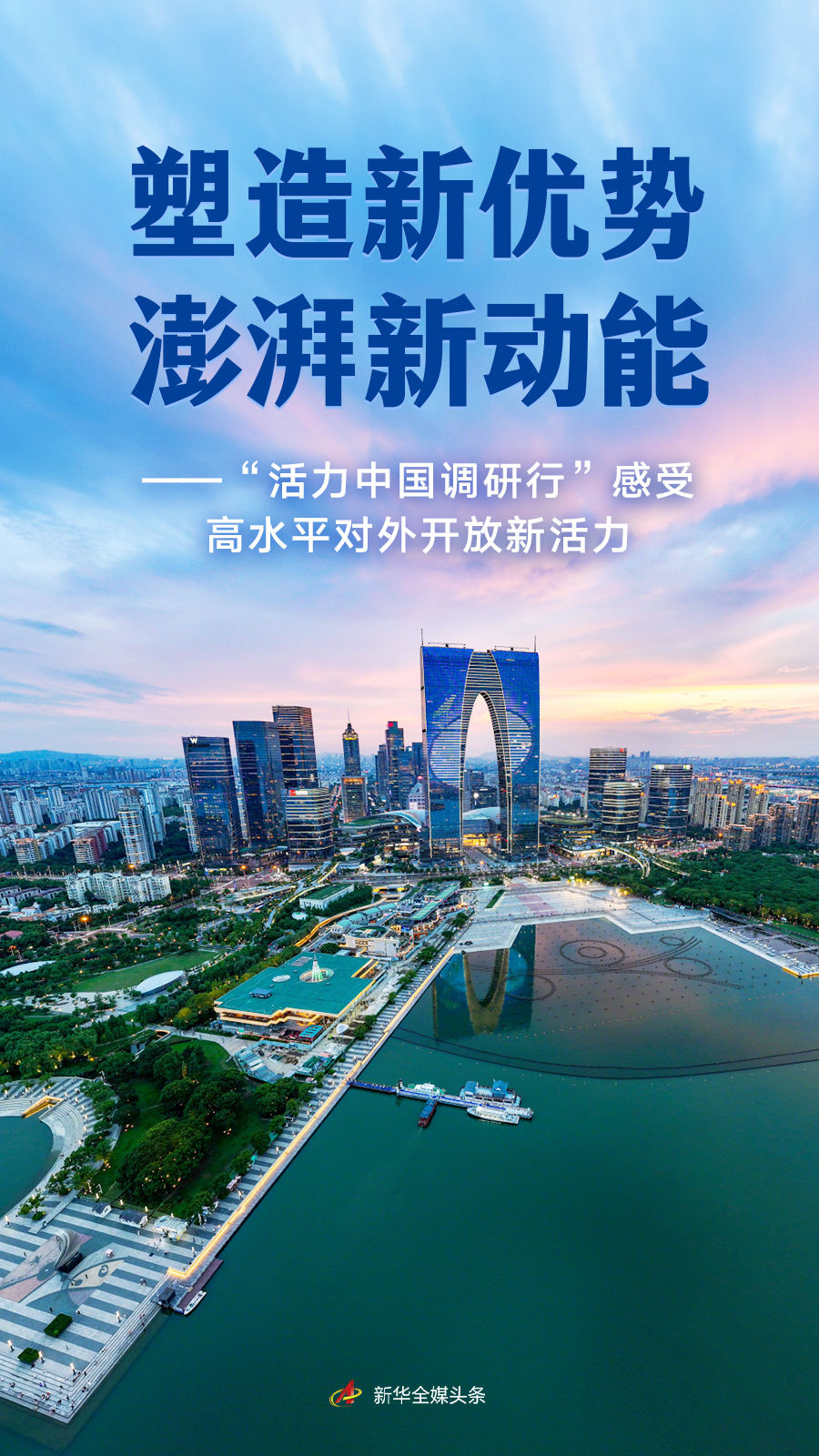
新华全媒头条·活力中国调研行|塑造新优势 澎湃新动能——“活力中国调研行”感受高水平对外开放新活力
Xin Hua She· 2025-10-18 09:03
Core Insights - China's high-level opening up is generating new momentum for high-quality development, emphasizing the importance of expanding openness to promote reform and growth [1] - The "Vibrant China Research Tour" highlights the confidence of foreign investment in China and the innovative exploration of Chinese enterprises going global [1] Group 1: Foreign Investment in China - Siemens' chairman's visit to China reflects the ongoing interest of foreign companies in the Chinese market, particularly in innovation [2][3] - Shanghai remains a preferred investment destination for foreign businesses, with over 5,700 new foreign enterprises established annually since the 14th Five-Year Plan, and a consistent import-export volume exceeding 4 trillion yuan [4] - Foreign companies are transitioning from mere investment to deep-rooted innovation in China, as exemplified by Schaeffler's significant local operations and high localization rate [5][6] Group 2: Export and Global Expansion - Chinese companies are increasingly confident in their ability to "go global," with significant growth in exports of new energy vehicles and high-tech products [7][8] - Jiangsu province's foreign trade performance is robust, contributing to over 1/8 of the national total, with a notable increase in exports of new energy vehicles and lithium batteries [7] - Companies like Yadea are establishing global production bases, enhancing their international presence and operational efficiency [8] Group 3: Institutional Opening and Policy Support - Hainan's recent reforms to simplify foreign investment registration processes demonstrate China's commitment to creating a favorable environment for foreign enterprises [9][10] - The implementation of the "2025 Action Plan for Stabilizing Foreign Investment" aims to enhance openness in various sectors, including telecommunications and biomedicine [10][11] - Shanghai and Jiangsu are leading in innovative regulatory measures to support foreign investment and facilitate companies' international operations [11]
吴晓求:资本市场生态链亟待系统性重塑
Zhong Guo Xin Wen Wang· 2025-10-18 08:34
一是改革资产端,为投资者提供与风险相匹配的长期回报;二是改革资金端,破除制度约束,引入社保 基金、养老金等长期机构资金,稳定市场基础;三是改革制度端,以确保市场透明度为核心,并大幅提 升违规违法成本。 吴晓求认为,通过这一系列深刻的生态重塑,将有力推动中国资本市场迈向更高水平的制度型开放,从 而更好地服务于国家创新驱动发展战略和金融强国建设。 (文章来源:中国新闻网) 中国人民大学原副校长、国家金融研究院院长吴晓求18日在北京表示,资本市场生态链亟待进行系统性 重塑。 吴晓求是在当天举行的通州·全球发展论坛(2025)的分论坛"全球资本市场发展新格局——机遇、挑战与 创新路径"上作如是表述的。 当天,吴晓求以"'十五五'时期中国资本市场改革重点和发展目标"为题发表主旨演讲。他表示,中国资 本市场的战略定位已提升至前所未有的新高度,其核心功能应从传统的融资渠道转变为激励社会创新和 推动财富管理的机制,资本市场生态链亟待进行系统性重塑。 ...
绿洲和热土在这里 中国制度型开放之路越走越宽丨决胜“十四五”
证券时报· 2025-10-18 01:00
Core Viewpoint - The article emphasizes China's commitment to enhancing its openness during the "14th Five-Year Plan" period, focusing on trade and investment liberalization, financial sector reforms, and the integration of domestic and international capital markets [1][5][6]. Group 1: Financial Sector Reforms - The "14th Five-Year Plan" aims to deepen financial sector openness, optimizing cross-border capital flow efficiency and enhancing the convenience of cross-border investment and financing [3][4]. - Shenzhen's Qianhai area has established six cross-border financial brands, including cross-border RMB loans and dual-currency funding pools, reflecting significant improvements in cross-border financial services [3][4]. - Shanghai has initiated a high-version integrated currency pool pilot, enhancing financial service packages for multinational corporations, which has improved cross-border fund utilization efficiency [4]. Group 2: Attractiveness of Chinese Assets - The removal of foreign ownership limits in various sectors and the improvement of the Qualified Foreign Limited Partner (QFLP) system have significantly increased the long-term attractiveness of China's capital markets to global investors [6][7]. - As of September 22, 2023, 13 foreign-controlled securities and fund institutions have been approved to operate in China during the "14th Five-Year Plan" period, indicating a growing foreign interest in the Chinese market [6][7]. Group 3: Chinese Enterprises Going Global - Chinese companies are increasingly confident in their overseas expansion, transitioning from mere product exports to comprehensive global supply chain integration and value co-creation [9][10]. - The establishment of the "Mainland Enterprises Going Global Task Force" in Hong Kong aims to support mainland companies in their international ventures, highlighting Hong Kong's role as a facilitator for these enterprises [9][10]. - Companies like Gree have announced plans for overseas listings to enhance their global strategies and financing capabilities, leveraging Hong Kong's financial infrastructure [9][10].

绿洲和热土在这里 中国制度型开放之路越走越宽
Zheng Quan Shi Bao· 2025-10-17 18:57
Group 1 - The "14th Five-Year Plan" emphasizes enhancing the level of opening up to the outside world, promoting trade and investment liberalization, and deepening the flow of goods and factors [1] - China is recognized as a "certain oasis and investment hotbed," with continuous reduction of foreign investment access negative lists and the complete removal of restrictions in the manufacturing sector [1][4] - Chinese enterprises are actively utilizing diversified financing tools such as A+H shares and Global Depositary Receipts (GDR) for global expansion, maintaining a leading position in foreign investment stock [1] Group 2 - The financial system is being optimized to enhance the efficiency of cross-border capital flow, facilitating global fund management for enterprises [2] - The Qianhai area has established six cross-border financial brands, including cross-border RMB loans and dual-currency funding pools, reflecting significant changes in cross-border investment and financing convenience [2] - Shanghai is focusing on improving cross-border financial services and has launched a high-version integrated currency pool pilot to support "going out" enterprises [3] Group 3 - The removal of foreign ownership limits in various sectors and the improvement of the Qualified Foreign Limited Partner (QFLP) system have significantly enhanced the attractiveness of China's capital market to global capital [4] - As of September 22, 2023, 13 foreign-controlled securities, fund, and futures institutions have been approved to operate in China during the "14th Five-Year Plan" period [4] - The establishment of QFLP funds in Qianhai has seen significant growth, with the new funds accounting for over 90% of Shenzhen's total [5] Group 4 - Chinese enterprises are increasingly confident in their overseas expansion, transitioning from "goods export" to "full industry chain export" and "value co-creation" [7] - The newly established "Mainland Enterprises Going Abroad Task Force" in Hong Kong aims to support mainland enterprises in overseas expansion [7] - Companies like Greenme have announced plans for Hong Kong listings to enhance their global strategies and financing capabilities [7] Group 5 - Shanghai Chenglian Bangzhong Technology Development Co., Ltd. successfully completed its first overseas direct investment (ODI) in Indonesia, showcasing the effectiveness of local financial infrastructure in facilitating overseas investments [8] - The company benefited from the support of the Hongqiao Overseas Development Service Center, which significantly shortened the approval process for ODI [8]

潘功胜:中国人民银行综合运用多种货币政策工具,保证流动性充裕
Jin Rong Shi Bao· 2025-10-17 10:59
Core Insights - The People's Bank of China (PBOC) Governor Pan Gongsheng stated that China's economy continues to show a stable and improving development trend, with key economic indicators in the first half of the year exceeding expectations [1] - The PBOC will maintain a moderately accommodative monetary policy, utilizing various tools to ensure ample liquidity and support consumption and effective investment [2] - The focus will be on deepening reforms, promoting economic structural transformation, and expanding domestic demand to provide strong momentum for high-quality development [2] Group 1 - China's economic growth rate ranks among the top of major global economies [1] - The PBOC aims to stabilize the RMB exchange rate at a reasonable and balanced level [2] - The PBOC emphasizes the importance of maintaining financial market stability [2] Group 2 - The PBOC plans to further promote the construction of a unified national market and stimulate consumer demand [2] - There is a commitment to actively participate in global economic governance and cooperation [2] - The PBOC intends to expand high-level opening-up and achieve mutual benefits through regulatory and standardization efforts [2]

开放的河南豫加出彩
Zheng Zhou Ri Bao· 2025-10-17 00:59
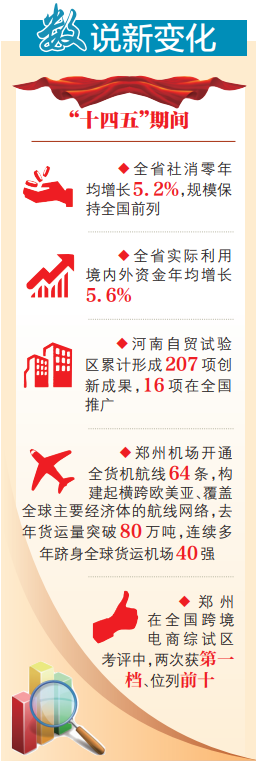
Core Insights - The report highlights the achievements of Henan Province in promoting high-quality business development during the "14th Five-Year Plan" period, focusing on expanding consumption, stabilizing foreign trade and investment, and enhancing overall openness [2] Consumption Growth - Henan Province has implemented multiple measures to expand the consumption market, achieving an average annual growth of 5.2% in total retail sales of consumer goods over the past four years, maintaining a leading position nationally [3] - The government has introduced various policies to boost consumption, including special action plans and subsidies for key products, resulting in over 40 billion yuan in consumer vouchers that stimulated consumption by more than 500 billion yuan [4] - New consumption trends have emerged, such as "IP + consumption," digital consumption, and live e-commerce, with online participation in the 2025 Henan online New Year goods festival exceeding 200 million [4] Foreign Trade Enhancement - Henan Province has focused on expanding and improving the quality of foreign trade, maintaining a trade volume exceeding 800 billion yuan over the past four years, ranking among the top ten in the country [5] - The proportion of general trade has increased from 32.9% in 2020 to 40.4% in 2024, with exports of mobile phones exceeding 200 billion yuan annually and a significant growth in automobile exports [5] - The number of import and export enterprises has increased by 3,600 since 2020, with private enterprises' share of total exports rising from 31.2% to 70.5% by 2024 [5] Investment Expansion - The province has combined high-quality "inward" and high-level "outward" investment strategies, achieving an average annual growth of 5.6% in actual utilization of domestic and foreign funds over the past four years [6] - Key projects have been attracted, such as the Singapore Yihai Kerry investment of nearly 7 billion yuan and the establishment of a new energy vehicle production base by BYD [6] - Over 300 Henan enterprises have invested in more than 50 countries, with total investments reaching 47 billion yuan, enhancing international competitiveness [6] Open Economy Development - Henan has deepened its free trade zone strategy, expanding institutional openness and enhancing trade connectivity through various initiatives [7] - The province has achieved 207 innovative results in its free trade zone, with 16 being promoted nationwide, and has established a leading air transport safety control model for cross-border e-commerce [7] - The Zhengzhou Airport has opened 64 all-cargo routes, significantly increasing its cargo volume and establishing itself as a key trade corridor connecting Europe and ASEAN [8]


以制度型开放提升产业链韧性与安全水平
Xin Hua Ri Bao· 2025-10-16 23:20
Core Insights - The article emphasizes the importance of industrial security as a key component of national economic security, highlighting the need for resilience and safety in industrial supply chains in Suzhou, a major city for foreign trade and industry [1] Group 1: Current Risks and Challenges in Suzhou's Industrial Security - The restructuring of global supply chains has intensified export competition, with local production being shifted to Southeast Asia and Mexico due to U.S. policies, creating homogeneous competition in sectors like automotive parts and electronics [2] - Suzhou faces significant pressure in maintaining foreign trade and investment, despite a double-digit growth in total foreign trade. The city has reduced its reliance on exports to the U.S. while expanding into emerging markets, but remains vulnerable to international environmental changes [2] - Institutional and industrial innovation policies need breakthroughs, as local protectionism and limited authority hinder the implementation of open policies, affecting sectors like biomedicine where foreign investment restrictions remain high [3] Group 2: Suggestions for Enhancing Industrial Chain Resilience and Safety - The article suggests aligning with high international trade rules to establish a cross-border flow mechanism for high-level factors, leveraging Suzhou's free trade zone to promote open innovation in sectors like biomedicine and data flow [6] - It advocates for integrating technological and industrial innovation by fostering collaboration between academia and industry, utilizing high-level innovation platforms to address critical issues in various sectors [7] - The development of modern industrial clusters with international competitiveness is encouraged, focusing on the integration of strategic emerging industries with advanced manufacturing to enhance value and influence [8] Group 3: Logistics and Economic Development - The article highlights the need to optimize the logistics industry and spatial layout to create a dual-open hub city, enhancing domestic and international logistics channels to support regional industrial collaboration [9] - It emphasizes the importance of establishing a foreign-funded headquarters economy in Suzhou, which reflects the region's development strength and international openness, while encouraging foreign enterprises to expand their operations and innovate [10]