
滞胀

Search documents
鲍威尔发表“鹰派”讲话,欧央行如期降息
Hua Tai Qi Huo· 2025-04-18 05:55
Report Industry Investment Rating - Overall neutral for commodities and stock index futures [4] Core Viewpoints - External risks are rising, but the domestic trend remains optimistic. China's economy is forming a new pattern driven by domestic demand and innovation [1] - The US "reciprocal tariff" policy intensifies stagflation trading, and the subsequent tariff game continues, which may push the Fed into a stagflation policy dilemma [2] - Pay attention to the abnormal movements of US Treasury bonds and the US dollar, and be vigilant about the emotional impact on commodities in the short - term and focus on stagflation allocation in the long - term [3] - After the short - term tariff event impacts global assets, pay attention to liquidity risks. Wait for the market to stabilize and then focus on the allocation opportunities of anti - inflation assets and A - shares [4] Summary by Related Catalogs Market Analysis - China's policies in March are positive, with an increase in the deficit rate, a decrease in the CPI target, and an expansion of government credit. The official manufacturing PMI in March improved month - on - month, and the GDP in the first quarter increased by 5.4% year - on - year. The A - share market was active on April 17th. Also, pay attention to the possibility of domestic policy easing [1] Tariff Policy - Trump signed an executive order on "reciprocal tariffs" on April 2nd, imposing a 10% "minimum benchmark tariff" on trading partners. The subsequent tariff game is complex, and the US - China tariff war has escalated. The US tariff policy may lead to stagflation and put pressure on the Fed [2] US Treasury Bonds and US Dollar - The long - term US Treasury bond yield has risen rapidly, mainly due to concerns about US Treasury bond buyers this year. The US dollar has been affected by Trump's policies, and the US liquidity situation needs further tracking [3] Commodities - For industrial products, be vigilant about the emotional impact from the adjustment of the US stock market. For agricultural products, the probability of price increases is higher. The oil market supply is expected to be loose in the medium - term, and the certainty of gold is relatively strong [3] Strategy - Overall neutral for commodities and stock index futures. Pay attention to liquidity risks in the short - term and look for three signals of sentiment easing, and then focus on anti - inflation assets and A - shares after the market stabilizes [4] News - The Ministry of Commerce will accelerate the introduction of policies such as optimizing tax - free shopping for outbound tourists. The European Central Bank cut interest rates on April 17th. The US - Japan trade negotiation will have the next round in a month [1][6]
独家洞察 | 美国关税政策引发市场担忧,降息预期升温
慧甚FactSet· 2025-04-17 04:53
在美国对部分国家实施新一轮关税政策后,市场对美国经济前景愈发担忧。投资者普遍认为,进口商品关 税成本最终将转嫁至美国消费者,抬高生活成本,抑制消费意愿;与此同时,企业面临更高的运营成本和 利润压缩,经济增长动能可能减弱。在这样的背景下,市场对美联储降息的期待不断升温。 值得关注的是,最新公布的3月通胀数据显示,美国通胀压力正持续缓解,为降息提供了政策空间。美国 劳工部公布数据显示,3月CPI同比上涨2.4%,为过去7个月最低,低于预期的2.5%,也较前值2.8%明显 回落;环比下降0.1%,为2024年6月以来首次为负,创2020年5月以来最低纪录。 3月核心CPI同比上涨2.8%,为连续第二个月回落,创下自2021年3月以来新低,低于市场预期的3%,也 低于前值3.1%;环比上涨0.1%,低于预期的0.3%,同样创下2024年6月以来的最低水平。 尽管通胀数据趋缓带来乐观预期,但市场普遍认为仍需保持谨慎。关税政策等外部变量可能在未来数月重 新点燃通胀压力,从而干扰美联储的政策路径。总之,美联储在通胀与经济增长之间正面临艰难权衡,未 来政策走向仍需密切关注经济数据与外部政策变动的动态演变。 欢迎长按识别下方二 ...
鲍威尔粉碎救市希望,纳指跌超3%,英伟达一度重挫10%,黄金大涨创新高
Sou Hu Cai Jing· 2025-04-16 23:34
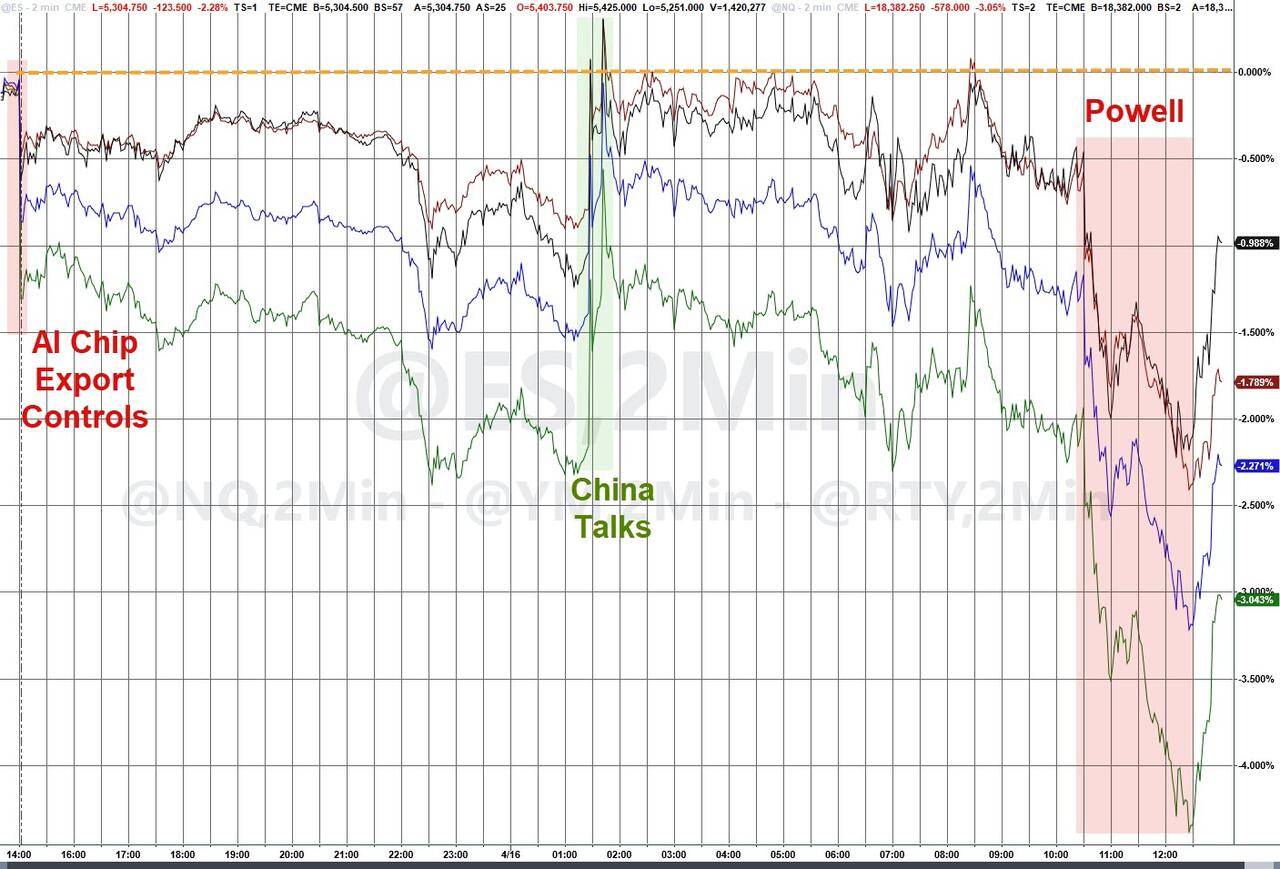
位于欧洲的芯片业"风向标",凸显关税破坏需求的风险。ASML公布的一季度订单额较分析师预期低逾18%,二季度营收指引也逊于预期,未能提供需求好 转的迹象。公司CEO还警告,美国近期宣布的关税给行业造成不确定性,"部分客户的不确定性"可能会导致公司全年营收仅达到指引区间的低端。 美股午盘时段,进一步打击了美股。他重申美联储将先观望、待形势更明确后再考虑降息行动,并警告,联储面临通胀和经济双重目标存在冲突的两难挑 战,被视为提出了滞胀的担忧。鲍威尔还否认会有Fed Put救市,强调市场有序、运转符合预期。 鲍威尔讲话后,芯片股进一步扩大,英伟达和AMD一度跌约10%,拖累三大股指刷新日低,回吐一周来多数涨幅,美元跌幅扩大、逼近三年来低位,美国 国债收益率刷新日低。 鲍威尔讲话后,三大美股指加速下跌,尾盘刷新日低时,道指跌超970点、跌超2%,标普跌超3%,纳指跌超4%。英伟达为首的科技股领跌标普,原油反弹 支持的能源板块一枝独秀。 三大指数两连跌至一周低位,至少收跌近2%。标普收跌2.24%,道指收跌699.57点,跌幅1.73%,纳指收跌3.07%。 关税战阴云笼罩、威胁全球贸易和经济,;芯片业龙头财报和出口管 ...


深夜,一片涨声中,敲响帝国“黄昏”钟声
凤凰网财经· 2025-04-14 14:23
4月14日,周一晚间,美股大幅高开,现道指涨1.01%,纳指涨1.75%,标普500指数涨1.32%。 红。 几十年来,美国经济的相对稳定使得美元能够发挥世界储备货币的作用,被全球各国央行持有。这也使得美国能够以低成本借款并弥补其经常账户和政府 预算的 " 双赤字 " 。 然而,最近因为特朗普"反复无常"的关税政策,使得国际资本加速撤离美元资产。 美元近期的趋势不仅反映了市场对关税政策的恐慌,更揭示了美元作为全球储备货币的根基正在动摇。 个股方面,芯片股普涨,美光科技涨逾7%,AMD、英特尔涨约4%,英伟达涨近3%。苹果涨近7%,惠普涨逾5%,戴尔科技涨近9%,特朗普政府豁免消费 电子等产品的对等关税。高盛涨超3%,第一季度股票交易收入超预期。此外,高盛董事会批准了至多400亿美元的股票回购计划。 值得一提的是,美股开盘后, 中国资产暴涨, 纳斯达克中国金龙指数高开高走,现涨超5%。阿里巴巴涨超6%,京东涨7%,小鹏汽车涨4.8%,蔚来涨超 4%,极氪涨超4%。 | | * ● | | 六合唱头 | | | | --- | --- | --- | --- | --- | --- | | 京东 | 1 | 38 ...
【招银研究】关税冲击暂缓,市场波动延续——宏观与策略周度前瞻(2025.04.14-04.18)
招商银行研究· 2025-04-14 11:20
Core Viewpoint - The article discusses the increasing "stagflation" pressure in the US economy, highlighting the divergence between consumer and corporate sectors, and the implications of tariff policies on economic performance and market dynamics [2][3]. Economic Conditions - The US economy is experiencing heightened "stagflation" pressures, with consumer confidence low and inflation expectations high, as indicated by the University of Michigan's consumer survey [2]. - The Atlanta Fed's GDPNOW model predicts a Q1 consumption growth rate of only 0.7%, while corporate investment growth is forecasted at 8.9%, driven by strong equipment investment [2]. - The service sector's PMI fell to 50.8, nearing the contraction threshold, while the manufacturing PMI dropped to 49, indicating a contraction [2]. Tariff Impact - Recent fluctuations in US tariff policies have led to significant market volatility, with a shift in trading logic from recession fears to capital flight from dollar assets [3]. - The US government announced a temporary exemption on tariffs for certain technology products, which could alleviate effective tariffs on about 25% of China's exports to the US [8]. - The article notes that the "export rush" effect has diminished, with a decline in container throughput at major ports [8]. Monetary Policy - The Federal Reserve's dual mandate suggests a reluctance to quickly lower interest rates, with officials expressing concerns over inflation driven by tariffs [2]. - The article anticipates that the Fed's intervention to address liquidity issues may be less likely than in the past, leading to a potential upward trend in interest rates [3]. Domestic Economic Response - China's economy is facing challenges from both internal and external factors, with a weak real estate market and declining retail sales due to tariff impacts [7]. - The government is expected to accelerate the issuance of special bonds to support economic growth and mitigate the effects of external shocks [9]. Market Outlook - The bond market is expected to present more opportunities than risks, with a potential decline in interest rates, while the A-share market is likely to remain volatile [12]. - The article suggests a balanced allocation in A-shares, focusing on technology, consumption, and dividend stocks, while also noting the potential for defensive positioning in the Hong Kong market [14].
【招银研究】关税冲击暂缓,市场波动延续——宏观与策略周度前瞻(2025.04.14-04.18)
招商银行研究· 2025-04-14 11:20
海外策略:关税冲击暂缓,回归"滞胀"压力 美国经济"滞胀"压力加剧,美联储"抗通胀"目标仍然优先于"稳经济"。 尽管居民与企业部门的分化仍在持续,但美国经济失速正在从居民向企业部门传导。居民部门方面,"滞胀"预 期继续压制消费。4月密歇根大学消费者调查继续呈现"低信心,高通胀"格局,亚特兰大联储GDPNOW模型最 新预测Q1消费增速仅0.7%。企业部门方面,尽管GDPNOW模型将Q1投资增速预测值上调至8.9%,其中设备投 资(16.4%)表现极为亮眼,知识产权(5.1%)和地产(3.2%)投资表现亦显强劲。一季度美国的强劲投资或 来自特朗普上任初期的新政刺激,随着关税落地,企业部门信心亦在转弱。3月服务业PMI陡峭回落至50.8, 逼近荣枯线,制造业PMI跌至49,进入收缩区间。 美联储"双目标"走势及官员表态均不支持快速降息,与市场预期发生背离,需警惕预期校准风险。通胀方面, 尽管3月CPI通胀超预期回落至2.4%,但尚未反映关税冲击,"二次通胀"仍是大概率事件。就业方面,周频首 次申领失业金人数仍然保持低位,与经济走势背离,可能反映了"劳工荒"带来的供给侧支撑。官员表态普遍偏 鹰,对关税带来的通胀压力表 ...
“特朗普冲击”的最佳对标:1971年的“尼克松冲击”发生了什么?
华尔街见闻· 2025-04-14 10:01
Core Viewpoint - The article discusses the potential economic repercussions of Trump's tariff policies, drawing parallels to Nixon's abandonment of the gold standard in 1971, suggesting that these actions could lead to significant instability in the dollar and the global trade order [1][2]. Group 1: Historical Context - The long-term effects of current tariff policies could mirror the impact of Nixon's decision to abandon the gold standard, which ended the post-war financial framework established with WWII allies [2]. - Nixon's measures, including a 10% import tariff and price controls, failed to achieve their intended goals and instead led to a loss of business confidence and stagflation, contributing to severe inflation in the 1970s [2][10]. Group 2: Market Reactions - As the dollar index has dropped from a high of 110.18 to 100.10, a decline of over 9%, investors are reassessing their strategies, leading to a shift towards gold and physical assets for preservation of value [4]. - There is a noticeable trend of investors moving away from U.S. assets, with a reevaluation of the dollar's status as a reserve currency, indicating a rapid process of de-dollarization [8]. Group 3: Economic Implications - The short-term political tool of tariffs may lead to long-term economic pain, as seen in Nixon's case where the economic shockwaves lasted for decades [10]. - The current financial landscape may react more swiftly to policy changes than in 1971, with the bond market potentially exerting pressure on politicians to alter their strategies more rapidly [12].
COMEX黄金价格下跌 国际贸易对抗进入新阶段
Jin Tou Wang· 2025-04-14 06:23
打开APP,查看更多高清行情>> 【要闻速递】 今日周一(4月14日)欧市盘中,COMEX黄金价格下跌,目前交投报3247.80美元/盎司,跌幅0.22%, 今日开盘于3246.00美元/盎司,最高上探3261.60美元/盎司,最低触及3225.60美元/盎司。 全球贸易紧张局势因美国政策反复而急剧恶化。亚洲大国宣布将对美国进口商品加征125%关税,标志 着国际贸易对抗进入新阶段。 WisdomTree大宗商品策略师Nitesh Shah指出,贸易战削弱了市场对美国作为可靠贸易伙伴的信心,导 致美元资产遭遇抛售,美元指数单周暴跌3%,创2022年4月以来新低(最低触及99.01)。美元作为传 统避险货币的地位动摇,促使资金转向黄金、日元及瑞郎等替代性避险资产。 Jefferies全球外汇主管Brad Bechtel分析称,美国经济"特殊性"减弱与衰退风险上升加速了资金从美元向 黄金的迁移。 美国经济数据释放矛盾信号,加剧市场对滞胀的担忧。4月密歇根大学消费者信心指数骤降至50.8 (2022年6月以来最低),而一年期通胀预期飙升至6.7%,创1981年以来新高。尽管3月PPI环比下降 0.4%,但同比仍维持2 ...
“特朗普冲击”的“最佳对标”:1971年的“尼克松冲击”发生了什么?
Hua Er Jie Jian Wen· 2025-04-14 01:03
Core Viewpoint - The article discusses the potential economic repercussions of Trump's tariff policies, drawing parallels to Nixon's 1971 economic decisions, which may lead to a significant challenge for the dollar and a shift in global trade dynamics [1][4][9]. Group 1: Historical Context - Former U.S. Treasury Secretary Summers criticized the notion that tariffs have positive effects, labeling it as "fraudulent rhetoric" [1]. - Nixon's abandonment of the gold standard and the implementation of a 10% import tariff are highlighted as pivotal moments that reshaped the global financial order [1][2]. - The "Nixon Shock" is noted for failing to achieve its intended goals, resulting in lost business confidence and contributing to stagflation in the 1970s [1][4]. Group 2: Current Market Reactions - Investors are increasingly reallocating assets towards gold and physical assets for preservation of value, as the dollar index has dropped from a peak of 110.18 to 100.10, a decline of 9.1% [3][4]. - There is a noticeable shift of corporate and consumer activities from banks to the bond market, indicating a decline in bank loans as a share of total borrowing [7]. - The current market is experiencing a reassessment of the dollar's status as a reserve currency, with signs of rapid de-dollarization [8]. Group 3: Economic Implications of Tariffs - Tariffs are viewed as a short-term political tool that may lead to long-term economic pain, with Nixon's tariffs providing temporary benefits but resulting in prolonged economic shocks [9]. - The article suggests that the current financial environment may react more swiftly to political pressures compared to the 1970s, with potential for rapid market responses to policy changes [10].

短期宏观因子仍难迅速好转
Hua Tai Qi Huo· 2025-04-13 07:12
Report Industry Investment Rating - The overall rating for commodity futures is neutral [2] Core Viewpoints - External risks abroad are rising, but the domestic trend remains optimistic. China's Two Sessions in March set a positive tone for the whole year, with more proactive fiscal and moderately loose monetary policies. The government's credit is in an expansion phase, and policies to address "involution - style" competition are worth attention. The official manufacturing PMI in March showed a month - on - month improvement but a year - on - year weakness, and the industry is also differentiated. Considering external tariff pressure, the possibility of additional domestic easing should be monitored [3] - The implementation of reciprocal tariffs exacerbates stagflation trading. Trump's reciprocal tariff order on April 2nd includes a 10% "minimum benchmark tariff" on trading partners and higher tariffs on some. It has an impact on China, Vietnam, Thailand, etc. Some products are exempted. The tariff game continues, and it may lead to stagflation in the US economy and put the Fed in a policy dilemma. Attention should be paid to the possible stagflation environment overseas in the long - term [4] - In the short term, be vigilant about the emotional impact on commodities, and in the long term, focus on stagflation - related asset allocation. From the 2018 tariff review, the impact of tariff increases first affects demand and then inflation. Industrial products like black and non - ferrous metals may be affected by the US stock market adjustment, while agricultural products may see price increases. Gold is relatively certain due to de - dollarization and potential stagflation overseas [5] Summary by Related Catalogs Market Analysis - China's government credit is expanding with policies such as raising the deficit rate, increasing special bond limits, and issuing special treasury bonds. The manufacturing PMI in March improved month - on - month but was still weak year - on - year, and the industry is differentiated. External tariff pressure may lead to additional domestic easing [3] Tariff Impact - Trump's reciprocal tariff order on April 2nd includes a 10% "minimum benchmark tariff" on trading partners and higher tariffs on some. Some products are exempted. The tariff game continues, and it may lead to stagflation in the US economy and put the Fed in a policy dilemma [4] Commodity Investment Strategy - The overall rating for commodity futures is neutral. In the short term, be vigilant about the impact of tariff events on global assets and liquidity risks. After the market stabilizes, focus on anti - inflation assets like gold and commodities and the allocation opportunities in A - shares. In the long term, pay attention to stagflation - related asset allocation [2][5]