电动化

Search documents
BBA集体失守中国市场
2 1 Shi Ji Jing Ji Bao Dao· 2025-08-04 23:13
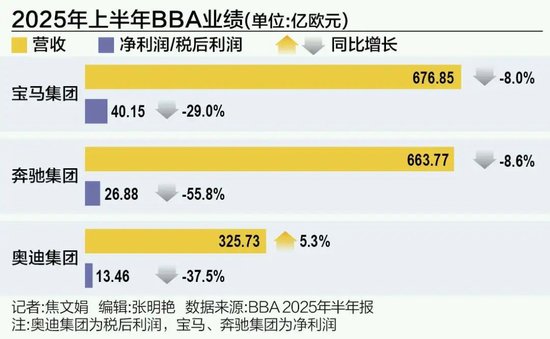
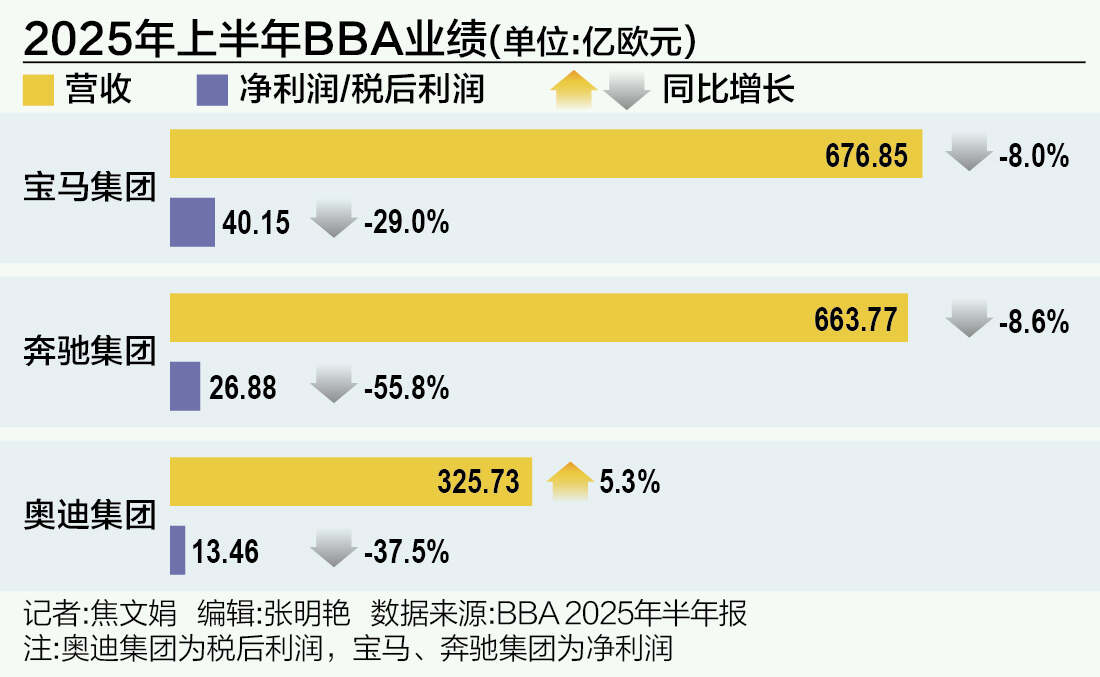
Core Viewpoint - The traditional luxury car giants BBA (BMW, Mercedes-Benz, Audi) are facing significant growth challenges, with declining revenues and profits, particularly in the Chinese market, indicating a critical phase in their transformation efforts [1][2][4]. Financial Performance - In the first half of 2025, BBA's financial results showed a mixed performance: BMW led with €67.685 billion in revenue, down 8% year-on-year; Mercedes-Benz followed with €66.377 billion, experiencing the largest revenue drop of 8.6% and a net profit decline of over 50%; Audi was the only brand with revenue growth, reaching €32.573 billion, but its net profit was only €13.46 billion, one-third of BMW's [2][4][5]. - The overall net profit for Mercedes-Benz fell by 55.8% to €2.688 billion, while BMW's net profit decreased by 29% to €4.015 billion, and Audi's net profit dropped by 37.5% [7][8]. Market Challenges - BBA collectively struggled in the Chinese market, with delivery volumes declining by 15.5% for BMW, 14.2% for Mercedes-Benz, and 10.3% for Audi [4][6]. - The entry-level models of BBA are facing intense competition from domestic brands, leading to significant sales declines in the mid-range price segment [7][8]. Electric Vehicle Transition - The shift towards electric vehicles (EVs) is critical for BBA, with distinct strategies emerging: BMW is leading in EV sales, with 220,600 units sold in the first half of 2025, a 15.7% increase; Audi's EV sales grew by 32.3%, while Mercedes-Benz's EV sales fell by 14% to 87,300 units [9][12][13]. - Audi is cautiously pursuing electrification, planning to launch new internal combustion and hybrid models between 2024 and 2026, while BMW is focused on its new generation platform to boost EV sales [12][13][14]. Strategic Adjustments - BBA is adjusting its electrification goals, with Mercedes-Benz postponing its target for full electrification to 2030, aiming for a maximum of 50% of new models to be electric or hybrid by that year [14][15]. - The competitive landscape is shifting, with BBA needing to enhance their smart technology capabilities alongside their electrification efforts to regain their former market dominance [15].

BBA的下跌叙事中,谁将率先突围?
2 1 Shi Ji Jing Ji Bao Dao· 2025-08-04 14:01
Core Viewpoint - The traditional luxury car giants BBA (BMW, Mercedes-Benz, Audi) are facing significant growth challenges, with declining revenues and profits, particularly in the Chinese market, indicating a critical transformation phase for these companies [1][2][4]. Financial Performance - In the first half of 2025, BBA's financial results showed a mixed performance: BMW led with revenues of €67.685 billion, down 8% year-on-year; Mercedes-Benz followed with €66.377 billion, experiencing the largest revenue drop of 8.6%, and a net profit halved to €26.88 billion; Audi reported revenue growth to €32.573 billion but with a net profit of only €1.346 billion, one-third of BMW's [2][4][8]. - The overall net profit for BBA saw significant declines, with Mercedes-Benz's net profit dropping 55.8%, BMW's down 29%, and Audi's down 37.5% [7][8]. Market Challenges - BBA collectively struggled in the Chinese market, with delivery volumes down 15.5% for BMW, 14.2% for Mercedes-Benz, and 10.3% for Audi, making it the largest single market decline globally for these brands [4][10]. - The entry-level models of BBA are facing intense competition from domestic brands, leading to a decline in both volume and profit margins [9][10]. Strategic Adjustments - BBA has lowered their profit forecasts: Audi revised its revenue target to €65-70 billion with a profit margin expectation of 5-7%; BMW anticipates a decline in its automotive EBIT margin to 5-7%; Mercedes-Benz expects lower sales than the previous year with a revised return on sales (ROS) of 4-6% [4][10]. - The companies are adjusting their strategies towards electric vehicle (EV) production, with BMW leading in EV sales, while Mercedes-Benz has delayed its full electrification target to 2030 [11][16]. Electric Vehicle Transition - Audi reported a 32.3% increase in EV sales, leading BBA, with a total of 101,400 units delivered; BMW's EV sales reached 220,600 units, up 15.7%, while Mercedes-Benz saw a 14% decline in EV sales to 87,300 units [14][16]. - BMW is focusing on its new generation platform to boost EV sales, aiming for 50% of its sales to be electric by 2035, while Audi is cautiously expanding its EV lineup [15][16]. Future Outlook - The BBA's transition to electric and smart vehicles is seen as a necessary response to market pressures, with the potential for new growth opportunities emerging from current challenges [17].
华为问界M8纯电版上市在即 40万级SUV市场黑马?
Di Yi Cai Jing· 2025-08-04 10:05
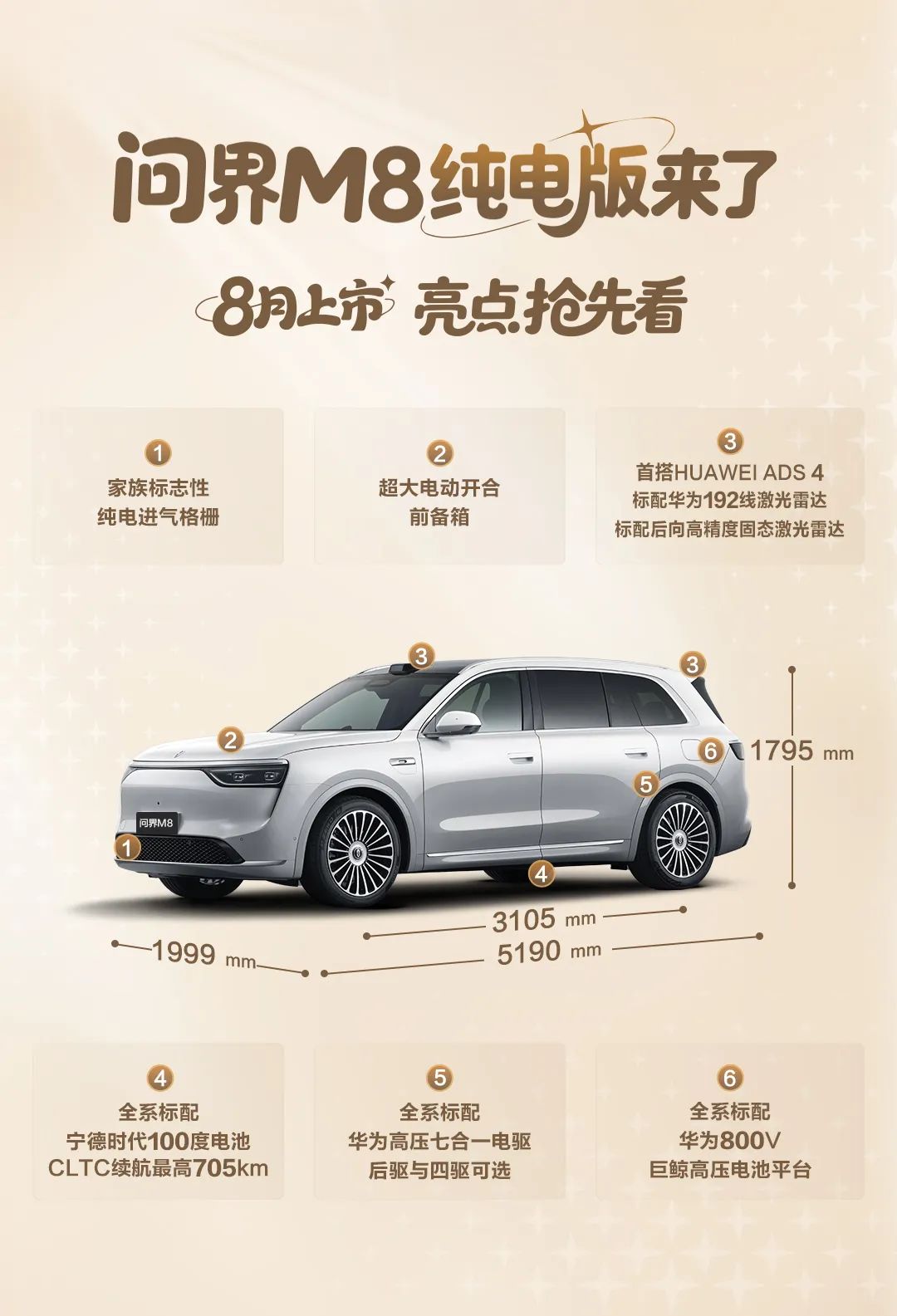
Core Insights - The domestic automotive market is experiencing intense competition, particularly in the new energy SUV segment, which is entering a growth explosion phase [1] - The AITO M8, positioned as a family smart flagship SUV, has achieved significant market differentiation and competitiveness, leading the luxury family SUV market with over 60,000 cumulative deliveries [1][2] - The AITO M8's sales strategy focuses on maintaining price stability while achieving continuous sales growth, contrasting with other brands that rely on price cuts and promotions [2][3] Market Performance - In Q1, the sales volume of vehicles priced between 300,000 to 400,000 yuan reached approximately 957,200 units, with new energy SUVs accounting for over 20% of this segment [1] - The AITO M8 has garnered over 40,000 units in sales within two months of its launch, demonstrating strong market momentum [2] - The average transaction price for the Hongmeng Zhixing brand is 410,000 yuan, while the AITO family averages 390,000 yuan, indicating a strong pricing power in the high-end market [6] Product Differentiation - The AITO M8 targets the high-end market segment of 400,000 yuan, filling a gap in the product line of the Hongmeng Zhixing brand [3] - The upcoming AITO M8 pure electric version will feature a 100 kWh battery from CATL, with a maximum CLTC range of 705 kilometers, showcasing advanced electric performance [3][4] - The AITO M8 pure electric version will incorporate Huawei's leading technology, including HUAWEI ADS4 and various advanced safety features, enhancing its competitive edge in the market [4] Strategic Positioning - The AITO brand is shifting from low-cost competition to a focus on high-end, high-technology, and high-value products, setting a new trend in the industry [7] - The success of the AITO M8 is driving the entire domestic brand upward, as more new energy vehicles enter the previously foreign-dominated price segments [7] - Foreign brands are increasingly seeking partnerships with local technology providers to enhance their offerings, indicating a shift in the competitive landscape [6][7]
问界M8纯电版上市在即 40万级SUV市场黑马?
Di Yi Cai Jing· 2025-08-04 09:36
Core Insights - The domestic automotive market is experiencing intense competition, particularly in the new energy SUV segment, which is entering a growth explosion phase [1] - The AITO Wenjie M8 has established itself as a leader in the luxury family SUV market, achieving over 60,000 cumulative deliveries and maintaining its position as the sales champion in the 400,000 yuan segment [1][4] - The Wenjie M8 is set to launch a pure electric version, which is expected to drive further sales growth for the Wenjie family and the Hongmeng Intelligent Driving brand [1] Market Dynamics - In Q1 2025, over 10 new SUVs were launched, with significant emphasis on price and configuration competition among major automakers [1] - The sales volume of vehicles priced between 300,000 to 400,000 yuan reached approximately 957,200 units, with new energy SUVs accounting for over 20% of this segment [1] - The automotive manufacturing industry's profit margin has declined, with a reported profit rate of 3.9% in Q1 2024, down from 4.3% in 2023 [7] Product Positioning - The Wenjie M8 targets the high-end market segment of 400,000 yuan, differentiating itself from the Wenjie M7 and M9 models, which cater to the 300,000 and 500,000 yuan segments respectively [12] - The upcoming Wenjie M8 pure electric version will fill a gap in the 400,000 yuan pure electric vehicle market, featuring a 100 kWh battery with a maximum CLTC range of 705 kilometers [12] Technological Advancements - The Wenjie M8 pure electric version will incorporate advanced safety and intelligent driving features, including Huawei's ADS4 and various radar systems for enhanced safety and driving assistance [14][16] - The vehicle's electric drive system will utilize Huawei's high-voltage battery platform, ensuring safety and efficiency [12] Competitive Landscape - The Wenjie M8 has successfully maintained its market position without resorting to price cuts, unlike many competitors who are facing challenges of "increased volume without increased profit" [7] - The brand's strategy focuses on high-value technology and premium positioning, contrasting with the low-price competition prevalent among other domestic brands [20] - The success of the Wenjie family is prompting a shift in the market, with foreign brands like Audi and BMW seeking partnerships with local tech firms to enhance their offerings [20] Industry Trends - The automotive market is entering a new consumption era where intelligent capabilities are prioritized, with a significant percentage of Wenjie M8 owners citing advanced driving assistance as a key purchase factor [18] - The overall sales of vehicles priced above 300,000 yuan are increasing, indicating a growing acceptance of high-end domestic brands in a market traditionally dominated by foreign luxury vehicles [20]
第二届中国品牌汽车海外展览会在智利开幕
Zhong Guo Chan Ye Jing Ji Xin Xi Wang· 2025-08-04 01:00
Core Insights - The second China Brand Automotive Overseas Exhibition recently opened in Santiago, Chile, showcasing over ten Chinese automotive brands, including Chery, Foton, XCMG, and Seres [1] - Chile's Deputy Minister of Transportation, Jorge Daza, highlighted China's role as a key strategic partner in green transportation, with an expectation of approximately 4,400 Chinese-made electric buses operating in the Santiago metropolitan area by early 2026 [1] - More than 40% of the new electric vehicle models certified in Chile between January 2024 and May 2025 are expected to come from China [1] Industry Summary - Chinese automotive brands have successfully entered the Chilean market over the past decade, gaining consumer favor due to advanced technology and excellent cost-performance ratio, leading to a dominant market share [1] - The influence of Chinese automotive brands in the international market is increasing, with a shift towards electrification, intelligence, and connectivity [1] - The cooperation between China and Chile in the field of green development not only provides consumers with more quality choices but also injects new vitality into the Chilean market [1]
机械行业周报:看好燃气轮机和人形机器人250802-20250803
SINOLINK SECURITIES· 2025-08-03 06:17
Investment Rating - The report maintains a positive outlook on the mechanical equipment sector, particularly highlighting the strong performance of specific companies like 应流股份 and 恒立液压 [11][16]. Core Insights - The gas turbine industry is experiencing a sustained increase in demand, with GEV signing new gas turbine orders of 12.2GW in H1 2025, representing a year-on-year growth of 35.56% [5][58]. - The report emphasizes the tight supply of turbine blades, a critical component in gas turbines, due to insufficient global production capacity, which is causing delivery challenges [5][23]. - The robotics sector is shifting from pure technology competition to application-specific scenarios, with significant advancements in automation and data utilization [5][24]. - The manufacturing PMI for July is reported at 49.3%, indicating a contraction in the manufacturing sector, but specific sub-sectors like forklifts are showing signs of recovery [5][33]. Summary by Sections Market Review - The SW Mechanical Equipment Index fell by 0.76% in the last week, ranking 9th among 31 primary industry categories, while the Shanghai Composite Index dropped by 1.75% [3][13]. - Year-to-date, the SW Mechanical Equipment Index has risen by 15.54%, ranking 6th among the same categories, compared to a 3.05% increase in the Shanghai Composite Index [3][14]. Key Data Tracking - General machinery continues to face pressure, with the manufacturing PMI below the neutral mark for four consecutive months [25][33]. - The engineering machinery sector shows resilience, with excavator sales in June 2025 reaching 18,804 units, a year-on-year increase of 13.3% [38]. - The gas turbine sector is on an upward trend, with significant order growth and a robust market outlook [58]. Industry Dynamics - The report highlights the ongoing tightness in the supply of turbine blades, which is critical for gas turbine production, and the implications for companies like 应流股份 [5][23]. - The robotics industry is advancing towards practical applications, with notable developments in automation and machine learning [5][24]. - The report suggests monitoring the forklift and injection molding machine sectors, which are expected to benefit from domestic demand policies [5][33].


2025汽车新质生产力发展论坛盛大召开
Zhong Guo Qi Che Bao Wang· 2025-08-01 11:09
Core Viewpoint - The 2025 Automotive New Quality Productivity Development Forum highlighted the transformation of the automotive industry through new quality productivity, emphasizing the importance of electric, connected, and intelligent vehicles in China's strategic development [2][4]. Group 1: Industry Transformation - The global trends of electrification, connectivity, and intelligence in the automotive sector are seen as inevitable, with China leveraging opportunities through initiatives like "Made in China 2025" to advance its new energy vehicle (NEV) industry [4]. - Despite significant achievements in the NEV sector, China faces increasing international competition and internal disarray, necessitating breakthroughs in core technologies such as solid-state batteries and autonomous systems [5][7]. Group 2: ESG and Sustainable Development - ESG (Environmental, Social, Governance) principles are becoming critical for the sustainable development of the automotive industry, with high ESG ratings leading to better market performance and capital access [7]. - The automotive sector must address challenges related to carbon emissions data, supply chain management, and competition to enhance sustainability and innovation [7][9]. Group 3: Strategic Foundations - China's rise in the NEV sector is attributed to strategic advantages, including institutional support, long-term planning, and advanced infrastructure [9]. - The industry has shifted from a "follower" to a "leader" position, but must navigate challenges such as trade barriers and the need for quality improvements in technology [9][26]. Group 4: Innovation and Collaboration - Companies are focusing on innovation and cross-industry collaboration to build a high-end intelligent electric vehicle ecosystem, with safety and user experience as top priorities [12][14]. - The integration of AI and next-generation power architectures is essential for future advancements in the automotive sector [13][20]. Group 5: Global Market Positioning - Chinese automotive brands are encouraged to enhance their global competitiveness through differentiated branding and technology innovation, aiming for significant market penetration in international markets [19][25]. - The automotive industry is urged to adopt an open and collaborative approach to overcome technological barriers and achieve high-quality development [26].

捷豹路虎新高层将变:全球CEO Adrian Mardell宣布年底退休
Sou Hu Cai Jing· 2025-08-01 07:13
【环球网科技综合报道】8月1日消息,捷豹路虎公司宣布其全球首席执行官Adrian Mardell将于2025年12月31日正式退休,结束其长达35年的职业生涯。据 悉,作为捷豹路虎最资深的员工之一,Mardell的继任者选拔工作已启动,具体人选也将于后续公布。 资料显示,Adrian Mardell的职业生涯与捷豹路虎紧密交织。他于1990年加入该公司,历任财务、运营等多领域管理岗位,2018年升任首席财务官 (CFO)。2022年11月,时任CEO Thierry Bolloré因个人原因辞职后,Mardell临危受命,先以临时CEO身份接管该公司,并于2023年7月正式出任全球首席 执行官。 在其任期内,Mardell推动捷豹路虎完成"重塑未来"全球战略转型,聚焦电动化、智能化与可持续发展。捷豹路虎公司财务表现显著改善:2024/2025财年 (2024年4月1日至2025年3月31日)税前利润达25亿英镑,同比增长15%,创近十年新高;企业净债务清零,现金流状况大幅优化。此外,Mardell高度重视 中国市场,多次率核心管理层访华,推动"在中国为全球"战略落地,加速本土化研发与生产布局。 截至目前,捷豹 ...
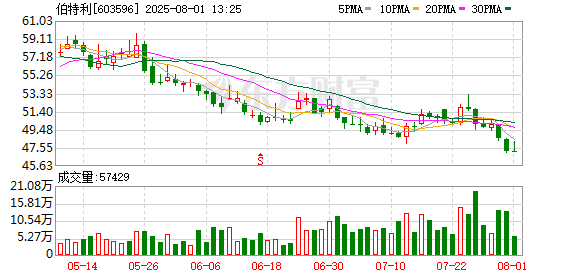
伯特利 | 发布员工持股计划 助力长期成长【民生汽车 崔琰团队】
汽车琰究· 2025-08-01 06:51
Event Overview - On July 31, the company announced the first phase of its employee stock ownership plan for 2025, covering core technical personnel and middle management (totaling ≤258 people). The stock source is from the company's repurchased shares, totaling no more than 1.8 million shares, accounting for 0.30% of the current total share capital. The employee purchase price is set at 24.97 yuan/share, with a total self-funded amount not exceeding 44.946 million yuan [2]. Employee Stock Ownership Plan - The incentive targets are broad, including core technical personnel and middle management, with a total of ≤258 individuals. The expected expense amortization amounts for 2025-2030 are 4.16 million, 9.98 million, 9.98 million, 8.31 million, 5.15 million, and 2.33 million yuan, indicating a minimal impact on the company's performance [3]. - The incentive is significant, with the grant price of 24.97 yuan/share representing a 47.03% discount compared to the current price. This plan is expected to attract and retain talent, enhance operational efficiency, and drive performance growth through a tiered unlocking and multiple assessment mechanisms, ensuring long-term development [3]. Strategic Developments - The company is actively expanding its smart and electric vehicle capabilities. It has become the first domestic supplier to mass-produce and deliver line control braking systems, with plans to build an annual production capacity of 1 million units by 2024, which will help seize market opportunities and expand its first-mover advantage [4]. - The company is also the first domestic supplier to achieve mass production of Electric Parking Brakes (EPB), with plans to expand production by 1 million units in 2024, effectively alleviating capacity bottlenecks and strengthening competitive advantages [4]. - Since 2012, the company has been engaged in lightweight braking components and has established a global presence, including a production base in Mexico that began operations in 2023, with plans for a base in Morocco in 2024 [4]. Integration and Market Position - The company has made strategic acquisitions, such as acquiring 45% of Wanda in 2022, enhancing its automotive chassis layout (braking + steering). Post-acquisition integration has led to a significant increase in net profit margins [5]. - In November 2024, the company plans to establish Bertley Automotive Suspension Technology Company and aims to add 200,000 units of suspension capacity annually, targeting the line control chassis market, which is projected to be worth hundreds of billions [5]. Financial Projections - The company is expected to benefit in the short term from the increased penetration of smart electric control businesses like EPB and line control braking systems. In the medium to long term, the line control chassis is anticipated to contribute significantly to revenue growth, with overseas production capacity gradually ramping up. Revenue projections for 2025-2027 are 13.075 billion, 17.089 billion, and 22.044 billion yuan, with net profits of 1.594 billion, 2.104 billion, and 2.793 billion yuan, respectively. Corresponding EPS is projected at 2.63, 3.47, and 4.60 yuan, with PE ratios of 18, 14, and 10 times [6][7].


民生证券给予伯特利推荐评级:发布员工持股计划助力长期成长
Mei Ri Jing Ji Xin Wen· 2025-08-01 05:24
民生证券8月1日发布研报称,给予伯特利(603596.SH,最新价:47.16元)推荐评级。评级理由主要包 括:1)发布员工持股计划绑定人才助力长期成长;2)智能化&电动化齐驱全球化再进一步;3)整合 稳步推进进击线控底盘。风险提示:客户销量不及预期;竞争加剧;原材料价格上涨;关税风险等。 (文章来源:每日经济新闻) ...