
生成式人工智能

Search documents
Steam上的AI游戏暴增,新“雅达利大崩溃”或将到来
3 6 Ke· 2025-07-23 11:19
Core Insights - AIGC (Generative Artificial Intelligence) is transforming the game development industry, with a significant increase in AI-integrated games on platforms like Steam, which saw an 800% rise in the number of games using generative AI since 2025 [1][3] - Nearly 8,000 games on Steam now explicitly mention the use of generative AI, up from less than 1,000 a year ago, indicating a rapid adoption of AI technologies in game development [3] - The use of AI in game development is primarily aimed at reducing costs and increasing efficiency, particularly benefiting small independent developers who often handle multiple roles [3][8] Industry Trends - The game development process has evolved from manual coding to utilizing game engines that encapsulate core components, leading to a more structured and professional approach in larger companies [5][6] - Large game studios are cautious about AI due to potential negative perceptions from players regarding automated content, which can harm brand reputation if not executed properly [11][14] - Independent developers are more willing to embrace AI, as they prioritize survival and efficiency over brand image, allowing them to produce games more quickly and with fewer resources [14][15] Challenges and Risks - The rapid increase in AI-generated games raises concerns about quality, reminiscent of the "Atari Shock" in the 1980s, where an oversaturation of low-quality games led to a market crash [17][19] - Players may develop a distrust towards AI-generated content if they encounter poorly executed games, which could lead to a decline in overall demand for games on platforms like Steam [19]


芯片巨头财报季开场即哑火 模拟霸主德州仪器(TXN.US)“关税虚火”遭戳破
智通财经网· 2025-07-23 00:21
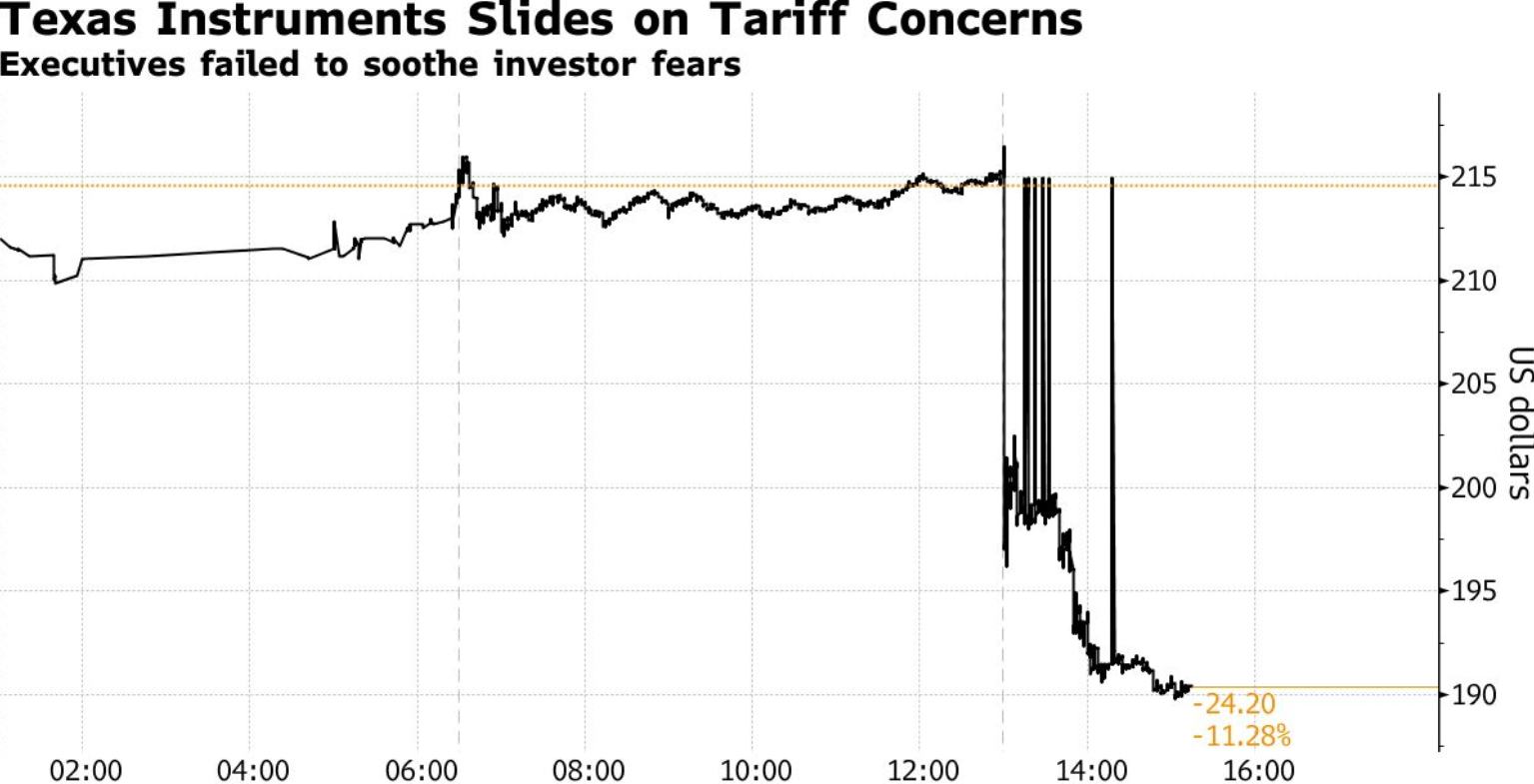
Core Viewpoint - Texas Instruments (TXN.US) reported earnings on July 23, leading to a significant drop of over 11% in its stock price during after-hours trading, primarily due to concerns that the surge in chip demand driven by Trump's tariff policies may be temporary [1][2]. Financial Performance - Texas Instruments' Q2 revenue reached $4.45 billion, a year-on-year increase of 16%, with earnings per share at $1.41, also up 16% year-on-year [8]. - The company projected Q3 revenue between $4.45 billion and $4.8 billion, slightly below Wall Street's average expectation of $4.57 billion [1][2]. - The anticipated earnings per share for Q3 is approximately $1.48, which is also below analyst expectations [1]. Market Dynamics - The overall revenue trajectory for Texas Instruments has been recovering since 2024, but the tariff-induced uncertainty has clouded demand forecasts [2]. - The company noted a strong domestic demand in the early part of Q2 due to tariffs, but order levels have since returned to normal recovery expectations [2]. - Texas Instruments holds a market share of approximately 19%-20% in the analog chip sector and ranks among the top five in the MCU market [6]. Industry Position - Texas Instruments is recognized as a leading manufacturer of analog chips and MCUs, with a diverse product range that is critical in various applications, including electric vehicles [5][6]. - The company serves over 100,000 customers across multiple sectors, making its performance a key indicator of overall industry demand [6]. - The demand for analog chips is expected to grow due to their essential role in automotive and industrial applications [5][8]. Future Outlook - Despite the current challenges, Texas Instruments remains optimistic about long-term growth opportunities, expecting to eventually surpass $20 billion in annual revenue [2]. - The company is cautious about the automotive market, which has not yet recovered, and anticipates continued positive demand in other sectors [7]. - Analysts predict a strong recovery in global semiconductor demand by 2025, with Texas Instruments' performance likely influencing broader market trends [11][14].

新独角兽Reka AI融资1.1亿美元 投资者包括英伟达(NVDA.US)和Snowflake(SNOW.US)
智通财经网· 2025-07-22 13:21
Group 1 - Reka AI raised $110 million from investors including Nvidia and Snowflake, doubling its valuation to over $1 billion [1] - The company, founded in 2022 by researchers from Google and Meta, develops large language models and claims higher efficiency than competitors [1] - Reka AI's valuation was approximately $300 million in a funding round earlier in 2023, indicating significant growth [1] Group 2 - Snowflake's AI engineering VP stated that the company will offer Reka AI's models and products to its customers, highlighting the unique talent within Reka AI [2] - Reka AI is one of the few independent companies capable of competing with major players like OpenAI, Meta, and Anthropic [2] - Reka AI's CEO mentioned that the company has expanded its workforce from 20 to 50 employees in the past year to accelerate product development [1]


《经济学人》感慨:苹果折进去10年,中企打了胜仗
Guan Cha Zhe Wang· 2025-07-22 06:35
【文/观察者网 阮佳琪】 在英国《经济学人》看来,同样是手机制造商"跨行"造车,小米在苹果的"折戟之地"取得了胜利。并且 在攻克汽车制造领域后,这家中国企业正将目光投向全球市场。 报道细数道,未来几年,小米计划将海外门店从去年的几百家扩张至1万家,用于展示旗下的时尚新车 和消费电子产品。与此同时,它还计划继续拓展新业务领域,比如人形机器人CyberOne、自研芯片"玄 戒O1"等,布局之广"令人眼花缭乱(vertiginous)。" 6月27日,上海,小米YU7上市,在小米徐汇百联旗舰店,不少消费者前来看车。视觉中国 《经济学人》这篇发布于当地时间21日的文章回顾称,过去几年,小米的崛起势头迅猛,令人惊讶: 首先,在全球智能手机方面,(今年第二季度)小米的销量仅次于苹果和三星;其次,其旗下智能互联 设备品类丰富,从空调、扫地机器人到电动滑板车、电视,应有尽有。 在经历了2022年的低迷后,这家公司强势回升,去年营收增长35%,市值一度飙升至1.54万亿港元。 文章随即特别强调,尤其随着第二款电动车YU7的成功上市,小米实现了苹果未能实现的"壮举":苹果 耗费十余年、投入数十亿美元研发电动车,最终却放弃了这一计 ...



高分辨率与高产出加持,尼康推出首款FOPLP光刻系统
势银芯链· 2025-07-22 04:46
Core Viewpoint - Nikon has announced the launch of its first backend lithography system, the digital lithography system DSP-100, which will start accepting orders in July 2025, specifically designed for advanced packaging applications [2][11]. Financial Performance - For the fiscal year 2024, Nikon's lithography business revenue is approximately $1.25 billion. The shipment of integrated circuit lithography machines was 32 units, a decrease of 13 units compared to 2023. The breakdown includes 4 ArFi machines (down 5), 7 ArF machines (down 3), 3 KrF machines (up 1), and 18 i-line machines (down 6). For FPD lithography machines, 28 units were shipped, a significant decrease of 40% compared to 2021 [4][5]. Product Features - The DSP-100 system supports large substrates up to 600 square millimeters and offers a high resolution of 1.0μm L/S. It combines Nikon's high-resolution semiconductor lithography technology with multi-lens technology from its FPD lithography systems, achieving a throughput of up to 50 panels per hour using 510x515mm substrates [9][11]. Market Trends - The demand for high-performance semiconductor devices is rapidly increasing due to the widespread application of IoT and generative AI technologies, particularly in data centers. Advanced packaging technologies, such as chip-on-chip connections, are evolving, leading to finer circuit patterns and larger packaging sizes. Consequently, the demand for panel-level packaging (PLP) using resin or glass substrates is expected to continue growing [6].

20CM涨停!这家公司光模块控温产品批量供货,引爆CPO赛道
Zheng Quan Ri Bao Zhi Sheng· 2025-07-22 03:23
Group 1 - The core point of the article is that Fuxin Technology (688662) has achieved significant milestones in the development of Micro TEC products for high-speed optical modules, leading to a 20% stock price increase on July 22 [1] - Fuxin Technology's subsidiary, Guangdong Fuxin Thermoelectric Device Technology Co., Ltd., has successfully passed product validation from a leading company in the communication sector and has begun bulk supply of Micro TEC products [1] - The Micro TEC products are essential for precise temperature control and heat dissipation in high-performance optical modules, meeting the industry's advanced performance standards [1] Group 2 - According to research from Dongfang Securities, Fuxin Technology is expected to achieve sales revenue of 27 million yuan in the communication sector in 2024, representing a year-on-year growth of 140.8% [1] - The demand for high-speed optical modules and related temperature control products is increasing due to the rapid development of generative artificial intelligence and the expanding global computing power market [2] - On July 22, several companies in the optical-electronic co-packaging technology sector saw their stock prices rise, indicating a broader market interest in this technology [2]

冠通期货资讯早间报-20250722
Guan Tong Qi Huo· 2025-07-22 00:41
1. Report Industry Investment Rating No relevant content provided. 2. Core Viewpoints of the Report The report comprehensively presents the overnight performance of the futures market, important macro - level news, updates in various industries such as energy, metals, black - series, and agriculture, as well as the trends in the financial market including stocks, bonds, foreign exchange, and the upcoming events schedule [2][9][36]. 3. Summary by Relevant Catalogs Overnight Night - Market Trends - Domestic futures: On Monday night, domestic futures had mixed results. Coking coal rose over 6%, while alumina, soda ash, glass, and coke rose over 3%. SC crude oil and asphalt fell over 1%, and soybean oil, rapeseed meal, and low - sulfur fuel oil (LU) fell nearly 1% [2]. - International precious metals: COMEX gold futures rose 1.55% to $3410.30 per ounce, and COMEX silver futures rose 2.02% to $39.24 per ounce [3]. - International oil prices: WTI crude oil fell 0.41% to $65.78 per barrel, and Brent crude oil fell 0.36% to $69.03 per barrel [4]. - London base metals: LME nickel rose 1.92% to $15510.00 per ton, LME zinc rose 0.92% to $2844.50 per ton, and LME copper rose 0.91% to $9867.00 per ton [5]. - International agricultural products: US soybeans fell 1.22%, US corn fell 1.10%, US soybean oil rose 0.41%, US soybean meal fell 1.17%, and US wheat fell 0.82% [6]. Important News - **Macro - news**: The central bank kept the one - year and five - year LPR unchanged at 3% and 3.5% respectively; the "Housing Rental Regulations" will be implemented from September 15, 2025; the Shanghai Export Container Settlement Freight Index (European route) dropped 0.9% to 2400.50 points; in June, total social electricity consumption was 867 billion kWh, a year - on - year increase of 5.4% [9][10]. - **Energy and Chemical Futures**: The premium for the alternative delivery product of caustic soda futures was adjusted from 80 yuan/ton to 150 yuan/ton; on July 22, 2025, the listing benchmark price of the first batch of propylene futures contracts was 6350 yuan/ton; as of July 21, the MEG port inventory in the East China main port area continued to decline [20][22]. - **Metal Futures**: Yichun Yinli plans to shut down for equipment maintenance; in June 2025, global primary aluminum production was 6.045 million tons; in the third week of July 2025, Brazil's copper and aluminum ore shipments increased compared to the same period last year [24]. - **Black - series Futures**: From July 14 - 20, 2025, the arrival volume of iron ore at Chinese ports decreased; the global iron ore shipment volume increased; coke enterprises decided to raise prices; in the third week of July 2025, Brazil's iron ore shipments decreased compared to the same period last year, but the daily shipment volume increased [26][28][29]. - **Agricultural Futures**: From July 1 - 20, 2025, Malaysia's palm oil production increased, but exports decreased; India's vegetable oil inventory increased significantly; it is estimated that Brazil's corn production in the 2024/2025 season will reach 136.3 million tons; in the third week of July 2025, Brazil's soybean shipments decreased compared to the same period last year, but the daily shipment volume increased; as of July 20, the US soybean and corn good - to - excellent rates were reported [31][33][34]. Financial Market - **Financial**: The A - share market continued to rise, with the Shanghai Composite Index hitting a new high for the year; the Hong Kong stock market also rose, and the number of IPOs and the amount of funds raised in Hong Kong increased significantly; some Hong Kong and US stock investors received tax - supplement notices; the top three stocks held by active equity funds were Tencent, CATL, and Kweichow Moutai [36][37][39]. - **Industry**: As of June 2025, China's Internet user scale reached 1.123 billion, with an Internet penetration rate of 79.7%; China's express delivery volume ranked first in the world for 11 consecutive years; Chengdu introduced 17 new real - estate policies [43][45]. - **Overseas**: In Japan's Senate election, the ruling coalition lost its majority; Fitch downgraded the outlook of 25% of US industries; the "OBBBA" bill will increase the US fiscal deficit by $3.4 trillion in the next decade; the EU may take counter - measures against the US [46][48]. - **International Stock Markets**: US and European stock markets had mixed results; the London Stock Exchange is studying the feasibility of extending trading hours; South Korea is considering raising the stock trading tax; Stellantis reported a net loss in the first half of the year; Verizon's second - quarter revenue exceeded expectations [51][52][53]. - **Commodities**: Propylene futures were listed on July 22; international precious metals rose, international oil prices fell slightly, and London base metals rose [55]. - **Bonds**: The central bank plans to cancel the freeze of bond repurchase collateral; the domestic bond market weakened; the euro - zone and US bond yields fell [57][58][60]. - **Foreign Exchange**: The on - shore RMB against the US dollar fell slightly; the US dollar index fell [61]. Upcoming Events On July 22, there are multiple events including central bank operations, policy announcements, corporate earnings reports, and new stock subscriptions; on July 22 - 23, the 12th Trusted Cloud Conference will be held; propylene futures and options will be listed on the Zhengzhou Commodity Exchange [64].
生成式AI重塑微软UX设计,人机协作开启新篇章!
Sou Hu Cai Jing· 2025-07-21 14:05
Core Insights - Generative AI is leading a profound transformation in the UX design field, with Microsoft's digital division at the forefront, exploring the integration of advanced AI technologies like Microsoft Copilot into daily design and development processes [1][2] Group 1: Changes in Design Workflow - The introduction of generative AI has significantly altered the workflow of designers, allowing for a more dynamic and non-linear design process, likened to creating a "living book" where each page evolves [1] - Designers are now focusing on the logic of prompt expression and the design of dynamic adaptive cards, shifting away from traditional linear processes [2][4] Group 2: Collaboration and Efficiency - The transformation extends beyond design processes to the collaboration methods within product development teams, enabling rapid alignment of plans and goals, breaking free from traditional linear workflows [4] - Designers can now synchronize design prompts directly with product managers and engineers, greatly enhancing work efficiency [4] Group 3: User Testing and Experience Optimization - Generative AI shows immense potential in optimizing user testing, allowing for comprehensive coverage of all usage scenarios, leading to more precise and efficient testing [5] - AI can provide insights into user experiences that are difficult to capture through traditional sampling methods, enabling thorough testing of entire applications [5] Group 4: Broader Applications of AI - AI's potential extends to assisting employees in daily tasks, from finding optimal parking spots to managing employee benefits and performance evaluations [6] - The integration of AI in the workplace is seen as a means to redefine roles and enhance problem-solving capabilities, with a focus on proactive thinking [6]


争夺人工智能人才的史诗级大战
阿尔法工场研究院· 2025-07-21 12:10
Core Insights - The article discusses the intense competition for talent in Silicon Valley, particularly in the artificial intelligence sector, highlighting the significant financial incentives being offered to attract top researchers and engineers [1][2][3] Group 1: Talent Acquisition and Competition - OpenAI was in talks to acquire Windsurf for $3 billion, but the deal fell through, leading to Windsurf's CEO leaving for Google and taking key employees with him [1][18] - Meta, under Mark Zuckerberg's leadership, is aggressively recruiting top talent, offering compensation packages exceeding $300 million, which has led to a shift in the talent market [2][9] - The competition has elevated AI researchers to "superstar" status, with salaries comparable to those of NBA players and Hollywood stars [1][2] Group 2: Company Strategies and Responses - Meta is focusing on building a "dream team" in AI by poaching leaders from promising startups and offering limited-time job offers to create urgency [2][3] - OpenAI's leadership is responding to the talent war by adjusting compensation and exploring innovative ways to recognize and reward top talent [11] - The article highlights a conversation between Zuckerberg and OpenAI's Chief Researcher, which led to a strategic shift in Meta's recruitment approach, emphasizing investment in talent over hardware [4][7] Group 3: Impact on Startups - Windsurf's acquisition by Google for $2.4 billion resulted in a significant loss of talent and left many employees feeling abandoned [18][19] - The article illustrates the emotional impact on employees at Windsurf, who were left uncertain about their future after the acquisition news [19][20] - The trend of "acquihire" deals is becoming common among tech giants, often leaving remaining employees in a precarious position [18]



奈飞(NFLX.US)财报后陷多空激战!业绩超预期反跌5%,大行目标价差近300美元
Zhi Tong Cai Jing· 2025-07-21 09:10
Core Viewpoint - Netflix reported strong second-quarter earnings that exceeded expectations, leading to an increase in full-year revenue guidance, yet the stock fell by 5% following the announcement [1] Group 1: Earnings Performance - Netflix's second-quarter revenue and profit surpassed expectations, prompting major Wall Street firms to take notice [1] - The company raised its 2025 revenue guidance from $43.5 billion to $44.8 billion, driven by a weaker dollar, subscriber growth, and increased average revenue per user (ARM) from advertising [3] - Excluding currency effects, revenue growth was 17% year-over-year, with an operating margin reaching a historical high of 34% [3] Group 2: Analyst Ratings and Price Targets - Morgan Stanley maintained an "Overweight" rating and raised the target price from $1,450 to $1,500, citing successful advertising initiatives and strong content innovation driven by generative AI tools [1] - Wells Fargo reiterated an "Overweight" rating with a target price increase from $1,500 to $1,560, highlighting market share growth as a key focus for investors [2] - Evercore ISI also maintained an "Outperform" rating, increasing the target price from $1,350 to $1,375, attributing the strong performance to favorable currency effects and robust subscriber growth [3] Group 3: Market Dynamics and Strategic Outlook - Analysts expressed concerns about the sustainability of Netflix's new advertising and sports strategies, suggesting potential risks to its core value proposition [4] - Despite strong quarterly performance, some analysts noted that the positive outlook was largely driven by currency improvements rather than operational excellence [4][5] - EquityDuo Insights rated the stock as "Sell," arguing that while Netflix remains a leader in streaming, its valuation appears high given industry uncertainties [5]
