人民币国际化

Search documents
海南全岛封关在即 黄奇帆建议发展服务贸易 不能“西装料做衬衫”
2 1 Shi Ji Jing Ji Bao Dao· 2025-12-02 05:17
12月2日,2025年"读懂中国"国际会议的湾区对话环节在广州举行,主题为海南自贸港建设与国际贸易 新空间。不久后,海南自由贸易港将正式启动全岛封关运作。对于封关后的发展重点,中国国家创新与 发展战略研究会学术委员会常务副主席、重庆市原市长黄奇帆提出了五个应着力推进的关键方向,认为 它们将对海南及全国产生重大战略意义。 第一,海南应率先实现内外贸一体化。 第二,大力发展高附加值服务贸易。 第三,打造面向东南亚和中国经济交往的枢纽与桥梁。 第四,建设金融回流基地。 第五,成为人民币国际化的重要前沿阵地。 (文章来源:21世纪经济报道) ...
债市早报:资金面稳中偏松,债市偏强震荡
Sou Hu Cai Jing· 2025-12-02 04:19
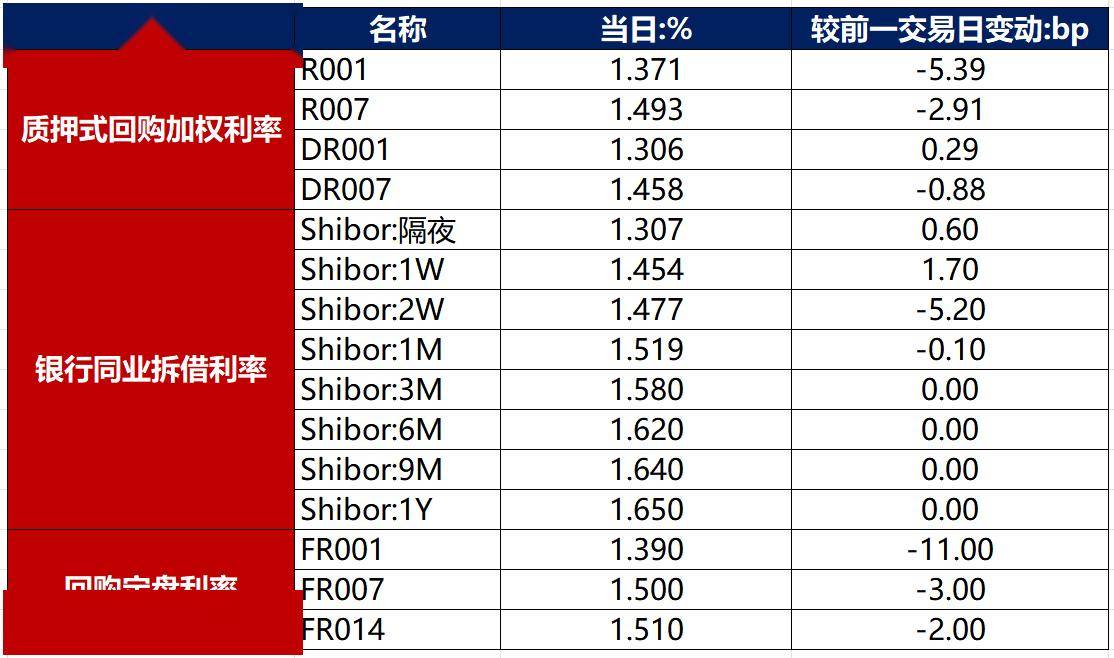
Group 1: Domestic News - The National Development and Reform Commission has expanded the scope of infrastructure REITs, including commercial office facilities and urban renewal facilities as independent asset categories [2] - The Ministry of Finance and the Ministry of Science and Technology issued guidelines to prevent illegal funding practices and ensure timely debt settlement [2] Group 2: International News - Russia will issue its first sovereign bonds denominated in RMB, starting on December 2, with a target coupon rate of 6.25%-6.5% for the 3.2-year portion and up to 7.5% for the 7.5-year portion [3] - The US ISM Manufacturing PMI for November fell to 48.2, indicating continued contraction in the manufacturing sector, with new orders and employment indices also declining [4] - The Bank of Japan's Governor hinted at a potential interest rate hike in December, leading to declines in both Japanese stocks and bonds [5] Group 3: Commodity Market - International crude oil prices increased, with WTI rising by 1.31% to $59.32 per barrel and Brent up by 1.26% to $63.17 per barrel [6] Group 4: Financial Market - On December 1, the central bank conducted a 7-day reverse repurchase operation of 107.6 billion yuan at a rate of 1.40%, resulting in a net withdrawal of 231.1 billion yuan [7] - The funding environment remained stable, with major repo rates showing slight fluctuations [8][9] Group 5: Bond Market Dynamics - The bond market showed strong fluctuations, with the 10-year government bond yield slightly decreasing to 1.8275% while the 10-year policy bank bond yield increased to 1.9000% [11] - In the secondary market, several corporate bonds experienced significant price deviations, with some bonds from Vanke dropping over 75% [14] Group 6: Credit Bond Events - Vanke's equity stake in Shenzhen Vanke Development was frozen for three years, and the company faced scrutiny over its financial practices [15] - Aoyuan Group announced it failed to pay interest on its bonds, accumulating a total of 6.44 billion yuan in unpaid principal and interest [15] Group 7: Convertible Bonds - The convertible bond market saw mixed performance, with the China Securities Convertible Bond Index and the Shanghai Stock Exchange Convertible Bond Index rising by 0.10% and 0.19% respectively [18] - The total trading volume in the convertible bond market was 55.329 billion yuan, a decrease of 9.851 billion yuan from the previous trading day [18] Group 8: Overseas Bond Market - US Treasury yields rose across all maturities, with the 2-year yield increasing by 7 basis points to 3.54% and the 10-year yield rising by 7 basis points to 4.09% [20] - Major European economies also saw an increase in 10-year government bond yields, with Germany's yield rising by 6 basis points to 2.75% [23]


人民币受青睐是现实选择,不是对抗游戏
Sou Hu Cai Jing· 2025-12-02 01:13
Core Viewpoint - The issuance of sovereign bonds denominated in RMB by Russia marks a significant step in the internationalization of the Chinese currency, driven by market logic and global trade dynamics rather than geopolitical confrontation [2][4]. Group 1: RMB Internationalization - Russia will issue its first sovereign bonds in RMB on December 8, with subscription starting on December 2, highlighting the growing acceptance of RMB in global markets [2]. - The internationalization of RMB is a historical process driven by market demand and the reshaping of global trade patterns, rather than a unilateral push by China [2][5]. - As of Q4 2024, RMB assets in global foreign exchange reserves are approximately $247 billion, with over 80 countries incorporating RMB into their reserves [3]. Group 2: Global Market Trends - The issuance of RMB-denominated bonds is becoming more common, with countries like Hungary, UAE, and Indonesia participating, while the scale of "Panda bonds" issued by foreign institutions in China continues to grow [3]. - In October, RMB's share in global trade financing reached 8.5%, making it the second most used currency in this sector [3]. - The preference for RMB is driven by economic considerations, as it offers relative stability and lower volatility compared to other currencies amid fluctuating interest rates and rising debt risks in developed economies [4]. Group 3: Economic Considerations - The increasing global interest in RMB reflects a market-driven trust, as investors seek to optimize portfolios and diversify risks rather than align with any ideological stance [4]. - The international status of a currency is built on long-term economic strength, institutional trust, and market acceptance, with RMB's rise supported by China's economic resilience and ongoing financial openness [4]. - The current global monetary system is undergoing structural changes, transitioning from a dollar-dominated framework to a multi-centered system, with RMB contributing to this evolution [4]. Group 4: China's Approach - China maintains a calm and steady approach to RMB internationalization, emphasizing market-driven and voluntary participation rather than seeking currency hegemony [5]. - The internationalization of RMB is a natural outcome of China's economic development and openness, contrasting with other nations that rely on military alliances and political pressure to maintain currency status [5]. - The preference for RMB is seen as a realistic choice in a complex world, highlighting the need for more options rather than confrontation [5].

香港中资公募怎么挑?一篇看懂6家“国家队”隐藏技能
Sou Hu Cai Jing· 2025-12-02 01:13
本篇我们将视角转向中资公募机构。作为香港资本市场的重要参与者,中资公募基金机构近年来发展迅 速,依托母公司强大的投研能力、跨境业务协同机制以及离岸人民币市场的独特优势,逐步构建起具有 本土化深度与国际化广度兼备的竞争力。 香港处理着全球约80%的人民币支付业务,是最大的人民币离岸中心。中资公募机构凭借这一区位优 势,结合QFII、RQFII、沪深港通、债券通、跨境理财通等政策工具,形成了"境内—香港"资金、客户 与资产的高效双向流动机制,打造出低成本、高效率的跨境一体化平台。 以下,我们选取六家在香港市场具有代表性的中资公募机构,从产品体系、投资策略、业务特色、适用 场景等维度进行系统梳理,以供投资者参考。 一、中银国际资管(BOCI AM) 关键词:银行系、全币种、港股通医药冠军 生态位:香港最大银行系资管,人民币清算量市占率35%,母公司中银香港坐拥200万零售户口。 产品线:80余只公募,货—债—股—多资产"闭环",人民币、美元、港元三币种一键切换。 年度黑马:中银港股通医药混合发起A,2025年以来收益+102%,同类第一,规模从年初4亿飙至87亿 港元。 在之前文章中,我们系统梳理了九家具有代表性的 ...
中金2026年展望 | 汇率:宽松交易或回归
中金点睛· 2025-12-01 23:51
Core Viewpoint - The article discusses the anticipated return of a loose monetary policy in the U.S. and its implications for the dollar index and the RMB exchange rate, highlighting the impact of employment data and government policies on currency movements [2][5][28]. Group 1: Dollar Index Trends - In the first three quarters of 2025, the dollar index showed a trend of decline followed by stabilization, with a significant drop of over 10% in the first half of the year due to concerns over U.S. economic stability and soft employment data [2][5]. - The dollar index stabilized in the second half of 2025 after the U.S. reached tariff agreements with trade partners, reducing market concerns about economic stability [2][5]. - The article predicts that the dollar index may break below its long-term upward trend line in 2026, entering a new phase as the market adjusts to a potentially lower interest rate environment [16][28]. Group 2: Employment Market and Monetary Policy - The U.S. employment market is showing signs of weakness, with PMI employment components consistently below 50 since April 2025, indicating a reduction in hiring across various sectors [6][7]. - The article suggests that the softening employment market may trigger a return to loose monetary policy, with the Federal Reserve likely to lower interest rates to support job growth [5][11]. - The influence of the U.S. government on the Federal Reserve is expected to increase, potentially leading to more aggressive rate cuts if a pro-Trump candidate is appointed as the next Fed chair [11][29]. Group 3: RMB Exchange Rate Dynamics - The RMB appreciated approximately 3.2% against the dollar as of November 28, 2025, following a period of depreciation due to tariff pressures [19][21]. - The article attributes the RMB's strength to a combination of internal and external factors, including a restructuring of the international monetary system and improved resilience in China's financial markets [21][27]. - It is anticipated that the RMB will continue to appreciate moderately against the dollar in 2026, supported by a favorable external environment and the ongoing internationalization of the RMB [28][33]. Group 4: Risks and Uncertainties - The article identifies several risks that could affect the dollar and RMB exchange rates, including potential government shutdowns, tariff rate fluctuations, and increased volatility in risk assets [12][13]. - The upcoming U.S. midterm elections and political changes in other countries may also contribute to market volatility, impacting currency valuations [12][13]. - The article notes that the preference of the Trump administration for a weaker dollar could further support non-dollar currencies, including the RMB [29][30].

何佳倍、翟崑:RCEP展现跨区域发展新趋势
Sou Hu Cai Jing· 2025-12-01 23:10
《区域全面经济伙伴关系协定》(RCEP)联委会第十一次会议近日在泰国清迈举行,全面落实今年10 月RCEP领导人会议达成的共识,其中一项关键任务是推进新成员加入进程。自2018年中美经贸摩擦出 现以来,全球产业链供应链重构,显现出局部收缩、近岸布局与区域聚拢的特征。在依托地理邻近性形 成的区域一体化基础上,区域间互联互通的动力也正在发挥作用。随着斯里兰卡和智利等相继提出加入 申请、其他一些经济体表达加入兴趣,RCEP展现出从区域安排向跨区域安排升级的预期潜力。未来, 可进一步依托RCEP,深化面向外部的区域一体化,构建以亚太大循环为主体,跨区域经济互联互通的 地区新发展格局。 RCEP的演进同时受到多股力量的共同作用。"美国-"刺激多边主义退缩。美国国内结构性调整压力持续 削弱其对外经济领导意愿,它在全球多边机构中更多体现出交易性质。无论政府如何更迭,华盛顿逐步 退出全球经济治理领导角色的趋势在短期内难以逆转。在此情况下,亚洲地区既难以依赖,也不应寄望 美国重回传统领导地位。而开放的亚洲将为非洲、北美和欧洲等其他地区带来积极效应,若RCEP推动 的改革与市场开放以多边方式拓展至成员国以外,其影响力将进一步扩大 ...
细水长流行更远
Wind万得· 2025-12-01 22:56
Group 1 - The domestic capital market has experienced a rapid structural rise in the past six months, with companies benefiting from external demand showing particularly strong stock performance [1] - Despite a recent decline in manufacturing sentiment since April, primarily due to external environmental fluctuations and adjustments in the domestic real estate market, the long-term positive trend of the Chinese economy remains unchanged [1] - The "14th Five-Year Plan" emphasizes the importance of high-quality development, with goals including significant improvements in economic growth, productivity, and domestic consumption, highlighting the strategic importance of domestic demand [2] Group 2 - Recent international economic and trade cooperation has shown positive signals, including progress in US-China negotiations and a reduction in tariffs, which enhances market confidence [2] - The plan outlines a focus on improving self-reliance in technology and fostering emerging industries, with a particular emphasis on sectors such as new energy, new materials, and aerospace [3] - The investment strategy will focus on high-quality companies in sectors like semiconductors, military trade, and aerospace, aiming to identify investment targets with core competitiveness [3]

社评:人民币受青睐是现实选择,不是对抗游戏
Sou Hu Cai Jing· 2025-12-01 16:51
Core Viewpoint - The issuance of sovereign bonds denominated in RMB by Russia marks a significant step in the internationalization of the Chinese currency, driven by market logic and global trade dynamics rather than geopolitical rivalry [1][2][3] Group 1: RMB Internationalization - Russia will issue its first sovereign bonds in RMB on December 8, with subscription starting on December 2, highlighting the growing acceptance of RMB in global markets [1] - The total amount of RMB assets in global foreign exchange reserves is approximately $247 billion, with over 80 countries incorporating RMB into their reserves [2] - The share of RMB in global trade financing reached 8.5% in October, making it the second most used currency in this sector [2] Group 2: Economic Considerations - The increasing preference for RMB is driven by economic factors, particularly the use of financial sanctions by the U.S., which has made RMB assets attractive due to their relative stability and lower volatility [3] - Investors are motivated to allocate RMB assets not out of ideological alignment but to optimize portfolios, diversify risks, and preserve value [3] Group 3: Global Monetary System - The global monetary system is undergoing structural changes, transitioning from a dollar-dominated framework to a multi-centered system, with RMB's rise supported by China's economic resilience and market appeal [3] - The international status of a currency is built on long-term economic strength, institutional trust, and market acceptance, rather than self-proclamation [3] Group 4: China's Approach - China maintains a cautious and steady approach to RMB internationalization, emphasizing market-driven and voluntary participation rather than seeking currency hegemony [4] - The preference for RMB is seen as a rational choice rather than a confrontational stance, indicating a need for more options in the global financial landscape [4]
点心债年内发行规模已突破万亿元关口
Zheng Quan Ri Bao· 2025-12-01 16:25
Core Viewpoint - The offshore RMB bond market, known as "dim sum bonds," is experiencing robust growth driven by increasing demand and supply, with issuance surpassing 1 trillion yuan in 2024 for the first time, reflecting the deepening internationalization of the RMB and the growing recognition of RMB assets in global financial markets [1][3]. Group 1: Market Growth and Dynamics - The issuance of dim sum bonds has reached 1,105.825 billion yuan with 1,236 bonds issued as of December 1 this year, marking a significant milestone in the market [1]. - The growth in issuance is attributed to the increasing internationalization of the RMB and the expansion of offshore RMB funding pools, particularly in markets like Hong Kong, which provides stable funding supply and lowers financing costs [1][3]. - The average interest rate of dim sum bonds is lower than that of USD bonds, making them attractive for issuers looking to reduce overseas financing costs [2]. Group 2: Diverse Issuers and Investors - The range of issuers has diversified, now including not only large state-owned enterprises and financial institutions but also technology companies and high-quality private enterprises, reflecting a shift towards a more market-driven approach [3]. - Investors have also diversified, moving from predominantly Asian funds to include foreign sovereign funds and pension funds, indicating a broader acceptance of RMB assets globally [3]. - The market is evolving into a healthy ecosystem characterized by multi-entity participation and global capital allocation, enhancing its ability to serve the real economy [3]. Group 3: Future Outlook and Recommendations - Dim sum bonds are expected to play a crucial role in the offshore RMB asset allocation framework, acting as a stabilizing force within the RMB asset system alongside onshore panda bonds [3][4]. - Future development should focus on enhancing connectivity, strengthening infrastructure, accelerating product innovation, and broadening the range of issuers to improve market attractiveness and activity [3]. - There is a suggestion to enrich the product offerings by introducing long-term, high-rated varieties and developing credit derivatives to meet diverse financing and risk hedging needs [4].
美债每100天增1万亿,普京反手借人民币,美元信用归零 ?彻底逆转
Sou Hu Cai Jing· 2025-12-01 13:27
与此同时,环球银行金融电信协会(SWIFT)发布的10月数据更是一记重锤:人民币在贸易融资市场的使用量稳居全球第二,仅次于美元,全球支付份额攀 升至8.5%。 当"欠债还钱"变成了"欠债印钱",当"私有财产神圣不可侵犯"变成了"随时没收你的资产",这个建立在美元信用基础上的全球金融体系,是否已经烂到了根 子里? 随着俄罗斯、匈牙利、阿联酋纷纷发行人民币债券,一场全球范围内的"货币起义"正在爆发。 美国国债突破37万亿的警报声中,人民币凭什么成为各国争抢的"香饽饽"? 这一轮金融大洗牌,究竟会如何重塑世界财富的分配格局? 一场全球性的"弃暗投明" 据彭博社近期汇编的最新数据, 尽管美联储还在维持高利率吸引资金,试图将全球资本回流美国,但全球各国政府对人民币债券的热情却创下了历史新 高。 今年以来,外国政府发行的人民币债券总规模已达130亿元,这个名单不仅有被制裁的俄罗斯,还有作为美国盟友或伙伴的匈牙利、印尼和阿联酋。 | 1 USD | | | 57.70% | | --- | --- | --- | --- | | 2 EUR | | 14.27% | | | ని GBb | 5.64% | | | | 4 ...