资产配置

Search documents
央行为何连续13个月增持黄金?背后暗藏哪些经济信号?
Sou Hu Cai Jing· 2025-12-08 02:14
12月7日,中国央行公布的数据显示,11月末黄金储备达7412万盎司,环比增加3万盎司,实现连续第13个月增持。这一动作看似微小,却折射出全球货币体 系深层变局。东方金诚首席宏观分析师王青指出,国际金价可能长期保持易涨难跌态势,这背后是美元信用体系松动的冰山一角。 美元资产信任危机下的黄金突围 全球央行正以历史级速度囤积黄金。世界黄金协会数据显示,10月各国央行净购金量达53吨,创年内单月峰值。中国央行13个月的增持轨迹,恰与美联储加 息周期尾声重叠。光大银行分析师周茂华认为,美国公共债务风险攀升,叠加地缘冲突频发,迫使各国重新评估外汇储备安全性。黄金作为非主权信用资 产,成为对冲美元贬值风险的关键工具。 分 易服通助力企业 金价牛市的平民化启示 黄金市场已悄然进入第三轮牛市。光大证券高瑞东团队发现,在央行持续购金支撑下,金价中枢突破前高形成新平台。对普通投资者而言,这传递出明确信 号:当全球央行集体增持黄金时,个人资产配置中5%-10%的黄金比例,或许是对抗通胀与黑天鹅事件的低成本方案。 当前黄金的金融属性正超越商品属性,成为衡量全球信用风险的温度计。央行13个月的坚持,或许正是给市场参与者上的一堂风险教育 ...


年末发行“翘尾” 多只新基金提前结束募集
Shang Hai Zheng Quan Bao· 2025-12-07 18:48
Core Viewpoint - The fund issuance market remains robust as year-end approaches, with many new funds being launched and several funds ending their fundraising early, indicating a continuous influx of capital into the A-share market [1][2]. Group 1: Fund Issuance Trends - As of December 3, 14 new funds announced early closure of their fundraising since November, reflecting strong demand [1]. - The newly launched Xingquan CSI 300 Quality ETF, initially set to raise funds until December 5, closed early on December 1 after selling over 1 billion units in just two days, with a fundraising cap of 2 billion yuan [1]. - The total number of new funds established this year reached 1,488, surpassing the numbers from 2024 (1,136) and 2023 (1,280), and is close to the 2022 figure of 1,546 [2]. Group 2: Fund Types and Investor Preferences - Passive funds, particularly equity and mixed funds, have gained popularity, making up over 50% of new products this year, the highest level in three years [2]. - "Fixed income plus" products have seen significant growth, with a total market size of 2.44 trillion yuan as of Q3, up over 500 billion yuan from Q2 [3]. - Index-enhanced funds are favored by institutions as a way to enter passive investment, allowing for both index tracking and showcasing active management capabilities [4].
什么情况下你会考虑投资买房?
集思录· 2025-12-07 13:04
Group 1 - The article discusses the investment attributes of real estate, suggesting that certain conditions should be met before considering property investment, such as a continuous increase in housing prices for two years with an annual growth rate exceeding 5%, rental income of over 5% per year, and zero down payment with interest subsidies [1] - A contrasting viewpoint is presented, arguing that from a pure investment perspective, real estate is not an attractive option due to high transaction costs, long selling cycles, and the need for finding buyers or sellers individually, likening it to a poorly performing stock [2] - The article highlights the importance of personal circumstances in real estate investment decisions, emphasizing that good rental locations can yield over 5% returns even after accounting for depreciation and management costs [3] Group 2 - The discussion includes historical data on Tokyo's real estate market, noting that the Tokyo real estate index peaked in 1990 and saw a significant decline by 2003, with a subsequent recovery by 2023, illustrating the volatility of real estate investments compared to stock market performance [5][6] - It is argued that in a declining population scenario, real estate may not outperform stocks, as housing is a major consumer good and population decreases limit the potential for increased housing consumption [6] - The article suggests that for investors focused on stock markets, the returns from equities are likely to be higher than those from real estate, indicating a preference for allocating funds to stocks rather than property [6]

资管市场速递:多只绩优基金进一步下调限购额度
Sou Hu Cai Jing· 2025-12-07 11:40
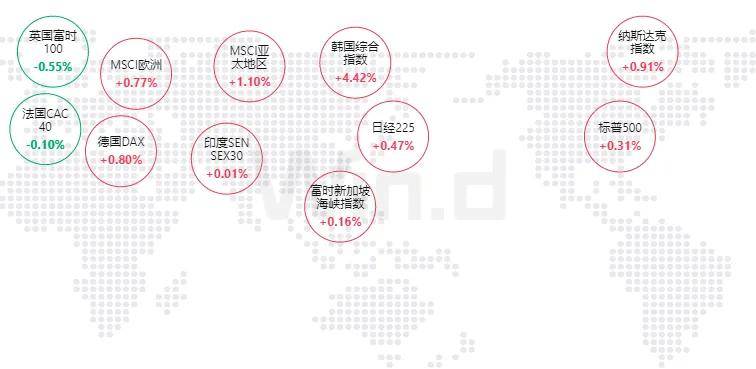
Group 1 - China's first national major scientific and technological infrastructure in the information and communication field, the Future Network Experimental Facility, has officially commenced operations, providing open experimental support for various sectors including industrial manufacturing, energy, education, and healthcare [1] - The State Administration for Market Regulation has released a national standard for food delivery platform service management, aiming to address issues like "ghost deliveries" and enhance the rights of delivery personnel, promoting innovation and healthy competition in the food delivery industry [1] - In November, the number of second-hand residential transactions in first-tier cities reached 49,000 units, marking a seven-month high with a significant month-on-month increase of 20%, and a total of 519,000 units sold in the first eleven months of the year, a year-on-year increase of approximately 5% [1] Group 2 - Multiple high-performing funds have further reduced their purchase limits, with 29 fund managers implementing purchase restrictions on 41 funds on December 4, with limits ranging from 100 yuan to 1.5 billion yuan, aimed at maintaining strategy capacity and reducing transaction costs [2] - In the U.S., the ADP employment report for November showed a decrease of 32,000 private sector jobs, the largest drop in two and a half years, leading to increased expectations for a Federal Reserve interest rate cut [2] - Global funds have continued to buy South Korean bonds, with overseas funds net purchasing $1.39 billion in South Korean bonds on November 28, marking the 20th consecutive day of net buying [2] Group 3 - Major global stock markets mostly rose in the past week, with the A-share indices in China collectively increasing, the Shenzhen Component Index rising by 1.26%, and the Hang Seng Index also showing a weekly increase of 0.87% [3] - In the U.S. market, the Dow Jones Industrial Average rose by 0.50%, the S&P 500 by 0.31%, and the Nasdaq by 0.91% during the week [4] - In Asia, the South Korean Composite Index led with a 4.42% increase, while the Nikkei 225 and the Straits Times Index also saw slight gains [4] Group 4 - Recent trends in government bond yields showed a mixed performance, with the 1-year Chinese government bond yield decreasing by 0.36 basis points to 1.40%, while the 10-year U.S. government bond yield increased by 12.00 basis points to 4.14% [8] - The majority of fund indices showed an upward trend, with the Wind All Fund Index rising by 0.46% and the Wind Stock Fund Total Index increasing by 0.88% [9] Group 5 - In the commodity market, precious metals showed divergence, with COMEX gold decreasing by 0.64% and COMEX silver increasing by 2.86% [11] - The U.S. dollar index fell by 0.46%, while the exchange rate of the dollar against the onshore and offshore Chinese yuan showed slight declines [12]
世界黄金协会中国区CEO:黄金投资永远不嫌晚
21世纪经济报道· 2025-12-07 01:25
Core Viewpoint - The World Gold Council advocates the "Gold+" asset allocation concept to help investors overcome challenges in gold investment, promoting gold as a long-term strategic asset to enhance risk resilience and optimize overall returns [1][3][5]. Group 1: Challenges Faced by Investors - Investors face three main difficulties in gold investment: understanding, entry, and holding [3][4]. - "Understanding difficulty" arises from the complex factors influencing gold prices, leading many to treat gold as a speculative tool rather than a strategic asset [4][5]. - "Entry difficulty" is characterized by hesitation over whether the current price is too high, causing investors to miss opportunities [4][5]. - "Holding difficulty" refers to the challenge of maintaining long-term positions in gold, with many selling during price fluctuations instead of holding for potential long-term gains [4][5]. Group 2: Long-term Value of Gold - Over the past 50 years, gold has provided an average annual return of approximately 10%, with a cumulative increase of nearly 60% since early 2025 [5]. - The "Gold+" concept encourages a shift from short-term speculation to long-term allocation, establishing gold as a strategic core asset [5][6]. Group 3: Recommended Allocation Strategies - The World Gold Council suggests two main strategies for gold allocation: indirect allocation through institutional investors and direct allocation by individuals [5][6]. - For individual investors, it is recommended to allocate 5% to 15% of household assets to gold, depending on personal risk tolerance [6][10]. - Institutional investors, such as public FOFs, actively incorporate gold into their long-term investment strategies, emphasizing discipline and strategic positioning [10][11]. Group 4: Successful International Examples - The Texas Teacher Retirement Fund exemplifies a conservative approach to gold allocation as part of a long-term investment strategy [7]. - Bridgewater Associates, led by Ray Dalio, views gold as a safeguard against credit risk, advocating for its inclusion in strategic asset allocation rather than tactical price betting [8]. Group 5: Domestic Market Trends - Public FOFs, particularly those targeting retirement, are actively incorporating gold into their investment strategies due to regulatory frameworks and product characteristics that favor long-term, disciplined investment [10][11]. - The discipline in managing gold allocations distinguishes institutional investors from individual investors, who may be more prone to short-term trading [13]. Group 6: Practical Investment Guidance - Investors should avoid speculative mindsets and consider gold as a long-term investment, with a recommended allocation not exceeding 20% of total assets [14][15]. - A gradual approach to investing in gold, such as starting with 2% to 3% of flexible funds and increasing to 5%, is advised to mitigate risks associated with market timing [14][15]. - Regularly reviewing gold investments and taking profits without fully liquidating positions can help maintain a balanced approach [15][16]. Group 7: Future Development of "Gold+" Products - The World Gold Council plans to promote the "Gold+" concept through industry meetings and public outreach, emphasizing gold's role as a strategic asset in long-term wealth preservation [16][17].

告别躺赚时代:大额存单退场,你的钱该去哪儿?
Sou Hu Cai Jing· 2025-12-06 20:45
Core Viewpoint - The long-term large-denomination certificates of deposit (CDs) are disappearing from banks, leading to a significant shift in savings habits among depositors as interest rates decline sharply [1][3][5]. Group 1: Product Supply - Major state-owned banks, including Industrial and Commercial Bank of China, Agricultural Bank of China, Bank of China, and China Construction Bank, have stopped selling 5-year large-denomination CDs [3]. - Some banks have also ceased offering 3-year large-denomination CDs, with no clear timeline for their return [3]. - Local banks are following suit, with announcements of the cancellation of 5-year fixed-term deposits [3]. Group 2: Interest Rate Decline - The interest rates for large-denomination CDs have dropped to the "1" range, with 3-year CDs at 1.55% for major banks [5]. - In contrast, prior to 2020, 3-year and 5-year CDs had yields above 3%, with some smaller banks offering rates close to 4% [5]. - The traditional practice of higher interest rates for larger deposit amounts has been disrupted, as the rates for different deposit amounts are now the same [5]. Group 3: Banking Strategy - The collective withdrawal of long-term large-denomination CDs is a response to the ongoing pressure on banks' net interest margins, which fell to 1.42% by Q3 2025 [7]. - Banks aim to lower liability costs and stabilize net interest margins by reducing the supply of long-term deposits [7]. - The current low net interest margin environment compels banks to avoid high-cost long-term deposits to maintain profitability [7]. Group 4: Shift in Depositor Behavior - With the discontinuation of long-term large-denomination CDs, depositors are seeking alternative investment products, such as savings insurance, government bonds, or structured deposits [9]. - However, these alternatives come with their own limitations, such as lower liquidity for savings insurance and limited issuance for government bonds [9]. - A survey indicates an increase in residents inclined to invest more, rising by 5.6 percentage points to 18.5% [9]. Group 5: New Investment Preferences - Non-principal guaranteed bank wealth management products have become a preferred investment method among residents, with the market size reaching 32.13 trillion yuan, a 9.42% year-on-year increase [11]. - Financial advisors are recommending a diversified asset allocation strategy to improve returns and liquidity, moving away from excessive reliance on long-term deposits [11]. - Low-risk bank wealth management products are suggested as alternatives that may offer better returns than traditional deposits [11]. Group 6: Future Trends - The banking sector is expected to shift towards shorter-term products, emphasizing flexibility and a diverse range of financial products [13]. - Banks need to enhance their wealth management capabilities to maintain customer relationships and ensure stable returns [13]. - Depositors are encouraged to prioritize liquidity in their investments during a declining interest rate environment, allowing for better opportunities in the future [13].







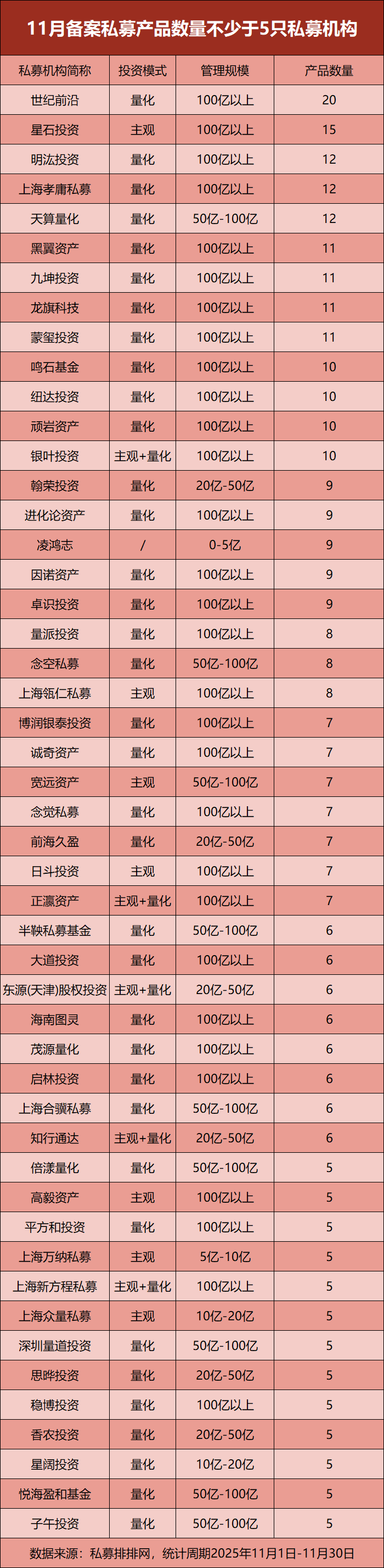
私募发行大爆发!单月备案量大增近30%
Zheng Quan Shi Bao· 2025-12-06 11:16
(原标题:私募发行大爆发!单月备案量大增近30%) 临近年底,A股市场虽在震荡中寻找方向,但私募基金的备案却马不停蹄。 最新数据显示,私募行业在11月迎来了一波备案潮。根据私募排排网统计,截至2025年11月30日,11月 共有1285只产品完成备案,环比大增近三成。这一数据不仅延续了此前的回暖势头,更一举创下年内月 度备案量的次高纪录。 值得注意的是,在这场年底的发行争夺中,量化私募再度强势领跑,百亿级量化巨头几乎包揽了备案榜 单的前列,成为推动本轮备案潮的主力军。 备案量飙升近三成 11月的A股市场,主要指数呈现震荡整固态势,市场情绪一度趋于谨慎。然而,在新产品的发行上,私 募机构的热情却异常高涨。 据证券时报·券商中国记者了解,此前由于市场火热,私募新备案节奏一度被拉长,部分机构向券商中 国记者反映,产品备案需要十几甚至几十个工作日。进入11月,随着市场的调整,产品备案节奏有所加 快。 数据显示,11月共计1285只私募证券产品完成备案(含自主发行和担任投顾),较10月份的994只大幅 增长29.28%。这一爆发式增长,直接将当月数据推升至年内第二高位,显示出私募机构在年底前强烈 的"补充弹药"意愿,无 ...
王向宇:放弃既要、又要的幻想,长期投资才是能实际把握住、有可能把握住的事情
Xin Lang Cai Jing· 2025-12-06 10:39
Core Viewpoint - The current challenges in pension fund management include the conflicting demands for both long-term and short-term returns, as well as absolute and relative returns, leading to a pessimistic conclusion that it is not feasible to achieve both simultaneously [2][5]. Group 1: Investment Challenges - The investment community faces a dilemma where clients and companies demand high returns with low volatility, which is difficult to balance [2][5]. - Wang Xiangyu emphasizes the need to abandon the unrealistic expectation of achieving both high absolute and relative returns simultaneously [2][5]. Group 2: Focus on Absolute Returns - It is recommended to focus on absolute returns rather than relative returns, as historical evidence suggests that successful long-term absolute returns will likely lead to satisfactory relative returns over time [3][5]. - Long-term investment is portrayed as a more manageable and beneficial strategy for investors, despite the need to endure short-term volatility [3][5].

人民币升值进入加速期:多重逻辑支撑下的资产配置新机遇
Sou Hu Cai Jing· 2025-12-06 09:20
Core Viewpoint - The recent strong performance of the Renminbi (RMB) in the trading market indicates an accelerated appreciation trend, supported by multiple core logics as it progresses through a critical phase of its historical cycle [1]. Group 1: Exchange Rate Trends - The RMB began its accumulation process following the reduction of US-China tariffs in May, entering an appreciation channel with a 2.8% increase against a basket of currencies and a significant 9.4% appreciation against the Japanese Yen [3]. - Despite the recent rebound of the US dollar index from 96.6 to 100.2, the RMB has remained stable, with the offshore RMB showing stronger performance and the gap with the central parity continuing to narrow, signaling a potential acceleration in appreciation [3]. Group 2: Internal Support Factors - From April 2022 to June 2023, the RMB's real effective exchange rate has declined by 19%, and the nominal effective exchange rate has decreased by 7.7%, while China's export share and trade surplus have been rising, indicating a strong demand for valuation recovery [4]. - Since the second quarter, there has been an expansion in the surplus of bank customer foreign exchange settlements, with continuous inflows of northbound capital, and a significant amount of over 500 billion USD in export income remains unconverted, suggesting substantial potential for capital repatriation once exchange rate expectations stabilize [4]. Group 3: Implications for Investors - According to Goldman Sachs, a 1% appreciation of the RMB could enhance returns in the Chinese stock market by approximately 3%, particularly benefiting sectors such as materials, technology, and non-essential consumer goods in H-shares [6]. - The scale of foreign investment in Chinese government bonds has surpassed 3.2 trillion RMB, and the appreciation of the RMB will further increase the attractiveness of RMB-denominated assets [6]. - Investors are advised to focus on industries and assets that benefit from foreign capital inflows and reduced import costs, while also considering hedging strategies for export companies to mitigate exchange rate risks [6].
私募发行大爆发,单月备案量大增近30%,量化巨头霸榜
Zheng Quan Shi Bao· 2025-12-06 08:57
临近年底,A股市场虽在震荡中寻找方向,但私募基金的备案却马不停蹄。 最新数据显示,私募行业在11月迎来了一波备案潮。根据私募排排网统计,截至2025年11月30日,11月 共有1285只产品完成备案,环比大增近三成。这一数据不仅延续了此前的回暖势头,更一举创下年内月 度备案量的次高纪录。 值得注意的是,在这场年底的发行争夺中,量化私募再度强势领跑,百亿级量化巨头几乎包揽了备案榜 单的前列,成为推动本轮备案潮的主力军。 备案量飙升近三成 11月的A股市场,主要指数呈现震荡整固态势,市场情绪一度趋于谨慎。然而,在新产品的发行上,私 募机构的热情却异常高涨。 据券商中国记者了解,此前由于市场火热,私募新备案节奏一度被拉长,部分机构向券商中国记者反 映,产品备案需要十几甚至几十个工作日。进入11月,随着市场的调整,产品备案节奏有所加快。 数据显示,11月共计1285只私募证券产品完成备案(含自主发行和担任投顾),较10月份的994只大幅 增长29.28%。这一爆发式增长,直接将当月数据推升至年内第二高位,显示出私募机构在年底前强烈 的"补充弹药"意愿,无疑为年末乃至明年初的市场行情注入了一剂强心针。 排排网集团旗下融 ...