
即时零售

Search documents
城市骑士守护春节烟火 平台加码春节保障助力骑手送单丨新经济观察
Xin Lang Cai Jing· 2026-02-15 13:47
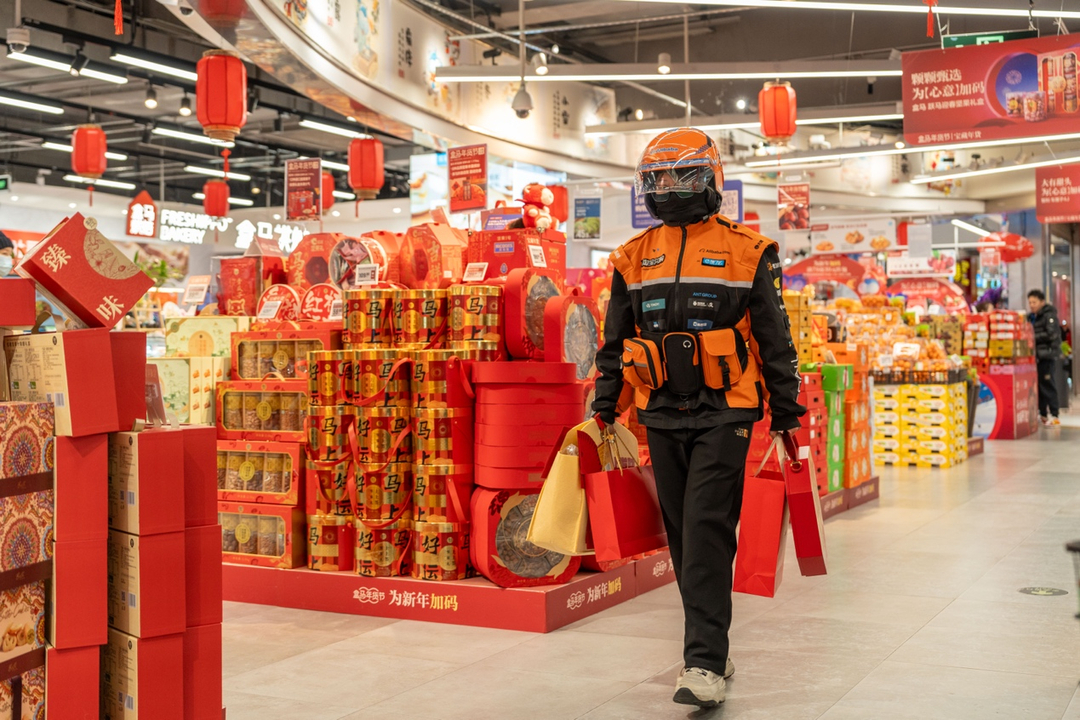
Core Insights - The immediate consumption during the Spring Festival is thriving, with delivery riders playing a crucial role in urban life, supported by instant retail platforms that are enhancing incentives and safety measures for riders [1][3] Group 1: Incentives and Support for Riders - Instant retail platforms have launched various initiatives during the Spring Festival, including a New Year's Eve dinner promotion in 60 cities, offering incentives worth 20 billion yuan, distributing festive gift packages, and increasing subsidies for riders [3] - Riders can earn over 1,000 yuan per day during the Spring Festival, with order volumes reportedly doubling compared to usual times, as some riders are completing over 100 deliveries daily [3] - The platform is enhancing safety measures through technology, including AI-powered tools and safety incentives, with over 1 million riders participating in safety programs across 36 cities [3] Group 2: Community and Industry Impact - The initiatives not only secure basic rights for riders but also reduce labor risks through technological advancements, reinforcing the operational foundation of urban service delivery [4] - The measures taken by platforms are seen as a significant boost for supply during the Spring Festival, aiming to create a symbiotic ecosystem where rider rights, corporate growth, and social needs are aligned [4] - The development model supported by technology and humanistic values is expected to set a new standard for the healthy growth of the instant delivery industry [4]

美团股东要哭死!外卖大战血流成河,一年打没了600亿,抖音转头又把刀架在团购脖子上了!
Xin Lang Cai Jing· 2026-02-15 07:19
Core Viewpoint - Meituan has issued a profit warning, expecting a net loss of over 23 billion to 24.3 billion yuan for 2025, a stark contrast to a profit of 35.8 billion yuan in 2024, indicating a significant downturn in its core local business segment [1][17]. Group 1: Financial Performance - Meituan's core local business, which includes food delivery and hotel bookings, is projected to suffer a loss of approximately 6.8 billion to 7 billion yuan in 2025, a drastic drop from a profit of 52.4 billion yuan in 2024 [2][17]. - The company's marketing expenses surged from 18 billion yuan to 34.3 billion yuan in a single quarter, reflecting the intense competition in the market [3][20]. - Meituan's quarterly performance shows a net profit of 10.05 billion yuan in Q1, a slight profit of 36.5 million yuan in Q2, followed by a significant net loss of 18.63 billion yuan in Q3, leading to a projected total loss of 23.3 billion yuan for 2025 [5][20]. Group 2: Competitive Landscape - The competition in the food delivery market has intensified, with Meituan, Alibaba (including Ele.me and Taobao Flash Sale), and JD.com engaged in a price war, collectively burning over 100 billion yuan in marketing expenses [6][20]. - Market share projections for the end of 2025 indicate Meituan holding 48-50%, Alibaba's group at 33-42%, and JD.com at 8-19%, marking a shift from a previous duopoly to a more competitive landscape [21][22]. - The entry of Douyin (TikTok) into the group buying space poses a significant threat to Meituan, as younger consumers are increasingly turning to Douyin for purchasing [28][29]. Group 3: Strategic Investments - Meituan's strategic investments include substantial subsidies to attract users, increased rider costs due to social security requirements, and efforts to lower fees for merchants to maintain competitiveness [3][18]. - Alibaba's Taobao Flash Sale is reportedly narrowing its loss per order, indicating a more efficient approach to competition, with expectations of continued investment in the instant retail market [10][25]. - The focus for both Meituan and Alibaba in 2026 will be on instant retail, with plans to enhance supply chain capabilities in key categories such as pharmaceuticals and fresh produce [14][26].

即时零售重塑年货消费新生态
Zheng Quan Ri Bao· 2026-02-13 15:29
Core Insights - The rise of instant retail is reshaping the Chinese New Year shopping landscape, driven by the demand for quick and convenient shopping experiences [1][2][3] - Instant retail is projected to exceed 1 trillion yuan by 2026, with an annual growth rate of 12.6% during the 14th Five-Year Plan period [1] - Consumer preferences are shifting towards younger, health-conscious demographics, with a significant portion of purchases driven by immediate needs and social occasions [2][3] Group 1: Market Dynamics - Instant retail is blurring the lines between online and offline shopping, allowing consumers to receive products within 30 minutes of ordering [1] - The demand for speed is evident, with 51.5% of users seeking faster delivery options, particularly in categories like personal care and beauty [2] - Platforms are adapting their marketing strategies to focus on emotional and situational needs, enhancing consumer engagement [2][3] Group 2: Impact on Traditional Retail - Instant retail is revitalizing offline businesses by integrating them into digital platforms, expanding their service reach significantly [4] - Local retailers are experiencing substantial sales increases during peak seasons, with some reporting a 30% rise in sales during the New Year period [4] - The collaboration between online platforms and local businesses is enhancing supply chain efficiency and customer reach [4][5] Group 3: Service Expansion and Innovation - Instant retail is extending its service offerings beyond products to include various lifestyle services, aligning with consumer demands for quality and convenience [7] - The integration of advanced technologies in logistics and supply chain management is crucial for maintaining service quality and efficiency [7][8] - The market is still in a phase of strategic expansion, with a focus on enhancing consumer experience and service integration [8][9] Group 4: Future Outlook - Instant retail is evolving from a new shopping option to a core component of the retail ecosystem, emphasizing efficiency and sustainability [9] - The industry is expected to undergo further differentiation and consolidation, with a future focus on creating a comprehensive "instant ecosystem" that combines products and services [8][9]
千亿烧光!美团优选退场,五年战略误判,终回即时零售赛道
Sou Hu Cai Jing· 2026-02-13 14:20
Core Viewpoint - Meituan's community group buying initiative, Meituan Youxuan, has been shut down after incurring losses of 110 billion yuan over five years, marking a significant strategic failure for the company [1][9]. Group 1: Business Performance - Meituan Youxuan was launched in July 2020 as a key strategic initiative, aiming to capitalize on the underserved market of small-town youth by offering a low-cost pre-order and self-pickup model [3]. - The community group buying sector saw a total subsidy expenditure exceeding 50 billion yuan in 2021, with Meituan Youxuan alone reporting quarterly losses of up to 3 billion yuan [5][6]. - The cumulative losses for new businesses, including Meituan Youxuan, are projected to exceed 110 billion yuan from 2019 to 2024 [9]. Group 2: Competitive Landscape - The rise of instant retail platforms like Meituan Shanguo, Taobao Shanguo, and JD Daojia has led to a daily order volume surpassing 250 million, highlighting the competitive pressure on Meituan Youxuan [1]. - The community group buying model failed to retain users, as customers were primarily attracted by low prices and quickly switched to competitors when prices increased [5][22]. - Pinduoduo emerged as the dominant player in the community group buying space, with a GMV nearing 300 billion yuan by November 2025, capitalizing on the market void left by Meituan [16]. Group 3: Strategic Missteps - Meituan's decision to focus on community group buying instead of instant retail was a critical strategic error, as the company had the necessary infrastructure and user base to succeed in the latter [18]. - The community group buying model's reliance on low-quality suppliers led to significant customer dissatisfaction due to issues with product freshness [10]. - The failure of the community group buying initiative reflects the flawed logic of "burning money for scale," where users attracted by subsidies proved to be disloyal once incentives were removed [22][23].

巨头抢滩、美团成为即时零售“守城人”核心本地商业承压 收购叮咚买菜后市值一度跌破5000亿港元
Xin Lang Cai Jing· 2026-02-13 14:04
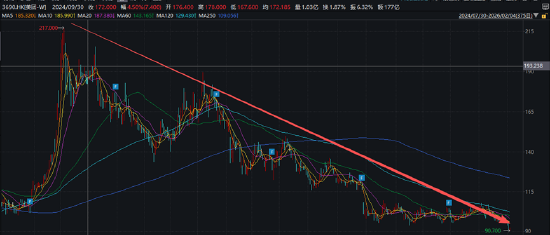
Core Viewpoint - Meituan's stock price has been on a downward trend since October 2024, with a significant drop in market capitalization, reflecting investor concerns about the company's future growth prospects [1][4][10]. Group 1: Acquisition of Dingdong Maicai - On February 5, 2026, Meituan announced the acquisition of 100% of Dingdong Maicai's China business for $717 million (approximately 5 billion RMB), which will be integrated into Meituan's financial statements [9]. - Following the announcement, Meituan's stock price fell by 12% over six trading days, from 93.8 HKD to 82.15 HKD per share, indicating negative investor sentiment towards the acquisition [9][10]. - The acquisition is viewed as a defensive strategy rather than an opportunity-driven move, aimed at preventing competitors like JD.com and Pinduoduo from gaining a foothold in the instant retail market [2][9]. Group 2: Competitive Landscape - Meituan faces intensified competition from major players like JD.com, Douyin, and Alibaba, which are aggressively entering the local retail market, putting pressure on Meituan's core business [11][12]. - JD.com has implemented a strategy of zero commission and substantial subsidies, significantly impacting the competitive dynamics in the food delivery sector [11]. - Douyin is leveraging its platform to drive impulse purchases through live streaming and short videos, attracting price-sensitive consumers, while Alibaba is enhancing its instant retail capabilities through initiatives like Taobao Flash Sale [12][6]. Group 3: Financial Performance - Meituan's core local business has seen a decline in profitability, with a reported loss of nearly 14.1 billion RMB in Q3 2025 due to increased direct subsidies in response to irrational competition in the food delivery sector [6][12]. - The ongoing market competition has led to a perception that Meituan is transitioning from an "attacker" to a "defender," resulting in diminished growth expectations from investors [10].
入境消费订单增长2.6倍,老外为何选择西安
2 1 Shi Ji Jing Ji Bao Dao· 2026-02-13 10:17
Core Viewpoint - Xi'an has achieved record highs in social retail sales and foreign trade in the past year, with plans for a series of consumption promotion activities leading up to the 2026 Spring Festival [1][2] Group 1: Consumption Market Growth - The growth in Xi'an's consumption market is attributed to the integration of bulk commodity updates and service consumption [2] - Over 900 promotional activities were conducted under the "Xi Yue Gou·Qu Chang An" initiative, introducing 376 new stores and generating over 20 billion yuan in transaction value from consumer exhibitions [2] - The implementation of favorable policies, such as the 240-hour visa-free transit, has led to a rapid increase in inbound consumption [2] Group 2: Trade and Export Growth - In 2025, Xi'an's total import and export value is projected to reach 498.79 billion yuan, marking a historical high with a year-on-year growth of 21.1%, ranking second among sub-provincial cities [2] - Cross-border e-commerce and new business formats saw a 75.1% increase in imports and exports, while high-tech products and "new three samples" exports grew by 26.3% and 31.4% respectively [2] Group 3: Future Business Directions - The focus for Xi'an's business sector in 2026 includes promoting consumption investment and expanding high-level openness, emphasizing policy empowerment and scenario-driven growth [3] - Key initiatives include the development of the "Yue Xiang Chang An" and "Chuhai Chang An" brands, and the establishment of new consumption models and international consumption environments [3][4] - Plans to enhance trade innovation include supporting enterprises in diversifying markets and promoting integrated trade and investment [4]
玫瑰花束、全球直采葡萄酒与巧克力……京东七鲜带来情人节即时心意
Zhong Jin Zai Xian· 2026-02-13 03:21
Group 1 - The core idea of the article is that JD Seven Fresh Supermarket is launching a special Valentine's Day promotion called "Three Gifts of Love," which seamlessly connects the festive spirit of the Spring Festival with Valentine's Day, offering consumers a variety of products including wine, imported beef, and high-quality flowers [1][10] Group 2 - The first gift focuses on flowers, featuring a selection of roses that symbolize different stages of love, with prices for single roses starting at 23.9 yuan and mixed bouquets as low as 29.9 yuan, emphasizing convenience and accessibility for last-minute purchases [3][5] Group 3 - The second gift is centered around wine, with JD Seven Fresh offering high-quality wines at affordable prices, such as Chilean Cabernet Sauvignon for 29.9 yuan and Marlborough Sauvignon Blanc for 59 yuan, making premium wines accessible for Valentine's Day celebrations [5][7] Group 4 - The third gift includes imported Australian beef, with promotions like "buy one get one free" and price reductions on premium cuts, such as the M6 ribeye steak reduced from 118 yuan to 99 yuan, allowing consumers to enjoy high-quality dining experiences at home [7][8] Group 5 - Additionally, a specially designed mousse cake called "A Letter of Love" is introduced for the occasion, priced at 79.9 yuan, which aims to enhance the romantic atmosphere of Valentine's Day while remaining affordable [10]


新消费研究-即时零售应需而生-酒类品牌或迎新机遇
2026-02-13 02:17
Summary of Conference Call on Instant Retail and Alcohol Industry Industry Overview - The instant retail market in China is projected to reach 1 trillion yuan by 2025 and 2 trillion yuan by 2030, with the alcohol category experiencing rapid growth, particularly after increased investment from internet platforms [2][3][20] - Instant retail is divided into platform models and self-operated models, with the platform model integrating supermarkets and chain stores, while the self-operated model is controlled by the platform [2][5] Key Insights - The rapid expansion of Meituan's Yaimasongjiu, which adopts a franchise model, aims to cover third-tier cities, although most stores are still in the ramp-up phase [2][5] - Beer accounts for the highest sales proportion in Yaimasongjiu's store structure, with profits mainly derived from craft products, while profits from white liquor are thinner [2][6] - The average monthly revenue per store is approximately 200,000 yuan, with a net profit margin of 10%, benefiting from a low-cost operational model [2][6] Market Dynamics - The shift in consumer behavior towards instant consumption, increased subsidies from e-commerce platforms, and innovative marketing strategies from emerging brands are driving the rapid development of instant drinking, especially for white beer [3][7] - The white liquor industry has seen a channel model adjustment since 2022, with accelerated development of online and instant retail channels [8][9] Sales and Revenue Projections - By 2030, the market size for alcohol in instant retail is expected to exceed 90 billion yuan, maintaining a double-digit compound annual growth rate [4] - The penetration rate of instant retail in the white liquor market is currently low at 2%, compared to 15%-20% for online channels, indicating significant growth potential [4] Operational Insights - Yaimasongjiu's sales structure shows that white liquor accounts for 15%-20% of sales, while beer SKUs make up 60%-70% [6] - The gross margin for craft beer products is around 50%, while white liquor operates on a consignment model with lower margins [6] Competitive Landscape - The white liquor market is becoming increasingly concentrated, with the top 10 brands accounting for nearly 60% of revenue by 2024 [9] - Major brands like Moutai and Wuliangye have established strong consumer recognition, reducing the need for extensive channel education [9][19] Impact of Instant Retail - Instant retail is enhancing the operational efficiency of white liquor chain stores, allowing for a lighter asset operation model [11] - The collaboration between alcohol companies and instant retail platforms is crucial for brand strength and market penetration [17][19] Future Outlook - The overall online channel currently accounts for 15%-20% of the total distribution scale, with instant retail being a smaller fraction [20] - Companies that strategically position themselves in this evolving market are expected to enjoy longer operational cycles and brand longevity [20] Investment Recommendations - Positive outlook on companies such as Luzhou Laojiao, Shanxi Fenjiu, Guizhou Moutai, and Yanjing Beer due to their proactive strategies in the instant retail space [20]
顺丰同城连续六年推“年味专送” 服务餐饮商超保障春节即时配送
Quan Jing Wang· 2026-02-13 01:31
Core Viewpoint - The upcoming Spring Festival is driving a surge in both online and offline consumption, particularly in the instant retail market, with significant growth in sales of traditional festive foods and beverages [1][4]. Group 1: Market Trends - Douyin platform's sales of New Year's Eve dinner products increased by 92% year-on-year, with popular items including seafood gift boxes and "light cooking" dishes [1]. - Meituan's flash purchase saw sales of beverages and digital home appliances double [1]. - The demand for New Year's Eve dinner reservations is high, leading to a "difficult to book" situation for dine-in services, while home delivery options are becoming increasingly popular [1]. Group 2: Delivery Services - SF Express has launched its "New Year Flavor Special Delivery" service for the sixth consecutive year, collaborating with renowned restaurant brands to deliver regional festive specialties to homes [1][2]. - The service has developed a mature operational system, ensuring comprehensive service coverage and timely delivery through sufficient transportation capacity and intelligent scheduling [1][2]. Group 3: Packaging and Delivery Standards - SF Express has established detailed packaging and delivery standards to meet the diverse requirements of partner restaurants, ensuring food quality during transport [2]. - For complex orders, SF Express utilizes various transportation tools and has implemented special plans for winter weather and traffic conditions to ensure timely delivery [2]. Group 4: Consumer Behavior and Marketing - The Spring Festival period sees a concentration of consumer demand for holiday shopping and gatherings, leading to increased consumption in the restaurant and supermarket sectors [3]. - SF Express provides a one-stop solution for all-channel delivery needs, enhancing the efficiency of local life services for emerging e-commerce platforms like Douyin and WeChat [3]. Group 5: Future Projections - The Ministry of Commerce predicts a 5.8% year-on-year increase in online retail sales during the 2026 Spring Festival, with instant retail order volume expected to grow by 120% [4]. - SF Express aims to transform its platform capabilities into operational support for merchants, meeting consumer demands for high-quality home delivery during the festive season [4].
顺丰同城(9699.HK):即时配送东风起 多元助力谱新篇
Ge Long Hui· 2026-02-12 21:35
Group 1 - The core viewpoint of the report highlights the growth of SF Express's urban delivery business, benefiting from the expansion of the instant retail industry, with significant revenue growth and improved profitability since its IPO [1] - The company has shown a steady revenue increase since its establishment in 2016, with a projected CAGR of approximately 34.3% from 2020 to 2024, and a revenue of 10.236 billion yuan in the first half of 2025, representing a year-on-year increase of 48.81% [1] - The net profit attributable to the parent company reached 137 million yuan in the first half of 2025, marking a year-on-year increase of 120.43% [1] Group 2 - The instant retail industry is experiencing accelerated growth, with user acceptance evolving from emergency needs to a daily lifestyle, and the market for non-food delivery expected to grow at a rate of approximately 27.7% by 2026 [2] - Major e-commerce platforms like JD.com and Alibaba are increasing their investments in the instant retail market, which is expected to further accelerate industry development [2] - The instant delivery industry is projected to maintain a high growth rate with a CAGR of about 17% from 2025 to 2028, driven by improved supply quality and expanding consumption scenarios [2] Group 3 - SF Express's strong brand and resource backing allow it to balance service quality and operational costs, positioning it well to benefit from the ongoing transformation in the instant retail sector [3] - Strategic collaborations within the SF Express ecosystem enhance customer loyalty and expand market reach, particularly in last-mile delivery services [3] - The company is actively enhancing its technological capabilities, including AI applications and autonomous delivery solutions, to improve operational efficiency and service delivery [3] Group 4 - Revenue projections for SF Express indicate expected revenues of 21.973 billion yuan, 33.956 billion yuan, and 40.901 billion yuan for 2025 to 2027, with year-on-year growth rates of 39.54%, 54.54%, and 20.45% respectively [4] - The net profit attributable to the parent company is forecasted to reach 238 million yuan, 452 million yuan, and 687 million yuan for the same period, with significant year-on-year growth [4] - The company is positioned as the largest third-party instant delivery platform in China, with strong competitive advantages and favorable long-term growth prospects [4]