
数字主权

Search documents
埃琳娜·季诺维耶娃:有人试图在网络领域孤立俄罗斯,这激起了我们的政治觉醒
Guan Cha Zhe Wang· 2025-08-29 02:28
Core Viewpoint - The article discusses the importance of digital sovereignty for Global South countries in the context of U.S. dominance over digital infrastructure and technology, emphasizing the need for local capacity building and multilateral cooperation to enhance autonomous development capabilities. Group 1: Digital Sovereignty Definition and Importance - Digital sovereignty is linked to technological sovereignty and international digital relations, viewed as crucial for national development and security in the 21st century [2][3] - Internal sovereignty involves control over territory, airspace, and now digital space, with data being as vital as natural resources [3][5] - The concept of digital sovereignty is essential for resisting foreign digital regulations and establishing a consensus on what constitutes digital sovereignty [4] Group 2: Geopolitical Context and Challenges - The current geopolitical landscape is characterized by a post-globalization era, where a multipolar world order is emerging, necessitating technological self-sufficiency [5][6] - The COVID-19 pandemic highlighted the critical role of digital technology, reinforcing the need for self-reliance in the digital domain, especially in light of Western technology sanctions [6][11] Group 3: Domestic Digital Sovereignty Framework - Russia's approach to digital sovereignty includes data localization, infrastructure control, and the development of domestic technology to reduce reliance on foreign systems [15][16] - Key legislative measures include the Personal Data Localization Law and the Sovereign Internet Law, aimed at ensuring data is stored within Russia and creating a national internet infrastructure [16][17] Group 4: International Cooperation and External Digital Sovereignty - Russia advocates for international norms and legislation regarding digital sovereignty, emphasizing the need for cooperation among Global South countries to address shared challenges [19][24] - The concept of responsible state behavior in cyberspace has been introduced, aiming to establish a framework for international cooperation in digital security [22][25] Group 5: Artificial Intelligence and Future Prospects - Artificial intelligence is identified as a pivotal technology, with Russia focusing on developing national AI strategies and fostering international collaboration in AI governance [26][27] - The anticipated growth of the AI market by 2030 underscores the importance of building technological expertise and capabilities within the country [27]

70页|2025中国AI企业出海系列研究:印尼篇
Sou Hu Cai Jing· 2025-08-28 00:30
Economic Overview - Indonesia's economy shows signs of "resilience with slight cooling" in 2025, with Q1 GDP growth at 4.87%, down from over 5% in the previous year, primarily due to falling commodity prices and slowing exports. However, agriculture (+10.5%) and transportation services maintained double-digit growth, indicating a stable domestic demand base [1][2] - In Q2, Indonesia's GDP grew by 5.12%, exceeding market expectations, ranking second among ASEAN countries, only behind Vietnam's 7.96% growth, while Malaysia and Singapore recorded 4.50% and 4.30% respectively [1][2] - The economic engine for Indonesia in 2025 will increasingly rely on domestic drivers, including public infrastructure investments, subsidies for middle and low-income groups, and structural contributions from emerging industries like nickel batteries and the digital economy [1][2] Investment and Economic Stimulus - Indonesia plans to implement a fiscal stimulus package totaling approximately 24.44 trillion IDR (around 1.5 billion USD) starting June, aimed at enhancing purchasing power and domestic demand through transportation subsidies, wage support, toll fee reductions, and food assistance [20][21] - The Indonesian government is seeking international investment partners for a 700-kilometer dam project on the northern coast of Java, with an estimated cost of 80 billion USD, inviting participation from China and Japan [24] - The Indonesian sovereign wealth fund Danantara has initiated its first round of financing, allocating 3 billion USD from its 10 billion USD fund to projects in chemicals, digital technology, and artificial intelligence [28] Trade Relations and Agreements - Indonesia and the EU have reached a political agreement to advance the Comprehensive Economic Partnership Agreement (CEPA), which will create new free trade opportunities in agriculture, automotive, and key mineral sectors [29] - Indonesia has signed a trade agreement with the United States, eliminating tariffs on approximately 99% of U.S. industrial, food, and agricultural products, while committing to purchase around 22.7 billion USD worth of U.S. goods [33][34] Demographic and Economic Structure - Indonesia is the fourth most populous country globally, with a population of approximately 281 million in 2024, accounting for about 40% of ASEAN's total population. The country is experiencing a demographic dividend, with a significant portion of the population in the working-age group [52][53] - By 2025, the median age in Indonesia is expected to rise to about 30.4 years, with the working-age population reaching 68.1%, indicating a continued demographic advantage that supports consumption in housing, education, and healthcare sectors [54][55]
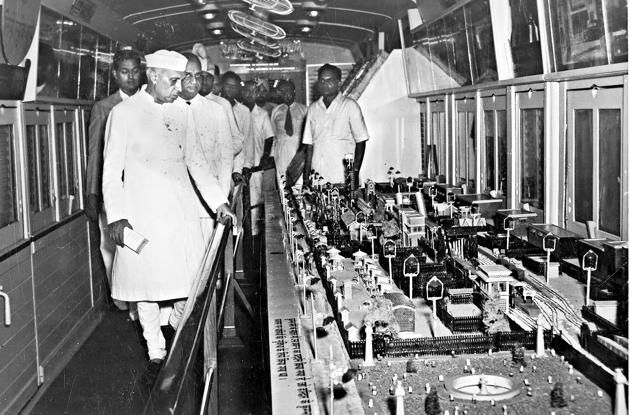
巴帕·辛哈:印度在半导体领域一度领先中韩,直到美国放了一把大火
Guan Cha Zhe Wang· 2025-08-24 05:23
Group 1 - India's journey towards self-reliance has historical roots dating back to the independence movement, emphasizing economic independence as a precursor to political independence [1][3] - Post-independence, India adopted a strong state-led industrial policy, inspired by Soviet models, to achieve rapid industrialization through five-year plans [1][4] - The shift to neoliberal reforms in the 1990s led to the privatization of state-owned enterprises, diminishing the role of self-reliance in key industries [4][5] Group 2 - The "Make in India" initiative under Modi's government aims to attract foreign investment in manufacturing but lacks genuine technology transfer, focusing instead on inviting foreign companies to set up operations in India [5][11] - Despite significant budget allocations for semiconductor and electronics industries, the lack of a local market and genuine technology transfer has hindered progress [11][12] - India's reliance on foreign technology and equipment has resulted in a weakened domestic manufacturing base, particularly in sectors like telecommunications and semiconductors [10][12] Group 3 - The digital economy in India is heavily dominated by foreign companies, with significant market shares held by U.S. firms in software, e-commerce, and social media [15][18] - The government has made strides in digital payment infrastructure, but the applications accessing this infrastructure are still largely controlled by foreign entities [18][19] - Data sovereignty issues have emerged, with recent legislation failing to protect user privacy and allowing data to be stored outside India, undermining national data security [19][20] Group 4 - The Indian government has recognized the need for technological self-reliance, particularly in artificial intelligence, but current strategies focus more on application development rather than foundational technology [23][24] - The historical context of India's technological advancements, such as in semiconductors and telecommunications, highlights missed opportunities due to policy shifts and lack of sustained investment [8][10] - The call for a renewed focus on local technology development and collaboration with global south partners is emphasized as a way to regain technological independence [28][29]
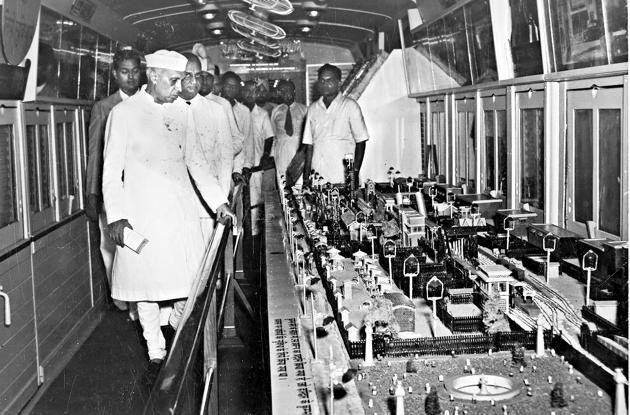
印度在半导体领域一度领先中韩,直到美国放了一把大火
Guan Cha Zhe Wang· 2025-08-24 05:15
Group 1 - The article discusses the challenges faced by the Global South, particularly India, in achieving digital sovereignty amidst Western dominance in technology and infrastructure [1][2][3] - It highlights India's historical journey towards self-reliance in industrial and digital sectors, emphasizing the need for a robust local capability and multilateral cooperation [1][4][5] - The shift from a self-reliant economy to a more liberalized one under neoliberal reforms is noted, with significant implications for India's technological independence [5][6][7] Group 2 - The Modi government's "Make in India" initiative is critiqued for inviting foreign investment without ensuring technology transfer, contrasting with earlier self-reliance efforts [7][9][10] - The failure of the "China + 1" strategy is acknowledged, with economic reports indicating that India has not successfully attracted manufacturing from China [9][10][11] - Specific examples of India's past technological advancements in semiconductors and telecommunications are provided, illustrating lost opportunities due to policy shifts [10][13][14] Group 3 - The article emphasizes the current reliance on foreign technology in various sectors, including hardware and software, with a significant portion of the market dominated by foreign companies [19][20][22] - It discusses the inadequacies of India's data protection laws and the implications of international agreements that compromise data sovereignty [23][24][26] - The lack of a coherent national strategy for artificial intelligence and technology development is highlighted, with calls for a return to foundational policies that prioritize local innovation [27][28][30] Group 4 - The need for collaboration among Global South countries to develop technology and reduce dependency on Western nations is stressed [32][33][34] - The potential of India's talent pool in technology sectors is recognized, advocating for a national strategy to leverage this talent for local development [33][34]
这是“协议”还是欧盟的“损失控制文件”?
Yang Shi Xin Wen· 2025-08-24 00:44
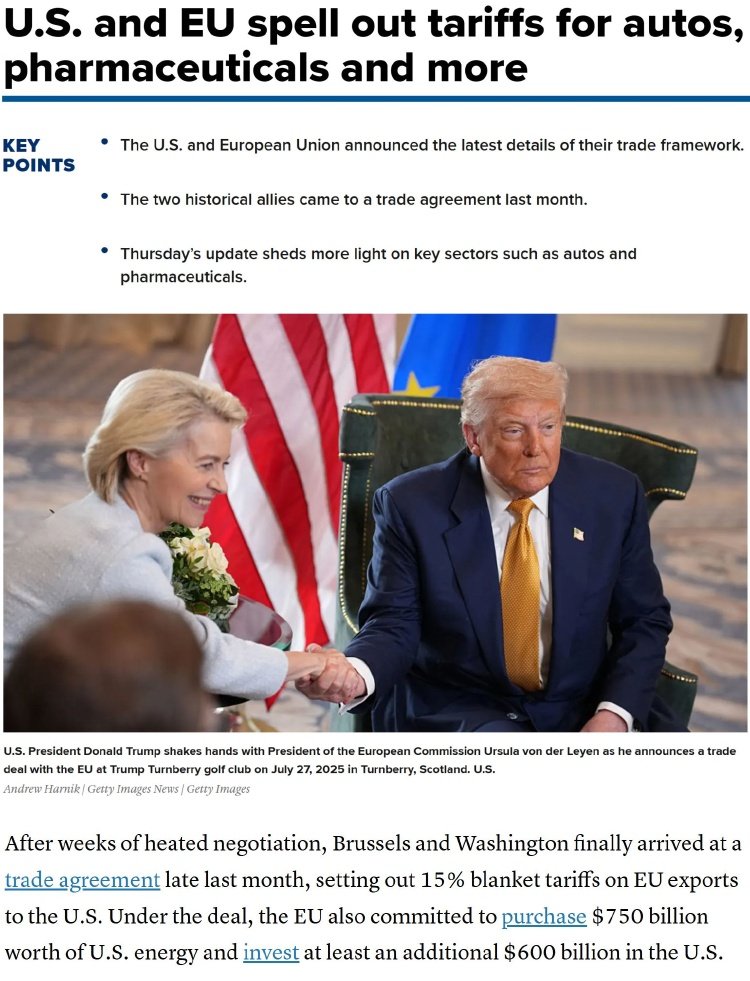
Core Points - The EU and the US announced a new trade agreement detailing tariffs and market access, with the US imposing a 15% tariff on most EU goods while exempting certain products [1] - The EU committed to eliminating tariffs on US industrial goods and providing preferential market access for US seafood and agricultural products [1] - The EU plans to purchase $750 billion worth of US liquefied natural gas, oil, and nuclear products by 2028, along with $40 billion in US AI chips [1][2] Group 1 - The US will impose a 15% tariff on most EU imports, while certain natural resources, aircraft, and generic drugs are exempt [1] - The EU will eliminate tariffs on US industrial products and provide preferential access for US seafood and agricultural goods [1] - The EU aims to significantly increase its procurement of US military and defense equipment [1] Group 2 - The agreement has raised concerns about fairness, with critics arguing it disproportionately favors the US [4][8][16] - There are unresolved issues regarding steel and aluminum tariffs, with no clear solution provided in the agreement [9] - The digital regulatory divide remains a significant point of contention, with no substantial progress made in this area [11] Group 3 - The agreement has been described as a "terrible, complete surrender" by some EU officials, highlighting the lack of reciprocity [8] - Concerns have been raised about the potential negative impact on European growth and employment due to the perceived imbalance in the agreement [16] - The agreement lacks legal binding, raising questions about its long-term viability and enforcement [20][23] Group 4 - The EU is expected to initiate legislation to ensure the US commits to reducing auto tariffs retroactively [23] - The agreement is seen as a "loss control document" for the EU, reflecting its dependency on the US [23][25] - Future negotiations are anticipated to address a fair and balanced trade agreement, although skepticism remains about the EU's leverage [25]
德国政府正计划淘汰微软,德媒:罪魁祸首是特朗普
Guan Cha Zhe Wang· 2025-08-22 13:22
Core Viewpoint - Germany is considering replacing Microsoft software with open-source alternatives in government operations to enhance digital sovereignty and reduce reliance on American tech companies [1][3]. Group 1: Government Initiatives - The German Federal Ministry of Digital and National Modernization plans to increase the use of European solutions and open-source software, impacting thousands of public employees including teachers, civil servants, and police [1]. - The ministry has begun testing Open Desk as a potential replacement for Microsoft Office, indicating a possible end to the use of Microsoft products like Outlook, Word, Excel, and PowerPoint in federal government agencies [1]. Group 2: Political Context - The move to reduce dependency on American products is politically motivated, influenced by the uncertainties stemming from the Trump administration's policies [3]. - The Schleswig-Holstein state in Germany is already phasing out Microsoft products, opting for LibreOffice, Linux, Nextcloud, Open-Xchange, and Thunderbird as alternatives [3]. Group 3: Global Trends - Germany is not alone in seeking alternatives to American software; countries like France, Denmark, Austria, Spain, Brazil, Ecuador, Peru, and Venezuela are also adopting open-source systems [5]. - India's Ministry of Defense has introduced a Linux-based operating system, Maya OS, to replace Windows, reflecting a broader trend of enhancing digital sovereignty [5]. - Russia is accelerating the replacement of foreign software with domestic solutions, particularly after the withdrawal of Western companies following the Ukraine conflict [5].


在欧盟服软、美国硬气,苹果面对的问题并不相同
3 6 Ke· 2025-08-08 11:53
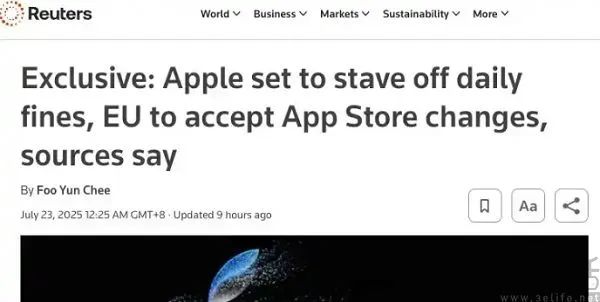
Core Viewpoint - Apple is facing significant challenges in both the US and European markets regarding its App Store policies, particularly the so-called "Apple tax" on in-app purchases, leading to different strategic responses in each region [1][3][10]. Group 1: Legal Challenges and Responses - Two months ago, Apple lost a lawsuit against Epic Games, resulting in a forced adjustment of its App Store policies in the US, including a 27% commission on external purchases and restrictions on developers directing users to alternative payment methods [1][3]. - Apple is now targeting the court that issued the ruling, arguing that the decision overstepped its jurisdiction by affecting all US developers, not just those involved in the case [1][3]. - In contrast, Apple has accepted the European antitrust ruling and is making significant adjustments to its App Store rules in the EU to avoid potential fines of up to €50 million per day for violating the Digital Markets Act (DMA) [1][3]. Group 2: Market Dynamics and Strategic Differences - The EU's determination to assert digital sovereignty has led to a more stringent regulatory environment, compelling Apple to comply with new rules, while the US market remains more lucrative for Apple, prompting a more defensive stance [5][7][8]. - Apple's market share in Europe is 26%, compared to 12% in China, but the revenue generated from the App Store in Europe is significantly lower, at $148 billion, compared to $539 billion in China and $406 billion in the US [5][7]. - The difference in revenue potential between the US and Europe is stark, with the US being the largest consumer market, which influences Apple's reluctance to concede on its "Apple tax" in the US [8][10]. Group 3: Financial Implications - If the US court's injunction is not overturned, Apple's App Store revenue could face catastrophic declines, as the company currently earns approximately $12.18 billion from the US App Store's commission structure [10]. - The disparity in penalties between the US and EU is notable; while Apple retains a 15% commission for external purchases in Europe, it would receive no revenue if developers bypass the in-app purchase system in the US [10][12]. - Major game developers, such as King and Zynga, have strong incentives to direct users to external payment methods, potentially increasing their profit margins by 5-8%, which could lead to significant revenue growth for US mobile game companies [12].

稳定币:全球货币体系的“数字补丁”,还是中国突围的“新战场”?
Huan Qiu Wang· 2025-07-31 06:32
Core Viewpoint - The article discusses the ongoing competition in the digital currency space, particularly focusing on the implications of stablecoins and China's approach to Central Bank Digital Currency (CBDC) as a strategic response to the dominance of the US dollar and the risks associated with stablecoins [1][2]. Group 1: China's Position on Stablecoins - China has chosen to develop its own CBDC instead of adopting stablecoins, viewing the latter as a potential tool for "new colonialism" and a threat to financial stability [2][3]. - The Chinese government has classified stablecoins as "virtual currencies" and has taken measures to prevent their direct exchange with legal tender, aiming to block potential capital outflows [3][7]. - The risks associated with stablecoins, such as the reliance on high-risk assets and the failure of algorithmic stablecoins, highlight the vulnerabilities in their structure [5][6]. Group 2: Regulatory Framework and Future Strategy - China's regulatory framework for stablecoins includes stringent requirements such as a minimum capital of 1 billion and 100% reserve backing, reflecting a commitment to financial safety [7][9]. - The article outlines a "three no" principle regarding stablecoins: not prohibiting technological innovation, not recognizing stablecoins as legal tender, and not allowing systemic risks [9]. - The future strategy for China's digital currency includes completing the "multi-CBDC bridge" project by 2025 and establishing a diversified global digital currency system by 2035 [10]. Group 3: Hong Kong's Role and Market Dynamics - Hong Kong is positioned as a testing ground for stablecoin issuance, with projections indicating its stablecoin market could reach $80 billion by 2025, accounting for 25% of the global market [8]. - The collaboration between Hong Kong's stablecoin initiatives and mainland China's digital yuan development reflects a strategic alignment in navigating innovation and risk management [8][9]. - The interplay between stablecoins and CBDCs may lead to a dual-track global currency system, influencing the future of monetary policy and financial stability [9][10].
【环球财经】金砖多极合作谋新局 中巴金融伙伴关系添动能
Xin Hua Cai Jing· 2025-07-28 05:49
Group 1 - The seminar "BRICS 2025: Strategic Cooperation in a Multipolar World" was held in São Paulo, focusing on the leadership role of BRICS nations in global governance and the potential for deeper collaboration between China and Brazil in areas like digital economy and green energy [1] - The Chinese Consul General in São Paulo emphasized the importance of BRICS as a leading force in global governance reform, expressing China's willingness to strengthen strategic cooperation with Brazil under the BRICS framework [1] - The seminar highlighted the accelerating trend of de-dollarization, with countries like China and Brazil exploring local currency settlement mechanisms to enhance financial autonomy and risk resilience [2] Group 2 - The use of direct settlement in local currencies, such as the Chinese yuan and Brazilian real, is expected to bring multiple benefits, including reduced transaction costs and improved negotiation power in international trade [2] - Chinese Agricultural Bank representatives noted the increasing attempts at local currency settlement in sectors like electricity, agriculture, and manufacturing, with a commitment to support Brazilian enterprises through yuan financing [2] - The New Development Bank (NDB) is increasing the proportion of local currency loans for infrastructure projects among BRICS countries, which aids in mitigating exchange rate volatility and promotes financial integration [2]
欧盟打出8张关税牌,可以反击特朗普关税战吗?
Hu Xiu· 2025-07-16 03:20
Group 1 - The European Commission President Ursula von der Leyen announced a carefully calculated plan that could be one of the most influential moves in the trade war of this decade [1] - The EU is preparing to impose €21 billion in retaliatory tariffs on U.S. goods but has postponed these measures until early August, giving Washington a three-week respite [2][4] - The conflict between the EU and the U.S. is not just a simple trade dispute but signals a deeper transformation in global economic rules, challenging the established order since World War II [4][6] Group 2 - The potential "10% solution" represents a significant concession from the initial U.S. position of 30% tariffs, allowing both sides to claim victory while avoiding a full-blown trade war [11][15] - The EU is likely to accept a compromise involving a 10% tariff with exemptions for key industries, which would be less damaging than a 30% tariff [11][16] - The EU's strategy includes a list of products that could be exempt from tariffs, focusing on high-value items that are attractive to U.S. consumers [16] Group 3 - The EU has a complex arsenal of eight countermeasures against U.S. tariffs, including retaliatory tariffs, anti-coercion tools, and potential WTO litigation [25][27] - The "carbon border adjustment mechanism" (CBAM) is a strategic tool that targets high-carbon imports, aligning with the EU's climate goals while impacting U.S. industries [35][36] - The EU's approach includes financial buffers to support affected businesses and workers in case of a trade war, ensuring economic stability [38] Group 4 - If a "10% plus industry exemptions" agreement is reached, European automotive parts companies and luxury goods manufacturers are expected to benefit significantly [44][45] - U.S. agricultural producers may also gain from increased exports to the EU, as part of the concessions made during negotiations [48] - The potential for a rebound in the euro is noted, contingent on the resolution of trade tensions and the European Central Bank's monetary policy [50] Group 5 - The ongoing trade conflict is reshaping the global market environment, with companies needing to adapt to new rules and uncertainties [6][7] - The EU's focus on green and digital initiatives will continue to drive investment in renewable energy and digital compliance infrastructure [58] - Companies with strong pricing power or essential goods are positioned to withstand inflationary pressures resulting from tariffs and supply chain disruptions [60]