
渠道变革

Search documents
“大小姐”标配,卖起了冲锋衣?
3 6 Ke· 2025-10-12 23:57
Core Insights - Teenie Weenie experienced a significant sales boost during a pop-up event in Xi'an, attracting over 40,000 visitors and achieving a store sales figure of 300,000 yuan on that day, with online sales surpassing 8 million yuan for a specific coat model [1][3] - Despite the short-term success from the event, the parent company, Jin Hong Group, reported a decline in revenue and net profit for the first half of 2025, with a 4.04% drop in revenue and a 23.03% decrease in net profit [3][6] - The brand's revenue has been on a downward trend, with a 3.78% decline in revenue for Teenie Weenie, which accounts for 78% of the group's total revenue, amounting to 1.56 billion yuan in the first half of 2025 [6][7] Financial Performance - Teenie Weenie's revenue has fluctuated over the years, starting at 2.3 billion yuan in 2020, peaking at 3.18 billion yuan in 2021, and then declining to 3 billion yuan in 2022 and 3.48 billion yuan in 2024 [6][7] - The brand's women's clothing line saw a revenue drop of 7.64% in the first half of 2025, with a total of 1.011 billion yuan [7][8] - The gross profit margin has also decreased from over 68% in 2022 and 2023 to approximately 66% in 2024 and the first half of 2025 [7][8] Market Strategy and Positioning - Teenie Weenie has shifted its sales focus from offline to online channels, with online revenue increasing from 25% in 2020 to 40% in 2024, while offline revenue remained relatively stable [8][9] - The brand has expanded its product line to include a wide range of items, moving from a focus on "Ivy League" styles to offering outdoor gear and other categories, which has led to confusion regarding its brand identity [9][20] - The company has also ventured into IP licensing, generating 22.79 million yuan in revenue in the first half of 2025, marking a 61.97% year-on-year increase, although this segment remains a small part of overall revenue [18][19] Brand Perception and Challenges - There is a growing concern among consumers regarding the quality and design consistency of Teenie Weenie's products, with reports of quality issues and a perceived decline in brand prestige [20][24] - The brand's attempt to diversify its offerings has led to a dilution of its original identity, with experts suggesting that the lack of a unified design language could harm its market position [20][29] - The high sales expenses, amounting to 1.02 billion yuan in the first half of 2025, indicate increasing costs associated with online marketing and sales, which could impact future profitability [33][34]



瓶装水“中场战事”:“价格战”下头部企业多元化布局谋突破
Xi Niu Cai Jing· 2025-09-29 10:22
Core Insights - The bottled water industry is experiencing a significant shift from a "price war" to a "value competition," driven by changing consumer demands and market dynamics [2][5][9] Company Performance - Nongfu Spring reported strong growth in the first half of 2025, achieving revenue of 25.62 billion yuan, a year-on-year increase of 15.6%, and a net profit of 7.62 billion yuan, up 22.2% [3][4] - In contrast, China Resources Beverage faced a sharp decline, with revenue falling to 6.206 billion yuan, down 18.52%, and a net profit drop of 28.63% [3][4] - China Resources Beverage's bottled water revenue decreased by 24.1% to 5.251 billion yuan, significantly impacting its overall performance [4] Market Dynamics - The competition in the bottled water market is intensifying, with companies focusing on product innovation, brand value, and channel transformation rather than just pricing [2][5][7] - Consumer preferences are shifting towards higher quality and health-oriented products, leading to increased demand for natural and mineral waters [5][6] - The rise of instant retail channels has changed consumer shopping habits, with instant retail now accounting for 18% of the market [5][6] Strategic Initiatives - Nongfu Spring is expanding its product line and market presence, including launching new products like "Nongfu Spring" ice and entering the Hong Kong market [7][8] - China Resources Beverage is accelerating its innovation efforts, planning to release 14 new SKUs in 2025, covering various beverage categories [8] - Wahaha is making significant strides in the market, leveraging channel strategies to penetrate first-tier markets [4][8] Future Outlook - The bottled water market is expected to see further differentiation in performance as consumer demand evolves and competition intensifies [9] - Companies will need to enhance their innovation capabilities and adapt to changing market conditions to remain competitive [7][9]

谁在杀死大品牌经销商?
Sou Hu Cai Jing· 2025-09-26 00:42
Core Insights - The article highlights the decline of channel dominance by major brands in the fast-moving consumer goods (FMCG) sector, as evidenced by the inability of Inner Mongolia dairy companies to recruit new distributors in Shanghai despite significant market share losses [1][7][24] - The report indicates a 37% increase in the distributor attrition rate for leading FMCG brands since 2020, with the beverage sector facing the most severe challenges [1][6] - The shift in consumer behavior towards price sensitivity and the rise of small brands is reshaping the distribution landscape, leading to a re-evaluation of the role of distributors [6][9][12] Industry Dynamics - The era of channel dominance by major brands, characterized by a "direct + deep distribution" model, has led to the marginalization of smaller brands, forcing them into lower-tier markets [2][4] - Major brands have historically treated distributors as mere execution tools, which has contributed to their current vulnerabilities [3][4][14] - The transition from a "stockpiling" strategy to a "neglected" approach reflects the changing consumer preferences and the need for brands to adapt to a more competitive environment [6][24] Distributor Evolution - Small brands are leveraging strategies such as profit sharing and operational flexibility to redefine channel value, offering higher margins (25%-40%) compared to major brands (8%-15%) [9][10][12] - The concept of "coexistence" is emerging, where small brands prioritize long-term loyalty and investment from distributors over short-term gains [12][18] - Major brands are facing a dilemma regarding the necessity of distributors in the digital age, prompting a reevaluation of their roles and contributions [16][17] Future Collaboration Models - The future relationship between brands and distributors is expected to shift from a "management and control" model to one of "empowerment and coexistence" [18][19] - Successful brands are beginning to integrate distributors into their value networks, as seen with companies like Nongfu Spring and Coca-Cola, which focus on core competencies while allowing distributors to thrive [21][22] - The article concludes that brands that respect and collaborate with their distributors will be better positioned to navigate market challenges and sustain growth [24]

独家|美的人事架构再调整:张玉龙升任中国区副总裁,5地运营中心迎来新冰箱产总
Sou Hu Cai Jing· 2025-09-24 04:08
Core Insights - Midea has undergone a personnel restructuring, with significant appointments across various departments including the air conditioning, washing machine, microwave and oven, and refrigerator divisions [2][4] Group 1: Personnel Changes - Zhang Yulong has been appointed as the Vice President of the China region and General Manager of offline business, previously serving as the Domestic Marketing General Manager of the Air Conditioning Division [2][4] - Feng Lin has taken over Zhang Yulong's previous role in the Air Conditioning Division [2][4] - The restructuring also includes new appointments in the refrigerator division's domestic marketing, indicating a broader organizational change [4][5] Group 2: Strategic Context - This restructuring follows Midea's earlier personnel changes in September, aimed at ensuring a simpler and more efficient organization [5][6] - The company is focusing on integrating its product lines and optimizing operations in response to market dynamics and cost efficiency pressures [6][7] Group 3: Market Performance - The domestic air conditioning market saw a retail revenue of 126.3 billion yuan in the first half of the year, reflecting a 12.4% year-on-year growth, driven by policy incentives, competitive pricing, and high temperatures [7] - Despite revenue growth, Midea's smart home business experienced a decline in gross margin to 28.52%, down 0.84 percentage points year-on-year [8]

茅台都扛不住了,这轮白酒寒冬还要持续多久?
3 6 Ke· 2025-09-23 03:44
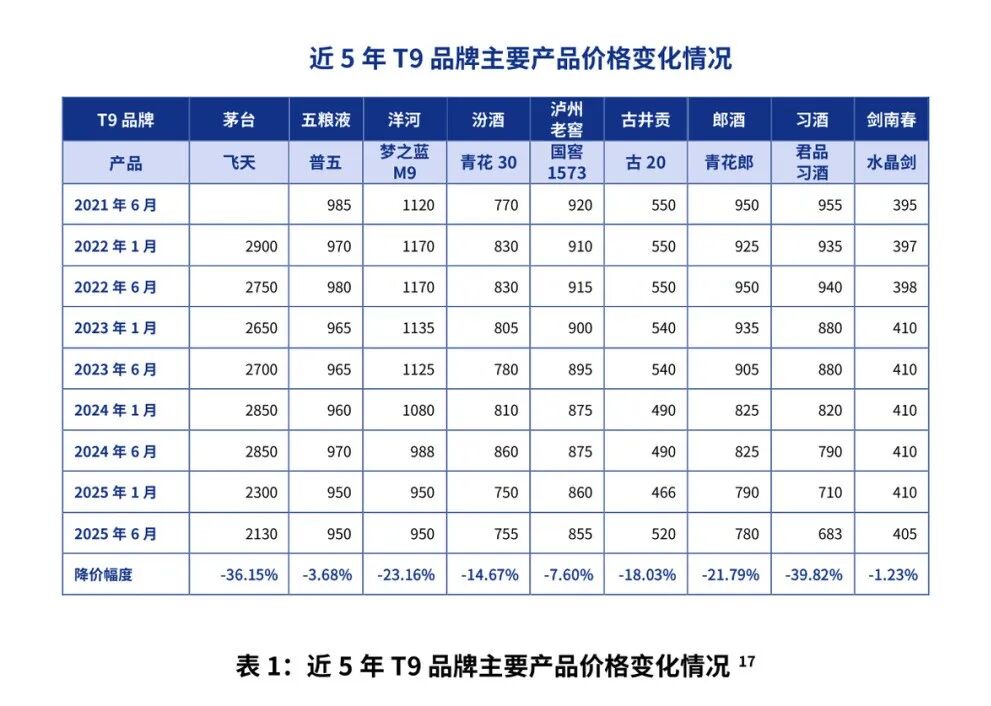
Core Viewpoint - The Chinese liquor industry, particularly the baijiu sector, is experiencing a significant downturn characterized by declining prices, increased inventory, and shifting consumer preferences, indicating a deep adjustment phase rather than a temporary fluctuation [4][15][22]. Industry Overview - The baijiu industry is facing a dual decline in both volume and price, with a reported production volume of 191.59 million kiloliters in the first half of 2025, a year-on-year decrease of 5.8% [5]. - Approximately 60% of liquor companies are experiencing price inversion, where actual market prices fall below manufacturer guidance, particularly affecting the 800-1500 yuan price range [5]. - The average inventory turnover days for the industry reached 900 days in the first half of 2025, a 10% increase year-on-year, indicating a significant slowdown in sales [11]. Company Performance - Major companies like Moutai and Wuliangye are showing signs of slowing growth, with Moutai's revenue growth target for 2025 set at 9%, the lowest since 2016 [17]. - Wuliangye's revenue for the first half of 2025 was 527.71 billion yuan, with a year-on-year growth of only 4.19% [17]. - Liquor companies are increasingly resorting to price cuts to manage high inventory levels, creating a downward pressure on prices [12]. Consumer Trends - The primary consumer demographic for baijiu is undergoing a generational shift, with younger consumers (born after 1995) showing diverse preferences for alcoholic beverages, including wine and craft beer [24]. - Health consciousness among younger consumers is changing drinking habits, leading to a decline in traditional drinking culture [25]. - The rise of new sales channels, such as e-commerce and community group buying, is disrupting traditional distribution models and further compressing profit margins for liquor companies [25]. Market Opportunities - Despite the challenges, there are emerging structural opportunities in the market, particularly in the lower price segments (100-300 yuan) where demand is shifting [26]. - The focus on family and friend gatherings as primary consumption scenarios is creating new opportunities for products that cater to these social settings [33]. - Companies that can adapt to these changes by enhancing their product offerings and marketing strategies are likely to survive and thrive in the long term [26].






研报掘金丨浙商证券:维持森马服饰“买入”评级,零售环境波动下收入逆势增长彰显韧性
Ge Long Hui A P P· 2025-09-17 07:23
Core Viewpoint - Semir Apparel reported a significant decline in net profit for H1 2025, with a net profit attributable to shareholders of 330 million yuan, down 41.2% year-on-year, and a net profit of 300 million yuan after deducting non-recurring gains and losses, down 45.2% year-on-year, indicating challenges in the retail environment [1] Financial Performance - The company achieved a dividend payout ratio of 124% in H1 2025, reflecting a commitment to returning value to shareholders despite profit pressures [1] - Revenue showed resilience against a fluctuating retail environment, attributed to proactive store openings and brand marketing efforts, although increased expenditure has temporarily pressured profit margins [1] Channel Development - Direct sales channels demonstrated high-quality growth, showcasing the effectiveness of the company's channel transformation [1] - Franchise income experienced a slight decline, primarily due to a weak retail environment, with net changes in direct and franchise stores being +19 and -66, respectively, resulting in 999 direct stores and 7,194 franchise stores [1] Brand Strength and Future Outlook - The company has a strong brand presence in the apparel industry, particularly with its main brands, Balabala and Semir, which are expected to benefit from store expansion and organizational changes [1] - The upcoming stock incentive plan to be announced in September 2024 reflects the company's confidence in its development prospects [1] - The company maintains a "Buy" rating, anticipating performance recovery as the retail environment improves [1]


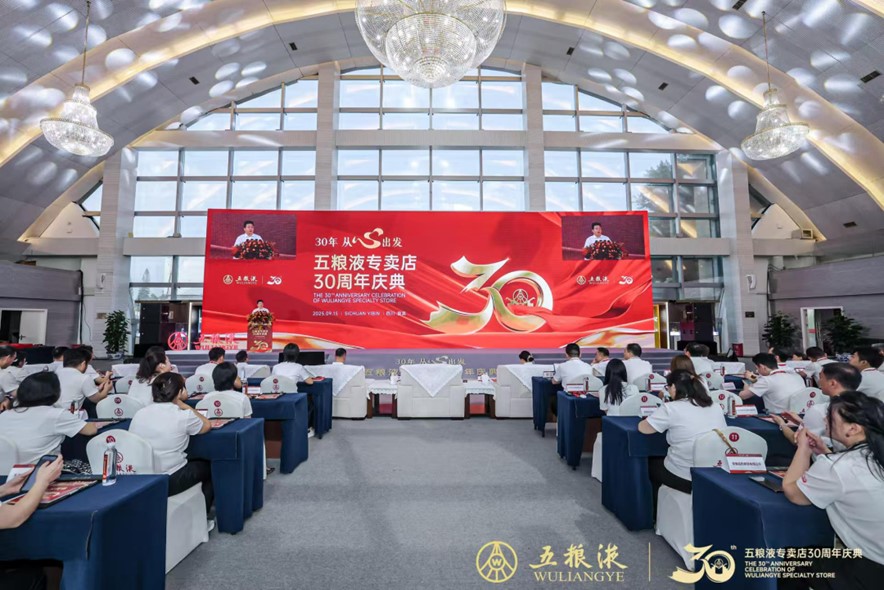
30年,300+座城市,1700+家店,五粮液专卖店书写酒业渠道变革史诗
Zhong Jin Zai Xian· 2025-09-17 01:38
Core Viewpoint - The establishment of the exclusive store model by Wuliangye 30 years ago has significantly transformed the marketing landscape of the Chinese liquor industry, leading to substantial growth in sales and brand recognition [1][3][10]. Group 1: Historical Development - Wuliangye pioneered the exclusive store sales model in 1995, addressing the challenges of counterfeit products and market chaos during China's economic transition [3][5]. - Over the past 30 years, the exclusive store system has expanded to over 1,700 stores across more than 300 cities, with sales increasing from several million to over 15 billion yuan [1][6]. Group 2: Strategic Evolution - The company has evolved its strategy from basic service provision to brand co-construction, enhancing operational capabilities and creating a robust ecosystem [5][6]. - Wuliangye has invested over 500 million yuan since 2019 to upgrade store hardware, ensuring that the stores maintain industry-leading standards [6][8]. Group 3: Marketing and Product Strategy - The company has implemented a "three unifications" system to enhance brand credibility, including unified staff uniforms, store visual styles, and online brand recognition [8][10]. - Exclusive products have been introduced to optimize the product structure, focusing on profit-oriented offerings to meet the needs of store operators [8][12]. Group 4: Future Directions - Wuliangye plans to strengthen its exclusive store system by focusing on brand empowerment, operational upgrades, digital transformation, customer engagement, and marketing innovation [11][12]. - The company aims to integrate online and offline resources to enhance the operational efficiency of exclusive stores, leveraging platforms like Meituan and JD.com [12][13].
中信建投:游戏为何“焕发新生”
智通财经网· 2025-09-11 23:51
Core Viewpoint - The gaming industry is expected to rejuvenate in 2025 after undergoing self-restructuring and external changes from 2021 to 2024, with a notable growth of 19% in the domestic self-developed online game market in the first half of 2025 [1] Industry Overview - The gaming market experienced nearly 20% growth in the first half of 2025, driven by a recovery in both supply and demand, leading to an increase in total gaming hours and ARPU [3] - The number of monthly game approvals has doubled over the past two years, with a peak of 166 domestic game approvals this year, significantly enhancing the supply of new games [3] - The demand for gaming remains resilient, with a 13% year-on-year increase in ARPU in the first half of 2025 [3] User Demographics - The gaming audience continues to be predominantly young, with over 45% of users under 30 years old, and a significant increase in female players, with the female gaming market expected to grow by 124% year-on-year in 2024 [4] Competitive Landscape - The competition among leading companies is easing, with firms focusing on their strengths and specific game genres, leading to a reduction in the pressure on mid-sized companies [5] - Mid-sized companies are increasingly excelling in niche markets, such as female-oriented horror games and SLG genres, with notable successes like "Supernatural Action Group" and "Endless Winter" [6] Marketing and Distribution Changes - Traditional marketing methods are declining, with a shift towards content-driven marketing and community engagement, resulting in improved profit margins for gaming companies [7] - The performance of gaming community platforms has exceeded expectations, with significant revenue growth reported by platforms like TapTap and Huya Live [7] Impact of AI - AI is enhancing game development efficiency, with a notable decrease in R&D expense ratios from 48% in Q1 2023 to 29% in Q2 2025 [8] - Native AI games are emerging, with advancements in AI NPC interactions and the potential for AI-driven UGC games [8] Future Outlook - The gaming sector is expected to see significant growth in Q3 2025, with a robust pipeline of new game releases scheduled for major holidays [9] - The valuation of the gaming industry is anticipated to align with previous high points, supported by improved fundamentals and a favorable competitive landscape [10]

定制家居企业业绩跌回4年前,渠道突围遇上节流御寒
3 6 Ke· 2025-09-05 02:52
Industry Overview - The overall revenue and net profit of custom home furnishing companies have declined to levels seen four years ago, with 9 out of 10 companies experiencing a drop in revenue, sales expenses, and R&D expenses [1][8][9] - The average revenue decline among the 10 companies analyzed is 12.54%, with only Wo Le Home experiencing a slight increase of less than 2% [8][9] Company Performance - Oppein Home achieved a revenue of 8.241 billion yuan, with a net profit of 1.018 billion yuan, marking a 20.88% year-on-year growth, solidifying its leading position in the industry [5][10] - Other companies, such as PIANO and MAG, faced significant challenges, with PIANO's revenue nearly halving and MAG's revenue declining by 23.07% [8][9] Profitability Analysis - Oppein Home leads in net profit margin at 12.39%, followed by Wo Le Home at 9.77%, indicating a strong profitability position [32][36] - The gross profit margin shows a clear tiered structure, with Wo Le Home leading at over 40%, while several other companies maintain margins above 30% [28][30] Channel Changes - Traditional distribution channels are under pressure, with only King Cabinet and Wo Le Home reporting revenue growth in this area; other companies have seen declines, particularly Zhihong Home with a 34.18% drop [12][13] - Direct sales channels and overseas markets have shown positive growth, with significant increases reported by companies like Topsolid and Sophia [12][16] Cost Control Measures - Companies are focusing on cost control, with many reducing sales expenses by over 14%, although excessive cuts have led to revenue declines for some [17][20] - R&D investments have generally decreased, except for Oppein Home, which saw a slight increase of 2.53% [24][26] Store Count Changes - Most companies have seen a net reduction in store counts, with Oppein and Zhihong Home closing over 100 stores each, while Wo Le Home and Haoleke have increased their store counts [14][15]


格力电器(000651):渠道改革初显成效,经营表现阶段阵痛
Changjiang Securities· 2025-09-03 15:25
Investment Rating - The investment rating for the company is "Buy" and is maintained [9]. Core Insights - The company reported a revenue of 97.325 billion yuan for the first half of 2025, a year-on-year decline of 2.46%. The net profit attributable to shareholders was 14.412 billion yuan, an increase of 1.95% year-on-year. The net profit excluding non-recurring items was 13.946 billion yuan, a growth of 0.59% year-on-year. In the second quarter of 2025, the revenue was 55.818 billion yuan, down 11.99% year-on-year, with a net profit of 8.508 billion yuan, a decrease of 10.07% year-on-year [2][6]. Summary by Sections Revenue Performance - The company experienced a revenue decline of 2.46% in H1 2025, with consumer electronics revenue down 5.09%, while industrial products and green energy grew by 17.13%, and smart equipment increased by 20.90%. Domestic revenue fell by 5.27%, but overseas revenue rose by 10.19%, with self-owned brands accounting for nearly 70% of export sales [12][12]. Channel Reform and Strategy - The company is actively promoting channel innovation and upgrades, focusing on live e-commerce and social e-commerce while enhancing its own online platform's user operation system. Offline, it is upgrading "Dong Mingzhu Health Home" stores to showcase a full range of health appliances, aiding the transition from air conditioning to a comprehensive home appliance brand [12][12]. Profitability and Financial Health - In H1 2025, the company's gross margin decreased by 0.88 percentage points. However, the sales expense ratio fell by 0.65 percentage points, indicating improved operational efficiency. The operating profit for H1 was 13.235 billion yuan, down 2.16% year-on-year, but the operating profit margin increased by 0.04 percentage points [12][12]. Future Outlook - The company has established a multi-brand industrial matrix covering consumer goods and industrial equipment, with a positive outlook supported by national subsidies. The projected net profits for 2025-2027 are 34.406 billion, 36.936 billion, and 40.220 billion yuan, respectively, with corresponding price-to-earnings ratios of 6.76, 6.30, and 5.78 [12][12].
