科技投资

Search documents
做科技投资 “进攻者”以产品思维锻造长期价值——访恒越基金吴海宁
Shang Hai Zheng Quan Bao· 2025-10-26 15:37
Core Viewpoint - The investment philosophy of Wu Haining emphasizes "product thinking" and focuses on companies with strong product capabilities, aiming for long-term value rather than short-term gains [3][4][10]. Investment Strategy - Wu Haining prefers investing in companies at the "1-10" growth stage, where the industry logic is validated and companies can consistently exceed performance expectations [3][8]. - The investment approach combines individual stock selection with portfolio management, integrating insights from private equity and public fund management [5][6]. Selection Criteria - Three product-oriented standards guide company selection: 1. Industry quality with large potential and high demand, such as the energy storage sector [8]. 2. Competitive barriers, focusing on technology and manufacturing capabilities for manufacturing firms, and brand loyalty for consumer companies [8]. 3. Management alignment with company interests and ability to execute strategies [8]. Performance and Market Outlook - Wu Haining's fund achieved a remarkable return of 124% over the past year, demonstrating effective risk management and dynamic portfolio adjustments [7]. - The current market is viewed as a short-term correction, but the long-term growth trend for technology stocks is believed to be only halfway through [10][11]. Focus Areas - Three main technology investment themes are highlighted: 1. The AI industry chain, with domestic hardware companies expected to compete globally [10]. 2. The acceleration of semiconductor localization, enhancing certainty in chip and equipment materials [10]. 3. Energy storage, driven by overseas electricity shortages and domestic economic viability [10]. Investment Philosophy - The philosophy stresses the importance of technology-driven growth and the need for companies to have solid performance backing, aligning with the belief that great products lead to long-term value [10][11].


主权财富基金投资模式谋变
经济观察报· 2025-10-26 05:27
Core Viewpoint - Sovereign wealth funds are exploring new paths to balance long-term financial investments with diverse development goals in a complex global environment [4][3]. Investment Trends - The global sovereign wealth fund asset management scale has increased from $3 trillion during the 2008 financial crisis to approximately $13 trillion currently, with the number of funds growing from fewer than 30 to over 100 [3]. - There has been a significant shift in investment strategies, with a growing emphasis on alternative assets such as private equity, infrastructure, and commodities, reflecting a pursuit of excess returns and an increased risk tolerance [3]. ESG Integration - Sovereign wealth funds are increasingly incorporating ESG (Environmental, Social, and Governance) factors into their investment decision-making frameworks, actively investing in clean energy, energy efficiency, and environmental protection [4]. - Investments in renewable energy by sovereign wealth funds have exceeded traditional oil and gas investments for three consecutive years [4]. Changes in Funding Sources - The funding sources for sovereign wealth funds, particularly those from oil-producing countries, have shifted from primarily relying on revenues from oil and gas exports to include foreign exchange reserves, fiscal surpluses, and state-owned asset returns [7]. - The roles of these funds have evolved to include supporting national development needs, promoting industrial transformation, and facilitating technological innovation [7]. Enhanced Investment Capabilities - Sovereign wealth funds are increasing their self-managed investment proportions, with self-managed public market stock investments rising from 34% to 54% and private equity direct investments from 28% to 50% [8]. Investment Challenges - Gaining investment from sovereign wealth funds is challenging, as they conduct thorough due diligence, focusing on team stability, past performance, investment strategy execution, and compliance with international standards [11]. - There is a growing emphasis on aligning ESG principles between Chinese enterprises and sovereign wealth funds, which may have differing expectations regarding environmental standards [12]. New Collaborative Investment Models - Sovereign wealth funds are evolving from traditional joint investments to deeper strategic collaborations, including partnerships with other sovereign wealth funds and private entities [15]. - The focus is shifting towards building a technology ecosystem through systematic investments across the technology supply chain, from research and development to application [15]. Role Transition of Sovereign Wealth Funds - Some sovereign wealth funds are transitioning from being mere limited partners (LPs) to becoming general partners (GPs) in investment management, seeking to guide their investments actively [16]. - For instance, the Abu Dhabi Investment Authority made a strategic investment of $1.5 billion in the logistics investment and management firm Prologis, indicating a desire to influence investment directions in national infrastructure projects [16].

北京公募“长情”向新
Shang Hai Zheng Quan Bao· 2025-10-23 18:39
Group 1: Industry Overview - Public funds are becoming increasingly important institutional investors in the capital market, playing a significant role in deepening reforms and promoting high-quality economic development [2][3] - The public fund industry has surpassed 35 trillion yuan in scale and is at a critical juncture for reform and high-quality development [6][8] Group 2: Huaxia Fund - Huaxia Fund actively guides social capital towards technology industries, enhancing its investment research capabilities in the tech sector [3][4] - The fund has developed a diverse range of thematic funds and ETFs focused on new productive forces, including the "Innovation Frontier" series and "Industry Leader" series [3][4] - As of now, Huaxia Fund manages over 200 billion yuan in investments directed towards technology companies in the secondary market [4] Group 3: Industrial and Technological Focus - Huaxia Fund emphasizes the importance of directing social capital towards new productive forces and technology industries, creating a high-level circulation ecosystem between technology, capital, and the real economy [4][5] - The fund has established a dedicated research team to enhance its ability to identify high-tech companies with strong innovation capabilities and good market prospects [4][5] Group 4: ICBC Credit Suisse Fund - ICBC Credit Suisse Fund has become a leading institution in the industry, with its first product achieving a cumulative return of 855.07% since inception [6][7] - The fund has demonstrated strong performance in both equity and fixed income sectors, with its active equity products ranking first in excess returns over various time frames [6][7] Group 5: Investment Strategy and Performance - The fund has developed a comprehensive investment strategy that includes a wide range of products, from fixed income to equity and pension finance, with a focus on long-term, value-driven investments [6][8] - ICBC Credit Suisse Fund has a robust talent development system, with over 70% of its fund managers being internally trained [9][10] Group 6: Jiashi Fund - Jiashi Fund has focused on guiding social capital towards high-value sectors during the "14th Five-Year Plan" period, managing assets totaling 1.61 trillion yuan [11][12] - The fund has invested over 220 billion yuan in sectors such as technology, manufacturing, and new energy, emphasizing deep research-driven fundamental investment [12][13] Group 7: Product Development and Investor Education - Jiashi Fund has built a comprehensive product system that includes both active and passive investment options, catering to various risk preferences [13][14] - The fund is committed to investor education, helping investors understand the value of technology investments and manage their risk preferences [14] Group 8: Jianxin Fund - Jianxin Fund has established a diverse product system covering various asset types, focusing on empowering the development of new productive forces [15][16] - The fund has launched multiple technology-focused products and has invested in over 1,400 technology-related enterprises [15][16] Group 9: Social Responsibility and Sustainable Development - Jianxin Fund actively participates in social responsibility initiatives, including investments in rural revitalization and green projects [17][18] - The fund has developed a robust risk management system to safeguard client assets and ensure compliance [17][18] Group 10: Future Outlook - Jianxin Fund aims to continue enhancing its research capabilities and product offerings to meet the wealth management needs of residents and support the transformation of the real economy [19]

【机构策略】A股市场持续向好的核心逻辑并未改变
Zheng Quan Shi Bao Wang· 2025-10-21 02:00
Group 1 - The A-share market experienced slight fluctuations on Monday, with strong performance in sectors such as communication equipment, electronic components, coal, and robotics, while precious metals, jewelry, energy metals, and non-ferrous metals showed weaker performance [1] - Market policy expectations are rising, and the potential for interest rate cuts by the Federal Reserve this year is expected to support the market [1] - The A-share market is likely to continue showing characteristics of consolidation, with structural opportunities remaining abundant, particularly in the technology growth sector [1][2] Group 2 - The A-share market opened higher due to positive sentiment over the weekend but faced cautious behavior from funds ahead of several macro events this week, leading to reduced trading volume [2] - There is a prevailing cautious sentiment among market participants, with a focus on controlling positions until new leading sectors emerge [2] - Despite short-term fluctuations, the core logic supporting the A-share market's upward trend remains intact, with a foundation for continued strength in the fourth quarter [2]
天弘国证港股通科技交易型开放式指数证券投资基金基金份额发售公告
Zhong Guo Zheng Quan Bao - Zhong Zheng Wang· 2025-10-15 15:43
Fund Overview - The Tianhong Guozheng Hong Kong Stock Connect Technology Exchange-Traded Open-Ended Index Securities Investment Fund was approved for registration by the China Securities Regulatory Commission on September 23, 2025 [1] - The fund is classified as an equity fund and operates as an exchange-traded fund [1][13] - The fund aims to raise a maximum of 2 billion RMB, with a cap of 20 billion RMB for the initial fundraising period [3][15] Fund Subscription Details - The subscription period is from October 20, 2025, to October 28, 2025, excluding weekends and holidays [18] - Investors can choose between online cash subscription and offline cash subscription methods [20][27] - The subscription fee will not exceed 0.80% [9][21] Investor Requirements - Investors must have a Shenzhen Stock Exchange RMB ordinary stock account or a Shenzhen Securities Investment Fund account to subscribe [2][33] - New investors need to open a Shenzhen Securities account before subscribing [34] Fund Management and Custody - The fund is managed by Tianhong Fund Management Co., Ltd., with China Construction Bank as the custodian [1][54] - The fund's assets will be verified by a legal verification agency within 10 days after the fundraising period ends [53] Risk Factors - The fund will primarily invest in stocks listed on the Hong Kong Stock Exchange that meet specific criteria, including being in the technology sector and having a compound annual growth rate of over 10% in revenue over the last two years [6][7] - The fund may face risks associated with market volatility, liquidity, and currency fluctuations due to its investment in overseas markets [10][11] Fund Structure and Operations - The fund will utilize a full replication method to track the performance of its benchmark index, which is the Guozheng Hong Kong Stock Connect Technology Index [7] - The fund's net asset value may fluctuate due to market conditions, and investors should be aware of the inherent risks [10][12]

星帅尔拟9000万元参投上电科星帅尔投资基金
Zhi Tong Cai Jing· 2025-10-13 14:34
星帅尔(002860)(002860.SZ)公告,公司与上海电科股权投资基金管理有限公司(简称"上电科基金")、 上海电器科学研究所(集团)有限公司(简称"上电科")签署了《上海上电科星帅尔私募投资基金合伙企业 (有限合伙)合伙协议》,共同投资设立上海上电科星帅尔私募投资基金合伙企业(有限合伙)(简称"上电 科星帅尔投资基金")。上电科星帅尔投资基金规模为人民币1亿元,其中公司作为有限合伙人以自有资 金认缴出资人民币9000万元,持有合伙企业90%的合伙份额。合伙企业拟主要投资核心零部件和其他科 技项目。 ...
科技投资“山高” 公募基金“水更长”
Zhong Guo Zheng Quan Bao· 2025-09-28 20:46
Core Insights - The technology sector has become a significant component of the A-share market, accounting for over 25% of the total market capitalization [1] - Public funds are increasingly focusing on technology investments, particularly in areas like artificial intelligence (AI), humanoid robots, and innovative pharmaceuticals, indicating a shift in investment strategies and methodologies [1][3] - The rise of technology investments is attributed to China's long-term economic transformation, emphasis on technological innovation, and the capital market's role in supporting the real economy [3] Investment Trends - Over 90% of newly listed companies in recent years are technology-related or have high technological content, with the number of technology companies in the top 50 by market capitalization increasing from 18 to 24 since the end of the 13th Five-Year Plan [1] - The market is witnessing a transformation in investment philosophy, with long-term capital, including insurance and pension funds, reassessing the long-term value of technology assets [3][4] - Fund managers are adapting to the complexities of technology investments, which require a shift from traditional linear thinking to a more systemic approach [1][5] Research and Methodology - The investment approach for technology sectors necessitates a deeper understanding of industry logic and performance expectations, with a focus on proactive positioning and foresight [6][7] - Fund companies are enhancing their research capabilities by building specialized teams and adopting innovative methodologies to address the unique challenges of technology investments [7][8] - The need for interdisciplinary knowledge is emphasized, with fund managers requiring a blend of financial acumen and technical expertise to navigate the technology landscape effectively [6][7] Product Strategies - Fund companies are diversifying their product offerings in technology investments, balancing between active equity products and passive index funds to capture various market opportunities [8][9] - The focus on technology themes aligns with national strategic development directions, leading to the creation of specialized funds targeting sectors like AI, semiconductors, and renewable energy [8][9] - The outlook for technology investments remains optimistic, with expectations of strong performance in sectors such as AI, semiconductors, and biomedicine [9]
资产配置周报:以质换量,带动工业企业利润回升-20250928
Donghai Securities· 2025-09-28 13:34
Group 1 - The core viewpoint emphasizes the shift from quantity to quality, driving a recovery in industrial enterprise profits. In the first eight months of 2025, the total profit of industrial enterprises above designated size increased by 0.9% year-on-year, a significant improvement from the previous -1.7%. Notably, in August, profits turned from a decline of 1.5% to a growth of 20.4% year-on-year [7][8][10] - The report suggests a focus on midstream sectors such as non-ferrous metal processing, chemicals, and steel, as the recovery in profits is expected to continue in the downstream manufacturing sector due to improved inventory management and lower raw material costs [7][10][11] Group 2 - In the domestic equity market, the growth style outperformed other styles, with an average daily trading volume of 22,951 billion yuan. Among the 31 primary industries, 7 saw gains while 24 experienced declines, with notable increases in power equipment (+3.86%), non-ferrous metals (+3.52%), and electronics (+3.51%) [18][19] - The report highlights the performance of the A-share market, particularly the technology sector, which has been buoyed by government policies aimed at stabilizing growth in key industries [10][11] Group 3 - The report indicates that the tightening of interbank liquidity is a concern due to the approaching quarter-end and holiday, but the central bank's liquidity management has alleviated some of this pressure. The focus remains on monitoring the scale of open market operations and changes in funding prices to assess the potential for policy easing [8][19][20] - The bond market is showing signs of sensitivity to the stock market's performance, with short-term yields rising and long-term yields remaining stable. The report suggests that there are emerging opportunities for mid-to-long-term bond investments due to supportive macroeconomic factors [19][24] Group 4 - In the commodities market, the report notes that oil, gold, and copper prices have risen, while aluminum prices have declined. The geopolitical situation has influenced oil and gold prices, but there are expectations of increased production from OPEC+, which may affect supply-demand dynamics [10][11][27] - The report tracks the performance of WTI crude oil, which rose to $65.72 per barrel, and highlights the increase in U.S. crude oil production and refinery throughput, indicating a robust energy sector [27][28]
周末官方数据,助力价值板块复苏?
Hu Xiu· 2025-09-28 10:50
Group 1 - Industrial enterprises' profits are showing significant recovery, raising questions about the impact on value sectors [3] - There is a debate in the market regarding whether A-shares will switch sectors, with technology stocks performing well while value sectors like banks and consumer stocks lag behind [3] - Recent market movements indicate a potential shift towards value investing, as funds have started to flow out of technology stocks, suggesting a possible recovery for blue-chip and value stocks [3] Group 2 - Despite positive news for leading technology companies, the investment market has not responded favorably, indicating a disconnect between performance and investor sentiment [5] - The overall market heat remains high, but there is pressure for potential direction changes as investors reassess their strategies [5]
刘晓春谈科技与金融:科技要对接真需求,谨防被“割韭菜”
Nan Fang Du Shi Bao· 2025-09-28 06:17
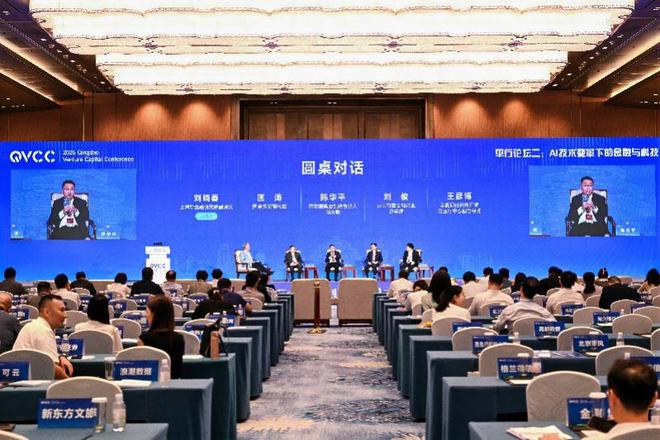
Group 1 - The 2025 Qingdao Venture Capital Conference highlighted the trend of technology investment, particularly in artificial intelligence, which is attracting a significant portion of investment funds while other sectors remain relatively quiet [1][4] - The "2025 Venture Capital Industry Annual White Paper" indicates a noticeable concentration of capital in the global venture capital market by mid-2025, with a shift in China's venture capital industry towards a new paradigm focused on hard technology innovation and "patient capital" [1][9] - Liu Xiaochun, Vice President of Shanghai New Finance Research Institute, emphasized the importance of technology addressing real needs and the necessity to guard against risks associated with technological investments [1][4] Group 2 - Liu Xiaochun discussed stablecoins, comparing them to traditional payment methods, and highlighted that their utility is limited to specific scenarios, particularly where traditional currency transactions are hindered [4][5] - He warned against the speculative nature of stablecoins and the potential for exploitation, citing a recent Ponzi scheme involving a stablecoin that resulted in significant financial losses for investors [5][8] - The trend of investing in hard technology is gaining momentum, with encouragement from the government for early, small, and long-term investments in this area, despite the challenges posed by technological barriers and rapid iterations [8][9] Group 3 - The ongoing U.S.-China tech competition is creating substantial market opportunities for domestic innovation and replacement in critical technology sectors, such as chip design and new energy vehicles [9] - Liu Xiaochun noted that technology requires financial backing for growth, and the integration of technology and finance is crucial for the success of tech enterprises [9] - While technology can enhance risk management in financial institutions, it also introduces new types of risks, necessitating a balanced approach to risk management that does not solely rely on technology [9]