财政主导

Search documents
从呼吁降息到“财政主导”? 特朗普盯上美联储的真正目的或许是“化债”
智通财经网· 2025-08-27 13:20
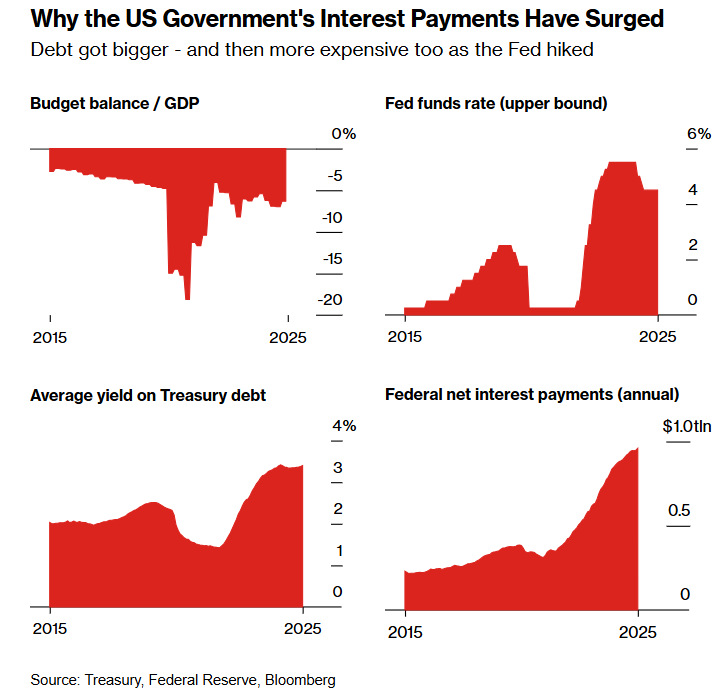
Core Viewpoint - Concerns are rising among investors regarding President Trump's attempts to exert control over the Federal Reserve's monetary policy, particularly in light of the increasing U.S. government debt and budget deficits [1][5][19] Group 1: Government Debt and Monetary Policy - The U.S. government's total debt has surged due to expanding budget deficits and rising interest rates, with economists suggesting that solutions should focus on reducing government borrowing through spending cuts and tax increases rather than relying on the Federal Reserve to lower borrowing costs [1][7] - Trump's push for a majority of rate-cutting seats on the Federal Reserve Board could lead to a series of movements aimed at lowering interest rates, which he claims would save the nation "hundreds of billions" [1][9] - The Federal Reserve's core objective is to curb inflation, but if interest rates become tools for maintaining government solvency, the task of controlling inflation could become unmanageable [5][8] Group 2: Fiscal Dominance and Economic Implications - The term "fiscal dominance" describes a situation where monetary policy is heavily influenced by political pressures, a scenario that analysts believe the U.S. may be approaching due to Trump's actions against the Federal Reserve [7][12] - There are indications that the U.S. is not yet in a textbook definition of fiscal dominance, but the situation is evolving, with budgetary pressures increasingly shaping policy decisions [12][19] - The anticipated budget deficit is projected to remain around 6% of GDP, which is significantly higher than the 3% target set by the Treasury Secretary [12][15] Group 3: Market Reactions and Future Outlook - As Trump advances his plans to remove Fed Governor Lisa Cook, U.S. Treasury yields and the dollar have declined, reflecting market concerns about the potential shift in Federal Reserve policy focus [9][10] - A recent Bank of America survey indicated that over half of fund managers expect the next Federal Reserve chair to resort to quantitative easing or yield curve control to alleviate the debt burden [10] - The ongoing pressure on the Federal Reserve may lead to a weakening of the dollar and an increase in bond yields, potentially driving investment towards alternative assets like cryptocurrencies and gold [9][10]

总统施压美联储大幅降息后,美国股债汇如何走?尼克松时代的历史这么说
Di Yi Cai Jing· 2025-08-27 05:41
Group 1 - The article draws parallels between the current financial market situation and the events surrounding President Nixon's administration, particularly regarding the pressure on the Federal Reserve to maintain low interest rates [1][3][4] - The 10-year U.S. Treasury yield has increased significantly, rising over 130 basis points to approximately 7.6% during Nixon's era, compared to the current level of around 4.3% [4][5] - Concerns about the independence of the Federal Reserve are growing, with potential implications for future monetary policy and market stability [4][5] Group 2 - The ICE U.S. Dollar Index fell significantly after Nixon ended the gold standard, and similar trends are observed today with the dollar index down nearly 10% this year [3][4] - The stock market experienced volatility, with the Dow Jones Industrial Average rising over 6% before a subsequent decline of 19% within a year after reaching its peak [3][4] - The yield curve has steepened, indicating increased market expectations for monetary policy easing, which could lead to higher long-term interest rates due to inflation concerns [5]

“信任危机”爆发!美国长期国债遭遇抛售,但市场仍过于自满?
Jin Shi Shu Ju· 2025-08-26 13:12
Group 1 - Long-term U.S. Treasury bonds faced a sell-off due to concerns over President Trump's attempt to dismiss a Federal Reserve governor, which may undermine confidence in the central bank [1] - The sell-off widened the gap between short-term and long-term bond yields to the largest level in nearly three years, with investors betting on a short-term decline in interest rates but higher rates in the future due to inflation pressures [1] - The two-year Treasury yield fell to 3.7%, while the 30-year yield rose by 0.06 percentage points, creating a gap of over 1.2 percentage points [1] Group 2 - The 30-year Treasury yield later retreated to 4.91%, indicating market volatility in response to political pressures [2] - Analysts expressed concerns that undermining the independence of the Federal Reserve could lead to higher inflation and interest rates, with significant implications for the economy [2] - Recent actions by Trump, including criticism of Fed Chair Powell and the dismissal of senior officials, have increased market unease regarding the Fed's independence and the reliability of economic data [2] Group 3 - Analysts view the White House's actions as part of a strategy to weaken the Federal Reserve's statutory independence, which could lead to a weaker currency and steeper government bond yield curves [3] - The dollar fell by 0.3% against a basket of currencies, with a year-to-date depreciation of over 9%, reflecting investor concerns about the U.S. economic outlook [3] - The pressure on the Federal Reserve is seen as a prominent example of a "fiscal dominance" era, where central bank policies are increasingly influenced by government needs to maintain low borrowing costs [3]
全球发达经济体进入财政主导时代意味着什么?
Sou Hu Cai Jing· 2025-08-26 03:33
Group 1 - Economists warn that developed economies may be entering an era of fiscal dominance, where fiscal demands dictate monetary policy, potentially leading to higher inflation and financial risks [1][4] - The U.S. is highlighted as a key example, with President Trump pressuring the Federal Reserve to lower interest rates to align with his fiscal policies, suggesting a significant reduction in the benchmark rate [1][2] - Other developed economies, such as the EU and Germany, are also adopting expansive fiscal policies, with significant funding plans for defense and infrastructure [4][6] Group 2 - Japan exemplifies a long-standing fiscal dominance, with its central bank implementing policies that support fiscal stimulus [5] - Historical precedents indicate that extreme fiscal dominance can lead to severe inflation crises, as seen in Germany in the 1920s and Argentina in the late 20th century [6] - Concerns over persistent fiscal expansion and potential political interference in monetary policy are reflected in rising long-term bond yields in developed markets [6][7] Group 3 - The OECD projects that sovereign debt issuance among its member countries will reach a record $17 trillion by 2025, with rising debt servicing costs as a percentage of GDP [7] - The shift to fiscal dominance may create favorable conditions for emerging markets, making their assets more attractive in the current environment [8] - The combination of fiscal dominance and financial repression under the Trump administration is expected to negatively impact the U.S. dollar while benefiting commodities and certain sectors in the U.S. and Europe [8]
鲍威尔“认错”,释放最强降息信号,美股狂欢!
Mei Ri Jing Ji Xin Wen· 2025-08-23 07:53
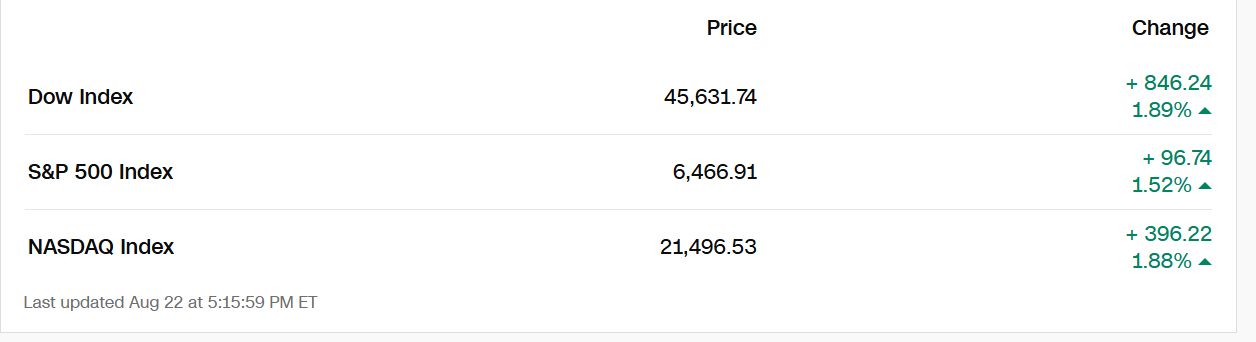
Group 1 - Federal Reserve Chairman Jerome Powell signaled a strong likelihood of interest rate cuts during his speech at the Jackson Hole global central banking conference, indicating a shift back to a 2% inflation target and abandoning the controversial "Flexible Average Inflation Target" (FAIT) [2][4][11] - The U.S. stock market reacted positively, with the Dow Jones Industrial Average surging over 900 points, marking a historical high, while the Nasdaq and S&P 500 also recorded their largest single-day gains since May [3][7][8] - Powell acknowledged the challenges facing the Federal Reserve, highlighting the conflict between low inflation and a healthy labor market, and warned of rising unemployment risks as job growth slows [8][9] Group 2 - The Federal Reserve's policy framework has undergone significant changes, with Powell admitting that the previous FAIT strategy was ineffective in addressing the post-pandemic inflation surge [11][15] - The new framework emphasizes a return to a clear 2% inflation target and a balanced approach to policy adjustments based on data and risk assessments, rather than political pressures [9][12][19] - Powell's tenure has been marked by a "fiscal dominance" phenomenon, where government fiscal policies overshadow monetary policies, raising concerns about the independence of the Federal Reserve and the potential for a "debt death spiral" as described by Ray Dalio [16][17][19] Group 3 - The upcoming earnings report from Nvidia is highly anticipated, with analysts focusing on new product manufacturing yields and the overall growth of its data center business, which is expected to contribute significantly to revenue [33][36] - Nvidia's revenue for the second quarter is projected to reach $45.8 billion, reflecting a year-over-year growth of 52.4%, although the growth rate is slowing compared to previous quarters [36] - The demand for GPUs and computing power remains extremely high, as indicated by OpenAI's recent financial performance and the ongoing infrastructure expansion to meet this demand [37]




鲍威尔“认错”,释放最强降息信号,美股狂欢;加沙超50万人陷入饥荒,以防长:“地狱之门”将打开;英伟达财报公布在即|一周国际财经
Mei Ri Jing Ji Xin Wen· 2025-08-23 07:03
Group 1 - Federal Reserve Chairman Jerome Powell signaled a strong likelihood of interest rate cuts during his speech at the Jackson Hole global central bank conference, indicating a shift back to a 2% inflation target and abandoning the controversial flexible average inflation target (FAIT) [3][5][11] - Following Powell's announcement, the U.S. stock market surged, with the Dow Jones Industrial Average rising over 900 points, marking a historic high, while the Nasdaq and S&P 500 also recorded significant gains [5][7][9] - Powell acknowledged the challenges facing the Federal Reserve, highlighting the conflict between low inflation and a healthy labor market, and warned of rising unemployment risks as job growth slows [9][10][11] Group 2 - The Federal Reserve's shift away from FAIT is seen as a necessary correction after its perceived failure to address the inflation surge post-pandemic, with Powell admitting that the previous strategy was ineffective [11][15][16] - The current economic environment is characterized by a "fiscal dominance" phenomenon, where government fiscal policy significantly influences monetary policy, potentially undermining the independence of the Federal Reserve [16][19] - Concerns are growing that the U.S. may be entering a "debt death spiral," as high government debt levels necessitate new borrowing to service existing debt, which could lead to a loss of confidence in the dollar and increased inflation [19][21] Group 3 - The upcoming earnings report from Nvidia is highly anticipated, with analysts focusing on the growth of its core data center business and the manufacturing yield of new products [33][35] - Nvidia's revenue for the second quarter is expected to reach $45.8 billion, reflecting a year-over-year growth of 52.4%, although the growth rate is slowing compared to previous quarters [35][36] - Analysts remain optimistic about Nvidia's future, with expectations of improved manufacturing yields and increased supply of new generation chips, which could bolster overall performance [36] Group 4 - Apple is reportedly in discussions with Google to integrate its new Siri voice assistant with Google's Gemini AI model, indicating a strategic move to enhance its AI capabilities [29][31] - This collaboration comes as Apple faces challenges in advancing its internal AI projects, prompting a shift towards leveraging external technologies to improve Siri's functionality [31][32]

鲍威尔的“绝唱”:释放最强降息信号 美国“债务死亡螺旋”的幽灵已浮现
Mei Ri Jing Ji Xin Wen· 2025-08-23 03:40
Core Viewpoint - Federal Reserve Chairman Jerome Powell delivered a significant speech at the Jackson Hole global central bank conference, indicating a strong signal for potential interest rate cuts and a return to the traditional 2% inflation target, abandoning the controversial Flexible Average Inflation Target (FAIT) [1][3][7]. Market Reaction - Following Powell's speech, the U.S. stock market experienced a surge, with the Dow Jones Industrial Average rising over 900 points, closing at a record high. The Nasdaq and S&P 500 also recorded their largest single-day gains since May, with the market fear index (VIX) dropping by 12% [2][3]. - The probability of a rate cut in September jumped from 75% to 90% immediately after Powell's remarks, reflecting market optimism [3][5]. Economic Challenges - Powell acknowledged the challenging situation facing the Federal Reserve, noting a conflict between low inflation and a healthy labor market. He highlighted a significant slowdown in job growth, with an average of only 35,000 jobs added per month, far below the expected levels for 2024 [4][12]. - He emphasized the need for caution in adjusting economic restrictions, suggesting that rate cuts would not be implemented all at once [4]. Policy Framework Changes - Powell announced the abandonment of the FAIT framework, which allowed inflation to exceed 2% for a period. This decision was made in light of the framework's failure during the post-pandemic inflation surge [7][12]. - The Federal Reserve will revert to a more traditional inflation target of 2%, with a focus on anchoring inflation expectations [7][8]. Legacy and Independence Concerns - Powell's tenure is marked by a "fiscal dominance" era, where government fiscal policy has overshadowed monetary policy, raising concerns about the independence of the Federal Reserve [12][14]. - The combination of significant government spending and aggressive monetary easing has led to a situation where the Fed's independence is perceived to be at risk, potentially leading to a "debt death spiral" as warned by Ray Dalio [12][14]. Future Implications - Powell's successor will face the challenge of controlling inflation without triggering a severe economic downturn while maintaining the Fed's independence amid political and fiscal pressures [16].
鲍威尔转向,美股狂欢,美国“债务死亡螺旋”如何破解;加沙超110万人濒临断粮;苹果新Siri或植入谷歌Gemini;英伟达财报下周来袭 | 一周国际财经
Sou Hu Cai Jing· 2025-08-23 03:36
Group 1 - Federal Reserve Chairman Jerome Powell signaled a strong likelihood of interest rate cuts during his speech at the Jackson Hole Global Central Bank Conference, marking a potential shift back to a 2% inflation target and abandoning the controversial Flexible Average Inflation Target (FAIT) [7][8][11] - Following Powell's announcement, U.S. stock markets surged, with the Dow Jones Industrial Average rising over 900 points, reaching a historic high, while the Nasdaq and S&P 500 also recorded significant gains [10][13][14] - Powell acknowledged the challenges facing the Federal Reserve, highlighting the conflict between low inflation and a healthy labor market, and warned of rising unemployment risks as job growth slows [14][18] Group 2 - The Federal Reserve's decision to abandon FAIT was seen as a necessary move after its failure to address the inflation surge post-pandemic, with Powell admitting that the concept of compensatory inflation overshoot was ineffective [17][21] - The new policy framework emphasizes a return to a clear 2% inflation target, with a focus on anchoring inflation expectations and ensuring long-term stability [18][20] - Powell's tenure has been characterized by a significant shift towards a government fiscal-led approach, which has raised concerns about the independence of the Federal Reserve and the potential for a "debt death spiral" as described by Ray Dalio [10][22][24] Group 3 - The upcoming earnings report from Nvidia is highly anticipated, with analysts focusing on the growth of its data center business and the manufacturing yield of new products, as the company is expected to report revenues of approximately $45.8 billion for the second quarter [36][39] - Apple is reportedly in discussions with Google to integrate the Gemini AI model into its new Siri voice assistant, indicating a strategic move to enhance its AI capabilities amid internal development challenges [32][34] - OpenAI's CFO highlighted the surging demand for GPU and computing power, with the company achieving over $1 billion in revenue for the first time in July, reflecting the growing market for AI technologies [41]

日本长债重回“危机模式”,“长债危机”会蔓延到股市吗?
华尔街见闻· 2025-08-22 11:08
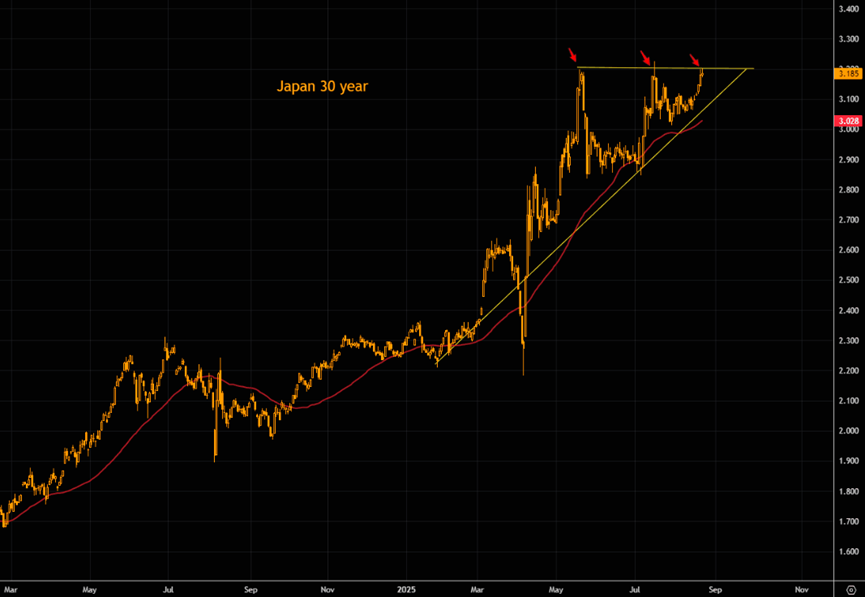
Group 1 - A "slow-motion crisis" is brewing in the global government bond market, with Japan at the forefront, driven by concerns over fiscal expansion and weakening investor demand [1][2][6] - The yield on Japan's 20-year government bonds has surged to 2.655%, the highest level since 1999, while the 10-year yield reached 1.61%, a new high since 2008, indicating rising market anxiety [1][2] - The sharp rise in yields is primarily due to worries about Japan's fiscal situation, with expectations of increased government bond issuance following the ruling coalition's loss in the July Senate elections [2][3] Group 2 - There is a significant decline in overseas investor demand for Japanese government bonds, with net purchases of 10-year and longer bonds dropping to 480 billion yen in July, only one-third of June's amount [2][3] - The withdrawal of foreign investors is exacerbating market vulnerability, as they have been the dominant source of demand for long-term bonds [3][4] - The trend of rising yields and declining demand for long-term bonds is part of a broader global trend, with warnings from analysts about the potential instability in the bond market [2][6] Group 3 - Japanese corporations are shifting from long-term bonds to short-term financing in response to rising yields, which may save costs in the short term but increase refinancing risks in the long run [4][5] - The structure of corporate bond issuance has changed significantly, with bonds maturing in five years or less accounting for 75% of the total issuance, while ultra-long bonds have nearly disappeared [4] Group 4 - The concept of "fiscal dominance" is emerging, where rising government debt and interest costs exert political pressure on central banks, potentially leading to artificially low interest rates [8][9] - The OECD projects that sovereign borrowing in high-income countries will reach a record $17 trillion this year, complicating central banks' efforts to reduce their balance sheets [8] Group 5 - The rising bond yields are causing a significant decline in the relative attractiveness of stocks, with warnings that the era of "There Is No Alternative" (TINA) for stock investments may be coming to an end [6][8] - Historical trends indicate a positive correlation between Japanese long-term bond yields and volatility in U.S. equities [7]

日本长债重回“危机模式”
Hu Xiu· 2025-08-22 07:30
Core Viewpoint - A "slow-motion crisis" may be brewing in the global government bond market, with Japan at the forefront of this turmoil [1] Group 1: Japanese Long-Term Bonds Under Pressure - Japanese ultra-long-term bond yields have surged to levels not seen in decades, driven by concerns over fiscal expansion and weakening investor demand [2][4] - The latest market turmoil pushed the 20-year bond yield to 2.655%, the highest since 1999, while the 10-year bond yield reached 1.61%, a new high since 2008 [2] - The rise in yields is causing direct pressure on corporate financing in Japan, as companies are shifting towards short-term financing to avoid long-term debt costs [9][10] Group 2: Weak Demand and Fiscal Expansion Concerns - Concerns over Japan's fiscal outlook are the core factor driving yields higher, with expectations that the government may increase fiscal spending following the July elections [7] - There has been a significant drop in overseas investor demand, with net purchases of Japanese bonds over 10 years falling to 480 billion yen in July, only one-third of June's amount [6][8] - The withdrawal of foreign investors raises concerns about the stability of the long-end yield curve, as they have been a dominant source of demand in the ultra-long bond market [8] Group 3: Global Context of the Crisis - The turmoil in Japan's bond market reflects a broader global trend, with rising long-term bond yields posing challenges to financial market stability [12] - High bond yields are making stocks appear "astonishingly expensive," marking the end of the "TINA" (There Is No Alternative) era for investors [13] - The OECD projects that sovereign borrowing in high-income countries will reach a record $17 trillion this year, complicating central banks' efforts to reduce balance sheets [18] Group 4: Fiscal Dominance and Its Implications - The concept of "fiscal dominance" is emerging, where rising government debt and interest costs exert political pressure on central banks to maintain low rates, potentially undermining their inflation control efforts [16][17] - There are warnings of a potential "debt death spiral," where governments may need to borrow more to pay rising interest, leading to currency devaluation [19] - Gold prices have reached historical highs this year, indicating that the market is pricing in these risks [20]