量化宽松(QE)

Search documents
甲骨文市值蒸发7200亿,中概股反弹拉升,油价跳水,加密货币超15万人爆仓
2 1 Shi Ji Jing Ji Bao Dao· 2025-12-11 15:53
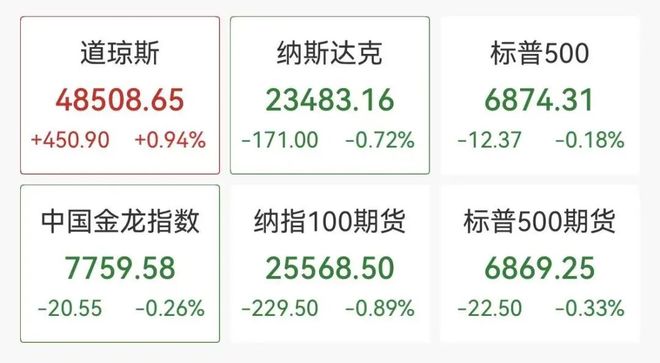
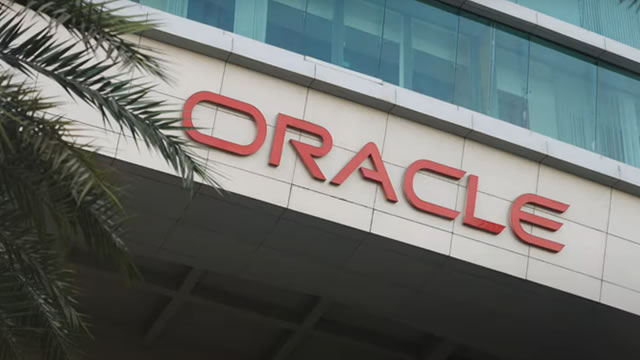
Market Overview - The three major U.S. stock indices opened mixed, with the Dow Jones up by 0.94%, while the S&P 500 and Nasdaq were down by 0.18% and 0.72%, respectively [1] - Major tech stocks experienced more declines than gains, with Oracle's stock dropping as much as 16%, resulting in a market cap loss of approximately $102 billion (around 72 billion RMB) [3] - Other tech stocks such as Nvidia and AMD fell over 3%, while Intel dropped over 2%, and Tesla, Apple, and Google were down more than 1% [3] Oracle's Performance - Oracle's second-quarter earnings report showed that both revenue and cloud business income fell short of market expectations, leading to a significant drop in stock price [3] - As of the report, Oracle's stock was down 13.24%, with a market capitalization of $551.6 billion [4] Cryptocurrency Market - The cryptocurrency market saw a collective decline, with Bitcoin falling below the $90,000 mark, currently priced at $89,897.3, reflecting a 2.35% decrease over the past 24 hours [7][8] - Over 150,000 traders were liquidated in the past 24 hours due to the market downturn [7] Oil Prices - Both West Texas Intermediate (WTI) and Brent crude oil prices dropped nearly 2% [5] U.S. Labor Market and Federal Reserve Actions - The U.S. Labor Department reported a 0.8% increase in the Employment Cost Index for Q3, indicating a slowdown in labor demand and slow growth in worker income [8] - The Federal Reserve announced a 25 basis point cut in the federal funds rate target range to between 3.50% and 3.75%, marking the third rate cut of the year [9] - The Fed's dot plot indicates a single expected rate cut in 2026, which analysts view as potentially misleading and subject to change based on labor market conditions [11] - The Fed will initiate a "mini QE" by purchasing approximately $40 billion in short-term Treasury bills starting December 12, aimed at addressing market liquidity rather than lowering long-term rates [12]

大放水,印钞机又启动了
凤凰网财经· 2025-12-11 14:47
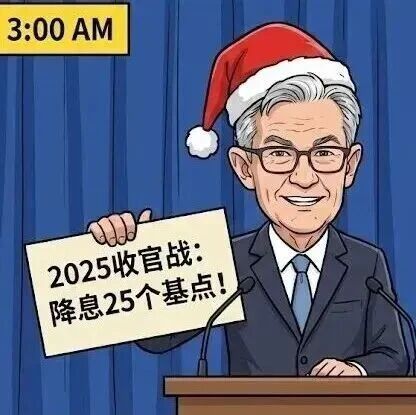
以下文章来源于财经连环话 ,作者就是轱辘慧 虽然结果是毫无悬念的"降息25个基点" (利率降到了3.50%-3.75%),但在轱辘慧看来,这背后简直就是一场 "年度宫斗大戏"! 表面上:平平无奇"三连降",全年KPI完成(共降75个基点)。 实际上:内部吵翻天,但鲍师傅最后还是给咱们发了个"超级流动性大红包"! 来,跟着慧慧,咱们剥开那些枯燥的金融术语,看看这场大戏到底有多精彩。 01 活久见!会议室里上演"三国杀" 这次最劲爆的瓜,不是降息本身,而是 居然有三个人投了反对票。 家人们,这是自2019年以来头一回啊。美联储内部的裂痕已经藏不住了,简直是"神仙打架": 财经连环话 . 一图看懂财经万象。 北京时间周四凌晨3点,大洋彼岸的那帮大佬们终于把2025年的最后一场大戏演完了。 激进派(踩油门): 理事米兰(Milan)拍桌子嫌慢:"才降25?我们要保就业!直接降50个基点啊!" 保守派(踩刹车): 芝加哥的古尔斯比(Goolsbee)和堪萨斯城的施密德(Schmid)死死拉住手刹:"停停停!通胀还没完呢,这次别降了!" 鲍威尔(端水大师): 夹在中间瑟瑟发抖,既要哄这一头,又要劝那一头…… 这种"有人嫌 ...
"Dip Worth Watching:" Weakness After Rate Cut, Jobless Claims & ORCL
Youtube· 2025-12-11 14:30
Core Insights - The jobless claims data showed a significant increase to 236,000, indicating a mixed labor market situation, but averaging the last two weeks suggests stability at around 213,000 [2][4][5] - The Federal Reserve's recent actions, including a $40 billion Treasury buying program, are seen as positive for the market, contributing to lower yields and a weaker US dollar [9][10] - The overall labor market is characterized as "no higher, no fire," indicating a lack of significant layoffs or new job creation, suggesting a period of uncertainty [6][7] Labor Market Analysis - Jobless claims rose to 236,000, higher than the previous week's 191,000, but the four-week average is at 216,750, indicating a relatively strong labor market [2][4] - Continuing claims decreased by 100,000, reflecting a positive trend, although this data is two weeks old and may revert in the next report [5][7] - The unemployment rate currently stands at 4.4%, with the labor market showing signs of stabilization post-pandemic [5][6] Federal Reserve Actions - The Fed's decision to purchase $40 billion in short-term securities is viewed as a supportive measure for the economy, with potential tapering in the future [9] - The market reacted positively to the Fed's announcements, with lower yields and a decrease in the US dollar value observed [9][10] Market Reactions - The market exhibited some jitters due to Oracle's disappointing earnings and the previous day's trading movements [3][10] - Despite pre-market declines, the overall macroeconomic indicators suggest a favorable setup for the end of the year, with lower crude oil prices and a stabilizing VIX [10]

美联储12月议息会议点评:再度降息、重启RMP
Huachuang Securities· 2025-12-11 14:28
Report Industry Investment Rating The provided content does not mention the report industry investment rating. Core Views of the Report - The Fed ended 2025 with continued interest rate cuts, totaling 75 basis points for the year. The policy focus shifted from concerns about inflation rebound to addressing employment downward pressure. The threshold for restarting rate cuts in 2026 is expected to increase, depending more on the pace of employment slowdown and the effectiveness of alleviating commodity inflation related to tariffs. [5][30] - The Fed's restart of RMP is expected to ease the previous liquidity tightening situation. However, internal disagreements among officials have intensified, and with key events such as the Fed chairmanship change and mid - term elections in 2026, the stability of monetary policy has decreased. It is expected that the Fed will maintain a "wait - and - see" attitude in the first half of 2026, and changes in the second half may depend on the new chairman's policy orientation and the economic outlook due to fiscal expansion. [5][30] Summary by Relevant Catalogs 1. Interest Rate Decision and Market Reaction - On the early morning of December 11, 2025, the Fed cut interest rates for the third consecutive time, lowering the federal funds rate target range by 25 basis points to 3.5% - 3.75%, and the reserve balance rate and discount rate to 3.65% and 3.75% respectively. In 2025, the Fed cut interest rates three times, a cumulative 75 basis points, reducing the federal funds target rate from 4.5% to 3.75%. [4][7] - After the interest rate decision was announced, the 10 - year U.S. Treasury yield fluctuated upward, reaching a high of 4.18%. The three major U.S. stock indexes rose, and the U.S. dollar index briefly rose above 99 points. During the press conference, the 10 - year U.S. Treasury yield turned downward, the U.S. stock rally continued to expand, the U.S. dollar index returned to around 98.5, COMEX gold first fell then rose, and crude oil prices declined. [8] 2. Interest Rate Statement - Focused on labor market pressure, policy outlook, and Reserve Management Purchases (RMP). The description of the unemployment rate was changed to "the unemployment rate has risen as of September". The statement added the expression "the extent and timing" for future interest rate adjustments, last seen in December 2024, which may imply a higher threshold for future rate cuts. It also added that the committee believes the reserve balance has fallen to an adequate level and will buy short - term U.S. Treasuries as needed to maintain a continuous and adequate supply of reserves. [4][12][16] 3. Economic Forecast - GDP growth forecasts for the next four years were raised, while the unemployment rate forecast for the following year and inflation forecasts for this and next year were slightly lowered. The December dot - plot predicts one rate cut each in 2026 and 2027, with the median remaining the same as in September. However, there is a high degree of dispersion among the 19 Fed officials providing forecasts, indicating significant disagreements on the subsequent rate - cut magnitude and increasing policy uncertainty. [18][19] 4. Reserve Management Purchases (RMP) - Core Purpose: To increase the bank system's reserve scale by purchasing short - term Treasuries and other assets, addressing the recent surge in funding prices. Since 2023, the scale of the overnight reverse repurchase tool ONRRP has dropped significantly to near zero, and the bank reserve scale has returned to the 2020 level. The Fed's long - term balance sheet reduction and the U.S. government shutdown have also drained short - term liquidity, with the SOFR remaining persistently higher than the EFFR since September 2025, with the spread reaching a maximum of 36 basis points. [2][20][22] - Bond - buying Operation: Starting from December 12, it plans to purchase $40 billion in Treasury bills over the next 30 days. The subsequent purchase amount will be adjusted according to the reserve supply outlook and seasonal fluctuations. According to Powell, the neutral monthly purchase level may be between $20 billion and $25 billion. [2][22] - Historical Operation: The last time the Fed carried out RMP was in 2019. In mid - September 2019, the SOFR was nearly 300 basis points higher than the EFFR. The Fed announced the launch of RMP on October 11, 2019, buying Treasury bills at a rate of $60 billion per month to maintain the reserve level at or above that of early September 2019. [2][22] - Comparison with QE: Unlike QE, which lowers long - term interest rates by buying long - term Treasuries and then reduces borrowing costs, RMP aims to replenish the bank system's reserves by buying short - term Treasuries, ensuring an adequate reserve scale without indicating a change in the monetary policy stance. [3][23] 5. Labor Market - Both labor supply and demand are slowing down, and employment data may overestimate the actual situation. From June to September 2025, the unemployment rate rose by 0.3 percentage points to 4.4%. Since April, the average monthly non - farm employment increase was about 40,000, but after adjustment, it may actually have decreased by about 20,000 per month. The continuous and gradual cooling of the labor market might be the main reason for the continued rate cuts. [5][24] 6. Inflation - Non - tariff factors have made positive progress, and inflation caused by tariff factors may peak in the first quarter of 2026. It is maintained that the impact of tariffs on inflation is one - time rather than continuous. In September, the U.S. core CPI year - on - year decreased from 3.1% in August to 3.0%, and the month - on - month growth rate dropped from 0.3% to 0.2%. Among sub - items, prices of tariff - sensitive goods such as clothing, furniture, and entertainment products increased month - on - month to varying degrees, while the housing rent in core services decreased, indicating a continued decline in service inflation, but the spill - over effect of commodity inflation caused by tariffs still exists. [5][27]
降息加扩表,黄金等待突破!
Sou Hu Cai Jing· 2025-12-11 13:37
尽管美联储欲盖弥彰,称这不是"QE",但市场听懂了,水要来了。因为历史证明"不QE"最后都变QE。 隔夜,现货黄金快速收复早盘失地,盘中最低下探4182元附近后强劲反弹,最高触及4238.59美元,创近三个交易日新高,最终收报4228.47美元,单日涨 幅约0.5%。现货白银表现更为亮眼,一举突破并站稳61美元整数关口,最高触及61.92美元,刷新历史纪录,今年以来累计涨幅高达113%。今日欧市盘 中,黄金窄幅震荡,目前在4211美元附近徘徊。 降息加扩表! 隔夜,美股三大指数集体收涨,截至收盘,道指上涨497.46点,涨幅1.05%;纳指涨0.33%;标普500指数涨0.68%。 消息面上,美联储再度出手,降息25个基点。 北京时间12月11日凌晨3点,美联储宣布,降息25个基点,将联邦基金利率目标区间从3.75%—4.00%下调至3.50%—3.75%,符合市场预期。 这也是美联储连续第三次会议宣布降息,也是2025年的最后一次降息,全年的累计降息幅度就此达到75个基点。 不只是降息,启动"技术性扩表"。美联储会后也同时宣布,将在本月开始扩大资产负债表,购买400亿美元的短期国债,购买规模预计会在几个月内 ...
有克制的“价”“量”双宽——12月FOMC会议点评
一瑜中的· 2025-12-11 12:19
Core Viewpoint - The December FOMC meeting resulted in a 25 basis point rate cut to a target range of 3.5%-3.75%, aligning with market expectations, while the Fed's tone remained neutral to slightly hawkish [2][20] Group 1: Interest Rate Decisions - The Fed's decision to cut rates by 25 basis points was anticipated, with 3 out of 12 FOMC members opposing the cut, indicating internal dissent [20] - The dot plot indicates only one rate cut is expected next year, which is below market pricing of two cuts [3][12] - The Fed's economic outlook is described as "Goldilocks," with upward revisions to GDP growth forecasts for 2025-2028 and downward revisions to inflation forecasts for the same period [6][21] Group 2: Economic Projections - GDP growth forecasts for Q4 of 2025, 2026, 2027, and 2028 are now projected at 1.7%, 2.3%, 2.0%, and 1.9% respectively, compared to previous estimates of 1.6%, 1.8%, 1.9%, and 1.8% [21] - Core PCE inflation forecasts for the same periods are adjusted to 3.0%, 2.5%, 2.1%, and 2.0%, down from 3.1%, 2.6%, 2.1%, and 2.0% [21] Group 3: Balance Sheet Management - The Fed is restarting "Reserve Management Purchases" (RMP) to maintain adequate reserve levels, with a purchase scale of $40 billion per month starting this December [14][35] - RMP is distinct from quantitative easing (QE), as it involves purchasing short-term Treasury securities to manage liquidity rather than a broad monetary policy shift [15][16] Group 4: Market Reactions - Following the FOMC meeting, the stock market saw gains, with the Dow Jones Industrial Average rising by 1.05%, and the S&P 500 increasing by 0.67% [38] - The dollar index fell by 0.6% to 97.24, while yields on 10-year and 2-year Treasury bonds decreased [38]

有克制的价量双宽:12月FOMC会议点评
Huachuang Securities· 2025-12-11 12:08
Group 1: Interest Rate Changes - The FOMC lowered the interest rate by 25 basis points to a target range of 3.5%-3.75%, aligning with market expectations[1] - The dot plot indicates a forecast of one rate cut in both next year and the year after, but there is significant disagreement among members[3] - There were 2 dissenting votes against the rate cut, with 6 out of 19 participants supporting no rate cut[3] Group 2: Economic Projections - The Fed raised its GDP growth forecasts for Q4 2025-2028 to 1.7%, 2.3%, 2.0%, and 1.9% respectively, compared to previous estimates of 1.6%, 1.8%, 1.9%, and 1.8%[1] - Core PCE inflation forecasts for the same period were adjusted to 3.0%, 2.5%, 2.1%, and 2.0%, down from 3.1%, 2.6%, 2.1%, and 2.0%[1] - The Fed's assessment of downside risks to growth has decreased, while the outlook for unemployment risks has also improved[21] Group 3: Quantitative Easing Measures - The Fed announced the restart of "Reserve Management Purchases" (RMP) to maintain adequate reserve levels, starting at a pace of $40 billion per month[5] - This RMP is a technical operation aimed at increasing liquidity in the money market, distinct from traditional quantitative easing (QE)[13] - The current asset purchase scale is smaller than previous QE measures, with the Fed's balance sheet at approximately $6.6 trillion compared to $3.8 trillion in 2019[7] Group 4: Market Reactions - Following the FOMC meeting, U.S. stock markets rose, the dollar index fell, and U.S. Treasury yields declined[35] - The futures market adjusted expectations for rate cuts next year from 2 to approximately 2.24 times, with the year-end policy rate forecast decreasing from 3.159% to 3.082%[35]
在连续三次降息后,美联储释放强烈信号短期或不再行动
Sou Hu Cai Jing· 2025-12-11 04:21
Core Viewpoint - The Federal Reserve's Federal Open Market Committee (FOMC) voted 9-3 to lower the federal funds rate by 25 basis points to a target range of 3.50%-3.75%, while strongly indicating a likely pause in future rate cuts [1] Group 1: Rate Decision and Economic Outlook - This marks the third rate cut by the Federal Reserve this year, aligning with expectations amid signs of a slowdown in the labor market [1] - Fed Chair Jerome Powell indicated that inflation risks are tilted upward in the short term, while the labor market is showing signs of weakness, presenting a challenging situation [1] - The dot plot suggests only one rate cut is expected next year, with a wide range of predictions among the 19 participants [1][2] Group 2: Internal Disagreements and Future Actions - There are indications of greater internal disagreement within the Fed than reflected in the FOMC voting results, with some members favoring a pause in rate changes [2] - Analysts predict that the Fed may remain inactive until the new chair takes office in May 2026, allowing time to assess the impact of previous rate cuts [4] Group 3: Economic Projections and Inflation - The Fed raised its economic growth forecast for 2026 from 1.8% to 2.3%, citing resilient consumer spending and strong AI-related investments [6] - The Fed expects inflation to remain above the 2% target until 2028, indicating a cautious approach to rate cuts [6] Group 4: Market Liquidity and Asset Purchases - The Fed announced a short-term Treasury purchase plan starting December 12, with an initial purchase of approximately $40 billion, marking a return to asset buying after three years [7] - This action is aimed at alleviating pressures in the repurchase market and is not considered a conventional monetary policy tool [7][8] - The Fed's balance sheet has decreased from $9 trillion in 2022 to about $6.6 trillion, but recent liquidity strains have prompted a shift in strategy [8]
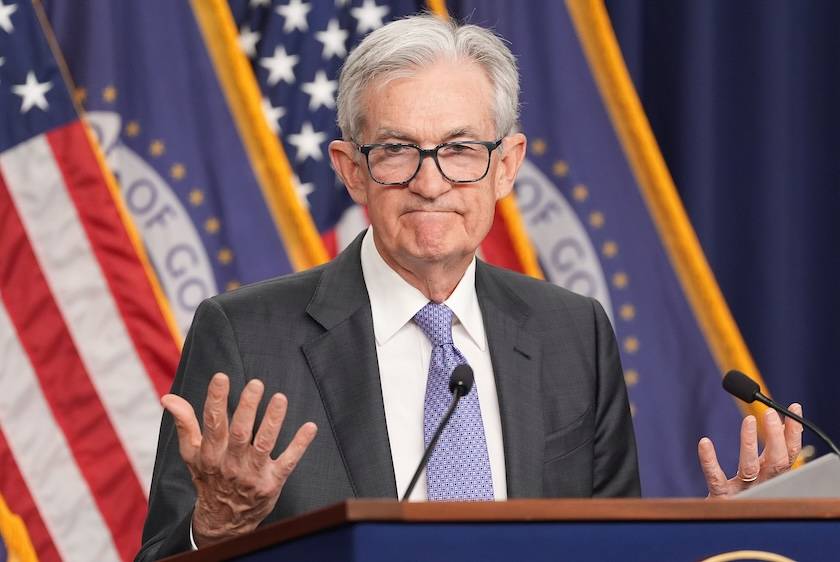
美联储降息落地,黄金冲高再下!
Sou Hu Cai Jing· 2025-12-11 02:39
本文黄金、白银等产品行情分析,以国际报价为基准;今日换算系数,国际金价/4.410≈国内金价。 美联储如市场预期降息,是在巨大的分歧当中降息25基点;12个委员投票9个赞成降息25基点,米兰则支持降息50基点,还有两个委员反对降息!事后美国 总统特朗普抱怨降息幅度太小,应该降息50基点。 美联储主席鲍威尔新闻发布会表示,短期内通胀风险偏向上行,就业风险偏向下行,形势充满挑战;所以,大部分委员决定降息25基点。鲍威尔称,可以等 待并观察经济如何发展,没人预期会加息,利率处于中性水平区间的上端,购债规模将在未来数月保持在高位。 总结来说,降息了,但在分歧中降息;并且未来继续降息的门槛提高,并且开启了短期QE。说明美联储在矛盾中前行,决策。接下来一系列的数据,如非 农数据,CPI数据将左右美联储决策。 下周五,19号日本央行利率决议,市场普遍预期日本加息。全球两大央行,一个降息,一个加息,势必掀起一场暴风雨走势。 利率决策声明当中,宣布"购买短期国债"(将每月买入约 400 亿美元短债),这被视为启动量化宽松(QE)政策;消息打压美元,支撑黄金和美股等。利 率声明措辞新增"将考虑进一步调整利率的幅度和时机"。 点阵 ...

A Dovish Message Within a Hawkish Rate Cut
ZACKS· 2025-12-10 23:46
Market Reaction - The stock market reacted positively to the Fed's announcement of a 25 basis point rate cut, with the small-cap Russell 2000 reaching a new all-time high close and the S&P 500 coming within 5 points of its own all-time high [1][2] - The Dow increased by 497 points (+1.05%), the S&P rose by 46 points (+0.67%), while the Nasdaq lagged with a gain of 77 points (+0.33%) [2] Federal Reserve Actions - The Fed cut the Fed funds rate by 25 basis points to a range of 3.50-3.75%, with three dissents from the policy decision, marking the first dissent in six years [3] - The Fed will begin purchasing $40 billion in Treasury bills, a move that was earlier expected to be $20-30 billion, indicating a more aggressive approach to maintaining its balance sheet [4] Economic Outlook - The Fed's outlook for 2026 GDP increased by 0.5 percentage points to +2.4%, while the inflation rate is predicted to decrease by 10 basis points to +2.5% [5] - A majority of Fed members now advocate for one rate cut or fewer in the upcoming year, with some members favoring no cuts at all [5] Company Earnings - Oracle (ORCL) reported fiscal Q2 earnings of $2.26 per share, exceeding expectations, but revenues of $16.1 billion fell slightly short of the $16.15 billion forecast [7][8] - Adobe Systems (ADBE) reported fiscal Q4 earnings of $5.50 per share, surpassing expectations, with revenues of $6.19 billion also exceeding estimates [9] - Synopsys (SNPS) posted fiscal Q4 earnings of $2.90 per share on revenues of $2.26 billion, both figures beating analyst expectations [10]